
Kanchenjunga North vs South Base Camp: Which Route Fits?
 Sristi Adhikari
Imagine standing beneath towering Himalayan peaks, surrounded by ancient glaciers, quiet mountain villages, and trails that lead deep into the wilderness. Sounds like an adventure worth taking?
If Mount Kanchenjunga is on your trekking bucket list, one big question awaits: Kanchenjunga North vs South Base Camp — which route is right for you?
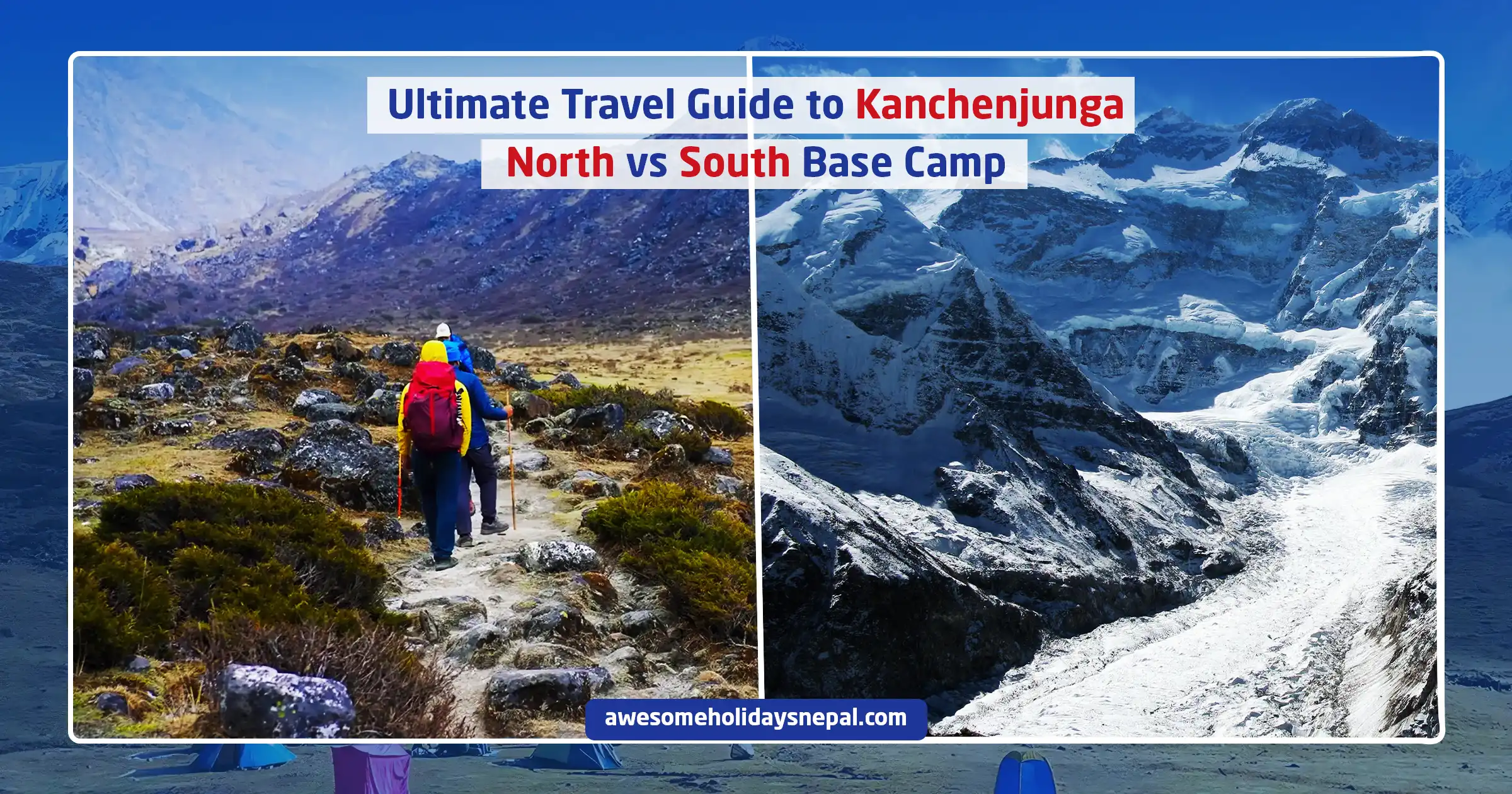
While the northern trail takes you toward the spectacular Pangpema viewpoint, the southern route rewards you with impressive views of the Yalung Glacier and Kanchenjunga’s southern face. Both journeys offer incredible mountain scenery, but their landscapes, challenges, and trekking experiences are different.
Whether you dream of exploring rugged alpine valleys or walking through forests before reaching glacial viewpoints, this guide will help you compare both routes and choose the Himalayan adventure that best matches your interests, fitness, and travel plans for 2027.
Kanchenjunga North vs South Base Camp: Key Difference at a Glance
| Comparison Factor | Kanchenjunga North Base Camp Trek | Kanchenjunga South Base Camp Trek |
|---|---|---|
| Main destination | Pangpema | Oktang |
| Highest Point | 5,143 m /16,873 feet | 4,840 m /15,879 feet |
| Average Duration | 16 to 22 days | 12 to 14 days |
| Main landscape | High alpine valleys and glacial terrain | Forests, meadows, green valley, and the Yalung Glacier |
| Cultural Immersion | Rai and Limbu communities | Tibetan Buddhist settlements |
| Major route villages | Ghunsa, Kambachen, Lhonak | Yamphudin, Cheram, Ramche |
| Difficulty Level | Challenging to strenuous | Challenging |
Understanding the Kanchenjunga North and South Base Camps
Kanchenjunga North Base Camp Trek: A Journey to Pangpema
The Kanchenjunga North Base Camp Trek is a remote and high altitude journey that makes you explore the rugged wilderness of Eastern Himalayas of Nepal. The trek offers you a chance to stand in front of the north face of the world’s third highest mountain, Kanchenjunga.
The journey makes you traverse across the dense forest, terraces, farmland, and traditional villages before reaching stark alpine terrain. You will get to enjoy both natural as well as local mountain life when you pass across popular villages like:
- Sekathum,
- Amjilosa,
- Gyabla, and
- Ghunsa,etc.
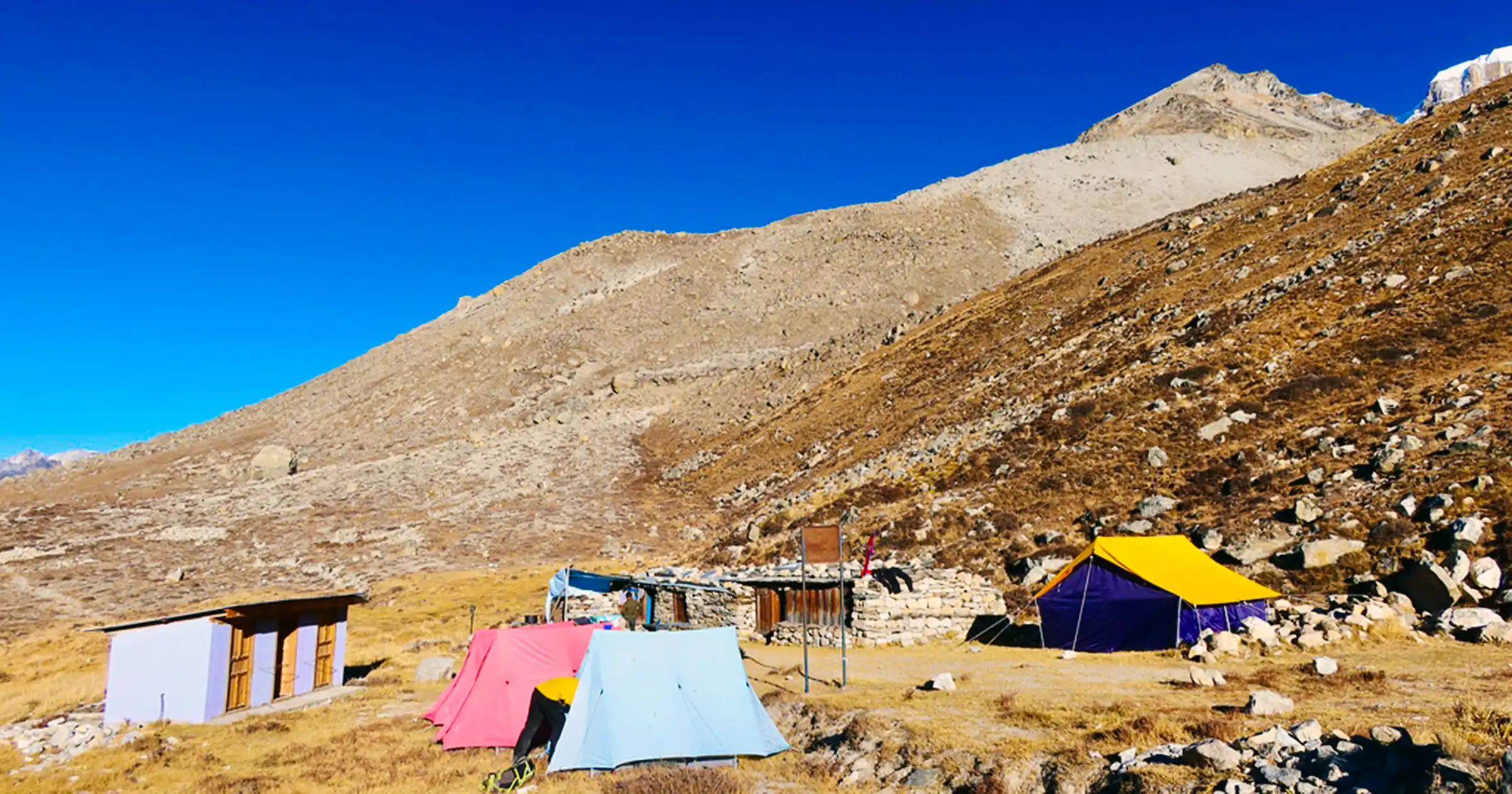
The final climb to Pangpema or Kanchenjunga North Base camp is quite challenging as the trails are steep and filled with rocky section but it rewards you with one of the dramatic views of mountain such as:
- Kanchenjunga’s northern face
- Jannu (Kumbhakarna)
- Chang Himal (Kaldang)
- Kirat Chuli (Tent Peak)
- Twin Peaks and Pyramid Peak
- Kabru and Ramtang Peaks, etc.
Beside these mountain views, you will also get to enjoy views of glistening glaciers and surrounding beauty with fewer crowds.
Kanchenjunga South Base Camp: Exploring the Yalung Glacier
Kanchenjunga South Base Camp takes you to Oktang which is also known as Ramche viewpoint. Oktang is the highest point of this trek which is elevated at an altitude of 4730 m from sea level.
It makes you traverse towards the heart of the Kanchenjunga region, following the Yalung glacier. The trek is also known as Yalung base camp and offer one of the close up views of:
- south face of Mount Kanchenjunga
- Mount Kanchenjunga Massif
- Kabru Massif & Surrounding Peaks
- Jannu (Kumbhakarna)
- Yalung Glacier & Amphitheater etc.
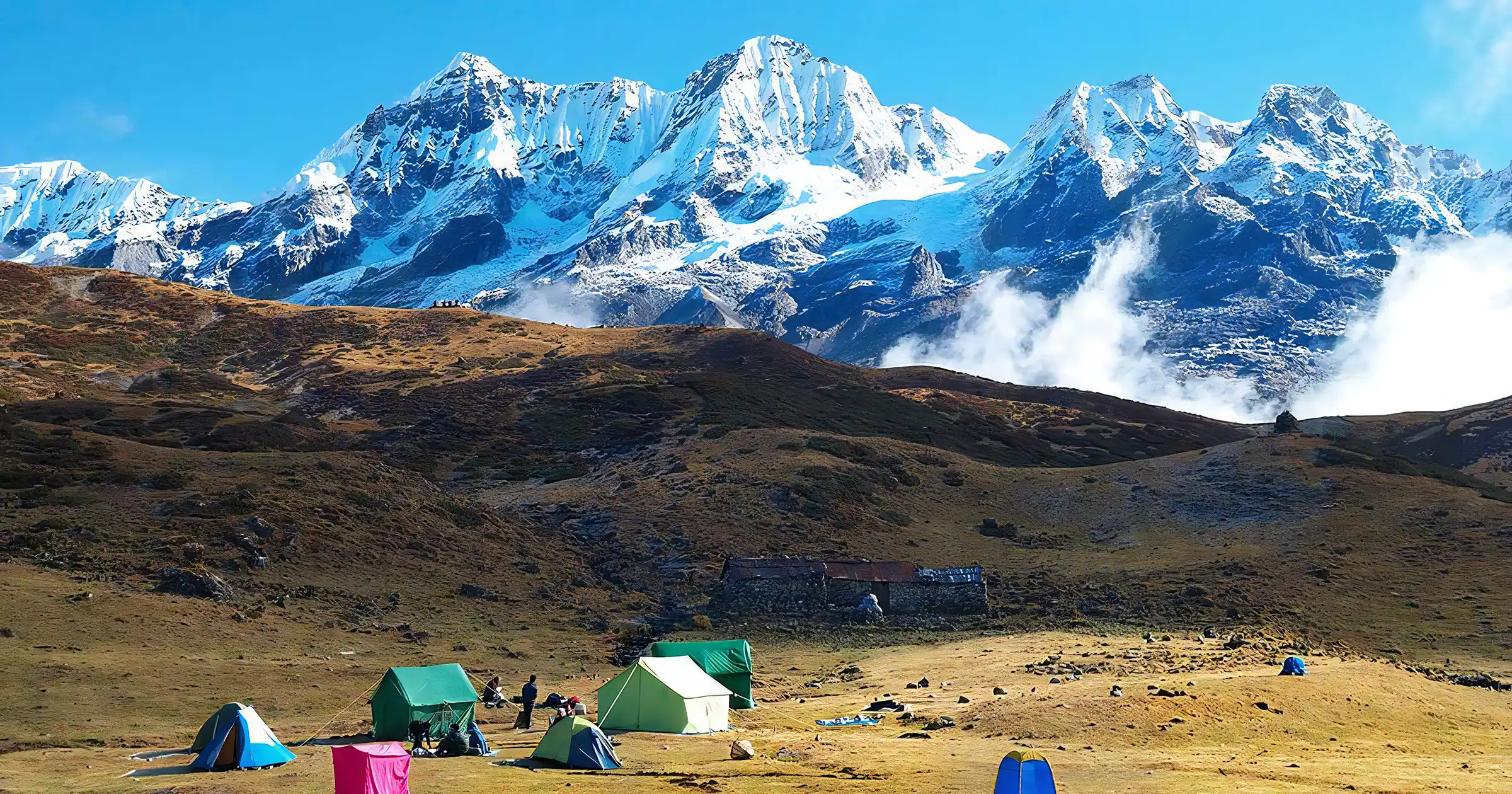
Unlike North trails, Kanchenjunga South Base camp trek is quite smooth and less which can be completed easily with good mental and physical fitness. Here, you will be crossing lush green forest, terraced fields, for several days before stepping into a rocky and more exposed section of high alpine meadow.
During your trekking days you will get to stay in traditional village like:
- Yamphudin,
- Tortong,
- Cheram (Tseram), and
- Ramche, etc.
You will get to learn more about how Rai, Limbu, and Gurung communities spend their day to day life far from modern development and are able to offer warm hospitality to visitors.
Kanchenjunga North vs South Base Camp
Kanchenjunga North vs South Base Camp trek differs from each other in different aspects and choosing which trek to choose depends hugely on your personal preference and kind of experience you are in search of.
Difficulty
When comparing Kanchenjunga North vs South Base Camp’s difficulty, the former one wins the debate as it is rated as one of the challenging to strenuous trek. Kanchenjunga North base camp makes you spend multiple nights over an elevation of 4,000 meters at stops like:
- Kambachen (4,050m)
- Pangpema
- Lhonak (4,815m)
This requires you to deal with colder conditions in remote and rugged landscapes. Also, you will be walking for longer hours in sustained ascents and glacier moraines near Pangpema, this will make you fatigued and without prior experience and mental resilience it is quite difficult to complete.
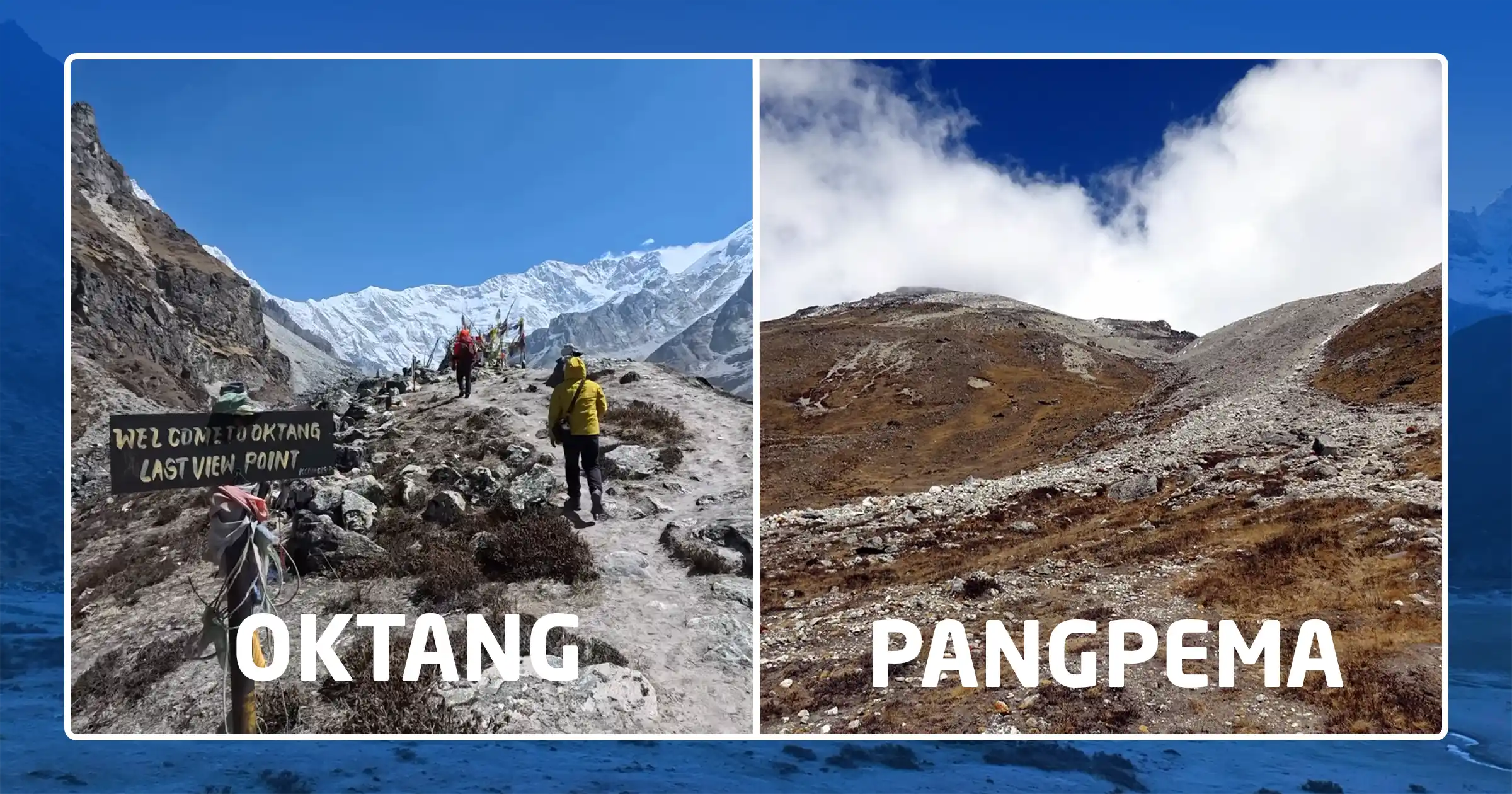
If you want to test your mental and physical capacity with enough preparation, choose Kanchenjunga North base camp trek. In contrast, the Kanchenjunga south base camp trek is also difficult but it’s less than north as it makes you spend overnight above 4,000 meters only in Oktang.
You will be exposed to high altitude for a short period of time. With average fitness and mental readiness, you can complete this trek more easily than on the North side. If you want to enjoy the beauty of the Kanchenjunga region without having to deal with extreme altitudes then choose South Base Camp.
Duration and Route Length
When deciding Kanchenjunga North vs South Base Camp, you should also consider how much time you have in your holidays. Kanchenjunga north base camp trek is quite longer and you will need to allocate 16 to 22 days for the overall journey.
From the trailhead, Sekathum, you will need to walk 10 to 12 days continuously for longer hours to reach Pangpema. You will be covering a total route distance of 190 to 200km during Kanchenjunga North Base Camp trek.
Kanchenjunga south base camp trek can be completed within 12 to 14 days and from Suketar, you will reach the highest point of the trek Oktang within 7 to 9 days. The overall distance for the Kanchenjunga South Base Camp trek is around 150 to 170km.
If you have less time choose North base camp, but if you want deeper immersion and have enough time, then choose Kanchenjunga south base camp trek in 2027.
Entry Points
Kanchenjunga North vs South Base Camp trek differs in entry points as well. The Kanchenjunga North base camp trek usually starts from Sekathum which follows the Ghunsa Khola valley towards Pangpema.
The trails are more rugged and remote where you have to walk for longer hours without human settlements. If you want to enjoy some time alone with nature, then choose Kanchenjunga North base camp trek.
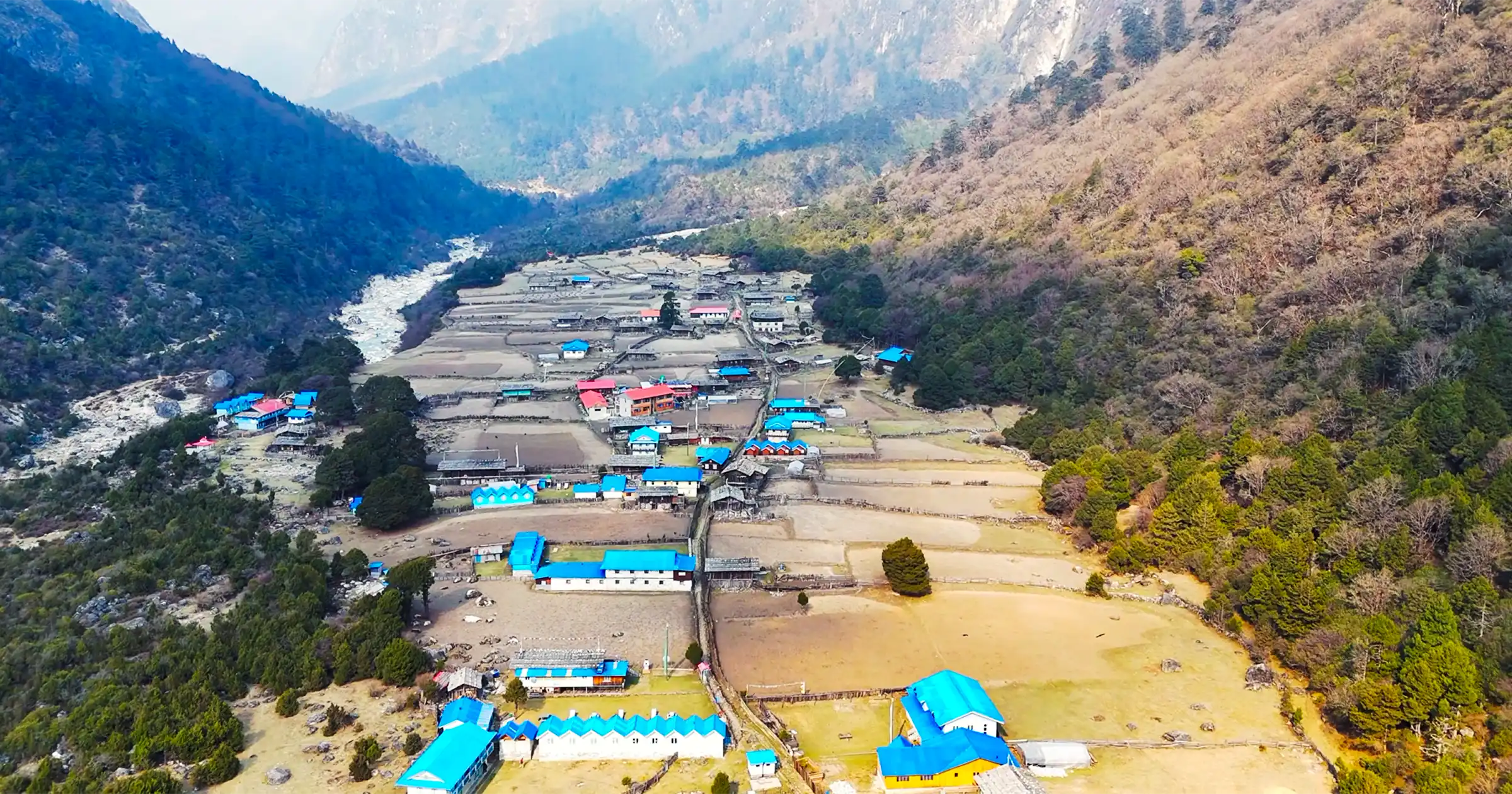
On the other hand, you will be starting your trek from Suketar and traverse side by side with Simbuwa Khola valley towards Oktang viewpoint, which is Kanchenjunga near south base camp. This trail makes you walk in more human settlement areas and the trails are quite defined than north.
If you are seeking deeper cultural immersion, then the south route offers you a wide range of opportunities as you will be crossing different ethnic human settlements throughout the journey.
Routes and Itinerary
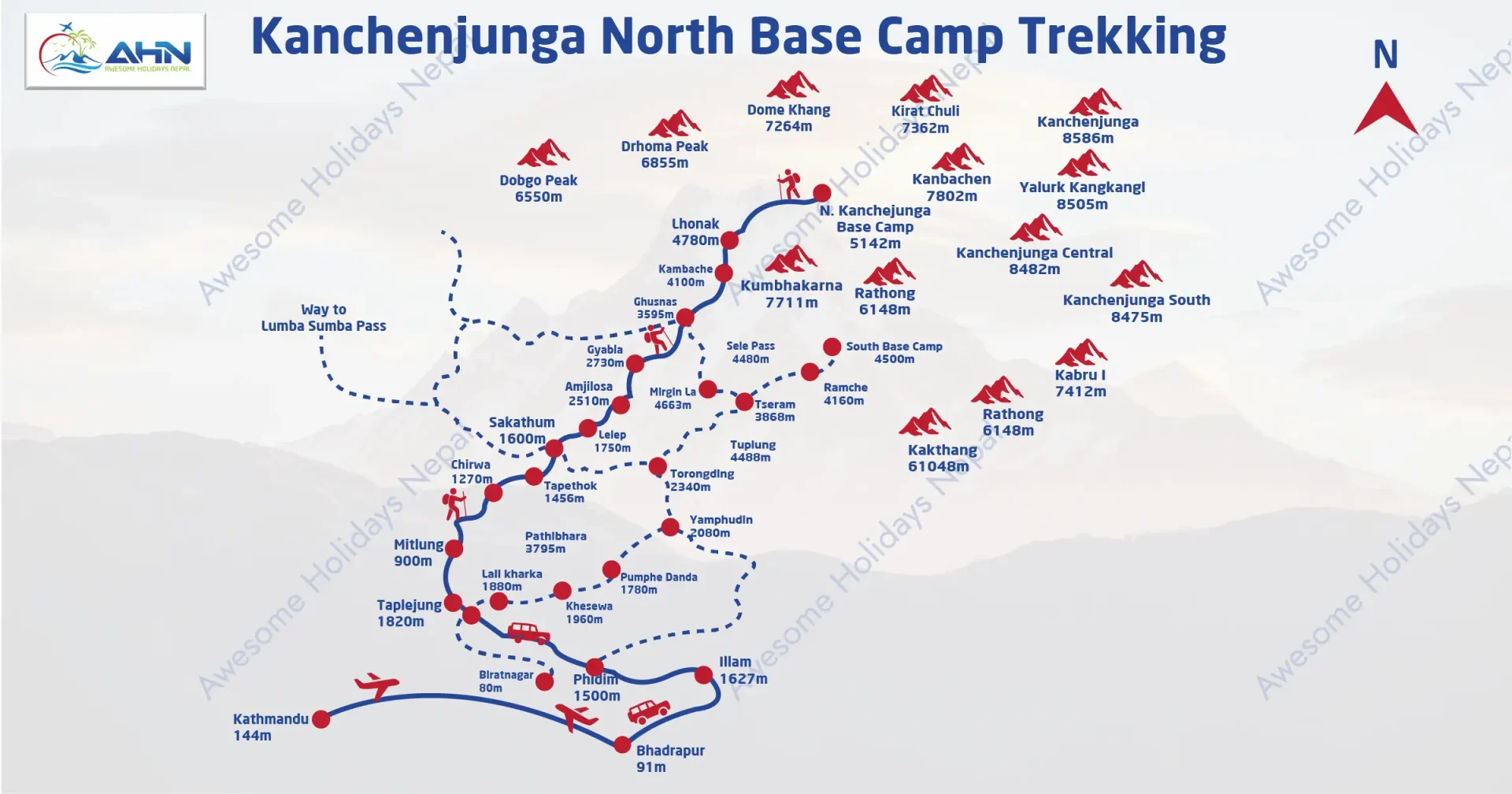
Kanchenjunga North vs South Base Camp trek differs in route and itinerary as well. You will be traversing across following routes when you choose Kanchenjunga north base camp trek:
- Kathmandu → Bhadrapur→ Taplejung→ Sekathum → Amjilosa→ Gyabla → Ghunsa → Kambachen → Lhonak → Pangpema (Kanchenjunga North Base Camp)
Similarly, a 16 to 22 days Kanchenjunga north base camp trek itinerary make you follow:
- Day 1: Arrive in Kathmandu
- Day 2: Trek preparation in Kathmandu
- Day 3: Fly to Bhadrapur and travel toward Taplejung
- Day 4: Drive to Sekathum
- Day 5: Sekathum to Amjilosa
- Day 6: Amjilosa to Gyabla
- Day 7:Acclimatization at Gyabla
- Day 8: Gyabla to Ghunsa
- Day 9: Ghunsa to Kambachen
- Day 10: Kambachen to Lhonak
- Day 11: Acclimatization at Lhonak
- Day 12: Lhonak to Pangpema and return
- Day 13: Lhonak to Ghunsa
- Day 14: Ghunsa toward Amjilosa
- Day 15: Amjilosa to Sekathum and onward by vehicle
- Day 16: Travel toward Bhadrapur
- Day 17: Return to Kathmandu
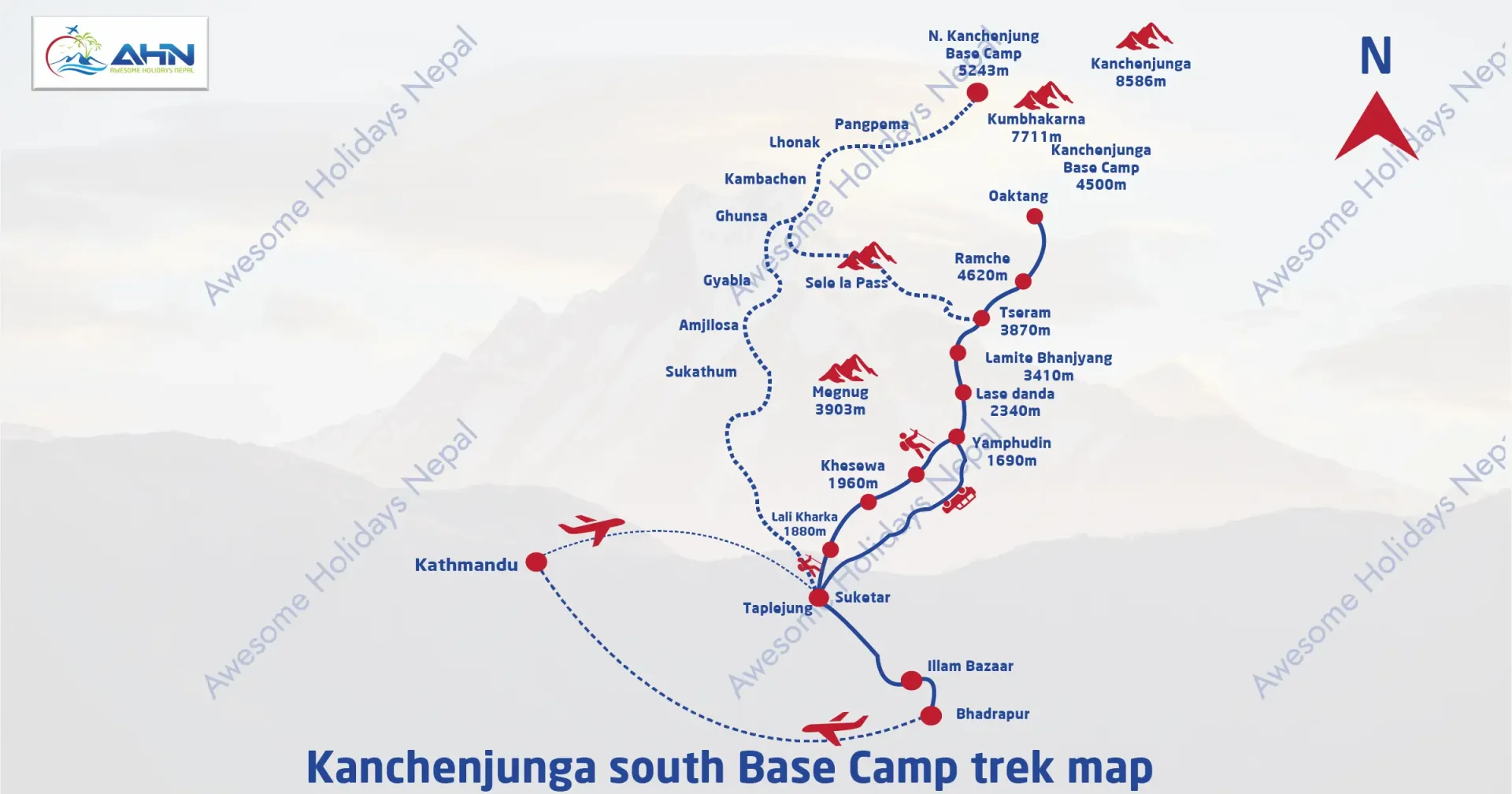
The Kanchenjunga south base camp trek make you traverse across populated areas in the trailhead with following routes:
- Kathmandu → Bhadrapur → Taplejung → Yamphudin → Tortong → Tseram (Cheram) → Ramche → Oktang (South Base Camp viewpoint) Oktang → return.
The short duration and challenging rated Kanchenjunga base camp trek itinerary follows:
- Day 1: Arrive in Kathmandu
- Day 2: Fly to Bhadrapur and drive toward Taplejung
- Day 3: Drive to Yamphudin
- Day 4: Trek from Yamphudin to Tortong
- Day 5: Trek from Tortong to Tseram
- Day 6: Acclimatization day at Tseram
- Day 7: Trek from Tseram to Ramche
- Day 8: Visit Oktang (South Base Camp viewpoint) and return to Tseram
- Day 9: Trek from Tseram to Yamphudin via Tortong
- Day 10: Trek from Yamphudin toward Khebang or another planned overnight stop
- Day 11: Continue trekking or drive toward Taplejung
- Day 12: Travel toward Bhadrapur and then fly to Kathmandu
- Day 13: Final departure
Culture and Villages
Kanchenjunga North vs South Base Camp mainly differs in terms of culture and natural beauty. The north base camp trails make you witness the influence of Tibetan Buddhism during your overnight stay in Sherpa village of Ghunsa and Kambachen.
You will also encounter different Tibetan monasteries, chortens, and prayer flags in the trekking trails. Whereas, Kanchenjunga south base camp trek makes you witness a mixture of both Hindu and Buddhist culture.
As you will be spending overnight under the same roof with Rai and Limbu communities, you will get to learn about their ritual, daily lifestyle, festivals, and insight into the mixture of religions.
When deciding Kanchenjunga North vs South Base Camp trek in 2027, choose north if you want to immerse yourself in villages which are influenced by Tibetan Buddhism but if you want to explore how Hindu and Buddhist culture are intertwined with each other then choose the south route.
Cost
The cost for Kanchenjunga North vs South Base Camp is higher for the north as it demands longer trekking days than south. It may cost you USD $1400 to $2400 per person for a guided and inclusive package of Kanchenjunga North base camp on average.
As Kanchenjunga south base camp is 4 to 6 days shorter than north, it may cost you less. Depending upon the group and package you choose, Kanchenjunga south base camp trek costs USD $2,000 to $3,800 per person.
Kanchenjunga Circuit Trek: Combined North and South Base Camp
If you are still confused between Kanchenjunga North vs South Base Camp, we suggest you combine both into a single adventure. A full Kanchenjunga circuit connects both northern and southern routes in the high mountain passes of the Sele La area.
Planning to Explore Kanchenjunga Region in 2027?
Or Call/Message on WhatsApp +977 98434 13619
If you have 20 to 30 days, it will be enough for you to complete Kanchenjunga circuit trek in 2027. This trip allows you to stand in front of Kanchenjunga’s north face in Pangpema and south face at Oktang viewpoint.
You will be encircling the world’s third highest mountain, Kanchenjunga, which allows you to witness every aspect of the Kanchenjunga region.
Final Verdict on Kanchenjunga North vs South Base Camp
Both north and south base camp offer one of the rare and incredible mountain experience. If you want a remote, longer, high altitude adventure where you will barely see any other trekker walking in the trails, and want to immerse in Tibetan influenced communities Kanchenjunga north base camp wins for you.
Likewise, if you want to spend some time in different ethnic traditional village, want to walk in a less rugged trails used by first successful ascender, Joe Brown and George Band then Kanchenjunga south base camp will be best for you. Also, Yalung glacier and surrounding valley offer picturesque landscape which is best for photography enthusiasts.
If you are still confused on Kanchenjunga North vs South Base Camp, combine both and enjoy the lush southern forest and glacial northern valley in a single trip by choosing a Kanchenjunga circuit trek. Here, you will get to witness 360 degree views of mount Kanchenjunga massif itself.
Whichever route you choose, don’t forget to contact Awesome Holidays Nepal to plan your adventure to Kanchenjunga region in 2027.
FAQs
Expand AllWhich is better Kanchenjunga North or South Base Camp?
For dramatic high-altitude mountain views, high alpine valleys and glacial terrain Kanchenjunga North is best but if you want to immerse in Tibetan influenced culture and tradition and want to witness lush green forests, meadows, green valley, and the Yalung Glacier south will be best for you.
Is Kanchenjunga North Base Camp harder than South?
Yes, Kanchenjunga North Base Camp harder than South.
How long is Kanchenjunga North Base Camp trek?
Kanchenjunga North Base Camp trek can be completed within 16 to 22 days.
Kanchenjunga North vs South Base Camp cost / which is cheaper?
When comparing Kanchenjunga North vs South Base Camp in terms of cost, south is cheaper as it is shorter in duration.
Pangpema vs Oktang which is better?
Both Pangpema and Oktang is better viewpoint as former offer a spectacular views of northern face of Mount Kanchenjunga and is elevated at approximately 5,143 meters.
Likewise, Oktang provides impressive views of the southern face and Yalung Glacier at approximately 4,730 meters.
Do I need a guide for Kanchenjunga trek?
Yes, you will need a guide for Kanchenjunga trek.
What is the highest point of Kanchenjunga North Base Camp?
The highest point of Kanchenjunga North Base Camp is Pangpema with an elevation of 5,143 m /16,873 feet.
What is the highest point of Kanchenjunga south Base Camp?
The highest point of Kanchenjunga south Base Camp is Oktang which is elevated at an altitude of 4,840 m /15,879 feet.
Is Kanchenjunga trek harder than Everest Base Camp or Annapurna?
Yes. Due to its remoteness, limited accommodation, and challenging trail condition, Kanchenjunga trek is rated harder than Everest Base Camp or Annapurna.
Is Kanchenjunga trek difficulty for beginners?
Yes, Kanchenjunga trek is difficult for beginners. Without prior experience and enough physical and mental fitness, one cannot complete this trek.
How much does Kanchenjunga base camp trek cost 2026/2027?
The Kanchenjunga Base Camp trek cost ranges in between USD $1,500 and USD $3,500 per person in 2026/2027.
What can you expect at Pangpema, and what are the views like?
Trekkers can expect dramatic views of Kanchenjunga’s northern face and entire ranges of third highest mountain.
Can you do both Kanchenjunga North and South Base Camps?
Yes, you can do both base camps by booking a longer Kanchenjunga Circuit Trek.
How to get to Kanchenjunga trek starting point?
Usually trekkers leave for Bhadrapur from Kathmandu via flight. Then, from Bhadrapur you will continue road travel towards Taplejung and until you reach the trailhead Sekathum or Kande Bhanjyang.
What Wildlife are visible on Kanchenjunga trek?
Snow Leopard, Elusive Red Panda, Blue sheep (chyangra), Himalayan black bear, langur monkeys, and birds are some wildlife that are visible on Kanchenjunga trek.
What is the fitness requirements for Kanchenjunga trek?
For Kanchenjunga trek, you need to have:
- good cardiovascular endurance,
- strong legs,
- the ability to walk for several hours,
- walk in an uneven terrain with heavy backpack.
Can you do Solo trekking to Kanchenjunga in2026?
Yes. You can do Solo trekking to Kanchenjunga by hiring a licensed and experienced trekking guide in 2026.
Kanchenjunga vs Makalu Base Camp trek, which to choose?
We suggest you to choose Kanchenjunga for its remote valleys and opportunities to explore the mountain’s northern and southern approaches, or Makalu for its rugged wilderness and spectacular views of Mount Makalu.
What is the cost of Restricted area permit for Kanchenjunga?
The Restricted Area Permit cost USD $20 per person for four first weeks and after four weeks, it cost you USD $25 per person per week.
How to obtain Restricted area permit for Kanchenjunga?
You can obtain Restricted area permit for Kanchenjunga by contacting a government-registered Nepali trekking agency like Awesome Holidays Nepal.
Related blog posts
Discover a choice of tourist destinations loved by most of our visitors. Whether you're on a jungle safari to spot rare animals or walking through a world heritage site, these well-planned itineraries cover the major highlights of Nepal.

 call an expert at: