
Mount Kanchenjunga: Nepal’s Sacred Himalayan Giant
 Sristi Adhikari
Mount Kanchenjunga stands majestically with a height of 8,586 meters, earning the position of 3rd highest mountain in the world. The untouched wilderness of the pristine mountain peak is far beyond a natural wonder but also holds a deep revered mountain in local cultures.
Rising like a frozen guardian between Nepal and India, Kanchenjunga offers serious mountaineers, an ancient trails untouched by modernization, forest filled with Rhododendron, pine and coniferous trees, along with spectacular view of Kanchenjunga ranges. Beside this, it amazes the nature enthusiast with an opportunity to encounter yak herding communities, sub-tropical forest, extra-ordinary bio-diversity, centuries old uninterrupted culture.
If you are curious about the 3rd highest mountain in the world, Mount Kanchenjunga or want to do Kanchenjunga Base Camp Trek in 2026. Then, continue reading this blog for more details on one of the most demanding yet rewarding adventures from its location to geographical importance.
Facts About Mount Kanchenjunga
- Rank: Third Highest mountain peak in the world
- Elevation: 8,586 Meters / 28169 Feet
- Latitude: 27º 42′ 10 N
- Longitude: 88º 09′ 00 E
- North Base Camp (Pangpema): Elevated at 5,143 meters (16,873 feet).
- South Base Camp (Oktang / Ramche):Elevated at 4,740 to 4,800 meters (15,550 feet).
Where is Kanchenjunga located?
Mount Kanchenjunga is located in the Far-Eastern Himalayas of Nepal, expanding over the boundary of the Indian state, Sikkim. It is situated in the Taplejung District of Koshi Province of Nepal.
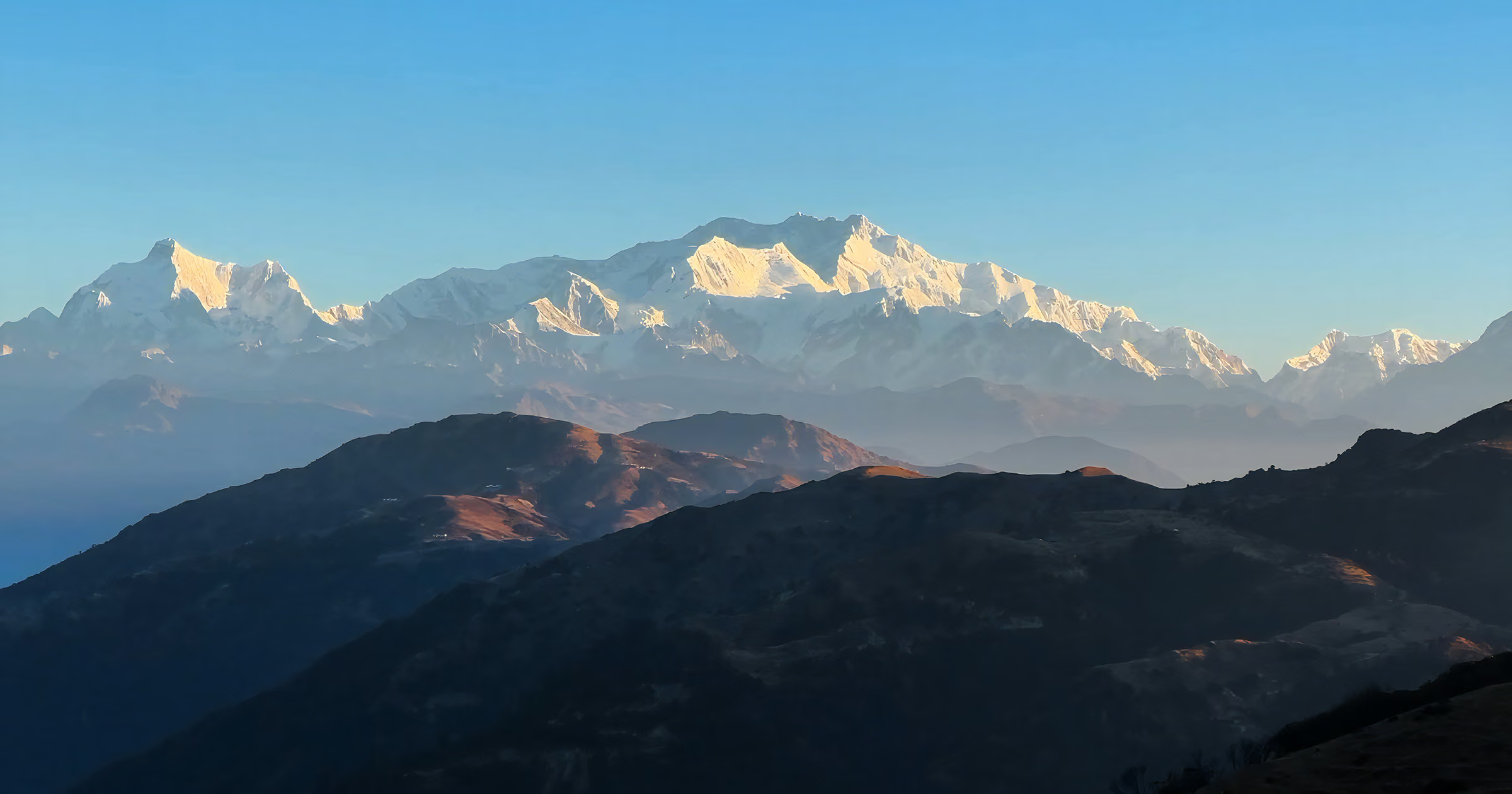
The word “Kanchenjunga” is derived from local Himalayan Tibetan languages which simply means, “ The Five Treasures of the Great Snow”. It is called so because it has five summits and each summit is said to contain treasures such as gold, silver, gems, grain, and holy scriptures.
Mount Kanchenjunga, a part of the Great Himalayan range is surrounded by important natural features like:
- The Teesta River flows along the Eastern side.
- West of Kanchenjunga is associated with the Tamur River.
- The Jongsang La Pass and the Lhonak River flows from the north.
- Kanchenjunga is only 124 km east-southeast away from Everest, the tallest mountain in the world.
- The distance from Siliguri to Kanchenjunga is about 100 to 150 km.
Major Peaks of Mt. Kanchenjunga
It is ranked as the 3rd highest mountain in the world, after Mount Everest and K2. It was once thought to be the highest mountain in the world, but the result of the Great Trigonometric Survey confirmed it was then called peak XV also known as Mount Everest tallest.
Mount Everest(8,848.89 meter) is only 262 meters higher than Kanchenjunga (8,585 meter). The exhilarating heights of these mountains is the reason why every year thousands of foreigners visit Nepal for the mountain expedition and trekking to Everest Base Camp and Kanchenjunga Base Camp.
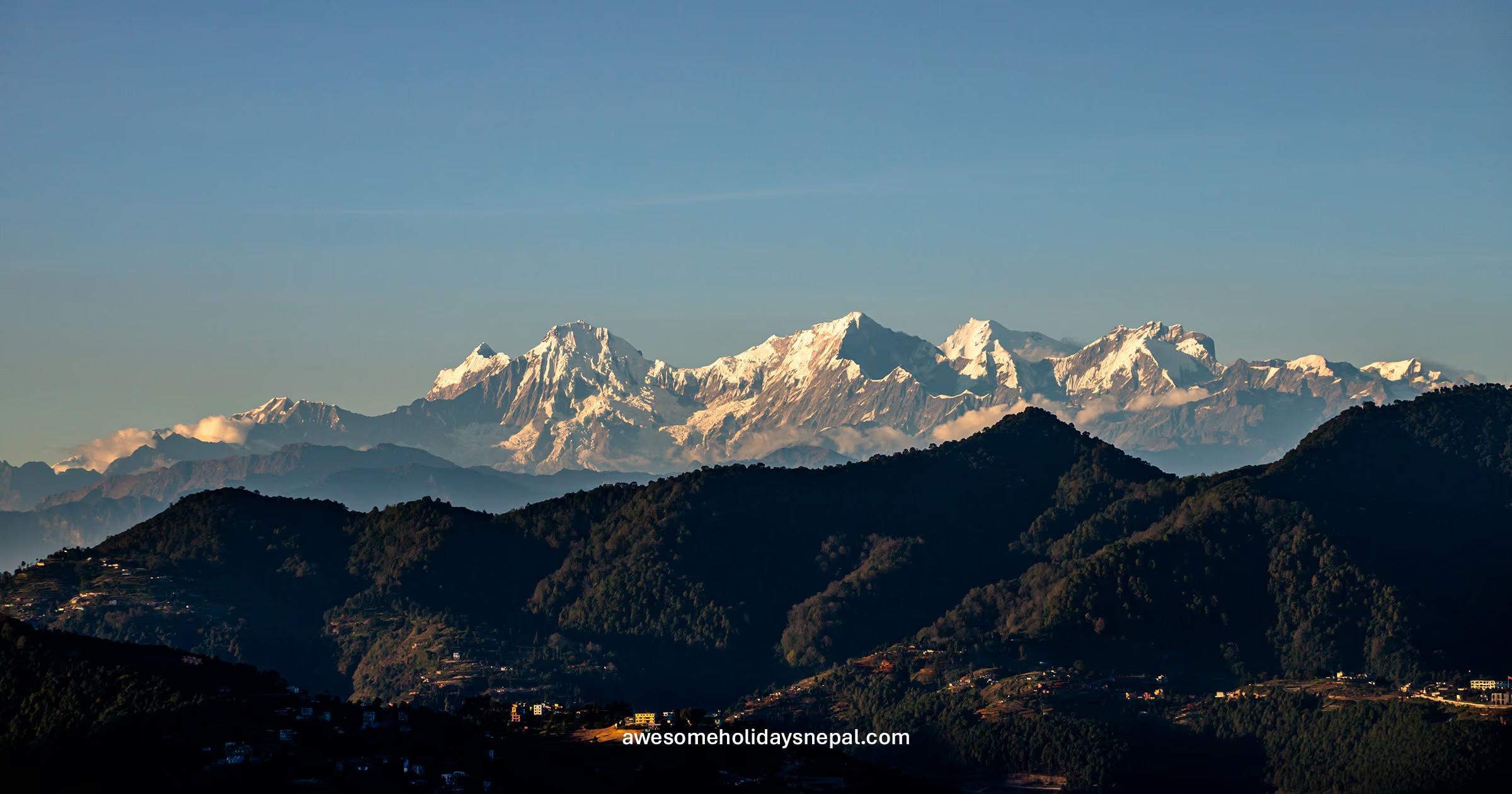
The five different peaks of Mount Kanchenjunga with its height and location is given below:
| Peak | Height | Location |
|---|---|---|
| Kanchenjunga Main |
|
In between Nepal and Sikkim (India) border. |
| Kanchenjunga West (also known as Yalung Kang) |
|
Taplejung District, Nepal. |
| Kanchenjunga Central |
|
In between Nepal and Sikkim (India) border. |
| Kanchenjunga South |
|
In the border of Nepal and Sikkim (India). |
| Kangbachen |
|
Taplejung District, Nepal. |
These five peaks of the Kanchenjunga massif makes one of the most dramatic skyline in the Himalayas of Nepal.
History of Kanchenjunga Ascent
British expeditors, George Band, Joe Brown successfully attempted the first ascent by reaching five vertical feet below the summit on May 25, 1955. The team promised that they would not step at the top of the mountain as Local Lepcha and Sikkimese traditions revere the mountain as a home of the gods.
The expedition was led by Charles Evans which became a testament to all other spirits of mountain expeditors. But before them, three attempts to Kanchenjunga failed and they are:
- An Anglo-Swiss team with Occultist Aleister Crowley made an first attempt to reach the summit of the Kanchenjunga via Southwest face in 1905. They had to return halfway due to an avalanche which took the lives of four other fellow climbers.
- German expeditions under the command of Paul Bauer had to face harsh weather conditions and rugged terrain which made them return in 1929 and 1939.
Then, many expeditors from different nations got their victory to Kanchenjunga. Some of the notable ascents to Kanchenjunga are listed below:
- From southwestern ridge, a Japanese expedition team of Yutaka Ageta and Takeo Matsuda successfully summited Kanchenjunga West (Yalung Kang). At the time of descent, Matsuda got separated from Ageta and his body was never found.
- In 1977, an Indian Army team led by Colonel Narendra Kumar got victory via challenging Northeast.
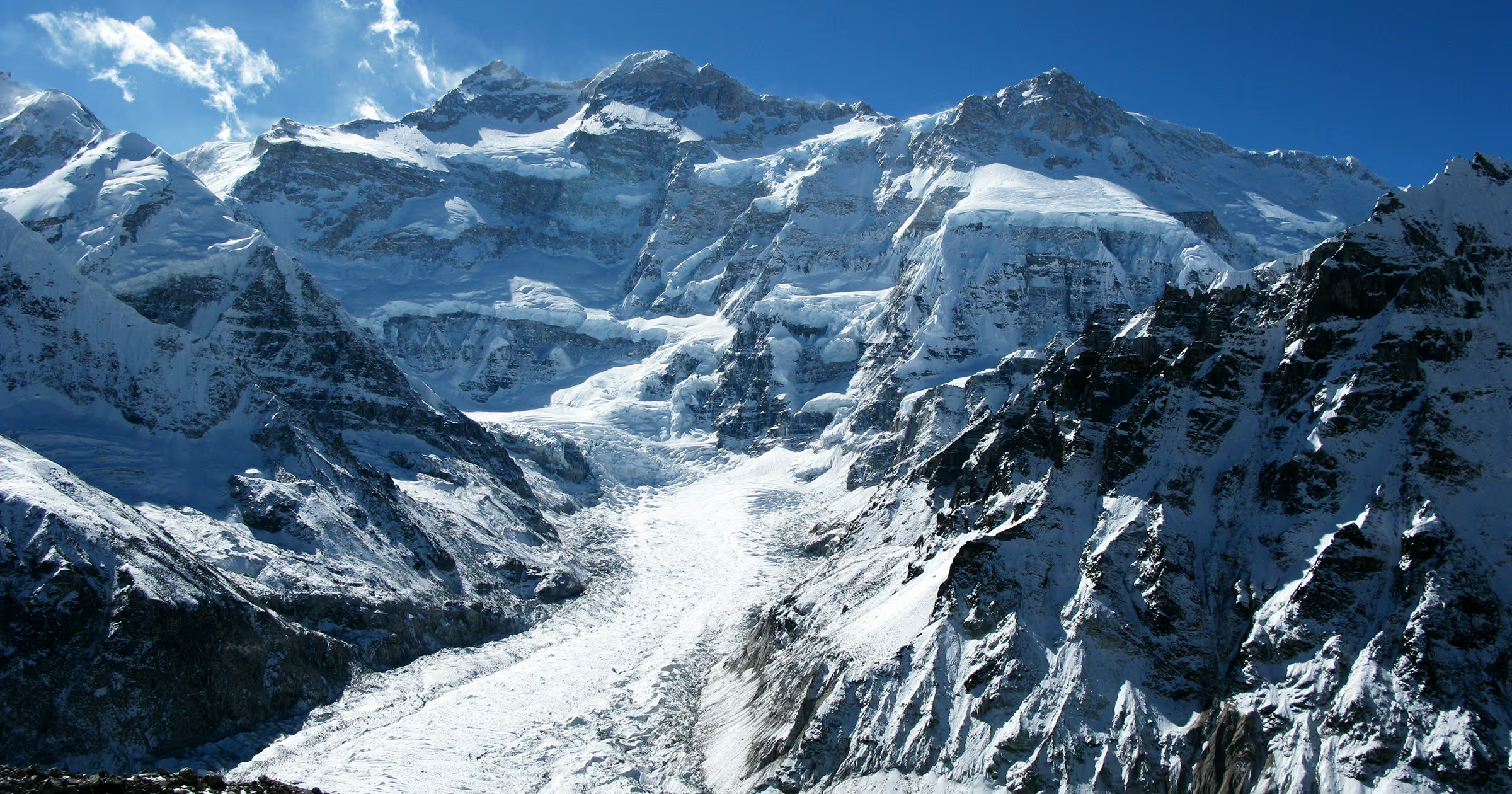
- Doug Scott, Peter Boardman, and Joe Tasker pioneered a new route successfully along the North Ridge without supplemental oxygen in 1979.
- On January 11, 1986, Polish climbers named Jerzy Kukuczka and Krzysztof Wielicki got victory to Mt. Kanchenjunga became the first one to reach the summit during winter.
- British mountaineer Ginette Harrison made history by becoming the first woman to reach the summit of Mount Kanchenjunga in 1988.
The Real Kanchenjunga Death Rate
The fatality rate of Mount Kanchenjunga is 15% to 22% which makes it one of the deadliest 8000ers. After the successful attempt of British climbers Joe Brown and George Band in 1955, many experienced climbers lost their lives, some on the way or some on descent.
Since that historic ascent, Kanchenjunga has recorded around 500–540 successful summits but out of them at least 50–55 climbers could not return home. This resulted in a death-to-summit ratio of roughly 9–12%.
Planning to Climb Mount Kanchenjunga in 2026?
Or Call/Message on WhatsApp +977 98434 13619
While some other records suggest that the fatality rate has climbed even higher, reaching about 15–22%. Overall, Kanchenjunga’s death rate has varied significantly across different climbing periods.
The main reason behind this increasing death rate is Kanchenjunga’s height of 8,586 meters and other factors like extreme technical routes, avalanche-prone faces, unpredictable weather, and extreme remoteness also contribute significantly. Unlike Everest or Annapurna, the infrastructure of Mount Kanchenjunga is not well established which results in slower logistics. The demanding terrain and unpredictable weather makes rescue operations dangerously complex.
Majestic Glacier of Kanchenjunga Region
Mount Kanchenjunga’s hydrology and ecology is highly dependent on five different glaciers which are a part of the Kanchenjunga conservation area. Locals of lower Kanchenjunga is dependent on this glaciers for freshwater.
| Glacier Name | Location | Key Features |
|---|---|---|
| Zemu Glacier |
|
|
| Yalung Glacier |
|
|
| Kanchenjunga Glacier | Northern side of Kanchenjunga, Nepal | High-altitude glacier system located in the North Base Camp. |
| Talung Glacier |
|
|
| Ramtang Glacier | Near Kanchenjunga North Base Camp, Nepal | Glacier system with dramatic ice formations and moraine fields. |
The Kanchenjunga Conservation Area
Kanchenjunga Conservation Area is a vast protected landscape established to preserve the mountain’s fragile ecosystems and cultural heritage in 1997. It expands over 2,000 square km which make it the largest Conservation area of Nepal.
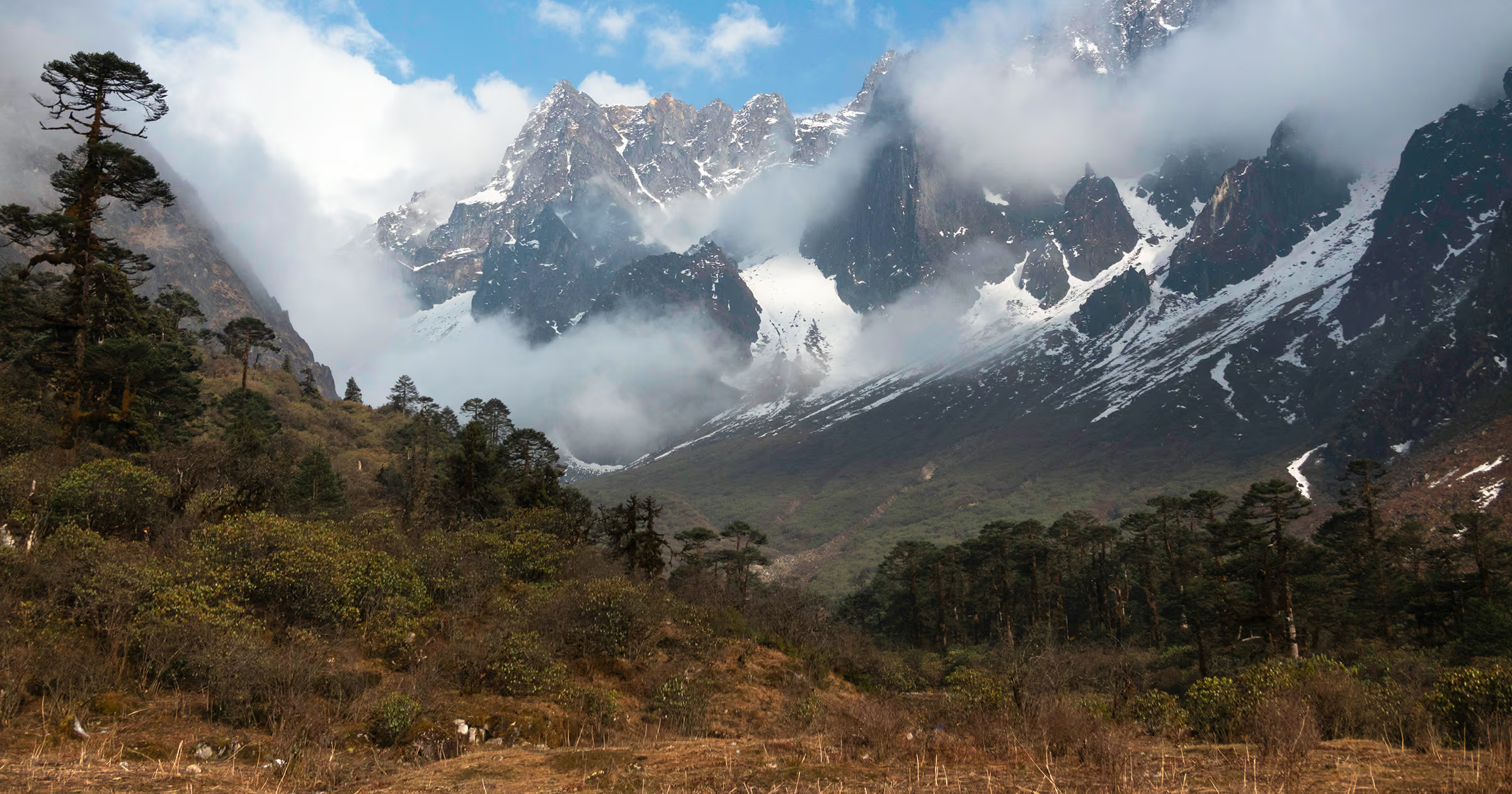
When exploring Kanchenjunga region for expedition or trekking, every aspect like from subtropical forests and alpine meadows to glaciers and high-altitude mountain deserts will make you pause and drown in the untouched beauty of the remote Himalayas. Those who enjoy solitude and want to witness the raw and untamed beauty of Kanchenjunga, then we suggest you book the Kanchenjunga Base Camp Trek in 2026.
When trekking inside the remote villages, dense rhododendron forests, alpine valleys, and glacier-fed landscapes of the Kanchenjunga region, you will get to witness rare and endangered species like:
- Snow Leopard,
- Red Panda,
- Himalayan Black Bear,
- Blue Sheep,
- Numerous species of pheasants and Himalayan birds.
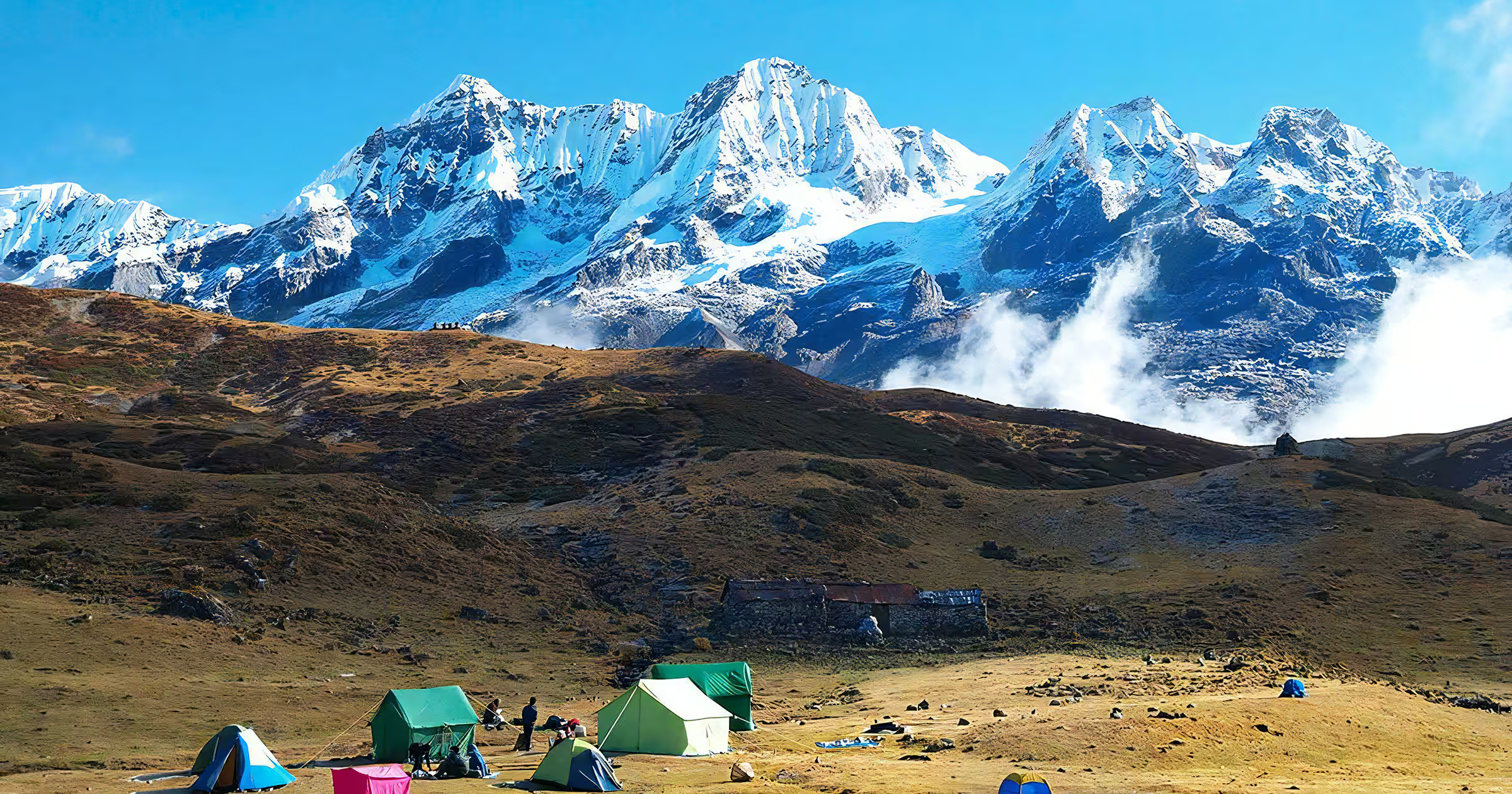
Furthermore, the two spectacular viewpoints of Kanchenjunga Base Camp trek are North Base Camp and South Base Camp which offers the best view of the North and South face of the deadliest 8000ers.
Conclusion
Mount Kanchenjunga is indeed far more than a towering peak but is a living symbol of the natural beauty of Nepal. Kanchenjunga has been offering a rare glimpse of the Himalayan world that remains largely untouched by modern tourism as of now.
No matter whether you are a traveler seeking solitude, wilderness or authentic mountain culture, Kanchenjunga, one of the sacred giants of Nepal, is standing as the extraordinary destination for you in 2026. From exploring remote trekking trails, getting deeper cultural immersion in teahouses and homestays, witnessing rare species of flora and fauna, Kanchenjunga offers a unique and raw journey.
While inspiring climbers and trekkers continuously with its sheer presence, the legacy of Kanchenjunga will remain as timeless as the mountain itself. If you want to have an experience which you do not want to be forgotten, then book a trip to the grand delights of the Kanchenjunga area with Awesome Holidays Nepal in 2026.
FAQs
Expand AllIs Kanchenjunga in India or Nepal?
Kanchenjunga is located on the boundary of India and Nepal.
What is the meaning of the name Kanchenjunga?
The name Kanchenjunga also known as “The Five Treasures of Snow” means its five prominent peaks and their symbolic treasures.
How high is Kanchenjunga compared to Everest?
Kanchenjunga stands at 8,586 meters (28,169 feet), but it is 262 meters shorter than Everest which has a height of 8,848.86 meters.
Why is Kanchenjunga called the "Five Treasures of Snow"?
Kanchenjunga is called the “Five Treasures of Snow” because its five peaks are believed to represent sacred treasures of gold, silver, gems, grain, and holy scriptures.
Is Kanchenjunga harder to climb than K2?
Both Kanchenjunga and K2 is harder to climb. Kanchenjunga’s route is physically grueling due to high risk of avalanche and collapsing seracs while K2 offer technical difficulty and climber have to face severe winds, extreme cold, and a high risk of avalanches on steep, exposed lines.
How many people have climbed Kanchenjunga?
According to the historical reports from the Himalayan Database, around 300 to 400 successful ascents is recorded for Kanchenjunga.
Can you see Kanchenjunga from Darjeeling?
Yes. Kanchenjunga is clearly visible from Darjeeling on clear days.
What is the best time to visit Kanchenjunga Base Camp?
The best time to visit Kanchenjunga Base Camp is during spring (March to May) and autumn (September to November). It offers favorable weather condition in comparison to other season.
Do you need a permit for the Kanchenjunga trek?
Yes. Trekkers need a Restricted Area Permit and a Kanchenjunga Conservation Area Permit to trek in the region.
Which state in India is Kanchenjunga located in?
Kanchenjunga is located in the Indian state of Sikkim and share border with Nepal.
What are the five peaks of Kanchenjunga?
Kanchenjunga Main, Kanchenjunga West (Yalung Kang), Kanchenjunga Central, Kanchenjunga South, and Kangbachen are the five peaks of Kanchenjunga.
Is Kanchenjunga a sacred mountain?
Yes. Kanchenjunga is considered a sacred mountain by local communities such as the Lepcha, Limbu, and Buddhist populations of the region.
How to reach Kanchenjunga from Kathmandu?
You can reach Kanchenjunga by taking a flight from Kathmandu to Bhadrapur airport and then a scenic drive to Taplejung district.
What is the Kanchenjunga death rate vs Everest?
Kanchenjunga has a death rate of 15% to 22%, whereas Everest generally has a lower fatality rate of roughly 1% to 4%.
How long does it take to trek to Kanchenjunga Base Camp?
It takes around 20 to 25 days to trek to Kanchenjunga Base Camp.
What is the temperature at Kanchenjunga summit?
The temperature at Kanchenjunga summit fluctuates from -15°C to -35°C (5°F to -31°F) and dropping to -40°C or lower with the wind chill.
Why is Kanchenjunga's summit never stepped on?
Kanchenjunga’s summit never stepped on out of respect for local religious beliefs.
What is the best view point for Kanchenjunga?
Pangpema, Oktang, Darjeeling’s Tiger Hill, are popular view point for Kanchenjunga.
Which national park is Kanchenjunga in?
Kanchenjunga is located within Khangchendzonga National Park of Sikkim while it falls within the Kanchenjunga Conservation Area of Nepal.
What animals are found in Kanchenjunga National Park?
Animals like Snow Leopard, Red Panda, Himalayan black bear, musk deer, blue sheep, and numerous Himalayan bird species are found in Kanchenjunga National Park.
Related blog posts
Discover a choice of tourist destinations loved by most of our visitors. Whether you're on a jungle safari to spot rare animals or walking through a world heritage site, these well-planned itineraries cover the major highlights of Nepal.
 call an expert at: