
Lokta Paper: Nepal’s Handmade Paper Craft and Where to Watch It Being Made (2026 Guide)
 Sristi Adhikari
Nepal is known for its Himalayan landscapes, ancient temples, colorful festivals, and rich traditions of craftsmanship. Among its lesser-known cultural treasures is Lokta paper, a traditional handmade paper produced from the inner bark of Himalayan shrubs.
This distinctive paper has played an important role in Nepal’s writing, documentation, artistic expression, and handicraft industries for generations. Unlike industrial paper manufactured from mechanized processes, traditional Lokta paper is produced through a series of hands-on techniques.
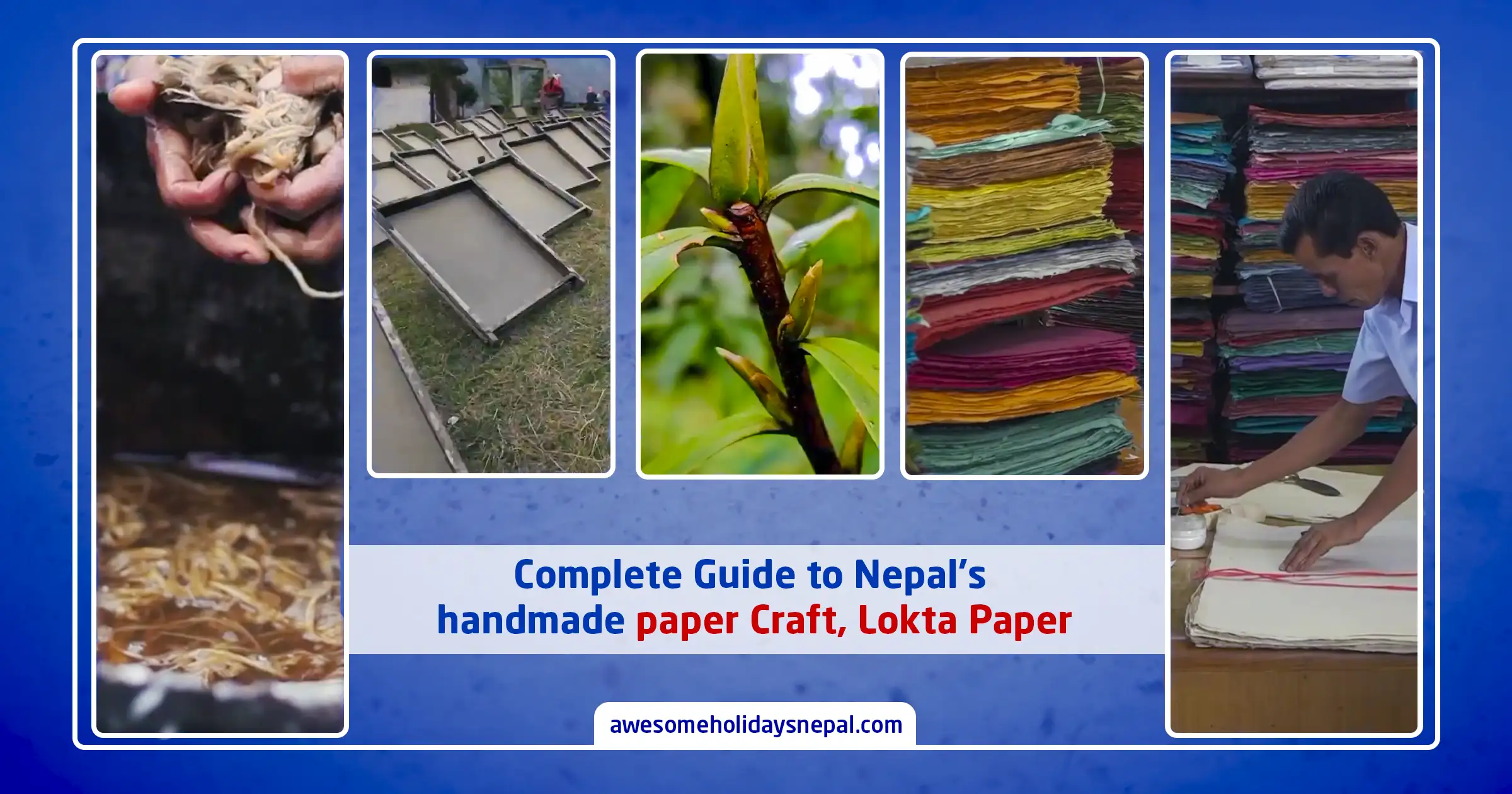
The process involves preparing plant fibers, creating pulp, spreading it across a framed screen, and drying the resulting sheets. Each stage contributes to the paper’s individual texture and handmade appearance.
For travelers visiting Nepal in 2026, discovering Lokta paper can be an opportunity to explore a different side of Nepali culture. Rather than simply purchasing a finished souvenir, visitors can learn about the natural materials, practical skills, and local livelihoods connected to this traditional craft.
Whether you are exploring Kathmandu Valley, shopping for locally made gifts, or planning a cultural excursion beyond the capital, continue reading our guide where will discuss about the history of Lokta paper, making process, and where you can find paper-making demonstrations and workshops in 2026.
What is Lokta Paper?
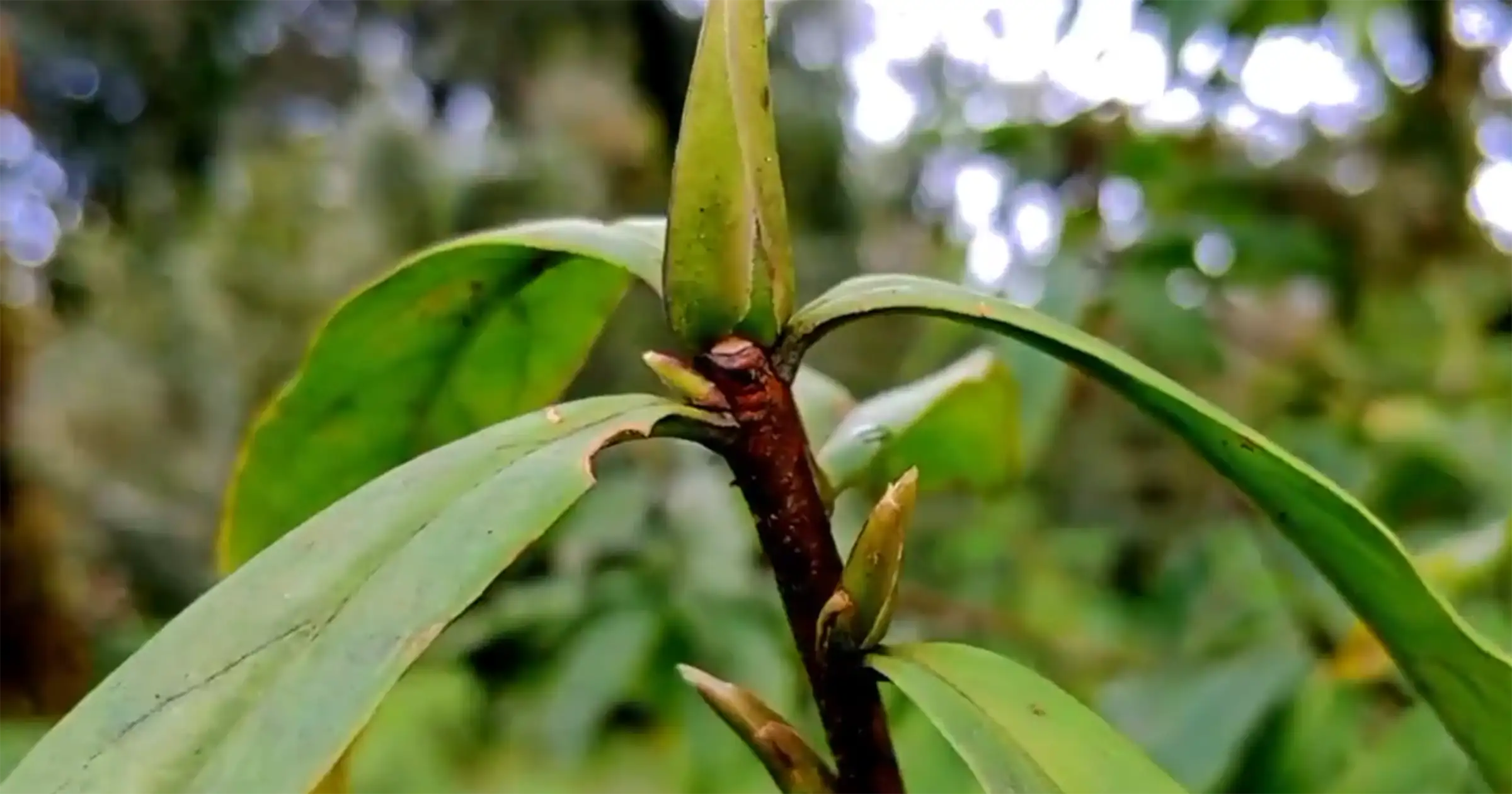
Lokta Paper is also known as Nepali Kagaj is a handmade paper made in Nepal from the inner bark of Lokta shrubs belonging to the Daphne genus. This is a wildcrafted, handmade paper made from two species Daphne bholua and Daphne papyracea.
The Lokta shrub is a flowering plant which consists of long, fibrous inner bark that can be processed into durable sheets of paper. What makes Lokta paper stand out from ordinary wood pulp paper is its:
- natural surface,
- visible fibers, and
- slightly irregular edges.
It ranges from smooth sheets to thicker paper which depends on the production and finishing process. Lokta paper (Nepali handmade paper) is naturally resistant to:
- Insects like paper crawlers
- Molds,
- Mildew,
- Tearing and
- Humidity.
The durable and resistant nature of Lokta (handmade) paper is used as official paper for keeping government records. The paper is also resistant to water, can exemplify ink from pen or print which is why we are able to read the oldest Nepali manuscript and sacred text written centuries ago.
Traditionally, Lokta paper were used for:
- Official and legal documents,
- land records,
- royal decress,
- Scared text, prayer books,
- backing material for Thangka painting,
- Wrapping valuable objects and books
- Trading goods,
- Interior lining of wooden chests and cabinet.
Today, the Lokta (handmade)paper is also being used by modifying it into wide range of products like:
- Notebooks, journals, and diaries
- Greeting cards and invitations
- Decorative paper and artwork
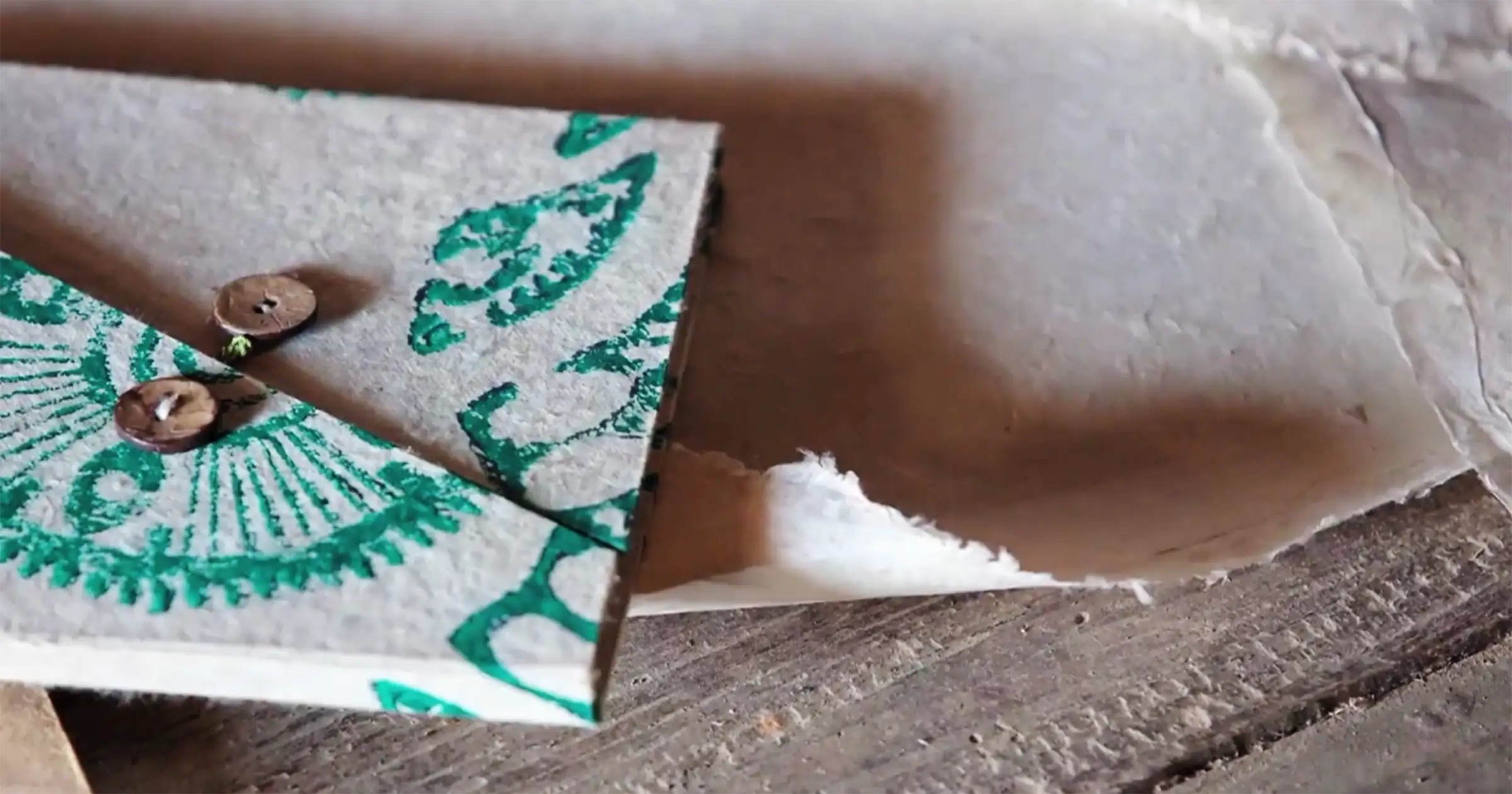
- Gift wrapping and envelopes
- Lampshades and decorative objects
- Handmade bags, folders, and stationery
- Specialty packaging and craft products
History of Nepali Handmade Paper in Nepal
One of the oldest surviving Lokta papers in Nepal is the Karanya Buha Sutra. It is a sacred Buddhist text which is believed to date back to the Lichhavi period, around more than a thousand years. Karanya Buha Sutra is preserved in Nepal national archives.
Nepalese handmade paper suddenly began declining when import of papercraft from Tibet began in the early 20th century. Also, people began replacing cheap papercraft imported from India in 1960.
Besides, few traditional families of Baglung and Parbat district, every single person started using cheap papercraft imported from nearby nations like Tibet and India. After a decade, Nepal started focusing on the Tourism industry which rejuvenated the production of Lokta paper in Nepal.
For the raw material for Lokta paper, national parks and wildlife reserves also began mass production of the Lokta Shrub. As a result, agro-based industries started growing in Nepal.
In the 1980s, the Agricultural Development Bank of Nepal (ADBN) and the Small Farmer Development Program (SFDP) initiated the Community Development and Health Project (CDHP) project together. Later, the project also got help from United Nations Children’s Fund (UNICEF) which revived the almost dying phase of Nepali handmade paper production.
Likewise, the focus on the handmade paper industry by international, national and environmental activists has made it successfully grow at around 15% annually. As of now, more than 22 districts of Nepal have been contributing to Lokta (handmade)paper production.
Lokta Paper Making Process in Nepal
The Lokta paper making is a forest based industry which transforms a Daphne bark into a finished sheet through several distinct stages. Lokta paper or Nepali handmade paper follow a traditional manufacturing process to produce the end products.
Harvesting the Lokta Shrubs
Lokta Shrub grows naturally in the Himalayan and middle-hill regions. At first, harvesters cut the stem of the Lokta plant carefully.
Separating and Preparing the Bark
Then, they carefully remove the stem and wash them until the dark spots get cleared. Only inner white bark is needed as it contains the fiber that is used to make the handmade paper.
Soaking and Boiling the Fibers
The prepared bark is soaked and cooked in boiling water to soften the material. It is immediately rinsed in cold water as this process helps in removal of the organic matter.
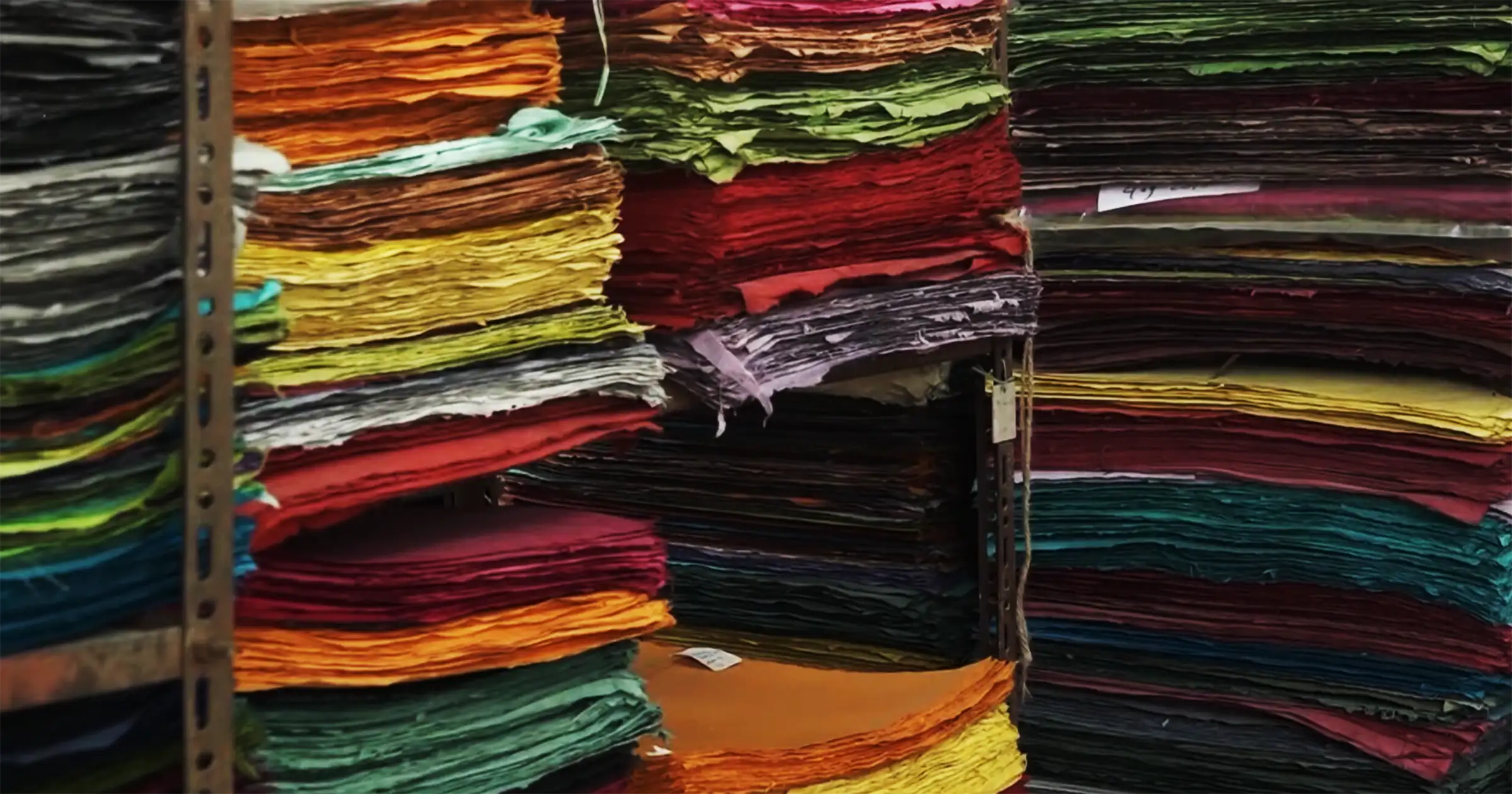
The amount of dedication and care invested in this process results in clean and high-quality Nepali handmade paper. The softened fibers are then washed and subjected for pulping.
Beating the Material into Pulp
The softened fibers of Lokta stem are then beaten using wooden hammers until they break down into a gooey and sticky paste. The consistency of sticky paste influences the appearance, thickness, strength and texture of the finished paper.
Forming the Paper Sheets
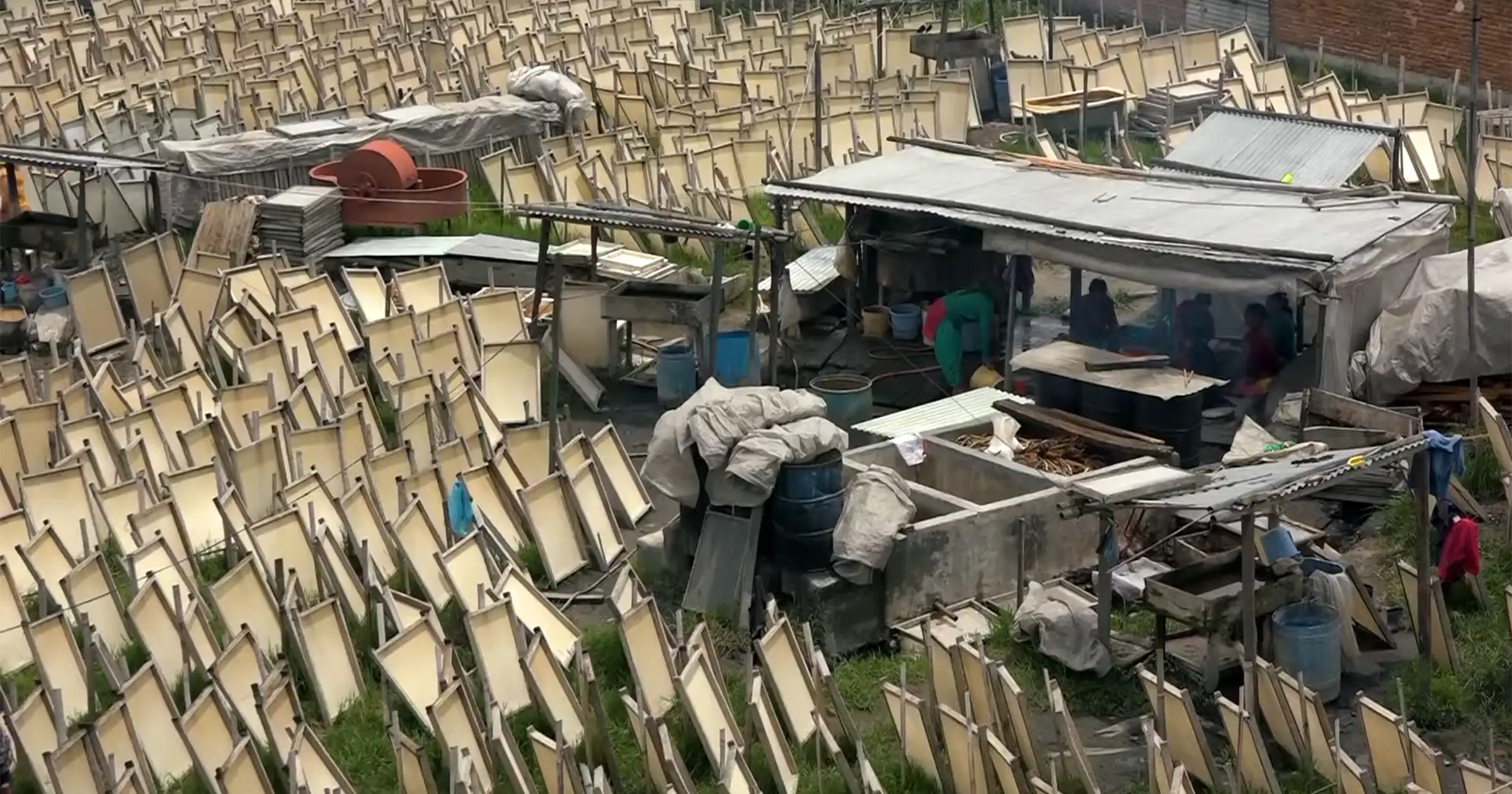
The prepared pulp is then mixed with water and spread across a framed mesh or screen. The frame is moved or gently shaken to distribute the fibers evenly. As water drains through the screen, the fibers remain behind and begin forming a sheet.
Drying the Paper
Finally, the frame plates are exposed to the sun for drying. When moisture completely gets removed, the fibers settle into a more stable sheet. The paper is carefully removed from the frame and then stored in a safe place.
Finishing and Creating Handicrafts
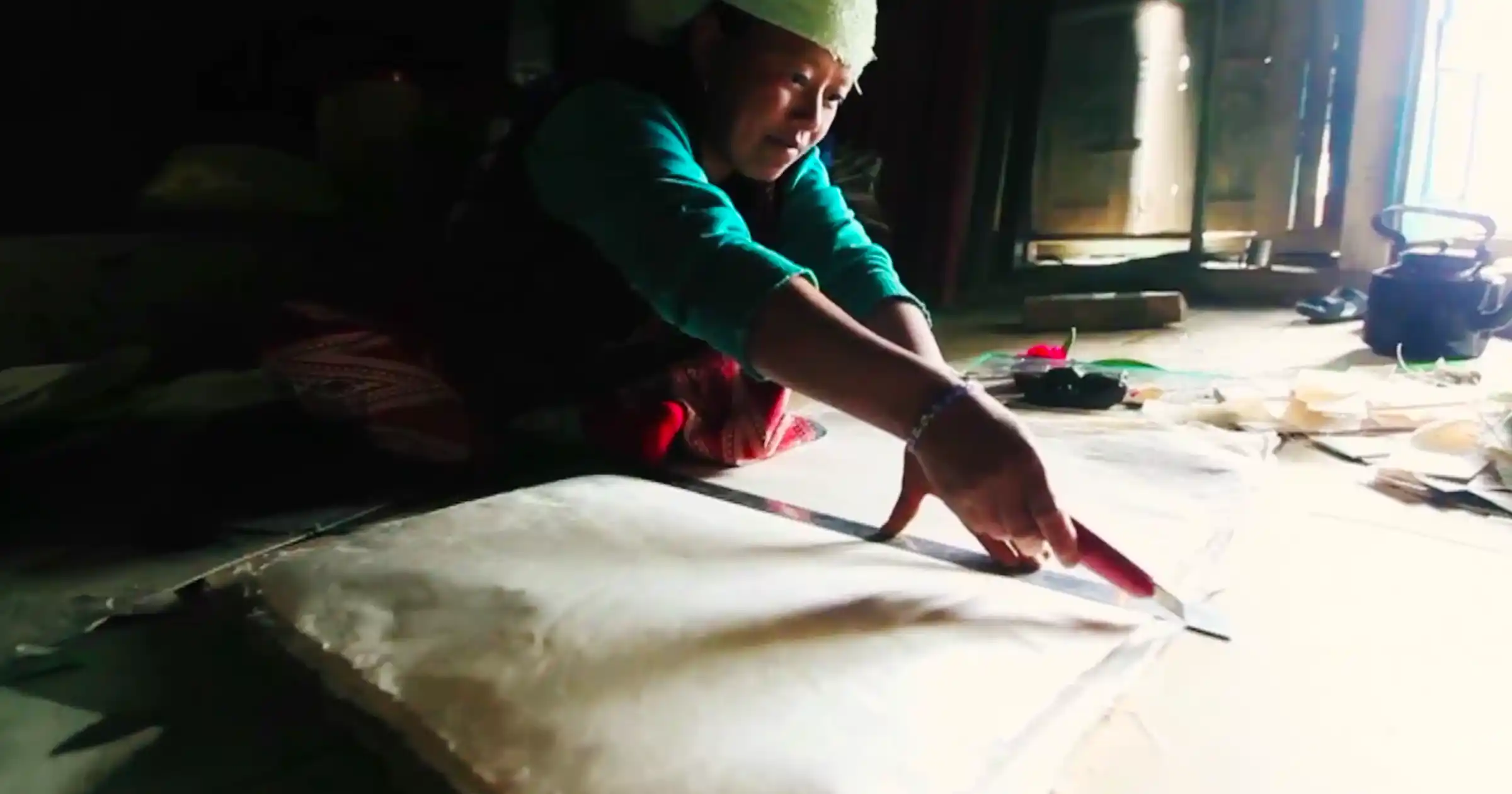
The finished dried paper sheets are then used for drawing, writing or making other products such as notebooks, envelopes, greeting cards, gift bags, and decorative objects.
Where to Watch Lokta Paper Being Made in Nepal?
During your Nepal visit, you can include watching or participating in Lokta(handmade) paper being made. Here are some places which allow you to experience how traditional Nepali paper craft are being made in real time.
Kathmandu Valley
Kathmandu has been serving as an important point for processing, printing, finishing, and selling eco-friendly handmade Nepali paper and its products. There are numerous shops and handicraft businesses that specialize in:
- Handmade stationery,
- Paper gifts, and
- Traditional Nepali products.
In Kathmandu, you should visit the following companies to watch how Lokta paper is being made.
- Nepali Paper Products
- Creative Women’s Creation
- Lokta Paper Craft
You need to first make enquiries and ask whether the location is an active paper-making facility or just a retail shop. If the production process is done in another place, simply ask them when you can visit there.
Lalitpur
Lalitpur is known for its artistic traditions, metalwork, woodcarving, and other forms of Nepali craftsmanship. If you want to know more about how traditional materials are used in contemporary design you should visit Lalitpur as the area offers a broader handicraft focused visit.
Planning to Watch Lokta Paper Making in Nepal in 2027?
Or Call/Message on WhatsApp +977 98434 13619
Here are some location which allow you to witness Lokta (handmade)paper making process:
- Manushi Nepal (Paper Craft Division)
- Lokta Paper Craft,
- Tibetan Handicraft & Paper Pvt. Ltd. (THP).
You should also confirm whether a business offers a hands-on paper-making activity or a guided explanation, or simply a retail experience before you visit.
Rural Areas
If you have enough time and want to make your visit farther you should visit hilly districts like Baglung, Ramechhap, and Ghandruk. Here, you get to witness the whole process of Lokta paper making from harvesting to end products.
How to Arrange a Genuine Handmade Paper-Making Visit
If you want to watch the whole production of Nepali handmade paper, you should contact the workshop for a Nepal paper making tour. Tour and trekking companies like Awesome Holidays Nepal also help you choose the best destination for paper making tours depending on your travel style.
If you want to arrange by yourself, make sure you follow these checklist:
- First search for the site that produces or processes Lokta (handmade) paper regularly depending on your preferred destination.
- Ask which stages of production visitors can observe or participate in.
- Then, check the address, opening hours, travel time, and appointment requirements.
- Ask whether a demonstration fee or minimum group size applies.
- Confirm whether they allow you to do photography and hands-on participation.
- Ask whether the workshop can offer you a guide for translation and schedule your visit.
- Before arriving in Nepal, make sure you again confirm your booking.
Travelers should not assume that they can arrive at any time and watch or participate in the whole process without advance booking.
Final Verdict: Experience Nepal Through the Art of Lokta Paper
Lokta paper is more than just a traditional Nepali craft but it is a symbol of Nepal’s rich cultural heritage, creativity, and sustainable way of life. This Nepalese paper is eco-friendly paper which is made from the natural bark of the Lokta plant using traditional techniques.
It also reflects the skill and dedication of local artisans thriving in rural areas of Nepal. Those who are into craftsmanship, watching the whole paper making process offers you a unique opportunity to experience living traditions of Nepal.
Travelers can support local paper-making communities by planning a paper making tour and buying Lokta(handmade) paper products. This small effort will help sustain local livelihoods, protect cultural heritage, and encourage environmentally responsible practices.
No matter whether you are a cultural explorer, a nature lover, or a curious traveler, discovering how Lokta paper is made will help you have one of the most meaningful and memorable experiences of any journey through Nepal in 2026.
FAQs
Expand AllWhat is Lokta paper?
Lokta (handmade) Paper, also known as Nepali Kagaj is a handmade paper made in Nepal from the inner bark of Lokta shrubs belonging to the Daphne genus.
What is Lokta paper made from?
Lokta (handmade) paper is made from the bark of two species Daphne bholua and Daphne papyracea.
How is Lokta paper made?
Lokta (handmade) paper is made by harvesting Lokta bark, boiling and pulping it, spreading the pulp over a mesh frame, and drying it in the sun.
Where is Lokta paper made in Nepal?
Lokta paper is made in rural, high-altitude mountain regions where the Daphne shrub grows such as Baglung, Parbat, and Dolakha. It is also made in more than 22 districts of Nepal including Kathmandu.
Why is Lokta paper so durable?
The long natural plant fibers create a strong, resilient texture that withstands regular handling and making it durable.
Is Lokta paper eco-friendly?
Yes. Lokta (Nepali kagaj / Nepali paper) is eco-friendly.
Is Lokta paper the same as rice paper?
No. Lokta paper is made from the bark of the Lokta plant, while rice paper is made from rice straw or other plant fibers.
What is the Lokta plant / Daphne shrub?
The Lokta plant is a wild Himalayan shrub that belongs to the Daphne genus. It’s inner bark is traditionally used to produce handmade paper.
How long does Lokta paper last?
Lokta paper can last over thousands of years.
What is Lokta paper used for?
Lokta paper is used for traditional documents, notebooks, journals, gift wrapping, handicrafts, lampshades, and decorative products.
Where can I watch Lokta paper being made in Kathmandu?
You can watch Lokta paper being made in Kathmandu at Kapan & Jorpati Area, Tibetan Handicraft & Paper Pvt. Ltd., Community Homestay Network / Traditional Workshops, Bhaktapur / Peacock Shop Area.
Is there a Lokta paper making workshop in Kathmandu?
Yes. Tibetan Handicraft & Paper Pvt. Ltd., Community Homestay Network / Traditional Workshops, Bhaktapur / Peacock Shop Area are some of the places where you can participate in Lokta paper making workshop.
How much does a Lokta paper workshop cost in Nepal?
A Lokta paper-making workshop costs between $20 and $55 per person in Nepal.
Is Lokta paper acid-free?
Yes. Traditionally made Lokta paper is naturally acid-free.
What is Nepali Kagaj?
Nepali Kagaj is the traditional handmade paper of Nepal, commonly produced from Lokta bark. It is used for writing, crafts, and official or cultural documents.
At what altitude does the Lokta plant grow?
Lokta plants generally grow in Himalayan mid-hills and mountain forests at elevations from 1,600 to 4,000 meters.
What products are made from Lokta paper?
Products like notebooks, diaries, greeting cards, lampshades, photo albums, envelopes, gift bags, and various handmade decorative items are made from Lokta paper.
How old is the Lokta paper tradition?
The tradition of Lokta paper is over thousand to two thousand year old.
Who makes Lokta paper today?
Lokta paper is made today by skilled artisans, local families, and small-scale producers in Nepal’s hill and mountain communities.
Is Lokta paper waterproof / water resistant?
Yes. Lokta paper is waterproof or water resistant.
Related blog posts
Discover a choice of tourist destinations loved by most of our visitors. Whether you're on a jungle safari to spot rare animals or walking through a world heritage site, these well-planned itineraries cover the major highlights of Nepal.

 call an expert at: