
Boudhanath Kora: How to Walk the Stupa Like a Local (Direction, Timing, Butter Lamps)
 Sristi Adhikari
Have you ever wondered what it feels like to walk around one of Nepal’s most sacred Buddhist stupas, surrounded by the gentle hum of prayers, the scent of incense, and the warm glow of butter lamps?
Boudhanath Kora is more than just a walk around the magnificent Boudhanath Stupa in Kathmandu—it’s a meaningful spiritual ritual that brings together locals, monks, pilgrims, and curious travelers. Whether you’re visiting for the first time or hoping to experience the stupa like a local, knowing which direction to walk, the best time to visit, and how to light butter lamps can make your experience even more special.
Ready to discover how to join this timeless tradition respectfully and make every step count? Then continue reading our blog.
Boudhanath Stupa Facts
- Local name: Boudhanath or Boudhanath
- Official name: Khasti Chaitya or Boudha Mahachaitya, Khsa Chaitya and Jharung Khashor
- Location: 7 km east of Central Kathmandu
- Type: UNESCO World Heritage site
- Height: 36 meters approximately
- Visiting Hours: 5:00 AM to 7:00 PM
What is Boudhanath Kora?
The traditional practice of circumambulating around the Boudhanath Stupa is called Boudhanath Kora. In Tibetan Buddhism “Kora” means circumambulation that is walking clockwise around a sacred or religious site like a stupa, temple, or monastery.
This practice is usually done while focusing on mantras which symbolizes:
- expression of faith,
- a form of moving meditation,
- or a way to dedicate positive intentions to oneself and others.
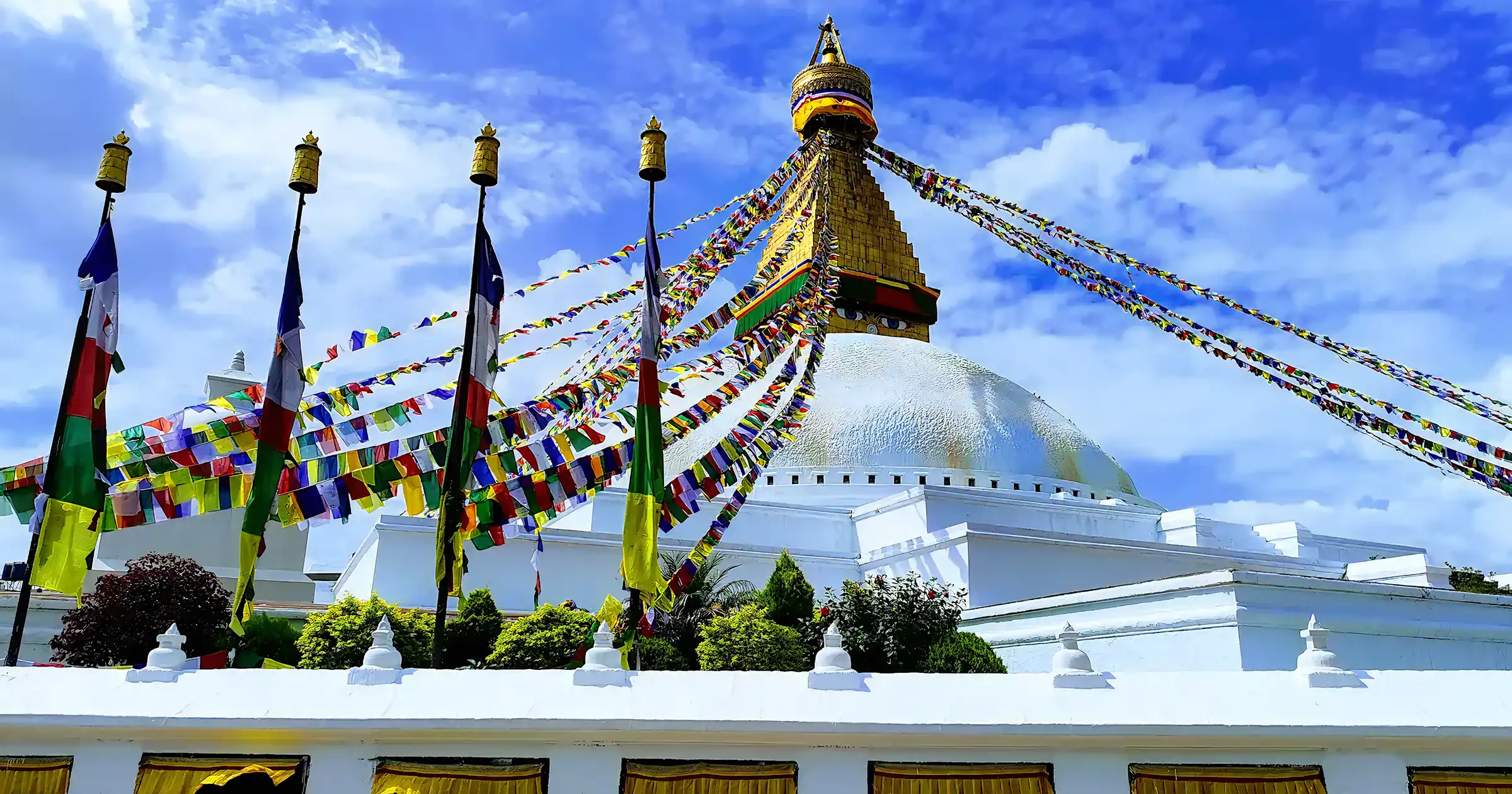
Boudhanath Kora is not limited to religious festival or special ceremonies but it is the daily spiritual routines of:
- Local residents,
- Tibetan Buddhist practitioners,
- Monks, nuns, and pilgrims etc.
Every step taken during kora is a part of prayers and each round symbolizes the offering. You don’t need to be Buddhist or follow Buddhism to do the kora.
Everyone can do the sacred circumambulation around stupas when visiting the Boudhanath stupa. As Kora is a moving meditation and it is believed that doing so will help:
- Purification of negative karma,
- accumulate merit, and
- refresh and calm the mind.
Correct Walking Direction Around Boudhanath Stupa
When visiting Boudhanath stupa, you might have wondered which direction you should do the circumambulation or Kora. As a traveler, you should always remember to walk clockwise around the Boudhanath Stupa, that is by keeping the stupa on your right.
In Tibetan Buddhism cosmology, walking clockwise around Boudhanath stupa imitates the natural movement of the sun and the turning of the dharma wheel. It also aligns the walking pilgrims’ action with the Buddha’s teachings and compassion.
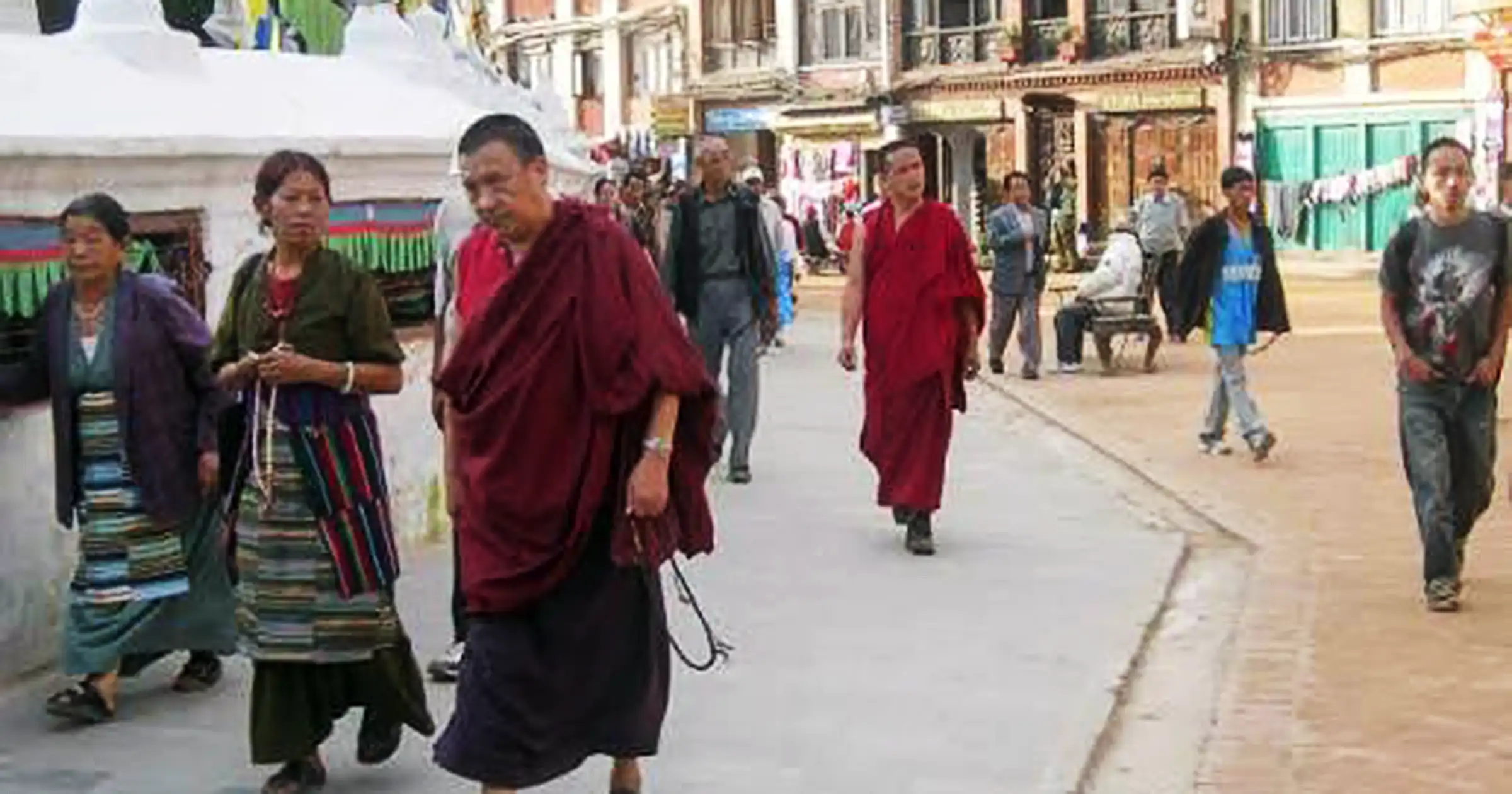
Visitors from different nations, monks, old aged people with prayer beads, and locals move around the stupa in the clockwise direction. Walking clockwise around the stupa is very important as it is a customary form of showing respect at Buddhist sacred sites like Boudhanath stupa.
How to Practice a Traditional Kora at Boudhanath Stupa
Boudhanath stupa is one of the best places to visit in Kathmandu. Doing Boudhanath kora is best during early morning as you will get to witness monks walking in a maroon-robe, the smell of burning incense and distant sound of chanting.
Here are some tips to make your Boudhanath Kora more memorable in 2027:
Step 1: Find the Walking Path
First enter inside the Stupa from any of the entry gates. Then, join the circumambulation path and keep walking in a clockwise direction.
Make sure you always follow the flow of pilgrims instead of crossing through groups who are already doing the praying.
Step 2: Keep the Stupa on Your Right
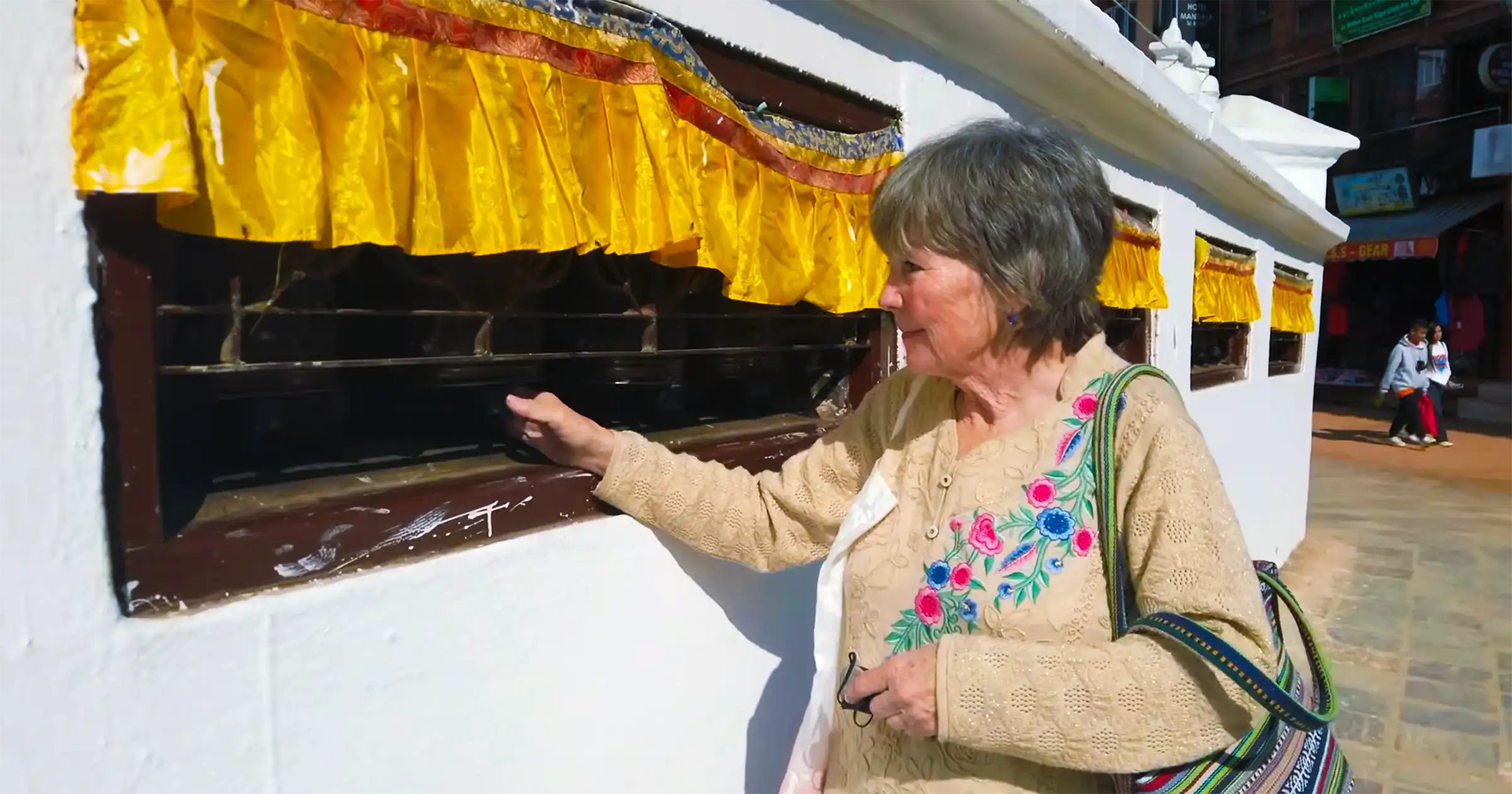
Walk clockwise around the stupa and rotate the prayer wheels in the same direction. Travelers need to avoid walking against the direction followed by other devotees.
Step 3: Walk at a Comfortable Pace
There is no need to hurry and you need to walk naturally at a normal pace. Always give way to elderly pilgrims, families, and people who may stop to pray.
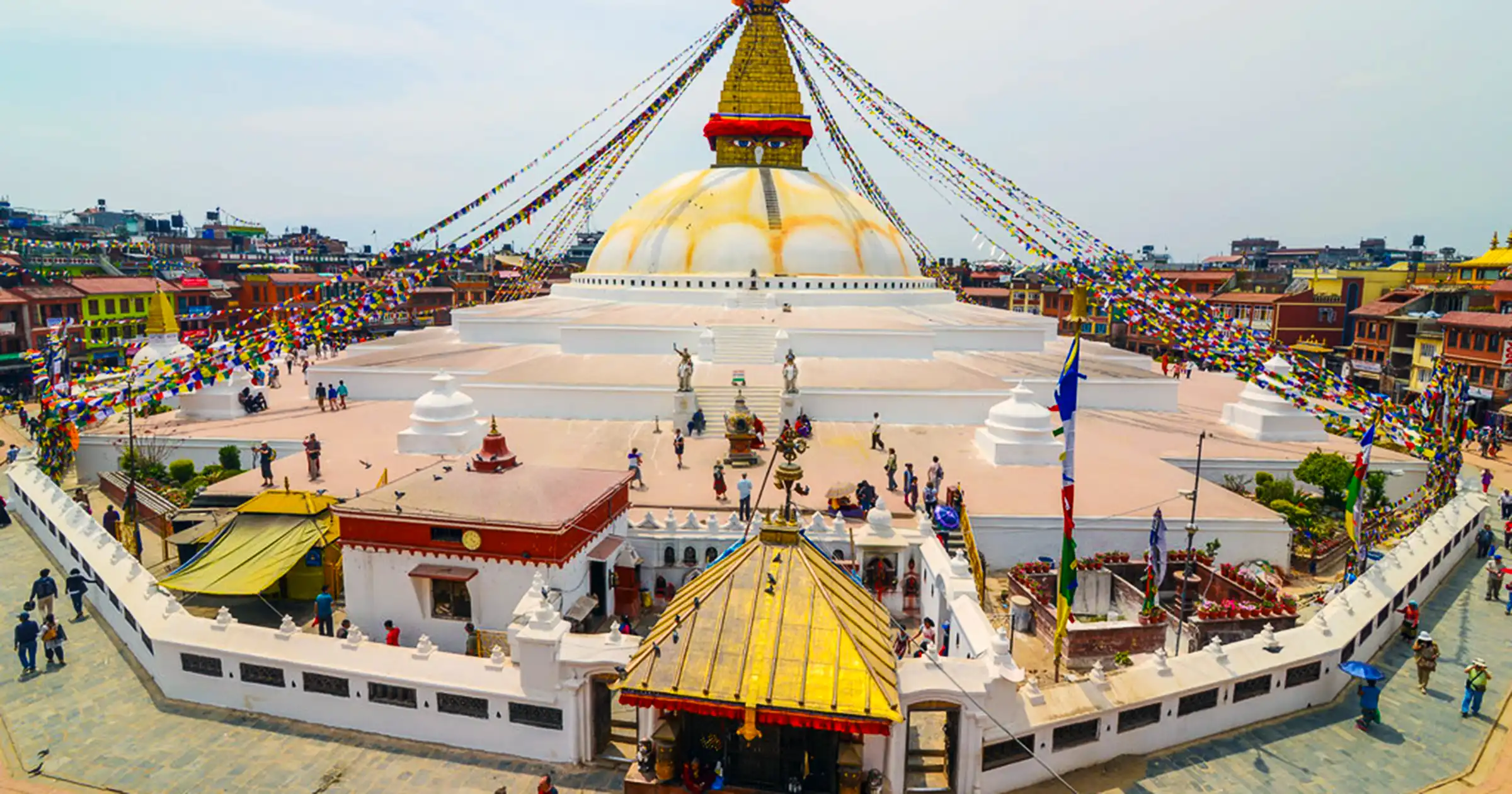
Depending upon your visiting time, you can do the Boudhanath kora in either one, three, seven or more other rounds. You can witness locals doing the Kora humming the mantra “Om Mani Padme Hum”.
Step 4: Turn the Prayer Wheels Gently
Prayer wheels are embedded in the wall of the stupas, you should rotate them gently as you pass. Follow the direction of their movement and avoid forcing or spinning them aggressively.
Step 5: Complete your Circuit Mindfully
You can walk one round or continue for several rounds if you wish. There is no need to imitate every religious practice you observe but if you want to light a butter lamp or do the donation, pause for a moment and continue the process.
A respectful, unhurried walk is a meaningful way to experience the place.
Best Time of the Day for Boudhanath Kora
Boudhanath stupa opens from 5:00 AM to 9:00 PM daily. The Boudhanath atmosphere fluctuates throughout the day.
It offers a quiet and calming atmosphere early in the morning which transforms into lively and busiest in the evening.
Early Morning: A Peaceful Start
Early morning is the best time of the day for Boudhanath kora as the calm and clean environment offers you a peaceful and relaxed sense of devotion.
The gentle light and fewer crowds make you capture one of the best photos and videos of the Boudhanath stupa. When doing Boudhanath kora in the morning, you will also get to witness street vendors opening their shops, different aged pilgrims and locals performing their religious ceremonies or rituals.
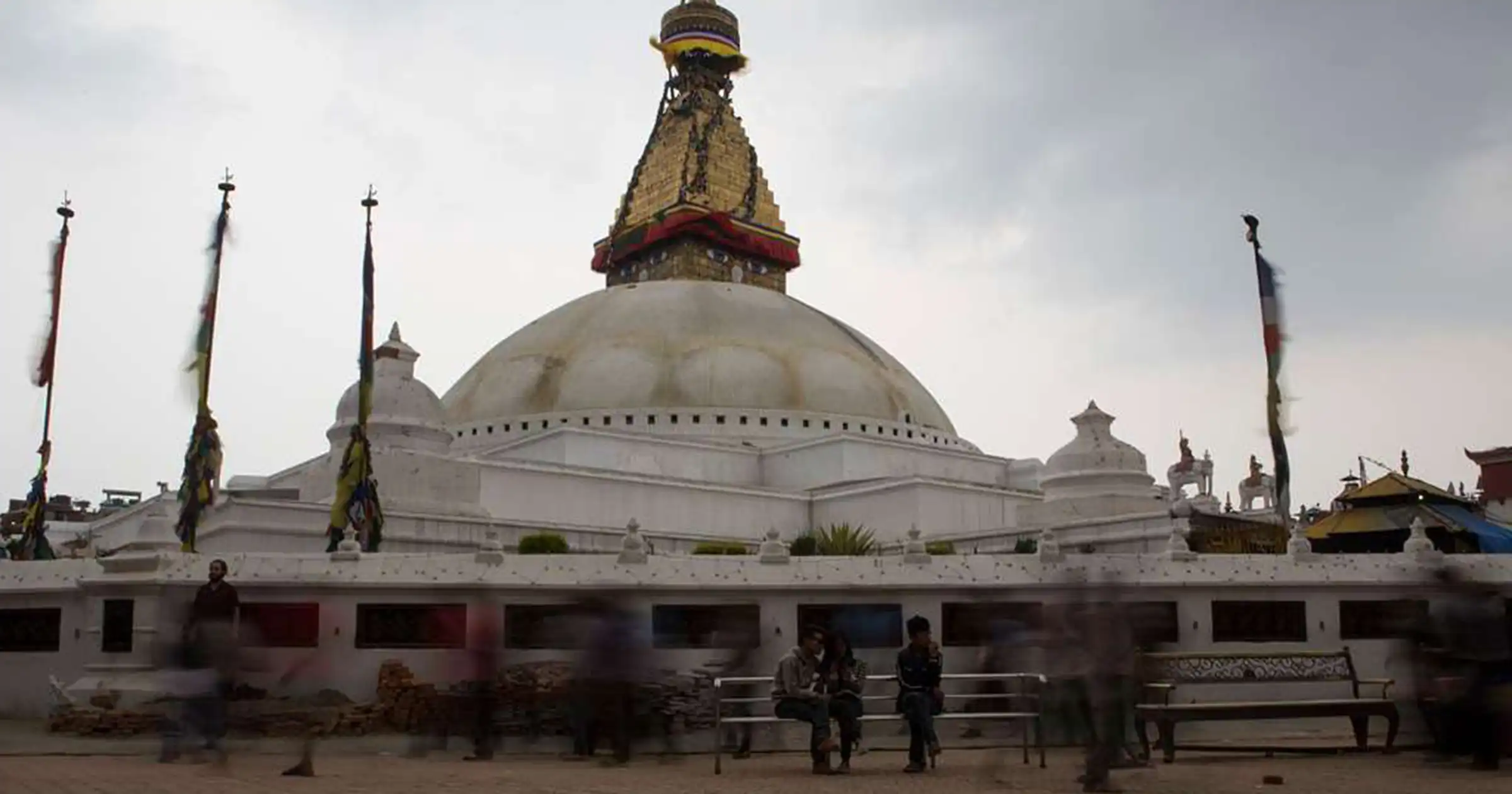
We suggest you to reach Boudhanath in morning for kora if you want:
- fewer sightseeing crowds.
- observe Buddhist practices and rituals.
- capture white dome and golden details of the stupa in softer natural light.
- quiet, reflective walk.
Late Afternoon and Evening: The Most Atmospheric Experience
In contrast, evening becomes ideal for those who are more social and in search of a deeper cultural observation. We suggest you to visit Boudhanath from 4:30 PM to 7:00 PM to witness a lively and vibrant atmosphere of the stupa.
The timing is perfect as the sun begins to set which offers golden light. As the golden light touches the white dome and gilded spire of Boudhanath Stupa, the entire monument glows with a quiet, almost otherworldly beauty, inviting you to slow down, join the gentle rhythm of the Boudhanath kora, and experience the spiritual heart of Kathmandu one mindful step at a time.
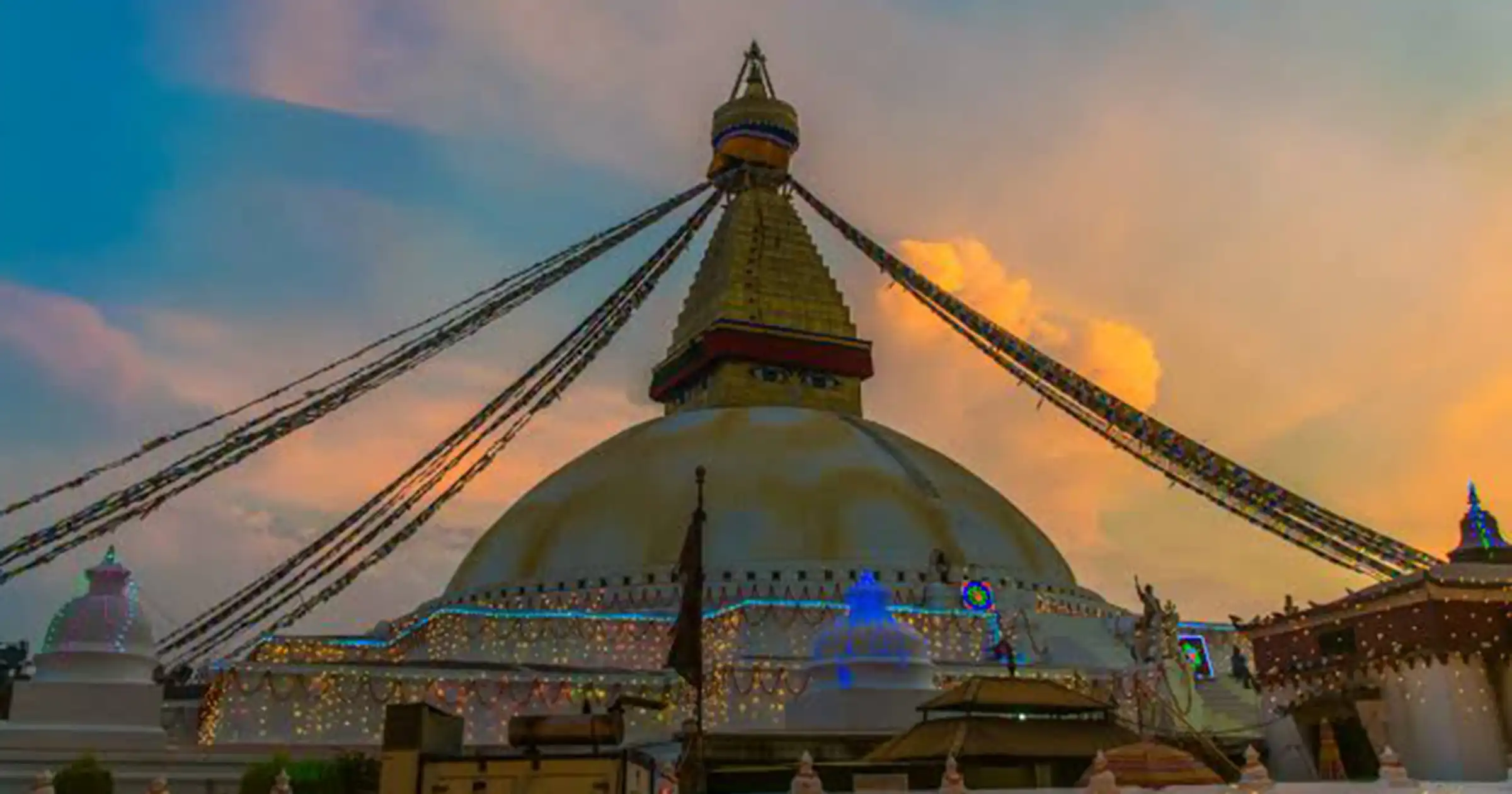
You can also light the butter lamp at one of the oldest Guru Padmasambhava temples in the world, Ajima Temple. Here, locals also offer sacrifices to receive spiritual merit.
Evening visit to Boudhanath combine Kora with a traditional cultural experience, a meal, or a relaxed visit to the surrounding neighborhood.
Midday: Convenient for Sightseeing
If you have a busy itinerary, you can also visit the stupa in midday for Boudhanath kora. This time of the day offers scorchy sun which may make you feel warmer and the spiritual atmosphere is less in comparison to dusk or dawn.
Butter Lamps at Boudhanath: Meaning and How to Offer One
Offering of butter lamps is one of the oldest practices that is being continued in Boudhanath stupa. Butter lamps also known as “Marme” in Tibetan Buddhism are traditionally made with yak butter. Now, ghee or oil is used.
It is often lit or offered in odd numbers (1, 3, 5, 7) which is one of the auspicious traditions of Tibetan Buddhism. These odd numbers symbolize the integrity of body, speech, and mind.
Offering a butter lamp is a symbolic gesture of devotion and it also serves as:
- a reminder of clarity,
- compassion, and
- spiritual understanding.
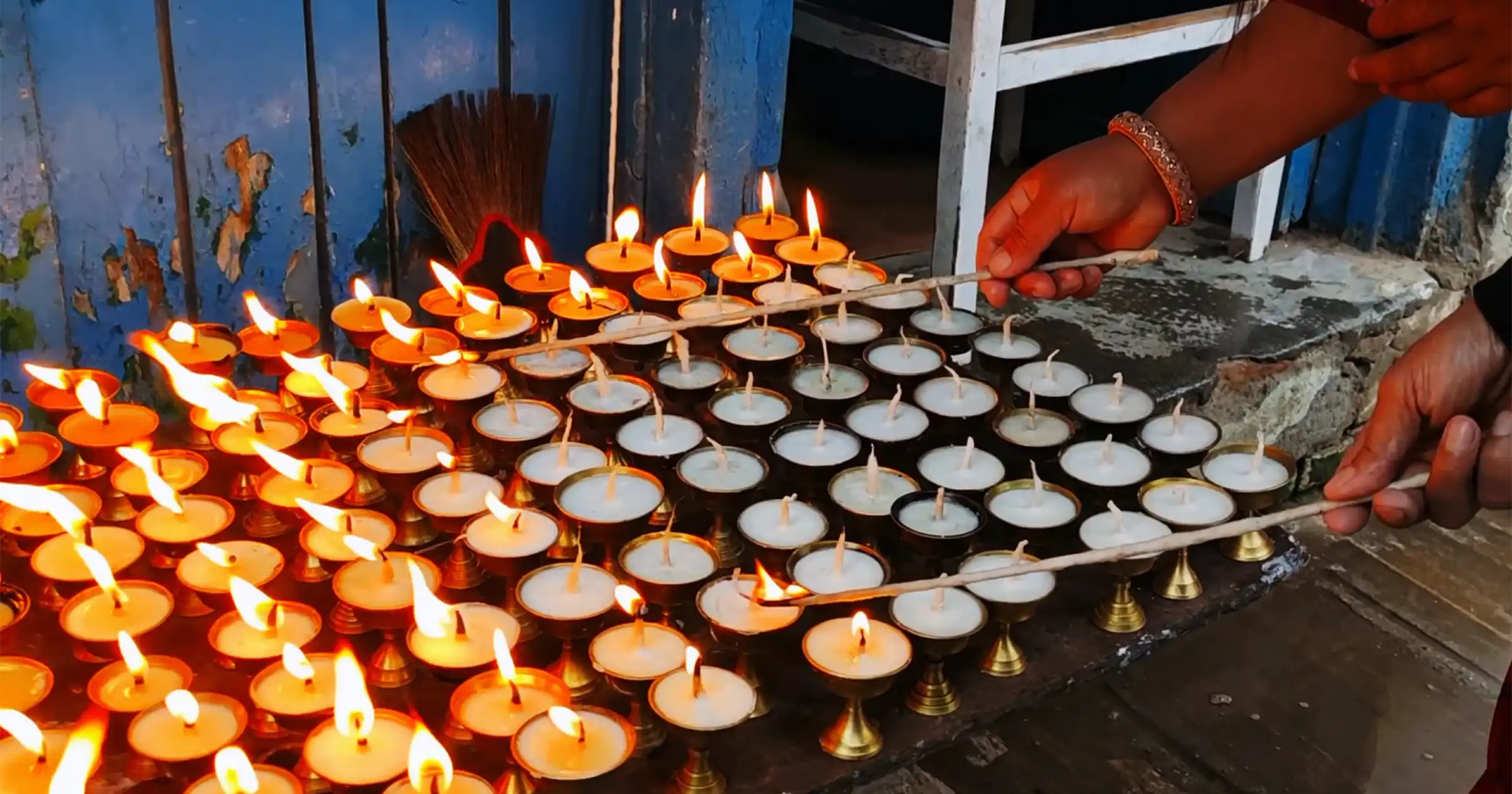
And, it is also connected with the aspiration to cultivate:
- wisdom,
- dispel ignorance, and
- dedicate positive intentions to others.
Lighting butter lamps in Boudhanath stupas will help you accumulate merit and people even offer 108 butter lamps at once as a meaningful act of devotion, praying for the wellbeing of the family and spiritual awakening. It is also lit to honor the good time spent with passed ones and well-being in the afterlife.
How to Make a Butter Lamp Offering at Boudhanath Stupa
When doing Boudhanath kora, you will see different areas where butter lamps are offered. Lighting butter lamps symbolizes the dispel of darkness and ignorance and represents the light of wisdom.
Everyday more than thousands of butter lamps are lit in the Boudhanath stupa and each single oil lamp ranges from NPR 15 to 15000. You can buy the butter lamps in front of the Boudha stupa, shrine rooms, lam house in front of the white dome, and in dedicated alcoves.
After purchasing a lamp, you will place the lamp in designated burning areas and light it while praying. You can ask about your friends or guides to capture this rare and spiritual moment.
Finally, you will give space to other and leave the butter lamp burning areas respectfully.
Kora Ritual Buddhism: Understanding the Spiritual Practice
In Buddhism, kora is not only a physical walk around the sacred and religious sites. It is a combination of movement, concentration, prayer, and an intention to cultivate positive qualities.
The practice of Kora at Boudhanath showcases how much importance it holds in the local community and its connection with religious devotion. During Boudhanath kora you will notice several spiritual elements that help you understand Buddhism, its culture and ritual.
Prayer Wheels
Traditionally prayer wheels are connected with Tibetan Buddhist practice which contains Buddhist prayers or mantras like “Om Mane Padme Hum” inscribed in it. Rotating the prayer wheels is a devotional act which symbolizes the spread of Budhha’s teaching.
It is believed that a complete rotation sends the prayers and blessing out in the universe and is equal to reciting the inner texts aloud. It is rotated in a clockwise direction and doing so is believed to help:
- build positive energy (merit),
- calm the mind,
- develop compassion, and
- clear negative karma.
- Prayer Beads and Mantras
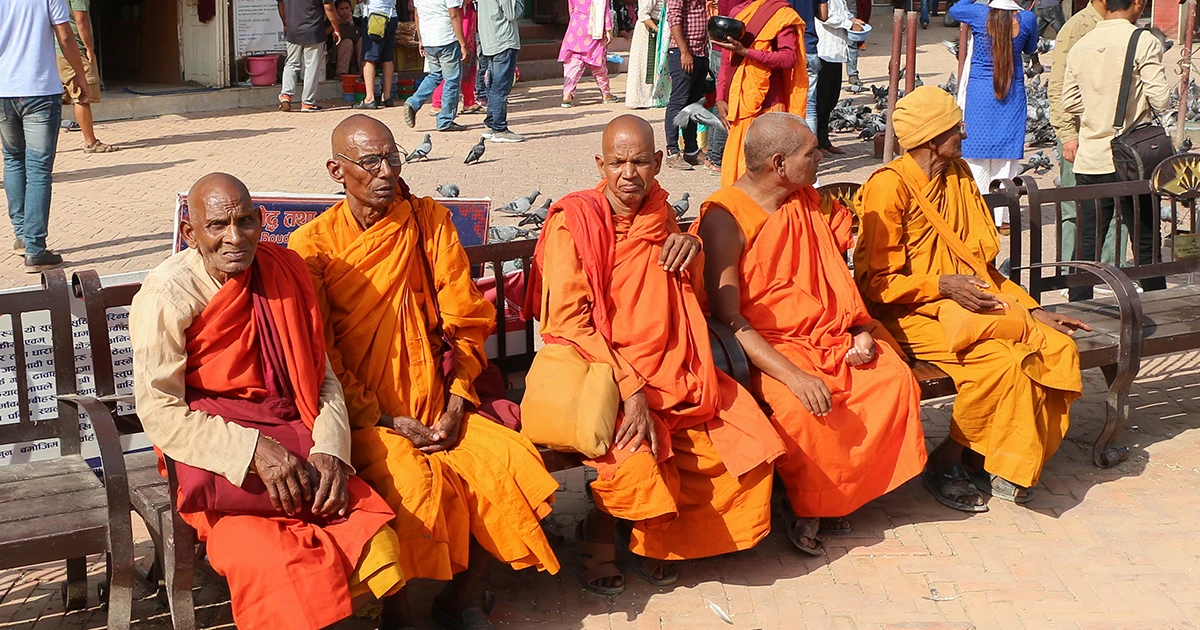
When doing Boudhanath kora you may witness devotees or old aged locals carrying a mala. The mala is a string of prayer beads which is used to count the recitation or support meditation.
You may hear the mantra Om Mani Padme Hum, which is closely associated with Avalokiteshvara, the bodhisattva of compassion in Mahayana Buddhist traditions. As a visitor, you can simply observe them respectfully from far away.
Prostrations and Devotional Gestures
You will also witness some devotee or local performing full-body prostrations or pause to pray at particular points. You should avoid stepping in their path and should observe them respectfully without making them uncomfortable.
Walking as Moving Meditation
Some devotees do multiple rounds of Boudhanath kora, depending upon your schedule you can also practice this moving meditation. Doing so will help you become calm and relaxed.
Boudhanath Kora Etiquette: How to Walk Respectfully
Visitors need to know following measure to make your Boudhanath Kora more respectful in 2027:
- Always wear comfortable clothing that covers your shoulders and knees.
- Maintain a low voice when talking on the phone or with friends.
- Always ask for permission before capturing ritual, ceremonies or other people.
- Visitors should strictly follow the clockwise direction when doing kora.
- Do not touch or click picture of monks when encountered in the stupas surrounding.
- Give space when you encounter devotees doing prostration of other spiritual practices.
- If you are alone, watch how kora practice works and follow the locals or simply ask them.
- Make sure you hire an experienced and certified guide for deeper cultural immersion.
- Always walk slowly, and respect the ritual and practice.
Final Thoughts
Boudhanath is one of the most important Buddhist landmark located inside Kathmandu valley. Doing kora or circumambulation around Boudhanath stupa is a meaningful way to experience the core of Tibetan Buddhism and spirituality.
As Boudhanath is always included in Kathmandu sightseeing tour and you should not miss clockwise walking route, turning prayer wheels, quiet prayers, and butter lamp offerings during a quick stop. Depending upon your itinerary, Boudhanath stupa demands around 1 to 1.5 hours to experience all of its ritual and practice from kora to butter lamps lighting in the early morning and evening hours.
You do not need to be a Buddhist or know every ritual to appreciate Boudhanath. What matters is taking the time to observe, respecting the people who come to worship, and approaching the experience with an open mind. When exploring the Best places to visit in Kathmandu, make sure you include Boudhanath Stupa in your itinerary and make room for a thoughtful walk around its sacred grounds.
Sometimes, the most memorable travel experiences are not the ones that take you farthest. They are the ones that invite you to slow down, pay attention, and understand a place a little better.
Finally, always remember to contact Awesome Holidays Nepal to have one of the meaningful cultural encounters and unforgettable Himalayan adventures in 2027.
FAQs
Expand AllWhat is the correct direction for Boudhanath Kora?
The correct direction for Boudhanath Kora is clockwise. Visitors should keep the stupa on your right as you walk around it.
How many times should you walk around Boudhanath Stupa?
You should always walk around Boudhanath Stupa in odd numbers such as 1, 3, or 108.
Can foreigners join the Kora at Boudha?
Yes. Foreigners can join the Kora at Boudha.
What is the best time to visit Boudhanath Stupa?
The best time to visit Boudhanath Stupa is in early morning and late afternoon.
What does 'Kora' mean in Tibetan Buddhism?
Kora is a Tibetan Buddhist practice of circumambulating a sacred site clockwise as an expression of devotion, meditation, and spiritual merit.
Why do people spin prayer wheels at Boudhanath?
Spinning prayer wheels is believed to accumulate spiritual merit, purify past karma, and spread blessings to all living beings. This is the reason why people spin prayer wheels at Boudhanath.
What is the dress code for Boudhanath Stupa?
Visitors should wear modest, respectful clothing that covers their shoulders and knees when visiting Boudhanath Stupa, nearby monasteries and religious spaces.
Are there any restrictions for photography at Boudhanath?
Yes. Photography is generally permitted around the stupa, but you should respect signs, restricted areas, worshippers’ privacy, and monastery-specific rules.
Where to buy butter lamps at Boudhanath Stupa?
You can buy butter lamps, candles, and other religious offerings from shops and stalls surrounding Boudhanath Stupa.
What is the significance of the 108 beads (Malas) in Kora?
The 108 beads of a Buddhist mala traditionally help practitioners count mantras or prayers while maintaining concentration during spiritual practice.
Can you go inside the main dome of Boudhanath Stupa?
No. You cannot go inside the main dome of Boudhanath Stupa.
How far is Boudhanath Stupa from Thamel?
Boudhanath Stupa is around 8 km away from Thamel.
What is the meaning of the eyes on the Stupa?
The eyes of the Boudhanath stupa symbolize wisdom, compassion, and awareness. The symbol between them represents the unity or oneness of existence.
Which monasteries are near Boudhanath Stupa?
Shechen, Kopan monasteries are located near Boudhanath Stupa.
How much does a taxi cost from Kathmandu airport to Boudha?
A taxi from Kathmandu airport to Boudha costs between NPR 700 and NPR 1,200. This amount fluctuates according to the traffic hours.
Is Boudhanath Stupa a UNESCO World Heritage site?
Yes. Boudhanath Stupa was enlisted as a UNESCO World Heritage site in 1979.
What are the best rooftop cafes in Boudhanath?
Roadhouse Cafe, Malaya Rooftop, Boudha Stupa Restaurant & Cafe, Stupa View Restaurant are some of the best rooftop cafes in Boudhanath.
What is the 13-step spire on the Stupa representing?
The 13-steps spire on the Stupa represent the thirteen stages or levels leading toward spiritual awakening and Buddhahood.
Can you visit Boudhanath at night?
Yes. You can visit Boudhanath at night for butter lamp ceremonies.
Is Boudhanath Stupa open every day?
Yes. Boudhanath Stupa opens every day.
Related blog posts
Discover a choice of tourist destinations loved by most of our visitors. Whether you're on a jungle safari to spot rare animals or walking through a world heritage site, these well-planned itineraries cover the major highlights of Nepal.

 call an expert at: