
Do You Need Trekking Poles in Nepal? Knees, Descents and Airline Rules
 Sristi Adhikari
Walking through the remote Himalayan trails feels surreal and exciting, as every step brings you closer to an unforgettable mountain experience. But it demands several hours of walking on rugged terrain, leaving your legs tired; your knees start to ache as the long stone staircases seem never-ending.
This is when a simple piece of trekking equipment can make a noticeable difference: trekking poles. Whether you are planning the Everest Base Camp Trek, Annapurna Base Camp Trek, Annapurna Circuit, or Langtang Valley Trek, you might wonder whether carrying trekking poles is really necessary.
The honest answer is that you can complete many Nepal treks without using trekking poles, but having a good pair of trekking poles definitely changes your experience. From improving your balance and offering additional support to making long uphill and downhill sections more manageable, trekking poles make your journey smoother and more memorable.
Let’s dive deeper into the necessity of trekking poles, how they protect your knees on steep descents, and what airline rules you should know before flying to Nepal in 2026/2027.
Do You Need Trekking Poles for Nepal?
Yes, for most Nepal treks, trekking poles are very useful. However, bringing it is not mandatory as it depends on your trekking experience, which routes you are choosing and how long it lasts.
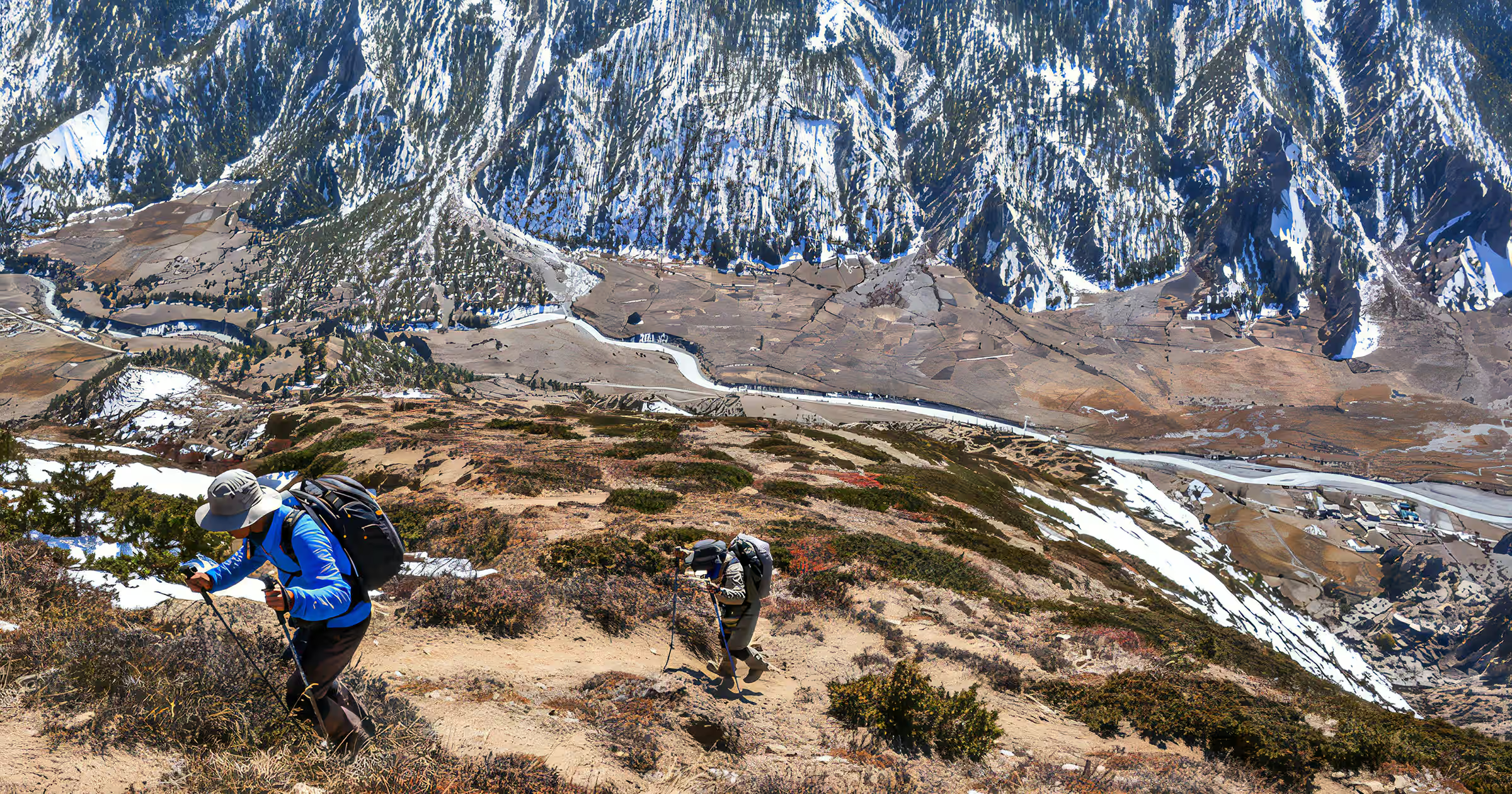
Hiking poles offer additional points of contact with the ground so that your tired legs and upper body will maintain balance while walking. It also distributes some of the physical effort between your arms and legs.
Some of the helpful benefits of the trekking poles are mentioned below:
Better Balance on Uneven Trails
Nepal’s most popular trekking trails like Annapurna Base Camp and Everest Base Camp make you walk on the uneven surfaces with loose stones, muddy sections, and narrow pathways for longer hours. Having a trekking poles provides you:
- An additional support,
- maintain a steady walking rhythm
- more confident on challenging terrain.
However, trekking poles are not a substitute for careful foot placement and you should always assess the terrain carefully before taking your next step.
Support During Long Trekking Days
Most of the trekking trails take you to remote mountain villages, for that you need to spend multiple hours hiking for multiple days. No matter how much experience you have, continuous hiking makes your body as well as your legs feel stuffy and tired.
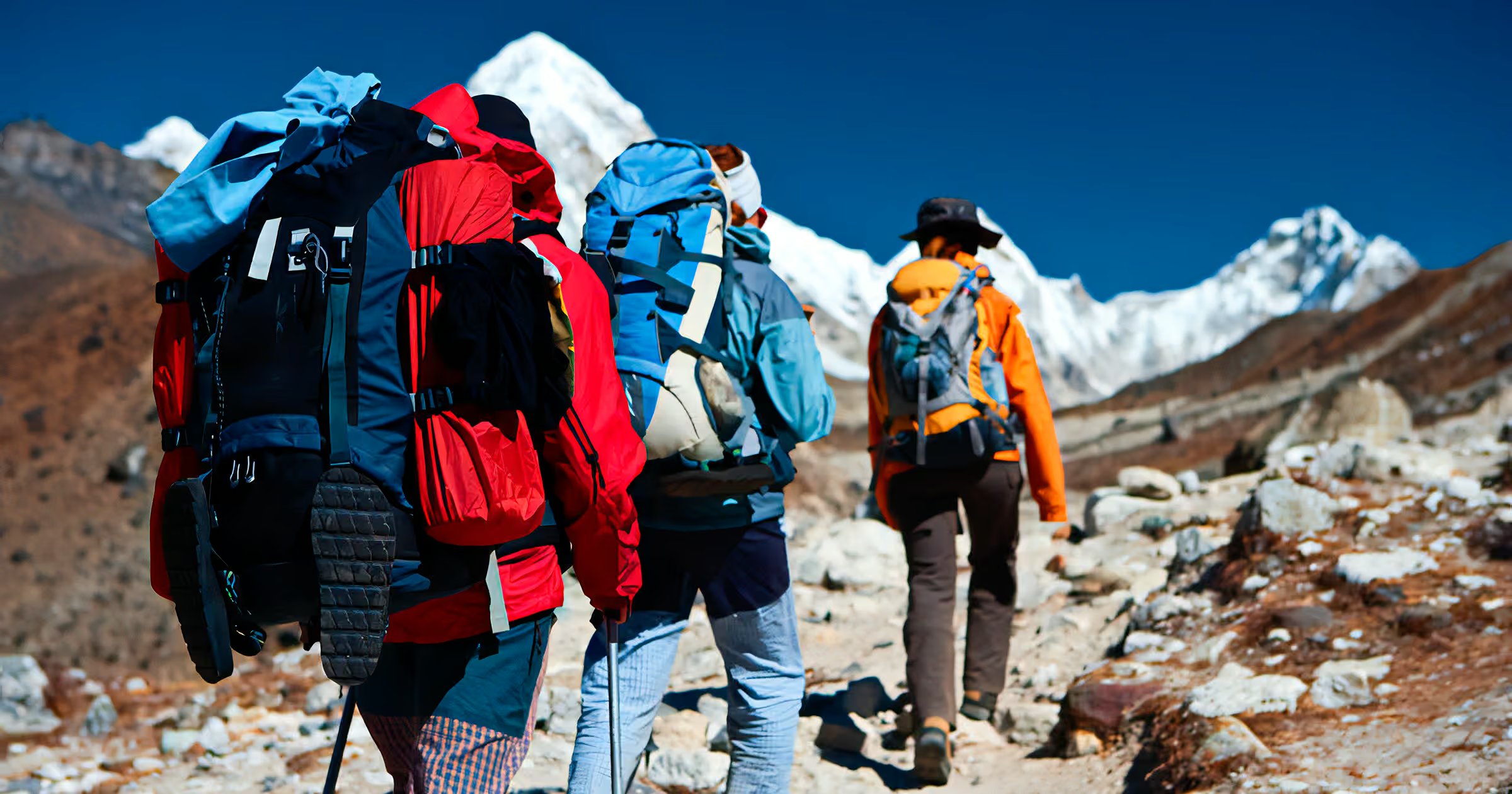
At that time having a trekking pole allows you to involve your arms when moving uphill and help maintain a consistent walking rhythm.
Additional Confidence on Steep Sections
Trekking trails of Nepal consist of continuous uphill as well as downhill which makes you traverse in a steep section. Having hiking poles offers you extra contact points that can help you move in a more balanced and confident way.
What Kind of Poles Should You Get?
Adjustable or Fixed
Trekking or hiking poles come in fixed as well as adjustable sizes. Buying or renting adjustable ones is highly recommended as you can shorten for uphill walk or lengthen it during downhill walk.
Fixed length poles are cheaper than adjustable ones but don’t fall for the cheap prices otherwise you will have to suffer in remote and secluded trails of Nepal.
3-Section or 2-Section
Hiking poles with three sections are folded in shorter parts, which will easily fit in your checked or duffel bag without consuming more space. Two section poles when collapsed will be lengthier than 3-section ones and will end up consuming more spaces in your duffel bags.
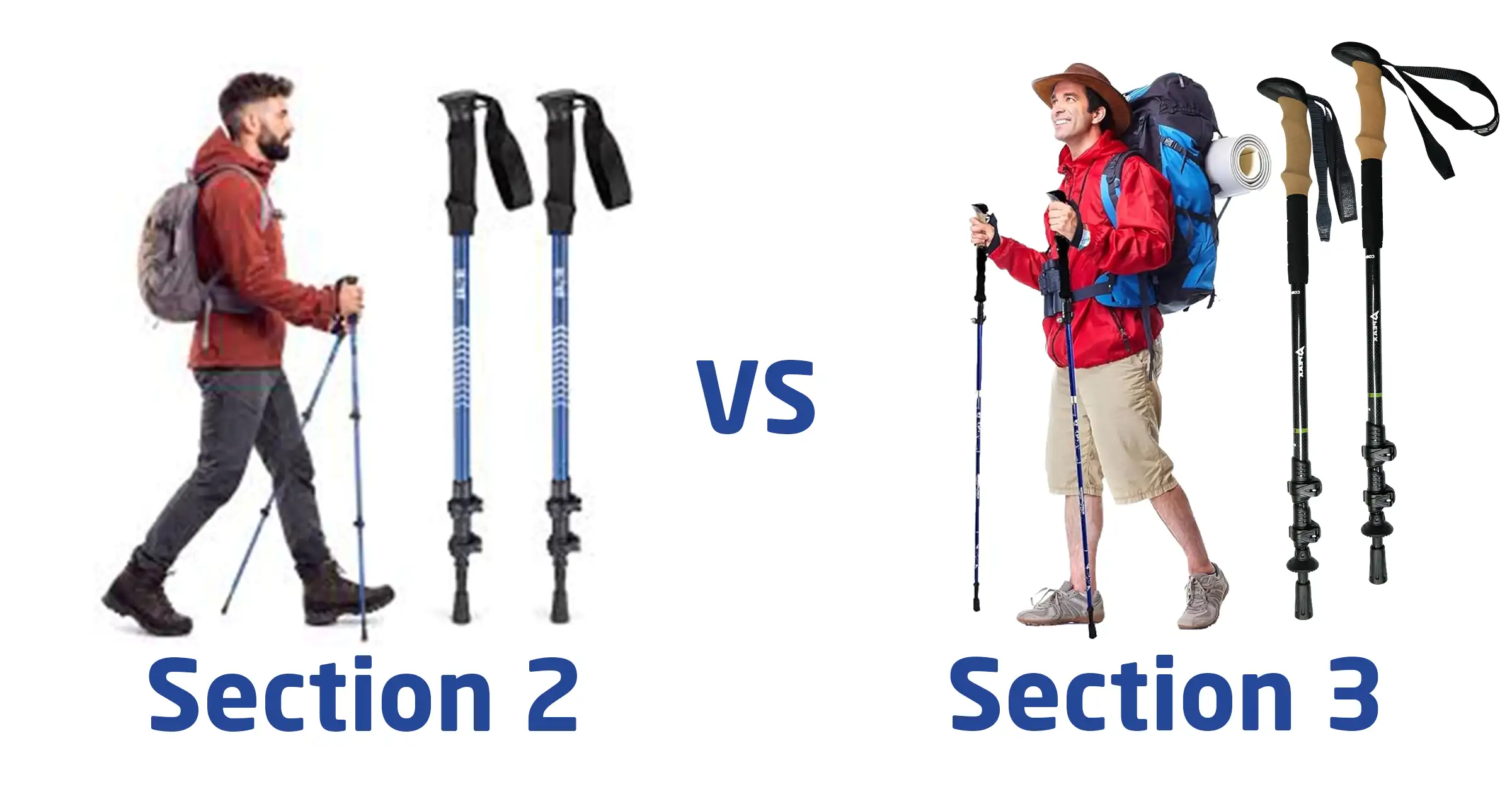
We suggest you bring 3-section poles instead of 2-sections.
Aluminium or Carbon
Trekking poles made up of aluminium are heavier and when comes in contact with a hard ground surface it bends instead of being broken. Whereas, carbon ones are lighter, stiffer, and break easily when stressed at the wrong angle.
Aluminium is highly recommended for the diverse trekking terrain of Nepal and it is also quite cheap in price.
Locking Mechanism
Trekking poles have two kinds of locking mechanism that is twist-lock or lever-lock. Twist lock ones will freeze or get loose when temperature drops below freezing points at high passes.
Lever-lock is also known as flick lock is recommended as it can be adjusted with cold or gloved hands. You can adjust it without having to stop.
Grips
Both cork or foam grips work for Nepal trek. Foam grips usually remain soft and warm in cold weather conditions whereas cork one moulds according to your hands and does sweat handling better.
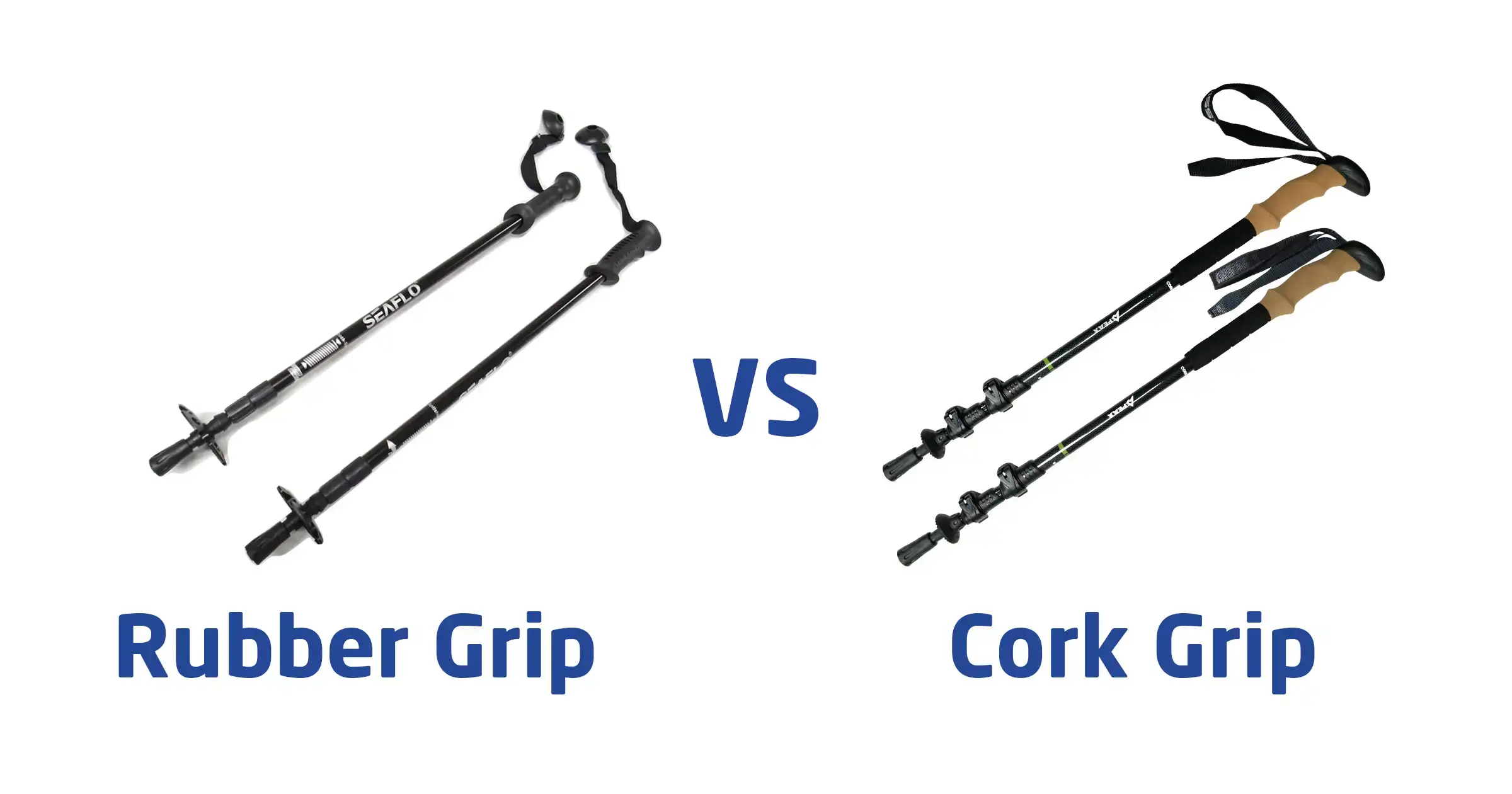
Rubber grip on trekking poles is highly restricted as it will cause blisters on multiple weeks treks.
When Trekking Poles Are Worth Having
Not every trekking route in Nepal requires the same level of physical effort. Your need for trekking poles depends on the trail conditions, elevation changes, walking duration and personal fitness.
Here are some popular Nepal trekking destinations where having a trekking pole is highly beneficial.
Everest Base Camp Trek
The trekking trails of Everest Base Camp are established mountain pathways but you will encounter rocky sections, uneven surfaces, stone steps and long descending sections. Once you leave Namche, especially between Dingboche and Lobuche, the loose rock and glacier debris makes the trails slippery, so having a trekking pole helps you maintain balance and control your steps for a longer period of time.
We suggest you bring two trekking poles for safer hiking.
Annapurna Base Camp Trek
The numerous stone staircases, particularly around the Chhomrong of Annapurna Base Camp Trek, means the use of trekking poles in Nepal. Bringing two adjustable poles will help maintain a comfortable walking rhythm and provide additional support on steep staircases.
Annapurna Circuit Trek
The changing landscapes, high-altitude sections and significant elevation differences makes Annapurna circuit trek more challenging. Trekking poles become more useful when you cross Thorong La pass (5,416 m) and descend an elevation of 1600 meters until you reach Muktinath on Annapurna Circuit.

Trekking poles help reduce stress on knees when you descend in slippery and icy terrain for longer hours. You will encounter almost every trekker, experienced or beginner using it.
Gokyo Lakes Trek
The sections near Cho La Pass, the Ngozumpa Glacier, Gokyo basin are filled with steep ridge climbs and glacial moraine. If you have two trekking poles, you will comfortably walk in these sections of the Gokyo Lakes Trek.
Manaslu Circuit Trek
The steep, icy descent of Larkya La (5106 m) is where you will find hiking poles very useful.
Where Hiking Poles Are Optional
Langtang Valley Trek
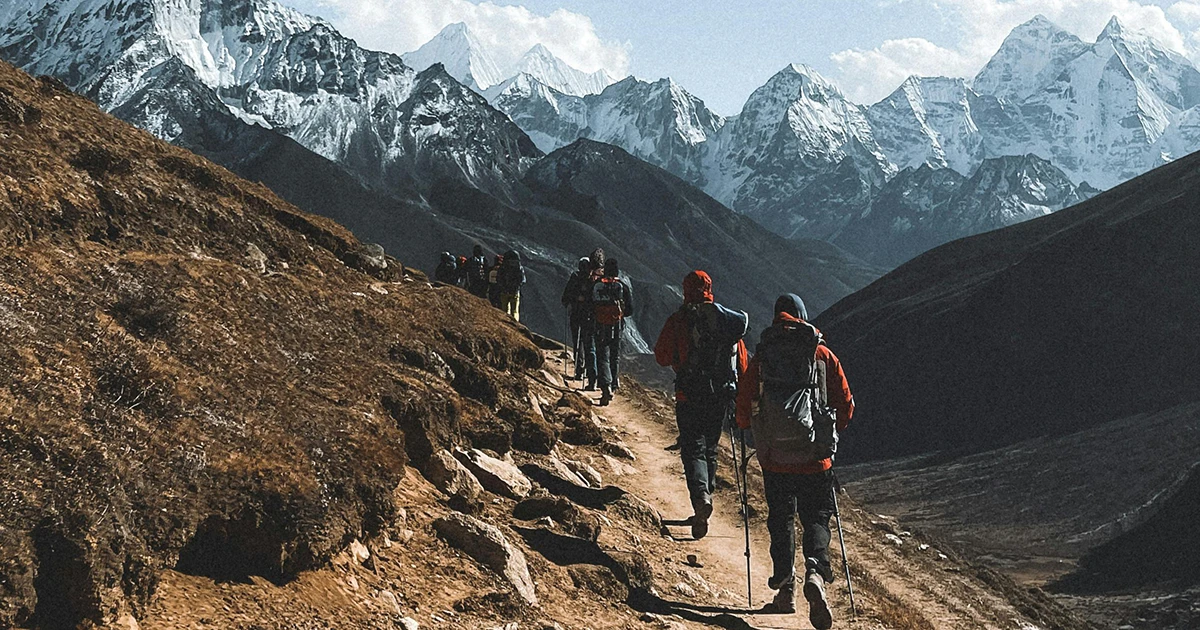
The steep climbs, rocky pathways and continuous descents of Langtang valley demands trekking poles for beginners. It will help balancing and reducing fatigue during longer trekking days but if you are an experienced ones, you may not need to use them.
Mardi Himal Trek and Poon Hill Trek
Both are rated as shorter Himalayan treks but consist of steep upper forest/ridge sections in Mardi Himal and the famous Ulleri staircase in Poon hill can be easily crossed if you have trekking poles. Having trekking poles is an option for beginners.
Note: If you have a history of knee issues like runner’s knee, patellar tendonitis, a previous ACL injury, whether it is short or long trekking, use two trekking poles mandatorily.
How Trekking Poles Help Protect Your Knees?
Trekking poles are mostly helpful during downhill walking as it helps balance your shaky legs. The continuous uphill walk of the remote mountainous terrain is not as difficult as descending in hundreds or thousands of stone steps.
When you are walking downhill continuously for longer hours, your leg muscles find it difficult to work to control your body’s movement against gravity. Also, all of your upper body loads go on knees during downhill walking which results in discomfort and fatigue.
Reducing the Load
Trekking poles allow your arms to share some of the work when walking downhill. By placing the poles firmly on the ground before stepping down, you can use your upper body for additional support.
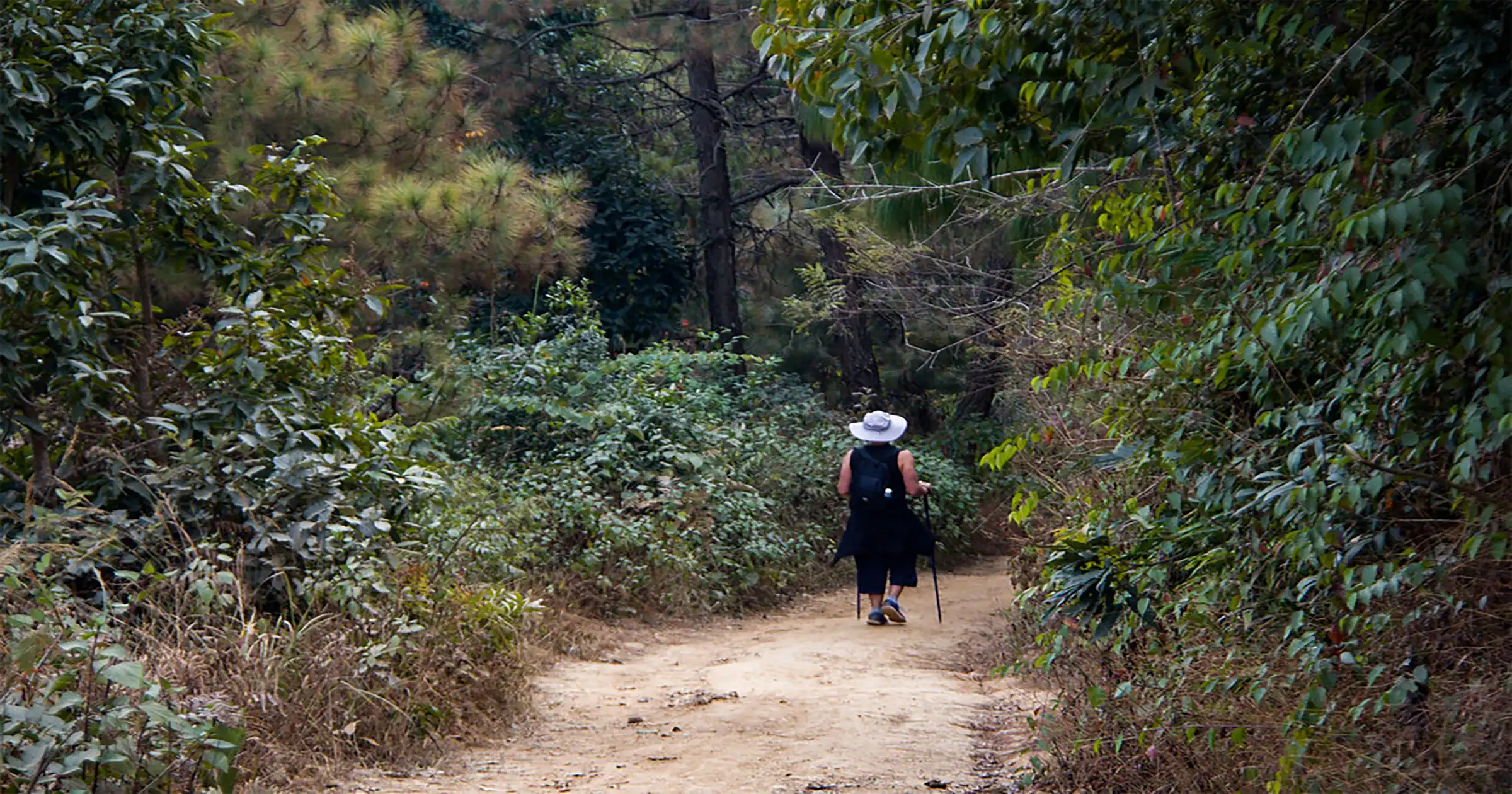
This does not eliminate knee pressure or guarantee injury prevention. However, proper pole technique can make descents feel more controlled and reduce the amount of work your legs need to perform.
Maintaining Stability
Fatigue can affect coordination and balance. When your legs become tired, you may find it harder to control your steps, particularly on steep stone staircases.
Using two hiking poles gives you additional support and can help maintain a more controlled walking pattern in remote trekking trails of Nepal.
Can You Take Hiking Poles on a Plane? Airline Rules Explained
Different airlines have different baggage policies which one should consider before buying hiking poles in your home country. Airline baggage policies and airport security regulations, and the rules can vary between countries.
TSA Rules for Trekking Poles
The Transportation Security Administration (TSA) distinguishes between blunt-tipped and sharp-tipped hiking poles, if you are planning to travel via United States Airport. You can bring trekking poles with blunt tips but cannot bring sharp tipped hiking poles on carry-on items.
An important detail is that folding your poles does not change the security classification of their tips. They give the authorities of airport security a final decision even though the items are generally allowed.
Other International Flight Rules
The hiking equipment like trekking poles may be a matter of different security and baggage restrictions. So, you should not assume that a hiking pole accepted at your departure airport will automatically be accepted at every connecting airport.
| Country / Region | Carry-on / Cabin Baggage | Checked / Hold Baggage | Important Restrictions |
| United Kingdom (UK) | Not allowed | Allowed | Walking and hiking poles must be packed in checked luggage. Whether they are foldable or have protective caps, it should be in checked baggage. |
| European Union (EU) | Generally avoid | Allowed | Sharp-pointed trekking poles may be rejected under restrictions on dangerous objects. Airport screening decisions can vary. |
| Canada | Allowed with conditions | Allowed | Hiking poles can pass security if their pointed or sharp ends are no longer than 6 cm. Security officers may inspect them. |
| Australia | Check before flying | Recommended | Sharp-pointed sporting equipment is restricted in aircraft cabins. Trekking poles with pointed metal tips should be packed in checked luggage. |
| New Zealand | Allowed with conditions | Allowed | Lightweight aluminium or carbon-fibre poles are permitted in cabin baggage if they fit in the overhead locker. Heavier poles must be checked. |
| China | Check local rules | Recommended | Cabin restrictions depend on airport security requirements and the airline. Confirm acceptance before departure. |
| India | Check local rules | Recommended | Trekking poles may be treated as potentially dangerous objects in cabin baggage. Checking them is the safer option. |
| United Arab Emirates (UAE) | Check local rules | Recommended | Acceptance depends on airport screening and airline restrictions. Pack pointed trekking poles in checked luggage. |
For Nepal airline, you should always confirm the latest airport security and airline requirements. Packing trekking poles in checked baggage is the safer approach.
Special Considerations for Lukla Flights
If you are planning a trek inside Khumbu region, you need to book a domestic flight from Kathmandu to Lukla or via Ramechhap. Lukla flights are weight-sensitive and the checked baggage limit is only 15 kg.

Instead of making your baggage heavy, we suggest you rent the hiking poles in Lukla or Namche Bazaar. Also, some airlines demand that pointed items like hiking poles should go in the hold.
Should You Buy, Rent, or Bring Trekking Poles from Home?
When trekking in Nepal, one may find themself wondering whether to buy, rent, or bring trekking poles from Home. This decision depends on how frequently you do the trek, how much budget you have, which trails you are planning to explore.
If you are planning a trek to Everest Base Camp, Annapurna Base Camp, Langtang Valley, or Manaslu, we suggest you bring a reliable pair of trekking poles for a more comfortable Himalayan adventure in 2026/27.
Buy in Nepal
- Convenient,
- Saves you from international securities,
- Wide range of option available according to you trekking styles,
- Best for those who are in search of affordable or replacement trekking poles
Rent in Nepal
- Recommended for first-time trekkers
- Short duration treks
- Budget-friendly,
- Easier arrangement,
- Avoid securities hassle in domestic as well international flights.
Planning A Nepal Treks in 2027?
Or Call/Message on WhatsApp +977 98434 13619
Bring from Home
- Best for experienced and regular trekkers
- Familiar equipment,
- Preferred grip and fit,
- Known quality.
Final Verdict: Should You Trek in Nepal with or Without Poles?
Trekking in Nepal is an unforgettable experience, and you can make your journey even more comfortable and enjoyable by bringing hiking poles. From the stone staircases of Annapurna to the rocky trails of Everest, every trekking route brings different challenges.
There is no mandatory requirement for trekking poles in Nepal but having it can make a meaningful difference to your balance, walking rhythm and comfort, particularly during long descents of the remote strenuous Himalayan treks. Bringing a pair of trekking poles is highly recommended but you should also consider about the airline’s baggage rules.
Most importantly, learn how to use your poles before beginning your journey. Correct adjustment and proper technique are just as important as choosing good equipment.
So, next time when you are planning your Himalayan adventure, make sure you contact Awesome Holidays Nepal for best guidance on choosing equipment wisely and safer Nepal trip.
FAQs
Expand AllDo I need trekking poles in Nepal?
Yes. Trekking (hiking)poles are recommended in Nepal but it is not mandatory.
Are trekking poles necessary for Nepal trek?
The necessity of trekking (hiking) poles for Nepal trek depends on which route you are choosing, how much weight you are carrying and the condition of your knees.
Are trekking poles good for knee pain?
Trekking (hiking) poles can good for knee pain but you should not solely depend on it.
Do you need trekking poles for Everest Base Camp?
Yes. Having trekking (hiking) poles help you have smoother descent for Everest Base Camp.
Do I need trekking poles for Annapurna Circuit?
Yes, especially during Thorong La descent you will need trekking (hiking) poles for Annapurna Circuit.
Do I need trekking poles for Poon Hill?
Trekking (hiking) poles is recommended for Poon Hill but if you are fit you wont be using it.
Do I need trekking poles for Langtang Valley?
Trekking (hiking) poles are Optional but having it is beneficial Langtang Valley.
Do trekking poles reduce knee pain downhill?
Yes, trekking (hiking) poles reduce knee pain and joint stress when walking downhill.
How to use trekking poles downhill?
When walking downhill, you should slightly lengthen your trekking (hiking) poles and plant them securely ahead of your body before stepping down. Then, keep your knees slightly bent and take short, controlled steps to maintain balance.
How lengthy trekking pole should be for downhill?
For downhill trekking, poles should generally be adjusted approximately 5–10 cm longer than your normal flat-ground setting. This will make you walk comfortably and reach the ground without leaning forward excessively.
How lengthy trekking pole should be for uphill?
For uphill trekking, shorten your poles approximately 5–10 cm from your normal flat-ground setting.
Which is enough: one trekking pole or two?
Although one trekking pole can provide some balance and support, but using two poles is generally better for Nepal’s demanding trekking trails because they distribute your weight symmetrically and help maintain your balance.
Difference between hiking poles vs trekking poles?
Hiking poles and trekking poles are often used interchangeably, but trekking poles refer to adjustable or durable walking supports which is usually designed for longer, more demanding mountain journeys. In contrast hiking poles refers the equipment that is intended for shorter recreational walks.
Are trekking poles worth it?
Yes, trekking (hiking) poles are worth investing as most of the Nepal trekking trails consist of longer ascent and descent.
Should beginners use trekking poles?
Yes, beginners should use trekking(hiking) poles. It will provide you an additional balance and confidence on unfamiliar mountain terrain, particularly when crossing uneven paths, climbing stone staircases and descending steep trails.
Can you bring trekking poles on a plane?
Yes, you can generally bring trekking(hiking) poles on a plane in checked baggage.
Can you rent trekking poles in Kathmandu?
Yes. You can rent trekking (hiking) poles in Kathmandu and it will help you avoid unnecessary airlines issues.
Which to choose: folding vs telescoping trekking poles?
Folding trekking (hiking)poles are generally more compact and easier to pack inside a backpack. Telescoping trekking (hiking)poles offer greater length adjustability, making both suitable depending on your portability and trekking requirements.
Which to choose: carbon vs aluminum trekking poles?
Adjustable aluminium trekking (hiking)poles with comfortable grips, reliable locking mechanisms, durable tips and removable rubber protectors are a practical choice for Nepal’s varied trails than carbon.
Which is best trekking poles for Nepal?
Adjustable aluminum trekking (hiking) poles is best for Nepal’s varied trekking terrain, including Everest Base Camp, Annapurna Circuit and Langtang Valley as it comes with:
- comfortable grips,
- reliable locking mechanisms,
- durable tips and removable rubber protectors.
Related blog posts
Discover a choice of tourist destinations loved by most of our visitors. Whether you're on a jungle safari to spot rare animals or walking through a world heritage site, these well-planned itineraries cover the major highlights of Nepal.

 call an expert at: