
Ngozumpa Glacier: Nepal’s Longest Glacier in the Gokyo Valley – Complete 2026 Guide
 Sristi Adhikari
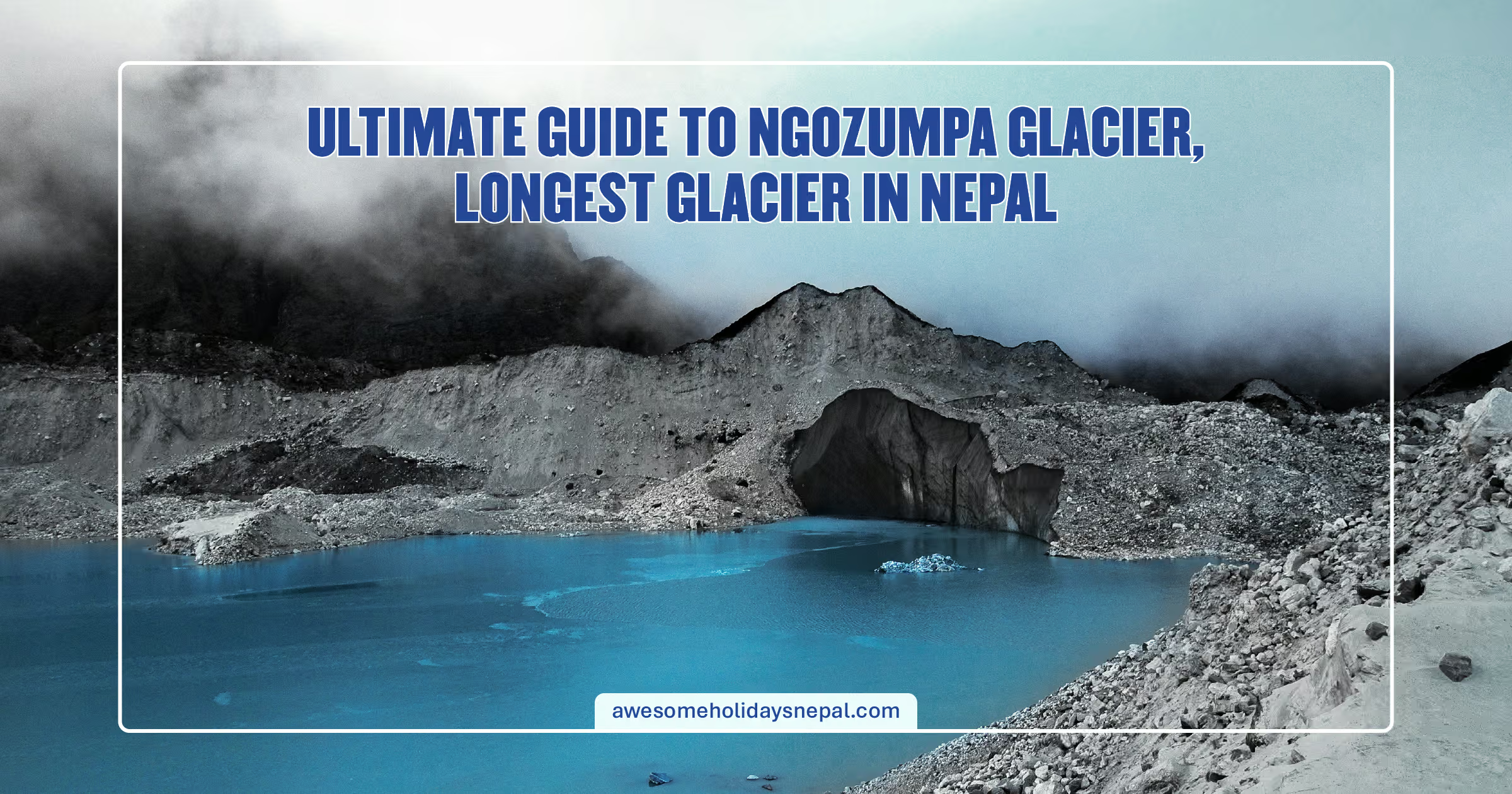
The Ngozumpa Glacier is the longest glacier and one of the most spectacular natural wonders found on the Himalayas of Nepal. This massive river of ice is located in the base of Cho Oyu (8,188 m), the world’s sixth-highest mountain, and stretches for approximately 36 kilometers.
The Ngozumpa Glacier is also known as Cho Oyu glacier and the melting of this longest glacier gets mixed into the Dudh Koshi River. The Ngozumpa Glacier is one of the most important features of the Khumbu region and is mostly covered by a thick layer of rock and debris which runs across the pristine Gokyo Valley.
The longest glacier of Nepal is surrounded by skyrocketing mountain peaks and falls in the protected territory of Sagarmatha National Park. While many trekkers visiting the Everest region focus mainly on Everest Base Camp, the Gokyo Valley offers a quieter and equally rewarding adventure which allows you to witness the longest glacier located in the Himalayas of Nepal.
The glaciers also serve as an important stop for trekkers who are exploring the pristine trekking routes of the Gokyo Lakes Trek and Everest Three Passes Trek. For more details on Ngozumpa Glacier’s history, how it formed and how it is shaping the river and nearby valleys, continue reading our blog.
Quick Facts About Ngozumpa Glacier
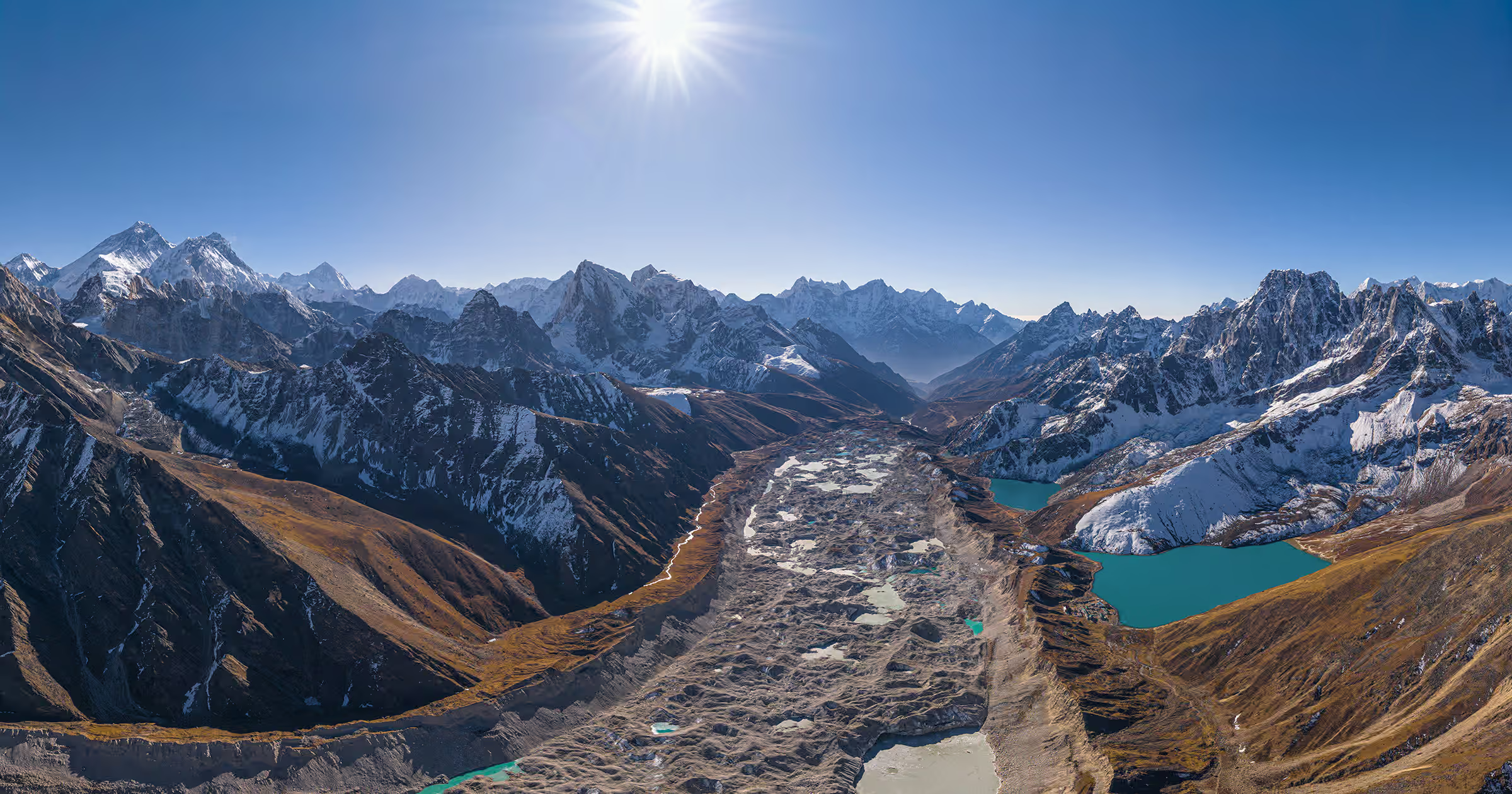
Where is Ngozumpa Glacier?
What Does Ngozumpa Stand For?
Ngozumpa is a Tibetan word which is pronounced as “Ngo-zoom-pah”. Ngozumpa showcases the rich culture and geography of the Khumbu region and the word “Ngozumpa” refers to the glacier associated with the “Cho Oyu” sixth highest mountain in the world.
The local Sherpa communities have been adopting the name of the glacier as Ngozumpa and it is highly rooted to their cultural tradition. The Ngozumpa glacier runs over the Gokyo Valley and as of now, it has been frequently used in scientific research, maps, guides, and research publication.
This glacier not only stands out as the Longest glacier in the Himalayas but is also shaping the history, culture, and identity of the Khumbu communities.
The Geological History and Formation of Longest Glacier in the Himalayas
The history of the longest glacier in Nepal is linked with the formation of the Himalayas. When Himalayan mountain range formed by the collision of the Indian plate and Eurasian plate 50 millions years ago, the mountain started to rise higher and higher.
These high elevations of mountains received heavy snowfall for thousands of years as it started piling up over and over, snow turned into thick ice forms which formed glaciers across the areas including Ngozumpa.
The cold weather conditions of Pleistocene Ice Age made snow accumulate faster and it extended over wide areas of valleys forming glaciers without melting.
This huge accumulated ice started to move downhill due to gravity since the end of the Ice age. This moving glacial carried rocks and sediments along with huge debris underneath it.
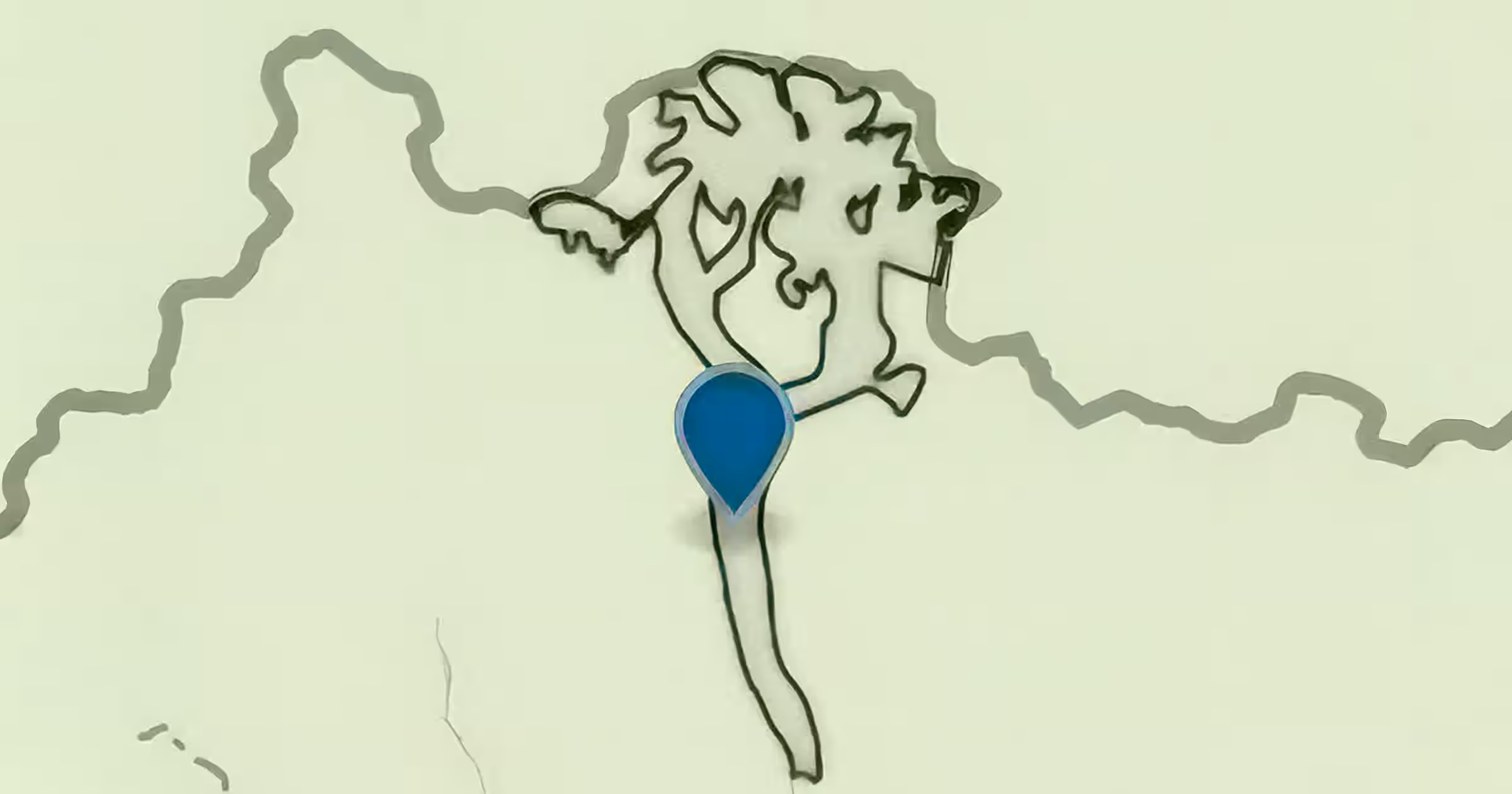
These debris are piled up in the side and end of the glacier which carved the Gokyo Valley in typical U-shape leaving a large pile of lateral and terminal moraine behind it. Over the period of time, moraines become filled with depression and melting of glaciers accumulated into it forming the popular Gokyo Lakes.
As of now, Ngozumpa glacier is continuously moving, shifting few centimeters to meters each year. The Glacier upper portion is covered with snow and ice whereas its lower section is filled with thick layer or rocks and moraine.
Why is Ngozumpa Glacier the Longest Glacier in the Himalayas?
Ngozumpa glacier is considered as the longest glacier in the Himalayas of Nepal because it is not only accumulated with single mountain ice. Different mountain basins fed ice to this glacier and stretched over a length of 36 kilometers (22 miles) from Cho Oyu, Gyachung Kang, and Hungchi, ending in the Gokyo Valley.
Planning to Explore Ngozumpa Glacier in 2026?
Or Call/Message on WhatsApp +977 98434 13619
Furthermore, the wide landscape of the Gokyo Valley allowed the glacier to flow as much as it could. This resulted in making the Ngozumpa the Longest Glacier in Nepal’s Himalayas.
How long is Ngozumpa Glacier?
Ngozumpa Glacier stretches over a length of 36 km from the base of Mount Cho Oyu and ends near Gokyo valley which is situated at an elevation of 4,750 meters above sea level. The upper portion of Ngozumpa is filled with accumulated ice whereas its lower region is filled with thick portions of rocks and debris, this debris makes the glacier look more like a valley than an accumulation of crystal clear ice forms.
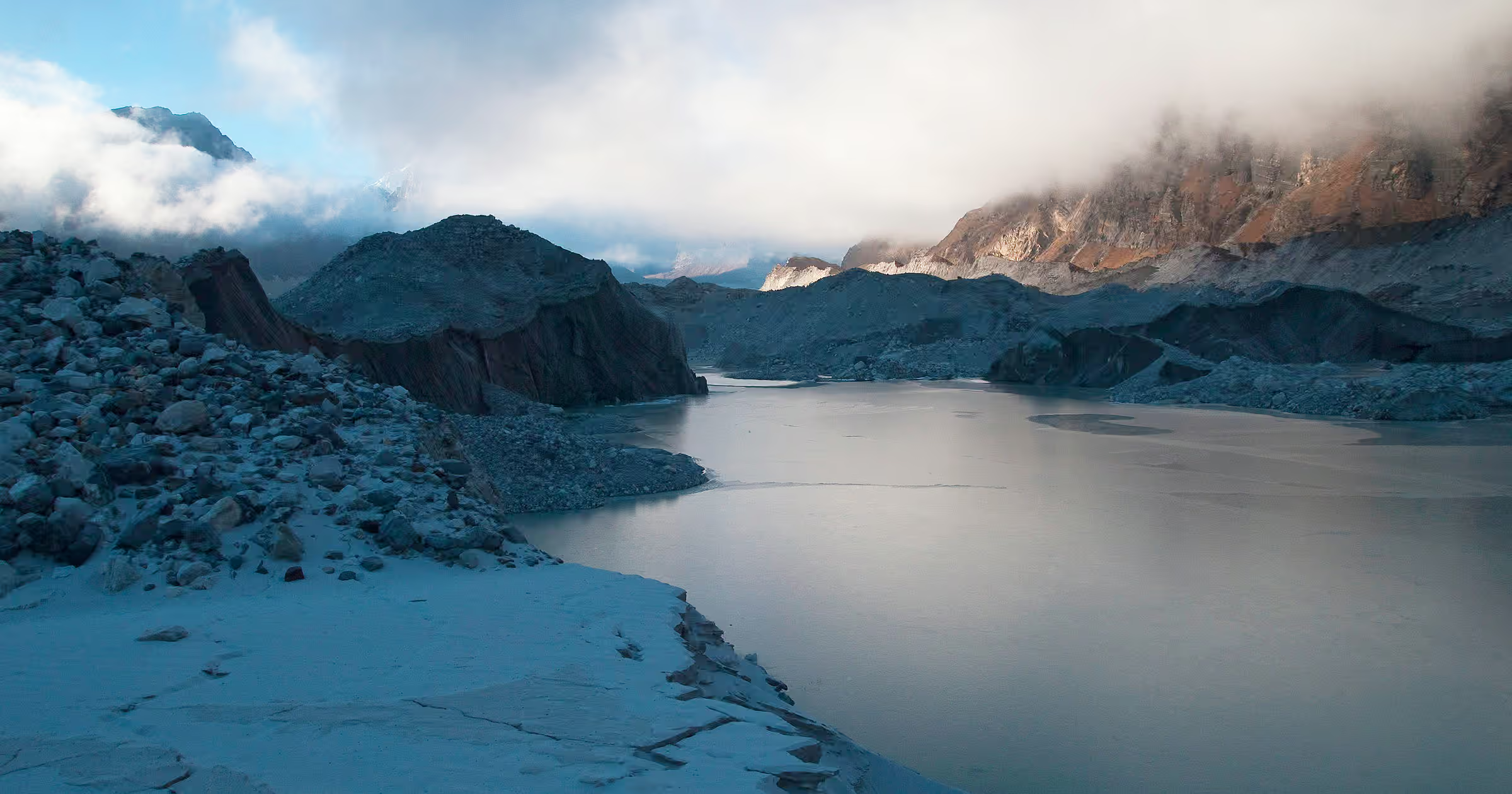
This huge valley of Ngozumpa or Cho Oyu glacier is moving downwards due to gravity and some part of the glacier is around 400 m deep. This slow movement is still continuing to accumulate debris underneath it.
Relationship Between Ngozumpa Glacier and Gokyo Lakes
Ngozumpa aka Cho Oyu glacier and Gokyo Lakes are closely connected to each other and are a part of the same glacial landscape. The supraglacial lake is located in the Eastern side of the glacier in the Gokyo Valley and is formed by the melting of glacial ice of Ngozumpa.
When ice began melting, it only left the lower portion of glacier such as ridges of rocks and sediments which is known as moraine and the melted water began filling these spaces which resulted in the formation of Gokyo lakes. As of today, the Gokyo lake is continuing to accumulate water melted from the Ngozumpa.
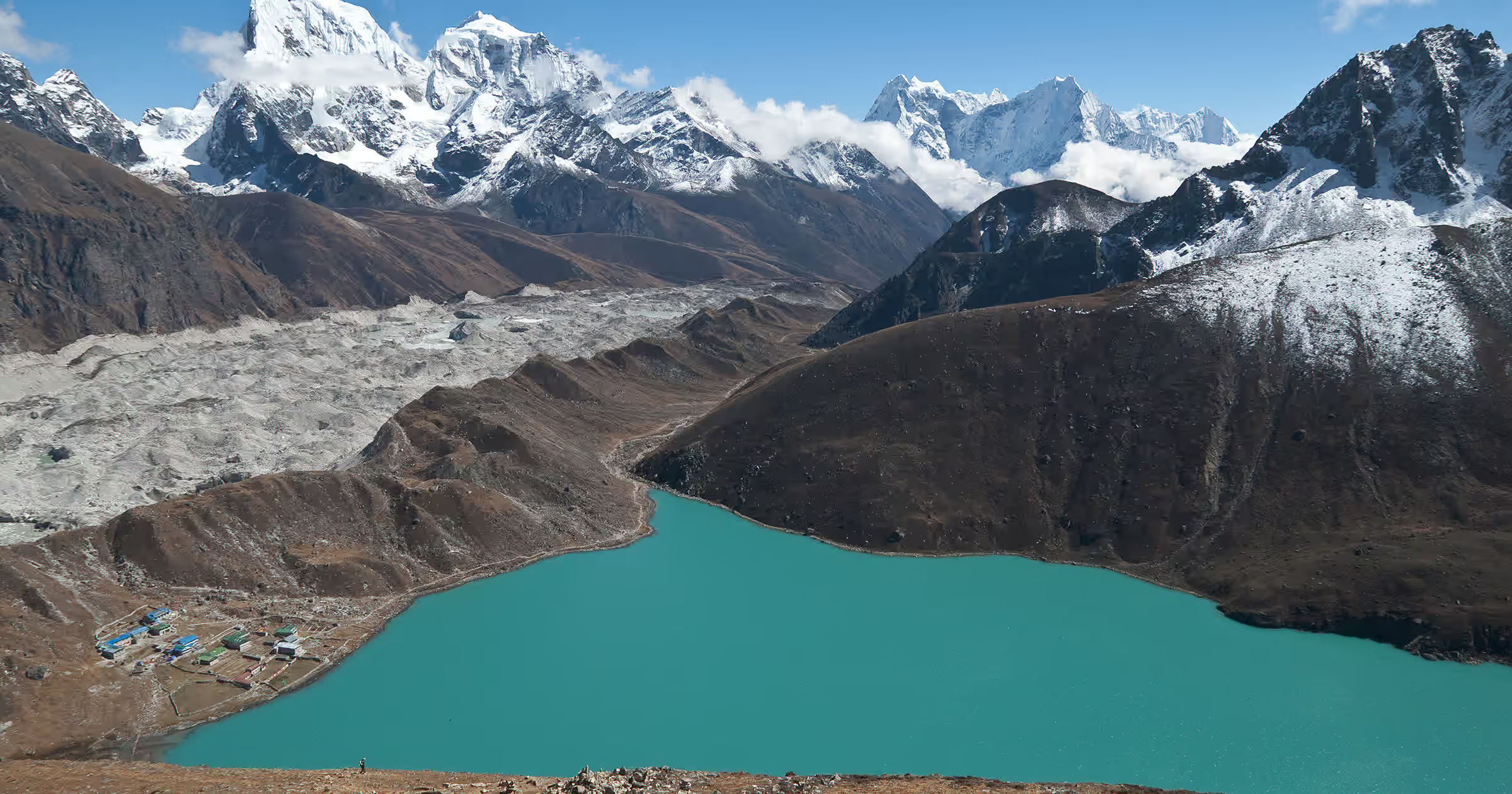
It is also reported that the water is melting from the lower part of the Glacier and is constantly feeding the nearby streams and lakes which of course we can’t see with our naked eyes. Both Ngozumpa and Gokyo Lakes also feed water to Dudh Koshi River.
This is how Ngozumpa and Gokyo Lakes are connected to each other and scientists are keeping eyes on both to understand how climate change is affecting the Everest region.
Ngozumpa Glacier vs. Khumbu Glacier
The two most famous glaciers of the Everest region are Ngozumpa and Khumbu Glacier. The key difference between Ngozumpa Glacier vs. Khumbu Glacier are:
| Feature | Ngozumpa Glacier | Khumbu Glacier |
|---|---|---|
| Location | Gokyo Valley, Khumbu Region | Everest Base Camp route, Khumbu Valley |
| Length |
|
Approximately 17 km long(11 miles) |
| Source |
|
|
| Glacier Type | Debris-covered valley glacier | Debris-covered valley glacier |
| Elevation Range | Nearly 8,000 m to about 4,7800 m | Around 7,600 m to 4,900 m |
| Nearby Attractions | Gokyo Lakes, Gokyo Ri, Cho Oyu | Everest Base Camp, Khumbu Icefall, Kala Patthar |
| Popular Trek | Gokyo Valley Trek, Everest Three Passes Trek | Everest Base Camp Trek |
| Surface Features | Moraine ridges, ice cliffs, supraglacial ponds, rocky debris | Khumbu Icefall, crevasses, seracs, moraine-covered ice |
| Main Water Drainage | Feeds streams flowing into the Dudh Koshi River | Feeds the Lobuche Khola, a tributary of the Dudh Koshi River |
| Difficulty to Explore | Moderate; viewed from trekking trails near Gokyo valley | More challenging due to high altitude and rugged terrain near Everest Base Camp |
| Tourist Crowds | Comparatively quieter and less crowded | One of busiest trekking destinations in Nepal |
| Best Known For | Nepal’s longest glacier and the scenic Gokyo Valley | The dramatic Khumbu Icefall and proximity to Mount Everest |
| Conservation Significance | Important for climate research and glacial lake monitoring | Widely studied for glacier retreat and Everest-region climate change |
Ngozumpa Glacier and Climate Change
We can see the effect of climate change on mountain glaciers by melting of the ice and visible forms of thick layers of debris and rocks. The melting of the lower portion of glacier ice shows more ice cliffs, ponds on its outer surface and formation of underground channels for melting of the ice water.
This melting of underground water also shapes the lands around it and it also flows into Gokyo lakes and finally feeds into Dudh Koshi River. Dudh Koshi River is one of the major freshwater sources for Khumbu communities.
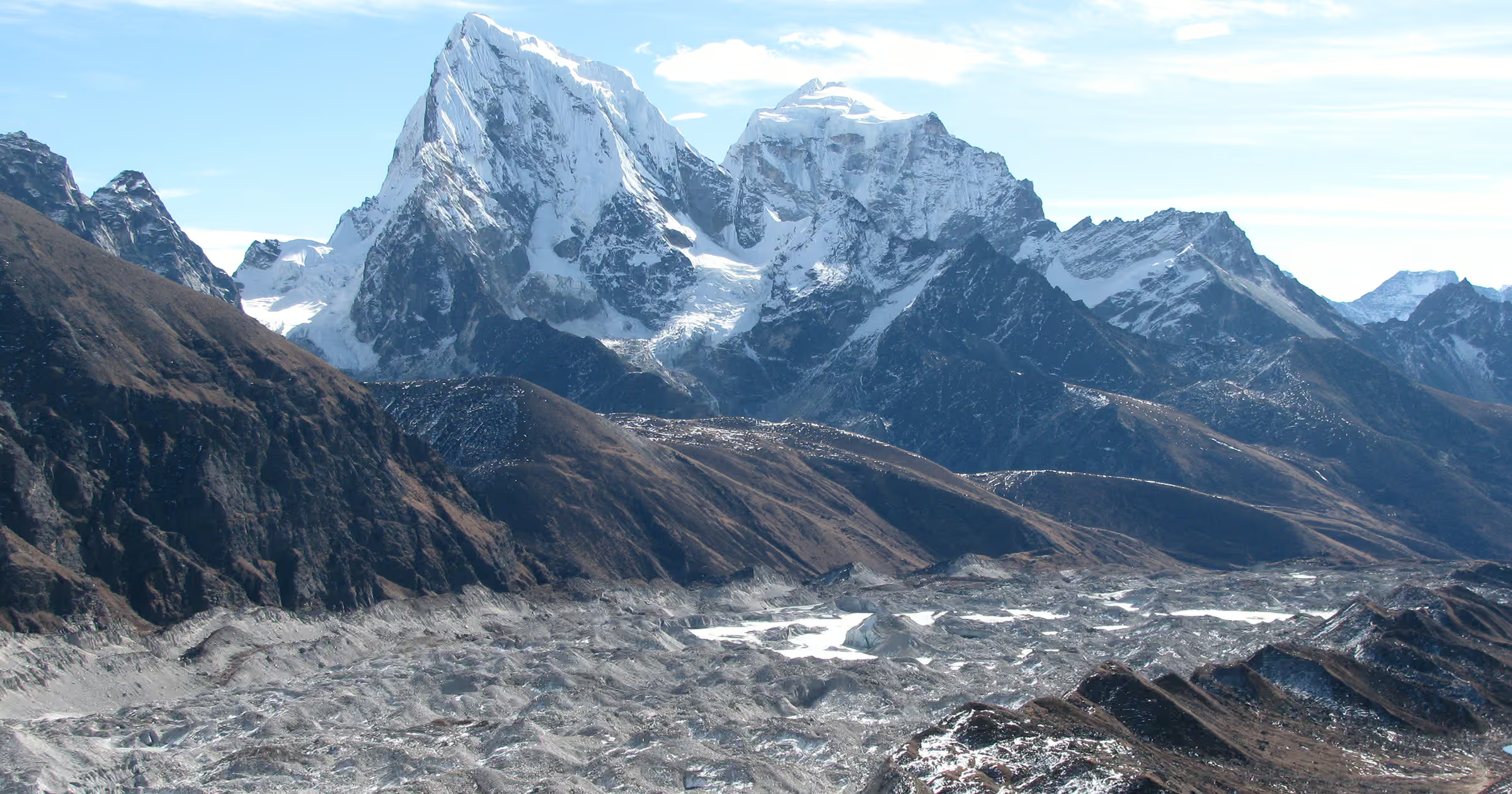
Scientists are continuously keeping eyes on the rise of glacial lakes and changes of meltwater flow with the rise of temperature. As these can result in the risk of Glacial Lake Outburst Floods (GLOFs).
The seasonal melting of Cho Oyu glacier is also influenced by its weather, warmer temperature in spring and summer create more melting glacial while during winter snowfall accumulates in the upper portion of the glacier. Over the period of time, Global warming and climate change have been affecting the Ngozumpa glacier to melt ice faster than accumulation in winter.
Final Thoughts on Ngozumpa Glacier
Ngozumpa Glacier is far more than Nepal’s longest glacier but it is a remarkable natural archive of Himalayan geology, climate, and alpine beauty of the Khumbu region. The melting of glacier ice feeds in the Dudh Koshi river which is the main source of water for communities and wildlife living in the Everest region.
The melting of Ngozumpa also adds beauty in Gokyo valley, Gokyo lakes, and surrounding snowy peaks that altogether attract the heart of global trekkers and photography enthusiasts. Visiting this extraordinary landscape also serves as a reminder of the importance of protecting fragile mountain environments as glaciers continue to respond to climate change.
If you are a scientist, climate researcher, academic institution, or trekker who want to explore Ngozumpa glacier, make Awesome Holidays Nepal your best local partner for research and adventure in 2026.
FAQs
Expand AllWhat is Ngozumpa Glacier?
Ngozumpa Glacier is one of the largest glacier in the Nepal. It flows from the slopes of Cho Oyu through the Khumbu region.
How long is Ngozumpa Glacier?
Ngozumpa or Cho Oyu Glacier is 36 km (22 miles) long, making it the longest glacier in Nepal.
Where is Ngozumpa Glacier located?
Ngozumpa or Cho Oyu Glacier is located in the Khumbu region of northeastern Nepal. It lies within Sagarmatha National Park, near the village of Gokyo.
Is Ngozumpa the longest glacier in Nepal?
Yes, Ngozumpa is the longest glacier in Nepal.
How to visit Ngozumpa Glacier?
You need to trek to the Gokyo Lakes Trek or the Everest Base Camp via Gokyo route from Lukla just to Ngozumpa or Cho Oyu Glacier.
How to cross Ngozumpa Glacier?
You can cross Ngozumpa or Cho Oyu Glacier by walking on marked trails over rocky moraine. This is often done under the guidance of experienced local trekking guides.
What are the Gokyo Lakes and Ngozumpa Glacier?
The Gokyo Lakes are a series of high-altitude glacial lakes. This lake lie near by the glacier and is originated from the melting of the Ngozumpa Glacier.
Is Ngozumpa Glacier melting or receding?
Ngozumpa or Cho Oyu Glacier is both melting and receding. Due to climate change, temperatures are also rising in the Himalayas which results in the glacier is shrinking, thinning, and retreating. This make extensive melting of glacier and creates expanding surface pools and a massive terminal lakes.
What is Ngozumpa Glacier elevation and size?
Ngozumpa Glacier is elevation ranges from 4,700 to over 5,700 meters (15,420–18,700 feet) and stretches roughly 36 km (22 miles).
Is Ngozumpa Glacier a supraglacial lakes?
No. Ngozumpa or Cho Oyu Glacier itself is not a supraglacial lake. But it contains numerous supraglacial ponds and lakes on its debris-covered surface.
What is Ngozumpa Glacier length in km or miles?
Ngozumpa or Cho Oyu Glacier is approximately 36 kilometers (22 miles) in length.
Is Ngozumpa Glacier debris-covered?
Yes. Ngozumpa Glacier is debris-covered.
How to pronounce Ngozumpa Glacier?
Ngozumpa Glacier is commonly pronounced as “ngoh-ZOOM-pah Glacier.”
Is Ngozumpa Glacier in Sagarmatha National Park?
Yes. Ngozumpa Glacier is in Sagarmatha National Park.
Is Ngozumpa Glacier moraine or terminal features?
Yes. Ngozumpa Glacier features extensive lateral and terminal moraines that is formed by the movement and deposition of glacial debris.
Are there any Trekking routes near Ngozumpa Glacier?
Gokyo Lakes Trek, Gokyo Ri Trek, Everest Base Camp via Cho La Pass, and the Three Passes Trek are some of the trekking routes near Ngozumpa or Cho Oyu Glacier.
Is Ngozumpa Glacier feeding Gokyo Lakes?
Yes. Ngozumpa Glacier is feeding Gokyo Lakes.
What are the Risks or dangers crossing Ngozumpa Glacier?
The risks and dangers of crossing Ngozumpa are:
- unstable moraine,
- loose rocks,
- hidden ice,
- altitude sickness, and
- rapidly changing mountain weather.
Are there any Accommodations near Ngozumpa Glacier in Gokyo?
Yes, there are teahouses and lodges available in Gokyo Village which provide accommodation for trekkers visiting Ngozumpa.
What are the Photography tips for Ngozumpa Glacier?
The best Photography tips for Ngozumpa visitors are:
- Visit during sunrise or sunset hours,
- Always use a wide-angle lens, and
- Capture viewpoints from Gokyo Ri for panoramic mountain scenery.
Related blog posts
Discover a choice of tourist destinations loved by most of our visitors. Whether you're on a jungle safari to spot rare animals or walking through a world heritage site, these well-planned itineraries cover the major highlights of Nepal.
 call an expert at: