
Larkya La Pass: Plan the Crossing and the Descent
 Sristi Adhikari
Larkya La Pass is the main highlight and highest elevation you need to cross when planning a Manaslu Circuit trek in 2026. With an elevation of 5,106 meters (16,752 feet), Larkya Pass connects the high valleys of the Manaslu region with the Bimthang side of the trek.
The crossing combines a long uphill climb, high-altitude terrain which often begins before dawn while facing unpredictable mountain weather, and a demanding descent. Reaching the pass is not simply about standing at the highest point but it is all about how to deal and manage the upcoming challenges the entire day.
From an early departure at Dharamsala, through the climb to the pass, and finally down toward Bimthang, it is one of the most thrilling journeys you will ever have. Though it is not a technical climb, only planning and preparation matter, so read our blog in detail which answers all the queries regarding Larke La Pass in 2026.
Quick Facts
- Pass Name: Larkya La Pass / Larke Pass
- Elevation: 5,106 meters (16,752 ft)
- Location: Between Dharamsala and Bimtang of Manaslu, Nepal
- Trek: Manaslu Circuit Trek
- Connects: Nubri Valley (Manaslu region) to Manang Valley (Annapurna region)
- Typical crossing time: 7 to 9 hours
- Required Permit: Restricted Area Permit (RAP), MCAP and ACAP permits
- Restriction: No solo trekking without licensed Guide
- Best seasons: Spring (March to May) and autumn (September to November)
- Himalayas View: Himlung Himal, Cheo Himal, Kang Guru, Annapurna II
Where is Larkya La Pass?
Larkya La Pass also known as Larkya La and Larke Pass is a challenging mountain pass which is located in Gorkha district in the Manaslu region of north-central Nepal. Larkya La is situated in the Manaslu Conservation Area and is close to the border with Tibet (China).
It is a tall mountain crossing which forms the high point between Dharamsala (Larkya Phedi) and Bimthang. With an altitude of 5,106 meters (16,752 feet) the pass links the Manaslu side of the route with the Marsyangdi Valley toward the Annapurna region.
Specialty of Larkya La Pass Trek
The trails to Larkya La pass trek offer a rare sense of remoteness. You will be walking in a trail where you will barely see another group of trekkers and can enjoy the viewpoint and stop over without any rush.
Due to less trekkers, the remote teahouses and lodges offer you enough time to encounter with traditional gurung and Tibetan-influenced locals. You will also get to learn their language and religious beliefs in more detail.
Also, the best views of the vast glacial basin right below the eighth highest mount Manaslu are truly awe-inspiring.
Crossing the Highest Pass, Larke La
Larke La is one of the most highest and iconic passes of Nepal and crossing it demands the highest level of fitness and dedication. Crossing this dramatic pass at an altitude of 5,106 meters while withstanding little oxygen which makes breathing difficult in a cold and windy weather makes you prone to altitude sickness risk.
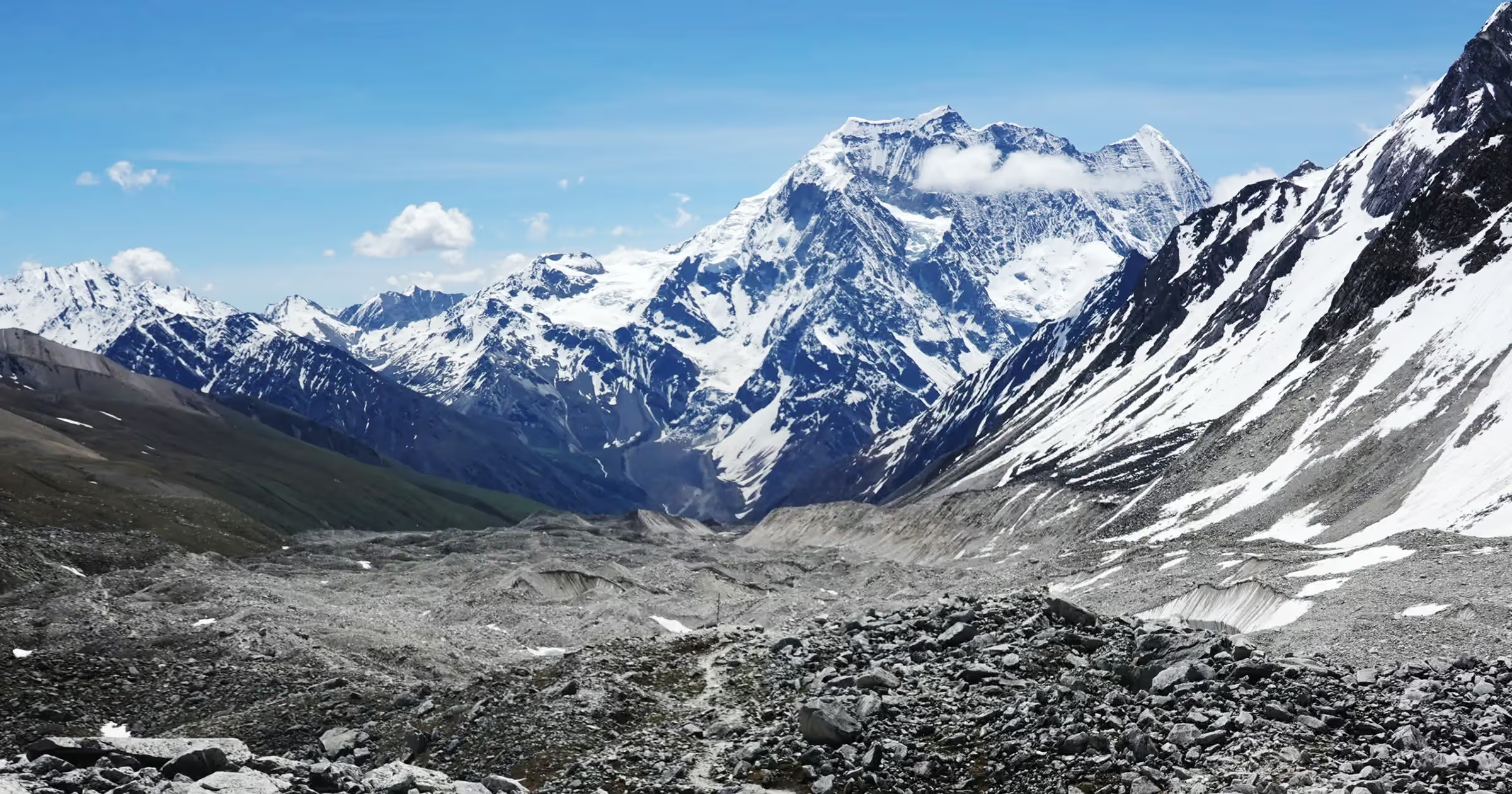
But, once you cross it, the pass rewards you with a 360 degree views of snow capped mountain peaks such as:
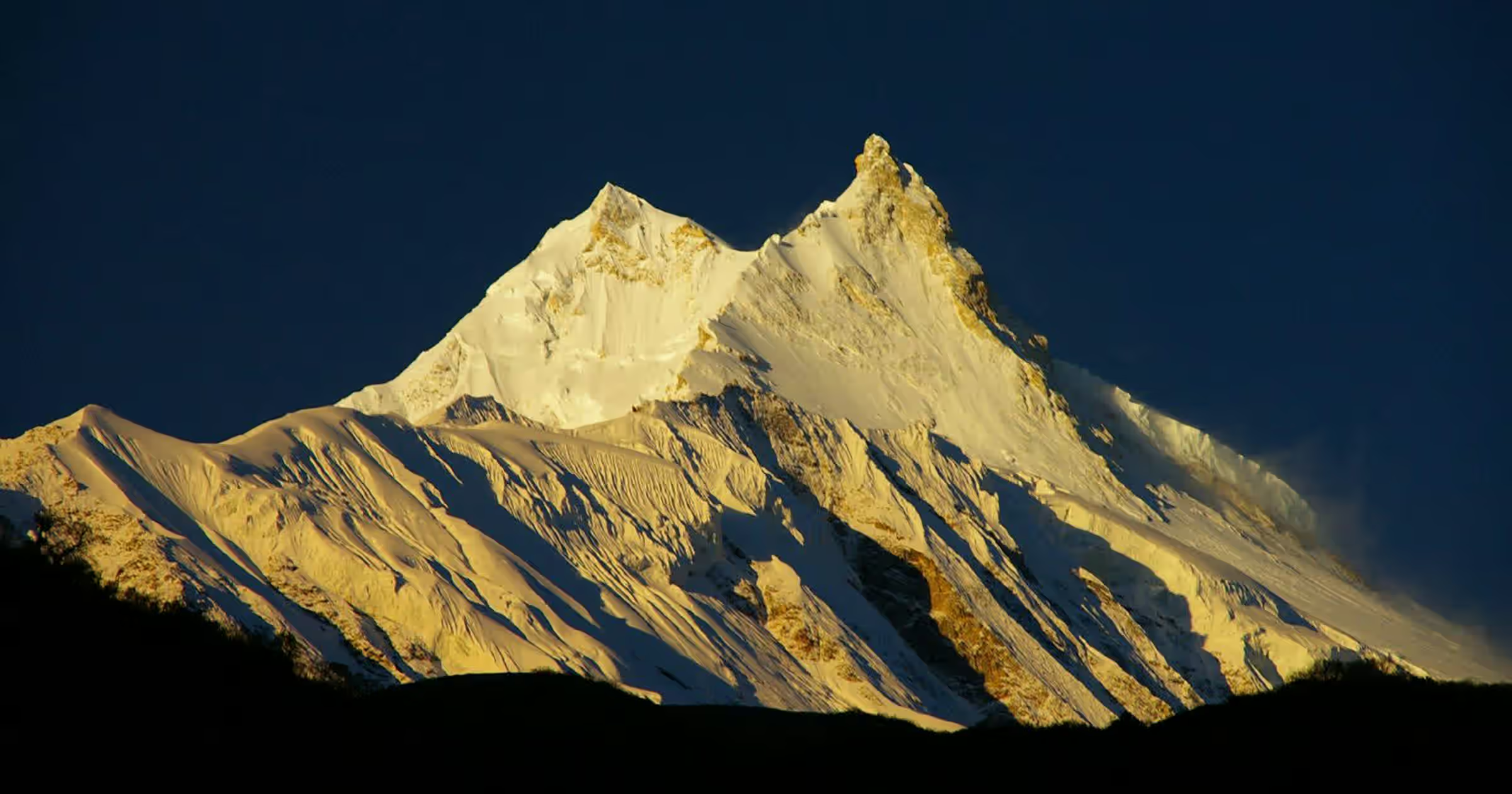
- Himlung Himal,
- Larke peak ,
- Cheo Himal,
- and Kang Guru, etc.
Tibetan Cultural Immersion
Larke Pass lies in Manaslu region which is inhabited by Gurung and Tibetan locals influenced by Tibetan Buddhism. During the trekking days, you will get enough time to have cultural interaction. Also, you will walk past ancient cultural and religious sites like:
- Mani walls (prayer stones),
- Fluttering prayer flags
- Pungyen Monastery
- Ribung Gompa etc.
Remote and Untouched Villages
You will be spending night at remote villages in Lho, Samgaun, Samdo where you will have insight of their day to day lifestyle. You will discover how people find happiness without the trappings of modernization, offering you a moment to pause and feel grateful for what you have. You can visit farms and yak pastures and also participate in seasonal cultivation or harvest and live like locals for some days.
Diverse Ecology and Rare Wildlife Encounters
You will begin your Larkay La pass trek in a sub-tropical forest filled with Pine and Rhododendron trees and move towards alpine meadows. You will also get to witness how alpine meadows convert into glacial valleys followed by high desert of Tibetan plateau.
As you will be walking inside these diverse ecology of Manaslu conservation area, you will get to encounter rare Himalayan wildlife such as:
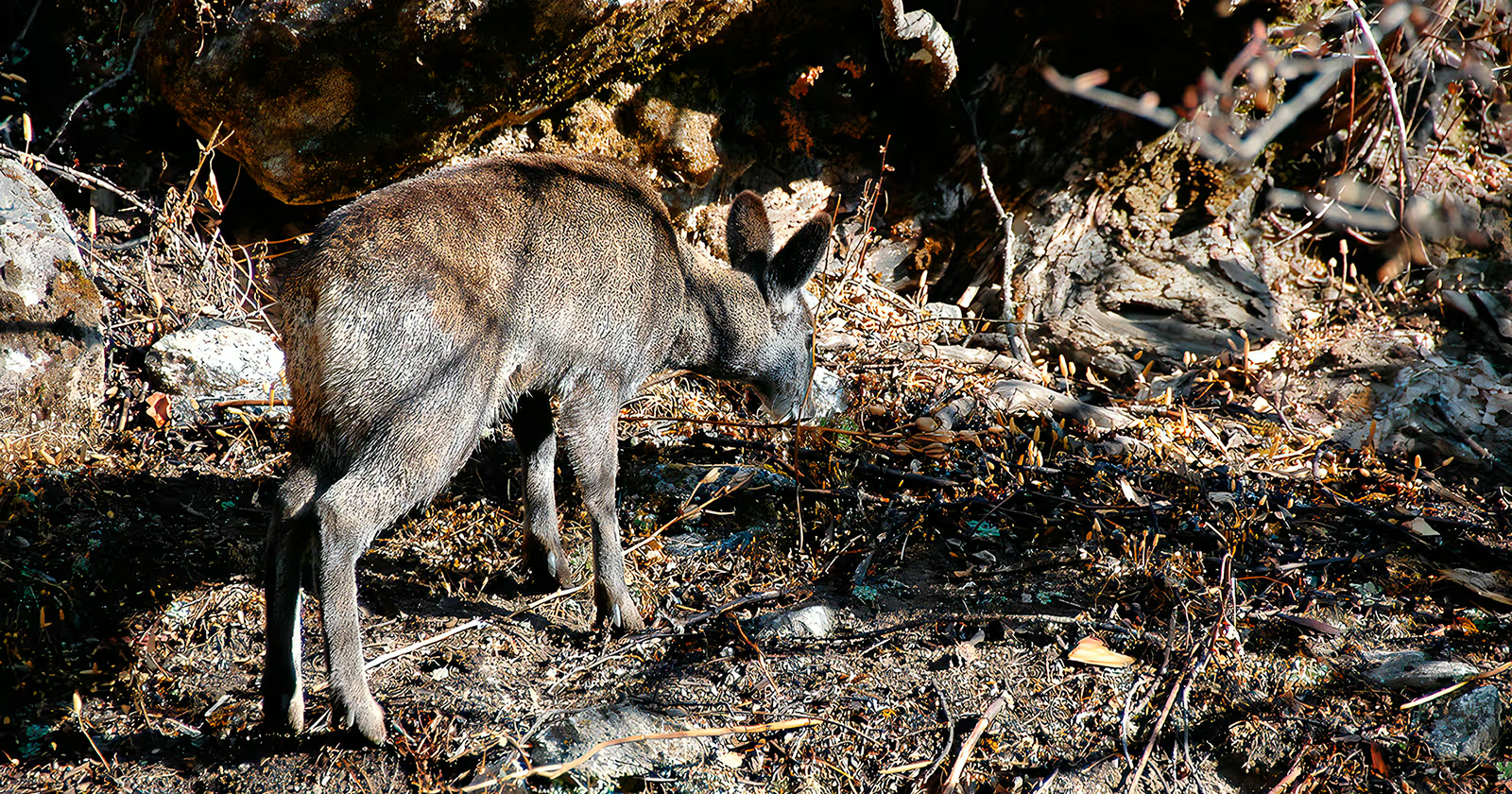
- Blue Sheep (Bharal)
- Himalayan Marmots
- Elusive Snow Leopard
- Himalayan tahr,
- Red pandas, and
- Musk deer.
Legendary Side Trek
When trekking to Larkye La Pass, you will get the opportunity to do side hikes such as Birendra Lake, Manaslu base camp, Rui La etc during acclimatization days. You will get a different perspective of killer mountain Manaslu from different side trips.
Why is Crossing Larkya La so Challenging?
The main difficulty of Manaslu Circuit Trek is to cross Larkya La Pass as it combines extreme altitude, distance, weather, and the longer hour of crossing day. Though, it does not demand climbing skills or ropes, but you will be walking 10 to 12 hours in an uphill section early in the morning.
You have to face freezing cold, strong winds, and oxygen level is quite low which makes it difficult to breathe. As the trail is filled with snow, you need to be careful and avoid slipping. This also challenges your body to manage your body temperature.
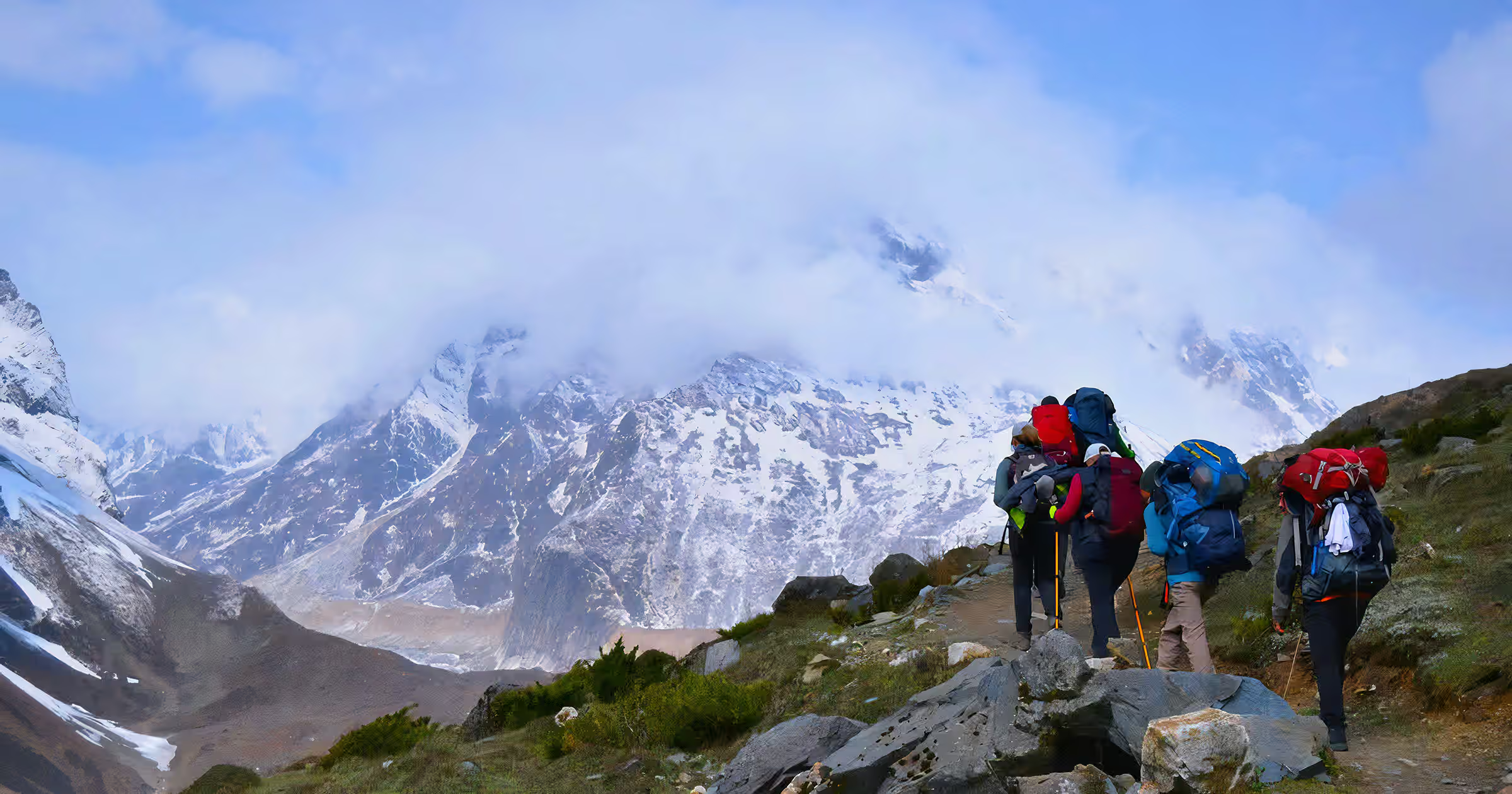
As a result, it requires you to have enough leg strengths and physical preparation along with mental readiness to face the upcoming challenges. Once you reach the pass, another challenge is waiting for you, that is to descend downhill.
Your legs become tired after walking uphill for 4 to 5 hours and traversing in loose rocks, snow, and steep sections can make the downhill journey surprisingly demanding. Due to this, we suggest trekkers consider the Larkya La crossing as a full-day mountain expedition rather than simply a short hike to a viewpoint.
Larkya La Pass Crossing
Getting Ready at Dharamsala
Dharamsala is the final overnight stop before the Larkya La pass. You will be sleeping at an elevation of 4,460m at Dharamshala which is also known as Larkya Phedi.
There are only 3 lodges, constructed with stone, wood and tarpaulin roof which is made just to serve trekkers crossing Larke pass, so you will receive minimum facilities. During peak season, these three lodges get packed so, if you book your trek last minute, you will have to spend a night in tent.
Your evening at Dharamsala should be focused on rest and preparation. So, after dinner, you will head to sleep and make your climbing days gear ready such as:
- Clothing and trekking equipment
- Place your gloves, hat, down jacket, and other warm layers near your bed.
- Headlamp and batteries
- Water bottle ready with boiled water
- Pack snacks and chocolate in your backpack
- Setting the alarm according to your morning departure time.
Larke La Crossing Day
The extreme high altitude of Larke La pass brings high winds which continue increasing throughout the day. You will leave your bed at around 3 AM, and then after quickly freshen up and wearing warm layer, you will leave the lodge by having a warm breakfast around 4 AM in the morning.
Larkya La Pass (5,106m) is only 700m above the Dharamsala (4,460m), and the journey is quite challenging and harsh. Though you will be ascending gradually in straight terrain but you have to walk in the dark which demands cautiously planned steps.
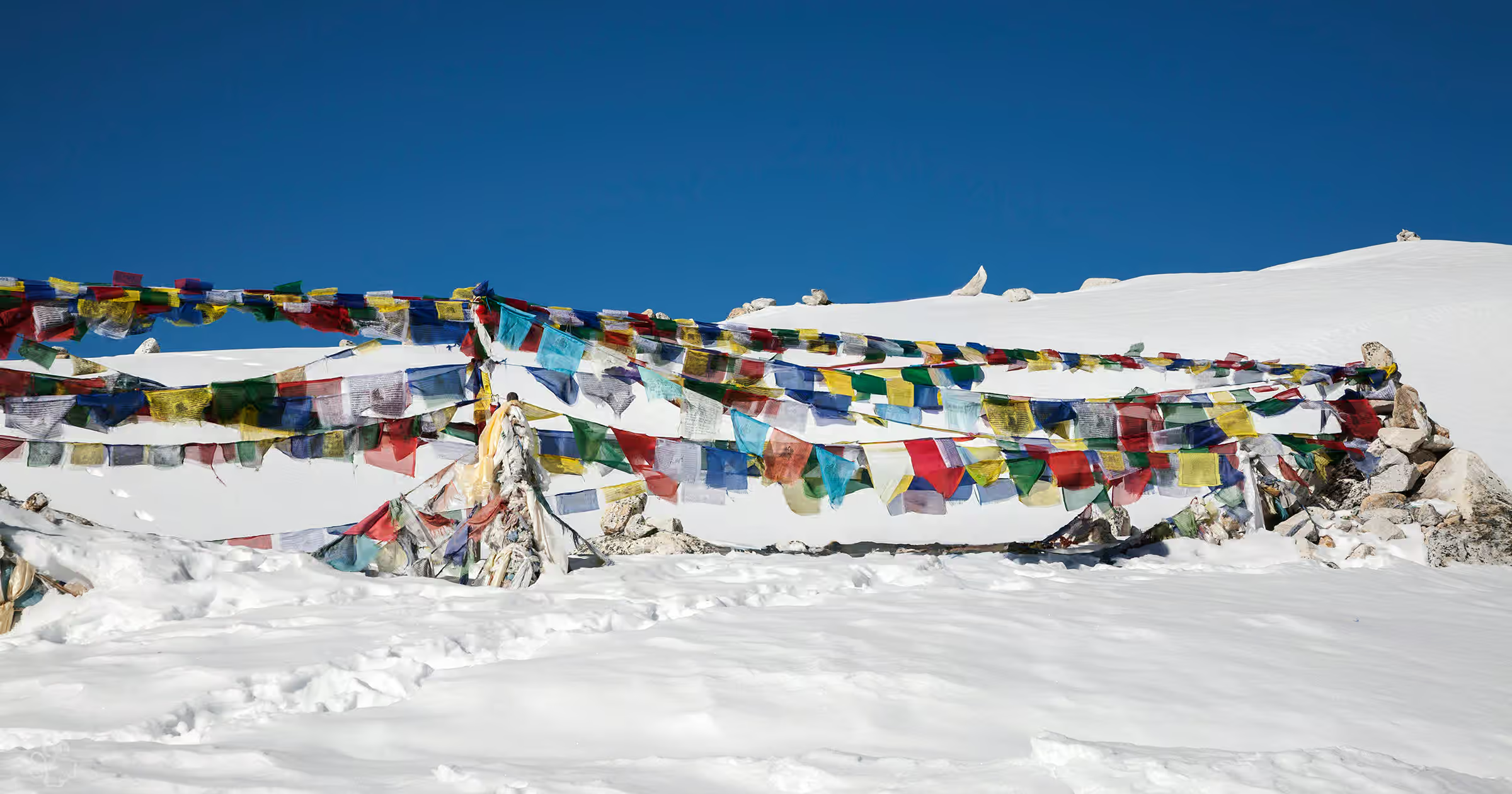
You will be traversing in rocky sections, moraine terrain, snow, and frozen areas depending on the season. It might get slippery so wear crampons or microspikes and use your trekking pole carefully and only step on designated trails.
The weather may change anytime so wear and pack every essential from layered clothing to sunscreen and sunglasses. After walking for around 3 to 4 hours, we will stop for a small tea break in a tiny hut.
This small break fuels you both mentally and physically and as you ascend, the sun starts to come up. You will reach the top of Larkya La Pass after continuously walking for the next 2 to 3 hours.
Reaching the Top of Larkya La
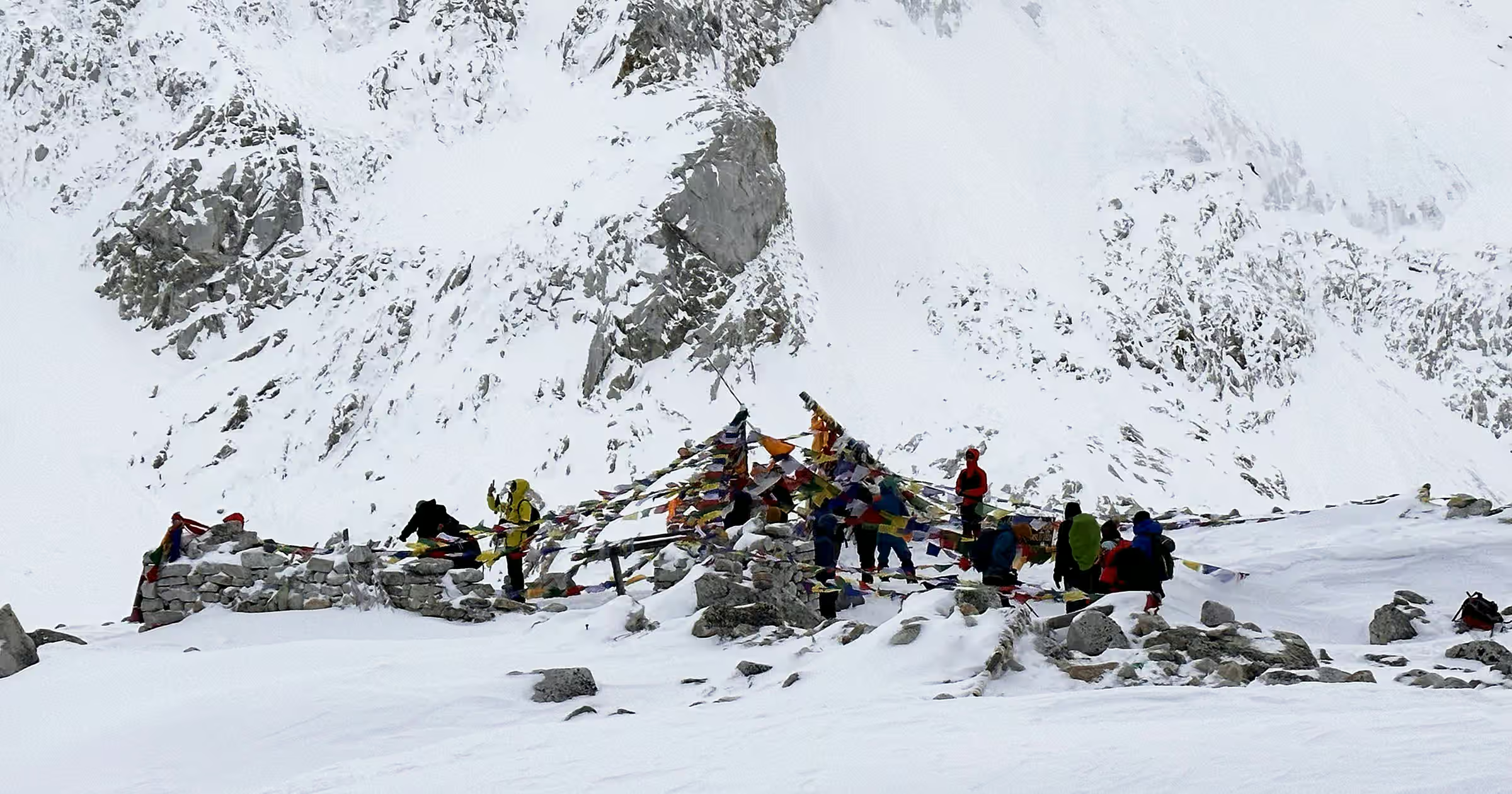
Once you reach Larkya La Pass, you will see two signs marking the summit which is decorated by colorful prayer flags. Those two signs marks the height 5,106 meters but it’s actually:
- Lower one: 5,135 m
- Higher one: 5,160 m.
Then, you will enjoy the beauty of surrounding panoramas such as Himlung Himal, Cheo Himal, Kang Guru, and Annapurna II. After clicking pictures, videos, and spending some time at top, you will begin your Larkya Pass descent.
Descend from Larkya La to Bhimthang
Larke Pass to Bhimthang journey is quite interesting and one should not underestimate it. Descending down in steep terrain with a strong wind may feel more tiring as your leg muscle has been already tired from the ascent hike but the changing views of mountains, valleys, glaciers, and alpine landscapes is always there to make you forget the pain and hardship.
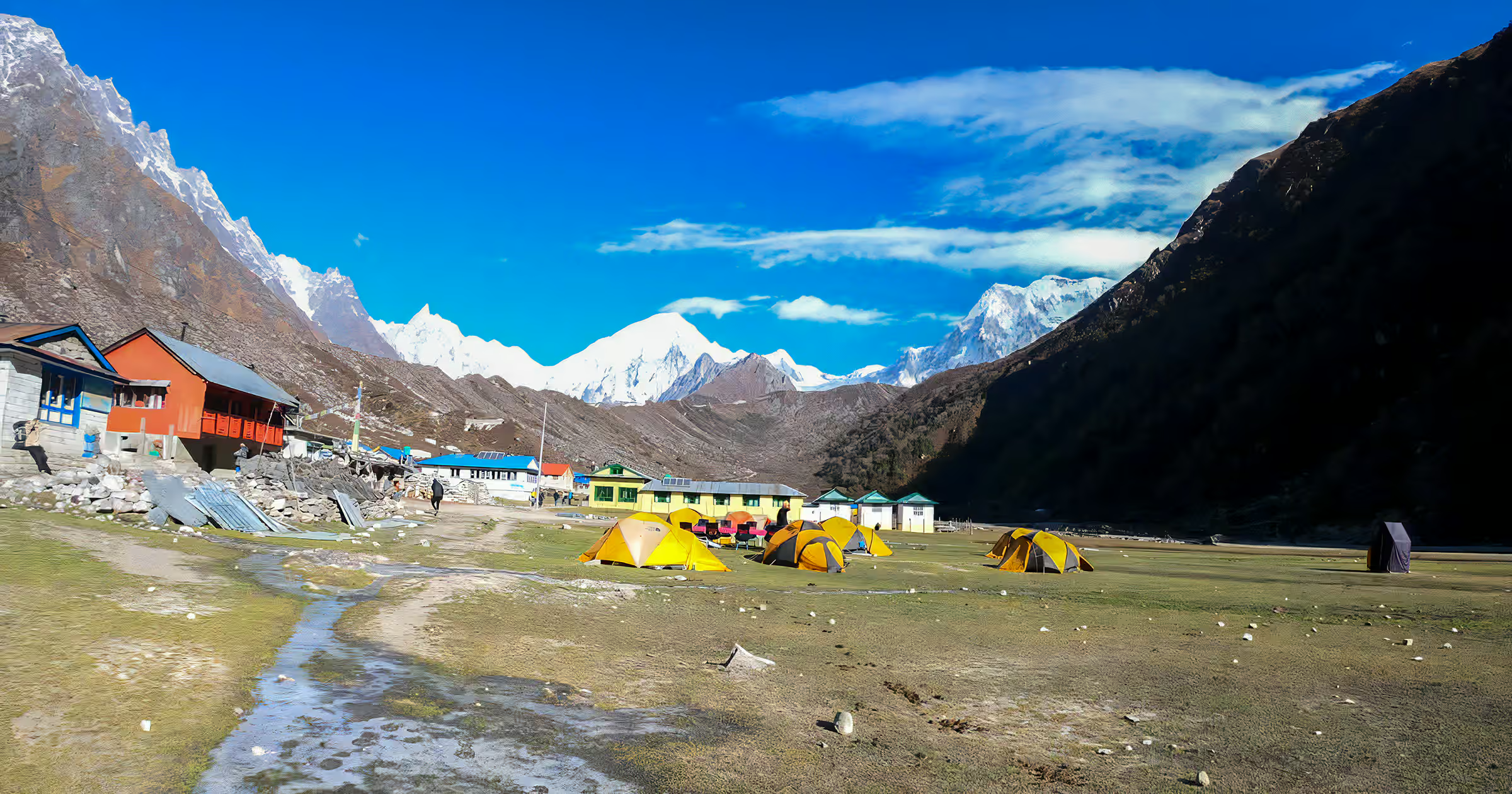
You have to use your trekking poles carefully and we suggest you to:
- Avoid rushing as it may make you fall.
- Use trekking poles on steep sections.
- Take short breaks instead of very long stops.
- Drink regularly.
- Eat small snacks throughout the day.
- Watch your footing on loose rocks.
- Keep your waterproof layers accessible.
- Follow your guide’s instructions around snow and exposed sections.
Altogether you will spend 11 to 12 hours on trails to ascend and descend. Trekkers should focus only on walking and enjoying the surrounding beauty of nature without thinking of it as a marathon.
Once you arrive in Bhimthang, U-shaped valley, Phungi Himal and Thualgi peak is waiting to surprise you.
Manaslu Circuit Trek Itinerary
Manaslu circuit trek usually starts from Machha Khola and ends when you arrive in Dharapani. Here is our 13-day Manaslu circuit trek itinerary for fixed departure:
- Day 1: Drive from Kathmandu (1,300 m)to Machha Khola (930 m)
- Day 2: Trek from Machha Khola to Jagat (1,340 m)
- Day 3: Trek from Jagat to Deng(1,804 m)
- Day 4: Trek from Deng to Namrung (2,630 m)
- Day 5: Trek from Namrung to Shyala( 3,575 m)
- Day 6: Shyala to Sama Gaun (3530 m)
- Day 7: Acclimatization Day (Day Trip to Manaslu Base Camp or Pungyen Gompa)
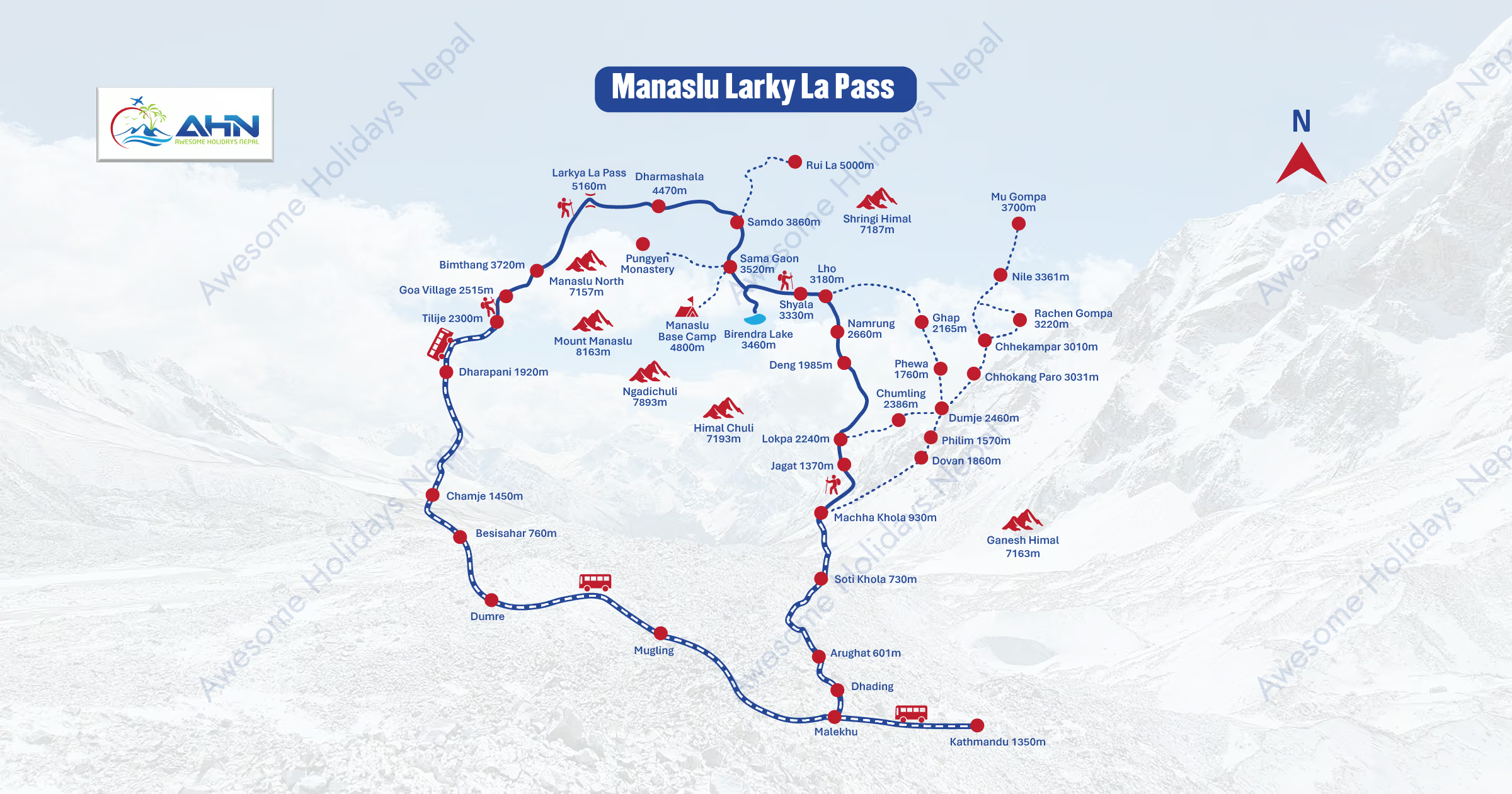
- Day 8: Trek from Sama Gaun to Samdo (3,865 m)
- Day 9: Acclimatization Day
- Day 10: Trek from Samdo to Dharmasala ( 4,460 m)
- Day 11: Trek from Dharmasala to Bimthang (3,590 m) via Larkya Pass (5,106 m)
- Day 12: Trek from Bimthang to Dharapani (1860 m)
- Day 13: Drive from Dharapani to Kathmandu or Pokhara (Drive)
Difficulty Level of Larkya La Pass Trek
Crossing Larkya La Pass is one of the most physically demanding sections of the Manaslu Circuit Trek. The trek takes you to a maximum elevation of 5,106 meters where oxygen levels are almost less than half of what they are at sea level.
You need to walk at a slow pace continuously for 10 to 12 hours which makes you physically drained no matter how fit you are. Also, you have to face freezing cold temperatures and traverse in the dark morning while dealing with strong winds.
The final part of the trail is filled with snow which makes it difficult to take proper steps and you have to carefully use your trekking poles. Once you reach the summit, you have to descend in a steepy trail towards Bhimthang which is quite challenging as you will feel difficult to balance with your tired legs which may make you fall or slip in an icy terrain.
You are also more prone to altitude sickness, so use your rest days in Samgaun and Samdo well. Also, make sure you hydrate yourself throughout the day and keep munching snacks and energy bars for instant fuel.
Best Time to Cross Larkya La Pass
Weather in the high altitude of the Himalayas like Larke Pass changes within minutes, so you need to plan your trek in the best time so that your journey to Larkya La becomes successful.
Spring
The best time to cross Larke Pass is in Spring (March to May). As it offers clear skies, mild temperatures and clear mountain views, Spring is considered as the best season for Nepal trek.
You may see traces of snow around the pass in the season, but the lower parts of the route become greener as temperatures rise. Daytime temperatures range around -5°C, while it drops to -10°C to -15°C or lower at nights and early mornings.
Autumn
Autumn from September to November is considered as another best season for trekking in Nepal. This time of the year is drier, and clear mountain views can make the high-altitude crossing especially scenic. Also, this season allows you to participate in the Dashain and Tihar festival among locals of Manaslu.
- Daytime temperature: 0°C to 8°C
- Nighttime Temperature: -10°C to -15°C (14°F to 5°F)
Winter
Winter from December to February brings much colder conditions and snowfall is extreme at high elevations. Due to heavy snowfall, it makes crossing the pass difficult and is often blocked by deep snow.
You have to face extreme alpine conditions of daytime highs around -15°C and nighttime lows plunge past -25°C (-13°F). With strong winter preparation, you can complete the trek but you need to face extreme weather difficulties during crossing day.
Monsoon
Another season we suggest trekkers avoid unless they are experienced or regular ones is Monsoon (June to August), as the trails become muddy and there are high chances of landslides which may temporarily block the trail. This will make you stranded in a remote village of the Manaslu circuit trek but if you have enough holidays you can live like locals with villagers.
The temperature is quite mild and is around 5°C, the extreme rainfall makes the trails wet and you have to also deal with persistent winds which will make your trekking journey bitterly miserable.
Permits and Other Requirements
The Larkya La Pass trek demands three permits as is inside the restricted zone of the Manaslu region. You will need:
- Manaslu Restricted Area Permit (RAP)
- Manaslu Conservation Area Permit (MCAP)
- Annapurna Conservation Area Permit (ACAP)
| Permit | Requirement / Coverage | Cost |
|---|---|---|
| Manaslu Restricted Area Permit (RAP) | Compulsory for all trekkers heading from Jagat to Samagaun. |
|
| Manaslu Conservation Area Permit (MCAP) | Mandatory as you will be entering the Manaslu Conservation Area | NPR 3,000 per person (approximately USD 25) |
| Annapurna Conservation Area Permit (ACAP) | After crossing Larkya La Pass, you will head toward Bimthang and Dharapani of Annapurna region. | NPR 3,000 per person (approximately USD 25) |
As you will be traversing inside the restricted zone, you need to hire a licensed trekking guide from a Government registered trekking agency. Without hiring a guide, you are not eligible for a restricted area permit.
Most of the trekking companies like Awesome Holidays Nepal manage logistics including permit application and collection, make sure you book your trek with us so that you can enjoy your trek without any hassle.
What to Pack for the Larkya La Crossing
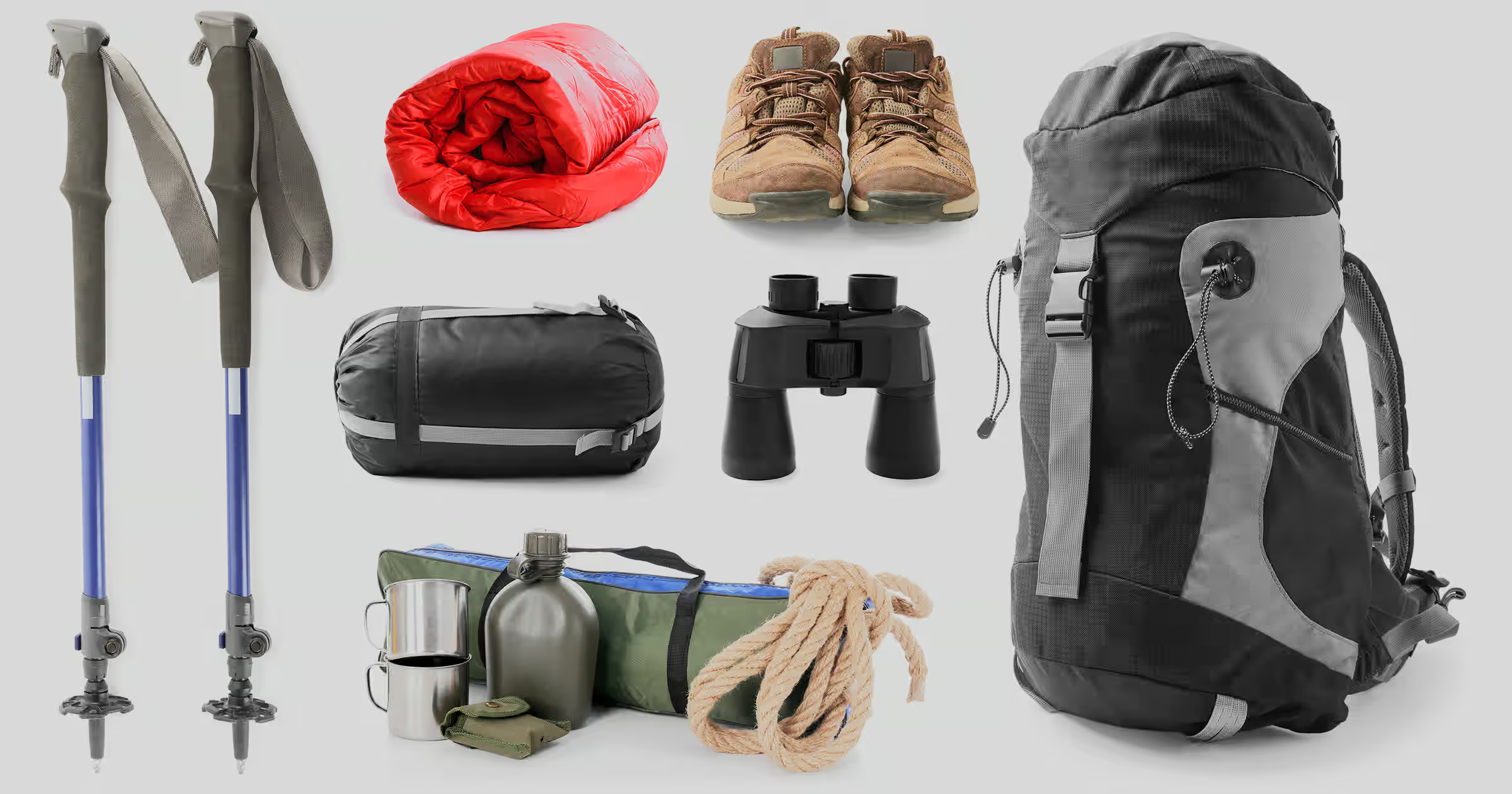
You need to have enough packing in order to complete your Larkya La Pass successfully. Make sure you have the following list before you step in the trailhead.
Trekking Gear
- Sleeping bags rate to zero degrees
- Backpack with rain cover (recommended size about 35-45 liters)
- Sleeping bag liner
- Duffel Bag
- Hiking poles, Headlamps
Basic Clothing
- Warmers and technical fabric base layer
- Comfortable pants
- Sleeping wear/night suits
- Undergarments and sports bra
- Technical fabric short and long sleeve shirts
- Technical fabric base layer for lower body
- Hiking pants, Hiking shorts
Warm Clothes
- Body warmer tops and pants, Warm pants
- Fleece jacket/pullovers
- Wool or technical fabric
- Hard shell outer gloves
- Warm caps/Knitted hats
Feet Protection
- Hiking socks
- Wool or liner socks
- Casual shoes, pair of slippers
- Ice cleats/Microspikes (for trekking on wet surfaces, specifically from November to March)
- Gaiters (for winter treks)
Snow Rain Protection
- Waterproof/Windproof jackets
- Waterproof/Windproof pants
- Hard-shell outer gloves, Raincoats
Sun Protection
- Caps or Sun hat
- Sunglasses, Shades (preferably polarized)
- Sunscreen
Essential Medicine and First-Aid
- Cough syrups, Ointments
- Antiseptic creams
- Mosquito repellents
- Electrolyte
Planning to Cross Larkya La Pass in 2026?
Or Call/Message on WhatsApp +977 98434 13619
Other Necessities
- Toiletry kit
- Passport
- Extra copies of passport-sized photos (required for permits and other docs)
- Reusable water bottle
- UV water purifier or Water purification tables
- Hydration bladder
- Towel
- Pillowcases
- Waterproof bags (for carrying money and necessary documents)
Final Verdict on Larke La Pass
Larkya La Pass at 5,106m is not only a single milestone on the map but it is the highest point of the Manaslu circuit trek which will last in your heart even after years and years. With enough physical endurance, mental preparation, proper acclimatization, you can overcome the difficulties of Manaslu trek and the crossing day of the Larke pass.
Once you reach the highest altitude at 5,106 meters of Larkya La Pass, all of the tiredness and fatigueness will be gone as you will be blessed with panoramic mountain views of Himlung Himal, Cheo Himal, and Kang Guru. Throughout your trekking days, you will get to witness changing landscapes, cultural immersion in different villages, different memorable side trips, serene and less crowded trekking trails.
If you also want to test your endurance and patience, you should definitely do, Larkya La Pass trek for your next adventure. And, always remember Awesome Holidays Nepal for a safe and memorable trip in 2026/2027.
FAQs
Expand AllHow much does the Manaslu Circuit Trek cost?
Manaslu Circuit Trek of 14 to 16 days costs between USD $900 and $1,500 per person when package is booked with guide.
How hard is the Manaslu Circuit Trek?
The Manaslu Circuit Trek is moderate to challenging. Its long walking days, steep terrain, high altitude, and crossing of one of the demanding high pass, Larkya La Pass make it rated as difficult.
How many days is the Manaslu Circuit Trek?
The Manaslu Circuit Trek usually takes around 14 to 18 days, depending on the itinerary, your pace, physical fitness, and your travel style.
What is the best month for the Manaslu Circuit Trek?
March to May and September to November offer relatively stable weather and mountain visibility is good which is why these are the best month for the Manaslu Circuit Trek.
What permits are needed for the Manaslu Circuit Trek?
Manaslu Restricted Area Permit, Annapurna Conservation Area Permit (ACAP), and Manaslu Conservation Area Permit (MCAP), are needed for the Manaslu Circuit Trek.
Is a guide required for the Manaslu Circuit Trek?
Yes. The Manaslu Circuit Trek requires trekkers to travel with a licensed guide by booking them through a registered trekking agency.
Can you trek the Manaslu Circuit solo?
No. You need to hire a licensed guide by booking them through a registered trekking agency.
What is the altitude of Larkya La Pass?
Larkya La Pass is elevated at an altitude of 5,106 meters (16,752 feet).
Is the Manaslu Circuit Trek worth it?
The dramatic Himalayan scenery, diverse landscapes, traditional villages, and less-crowded trails makes Manaslu Circuit Trek worth it in 2026.
How long does it take to cross Larkya La Pass?
Crossing Larkya La Pass usually takes around 10 to 11 hours depending on the weather condition and your physical fitness.
How difficult is Larkya La Pass?
Larkya La Pass is quite difficult as it one of the most challenging sections of the Manaslu Circuit due to its high altitude, long ascent, steep sections, and potentially snowy conditions.
What is the distance from Dharamsala to Bimthang?
The trek distance from Dharamsala to Bimthang is approximately 18–20 kilometers.
What is the best time to cross Larkya La Pass?
The best time to cross Larkya La Pass is usually early in the morning during the spring or autumn trekking seasons.
What is the weather like at Larkya La Pass?
The weather at Larkya La Pass can be freezing cold, windy, and unpredictable, with snow and low visibility possible even during the main trekking seasons.
What altitude-sickness risks are there on the Manaslu Circuit?
As you will start your trekking from low elevations around 700 meters up to a staggering Larkya La Pass at 5,106 , the elevation gain, longer walking hours, may make your body tired and make you susceptible to altitude sickness risk.
Is Larkya La harder than Thorong La?
Larkya La is more demanding and fatiguing due to rougher terrain, remote isolation, and it takes around 9 to 11 hours to cross the pass whereas Thorong La(5,416) metres is harder on the respiratory system because of its higher altitude.
Is Larkya La Pass dangerous?
The high altitude, rapidly changing weather, snow, strong winds, freezing cold, lower oxygen availability, and difficult terrain makes Larkya La Pass very dangerous.
How cold is Larkya La Pass?
Larkya La Pass temperature is below freezing point most of the time so it is very cold. In September, the daytime temperature ranges from 1°C to 4°C while it drops to 0°C to -2°C at night.
What is the route from Dharamsala to Bimthang?
From Dharamsala, the route take you to Larkya La Pas and then the steep descend through the glacial landscape toward the Bimthang Valley, and continues to Bimthang village.
Do I need crampons for Larkya La Pass?
Crampons are not always necessary but lightweight microspikes becomes useful when snow and ice cover the trail.
Related blog posts
Discover a choice of tourist destinations loved by most of our visitors. Whether you're on a jungle safari to spot rare animals or walking through a world heritage site, these well-planned itineraries cover the major highlights of Nepal.
 call an expert at: