
Sleeping Bag Temperature Ratings for Nepal Treks: Season by Season Guide
 Sristi Adhikari
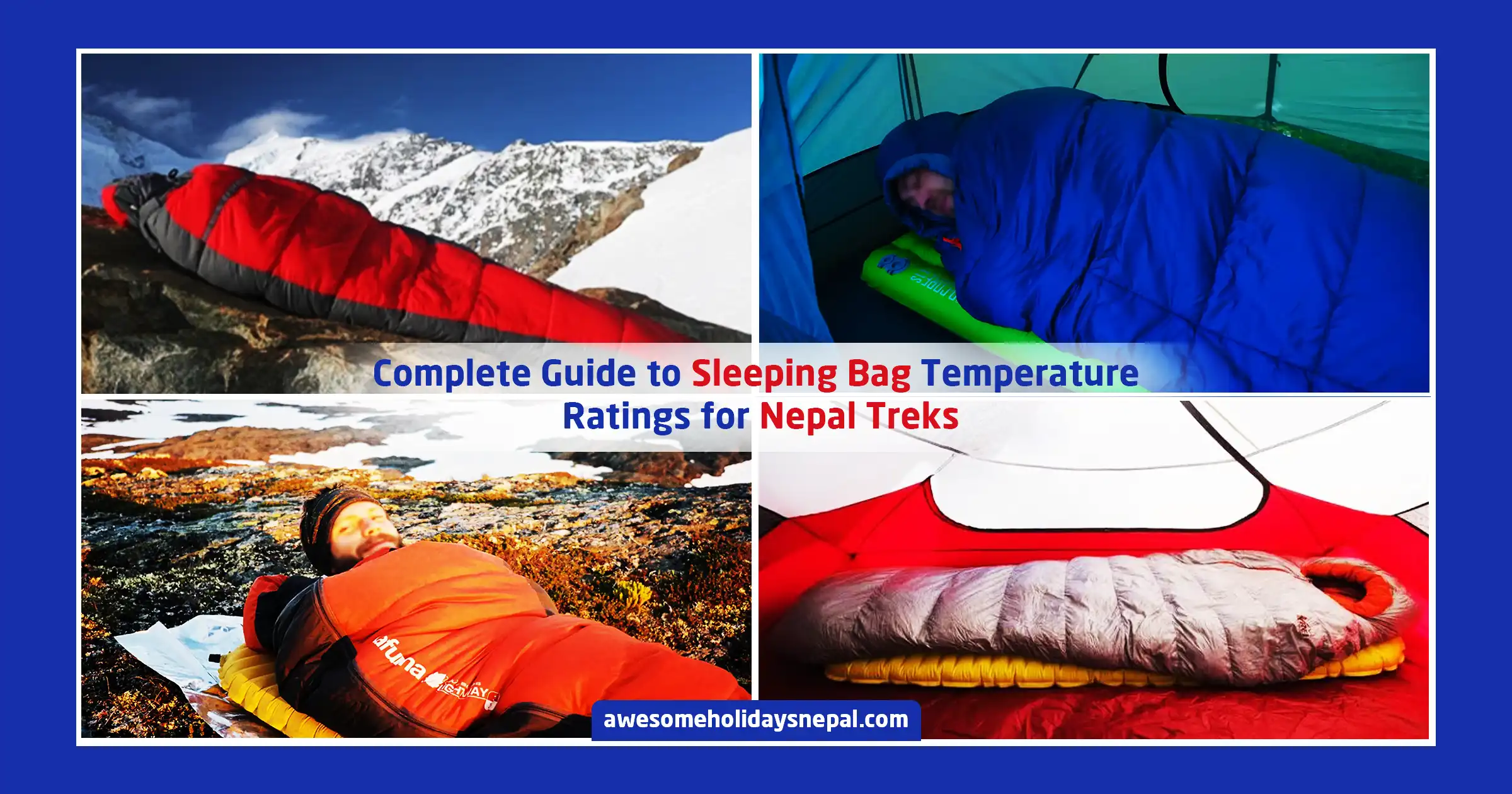
Planning a Himalayan adventure requires more than choosing the right trekking route and packing a sturdy pair of boots. Staying warm at night is equally important, especially when your journey takes you through remote mountain villages and high-altitude landscapes.
Understanding Sleeping Bag Temperature Ratings for Nepal Treks helps you select suitable gear for changing weather conditions, freezing nights, and different trekking seasons. Nepal offers an incredible variety of trekking experiences, from the relatively gentle trails of Ghorepani Poon Hill to the challenging routes around Everest Base Camp and the Annapurna Circuit.
However, temperatures fluctuate depending on elevation, season, weather and your sleeping bag that works perfectly in a lower-altitude teahouse may not provide enough warmth at a mountain lodge located above 4,000 m. Choosing the appropriate sleeping bag does not mean buying the most expensive or warmest model but you should understand about the temperature ratings, maximum elevation you will reach, and prepare accordingly.
Why Sleeping Bag Temperature Ratings for Nepal Treks Matter
Most of the Nepal trekking trails take you to an elevation above 5000 meters where climate can change dramatically within a certain period of time. The daytime temperature becomes comfortable for walking but at night the temperature may suddenly plummet below freezing points.
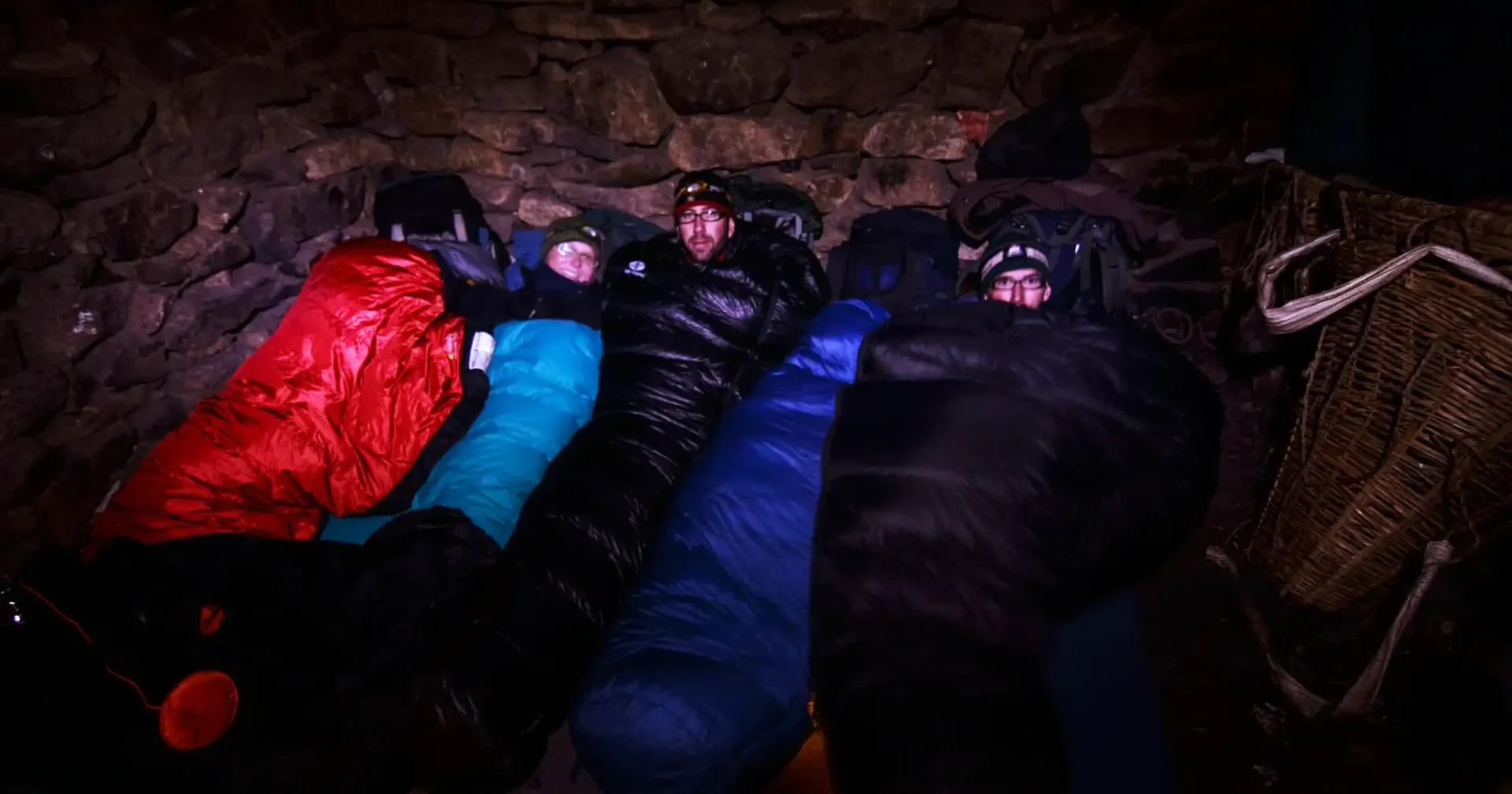
The bedrooms of available teahouses and homestays at high altitude are often unheated and provide only one blanket. So having a sleeping bag with an appropriate rating provides body warmth resulting in comfortable and deep sleep.
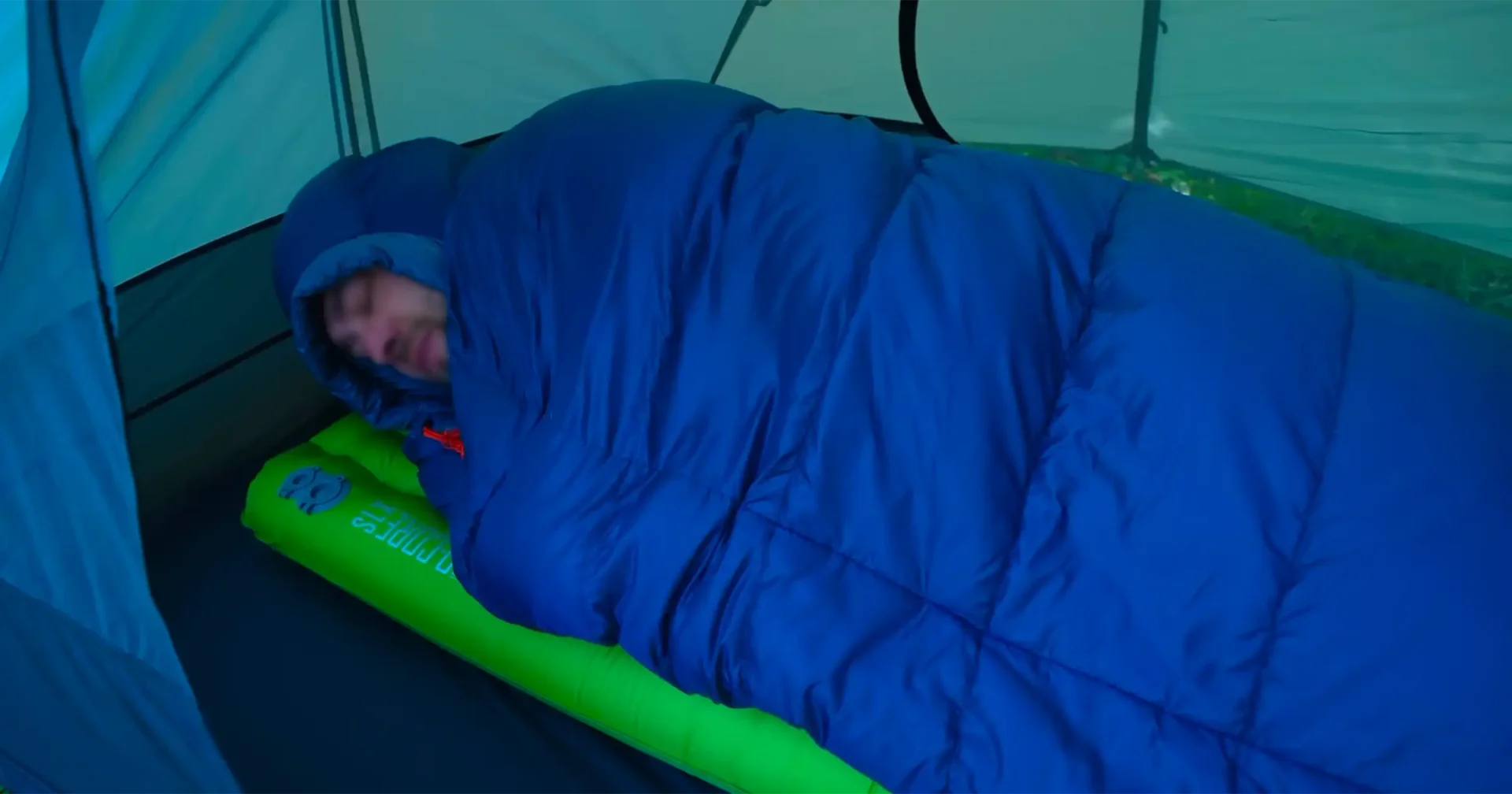
Deeper and enough sleep allows you to acclimatize easily as you are gaining elevation daily and it aids with sore muscle recovery and fatigue reduction. Beside this, sleeping bags also protect you from extreme cold, especially at higher elevation.
If you bring your own sleeping bag, you don’t need to depend on additional blankets in mountain lodges and it makes you prepare for the longer hour of the next day’s trek.
Understanding Sleeping Bag Temperature Ratings for Nepal Treks
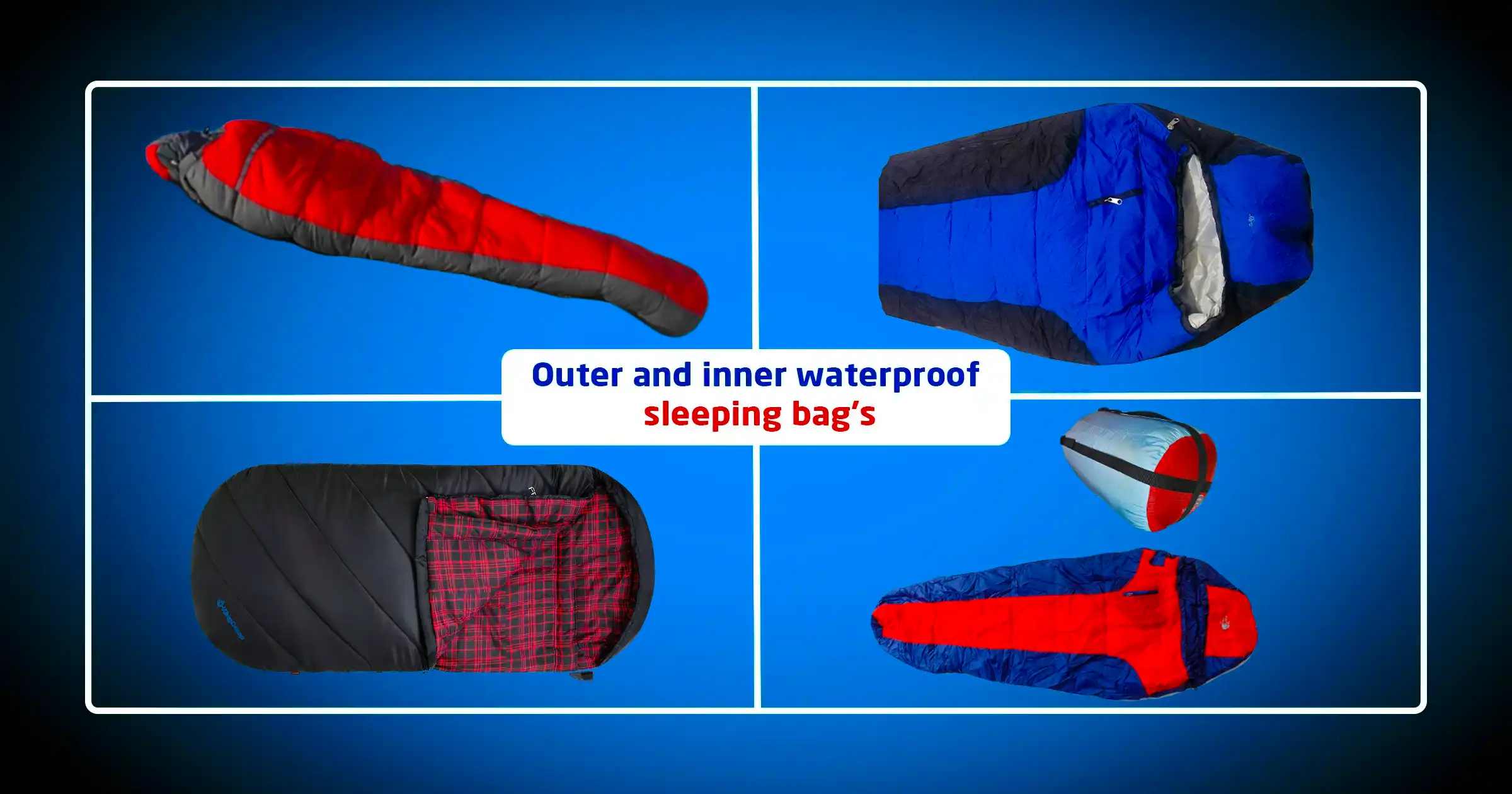
In order to find the best sleeping bag temperature, you need to understand what the number on the sleeping bag actually means. Also, you need to focus on comfort and lower limit rating rather than depending on the coldest number printed on the packing.
Most of the market available sleeping bags are often tested under the European EN 13537 standard and they are of following temperature rating:
Upper Limit Rating
It is the highest temperature at which an adult man can sleep without sweating excessively at night.
Comfort Rating
Comfort rating is one of the best suited sleeping bag temperature ratings of Nepal treks as it offers temperature where a standard adult woman of 25 years with 60 kg weight, and 160 cm height woman get comfortable and relaxed sleep at night.
Lower-Limit Rating
The lower-limit rating indicates a colder sleeping condition than the comfort rating and is based on a standard adult man of 25 years with 80 kg weight and 173 cm height can sleep for a whole night in a curled position. It is often marketed as the main and best sleeping bag temperature ratings for Nepal treks.
Extreme Rating
It offers a minimum temperature at which one can survive a colder night but cannot sleep comfortably. It helps prevent risk of hypothermia and is not reliable for general use which is why one should not buy this kind of sleeping bag temperature ratings for Nepal treks.
Most of the Nepal trek which takes you above 4,000 m elevation, where night gets extreme cold, comfort rating sleeping bag are best and reliable to guide you.
Season By Season Sleeping Bag Recommendation
Comfort rating sleeping bags are recommended for Nepal trek as each trekking season brings different challenges. The recommended comfort temperature rating for different season are mentioned below:
Spring (March to May)
During spring season daytime temperature is quite warm but the nighttime temperature falls below freezing points at higher elevation such as:
- Everest Base Camp,
- Annapurna Circuit, or
- high mountain passes.
Comfort rating sleeping bag temperature ratings for Nepal Treks in spring season in terms of altitude are listed below:
| Trek / Route | Trekking Category | Maximum Elevation | Recommended Sleeping Bag Comfort Rating (Spring) |
|---|---|---|---|
| Ghorepani Poon Hill | Lower-altitude trek | 3,210 m | 0°C to -5°C |
| Annapurna Base Camp (ABC) | High-altitude teahouse trek | 4,130 m | -5°C to -10°C |
| Annapurna Circuit | Colder high-altitude trek | 5,416 m (Thorong La Pass) | -10°C to -15°C |
| Manaslu Circuit | Colder high-altitude trek | 5,106 m (Larkya La Pass) | -10°C to -15°C |
| Everest Base Camp (EBC) | Colder high-altitude trek | 5,545 m (Kala Patthar) | -10°C to -15°C |
| Everest Three Passes | High-altitude high-pass trek | 5,535 m (Kongma La Pass) | -15°C to -20°C |
Having a lightweight down sleeping bag with a well-insulated hood, a draft collar, and that fits you perfectly is highly recommended as it saves you from extreme night time cold temperatures and does not take much space in your bag.
Autumn (September to November)
It is another best season for Nepal trekking. The daytime temperature is often dry and warmer from lower to upper region but night often gets increasingly cold as the season progresses.
October conditions can differ substantially from those experienced in late November, especially at higher elevations. If you are planning to trek in Autumn season, we have estimated sleeping bag temperature ratings for Nepal treks:
| Trek Category | Route Names | Recommended Comfort Rating (Autumn) |
|---|---|---|
| Lower-altitude treks | Ghorepani Poon Hill, Mardi Himal | 0°C to -5°C |
| Moderate to high-altitude treks | Langtang Valley, Annapurna Base Camp, | -10°C to -15°C |
| High-altitude teahouse treks | Everest Base Camp, Gokyo Lakes | Around -15°C to -20°C |
| Colder high-altitude routes | Annapurna Circuit, Upper Mustang, Manaslu Circuit | -10°C to -15°C |
| High-pass treks | Everest Three Passes and other exposed high-pass routes | Around -15°C |
For autumn, when you are spending overnight in lower altitude, three-season sleeping bag is appropriate but if your trek takes you to high altitude where night temperature drops seriously below freezing points, a four-season sleeping bag is highly recommended.
Summer/ Monsoon (June to August)
The season brings heavy rainfall and quite warmer daytime temperatures which is why most of the high altitude treks are not recommended. As it is not peak trekking season, only those who want solitude plan the trek mainly in lower altitude regions and rain shadow areas.
Here, the nighttime temperatures are mild and it barely drops below freezing points. A comfort rating sleeping bags of around 0°C to +5°C may be sufficient for Nepal trek in lower altitude regions whereas a comfort rating of 0°C to -10°C is best for high altitude trek to rain shadow areas like Upper Mustang, Dolpo region, and Manaslu.
| Trek Category | Route Names | Recommended Comfort Rating (Monsoon) |
|---|---|---|
| Lower-altitude treks | Ghorepani Poon Hill, Mardi Himal, lower-altitude Langtang routes | 0°C to +5°C |
| High-altitude rain-shadow treks | Upper Mustang, Dolpo Region, Manaslu Circuit | 0°C to -10°C |
As it is a rainy season, your sleeping bag temperature ratings for Nepal treks needs synthetic insulation as it offers more damp tolerance than a down insulated bag.
Winter (December to February)
Winter trekking in Nepal demands careful preparation as high altitude trails become more slippery due to heavy snowfall. For winter trips, Sleeping Bag Temperature Ratings for Nepal Treks follows:
| Trek Category | Route | Recommended Comfort Rating (Winter) |
|---|---|---|
| Lower-altitude winter treks | Ghorepani Poon Hill, Mardi Himal, lower-altitude Langtang routes | -10°C to -15°C |
| High-altitude winter treks | Everest Base Camp, Annapurna Base Camp, Annapurna Circuit, Manaslu Circuit | -20°C to -25°C |
| Severe cold / remote camping expeditions | Everest Three Passes, Island peak climbing, remote high-altitude camping and winter expeditions |
|
Which to Choose: Down vs Synthetic Sleeping for Nepal Trek?
Sleeping bags are designed differently to withstand different temperature conditions. Depending on the insulation types, there are two types of sleeping bags they are:
- Down sleeping bags
- Synthetic sleeping bags.
Choosing between down vs synthetic sleeping bags matter as much as sleeping bag temperature rating for Nepal Treks.
| Components | Down Sleeping Bag | Synthetic Sleeping Bag |
|---|---|---|
| Insulation Material | Natural duck or goose down | Man-made synthetic fibres |
| Warmth-to-Weight Ratio | Excellent warmth with less weight | Heavier for similar warmth |
| Weight | Lightweight | Relatively heavier |
| Packability | Compresses smaller | Bulkier when packed |
| Warmth in Wet Conditions | Loses insulating ability when wet | Retains more warmth when damp |
| Drying Time | Takes longer to dry | Dries relatively faster |
| Durability | Long-lasting with proper care | Generally shorter lifespan |
| Maintenance | Requires careful cleaning and storage | Easier to maintain |
| Price | More expensive | More affordable |
| Best For | Cold, high-altitude and winter treks | Wet conditions, budget trekking and humid environments |
| Recommended Treks in Nepal | Everest Base Camp, Annapurna Circuit, Three Passes and Manaslu Circuit trek | Ghorepani Poon Hill, Mardi Himal, Langtang and lower-altitude treks |
Should You Buy or Rent a Sleeping Bag in Nepal?
After knowing about, sleeping bag temperature ratings for Nepal treks, buying or renting a sleeping bag is one of the frequently asked questions by trekkers and expeditors when planning their Nepal trip. If you are those who plan the trek once in a blue moon or are a beginner trekkers, we suggest you rent a sleeping bag.
Planning a Nepal Trek in 2027?
Or Call/Message on WhatsApp +977 98434 13619
But, if you are trekking, having your own sleeping bag is best for Nepal trek. No matter whether you buy or rent, you need to have a clean sleeping bag liner for better warmth and for hygiene purposes also.
| Rent a Sleeping Bag | Buy a Sleeping Bag |
|---|---|
| Ideal for first-time trekkers | Best for frequent trekkers |
| Budget-conscious trekkers | Durable and guarantee of quality |
| Does not consume extra luggage space during International travel | Fits perfectly and offer high comfort. |
| Convenient for specialized sleeping bags | Provides consistent quality and warmth. |
| Found in outdoor shops in Thamel, Kathmandu and in Pokhara. | Allows you to compare brands, insulation and temperature ratings. |
| Cleanliness, zippers, stitching and insulation loft should be checked thoroughly. | Construction, insulation, sizing and temperature ratings should be checked before paying. |
| Need to check temperature rating of comfort or lower limit. | Choose a bag based on your trekking season and destination. |
Practical Tips for Staying Warm Inside Your Sleeping Bag
Trekkers need to use Sleeping bags properly otherwise the best rated ones will make you feel cold throughout the night. Here are few tips you need to follow so that you can have one of the best sleep during your Nepal trek in 2026/2027:
- Change your damp daytime worn clothing layers and wear dry thermal wear before entering inside the sleeping bag.
- Place the sleeping bag liner inside for additional insulation.
- Use an appropriate insulated sleeping mat if your trek demands you to spend overnight in a tent.
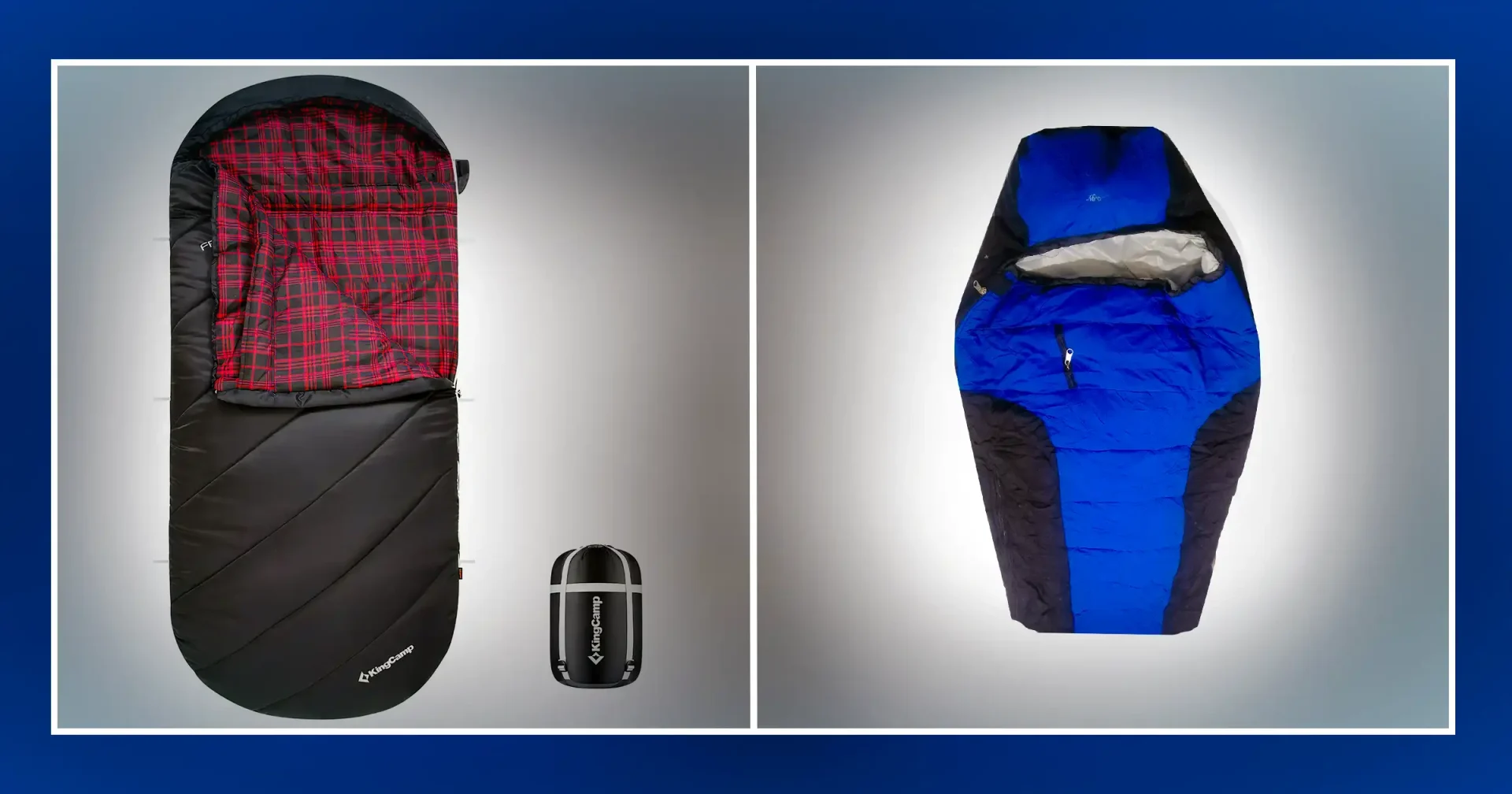
- Always make sure that sleeping bag is protected from rainfall and damp floor.
- When buying or renting make sure you choose the perfect size and have space to move your legs and body freely.
- Do not expect you will get sleeping bag in teahouses and bring your own.
- Inspect the quality when buying and if you are renting make sure it is not torn.
Conclusion
A successful Nepal trek depends on both daytime as well as nighttime preparation. Physical fitness, mental readiness, planning with certified operator, and prior previous experience of longer hour of trek comes inside the former preparation whereas later demands a warm sleeping gear for deeper sleep and proper acclimatization.
Bringing an appropriate sleeping bags is very important as it help you sleep comfortably in the remote mountain lodges of Nepal. Understanding Sleeping Bag Temperature Ratings for Nepal Treks begins with identifying your trekking route, estimating the highest elevation with coldest night, and comparing the comfort ratings of available sleeping bags.
The comfort rating of sleeping bag varies as per season and bringing a right one is very important for a comfortable sleep and protection against extreme cold. If you are also preparing for your next Himalayan trails make sure you focus on nighttime preparation and select best Sleeping Bag Temperature Ratings for Nepal Treks and fully enjoy Nepal’s remarkable landscape.
Ready for next Nepal adventure? Contact Awesome Holidays Nepal for planned and curated itineraries for 2026/27.
FAQs
Expand AllDo I need a sleeping bag for Everest Base Camp?
Yes. A warm sleeping bag with around a -10°C comfort rating is recommended for the Everest Base Camp trek.
Are tea house bedrooms heated in Nepal?
No. Tea house bedrooms are not heated in remote Himalayas of Nepal.
What temperature rating sleeping bag for Annapurna Circuit?
A sleeping bag with a -10°C to -15°C comfort rating is recommended for the Annapurna Circuit during peak trekking season.
Are teahouse blankets enough in Nepal?
Teahouse blankets are only sufficient at lower elevations so you need to carrying your own sleeping bag at higher elevation. It aids reliable warmth and hygiene.
How cold does it get at night on the EBC trek?
Nighttime temperatures on the Everest Base Camp trek can drop below -10°C to -20°C.
How much does sleeping bag rental cost in Kathmandu?
The sleeping bag rental cost in Kathmandu ranges from NPR 100 to NPR 400 per day.
What degree sleeping bag for Poon Hill trek?
A sleeping bag with a 0°C to -5°C comfort rating is generally suitable for the Poon Hill trek.
Can you rent a sleeping bag in Kathmandu?
Yes, you can rent a sleeping bag in Kathmandu’s stores like Rental Trekking Gear (HIMAL OUTDOOR), Shona’s Alpine, Himalaya Gears (Trekking shops in Thamel, Kathmandu) etc.
Do I need a sleeping bag liner for a Nepal trek?
Yes, sleeping bag liner is very important for a Nepal trek.
How cold is Lobuche and Gorak Shep at night?
Lobuche’s nighttime temperature ranges from -12°C to -5°C while Gorak Shep is one of the coldest night of the trek with temperature ranges of -18°C to -10°C.
What size backpack for Nepal with a sleeping bag?
A 50L to 65L backpack is recommended with a sleeping bag, if you are carrying it yourself.
What is the comfort rating for an Everest Base Camp sleeping bag?
A sleeping bag with a -10°C comfort rating is a good starting point for the Everest Base Camp trek.
What sleeping bag do I need for Nepal in October?
A sleeping bag with a -5°C to -10°C comfort rating is need for Nepal in October.
What is the best 4-season down sleeping bag for Nepal?
Mountain Equipment Helium 600, Rab Ascent Down (-12°C), Mountain Hardwear Phantom Series, Alpkit Andes Infinium 800 are some of the best 4-season down sleeping bag for Nepal.
What sleeping bag temperature for the Manaslu Circuit?
A sleeping bag with a -10°C to -15°C comfort rating is recommended for the Manaslu Circuit during peak trekking season.
Is a 4-season sleeping bag necessary for Nepal?
A 4-season sleeping bag necessary if your Nepal trek takes you to an elevation above 3,000 to 4,000 meters.
What sleeping bag do I need for Nepal in Spring?
A 0°C to -5°C Sleeping Bag Temperature Ratings for Nepal Treks is required for a lower-altitude spring treks while you will need -10°C or colder ratings for high altitudinal region.
Is a 3-season sleeping bag warm enough for Nepal?
Yes. A three-season sleeping bag can be sufficient for lower-altitude and warmer-season treks.
Does my porter carry my sleeping bag?
If you hire a porter, then your sleeping bag will be carried by him.
Quilt vs. sleeping bag for Everest Base Camp?
A traditional sleeping bag is the better choice for Everest Base Camp than quilt because it provides more reliable insulation and protection against cold mountain temperatures.
Related blog posts
Discover a choice of tourist destinations loved by most of our visitors. Whether you're on a jungle safari to spot rare animals or walking through a world heritage site, these well-planned itineraries cover the major highlights of Nepal.

 call an expert at: