Nepal Restricted Area Permit 2026: Solo Trekkers Now Allowed
 Sristi Adhikari
Nepal has introduced one of the biggest changes to its trekking regulations in recent years. As of 22 March 2026, foreign solo trekkers can now obtain a Restricted Area Permit (RAP) without having to join another trekker to form a group.
This landmark decision opens the door for independent adventurers who have long dreamed of exploring Nepal’s most remote Himalayan regions. While the group requirement has been removed, trekking in restricted areas is not completely independent.
Solo trekkers must still travel with a licensed Nepali guide, and all permits must be processed through a government-registered trekking agency. In this guide, we’ll explain everything you need to know about Nepal’s Restricted Area Permit (RAP), the new rules for solo trekkers, permit requirements, costs, and the regions covered under the updated policy.
What does Nepal Restricted Area Permit (RAP) mean?
A special trekking permit which is issued by the Department of Immigration to enter in designated protected regions of Nepal is called a Nepal Restricted Area Permit (RAP). There are 15 restricted districts in Nepal which demand Restricted Areas permits for trekking or touring in 2026. They are:
- Upper Mustang
- Upper Dolpo
- Gorkha Manaslu Area
- Humla
- Taplejung
- Lower Dolpa Area
- Dolakha
- Gorkha Tsum Valley Area
- Sankhuwasabha
- Solukhumbu
- Rasuwa
- Manang
- Bajhang
- Mugu
- Darchula.
These areas are restricted by the Government to protect nature, wildlife, plants, secure International borders, and respect cultural sensitivities communities. Nepal Restricted Area permits have strict regulations which focus on preserving local heritage, protecting biodiversity, and ensuring visitor safety.
Without a restricted area permit, one cannot enter these 15 restricted areas legally.
What’s New in the Nepal Restricted Area Permit 2026 Update?
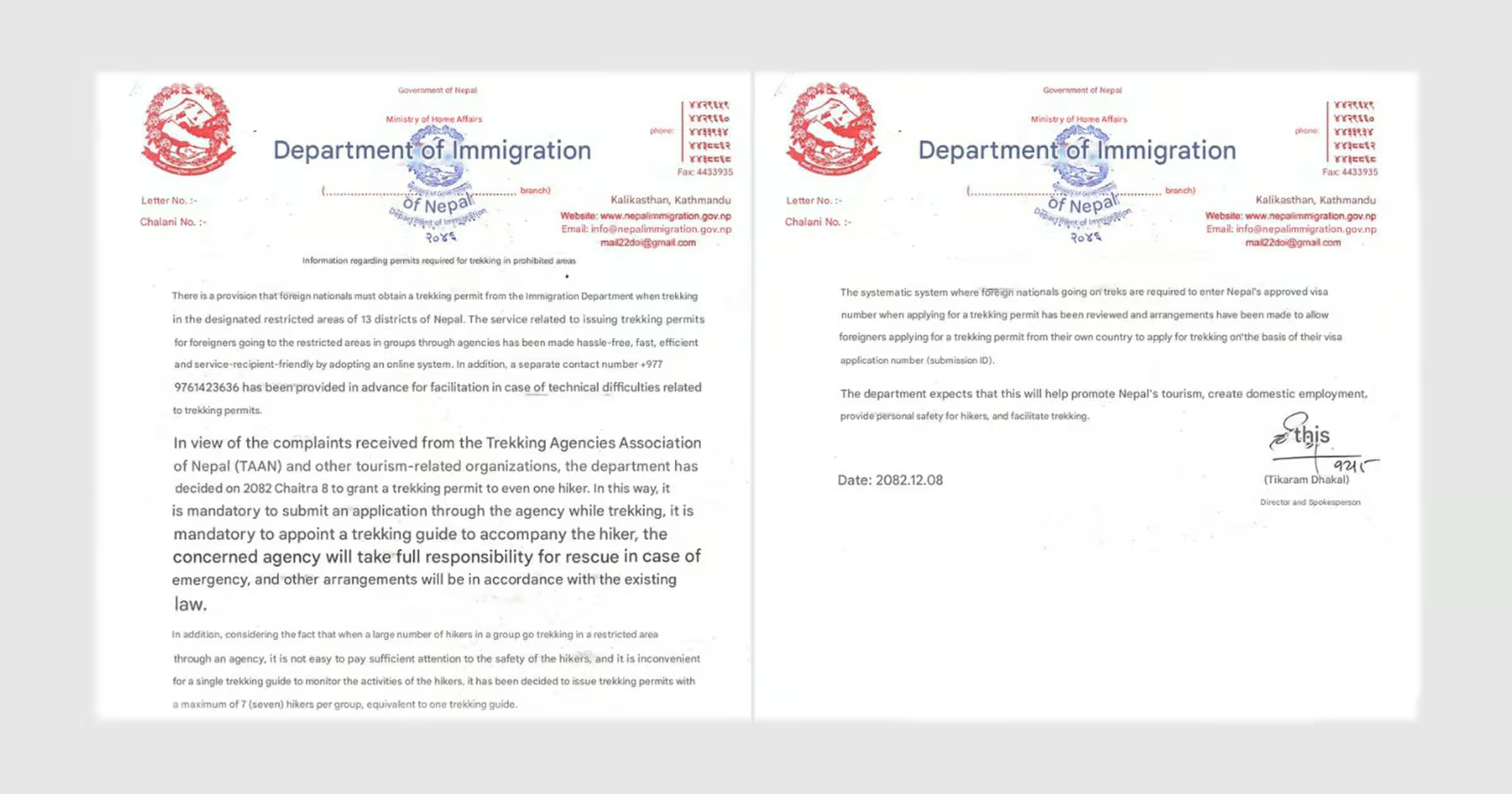
On March 26, 2026, the restricted area trekking system underwent a most important regulatory update on solo trekking and pre-arrival permit processing. The newly reformed policy by Department of Immigration Nepal, states:
- Nepal now allows solo trekkers to obtain restricted areas permits as Individuals.
- Pre-arrival permit processing is now accepted before flying to Nepal.
- In order to apply for solo permits one must go through a TAAN-registered trekking agency.
- One can apply online with only a visa number or pre-arrival submission ID.
- Hiring a Nepali licensed guide is mandatory and without them, Independent trekking is not allowed in restricted areas.
- One licensed guide can lead up to 7 trekkers in the restricted areas of Nepal.
All the paperwork and required logistics is handled by TAAN-affiliated trekking and touring agencies for solo permit holders.
What Has not Changed
- Every trekker must have a Restricted Area Permit to enter every 15 restricted areas.
- Independent hiking without hiring a Nepalis licensed guide is highly restricted.
- The permit fee to enter Restricted Areas is still the same.
- Fixed entry and exit dates on permits are time-bound. Inform early for extension.
- Every trekker should go through a TAAN-registered trekking agency for permit processing.
- Legal responsibility of trekkers safety and emergency protocols are handled by applied trekking agencies.
Why Does Nepal Require Restricted Area Permits?
Nepal require restricted area permit because restricted area are restricted for reason like:
Border Security
Most of the Restricted areas are located directly on the border of Nepal and China. When trekking in Restricted areas of Nepal like Upper Mustang, Upper Dolpo, Humla, Manang, etc, unauthorized movement near the border may result in diplomatic and security issues.
With the help of Nepal Restricted Area Permit, the Government will monitor trekkers movement while strengthening security of the nation and preventing unauthorized cross-border travel. Permit records also enable authorities to track trekkers in case of emergencies near the border.
Visitors Safety in Remote High Altitude
Trekking inside Restricted areas of Nepal takes you to an altitude of 5,000 meters at high mountain pass. Here, you have to traverse across less-designated, rugged trekking trails without any sort of communication facilities and every step you take is filled with risk as any time weather may change.
In case you suffer from injuries or altitude sickness, having a guide will ensure that you will be rescued at the right time.
Preservation of Culture
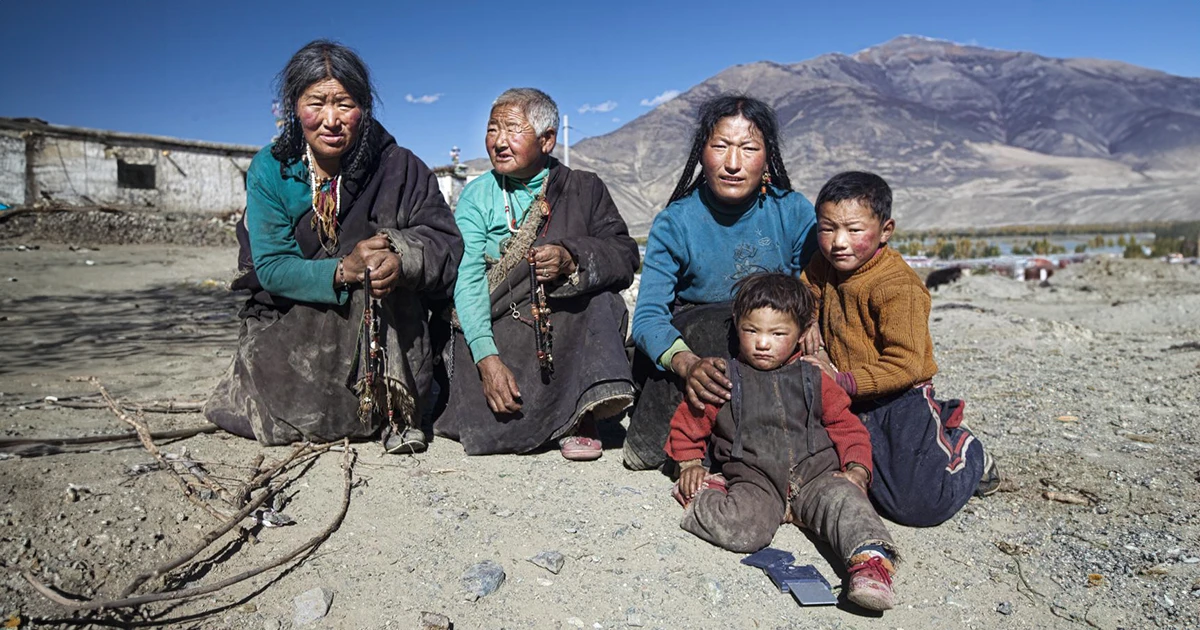
Almost every restricted zone of Nepal is home to communities who follow Tibetan Buddhism and Bon’s religion. They have lived a simple life untamed from any kind of modernization, and unmonitored trekkers exploring the region may disrespect the custom and tradition and way of their life. So, organized trekking with licensed trekking guides help them guide about the culture.
Environmental Conservation
The remote high altitudinal region of Nepal restricted area is filled with pristine forests, alpine meadows, glaciers, endangered wildlife, and fragile mountain ecosystems. Uncontrolled trekkers may cause destruction of these tranquil environments and in order to manage visitor flow and conservation of the Himalayan environment, issuance of Nepal restricted area permit is highly needed.
Sustainable Tourism Management
The Nepal Restricted Area Permit fees contribute to conservation efforts, local infrastructure, trail maintenance, and community development projects. Mandatory licensed guides also create employment opportunities to local guides which will benefit the local communities living in the remote trekking trails of Nepal.
Updated Restricted Area Permit Fees in 2026
Here are list of 15 restricted trekking areas with their updated Restricted Area permit fee for trekker planning to visit in 2026:
| S.N. | Restricted Area | District | Permit Fee (2026) |
|---|---|---|---|
| 1 | Upper Mustang (Lo Manthang and Lo-Ghekar Damodarkunda) | Mustang | USD 500 per person for the first 10 days; USD 50 per day thereafter |
| 2 | Upper Dolpo | Dolpa | USD 500 per person for the first 10 days; USD 50 per day thereafter |
| 3 | Manaslu Restricted Area | Gorkha |
|
| 4 | Humla (Limi Valley & surrounding areas) | Humla | USD 50 per week; USD 10 per day thereafter |
| 5 | Olangchung Gola Region | Taplejung | USD 20 per week (first 4 weeks); USD 25 per week thereafter |
| 6 | Lower Dolpo | Dolpa | USD 20 per week; USD 5 per day thereafter |
| 7 | Gaurishankar Area | Dolakha | USD 20 per week |
| 8 | Tsum Valley | Gorkha |
|
| 9 | Makalu Region (Bhotkhola and Makalu Rural Municipality) | Sankhuwasabha | USD 20 per week (first 4 weeks); USD 25 per week thereafter |
| 10 | Upper Everest (Nangpa La Area) | Solukhumbu | USD 20 per week (first 4 weeks); USD 25 per week thereafter |
| 11 | Gosaikunda North Border Area | Rasuwa | USD 20 per week |
| 12 | Nar–Phu Valley | Manang |
|
| 13 | Saipal Region | Bajhang | USD 90 for first week; USD 15 per day thereafter |
| 14 | Mugu (Mugum Karmarong Area) | Mugu | USD 100 per week; USD 15 per day thereafter |
| 15 | Byas Valley | Darchula | USD 90 for first week; USD 15 per day thereafter |
Note: Every permit should be obtained from TAAN-affiliated agencies and should follow a mandatory licensed guide protocol. Hiking alone without guide is considered illegal in these restricted region in 2026.
How to Apply for a Nepal Restricted Area Permit
Nepal solo trekking in 2026 demands a mandatory Restricted area permit. According to Nepal Department of Immigration trekking rules, you can apply for a restricted area permit from your own home.
Step I: Choose your Trek for 2026
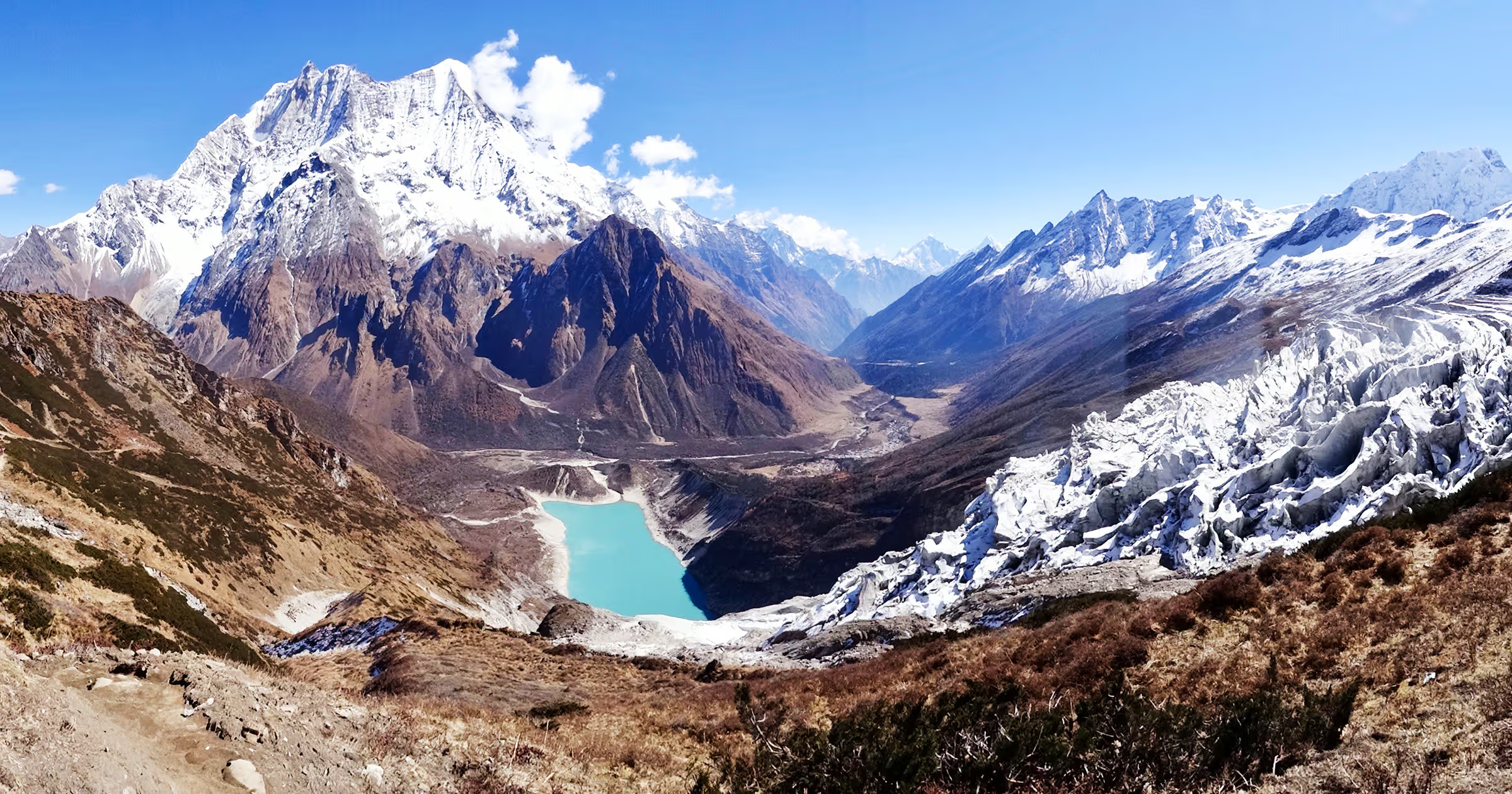
Select your preferred restricted trekking destination like Upper Mustang, Tsum Valley, Nar Phu valley, Saipal region or Olangchung Gola Region.
Step II: Book a TAAN or Government certified trekking agency
You cannot simply apply for a restricted area trekking permit in Nepal as a solo trekker in 2026. So, you have to contact a Government certified trekking agency like Awesome Holidays Nepal at least 2 to 3 months before your actual trek.
And discuss your preferred itinerary, route, dates, and guide assignment. Your booked licensed trekking company will process the RAP on your behalf.
Step III: Gather and Submit Required Documents
You need to submit documents like:
- Passport copy
- Nepal visa information or pre-arrival submission ID
- 2 to 4 recently clicked passport-sized photos
- Detailed travel itinerary
- Guide details with High altitude travel Insurance
- Details of emergency contact

Submit all these documents via email for application to your agency.
Step IV: Permit Processing
Your agency will submit your application to the Nepal Department of Immigration. Within 1 to 2 days, your permits will become verified which you can check via the government’s online system.
Step V: Collection and Begin your Adventure
As soon as you arrive, your travel agency will give you the permit which they collected on your behalf. You should carefully pack in your bag and enjoy the journey to restricted zones in 2026.
Benefits of the New Nepal Restricted Area Permit Rules
The updated solo trekking Nepal rule and regulations of March 2026 provide several advantages to those who are planning solo adventures to restricted areas of Nepal.
Greater Flexibility
Solo trekkers now don’t have to search for another trekker’s dates, pace, and itinerary in 2026. You can simply book a trek according to your preference and scheduled holidays. Now, solo trekkers can build a custom itinerary and enjoy the beauty of the Restricted area without having to match other pace and can avoid extra side hikes.
Easier Trip Planning
Nepal solo trekking rules in 2026 offer more flexible travel dates since you don’t need to wait or form a group for permit application.
Better Visitor Experience
The updated solo trekking rules of Nepal help you enjoy a more personalized itinerary while still benefiting from professional local guides.
Improved Safety
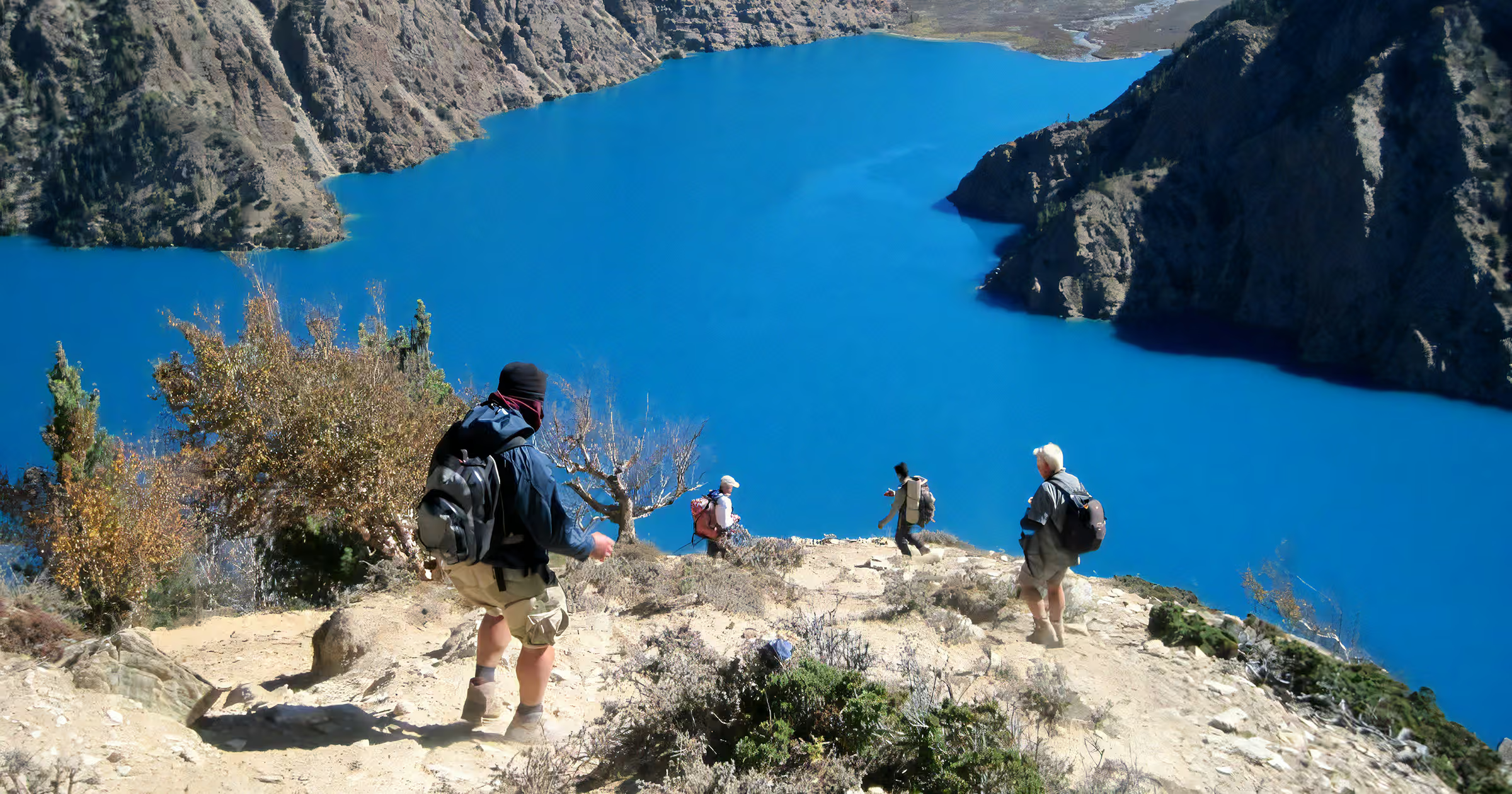
Nepal restricted area permit demands mandatory guides. The local certified guide will offer better navigation in the remote terrain, deeper cultural insights, quicker response with emergency support, and logistical assistance.
Photography Enthusiasts and Visual Storytellers
Those who are passionate about filming mountains and culture may find group travel a bit incompatible for their work as they need to stop at a certain place, capture the moment or even have to return at the same place for another scene for sunrise or sunset. Now, hiring a guide allows them to receive Nepal restricted area permits, which will make their trekking journey to restricted area of Nepal like Upper Mustang, Manaslu, and Kanchenjunga more memorable and immersive.
Why a Licensed Guide Still Matters
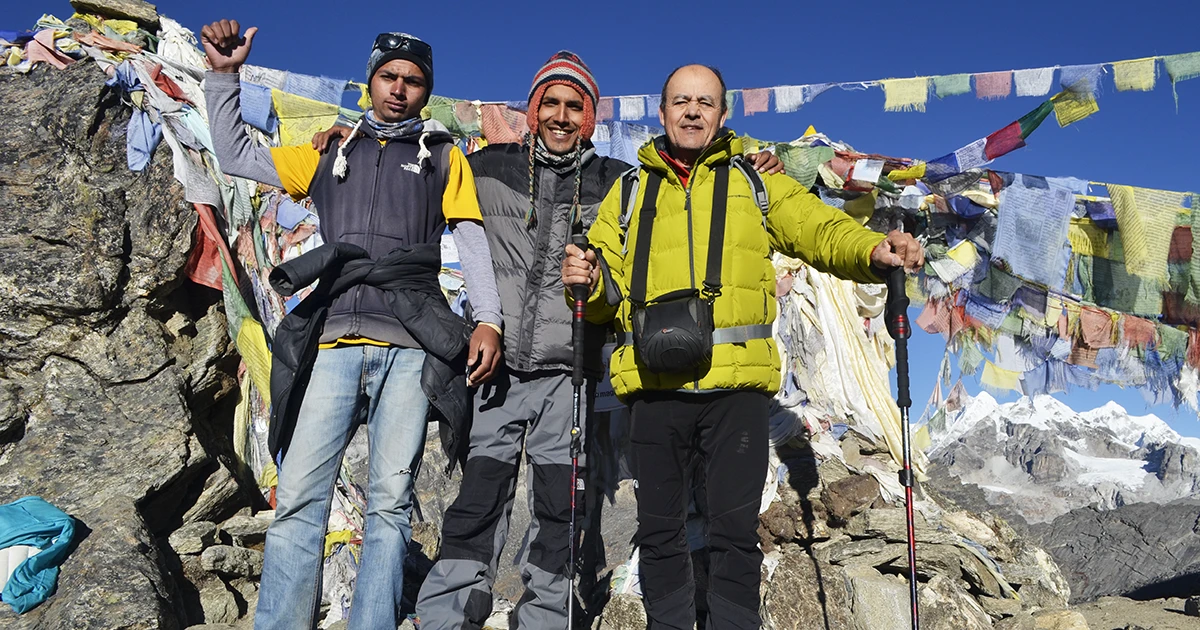
According to Nepal’s solo trekking rules of 2026, solo permit applications are only accepted if you hire a licensed guide to trekking in restricted areas. Now, you don’t need to be with other two fellow trekker just to hire a guide and need to join a fixed group departure is also cancelled.
The controlled access to Nepal restricted areas allows a 1:7 guide to trekkers ratio in case you want to be in group. Hiring a licensed guides when planning a solo trekking in Nepal help you with:
- Safer route navigation as high altitude regions are more prone to landslide and erosion which may disrupt the original trekking routes.
- Licensed guide will monitor your blood oxygen saturation regularly above 4000 meters to ensure your high-altitude safety.
- They will help you to understand local language.
- Local cultural interpretation and guide you to follow the certain restricted signs.
- Emergency response.
- Permit inspections and show permits at every checkpoint on your behalf.
- Accommodation coordination and help you have proper acclimatization by scheduling one rest day per 1000 m of altitude gain.
Their expertise enhances both safety and the overall trekking experience in Nepal’s restricted areas in 2026.
Tips Before Applying for a Nepal Restricted Area Permit
If you are planning a restricted area trekking as a solo trekker in 2026, make sure you follow these practical tips:
- Book your Restricted area trekking Nepal with a reputable licensed operator like us.
- Carry multiple passport copies.
- Purchase travel insurance which cover helicopter evacuation above 5,000 meters.
- Allow extra days for weather delays and flights cancellation.
Planning a Solo Trek in Restricted Areas of Nepal in 2026?
Or Call/Message on WhatsApp +977 98434 13619
- Always respect local customs and norms and follow proper temple etiquette in shrines and monastery.
- Stay hydrated by drinking 3 to 4 liters of water daily and acclimatize properly by taking enough rest.
- Follow your guide’s instructions throughout the trek.
- Carry all your trash and do not disturb the wildlife or vegetation.
Conclusion: A New Chapter for Solo Adventures in Nepal
Nepal restricted area permit update of 2026 concludes that solo trekking application to restricted areas is officially open but you need to hire a licensed guide via Government certified trekking agency. Government is making solo trekking easier by removing previous minimum group requirement to country’s most breathtaking Himalayan destinations like Upper Mustang, Manaslu, Tsum Valley, Upper Dolpo, or Nar Phu Valley in 2026.
The mandatory requirement of licensed guide also ensure the safety of solo trekkers while preserving culture and allow you to practice a responsible tourism approach. With the updated Nepal Restricted Area Permit regulations, solo trekkers will have more freedom than ever—while still enjoying the expertise and security that professional guides provide in 2026.
Feel free to contact us for more safer and memorable journey to restricted areas in 2026.
FAQs
Expand AllIs solo trekking allowed in Nepal 2026?
Yes, solo trekking allowed but you have to hire a licensed guide in Nepal 2026.
Can you trek alone in restricted areas of Nepal?
Yes, you can trek alone in restricted areas of Nepal. But, you have to hire a licensed guide.
Do I need a guide for solo trekking in Nepal?
Yes, a guide is mandatory for solo trekking in Nepal.
What changed in Nepal trekking rules 2026?
According to updated Nepal trekking rules 2026, you can trek solo in restricted area by hiring a licensed guide.
Is independent trekking allowed in Nepal 2026?
Yes, independent trekking is allowed but restricted regions require permits and a mandatory licensed guide.
When did Nepal allow solo trekking in restricted areas?
Nepal allowed solo trekking in restricted areas on March 22, 2026.
What are Nepal's restricted area trekking rules?
Nepal’s restricted area trekking rules states trekkers must obtain a Restricted Area Permit through an authorized agency, hire a licensed guide, carry valid travel documents, and follow all local regulations.
How to apply for Nepal restricted area permit solo?
Solo trekking to restricted area requires following document for permit:
- Nepal visa,
- Passport-sized photographs,
- Travel itinerary, and
- Travel insurance details.
Can I get RAP permit without a group?
Yes. You can get RAP permit without a group but a licensed guide is mandatory in 2026.
Can I apply for Nepal trekking permit online?
Yes, you can apply for Nepal trekking permit online.
What documents needed for Nepal solo trekking permit?
Documents like valid passport, Nepal visa, passport-sized photographs, travel itinerary, and travel insurance details are needed for Nepal solo trekking permit.
Can I get Nepal trekking permit before arrival?
Yes, many registered trekking agencies can arrange your permits before you arrive in Nepal.
Can I trek Manaslu solo in 2026?
Yes, you can do Manaslu solo trekking in 2026.
Can I trek Nar Phu Valley alone?
Yes, you can do solo trek in Nar Phu in 2026. However, you need to obtain the necessary Restricted Area Permit and trek with a licensed guide.
Can solo trekkers visit Upper Dolpo?
Yes, solo trekkers can visit Upper Dolpo. You need to have Dolpo solo trek permit and should hire a a licensed guide.
Can I share guide with other solo trekkers Nepal?
Yes, solo trekkers traveling on similar itineraries can often share a licensed guide with 7 other trekkers.
What is Upper Mustang permit fee 2026?
The Upper Mustang Restricted Area Permit (RAP) fee is $50 per person, per day.
Is travel insurance mandatory for Nepal trekking 2026?
Yes, travel insurance mandatory for Nepal trekking in 2026.
What happens if I trek without permit in Nepal?
If you trek without permit in Nepal, you have to pay fines, denial of entry at checkpoints, cancellation of your trek, or legal action by the authorities.
Can experienced trekkers skip guide in Nepal?
No. Experienced trekkers cannot skip guide in Nepal.
Related blog posts
Discover a choice of tourist destinations loved by most of our visitors. Whether you're on a jungle safari to spot rare animals or walking through a world heritage site, these well-planned itineraries cover the major highlights of Nepal.
 call an expert at: