
Stargazing in Nepal: The 5 Best “Dark Sky” Spots in the Himalayas for 2026
 Sristi Adhikari
Nepal is not just a Country of Sagarmatha, world’s tallest mountains, it is also a stargazer paradise. The highest altitude of mountain land makes Stargazing in Nepal possible with peaceful nights, crystal-clear mountain air, minimal light pollution, while making you feel like you are closest to the sky.
Nepal’s dark sky offers you a once-in-a-lifetime chance to experience the purest form of cosmos whether you’re planning a trekking adventure or searching for the best stargazing places in Nepal as a photographer or astronomer to witness thousands of stars overhead.
When planning stargazing in Nepal, continue reading our blog in details to explore countless hidden gems waiting to be explored with best time, best camera and essential travel tips for 2026:
What is Stargazing?
Stargazing is an activity which includes staring at the distant sky to enjoy the view of stars, planets, or even galaxies. Stargazing is done in the dark sky where people do it for different purposes like as a hobby, for peace of mind, for research and scientific purposes.
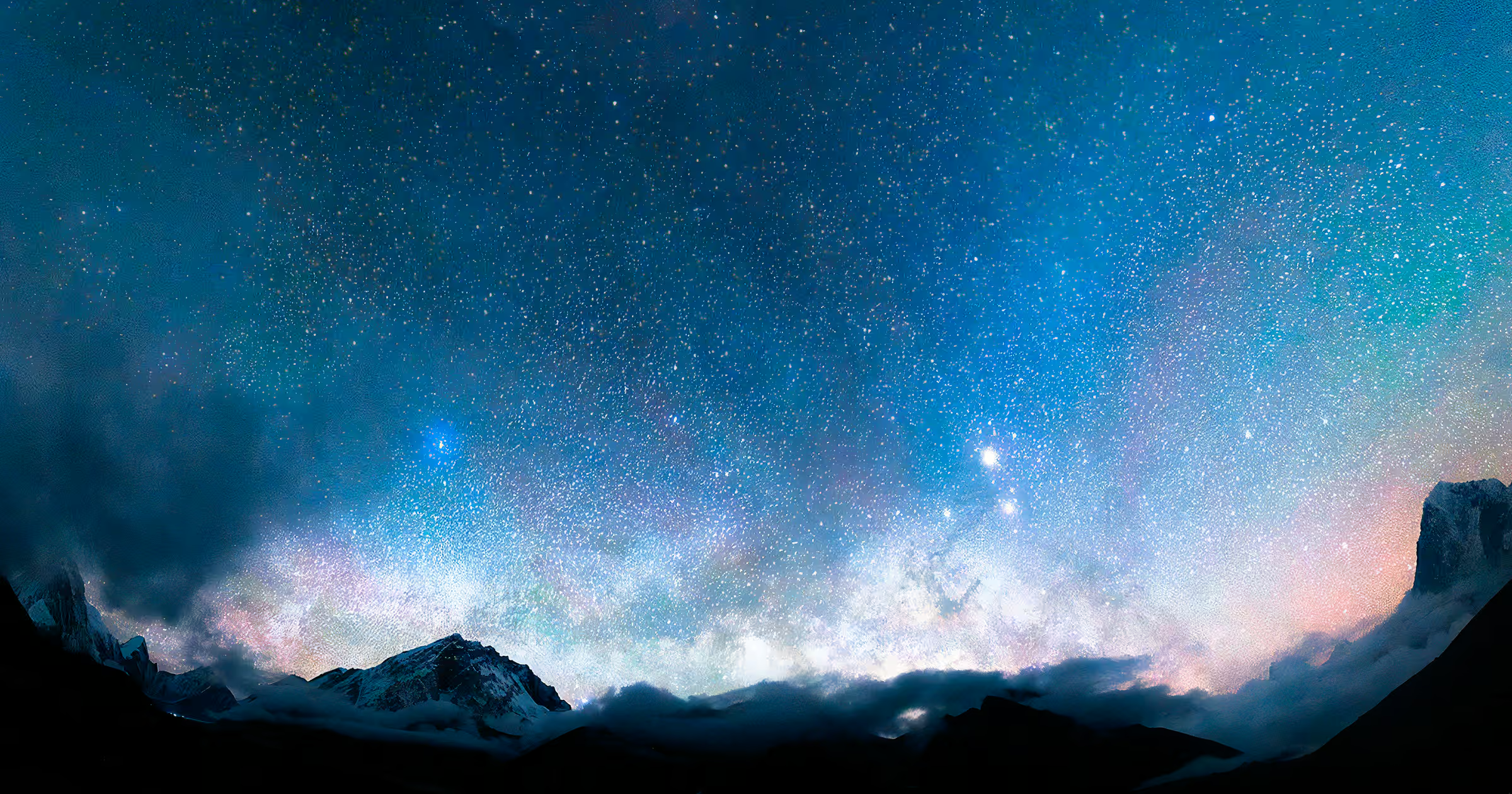
Stargazing in Nepal is a magical experience where you can simply enjoy the dark night without even using a telescope or other gear which helps you connect deeper with the universe.
Why Nepal’s Dark Sky is Perfect
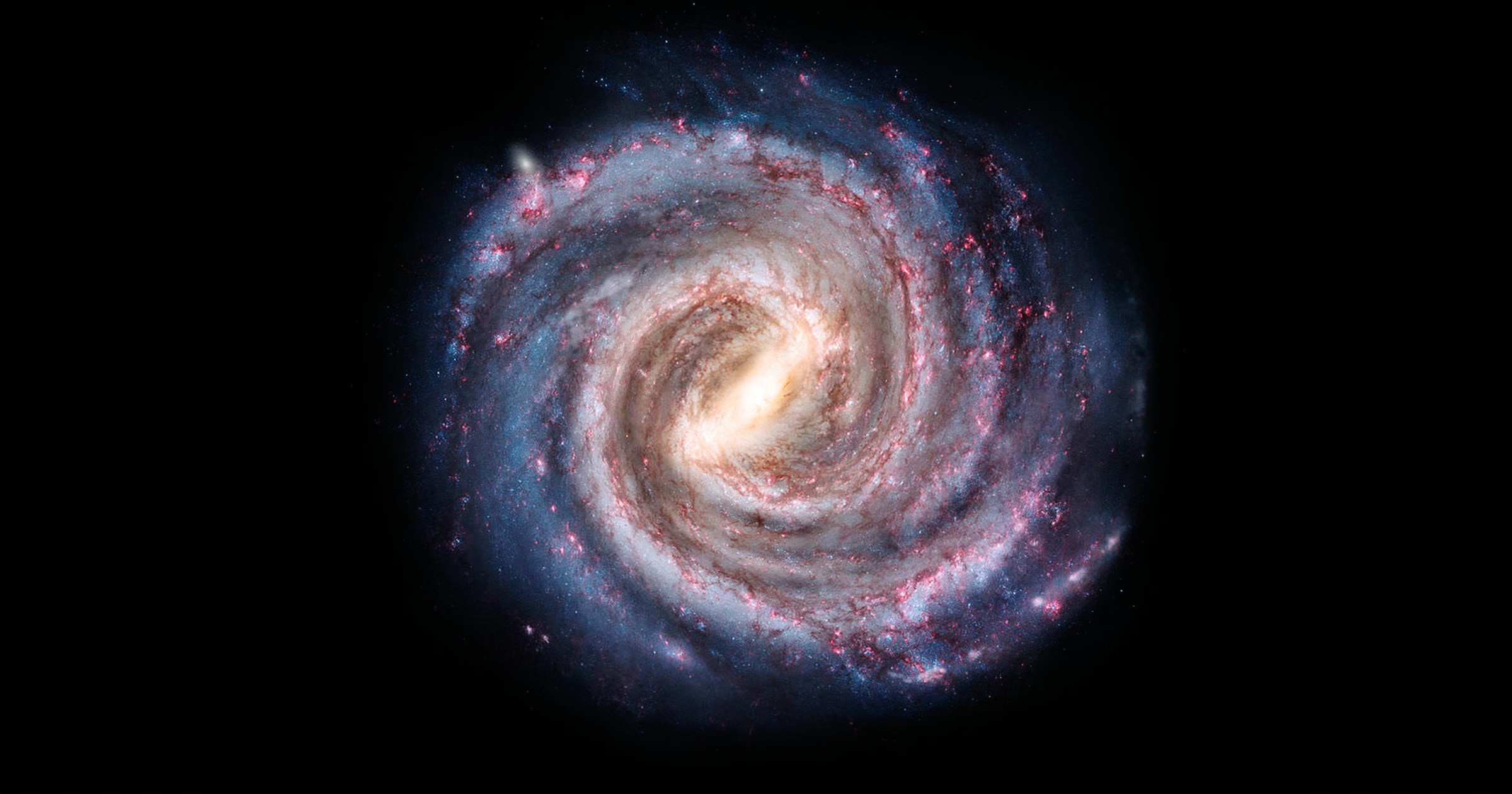
Nepal’s night sky offers you a unique chance of stargazing where you can even spot breathtaking views of the Milky Way galaxy. Stargazing in dark sky of Nepal is one of the best thing you should do in 2026 because:
Latitude
Nepal is quite close to quarter which is why it is the perfect destination to observe the Southern Sky. With 26° 22′ N and 30° 27′ N latitude, the Himalayas of Nepal offer the best views of the Milky way galaxy during autumn.
Altitude, latitude and clear atmosphere are three conditions which makes a Nepal’s sky appear darker which even left Chilean Atacama Desert and the high plateaus of Hawaii behind as the best destination for astronomical or stargazing sites.
High Altitude
Trekking in Nepal takes you to an elevation of 3,000 meters to 5,500 meters, where you will experience thin air conditioning and a darker sky. You will be a part of the same atmosphere which scatters star light, absorbing infrared wavelengths while creating the twinkling.
Everything is quite sharp, bright, clean and more vivid which is why you will spot the shape of numerous stars with minimal twinkling effect. Nebulae and Milky Way galaxies that can’t be viewed from lower altitudes become so clear that you won’t need a telescope unlike sea level.
The teahouses and homestay of the Himalayas are considered as the best spots to do stargazing in Nepal.
Absence of Light Pollution
Himalayan stargazing in Nepal makes you trek to destinations like Khumbu, Annapurna sanctuary, Upper Mustang, Rara etc. When you reach an elevation of 3,000 meters, you will see less effect of modern development like road and electricity infrastructure.
The nights in the remote village have no artificial light at night, these places become extremely dark in the night. Unlike lower regions, Nepal’s Himalayas lack streetlight, city noise, highway glow on the horizon, which offer you a quality and peaceful time for stargazing in Nepal.
You will witness billions of stars quite close to you in the dark sky of Nepal. The best point is that National Geography listed our Sagarmatha National Park in the list of the best five stargazing destinations in world.
5 Best Stargazing Places in Nepal
While high altitude enhances astronomical viewing by reducing the amount of atmosphere between the observer and the stars, it is not the only factor that makes Stargazing in Nepal extraordinary. The factors like low light pollution, dry mountain air, stable weather, minimal atmospheric moisture, remote landscapes, and expansive horizons also have equal contribution when doing stargazing in Nepal.
For 2026, we have listed you some of the best stargazing places in Nepal which you should definitely visit if you want to get most out of your astronomical viewing journey:
Gorakshep
With an elevation of 5, 164 meters, Gorakshep stands out as one of the best stargazing places in Nepal. It is also one of the highest places where you will be staying, when you are on Everest Base Camp trek in 2026.
The thin air, dark sky without any artificial light offers you the three dimensional view of the Milky way galaxy which you definitely won’t see from any lower region. Without any technical climbing skills, you can witness the shadow of the Milky way rising above the Khumbu glaciers.
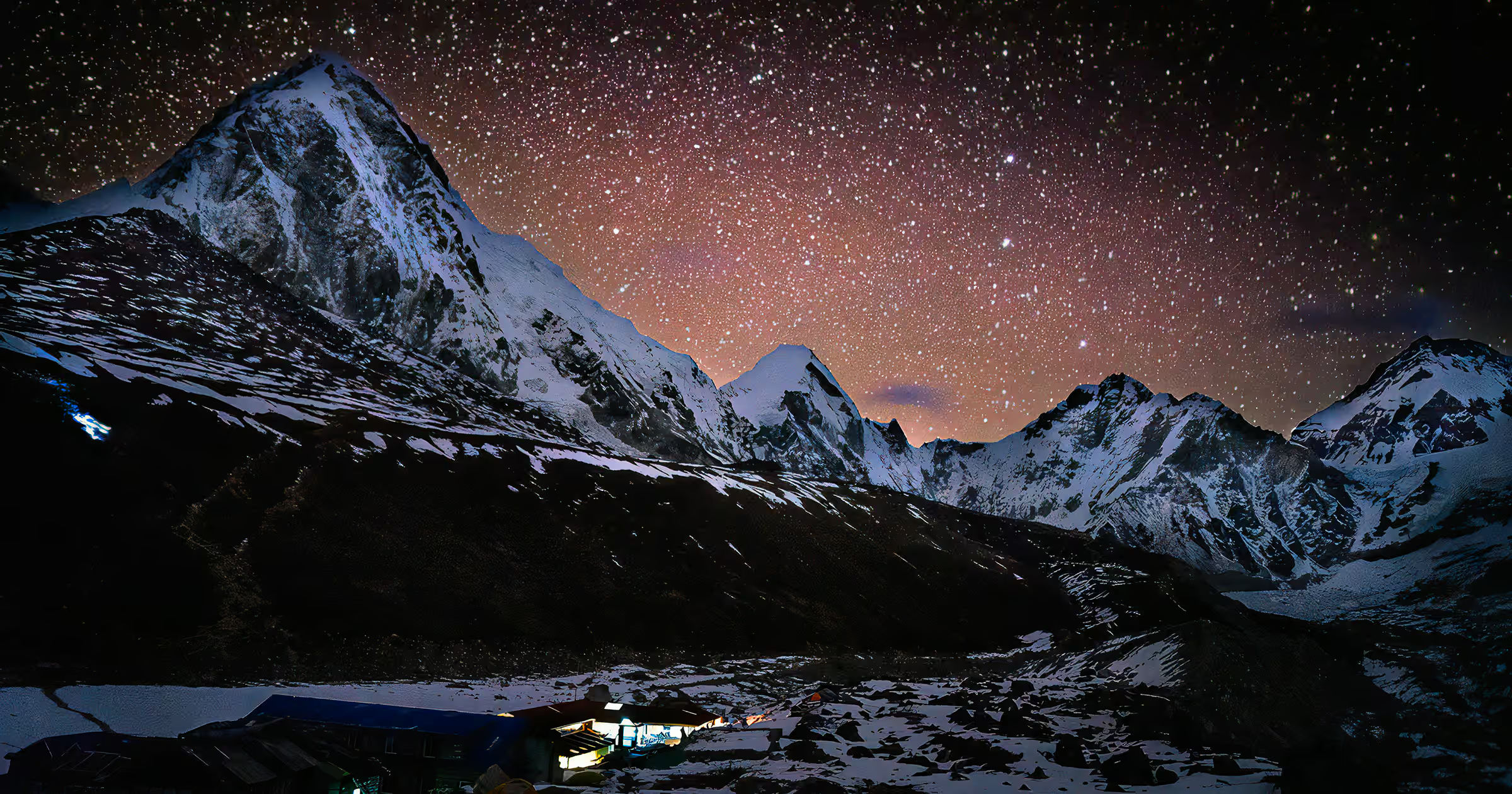
Beside this the night view of the Milky way in Nepal, you will be rewarded with Everest, world’s tallest mountain views along with other snowcapped mountains like Nuptse, Kala Patthar and Pumori. Every trekker or astrophotographer needs to take the altitude seriously, and should focus on layered clothing, proper acclimatization otherwise you are more prone to altitude sickness which likely get converted into other life-threatening situations like HACE and HAPE.
Note: Night time temperature at Gorkashep plummets below freezing throughout the year. Expect night time temperatures of -15°C to -5°C in spring, -15°C to -8°C in Autumn, -20°C or lower in winter, and -5°C to 0°C in summer.
Gokyo
Gokyo valley is situated at an elevation of 4,790 meters and is considered as the quietest route to Everest region. You will see less headlamps and less noise in the trails which offer you a serene environment to witness the reflection of starlight on Gokyo lake.
The viewpoint of Gokyo Ri elevated at 5,357 meters should be reached early in the morning and it will amaze you with the mesmerizing transformation of a sky filled with stars into the sun rising behind Everest. This 45 minutes of hypnotic experience is a once-in-a-lifetime opportunity you should not miss in 2026.
Upper Mustang
Upper Mustang is the rain shadow area located in the elevation of 3,800 meters to 4,000 meters, North of the Annapurna-Dhaulagiri massif. Being a rain shadow region, it receives less rainfall which makes the air quite dry, clear sky with less clouds even in the month of Monsoon. And this is why Upper Mustang appears as one of the best stargazing places in Nepal.
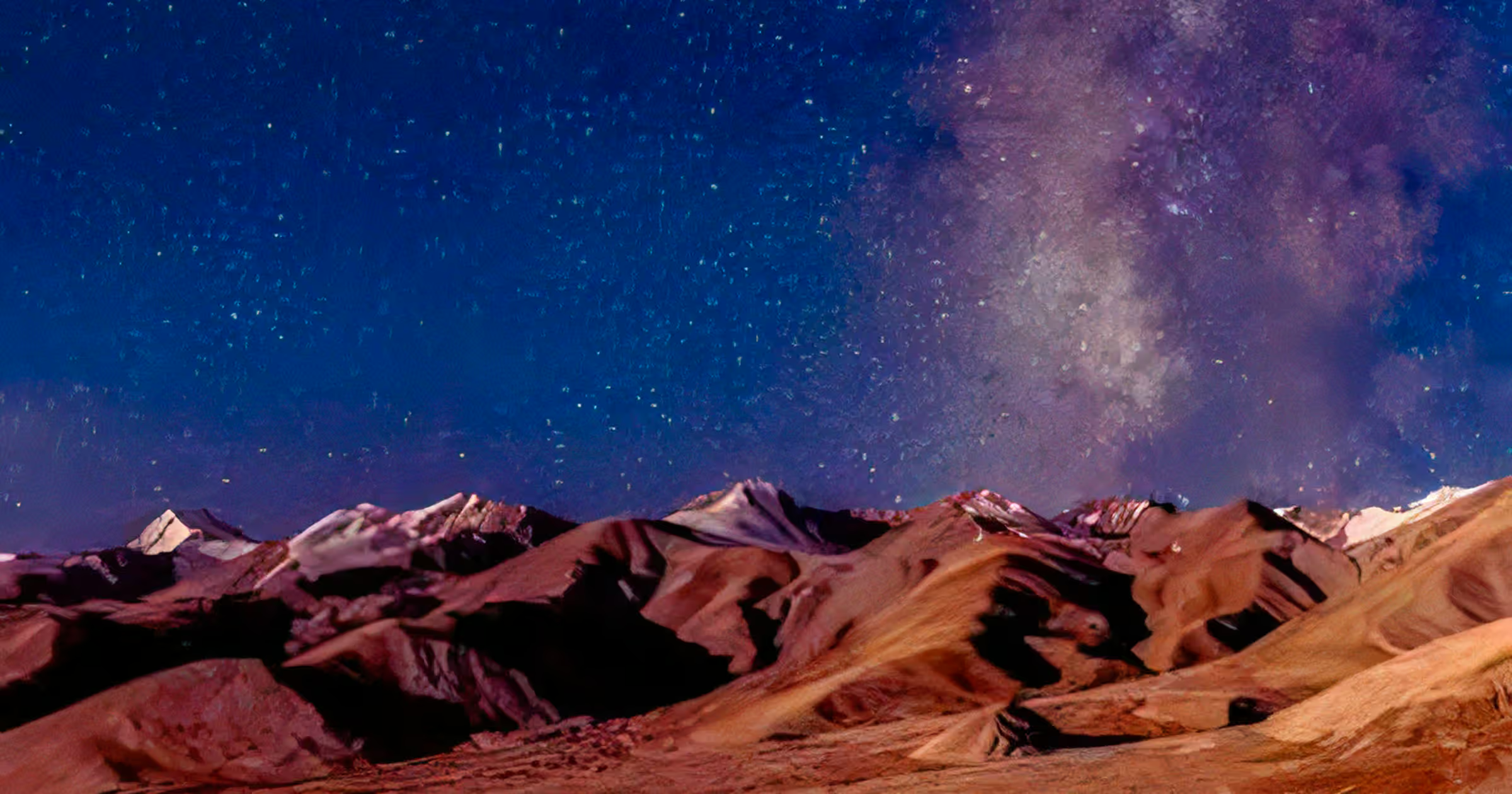
Annapurna Base Camp
Annapurna Base Camp rewards you with the best view of snowcapped mountain ranges like Annapurna I, Annapurna South, Machhapuchhre, Hiunchuli. When you reach the elevation of 4130 meters from sea level, you will see less settlement, which means less night light, as most of the teahouses and homestays close their business within 10 PM, you will be exposed to clear and dark sky filled with multiple stars.
Unlike Everest Base Camp, you will enjoy the wide views of night sky with comfortable sleep temperature and altitude is also more manageable at the base camp of Annapurna.
Rara National Park
If you are searching for peaceful wilderness Stargazing in Nepal reaches another level at Rara National Park. As it is the least visited trekking destination in Nepal, you will get to experience serene trails and without any stamp of urban development.
The national park stretches from an elevation of 2,800 m to 4,039 m, and Rara lake is situated at a lower elevation of 2,990 meters which offers warm night and comfortable spots and stands out as one of the best stargazing places in Nepal. Rara Lake reflects the stars like a natural mirror and its pristine dark skies are rarely found elsewhere in South Asia.
What Can You See While Stargazing in the Himalayas of Nepal?
The combination of high altitude, minimal light pollution, and dry air makes stargazing in the Himalayas of Nepal truly spectacular. What you can see depends on the season, moon phase, weather, and how far you are from artificial lights.
The Milky Way
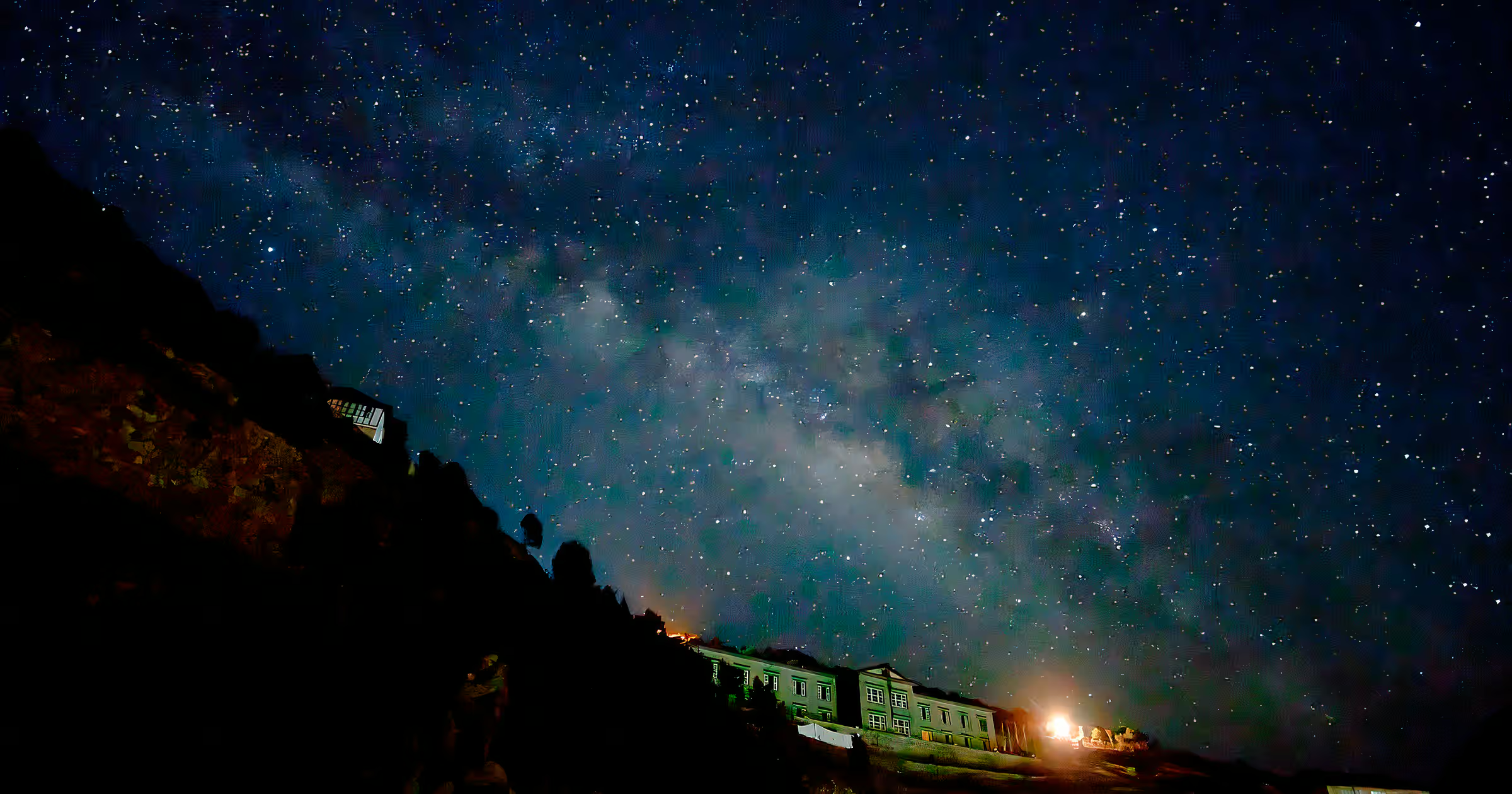
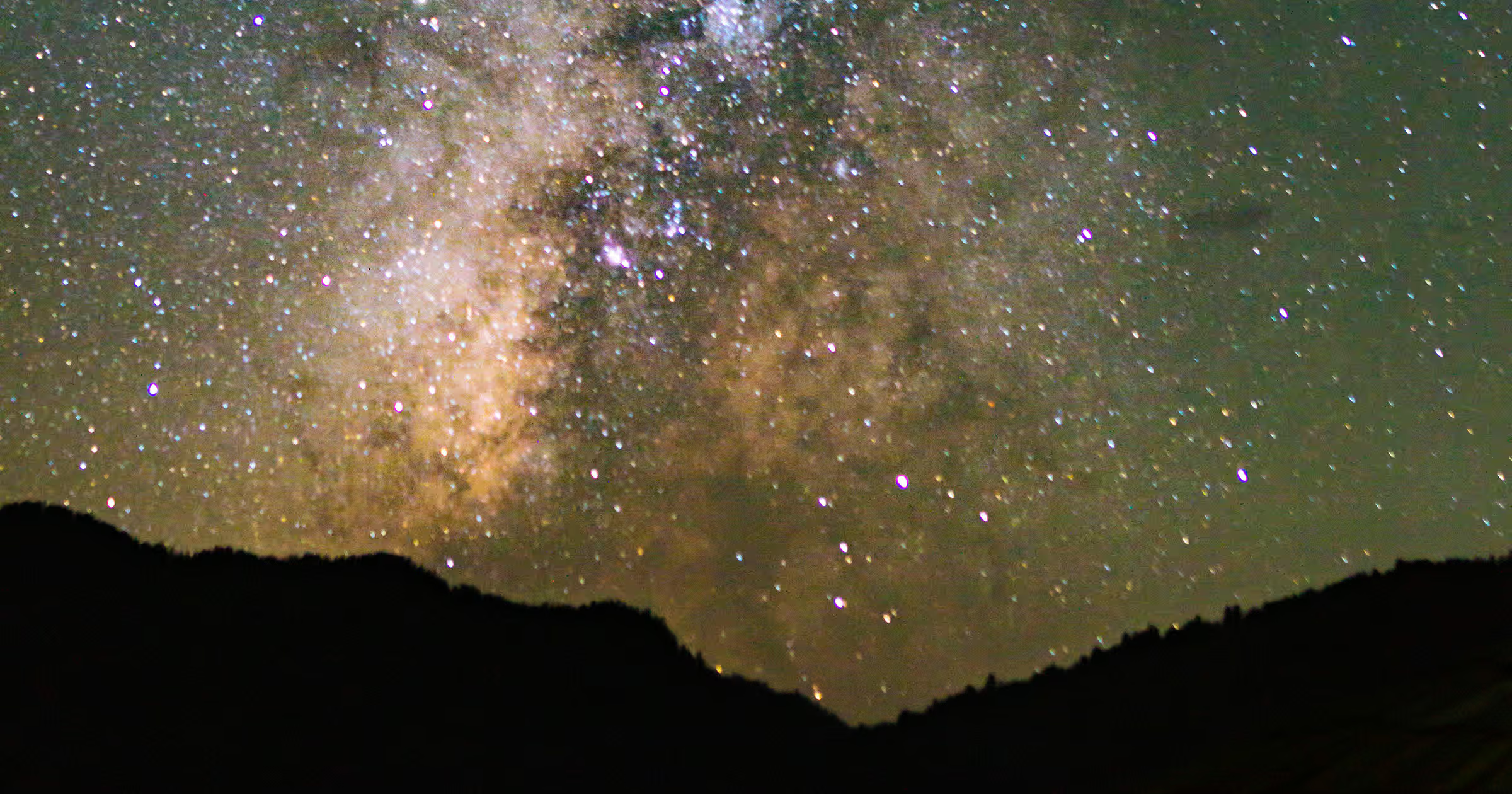
You will witness the rise of the galactic center above the horizon of Nepal in Spring and Autumn months. On clear, moonless nights, the three dimensional structure of the Milky Way appears as a bright, dark lane with clustered star clouds is seen stretching across the sky. You will spot the extraordinary details of the Great Rift of the Milky way which definitely make your jaw-drop.
Thousands of Stars
You’ll see far more stars in the clear dark sky of Nepal’s Himalayas than in urban areas. You will get the chance to witness at least 5–15 meteors per hour from random, or sporadic, meteors. Likewise, you will also witness the shooting stars falling with the speed of 50 to 120 per hour during popular meteors showers such as Geminids or Perseids.
Planets
Planets like Venus, Jupiter, Saturn, Mars are visible with our naked eyes without using any instruments. With a small telescope or binoculars, you will encounter Jupiter’s four Galilean moons, Saturn’s rings, and the brighter blase of Venus in pre-dawn and post-sunset sky.
Constellations
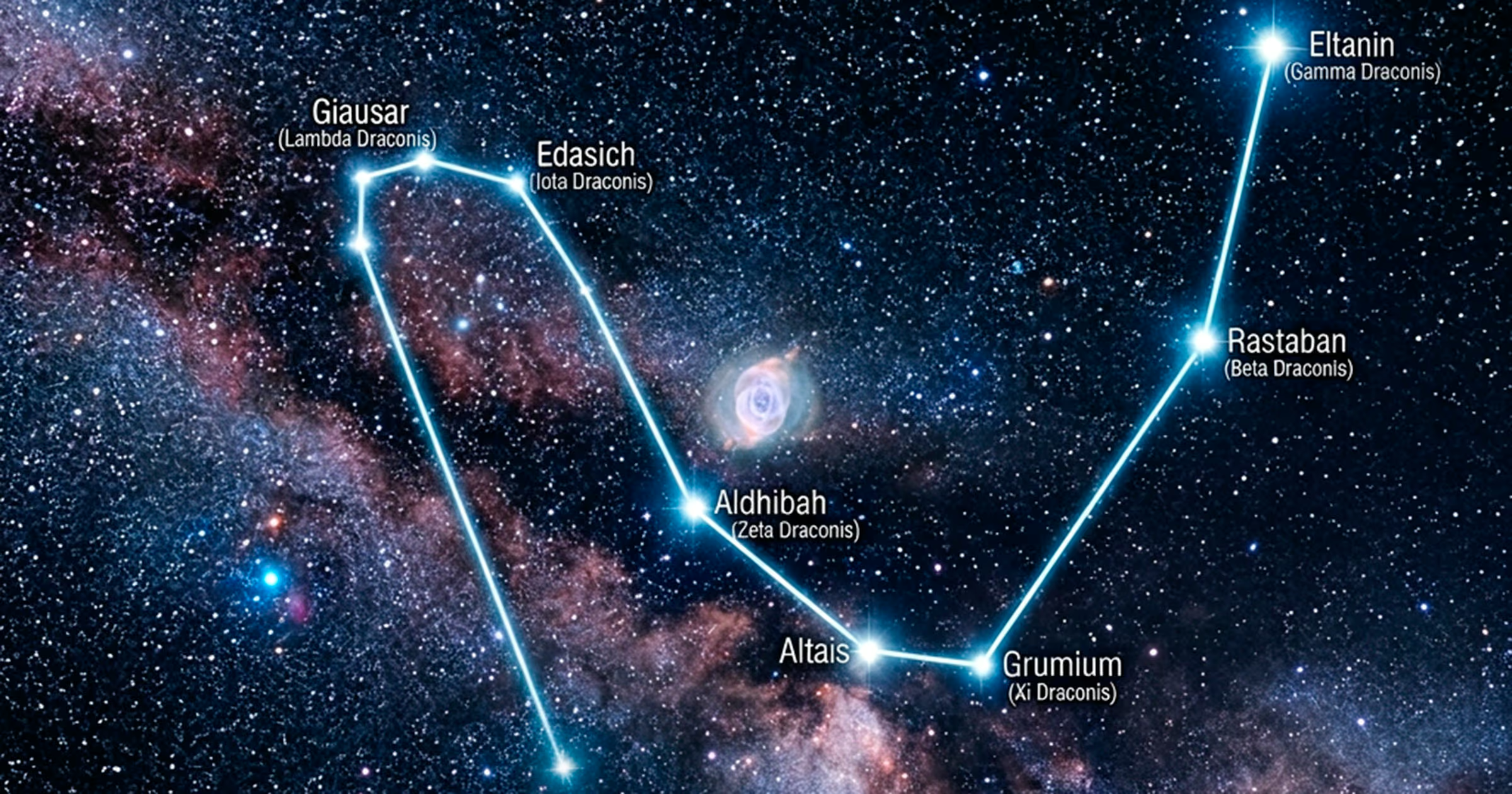
Nepal’s latitudinal location makes you spot famous constellations like
- Orion (winter),
- Scorpius (summer),
- Cassiopeia,
- Cygnus,
- Ursa Major.
Satellites and the ISS
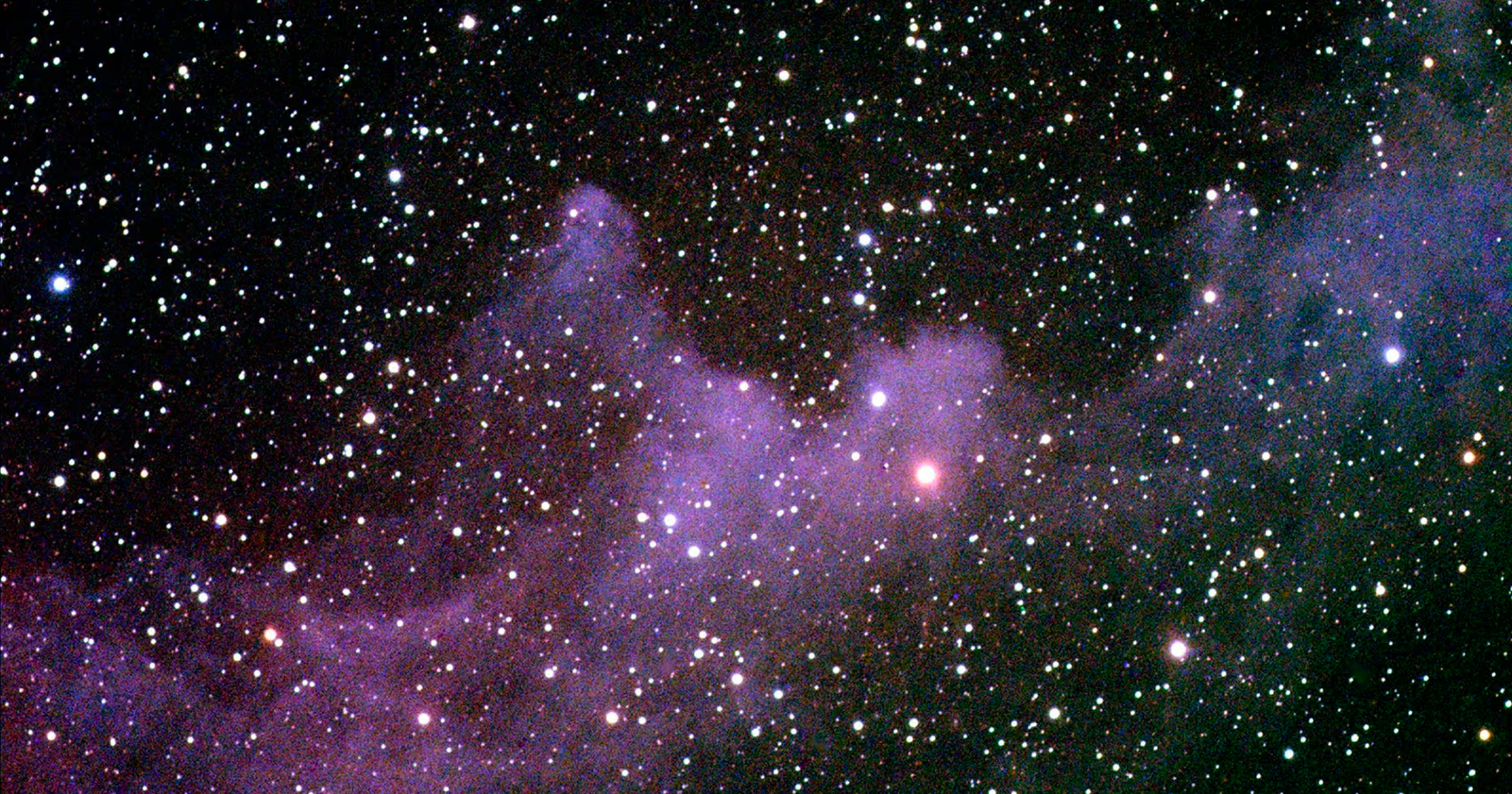
You will commonly spot satellites slowly crossing the dark sky of Nepal. The International Space Station is visible as one of the brightest moving objects and you will also see bright lined dots of Starlink satellites.
Deep-Sky Objects
If you are an experienced stargazer, you will definitely witness following objects with the use of modest binoculars:
- Andromeda Galaxy (M31), a 2.5 million light-years away ancinet photon
- Orion Nebula (M42),
- Pleiades (M45) also known as Seven Sister
- Beehive Cluster (M44),
- Double Cluster in Perseus,
- Triangulum Galaxy (M33).
With the help of 10×50 binocular, you will see the enlarged form of following cluster in the galactic plane:
- Lagoon Nebula,
- Omega Centauri globular cluster,
- Carina Nebula.
The Moon
During a full moon, you’ll be able to see craters, mountains, and dark lava plains even with binoculars. A full Moon reduces the visibility of faint stars, so moonless nights are best for Milky Way viewing.
Best Time for Stargazing in Nepal
The best time for Astro tourism in Nepal is in the month of October and November. As the monsoon just passed, it makes the weather so cleaned and warm temperature offer the clear visibility of the milky way core in Nepal.
| Season or
Months |
Sky
Conditions |
Visibility of
Milky Way |
Experience | Recommendation |
|---|---|---|---|---|
| October to November |
|
Core visible in the evening |
|
Best Overall |
| December |
|
|
Ideal for observing
|
Perfect for winter constellation |
| January to February |
|
Core visible before dawn | Best view of Dark sky in Nepal
|
Good for those who an cope cold |
| March to April | Generally clear with increasing haze | Rises earlier in the night
|
|
Good |
| May |
|
Well positioned |
|
Build of pre-monsoon clouds |
| June to September
(Monsoon) |
Frequent clouds and rainfall across most of Nepal | Best core Position | Worst weather conditions | Best for Upper Mustang and skip other places. |
Camera Setting for Night Photography in Nepal
When doing Stargazing in Nepal, dark sky, backdrop of dramatic mountain ranges, extreme high altitudinal environments creates an unforgettable celestial experience in 2026. Knowing about specific techniques and setting adds cherry on top of your astrophotography journey in Himalayas of Nepal.
Essential Gear
Camera
For noctourism in Nepal, you need to have a mirrorless camera or DSLR with manual mode and good high-ISO performance. Even APS-C cameras and Micro Four Thirds cameras work well.
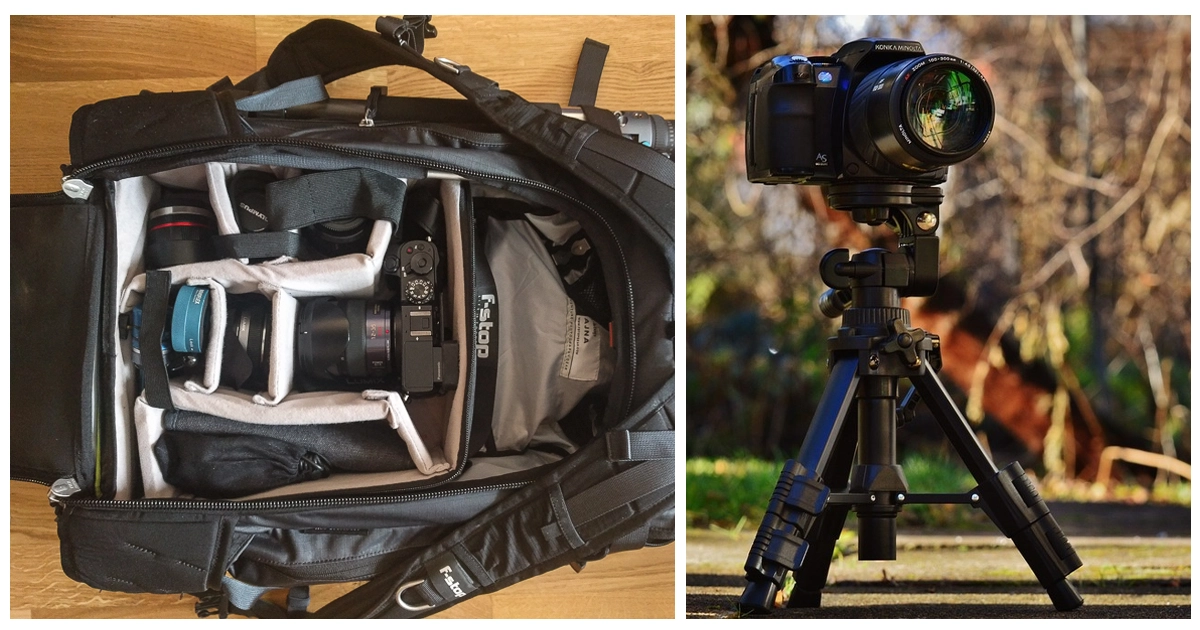
Pack a full-frame sensor like Sony A7 series, Canon R6/R5, Nikon Z6/Z8, it will be best for low light. Having a modern smart[phone with decent night modes like iPhone 15 Pro/16, Samsung S24/S25 Ultra also fit.
Lens
The most important piece of your glass is a fast, wide-angle prime. The lens of 14mm f/2.8 or 20mm f/1.8 is the best option for astrophotography in Nepal.
If you are on budget, buy Samyang/Rokinon 14mm f/2.8 and if budget is not a matter, then buy Sigma 14mm f/1.8 Art when doing astro tourism in Nepal.
Tripod
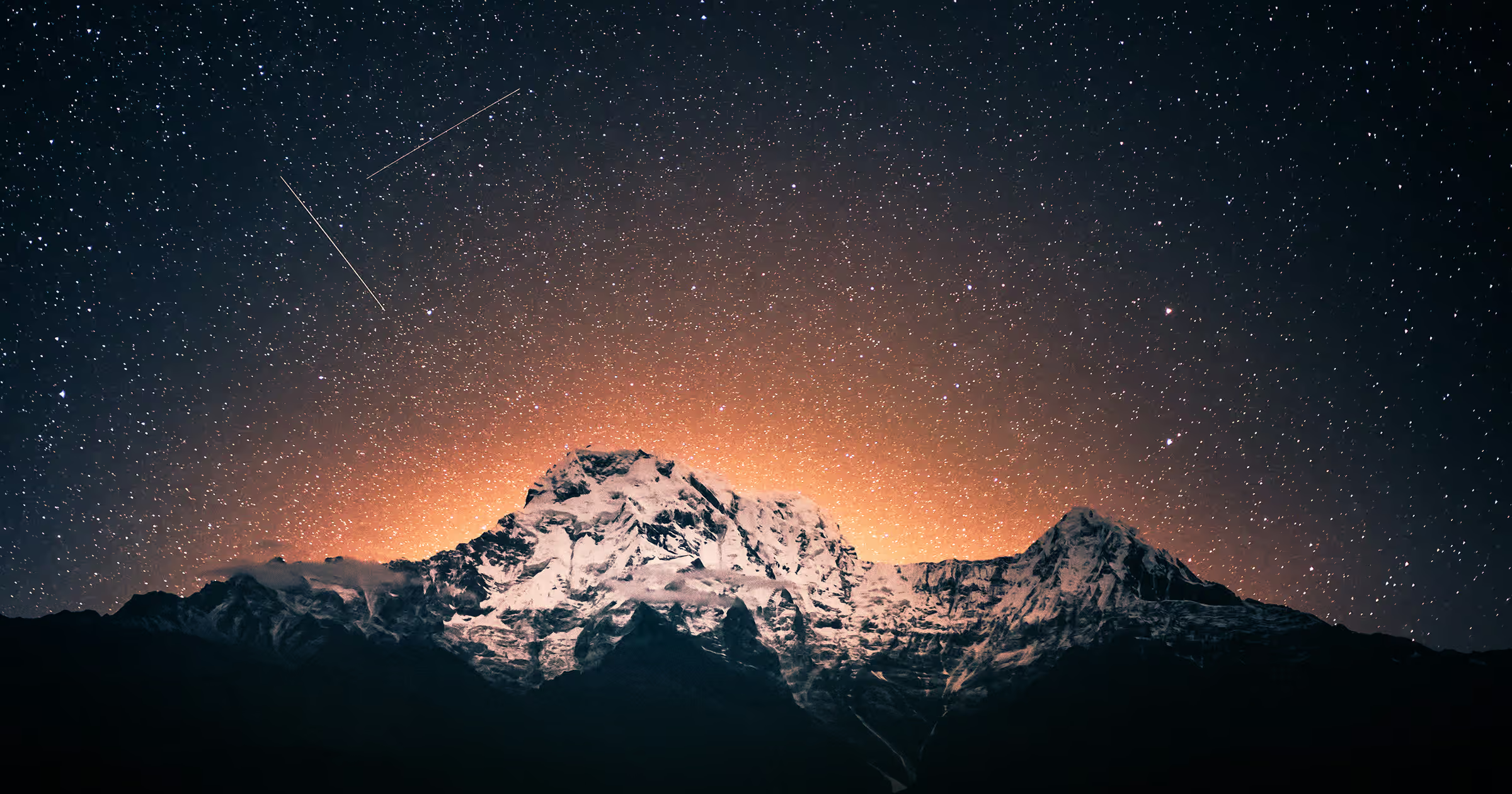
Carbon-fiber model, light weight, sturdiest and stable tripod is highly required. Check whether your tripod legs work perfectly without freezing in sub-zero temperature for longer hours.
Power Bank and Spare Batteries
As high altitudes offer extreme cold temperatures which will drain batteries quickly. Having a fully charged power bank and spare batteries is highly essential to keep cameras, phones, and other devices working non-stop for the whole night.
Headlamp with Red Mode
A headlamp with a red-light mode is very important for moving around safely at night without disturbing your night vision. Red light helps preserve your eyes’ ability to see faint stars whereas white light ruins your night vision and takes at least half an hour to fully develop.
Lens Wiper
Himalayan stargazing is usually done at high altitude of Nepal which causes formation of frost and condensation in your lens. So, you will need a clean microfiber cloth and chemical handwarmer to wrap firmly around the barrel of the lens to terminate the formation of dew.
Remote Shutter Release
It avoids your camera shaking during longer exposure hours or throughout the night. This also helps in prevention of blurry images.
Camera Setting for Photography of Milky Way Galaxy
When doing Astro photography in Nepal above an elevation of 4000 meters, you should set camera in best form.
| Camera Setting | Recommended Range | Purpose / Effect |
|---|---|---|
| Shooting Mode | Manual (M) mode |
|
| Lens | Wide-angle lens (14–24mm or similar) with a wide aperture | Captures more of the sky and allows more light to enter |
| Aperture | f/1.4 to f/2.8 |
|
| ISO |
|
Increases camera sensitivity for capturing stars even in low-light environments |
| Shutter Speed | 15 to 30 seconds | Allows enough light for stars while reducing star trails caused by Earth’s rotation |
| Focus | Manual focus set to infinity (∞) |
|
| White Balance | 3500K–4500K (cool tones recommended) | Produces natural-looking night skies and enhances blue tones |
| File Format | RAW | Preserves maximum detail and allows better editing after shooting |
| Tripod | Essential | Prevents camera shake during long exposures |
| Remote Shutter / Timer | 2–10 second delay or remote trigger | Reduces vibration when pressing the shutter button |
| Image Stabilization | Turn off when using a tripod | Prevents unwanted movement during long exposures |
| Extra Tips | Shoot during a new moon, avoid artificial lights, and use foreground elements like mountains or landscapes | Creates dramatic compositions combining Himalayan scenery with the night sky |
Difficulty of Himalayan Stargazing in Nepal
When doing Himalayan Stargazing in Nepal, you need to face several challenges like extreme altitude, cold temperature, and longer hours of multiple-days trek, and only you can enjoy the spectacular views of the sky filled with stars.
Numb Hands and Cold Temperatures
Nighttime temperatures in high-altitude regions of Annapurna, Everest or in Rara drop below freezing. This makes it difficult to handle gear like cameras, binoculars, or telescopes. You have to stand outside the teahouses or homestays for a longer period of time which makes your fingers numb. This will reduce comfort and make tasks such as adjusting camera settings or changing lenses more challenging.
Condensation and Frost
Placing a camera for longer hours outside at night and suddenly bringing it to warmer teahouses and lodges causes condensation in camera lenses and optical equipment. So, packing your camera in a sealed plastic bag before entering teahouses will reduce moisture building and save your images from being blurred.
Fatigue and Altitude Effects
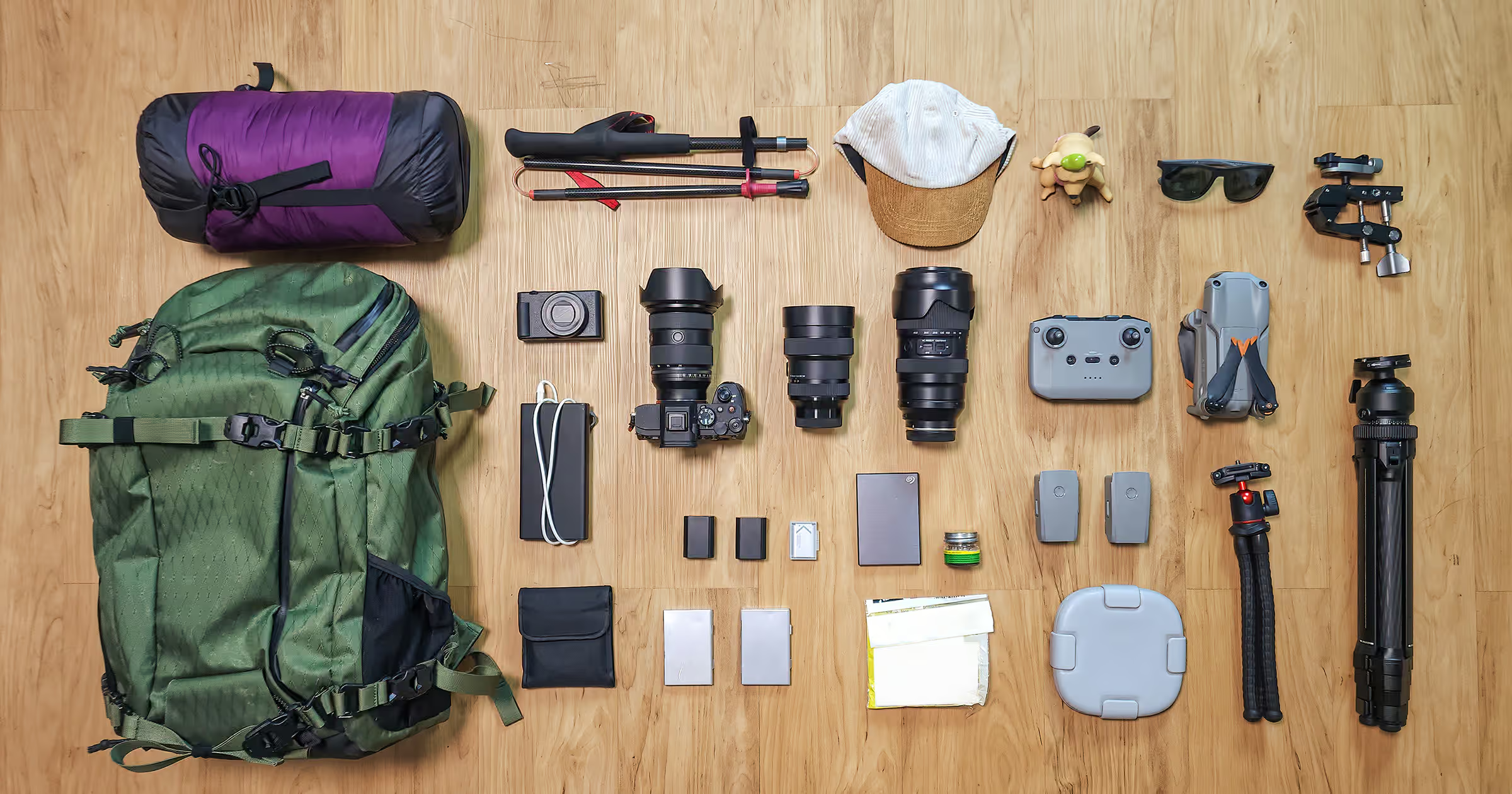
Stargazing in Nepal demands you to do multiple days trekking to higher elevation. The best Milky Way window viewing window is always late at night, you need to wake up at 2am in the morning and have to leave your cozy bed and step in front of your teahouse to set your tripod and camera gear.
This will increase tiredness and staying awake outdoors makes you more prone to altitude related risk.
Extra Weight on Backpack
Trekking to high altitude demands a heavy backpack filled with layered clothing, first aid essentials, and other items. Camera gear adds an extra 3 to 5 kg of weight on your pack, which makes it difficult to carry a heavy backpack.
Every adventure has its own challenges, so does stargazing in Nepal but once you handle the difficulties and challenges, you will be rewarded with pristine dark skies, dramatic Himalayan landscapes, and rare celestial views in the skies of Nepal.
Popular Treks for Himalayan Stargazing in Nepal
Nepal’s remote trekking regions provide breathtaking views of the Milky Way, planets, meteor showers, and star-filled skies above dramatic landscapes. If you are planning stargazing in Nepal, make sure you trek to following routes like:
Everest Base Camp Trek
You will get to experience three nights for stargazing in Everest Base Camp trek. Here, you will get rewarded with the spectacular views of stars shining above Mount Everest in places like Dingboche (4,410m), Lobuche (4,940m), and Gorak Shep (5,164m). Trekkers also do stargazing in Namche Bazaar.
Gokyo Valley Trek
The peaceful alpine landscapes, turquoise lakes, and panoramic Himalayan views of Gokyo Valley Trek serve as one of the excellent destinations for observing the night sky. Himalayan stargazing in Gokyo gives you the best views of stars reflected on Gokyo’s lakes, with impressive mountain silhouettes creating a dramatic foreground. The trek is best suited for Milky Way photography in Nepal.
Rara Lake Trek
During Rara lake trek you will be spending night in lower altitude which offers you a warm dark night. When planned carefully, you can see countless stars, the Milky Way stretching above the lake, and a stunning reflection of the night sky on the calm surface of Rara Lake.
Annapurna Base Camp Trek
Annapurna Base Camp Trek offers a dramatic setting for observing stars in 2026. During autumn and spring, you will spot dark nights that are best suited for Milky Way photography and celestial viewing.
Upper Mustang Trek
For astrophotography and stargazing, Upper Mustang trek also stands out, as a rain shadow area, it receives less rainfall, which makes a clear and dark sky. This favors ideal conditions for capturing the Milky Way, meteor showers, and deep-sky objects.
How to Plan Astro Tourism in Nepal?
Nepal is a country of Mountain and its mountainous region offers one of the most pristine dark skies in the whole universe. The remote region lacks artificial light sources as it is far away from modern development and locals are continuing their day to day activity depending on butter lamps or solar lamps.
Astro tourism in Nepal demands careful planning, patience, physical and mental preparation, and the ability to stand in frosty cold nights in the high mountainous region.
- Firstly, you need to choose the best season, either October or November.
- Contact a Licensed trekking and tour operator like Awesome Holidays Nepal for itinerary adjustment and trip planning to stargazing in the Himalayas in 2026.
Planning a Stargazing in Nepal in 2026?
Or Call/Message on WhatsApp +977 98434 13619
- Then, choose which trekking trails you want to explore. We recommend EBC trek, as it offers three nights above 4,000 meters elevation which offers clear sky to witness the Milky way.
- Always add acclimatization for 1 to 2 nights and utilize the night for stargazing.
- Plan your trip after Full-moon for a dramatic night sky.
Final Verdict on Astro Tourism in Nepal
Stargazing in Nepal offers a unique combination of adventure, culture, and astronomy. From remote deserts of Upper Mustang to the base of world’s tallest mountain, Everest, these trekking trails offer an unmatched beauty of dark sky with a backdrop of skyrocketing mountain peaks.
With minimal light pollution, the high altitude landscapes, well-established trekking trails, in near future, we will definitely see amateur astronomy clubs, astrophotography tours, dark-sky enthusiasts choosing Nepal over world’s premier stargazing destinations like Namibia, Chile, and the Canary Islands.
Himalayan Astro-tourism is continuing to flourish. Make sure you also contribute to this growth by planning a trip with us to experience the magic of Stargazing in Nepal beneath some of the darkest skies in 2026.
FAQs
Expand AllIs Nepal good for stargazing?
Yes. Nepal is not only good but serve as an excellent destination for stargazing.
Where is the best place for stargazing in Nepal?
Upper Mustang, Rara Lake, Everest Base Camp, Annapurna region are some of the best place for stargazing in Nepal.
What is the best time to see the Milky Way in Nepal?
When the monsoon clears and skies are crisp, autumn (mid-September to early December)is the best time to see the Milky Way in Nepal.
Can you see the Milky Way from Everest Base Camp?
Yes. Everest Base Camp offers spectacular views of Milky Way.
Is Nagarkot good for stargazing?
Yes, Nagarkot is a good stargazing. It offers clear nights but you may witness some light pollution.
Do I need a telescope for stargazing in Nepal?
No. Many celestial objects, including the Milky Way, planets, and bright constellations, can be enjoyed with the naked eye or binoculars in Nepal.
Is Upper Mustang good for stargazing?
Yes. The dry climate, high elevation, and exceptionally dark skies of Upper Mustang serves as one of the finest stargazing destinations.
What stars can you see from Nepal?
Bright stars such as Sirius, Vega, Betelgeuse, Rigel, Antares, Arcturus are visible from skies of Nepal.
How dark are the skies in Nepal?
Due to minimal light pollution, the skies of remote Himalayas offer dark nights in Nepal.
Can you see the Southern Cross from Nepal?
No. As Southern Cross (Crux) is below Nepal’s horizon , you cannot see.
What is astro tourism in Nepal?
The combined travel with guided stargazing, astrophotography, astronomy education, and nighttime experiences in dark-sky locations is known as Astro tourism in Nepal.
Is Rara Lake good for stargazing?
Yes. Rara Lake is good for stargazing.
What is the Bortle scale for Nepal dark sky areas?
Nepal dark sky areas falls in between Bortle Class 2 and Class 3.
Can you stargaze in Nepal during monsoon?
Stargazing in Nepal during monsoon season is difficult because frequent clouds and rain obscure the night sky.
What constellations are visible from Nepal?
Orion, Scorpius, Cassiopeia, Cygnus, Ursa Major, Leo, and Sagittarius are some of the constellations that are visible from Nepal.
Are there any dark sky parks in Nepal?
No. There are no official dark sky parks in Nepal even though multiple remote regions have excellent dark-sky conditions.
What is the best altitude for stargazing in Nepal?
The best altitude for stargazing in Nepal is in between 2,000 meters to 5,000 meters.
Is Sarangkot good for stargazing?
Yes. Sarangkot offers enjoyable stargazing opportunities on clear nights, especially during the dry season.
Can you see the Andromeda Galaxy from Nepal?
Yes. The Andromeda Galaxy is easily visible via naked eye from Nepal.
When is new moon in Nepal 2026 for stargazing?
The new moon dates in Nepal for stargazing in late 2026 occur during the post-monsoon dry months of October, November, and December.
Related blog posts
Discover a choice of tourist destinations loved by most of our visitors. Whether you're on a jungle safari to spot rare animals or walking through a world heritage site, these well-planned itineraries cover the major highlights of Nepal.


 call an expert at: