
Tirthapuri Hot Springs: The Third Leg of the Kailash Pilgrimage Most Tours Skip
 Sristi Adhikari
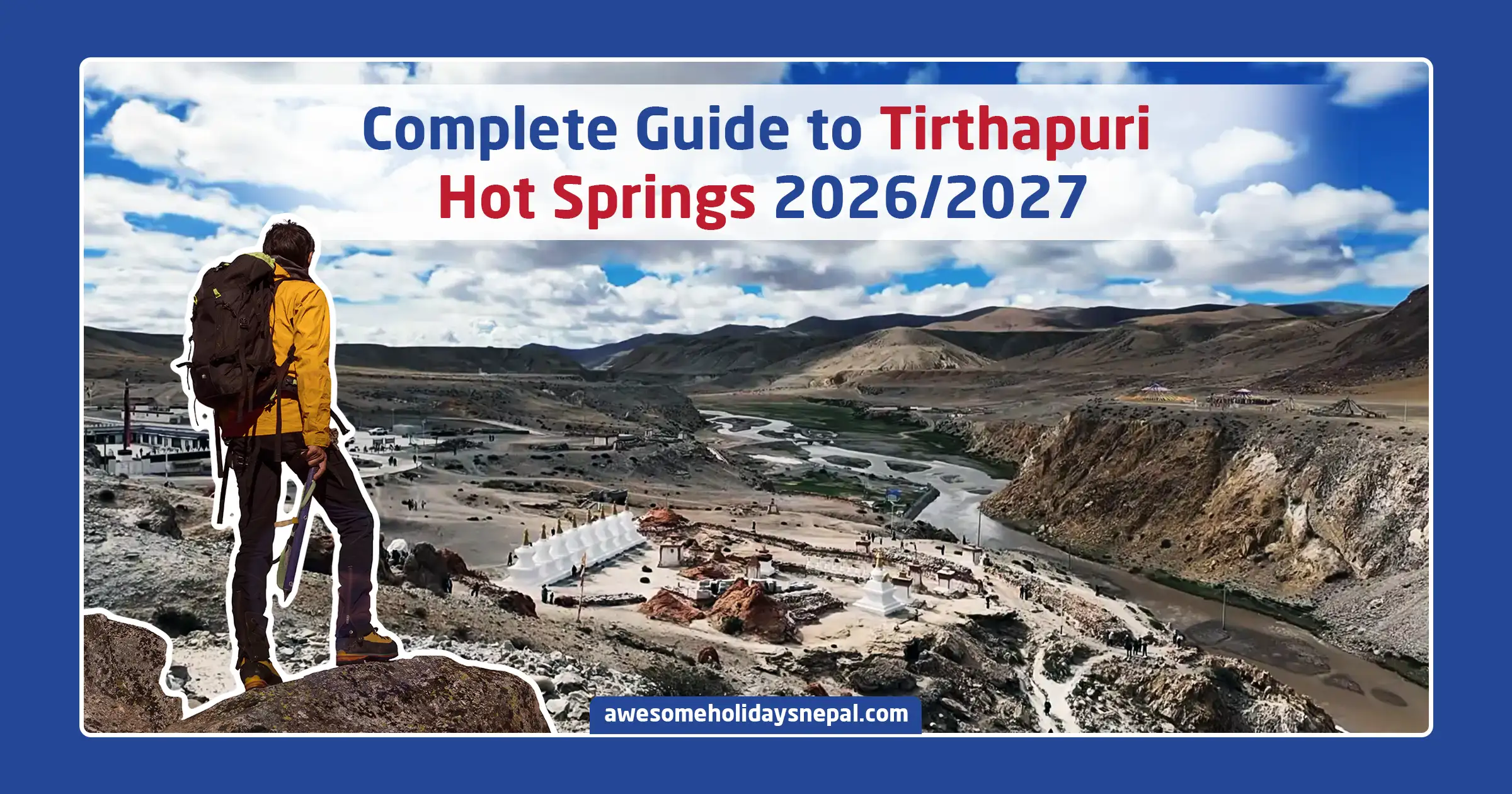
A journey to Mount Kailash is often described through two unforgettable landmarks: the sacred mountain and the clear waters of Lake Mansarovar. Yet beyond these celebrated stops lies a quieter place that completes the spiritual story of western Tibet.
Tirthapuri Hot Springs is a pilgrimage site of steaming water, prayer flags, ancient rock formations and deep Buddhist and Hindu associations. Despite its religious importance, Tirthapuri is frequently overlooked in standard Kailash Mansarovar tour itineraries.
This relaxing spot of Tirthapuri helps you understand deeply about the spiritual traditions of the Kailash region. Its ancient monastery, meditation caves, sacred springs and pilgrimage circuit reveal another side of Tibet‘s religious heritage.
Where is Tirthapuri Hot Springs?
Tirthapuri hot springs is located around 80 km northwest of Mount Kailash and on the northern bank of the Sutlej river. It lies 65 km west of Darchen, a key gateway to Mount Kailash and 9 km south of the historic Moincer village of Tibet Autonomous Region.
Tirthapuri Hot Springs is elevated at an altitude of 4,310 meters above sea level and stretches over an area of 11 square km along the river gorge. The formation of hot springs above 4,000 m elevation creates an unusual contrast against the cold, dry and arid environment of the Tibetan Plateau.
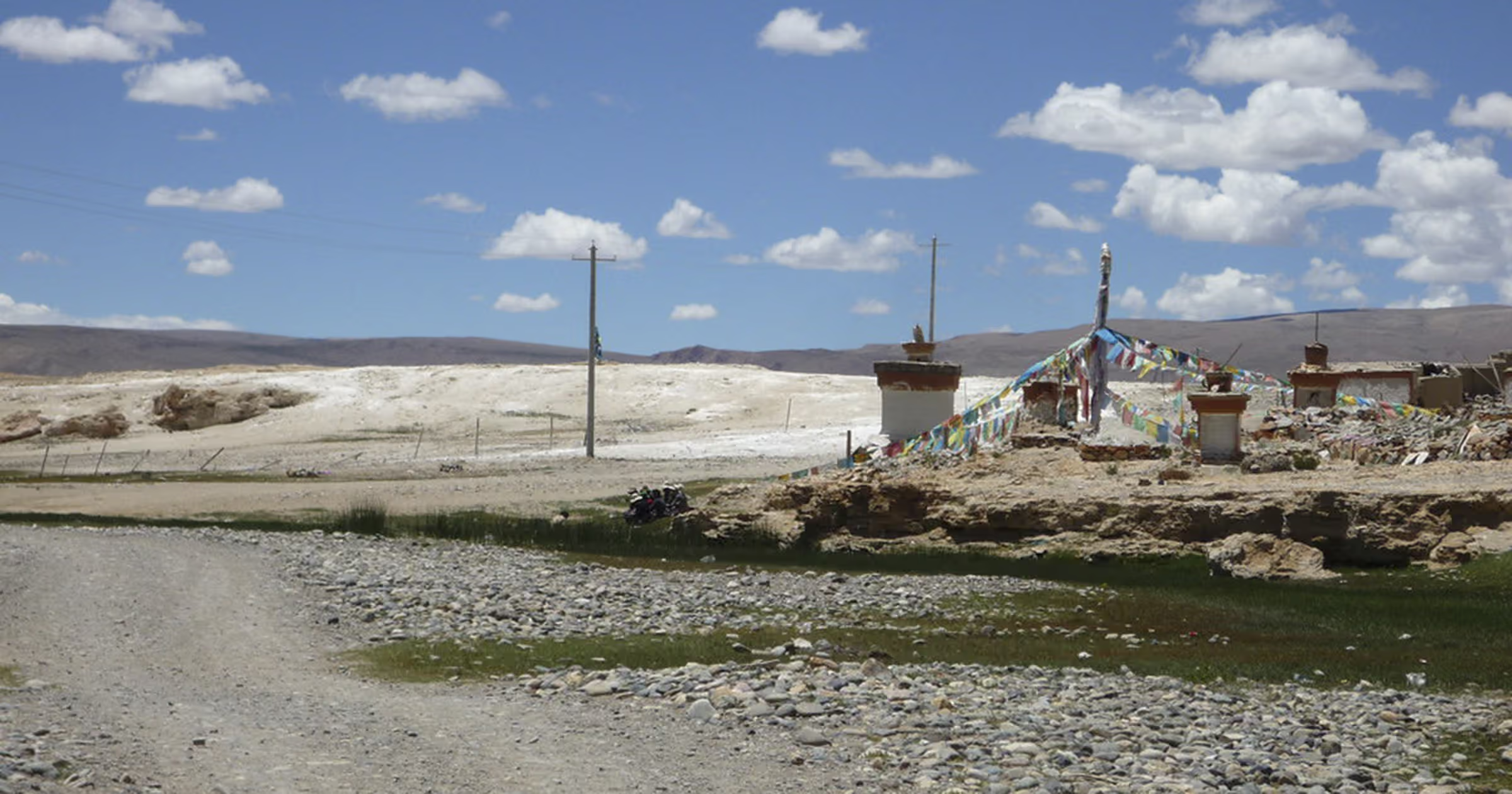
Tirthapuri is also regarded as the Kailash pilgrimage’s third site after Mount Kailash and Lake Mansarovar. Most of the global and local pilgrims pay a visit to Tirthapuri after completing their Kailash kora and soothe their tired leg muscle by dipping in it.
Tirthapuri is locally known as “ Zhadaburi” and the “place of holy waters” is attracting the hearts of Hindu, Buddhist, Bon, and Jain religions from all around the world with it’s:
- Hot springs,
- geysers,
- Limestone terraces
- Cave,
- Monastery, and
- deep mythological connections to Mount Kailash.
Sacred History of Tirthapuri
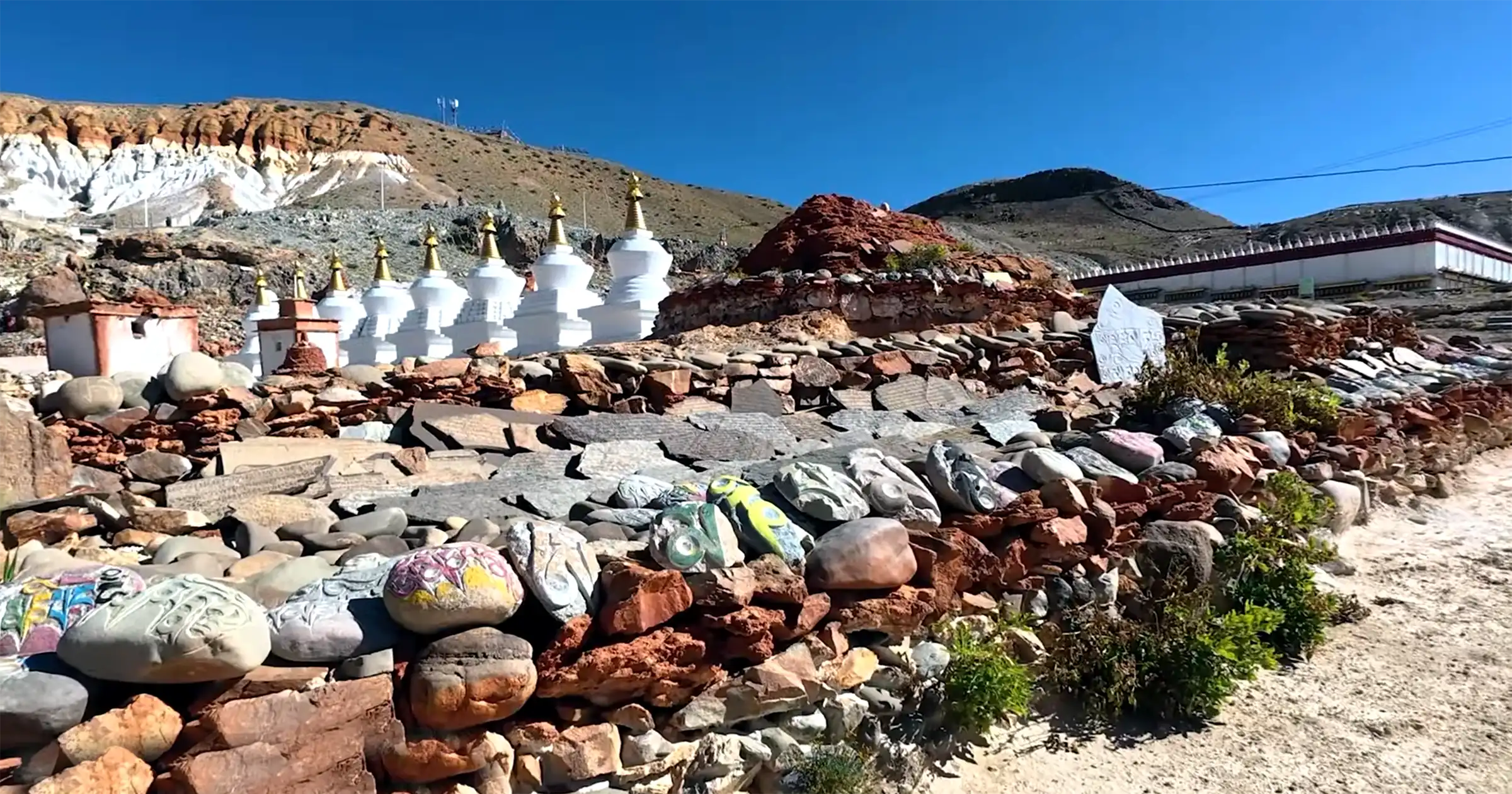
Tirthapuri holds deep spiritual significance for Tibetan Buddhist tradition with its association to Guru Rinpoche also known as “Padmasambhava” whereas it is considered as the Lord Shiva healing powers in Hindu traditions. The sacred complex of Tirthapuri consists of:
- hot springs,
- monastery,
- mani walls,
- ancient chortens,
- caves and
- Shiva Lingam shaped rock formation.
Tirthapuri, a spiritual geography of Western Tibet combines spirituality with natural geothermal activity which is why thousands of pilgrims every year extend their Kailash tour to:
- pray,
- meditate and
- perform circumambulation (Tirthapuri Kora).
Association with Padmasambhava
Tirthapuri is one of the places where Guru Rinpoche (Padmasambhava) introduced Vajrayana Buddhism in Tibet during the 8th century. Guru Rinpoche is an Indian tantric master who meditated in the Vajravarahi caves within Tirthapuri monastery.
It is also believed that his spiritual consort, Yeshe Tsogyal, mediated alongside Rinpoche in Tirthapuri. You can witness his presence via:
- the footprints,
- handprints and
- sacred impressions left in the rock inside the Rinpoche’s retreat.
These are treated as objects of devotion, and pilgrims often pause to offer prayers and pay their respects. Tirthapuri western Tibet is beyond a sightseeing experience for Buddhist pilgrims as it helps them connect with the life and teachings of Padmasambhava in a landscape traditionally associated with his meditation.
The Hindu Significance
Tirthapuri also holds immense significance in Hindu religious tradition because it is connected with sacred Mount Kailash, an abode of Lord Shiva. It is believed that Tirthapuri hot springs arose from the own healing power of Lord Shiva who lives in Mount Kailash with Goddess Parvati.
Tirthapuri, Western Tibet is also connected to the story of demon Bhasmasur. When a demon Bhasmasur received a powerful boon of converting anything and anyone into ashes just by placing his hand on their head from Shiva, he tried to use it against the Lord Shiva himself.
Then, Lord Vishnu appeared as Mohini and tricked Bhasmasur into placing his own hand on his head, causing him to turn into ashes. The white limestone terraces which surround the Tirthapuri hot springs are believed to be the remains of Bhasmasura ashes.
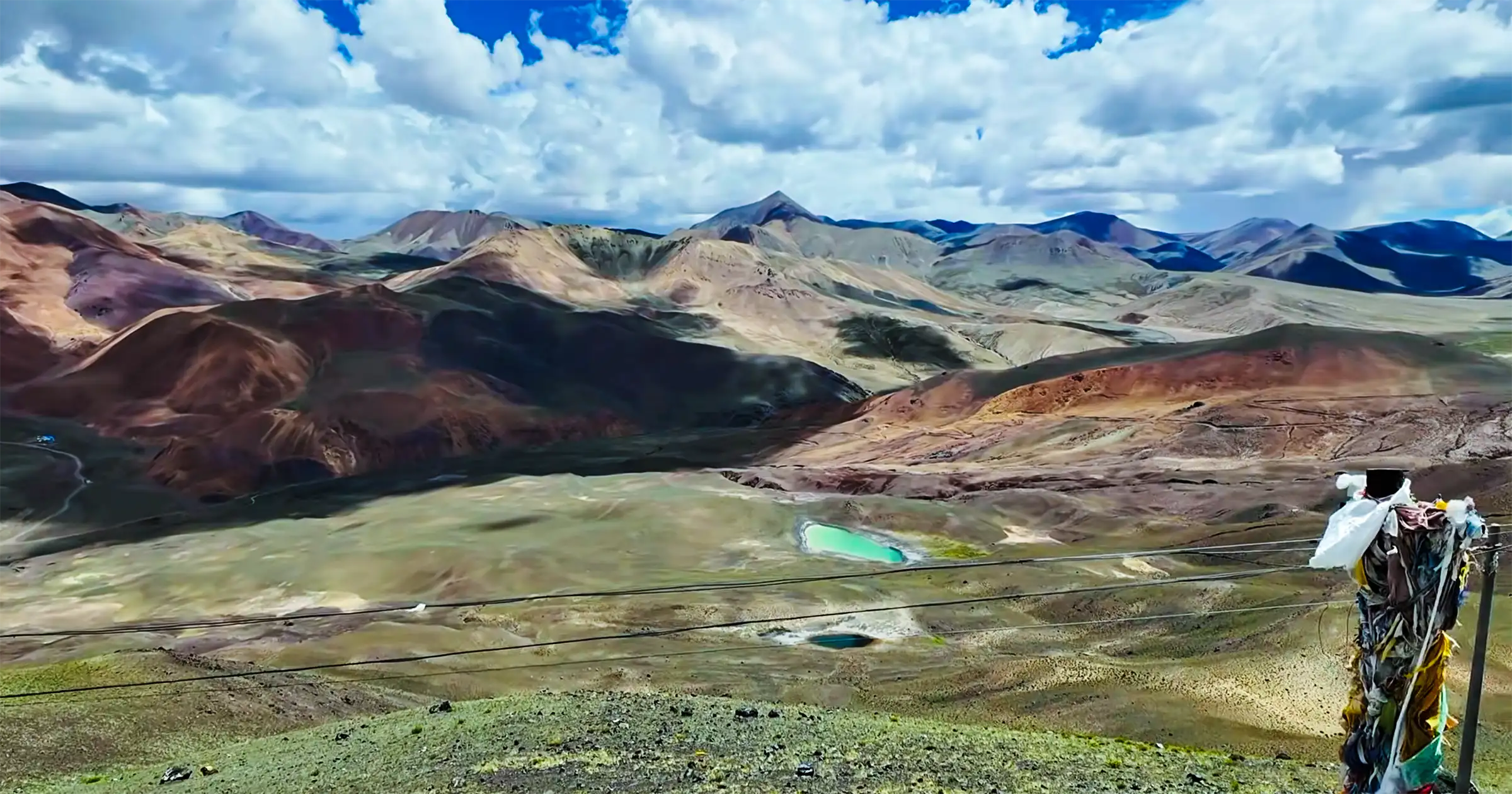
Hindu devotees believes, ritual bathing in the sacred water of Tirthapuri hot springs is connected with:
- purification,
- cleansing, and
- spiritual renewal.
Visiting the hot springs of Tirthapuri Tibet adds another religious dimension to the Kailash Mansarovar Yatra, bringing together mythology, devotion and traditional pilgrimage customs.
What Makes the Tirthapuri Hot Springs Special?
Tirthapuri hot springs emerge naturally from a rugged, high-altitude setting of the western Tibetan plateau and are quite shallow. The hot springs are surrounded by white and red stone terraces.
This hot water accumulates calcium clumps inside the springs which are mainly collected mainly for medicinal purposes. Tirthapuri Tibet is popular among pilgrims and visitors all around the world due to the following reasons:
Natural Geothermal Water
Naturally emerged hot springs are the main attraction of Tirthapuri Tibet. Its formation in the cold and barren landscapes offer a striking contrast to the surrounding environment.
Planning A Visit To Tirthapuri Hot Springs in 2027?
Or Call/Message on WhatsApp +977 98434 13619
Unique Mineral Formations
The hot springs are surrounded by pure mineral-rich terraces which are of medicinal value. The mineral rich water flows over the land leaving reddish deposits around the spring outlets. This reflects the unique geothermal activity in the rocky and open landscapes.
Religious and Spiritual Practices
The ritual washing at Tirthapuri hot springs is believed to provide both physical relief and spiritual purification.
Traditional Bathing Experience
The shallow pools allow you to enjoy the naturally warm water either by soaking feet or by taking a bath in public without any facilities.
Traditional Healing Beliefs
The mineral deposits and hot waters of Tirthapuri springs are traditionally associated with medicinal and healing properties. Small pure opaque calcium balls found in the pink and white limestone terraces are considered to be of powerful medicine.
Geothermal Activity and Steam
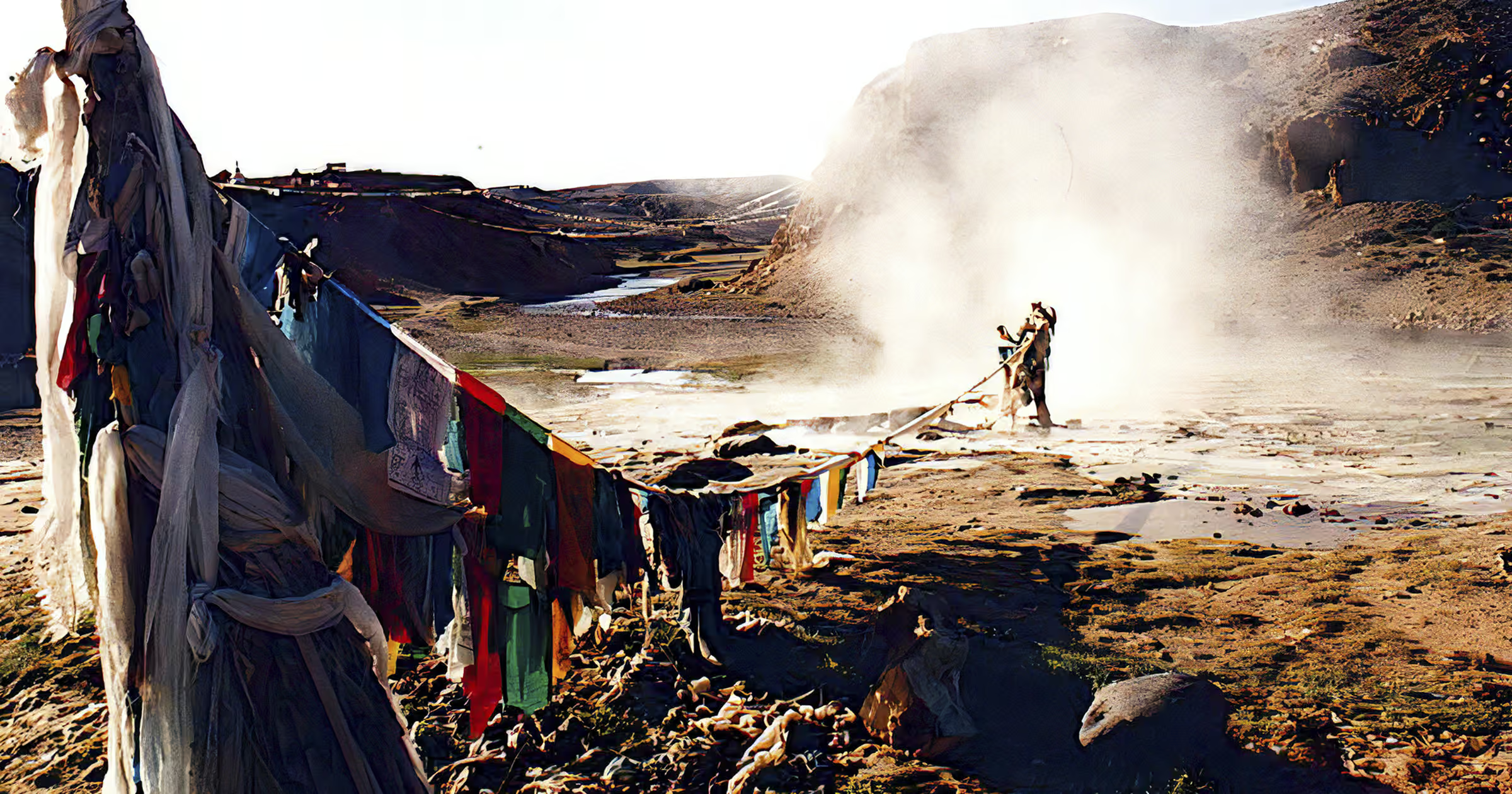
The geothermal activity in Tirthapuri forms heated water, streams, and mineral deposits. The area was once famous for its noticeable geyser activity, which now seldom releases hot water.
Nevertheless, the surrounding landscape continues to display clear signs of geothermal processes.
A Place for Relaxation After Kailash Pilgrimage
Tirthapuri hot springs serve as the place to rest and relax after walking multiple days around Mount Kailash. Its peaceful and spiritual atmosphere brings a refreshing break from the challenging journey.
Tirthapuri Pilgrimage Kora: What to Expect
During Kailash Mansarovar yatra from Nepal, many pilgrims choose to pay a visit to lake Mansarovar at first and then head towards Kailash kora, and finally towards Tirthapuri for Kora. Doing Tirthapuri kora for thirteen times is considered to bring equal merit similar to single Kailash Kora.
Tirthapuri Kora takes one hour for completion which usually begins in the southwest corner of the springs. Here, pilgrims take a bath in two small pools and then you will head towards the cremation points where you will encounter old clothes and rage that have been left on the rocks since ages.
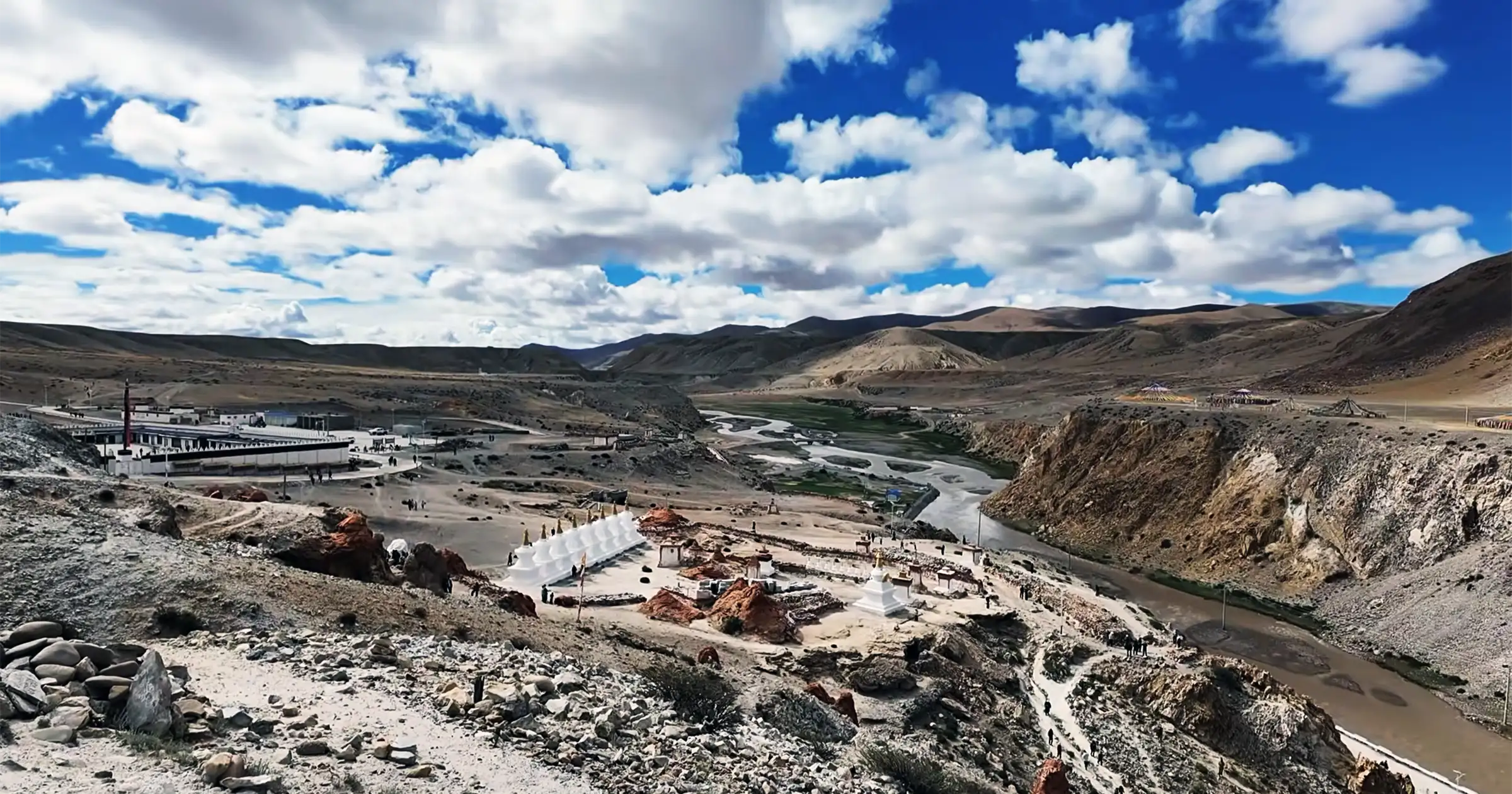
After walking for some time, you will head eastwards through a “sour” earth hole where pilgrims dig holes in search of small stones which have healing properties. There is another hole which is known as a “sweet” earth hole that lies a few steps away.
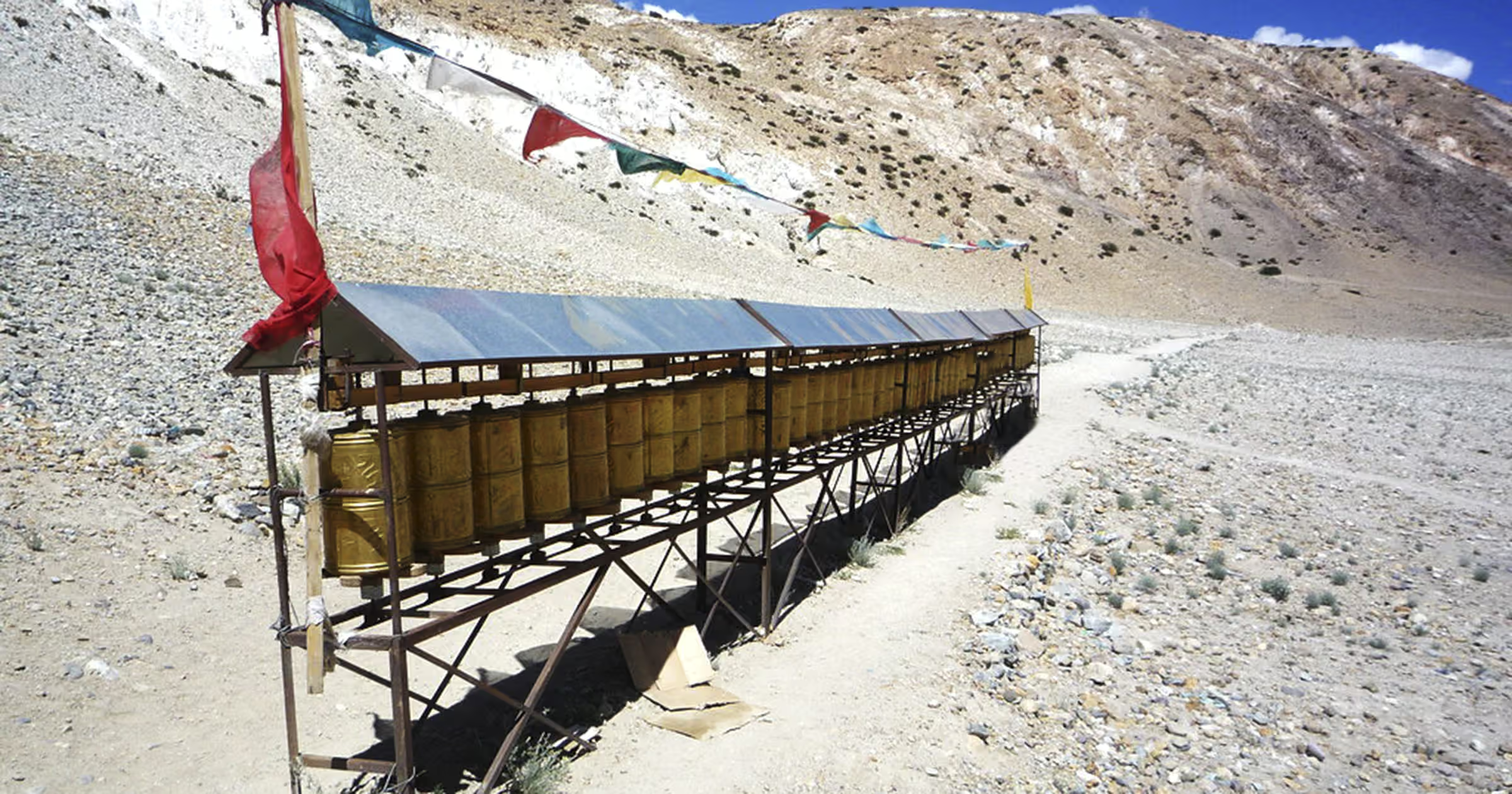
Then, you will come towards the prayer wheel and underneath its rock, there is a Karma-testing hole. Here, you can test your karma by pulling out two stones from the hole. If you found two white stones then it indicates a good karma but if you pull out one black and one white means that it could use some work while if you found both black stones then it indicates your bad karma.
Tirthapuri Kora trails bring you t o Guru Rinpoche monastery which is popular as Tirthapuri monastery. You can enter inside the monastery and witness the stone footprints of Padmasambhava and his consort Yeshe Tsogyel in the hall.
The south side of Tirthapuri monastery is filled with mani stones which encircle the spot where gods believed to have danced during the enshrinement of Guru Rinpoche. Then, you will come across the route where you will encounter multiple larger mani walls which are incorporated with yak heads.
One of the largest main walls extends from the east side of the monastery which is around 200 m long. Locals believed that when the demon shot an arrow at Guru Rinpoche, he stopped the arrow mid-way which later transformed into the mani walls.
This is the last part of your kora and then you will trace back to the hot springs.
Tirthapuri Travel Guide
Foods and Drinking Water
When you extend your Kailash tour from Kathmandu towards Tirthapuri, you need to stay in Darchen as it is the closest town to Tirthapuri. There are no accommodation facilities at Tirthapuri as the site mainly focuses on spiritual rituals.
So, you need to bring your own packed lunch or snacks from Darchen’s guesthouses and lodges for the Tirthapuri kora day. We suggest you bring energy dense snacks like chocolate bars, nutrient-rich tsampa (roasted barley flour), salted nuts, sturdy biscuits, and sun-dried fruits like raisins, almonds, and apricots.

For drinking water, you need to bring reusable water bottles and refill it with boiling water or purified water from nearby teahouses and lodges. The sacred and fragile ecosystem of Tirthapuri demands responsible tourism so pack every waste in your backpack and dispose of it in the dustbin of Darchen’s Teahouses and lodges.
Accommodation Options
You will be staying in Darchen before and after the Tirthapuri pilgrimage. There are a wide range of accommodation options available in the Darchen from budget friendly to luxury style.
Some of the popular accommodation where you can book for next Kailash Mansarovar yatra from Nepal such as:
- Kailash Hotel,
- Yuntianzhouji Hotel,
- Chengdu Grand Hotel,
- Gaer Shuangfu Business Hotel,
- Zhusu Guesthouse,
- Tashi Hotel etc.
Best Time to Visit
April to October is a favorable time to visit Tirthapuri Hot Springs. The moderate temperature, passable road makes the period most visited. For more details on the best time, click here.
Why Many Kailash Tours Leave It Out
The main Kailash tour from Kathmandu consists of long distance, longer hours of road travel, high altitude and careful scheduling. Many travel and tour operators often build itineraries while focusing on the Mount Kailash kora and Lake Mansarovar which become two weeks or longer in total.
Many pilgrims do not have enough time and their main purpose of travel is to do Mount Kailash kora and take holy dip in Lake Mansarovar and adding Tirthapuri in itineraries demands an additional stop which can mean another transfer.
As a result, it makes your stay longer in the Tibetan plateau and adjustments become quite difficult to an already tight schedule. Another factor is budget, the Kailash Mansarovar tour is often expensive and adding an extra day could increase the overall package value making the tour expensive as compared to regular ones.

During price comparison most of the pilgrims and travelers skip your package of Kailash Mansarovar yatra from Nepal due to high prices. In order to compete in market value, Kailash tour operators purposely skip Tirthapuri and offer similar rates like others.
As a result, Tirthapuri Hot Springs often get missed in shorter or fixed-departure tours. Those who have knowledge about the Tirthapuri and its spiritual importance can add a day in their customized itinerary for Tirthapuri after Kailash kora.
If you plan via western Tibet route, Tirthapuri can also fit naturally with travel towards the Guge region including Tirthapuri Hot Springs in this wider itinerary that can make sense for travelers who have allowed enough time.
Final Verdict on A Quieter Ending to a Remarkable Pilgrimage
Tirthapuri, third leg or final destination of the Kailash Mansarovar pilgrimage offer something different. It holds intimate, contemplative and rooted in stories carried across generations.
Tirthapuri Hot Springs is not only popular for its natural warmth of the earth but it also holds deeper significance to the spiritual traditions of a landscape that means a great deal to both Buddhist and Hindu pilgrims. The sacred landscape of Western Tibet is only accessible via road and adding it as a stop in Kailash pilgrimage give you a deeper insight of centuries old Tirthapuri monastery, 11 kora around Tirthapuri which make you gain spiritual merit similar to one Kailash kora.
And for anyone seeking a quieter experience beyond the usual pilgrimage route, Tirthapuri provides a memorable glimpse of hidden and most escaped sacred landscapes of Western Tibet. Sometimes, the most meaningful part of a pilgrimage is not the destination everyone talks about, but the sacred place discovered along the way.
When being ready for your next Kailash Mansarovar yatra make sure you add Tirthapuri hot spring and for memorable and enjoyable journey plan your Tibet journey with Awesome Holidays Nepal.
FAQs
Expand AllWhere is Tirthapuri Hot Springs?
Tirthapuri Hot Springs is located in the Ngari region of western Tibet. It lies near the Sutlej River and northwest of Mount Kailash.
Are Tirthapuri Hot Springs in Nepal or Tibet?
Tirthapuri Hot Springs is in Tibet, China, not Nepal.
Is Tirthapuri the third site of the Kailash pilgrimage?
Yes. Tirthapuri is the third site of the Kailash pilgrimage.
Do pilgrims visit Tirthapuri before or after the Kailash kora?
Pilgrims mostly visit Tirthapuri after completing the Mount Kailash kora and visiting Lake Manasarovar.
Can you visit Tirthapuri after completing the Kailash kora?
Yes. You can visit Tirthapuri after completing the Kailash kora.
How do you get to Tirthapuri from Darchen?
You can reach Tirthapuri from Darchen by hiring a private vehicle or an organised tour through the road connecting the Kailash region with western Tibet.
How far is Tirthapuri from Darchen?
Tirthapuri is located 65 km west of Darchen.
How do you reach Tirthapuri from Nepal?
From Nepal, you can generally travel through an authorised Tibet tour route via the Nepal–Tibet border before continuing towards Mount Kailash and Tirthapuri.
What route connects Kathmandu, Kailash, and Tirthapuri?
A typical route make you travel Nepal to Tibet border at first and then continue the journey onward to Saga and the Kailash region, followed by Lake Manasarovar and Tirthapuri,
What is the Tirthapuri Kora?
A traditional circumambulation route around the sacred monastery, meditation caves, hot springs and surrounding religious landmarks is called Tirthapuri Kora.
How long does the Tirthapuri Kora take?
Tirthapuri kora can be completed within an hour of time interval.
What can you see at Tirthapuri?
Natural hot springs, Tirthapuri Monastery, Guru Rinpoche’s meditation cave, prayer flags, mani walls and sacred rock formations are some of the attraction you will witness at Tirthapuri.
Can pilgrims bathe in Tirthapuri Hot Springs?
Yes, you can bathe in Tirthapuri Hot Springs.
What is Tirthapuri Monastery known for?
Tirthapuri Monastery is known for its association with Guru Rinpoche, sacred meditation caves, Buddhist religious traditions and its importance in the Kailash pilgrimage.
What is the connection between Tirthapuri and Padmasambhava?
Padmasambhava, also known as Guru Rinpoche is believed to have meditated in the sacred caves surrounding the Tirthapuri monastery.
Is Tirthapuri included in Kailash Mansarovar tours?
Most of the time, Tirthapuri is excluded in Kailash Mansarovar tours.
Which Kailash tour itineraries include Tirthapuri?
Extended Kailash Mansarovar pilgrimage packages and customised western Tibet tours include Tirthapuri as a stop.
How much time should I allow for Tirthapuri?
A half day is enough for Tirthapuri but allocating full day allows you a deeper immersion.
What is the altitude of Tirthapuri?
Tirthapuri is situated at 4,310 metres (14,140 feet) above sea level.
Can visitors travel to Tirthapuri independently?
No. Foreign travelers need to arrange their visit through an authorized Tibet tour operator to obtain the permits and to enter inside the Autonomous region of Tibet.
Related blog posts
Discover a choice of tourist destinations loved by most of our visitors. Whether you're on a jungle safari to spot rare animals or walking through a world heritage site, these well-planned itineraries cover the major highlights of Nepal.



 call an expert at: