
Yellow Band Everest: The Ancient Ocean on Mount Everest
 Sristi Adhikari
Almost every person thinks of Mount Everest with towering glaciers, extreme altitude when dreaming of standing on the world’s highest summit. However, hidden among Everest’s icy slopes is one of the mountain’s most fascinating geological treasures—the Yellow Band Everest.
The story of Yellow Band Everest reveals how the highest mountain on Earth was once part of an ancient seabed, where layers of marine sediments accumulated beneath the Tethys Ocean over hundreds of millions of years. This striking golden rock formation also offers climbers and geologists a remarkable glimpse into the powerful tectonic forces that transformed an ocean floor into the towering Himalayas.
Let’s dive deeper into the history, geology, and climbing significance of the Yellow Band Everest with a detailed explanation of how this extraordinary rock layer is considered one of Mount Everest‘s most iconic and scientifically important features.
What does Yellow Band Everest mean?
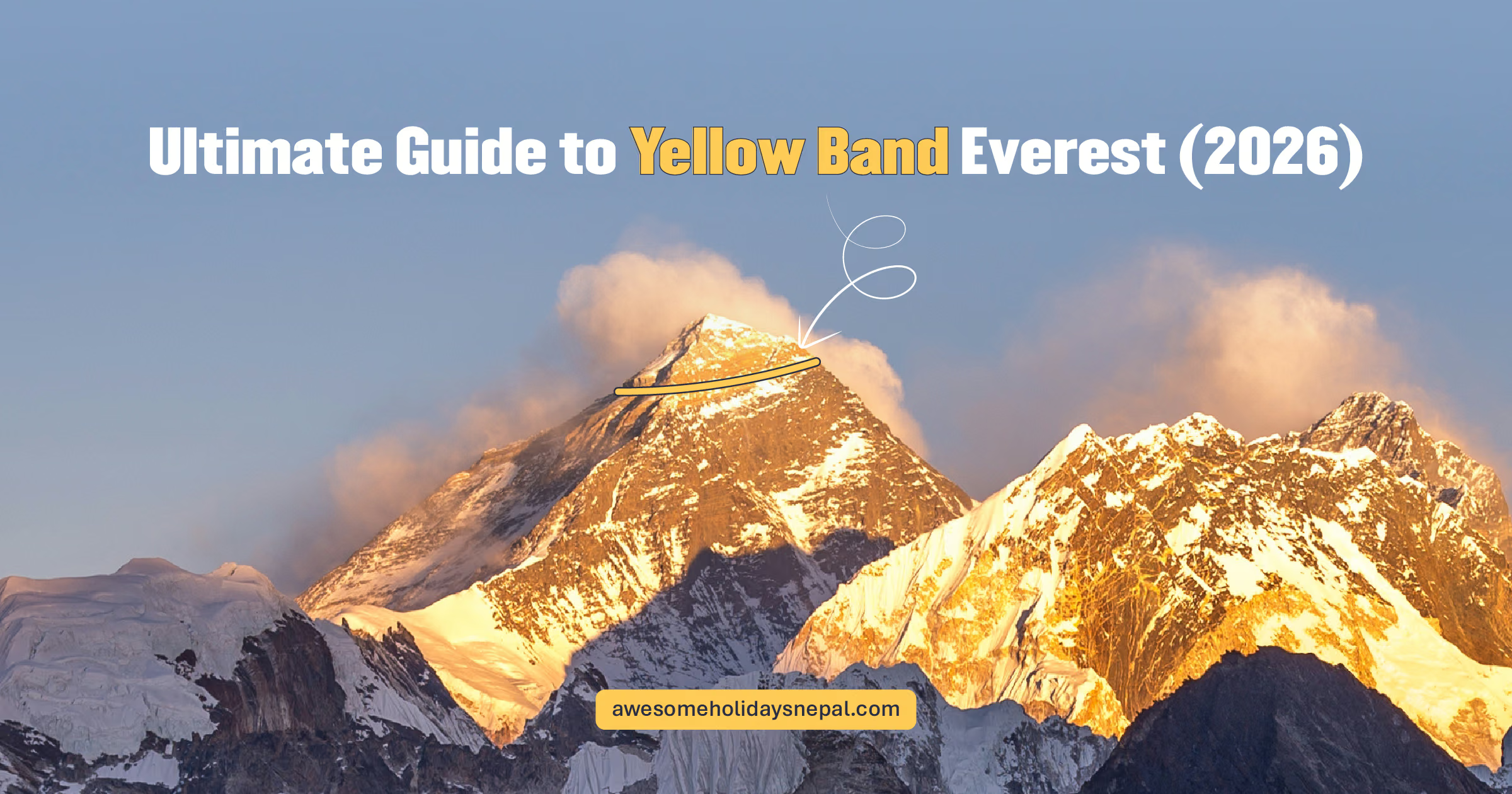
The yellow band Everest is a horizontal yellowish brown metamorphic rock that stretches across the upper slopes of the Lhotse face like a natural stripe when climbing Mount Everest.
The yellow band of Mount Everest is believed to have formed almost half a billion years ago. The yellow band has a thickness of 150 to 20 meters (500 to 800 feet) approximately and is composed of metamorphic rocks like limestone, marble, quartzite, and calcium-silicate.
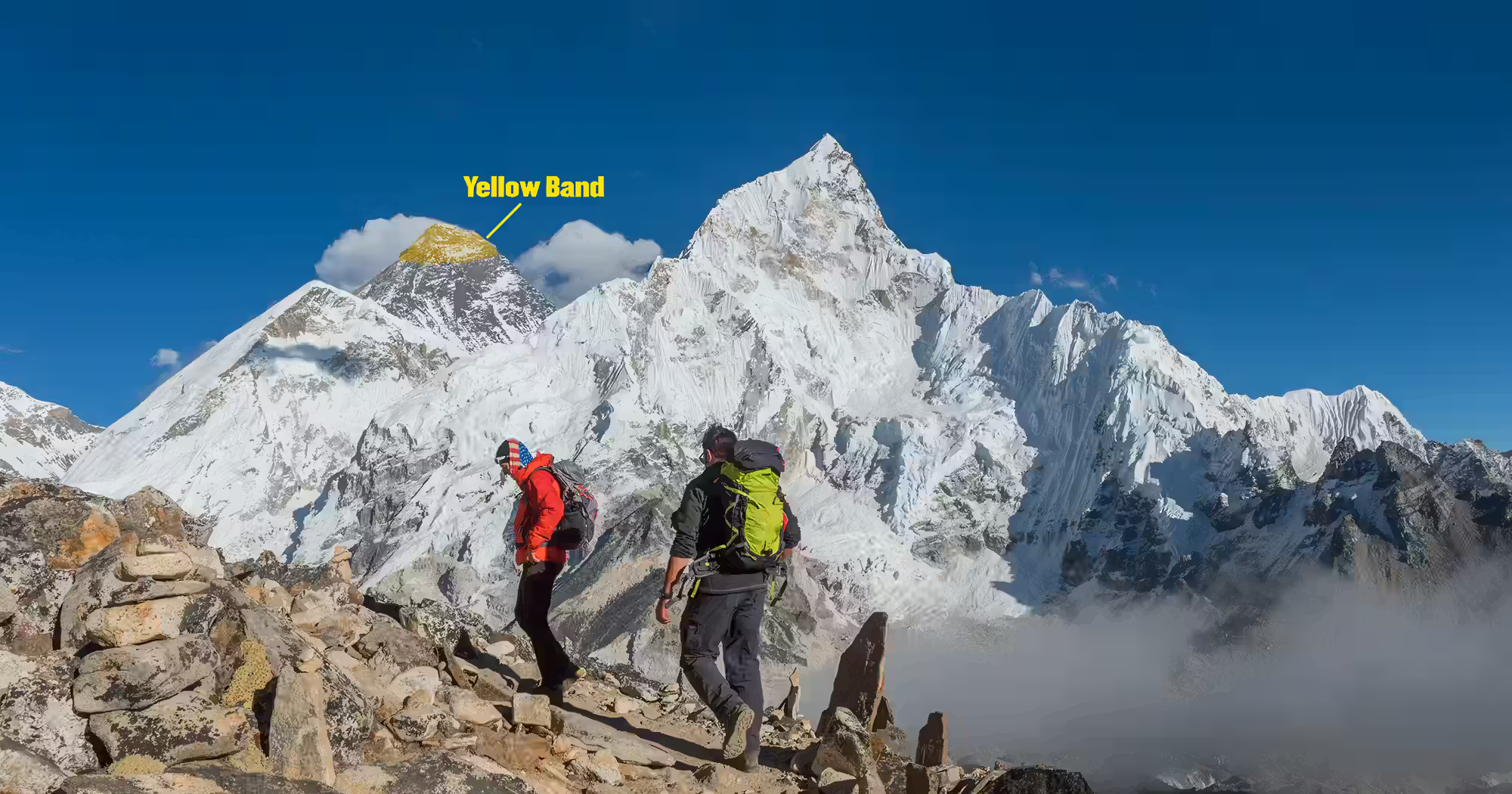
Yellow band appears as a stripe on Everest in between Camp III and Camp IV at the south col at an elevation of 8,000 meters from sea level. The Qomolangma Formation crowns Mount Everest above the Yellow Band, which is made up of grey Ordovician limestone while creating the famous summit pyramid.
Why is it called the Yellow Band?
The unique appearance of yellowish or golden brown color makes the name Yellow band Everest. The rocks within the Yellow Band of Everest contain metamorphosed limestone, marble, quartzite, and calcium silicate minerals that weather into warm yellow and golden-brown shades.
During sunrise and sunset, these rocks reflect light beautifully, creating a glowing stripe across Everest’s upper slopes. This striking appearance has made the Yellow Band Everest one of the mountain’s most photographed natural landmarks.
Yellow Band Geology and Location
Yellow band Everest sits at an elevation of around 7,500 to 7,900 meters from sea level. It is located on the Southeast Ridge also known as South Col route of Everest in Nepal. The yellow band on Mount Everest is located just below Geneva Spur and South Col, and above Camp III on the Lhotse Face.
However, it appears at an altitude of 8,200 to 8,500 meters from Northeast Ridge route(Tibet). Almost every climber has to cross the yellow band when doing the Everest summit.
Geological History
Yellow band geology is another interesting fact of Mount Everest. Around 470 to 500 million years ago, during the Ordovician period long before Mount Everest existed, this region lay beneath the warm, shallow Tethys Ocean.
Layers of marine sediments, shells, corals, trilobites, brachiopoids, crinoids, and other sea organisms gradually accumulated on the ancient ocean floor. Over millions of years, these sediments hardened into limestone on Everest.
Around 60 million years ago, when the Indian tectonic plate slowly collided with the Eurasian plate, the immense pressure and heat transformed the ancient seafloor to extraordinary heights.
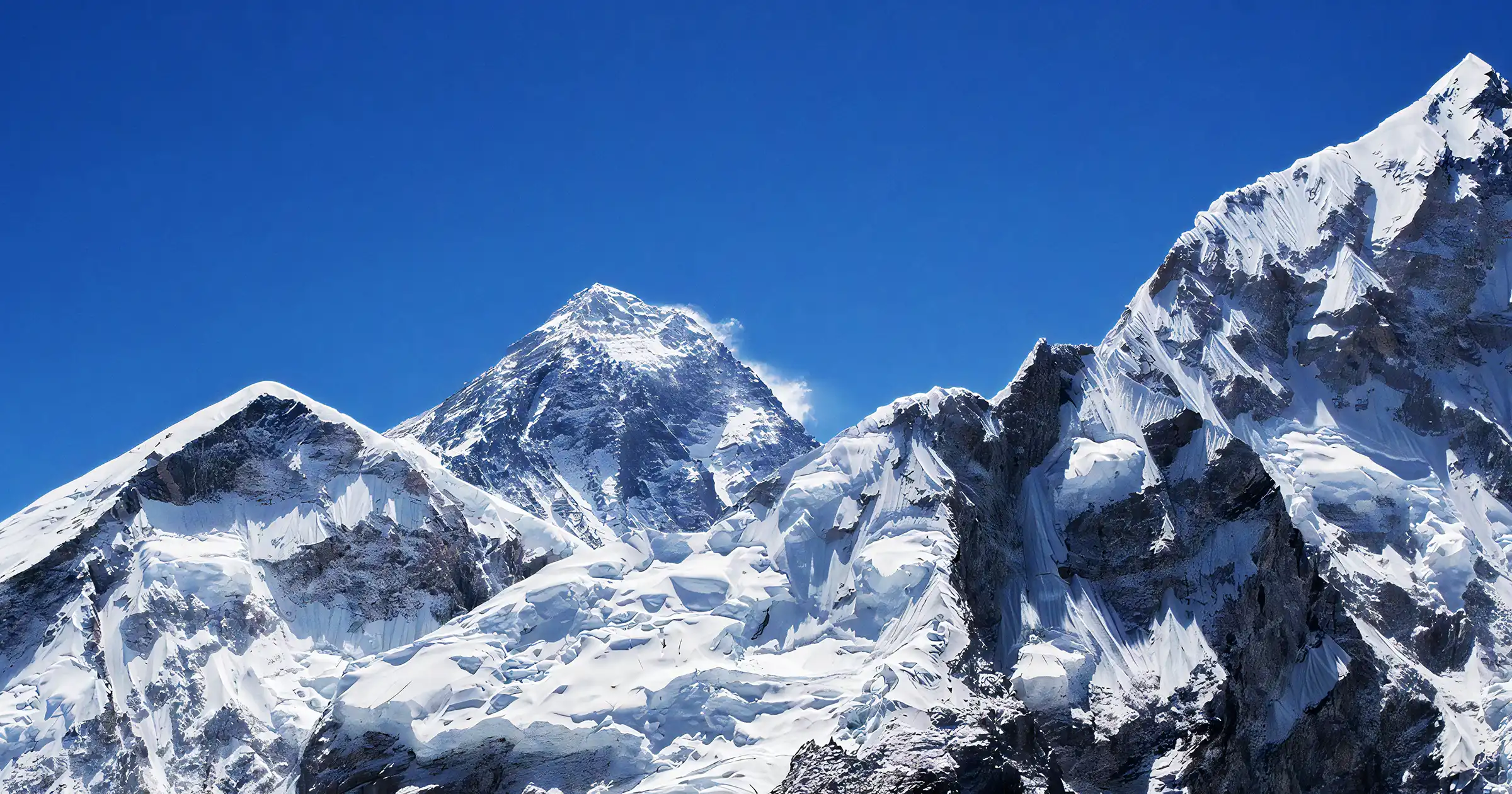
During this collision, a structure called the Qomolangma detachment formed when the limestone underwent metamorphism, transforming into marble, sandstone, and other rocks that now form the Yellow Band Everest. Furthermore, the conversion of plates resulted in the closed Tethys oceans.
Geologists have also discovered the recrystallized form of ancient marine life like crinoids also known as “ghost fossils” underneath the yellow band’s marble.
Today, climbers crossing this section are literally walking on rocks that once rested beneath an ancient ocean.
Marine Fossils Found Near the Summit
The rock unit which forms the summit of Mount Everest is called Qomolangma formation. The Qomolangma formation contains strongest piece of evidence which supports that earth highest peak was once underneath the sea bed via:
Marine Fossils
There are Ordovician fossils on Mount Everest is of extinct arthropods like Trilobites with segmented exoskeleton, stalked echinoderms like crinoids, brachiopods, corals which were found on the ancient seafloor.
Rock Types
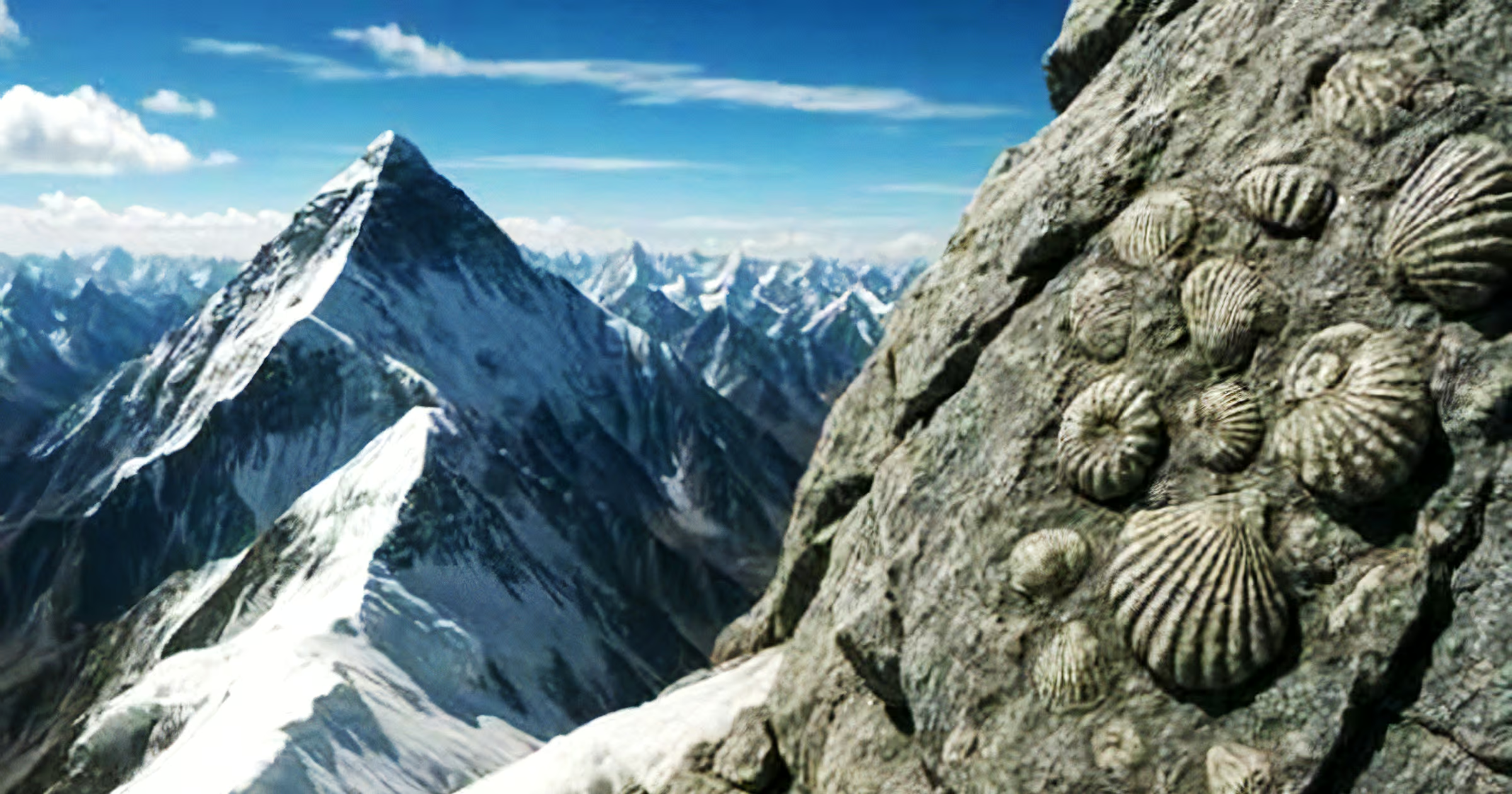
A distinct geological layer of Qomolangma Formation consists of pale-grey limestone, dolomite, and siltstone which are formed from shells and debris of species found only in shallow marine environments.
Yellow Band
The yellow band is composed of marble and metamorphosed limestone which traces marine past.
Why Is the Yellow Band Everest Challenging for Climbers?
Yellow Band Everest is one of the most demanding sections as the Khumbu icefall and the Hillary step of the climb. Yellow Band is above 7,000 meters from sea level, and to reach this section, climbers need to spend multiple weeks at high altitude which makes their body tired and fatigued.
Also, they have to walk carrying a summit pack with oxygen cylinder and climbing gear as Mount Everest demands a technical climbing. Climbers have to deal with unpredictable weather conditions and within a seconds you will be exposed to strong wind on your face and sudden drop in temperature may make you feel difficulty breathing.
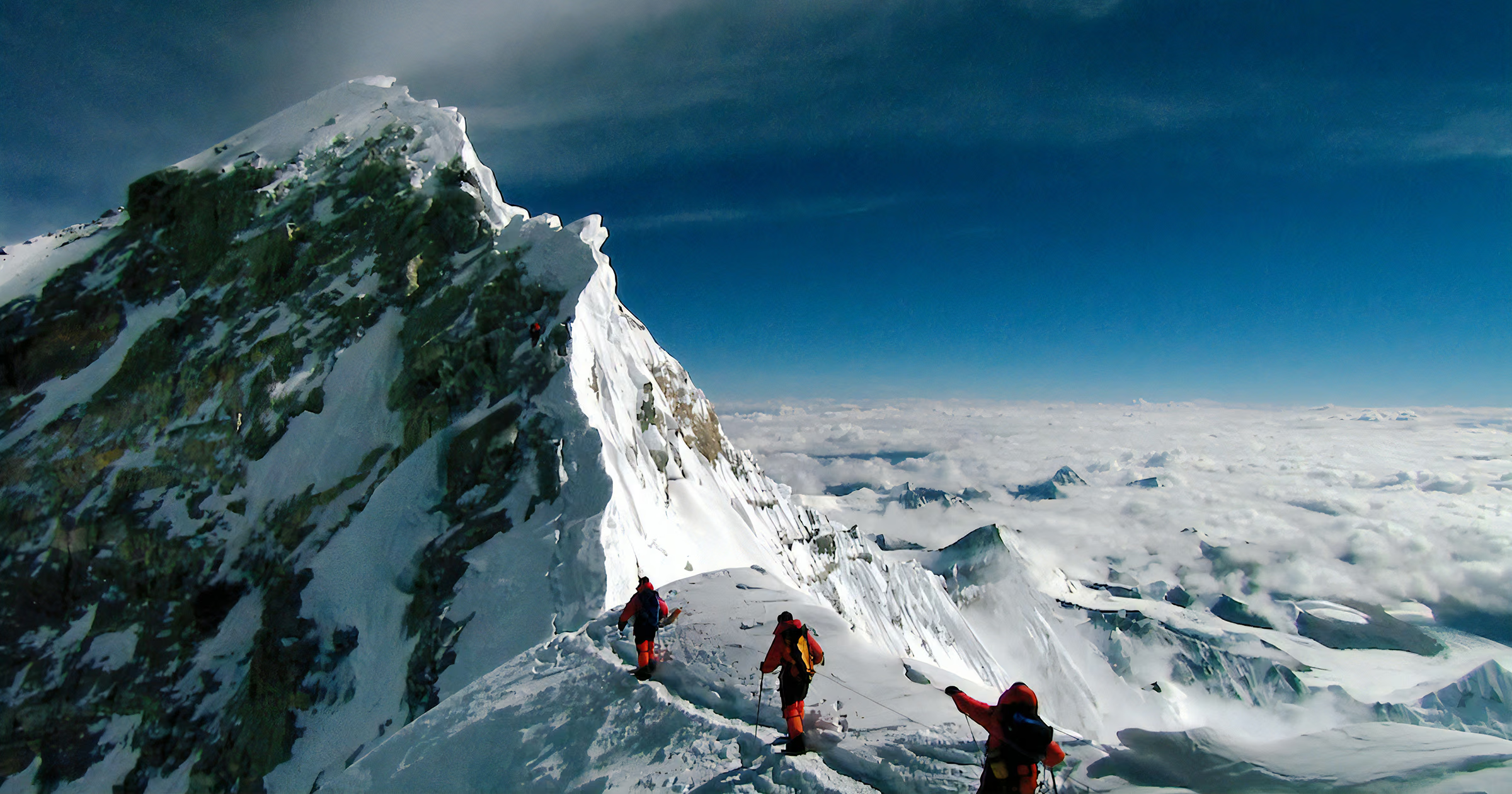
You cannot stand still, you have to keep moving slowly in steep, icy terrain and your body will start losing heat as oxygen levels are only a fraction of those at sea level. Saving energy for the final push towards the summit is very important but all these factors make you mentally and physically tired and it will become very difficult for you to cross the Yellow band of Everest.
Why the Yellow Band Matters to Everest Climbers?
Yellow band is one of the most significant features of the tallest mountain in the world, Mount Everest. Every Everest climber have to cross one of the first technical section of Yellow band which even makes them realize that they are about to move deeper in the Death Zone from the South Col.
Planning Everest Expedition in 2026?
Or Call/Message on WhatsApp +977 98434 13619
When Climbers cross the Yellow Band Everest, they can only traverse popular landmarks near the top of Everest such as:
- The Balcony (8,400 meters /27,559 feet),
- The historic Hillary Step (8,790 meters /28,839 feet), and
- The summit itself (8848.86 meters/ 29,031.7 feet).
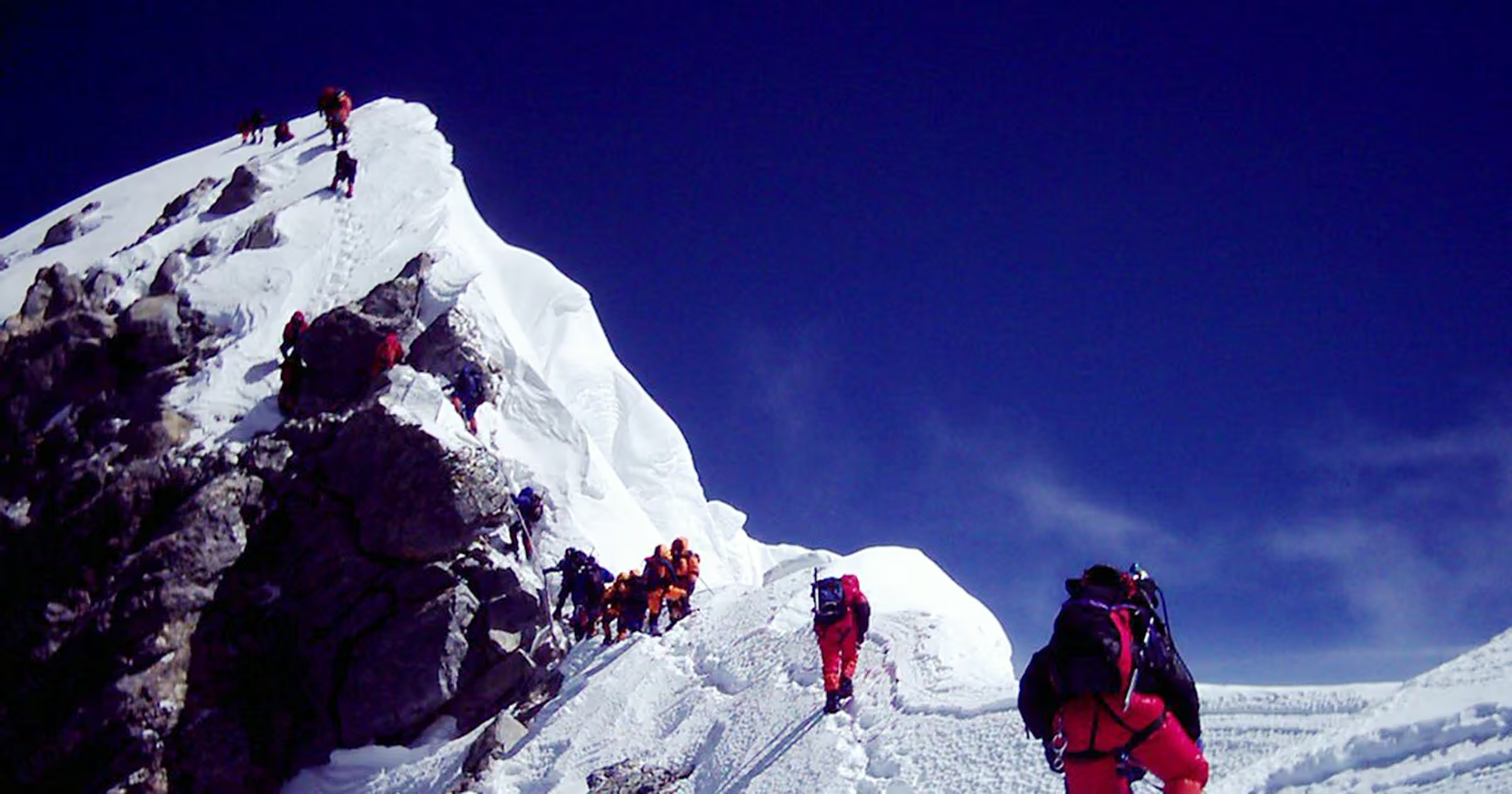
Climbers experienced this section more exhausting as they have to navigate the Yellow band several times during the acclimatization rotation. And, yellow band is the point from where rescue operation becomes very hard, and your sherpa guide will monitor the early signs of altitude sickness closely on climbers.
Final Thoughts
The Yellow Band Everest is far more than a colorful stripe across the world’s highest mountain but it is a geological wonder which remind us that what was once the floor of the ancient Tethys Ocean is now challenging climbers who are on the way to the summit of Mount Everest.
The section is quite challenging but once you cross it, you will get extra motivation to cross upcoming technical part of the climb even including the Death Zone. You are not only crossing the Yellow Band but you’re also traversing a remarkable piece of Earth’s history.
Every step takes you across a timeless connection between Earth’s distant past and its highest peak. If you are also planning to climb Mount Everest then, feel free to join us in 2026.
FAQs
Expand AllWhy is there a yellow band on Everest?
The collision of the Indian and Eurasian tectonic plates uplifted the layer of ancient marine limestone and metamorphic rocks which created the distinctive visibility of yellow-colored stripe on Everest.
Was the top of Mount Everest underwater?
Yes. The rocks that now form the summit of Mount Everest were once underwater of the ancient Tethys Ocean.
What is the yellow band made of?
The Yellow Band is primarily made up of metamorphosed limestone, marble, calc-silicate rocks, and quartz-rich minerals.
Is Mount Everest still rising?
Yes, Mount Everest is still rising.
What fossils are found on Mount Everest?
Fossils of marine organisms such as crinoids, brachiopods, trilobites, ostracods, and other ancient sea creatures are found on layers of Mount Everest.
Is Everest summit made of limestone?
Yes. Everest summit is made of limestone which traces back to Ordovician period.
What is the Qomolangma formation?
The Qomolangma Formation is the uppermost geological layer of Mount Everest. It is primarily made up of ancient Ordovician limestone that forms the mountain’s summit pyramid and preserves evidence of its marine origins.
What color is the yellow band on Everest?
Yellow Band on Everest appears in shades ranging from golden yellow and tan to light brown and ochre which also depends on sunlight, weather, and viewing angle.
Where is the yellow band on Everest?
The yellow band on Everest is in between Camp III and the Geneva Spur on the Southeast Ridge route.
How high is the yellow band on Everest?
The Yellow Band on Everest is at an elevation of 7,500 to 7,900 meters (24,600 to 25,900 feet) above sea level.
Is the yellow band hard to climb ?
Yes. Yellow band is quite hard to climb because climbers must navigate steep mixed rock and ice terrain while dealing with extreme altitude and low oxygen levels.
How long does it take to climb the yellow band?
Most climbers take between one and three hours to cross the Yellow Band. However, the duration also depends on weather conditions, traffic, climbing experience, and fixed rope placement.
What camp is the yellow band near?
The yellow band is above Camp III and below Camp IV (South Col).
Is the yellow band on the north or south route ?
The Yellow Band can be seen from both the south and north sides of Everest.
Do you need oxygen at the yellow band ?
Yes, most climbers begin using supplemental oxygen before or while crossing the Yellow Band. Due to extremely high altitude, there is low oxygen levels which might become insufficient for most people.
How much rope is needed for the yellow band?
Expedition teams take care of installation of several hundred meters of fixed rope across the Yellow Band each climbing season. Individual climbers do not need to think about carrying rope in any part of the expedition..
How was Mount Everest formed?
When the Indian tectonic plate collided with the Eurasian plate it pushed ancient ocean sediments upward to create Mount Everest.
Could Everest ever be underwater again ?
No. Everest could not be underwater again.
How much does it cost to climb Everest 2026?
The cost for climbing Everest ranges from $33,590 for basic Sherpa-led climbs to over $1,30,000 for high-end luxury expeditions in 2026.
What is the death zone on Everest?
The area above 8,000 meters (26,247 feet), where the air contains too little oxygen to sustain human life for extended periods is referred as the death zone on Everest.
Related blog posts
Discover a choice of tourist destinations loved by most of our visitors. Whether you're on a jungle safari to spot rare animals or walking through a world heritage site, these well-planned itineraries cover the major highlights of Nepal.
 call an expert at: