
Mithila Art of Janakpur: The Painting Tradition and the Women Keeping It Alive
 Sristi Adhikari
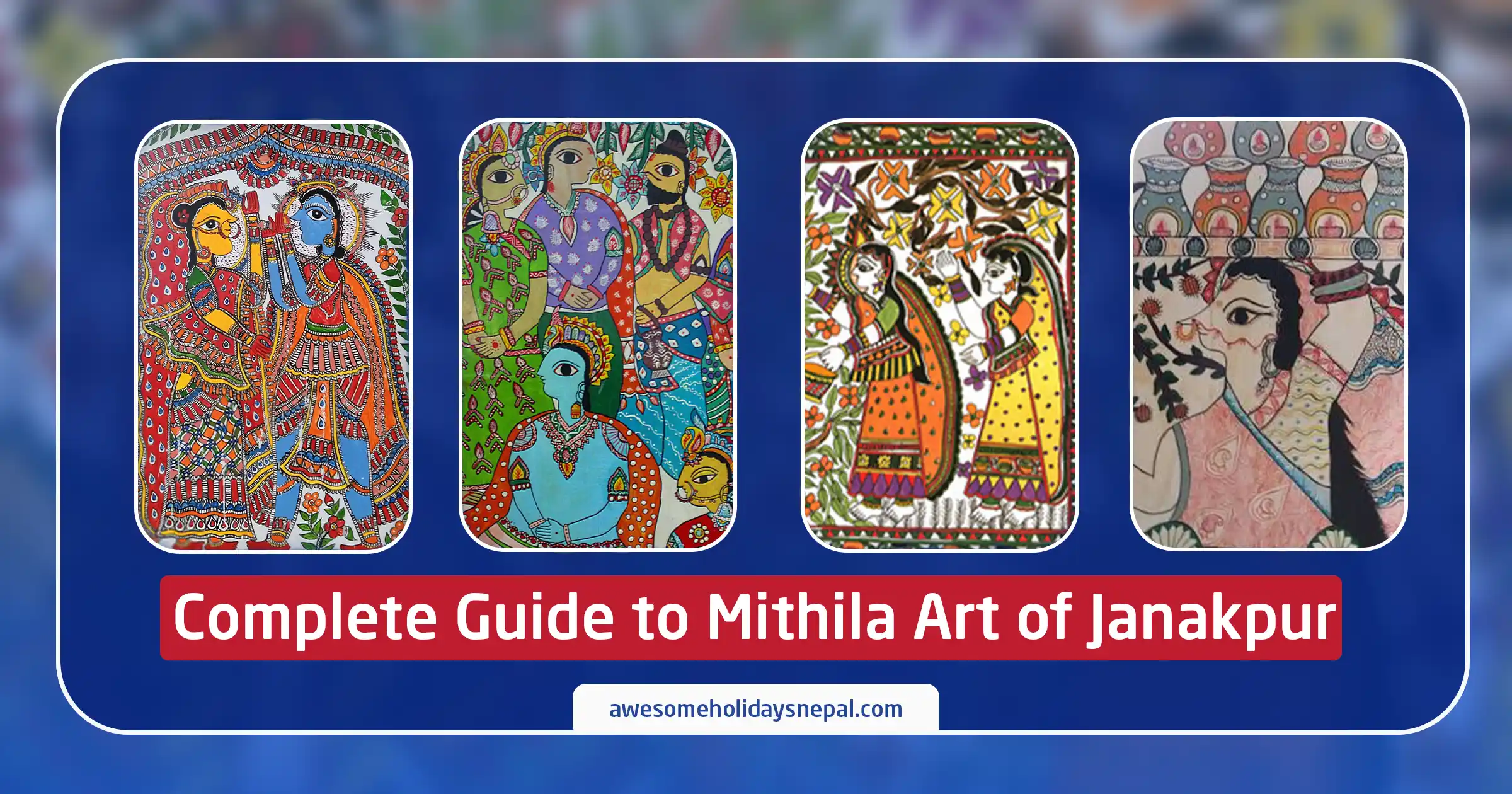
Janakpur, a historic city in Nepal’s southeastern Terai, is celebrated for its sacred temples, the legendary story of Sita and Rama, and its vibrant Maithili heritage. Mithila Art of Janakpur is one of the city’s most captivating cultural treasures, inviting travelers to discover colourful folk paintings filled with intricate patterns, expressive figures, and stories inspired by mythology and everyday life.
More than a painting tradition, Mithila art is a living expression of local customs, women’s creativity, and cultural pride. Traditionally painted on the walls and floors of homes, these artworks have gradually found their way onto paper, fabric, ceramics, and other crafts.
Today, local women continue to preserve this heritage while creating opportunities for independent income and wider recognition. For travellers seeking authentic cultural experiences, exploring Mithila Art of Janakpur offers a chance to connect with the talented artists, fascinating stories, and enduring traditions that make Janakpur a truly memorable destination.
Mithila Art and Maithili Culture
Janakpur is the best place to explore Mithila art within its cultural setting. Janakpur is also known as Janakpur Dham and is believed to be the birthplace of Goddess Sita.
It was a former Mithila Kingdom which holds special spiritual and cultural background. Janakpur is also the center of Maithili culture where you will get a full insight of customs, folklore, and rituals.
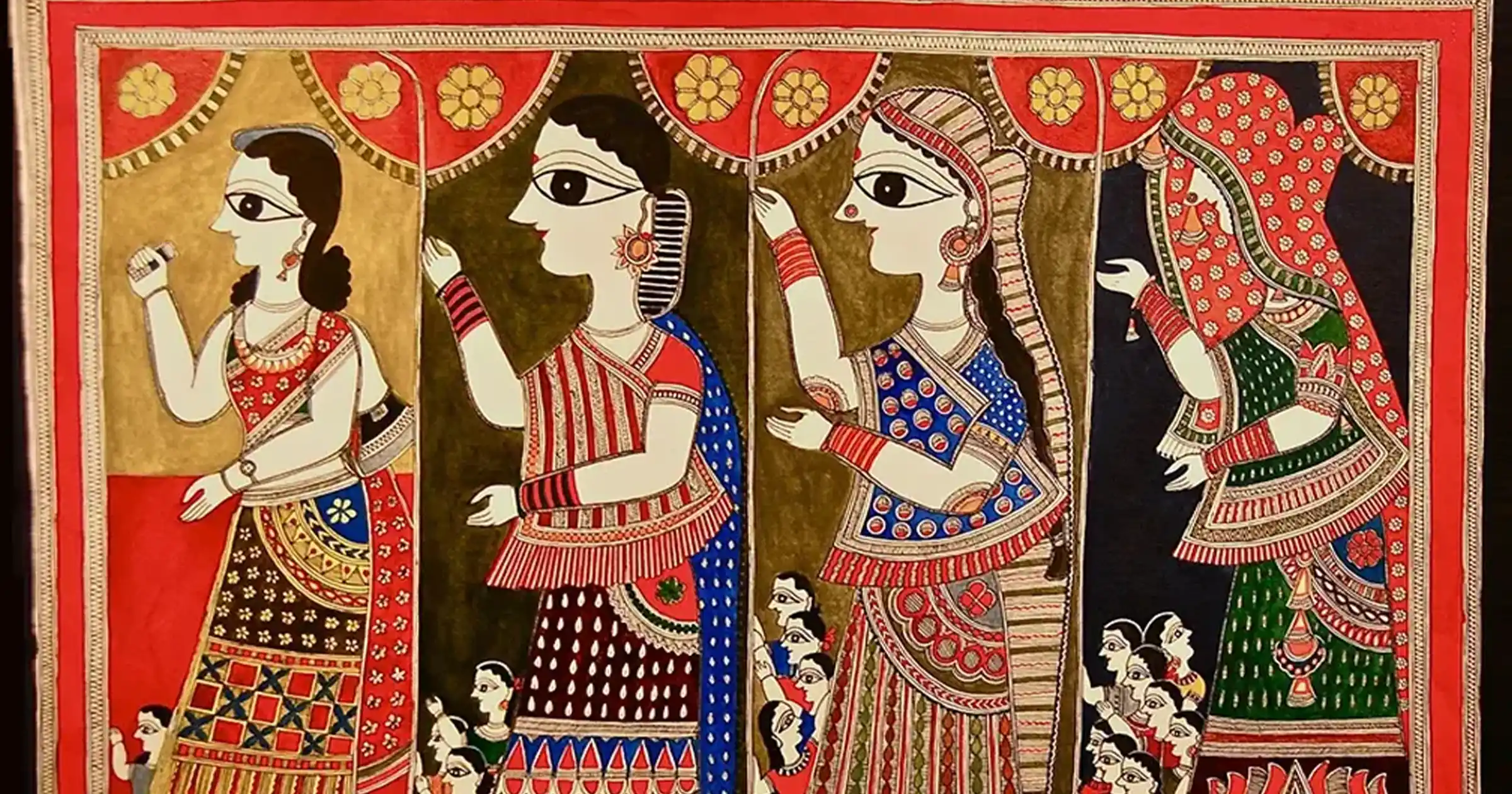
Maithili culture is an ancient culture which blends enriched forms of arts with spirituality and is deeply connected with the stories of hindu epic, Ramayana. Maithili women wear a vibrant sari and blouse and every woman wears a round bindi called “Tikuli”.
Likewise, Maithili men mostly wear Dhoti with long shirts or Kurtha. They also wear a traditional scarf known as “Gamcha” which is mostly in red or blue color. Maithili people celebrate festivals like Vivah Panchami, Chhath Puja, Dashain, Tihar, and Holi.
Mithila Art: The Painting Tradition of Maithili Women
Mithila art is a traditional folk-art form originated in Janakpur, Eastern Nepal. The term Mithila belongs to ancient Mitha Kingdom and king Miti who used to rule Janakpur.
Mithila art extends across parts of southern Nepal and northern Bihar in India, where locals called it Madhubani painting. Earlier, Mithila art was painted by Maithili women in their home in the occasion of:
- Weddings,
- Religious ceremonies,
- and festivals.
This is an exclusively women art form which has been passed from generation to generation via mother to daughter. Earlier, women used to showcase their intricate design in walls, courtyard, and floors which is now transformed into:
- Handmade paper,
- Cloth,
- Ceramics,
- and even leather.
The painting is not only art but it is designed to:
- welcome good fortune,
- celebrate important occasions,
- and express devotion.
The bold outline, closely arranged patterns, colorful figures, and a distinctive absence of large, unpainted spaces in many compositions makes Mithila art of Janakpur stands extraordinary than other artforms. The Mithila Art of Janakpur is closely related to women’s lives as the artistic knowledge was passed from mothers to daughters from generation to generation.
This helps preserve their community’s stories and visual traditions through everyday creative practices.
History and Myths
Mithila painting dates back to an ancient kingdom of Mithila as early as the 14th century. The story is associated with the Hindu epic, Ramayana. Mithila was ruled by King Janak, he asked his local artists to paint his daughter Sita’s wedding to Lord Rama.
Since then, it was believed that Mithila art practice began and has been passed through generations. For generations, women painted mud walls, courtyards, and ceremonial spaces during weddings and festivals which later changed onto portable surfaces such as paper and cloth.
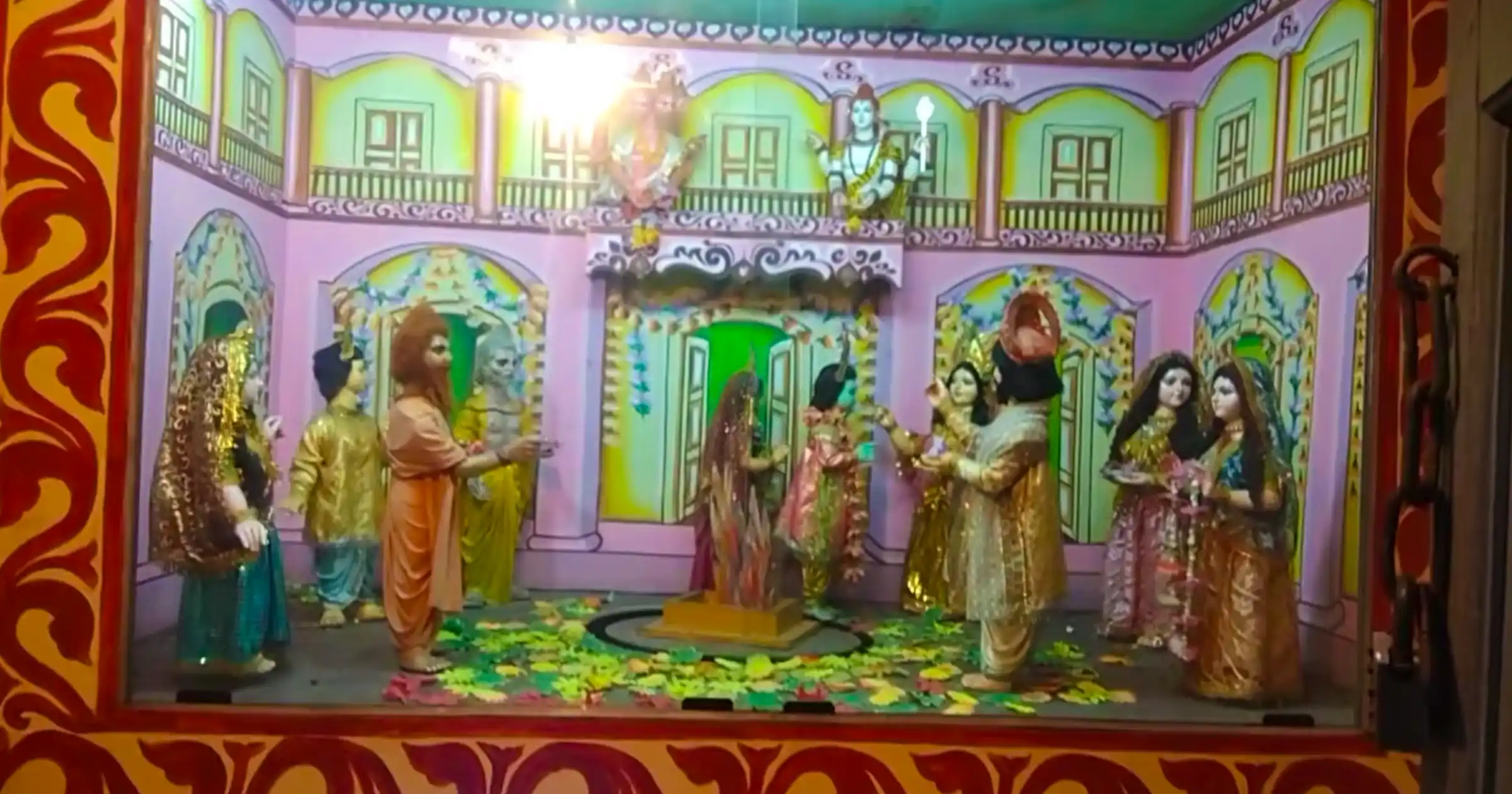
This transition helped local artisans to sell their paintings outside their village. As of now, different organizations have been continuously focusing to support women artists and helped accelerate this development.
Today, Mithila Art of Janakpur connects ancient legends with contemporary experiences including women’s everyday lives, education, social change, and personal aspirations.
Understanding the Styles of Mithila Painting
There are different styles of Mithila painting in which visual language differs from community to community. The diverse Mithila art can be differentiated with the help of following five styles:
Bharni
This style is known as the “filled” style of Mithila art uses Hindu gods and goddesses, mythological narratives, and auspicious scenes as the subject. Here, bold outlines of the subject are filled with vibrant color.
This is the most popular style which is chosen by travelers when searching for traditional religious painting.
Kachni
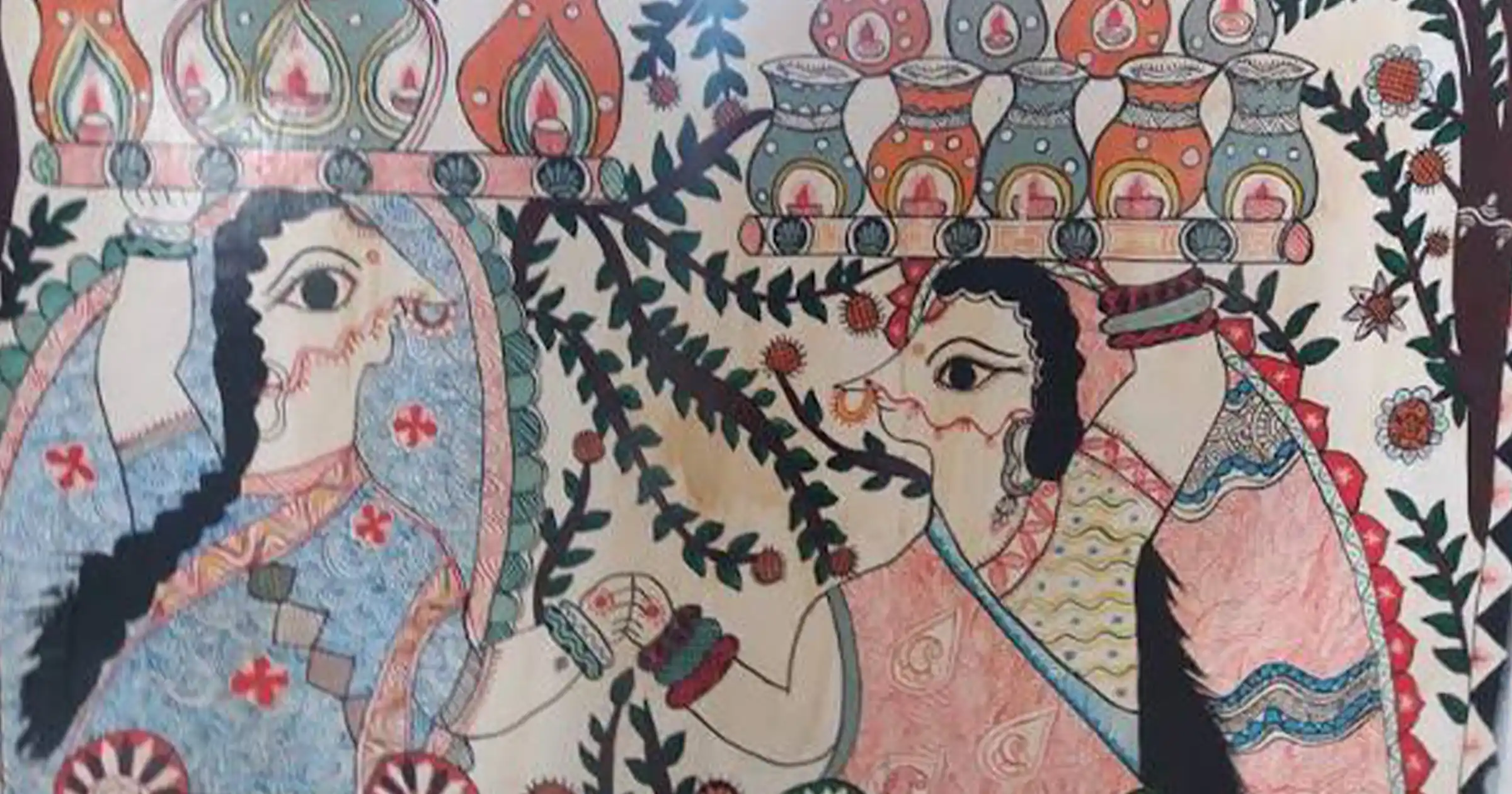
Kachni is a “line” style of Mithila painting which emphasizes fine lines, delicate detailing, and carefully arranged patterns. It uses very little or no color which means the painting results in a quiet and intricate form.
Tantrik
Tantrik is an esoteric style of paintings which feature religious and spiritual imagery associated with particular Hindu and Tantric traditions. Deities and symbolic arrangements are central to many examples.
Godna
It is a tattoo style of mithila painting where geometric form gets repeated again and again. It originated in the Dusadh community which helped the flourishing of art beyond the Maithili people.
Kohbar
Another style used in Mithila art, Nepal is marriage style. It is associated with marriage rituals and the decoration of the bridal chamber.
Common motifs include lotus flowers, bamboo, fish, turtles, birds, and symbolic representations of fertility and prosperity.
Different Motifs Meaning in Mithila Art, Nepal
The Mithila art of Janakpur, Nepal is not only a decorative display but it carried different symbol with hidden meaning. Every motif used carries a wish and also works as a blessing which is why people give it as gifts.
| Motif | Symbolic Meaning in Mithila Art |
|---|---|
| Fish | Express fertility, prosperity, and good fortune. They are mostly drawn in pairs and is especially common in traditional wedding artwork and ceremonial gifts. |
| Peacock | Symbolizes romance, affection, and devotion between partners, making it a popular feature in bridal paintings. |
| Lotus | Represents purity, renewal, and feminine fertility. It holds an important place in kohbar paintings associated with marriage rituals. |
| Sun and Moon | Often depicted with human-like faces, these celestial symbols signify vitality, life, and harmony in the universe. |
| Elephant and Tortoise | refers strength, endurance, stability, and auspiciousness. |
| Bamboo | refers to family growth, lineage, and continuity. In traditional wedding imagery, it is often associated with masculine symbolism and paired with the lotus. |
| Tree of Life and Parrots | Symbolizes the connection between the earthly and spiritual worlds, while parrots commonly represent affection, loyalty, and lasting relationships. |
Women’s Development Centre: Crafting Empowerment
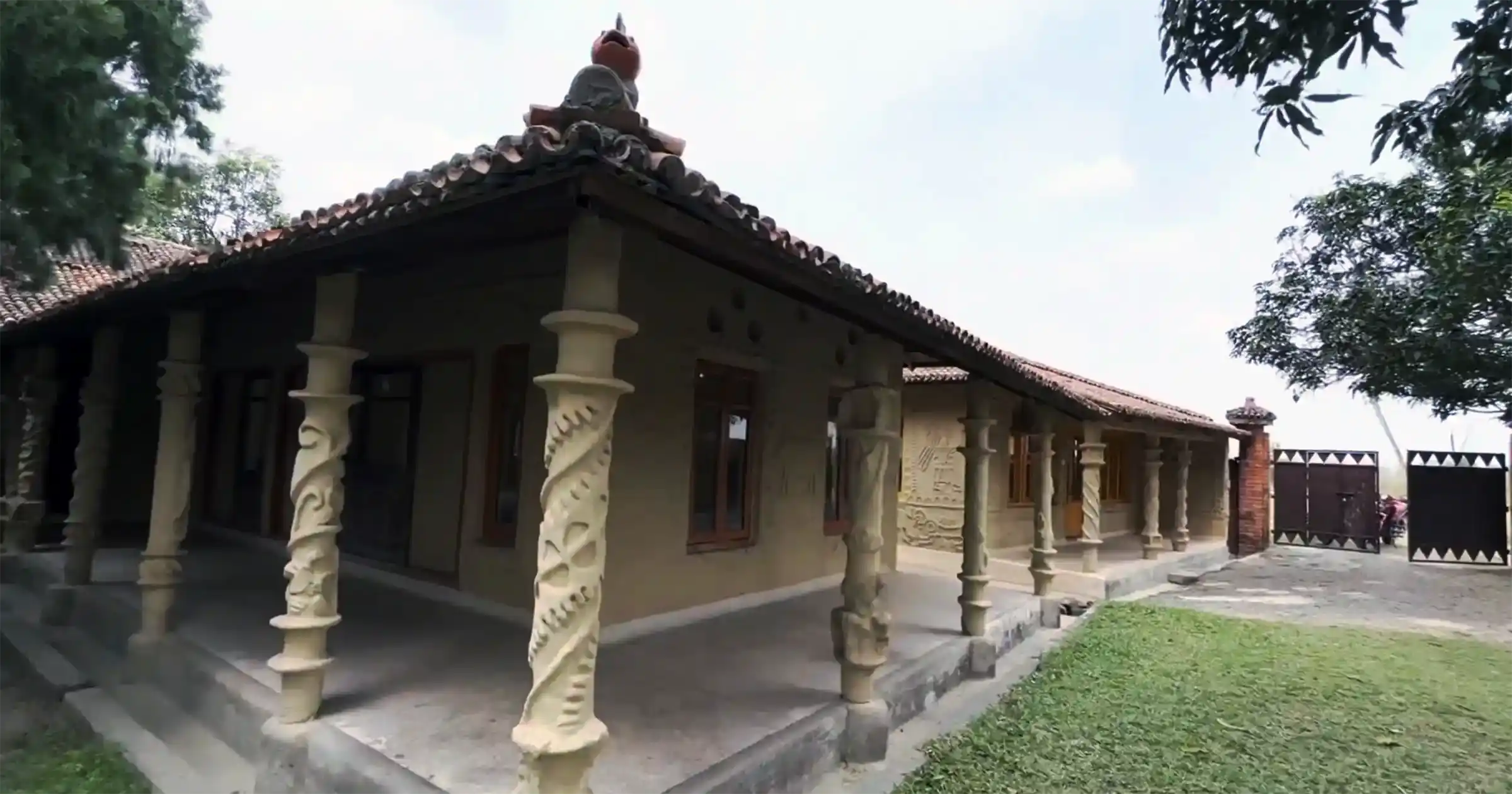
The Janakpur Women’s Development Centre (JWDC) is continuously working to preserve and promote Mithila painting in Nepal. It was established as the Janakpur Women’s Art Project in 1989. At that time, only twelve skilled women used to do the painting in the mud walls of their village homes were hired.
The project helped women transfer traditional wall designs onto portable materials, including handmade lokta (Nepali paper) and cloth. This development created opportunities to sell artwork beyond the villages where the tradition had originally been practised. It has been supporting women via:
Training and Skill Development
Local women are getting a platform to enhance their painting techniques. This allows them to learn new artwork with different materials and products.
Income Generation
Local women can sell the Mithila art which they made, which provides opportunities to earn money through artistic skills. Even those family members without a painting background can learn skills and generate some income.
Cultural Preservation
The center helps maintain traditional patterns, motifs, and artistic knowledge while encouraging their use in contemporary products.
Wider Recognition
Women can showcase their Mithila arts of Janakpur to the outside world via exhibitions, sales, and connections with buyers.
A Broader Range of Crafts
Beside Mithila painting, the centre has been associated with products such as:
- Ceramics,
- papier-mâché objects,
- textiles, and
- printed crafts.
The Janakpur Women’s Development Centre has been proving that preserving heritage does not necessarily mean keeping it unchanged. By adapting traditional designs to materials that can be sold and transported, women artists can maintain important visual traditions while responding to new opportunities.
Visiting Janakpur Women’s Development Centre: What to Expect
Here, you can watch artists working and learn about the meaning behind the symbolic language and pattern used in painting. You can also purchase the produced painting which showcases the glimpse of Mithila art of Janakpur, Nepal.
When purchasing artwork, we suggest you ask about the artist, the materials used, and the meaning of the design. Always focus on buying directly from an artist or a community craft organization, this will not only help them to generate a source of motivation but they will also get motivation to continue their artistic tradition.
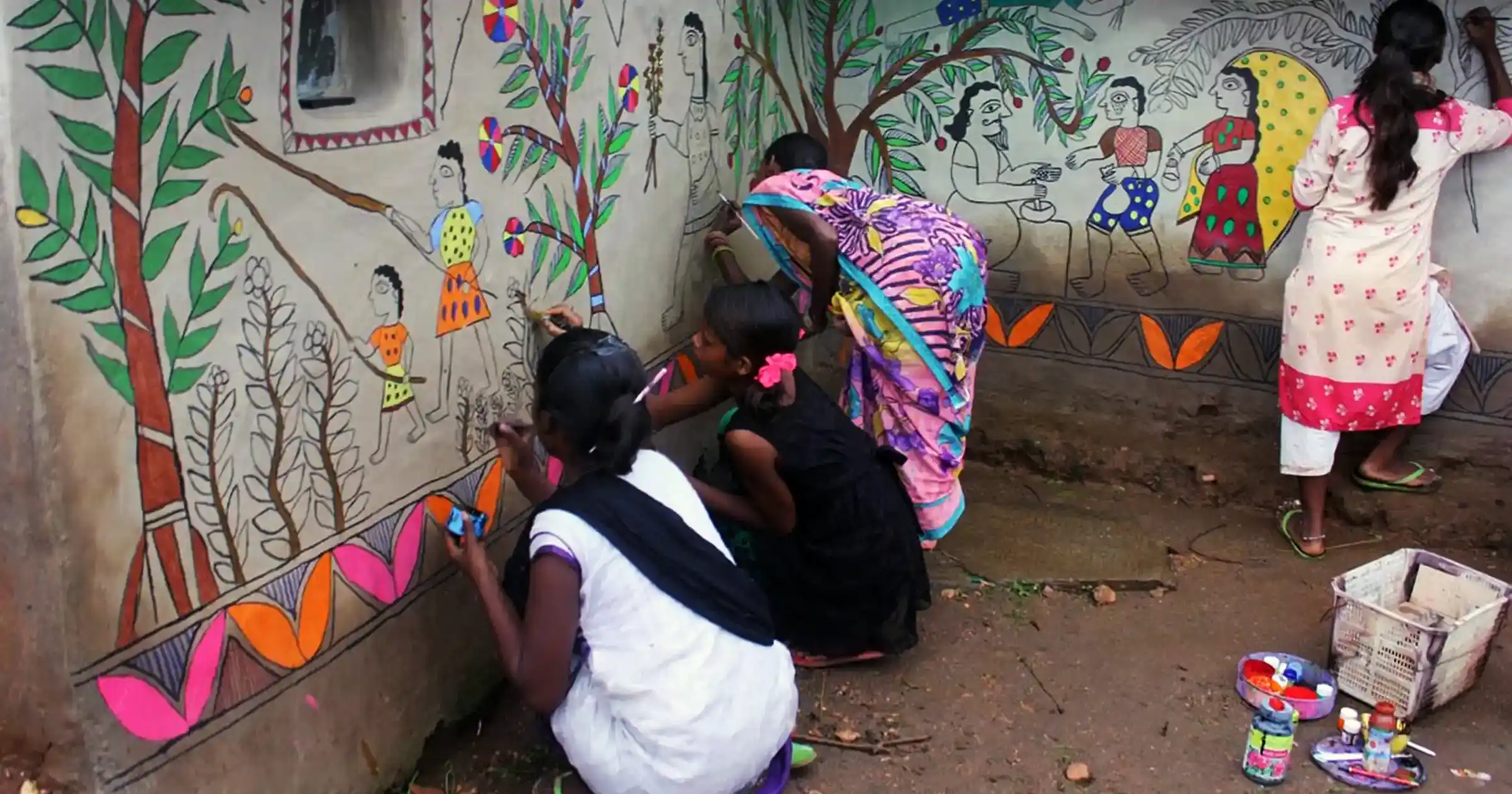
The Janakpur Women’s Development Centre is not only a craft destination but an opportunity to understand how Mithila art Nepal connects cultural identity with women’s economic participation, professional recognition, and creative independence.
A Cultural Traveler’s Guide Mithila Art of Janakpur
Mithila art of Janakpur allows you to get connected with the artistic practice where you will also learn about the people behind the paintings. This will change your perspective towards the cultural artwork.
Janakpur Women’s Development Center
The Janakpur Women’s Development Center is another place which you must visit when exploring Mithila culture. It is the place which helps uplift women’s livelihoods via traditional painting.
You can also learn about the artistic process, see works in progress, or purchase paintings.
Explore Local Craft Shops
Here you will get to discover paintings, cards, textiles, and decorative objects featuring Mithila designs. When purchasing artwork, ask about the artist, the materials, the time required to complete the piece, and whether the seller works directly with the painter.
These conversations can help visitors better understand and appreciate the traditional artform.
Visit Janaki Mandir
Janaki Mandir also known as Janaki temple is one of the most revered Hindu temples located in Janakpur. The temple is dedicated to Hindu goddess Sita, a central figure of epic Ramayana.
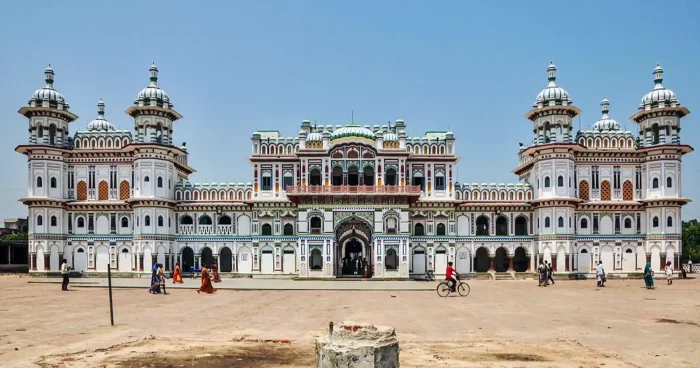
Its architecture, devotional atmosphere, and place in local religious life provide useful context for the mythological subjects found in Mithila painting.
Community-Based Cultural Experience
If you want to get a deeper insight of Maithili culture and religion, we suggest you stay in homestays instead of hotels and lodges. Here, you will get to know more about traditional artforms while enjoying food, language, family customs, festivals, and everyday practices.
Your stay should be respectful towards the home-owner and always ask permission before entering private spaces or touching or seeing their Mithila artwork.
Plan Your Trip during Festival
Festivals are one of the best opportunities to witness artistic expression, religious practice, and community participation. You should plan your trip during Chhath Puja for a deeper insight of culture and tradition of Mithila region.
Women Keeping It Alive: A Tradition That Continues to Grow
The Mithila art of Janakpur is a living testament to the creativity, knowledge, and resilience of the women who have sustained it. From household walls, Mithila art has been transformed into a portable artform like paper, cloth, canvas and pottery.
The visual beauty of Mithila art beholds a process of learning, interpretation, and skilled labor. Behind the tradition is a network of families, teachers, artists, and organizations working to ensure that its knowledge remains alive.
For visitors, discovering Mithila art offers a different way to experience Janakpur. The city becomes not only a destination associated with sacred stories, but also a place where women continue to shape cultural identity through their work.
So, when visiting Janakpur do not forget to appreciate the Maithili culture, strictly make purchase from local artisan and share the artist stories online or recommend it to other. And, contact Awesome Holidays Nepal for better trip planning and for memorable journey in 2027.
FAQs
Expand AllWhat is Mithila art?
The form of painting which originated in Mithila Culture is called Mithila art. It uses natural pigment to make painting which are mainly painted on mud walls, Lokta paper, and canvas.
Where is Mithila art from?
Mithila art originates from the Mithila cultural region of southern Nepal and northern Bihar, India, with Janakpur serving as an important centre in Nepal.
What is the difference between Mithila art and Madhubani painting?
The only difference between Mithila art and Madhubani painting is thier origin, former one is originated ancient Mithila region which spans northern Bihar in India and the Terai/Janakpur region of Nepal while later one was discovered and documented in the Madhubani district of Bihar, India.
Who makes Mithila paintings in Nepal?
Maithil women artists, alongside men and contemporary artists makes Mithila paintings in Nepal.
What are the motifs used in Mithila art?
Fish, peacocks, lotus flowers, trees, the sun, the moon, geometric patterns, Hindu deities, and scenes from weddings and daily life are the motifs used in Mithila art.
What is the Janakpur Women's Development Centre?
The Janakpur Women’s Development Centre is NGO run by women based in Kuwa village of Nepal. It is focusing to promote Mithila arts and economically empower Maithil women through art and crafts.
How old is Mithila painting tradition?
The Mithila painting tradition is believed to be originated in the time of the epic Ramayana at least 2,500 years old.
What colors are used in Mithila art?
Traditional Mithila paintings use colours derived from natural materials, including red, yellow, green, black, and white. Contemporary artists use commercially produced paints.
Can you buy Mithila paintings in Janakpur?
Yes, you can buy Mithila paintings in Janakpur.
Is Janakpur worth visiting?
Yes. Janaki Mandir, Mithila art, religious heritage, vibrant festivals, local cuisine, and distinctive Maithil culture make your Janakpur visit worthwhile.
What language do they speak in Janakpur?
Maithili is widely spoken in Janakpur. Other languages like Nepali, Hindi, and are also used in everyday communication.
What is lokta paper and why is it used in Mithila art?
Lokta paper is handmade Nepali paper produced from the bark of Himalayan lokta shrubs. It’s its distinctive texture and suitability for detailed paintings and traditional crafts are valued by Mithila artist.
What does the fish symbol mean in Mithila painting?
Fish commonly symbolise fertility, prosperity, abundance, and good fortune in Mithila painting.
What festivals are celebrated in Janakpur?
Major festivals like Vivah Panchami, Ram Navami, Chhath Puja, Holi, Dashain, Tihar, and the celebrations associated with Janaki Navami are some of the festival celebrated in Janakpur.
What is Vivah Panchami festival in Janakpur?
Vivah Panchami is a week-long Hindu festival that commemorates the divine marriage of Lord Rama and Goddess Sita from the Ramayana in Janakpur.
How long should I spend in Janakpur?
Spending 1 to 2 days in Janakpur is highly recommended.
What souvenirs can I buy in Janakpur?
Hand-painted Mithila artworks, traditional paintings on paper, handmade crafts, decorative items, textiles, and locally produced cultural keepsakes are some souvenirs you need to buy when in Janakpur.
What is the connection between Janakpur and Goddess Sita?
Janakpur is deeply connected to Goddess Sita as her birthplace. It is also the place where her divine wedding to Lord Rama took place according to the Hindu epic Ramayana.
Is Mithila art recognized by UNESCO?
No. Mithila art is yet to get recognized by UNESCO.
Can tourists participate in Mithila art workshops in Janakpur?
Yes. Tourists can participate in Mithila art workshops and cultural classes in Janakpur.
Related blog posts
Discover a choice of tourist destinations loved by most of our visitors. Whether you're on a jungle safari to spot rare animals or walking through a world heritage site, these well-planned itineraries cover the major highlights of Nepal.



 call an expert at: