
Limi Valley Trek 2026: Inside Nepal’s Hidden Tibetan Shangri-La
 Sristi Adhikari
Have you ever heard of the Limi Valley Trek, one of the best-kept trekking secrets of Nepal? Hidden in the remote Far-west corner of Humla district near the Tibetan border, the Limi Valley offers you one of the real lifestyles of the remote Himalayas.
With very few footprints in an isolated valley of Limi, travelers exploring it will witness breathtaking landscapes of snow-capped peaks, ancient monasteries, and centuries-old Tibetan villages where traditions remain beautifully preserved. The trails of Limi Valley trek allow you to traverse across the ancient salt trade route with a true wilderness and authentic cultural interaction with Tibetan influenced locals.
In 2002, the Limi valley was only opened to foreign trekkers and is considered a restricted region. This has helped preserve its fragile ecosystem and unique Tibetan heritage. Let’s dive deeper and explore what makes this remote trekking route so extraordinary and everything you need to know before planning your Limi Valley Trek in 2026.
Where is Limi Valley?
Limi Valley is located in Humla District of Karnali Province, bordering Tibet (China), in the far north west of Nepal. Limi valley is one of the most isolated valleys of Nepal and is elevated between 3,700 meters and 4,100 meters.
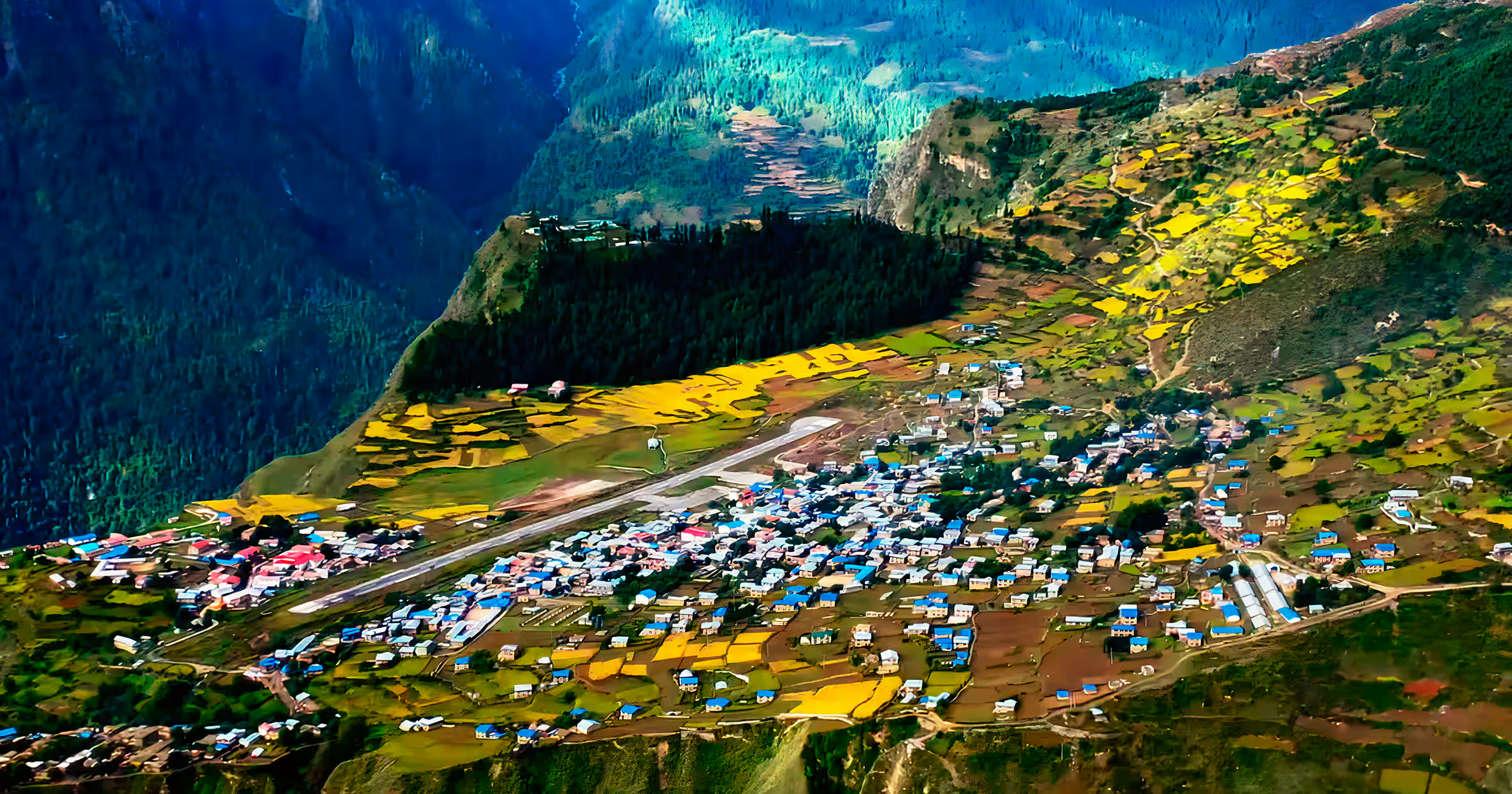
Being a part of the largest and least developed region of Karnali, Limi valley is unaffected by mass tourism. This hidden valleys of Nepal offers best view of mountain such as:
- Mount Saipal(7030m),
- Mount Kailash,
- Mount Kanjiroba.
Limi Valley consist of three ethnic villages such as:
Til (4,100m/13,500 feet)
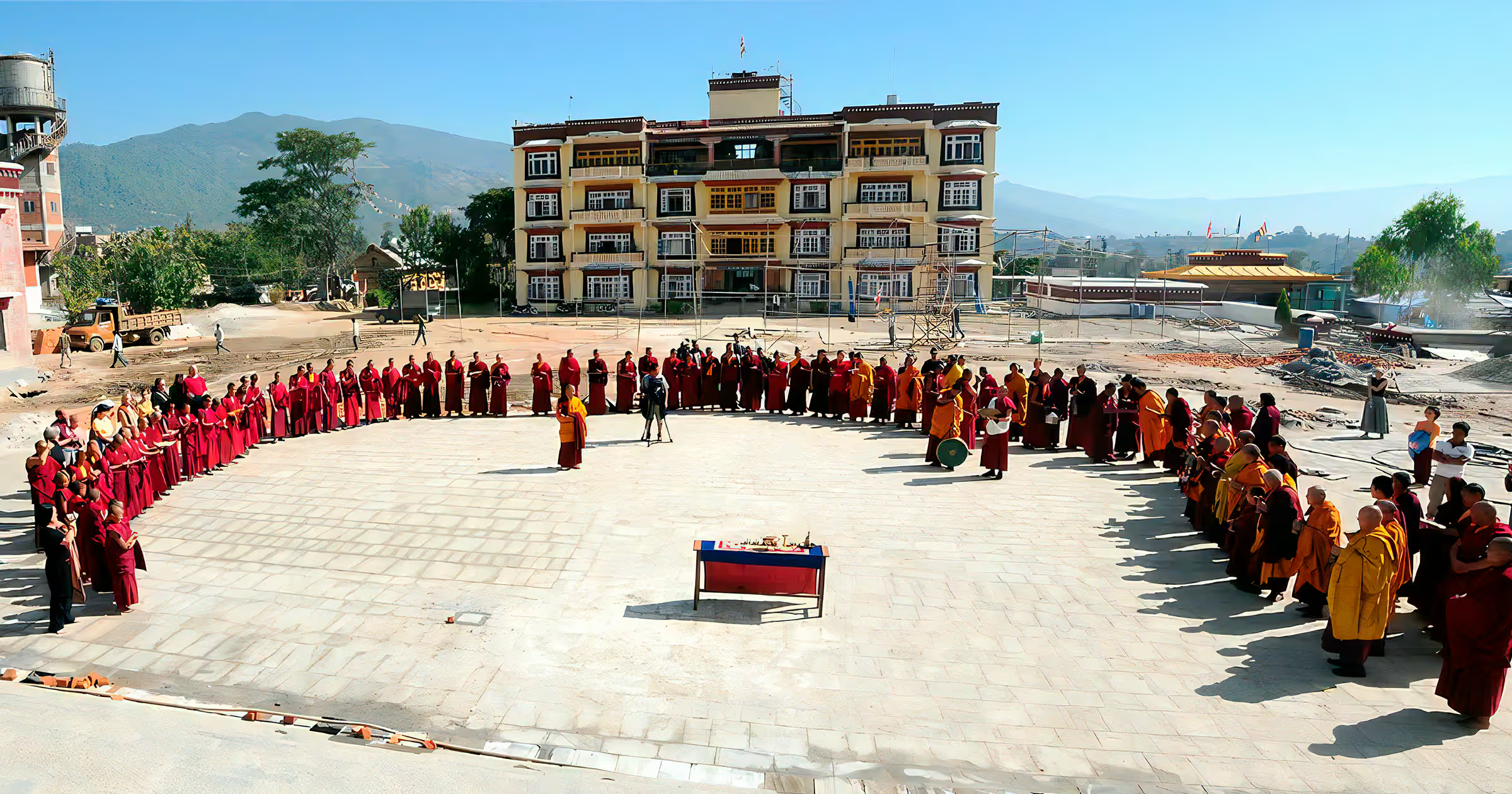
Til is a small village located in the western side of Limi Valley. Only 30 families live in this village and the houses are constructed from dry stones and is considered as the final village of Humla district. The cascading waterfall situated at the straight side of the village supplies water to locals and nearby it you can see more than 300 years old Kunzum Do-Nag Choeden Monastery.
Jhang(3,930 meters/12,894feet)
Located in the easternmost part of the Limi Valley, there lies a Jhang village which is home to one of oldest Buddhist monasteries dating back to the 13th century and beautiful traditional architecture.
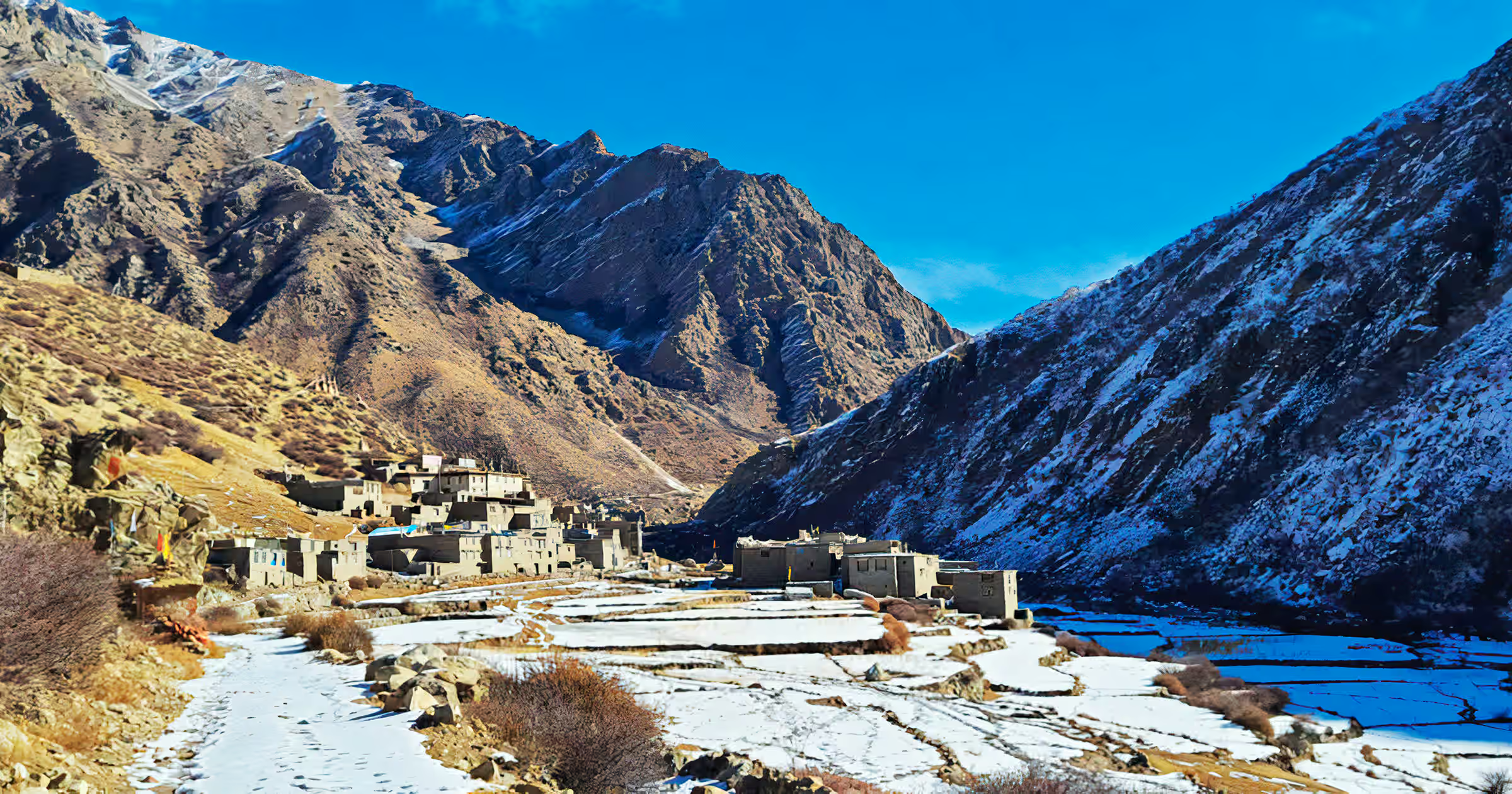
Walking through Jhang feels like stepping into a living museum where ancient traditions continue to shape everyday life. The village has wide pasture lands where locals graze their yak, sheep, and goat and they depend mostly on animal husbandry rather than agriculture as there is not much agricultural land. Locals import goods from the nearby border of Tibet.
Halji(3,700 meters /12,140feet)
Halji, considered as the cultural heart of Limi Valley, is located in the middle of Til and Jhang village. The village is bigger than the other two and also has monastic headquarter.
The village is home to the old historical gompa named Halji Rinchenling Monastery, where every religious festival and rituals of Limi Valley are celebrated. It is believed that Lotsawa Rinchen Zangpo built the Halji Rinchenling Monastery(Gompa) in the early 10th century.
Among 108 monasteries and stupas built across the Himalayas by Lotsawa Rinchen Zangpo, Halji Rinchenling Monastery(Gompa) stands at 108th position. The monastery is also a part of the Drikung Kagyu School of Tibetan Buddhism and is serving as the Spiritual Headquarter of the Trulku Senge Tenzin Rinpoche as of 2026.
Culture and Traditions of Limi Valley
Limi is a Tibetan word which is derived from “Le” and “Mi”. In the Tibetan language, Le means lands between two river systems and Mi means people. The meaning of “Limi” refers to people living in between two rivers.
The untamed and high deserted valley of Limi is inhabited by both Buddhist and Hindus. Locals speak Tibetan language on a daily basis and they follow Tibetan Buddhism.
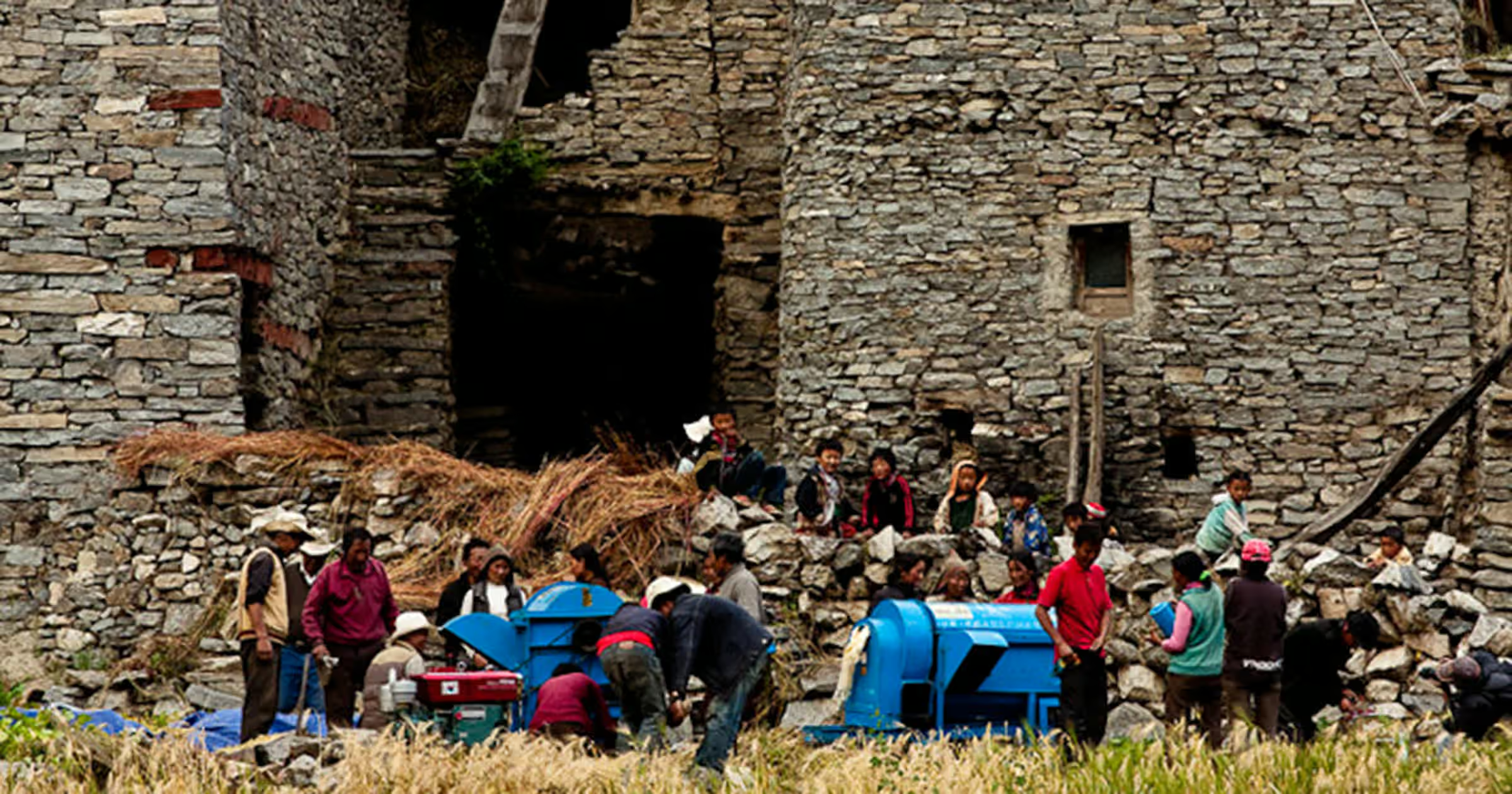
The locals of Limi valley follow an interesting Tibetan sky burial practice where a dead body is taken to a high mountain site, where it is respectfully prepared and offered to birds primarily vultures and other wild animals. The people of Limi valley celebrate festivals like:
- Lhosar,
- Rim-Choe,
- Duela.
Why Limi Valley is Called Nepal’s Hidden Shangri-La
Limi Valley feels like a place forgotten by time. The valley is home to traditional Tibetan communities whose lifestyle has remained largely unchanged for generations.
When visiting this hidden valley you will be welcomed by serene atmosphere along with:
- Whitewashed mud houses,
- prayer wheels spinning in the mountain breeze,
- yak caravans crossing ancient trails, and
- centuries-old Buddhist monasteries and Gompas.
- Dense Rhododendron forests and pine woods transition to arid wilderness desert,
- Scenic mountain views of Mt. Saipal, Mt. Kailash, Mt. Kanjiroba
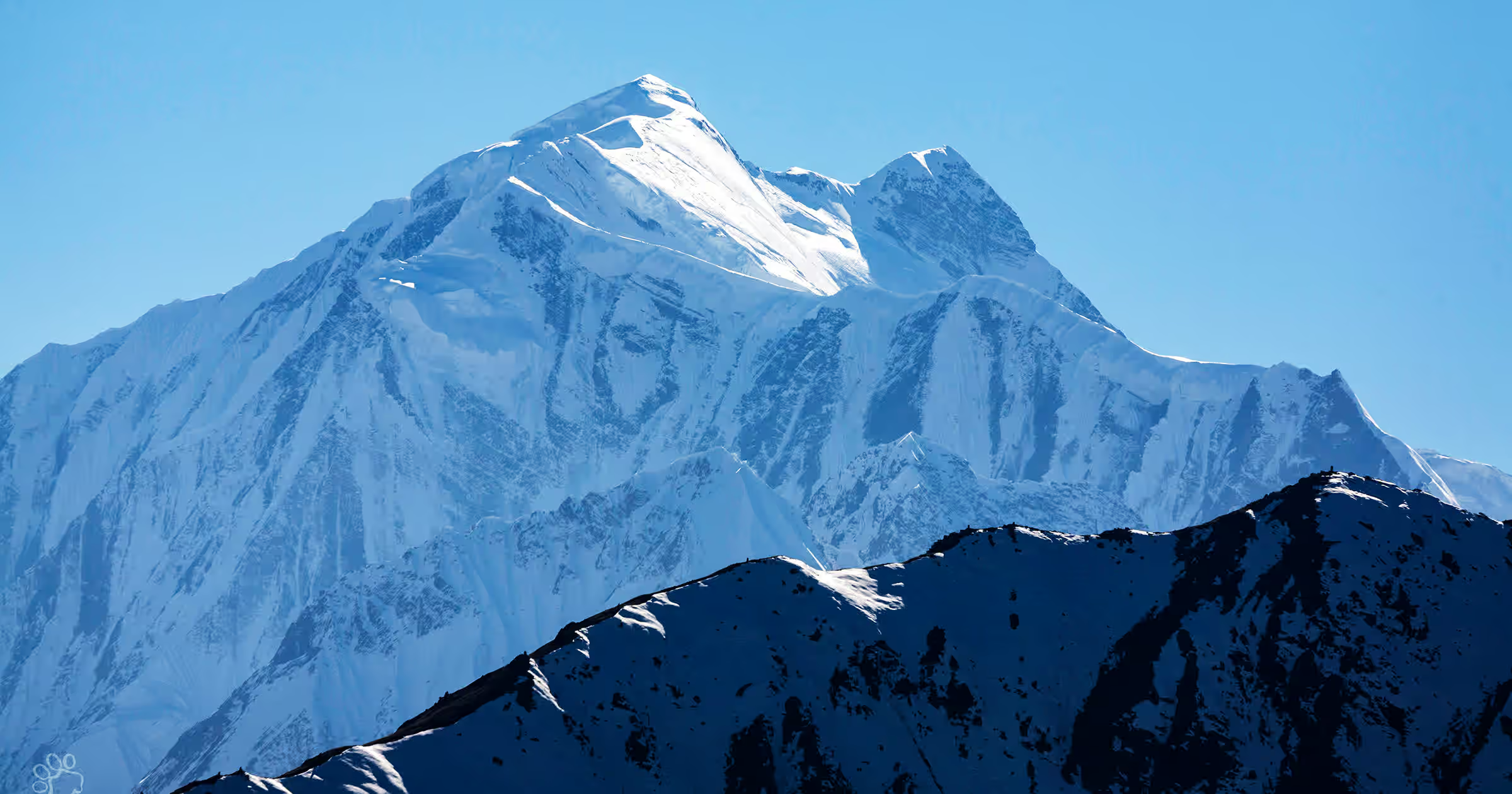
Historically, it served as an important trading corridor connecting Nepal and Tibet where locals even follow the same route today to carry salt, wool, grain, and medicinal herbs across the Himalayas.
The Valley offers genuine solitude, your journey to Humla district for Limi valley trek may pass without meeting another trekking group, making every mountain pass, monastery, and village feel deeply personal.
How to Reach Limi Valley, Nepal
Limi valley is a remote Himalayan village of Humla district and reaching there is an adventure in itself. As there is no roadway linking this hidden valley, you need to spend several days trekking.
So, you need to take a scenic flight to Nepalgunj at first and then again take a scenic flight to arrive at Simikot. Your trekking journey starts from Simikot until you reach Limi valley.
Flight to Simikot may get delayed or cancelled due to weather condition, so book them in early morning and add two to three buffer days on your itinerary for it. The entire journey demands more than two weeks for the completion.
Limi Valley Trek
Limi valley trek is a Nepal’s last truly remote trekking adventure which allow you to witness the untamed centuries old culture and tradition along with the breathtaking Himalayan scenery. You will get to slow down your life in an tranquil atmosphere of this pristine valley.
During you trekking journey, you will get to witness Tibetan influence Buddhist culture when visiting three main settlements like Til, Halji, and Jang villages. You will get to know about ancient murals, sacred scriptures, traditional Tibetan artwork when visiting a thousand years, Rinchenling Monastery.
Beside this, trek allow you to encounter blue sheep (bharal), Himalayan yak grazing on steep slopes, along with high-altitude bird species like Golden eagles, Himalayan griffon vultures, etc.
Facts of Limi Valley Trek
| Information | Details |
|---|---|
| Region | Humla, Far Western Nepal |
| Duration | 18 to 22 Days |
| Maximum Elevation | Approximately 4,900 to 5,000 meters at Nyalu La Pass |
| Trek Type | Camping Trek |
| Difficulty | Challenging |
| Accommodation | Camping and Basic Village Homestays |
| Best Seasons | May to June and September to October |
| Permit | Restricted Area Permit Required |
| Trek Start | Simikot |
| Trek Ends | Simikot |
Route and Itinerary
Humla Limi Valley trek often follows the same route which starts from Kathmandu and follows routes like Nepalgunj, Simikot and Limi Valley. The typical route of Limi Valley trek follows as:
- Kathmandu → Nepalgunj → Simikot → Trek to Limi Valley
Different trekking agencies have different itineraries for the trails of Limi Valley Nepal. Our 18-day Humla Limi Valley trek itinerary follows:
- Day 01: Fry from Kathmandu to Nepalgunj
- Day 02: Fly from Nepalgunj to Simikot to Dharapuri (2,270 meters)
- Day 03: Trek from Dharapuri to Kermi (2,629 meters)
- Day 04: Trek to Chumsa Khola Valley from Kermi (3,400 meters)
- Day 05: Trek from Chumsa Khola Valley to Dharamshala (4,000 meters)
- Day 06: Trek from Dharmashala to Talung (4,380 meters)
- Day 07: Trek to Jang from Talung(4,070 meters)
- Day 08: Acclimatization Day
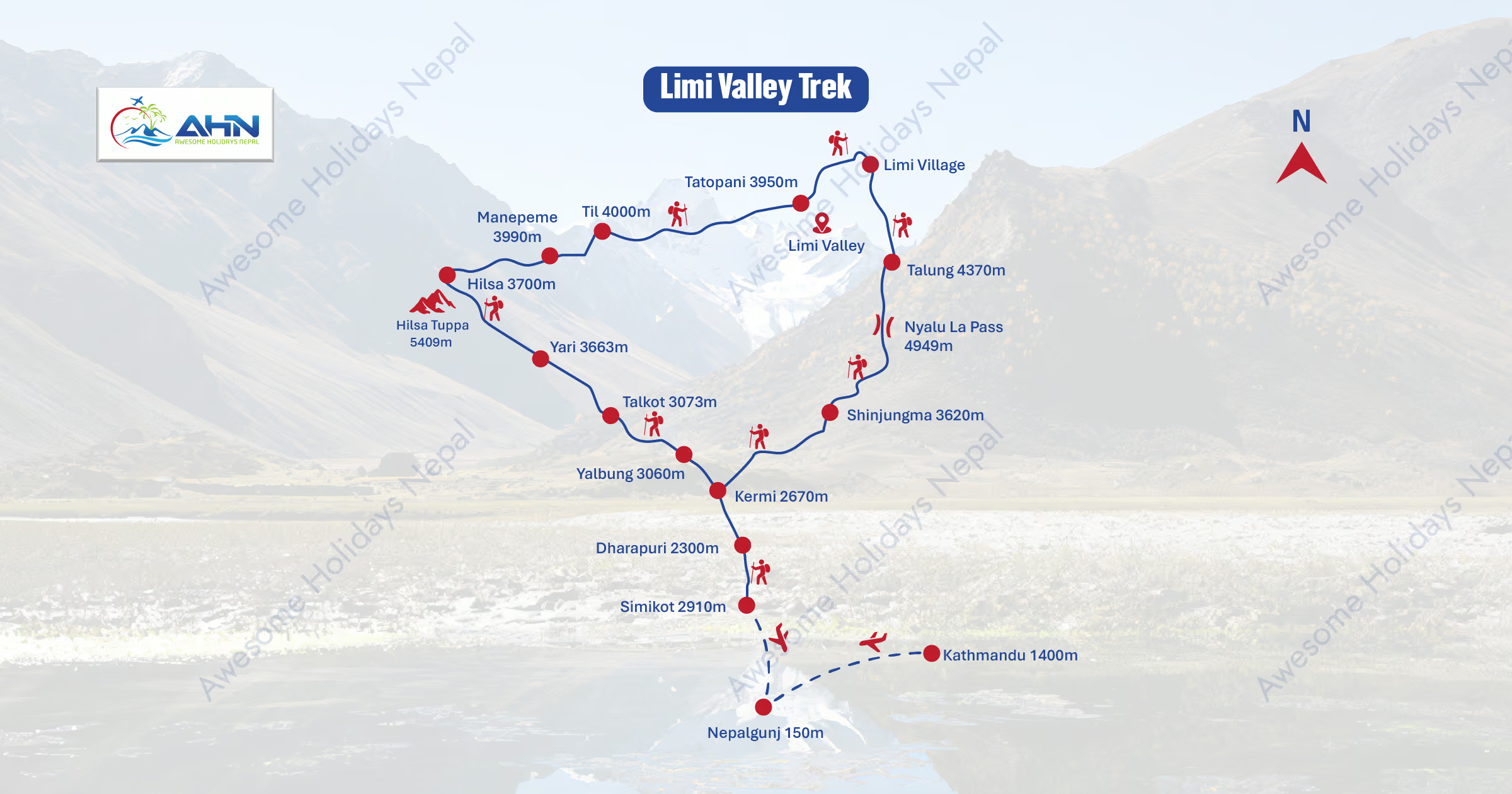
- Day 09: Trek to Halji from Jang (3,670meters)
- Day 10: Trek from Halji to Til (3,700 meters)
- Day 11: Trek from Til to Manepeme (3,970 meters)
- Day 12: Trek from Manepeme to Hilsa (3,740 meters)
- Day 13: Trek from Hilsa to Palbang (3,389 meters)
- Day 14: Trek from Palembang to Muchu (2,929 meters)
- Day 15: Trek from Muchu to Chumsa Khola (3,400 meters)
- Day 16: Trek from Chumsa Khola to Dharapuri (2,270 meters)
- Day 17: Trek from Dharapuri to Simikot (2,910 meters)
- Day 18: Fly from Simikot to Nepalgunj and then again to Kathmandu
Best Time for the Limi Valley Trek in 2026
Spring (May to June)
Spring is considered as the best time to visit Limi Valley via trekking in 2026. These months bring pleasant temperatures, clear visibility, blooming alpine vegetation, and relatively stable weather which favors longer hour trekking in daytime.
In March and early June, the temperature ranges from 4°C to 10°C, with sudden drops of -12 °C at night. The cloudfree sky offers the best view of panoramic mountain ranges and the fresh bloom of Rhododendron aroma adds refreshment in your trekking journey to Nepal’s last Tibetan frontier .
Autumn (September to October)
Autumn is considered the finest trekking season. Clear skies provide outstanding mountain views and stable weather conditions make the trails free from mud.
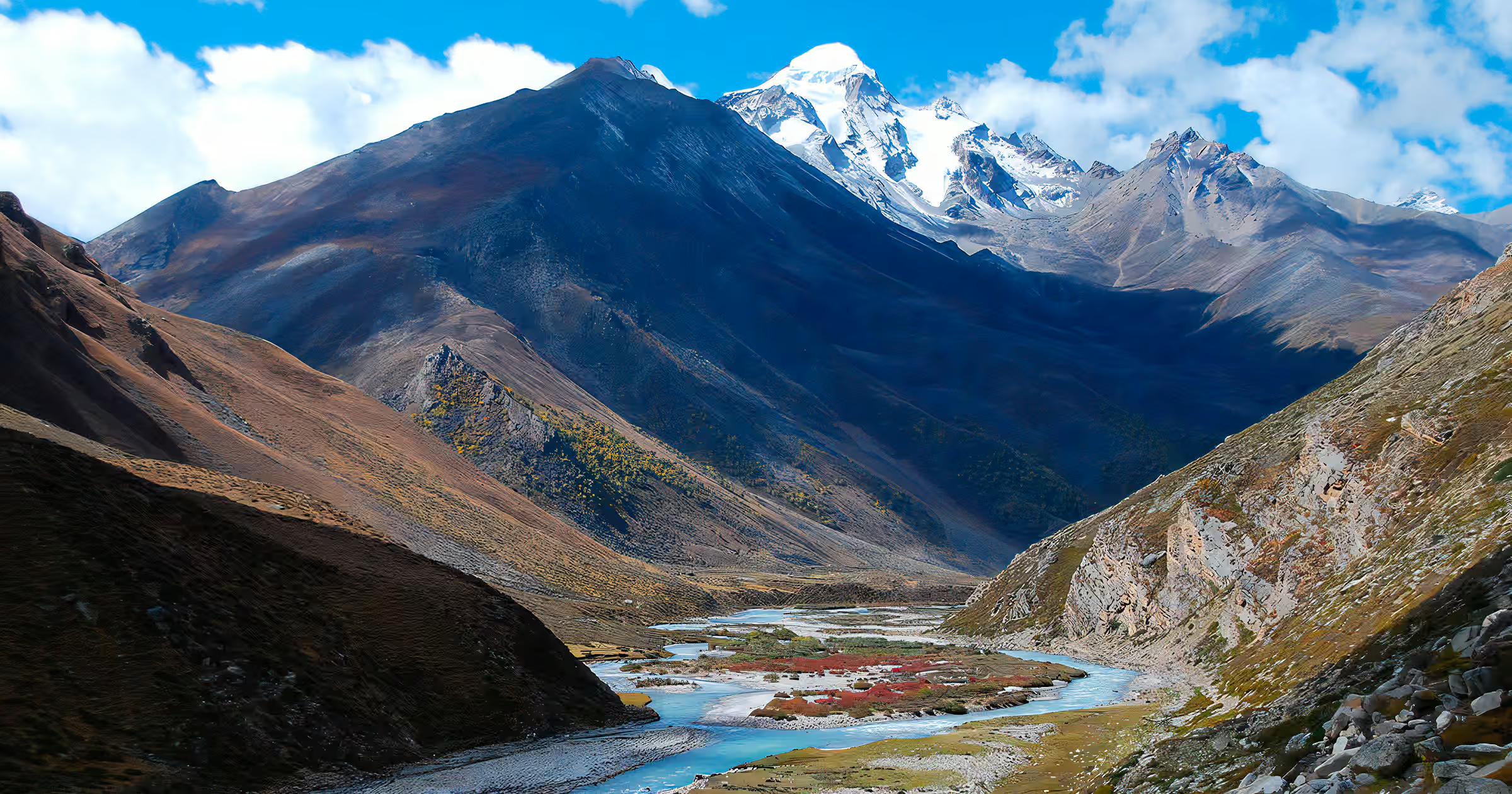
The comfortable daytime temperatures of 25°C and 10°C at night make your trekking days more enjoyable.
Winter (December to January)
During Winter , the Limi valley and the high passes are filled with heavy snowfall and you have to deal with a freezing temperature of -20°C. As most of the trekking trails are covered with a huge layer of snowfall, you are more prone to slipping and injuries and crossing high passes is impossible. So, we suggest avoiding trekking in this season.
Monsoon/Summer (July to August)
Since Limi lies in the Himalayan rain shadow, it receives less rainfall than central Nepal, but when exploring the dense lush green forest, you have to deal with leeches and mosquitoes. The daytime temperature of 10°C to 20°C favors longer hours of trekking but you need to become more cautious.
Limi Valley Trek Permit
Limi valley is an unexplored Himalayan valley of Nepal and falls inside the Restricted Area. So, you need to have:
- Restricted Area Permit (RAP)
- Karnali Conservation Area Permit (KCAP)
- TIMS card
- Humla District Special Permit
Restricted Area Permit (RAP) cost USD 50 per person per week and if you stay beyond 1 week you need to pay USD 10 per person per day. KCAP costs USD 8 to 10 per person and TIMS cards cost USD 20 per person for foreigners.
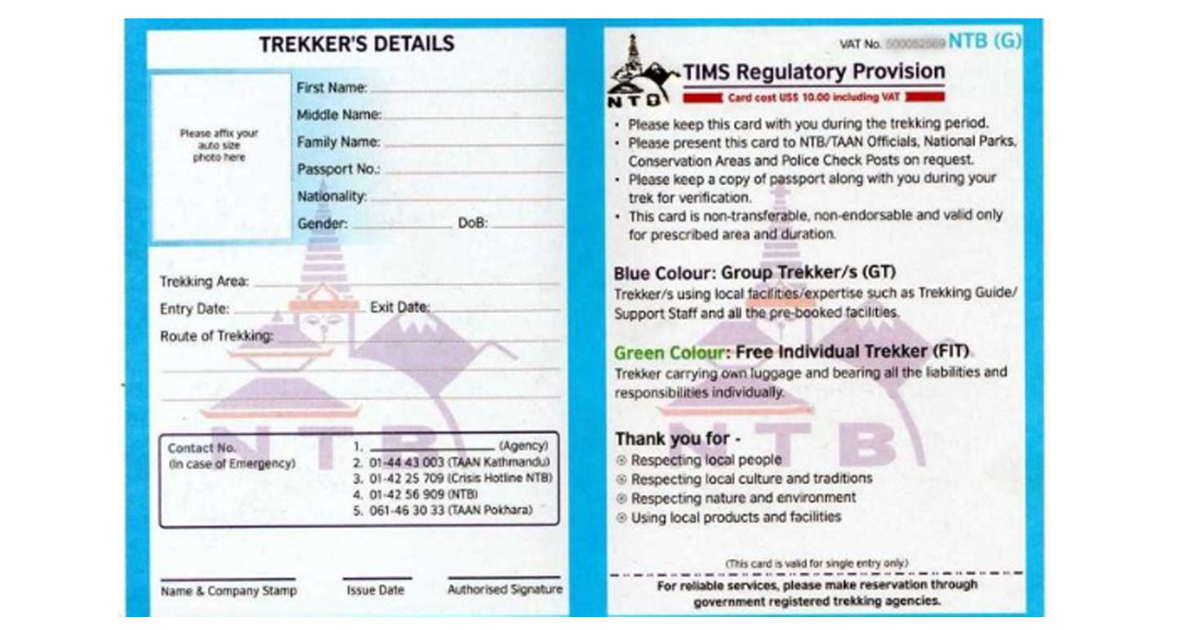
The cost for the Humla District Special Permit is around USD $90 which depends on your exact entry and exit points into Tibet/Simikot. As you will be traversing inside the restricted areas, you need to hire a mandatory licensed guide. The Limi Valley trek permit requirements includes:
- Passport copy,
- Passport-sized photos,
- Travel insurance,
- Dates of your Nepal tourist visa
- Flight tickets, etc.
Permits are generally obtained from NTB, we can also obtain it on your behalf.
Difficulty Level
Limi Valley trek is one of the Nepal hidden valley treks which is rated as Challenging. Those who have good physical fitness can walk for hours of time for multiple days.
As the trekking trails take you to an elevation of around 4,940 meters at Nyalu La Pass, you must have enough cardiovascular endurance and leg strength to walk uphill and downhill without any difficulty. If you have prior experience of trekking to high altitude and are quite enthusiastic regarding the new place and learning new culture, you can book the Limi Valley trek in 2026.
Food and Accommodation
Unlike other famous tea-house routes, much of the trekking to Limi Valley demands camping. When booking a trek to Limi valley with us, you will be given a full site camping chef and licensed trekking guide and you have to bring your own camping essential.
You will be staying in fully supported tented camping where you will be served three meals a day, breakfast, lunch and dinner. You will eat porridge with Tsampa bread, tea, and boiled eggs for breakfast while you will eat a typical Nepali Dalbhat set which comes with vegetable curries, pasta, noodles for lunch and dinner.
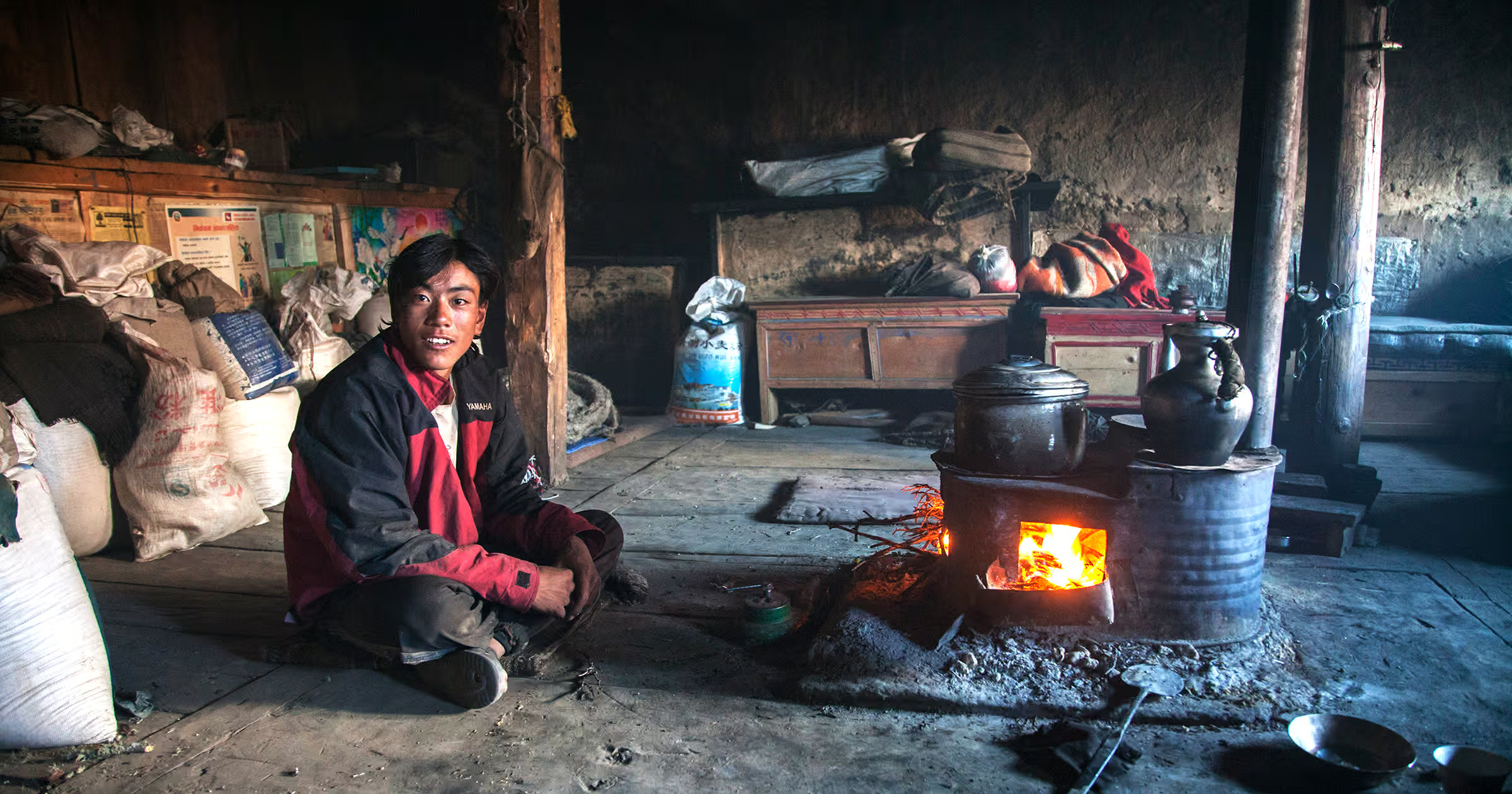
Lunch is mostly prepared in the morning with breakfast which is packed and carried to eat on the trails. We also suggest you to bring energy bars, protein bars, chocolates, and dry nuts to munch during the trekking hours. When staying with locals herders, you will get to taste butter tea and yak milk with their nomadic families.
Drinking Water
We suggest you bring a reusable water bottle, so that you can refill the boiled water in the kitchen tent. For trekking hours, purifying drops and tablets makes water from mountain springs and rivers drinkable.
Altitude Sickness and Safety Measures
The Limi Valley Trekking trails reach its highest point at Nyalu La Pass approximately at 4,940 meters. As you make your way toward the pass, the trail gradually gains elevation, so you need to focus on proper acclimatization.
- You have to drink at least 3 to 4 litres of water daily,
- Must eat balanced diet meals,
- Focus on walking in a slow pace and taking regular breaks
- Follow the commands of guide carefully
- Do not hesitate to inform your guide regarding minor difficulties whether it is headache, or sudden uneasiness.
- You should always walk within the visible distance of guide and should not wander off alone.
Otherwise, you will be more prone to altitude sickness and have to return from the middle of the trek.
Packing List for Limi valley, Humla trek of Nepal
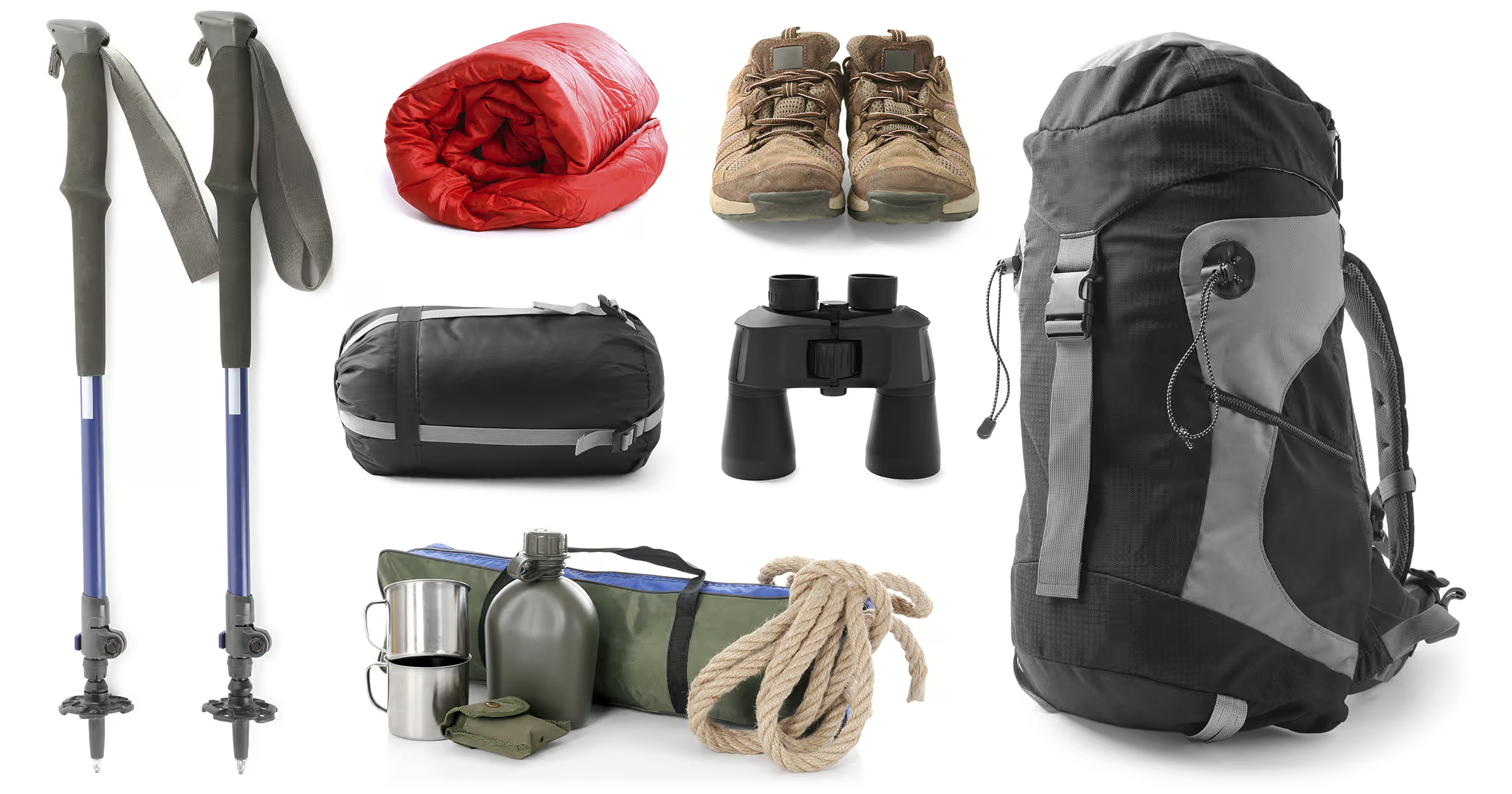
As trekking to Limi valley of Nepal demands camping you have to bring your camping essential. Trekking and camping essentially make your duffel bag quite heavy, so you need to hire a porter to ease your burden. The essential packing list along with camping essential for Limi Valley trek in 2026 is listed below:
Luggage
- Day pack (1)
- Large duffel bag(1)
Head Wear
- Sunhat
- Sunglasses
- Warm hat
- Sunscreen with SPF-5
- SPF-6 Lip balm
- An emergency head light
Hand wear
- Lightweight gloves/mittens
- Liner gloves
Clothing
- T-shirts
- Thermal top and bottom
- Underwear
- 2 shorts
- 2 Trousers, one thin, one thick and warm down Jacket
- Fleece Jacket (or a windproof jacket)
- Waterproof jacket with a hood (or a poncho)
- Waterproof pants
- Baggy pants
- Fleeced sweater
Footwear
- Sturdy trekking boot (well-broken in)
- Spare laces
- Thick woolen socks
- Thin liner socks
- Comfortable camp sandals
Camping and Sleeping Equipment
- Sleeping Bag rated for-15 degrees Celsius
- 4-season tent,
- Pillow
- An insulated foam/air mattress,
- A reliable water filtration system
- Toiletries like tissue roll, toothbrush and paste, biodegradable soaps, and small towel
Planning a Limi Valley Trek in 2026?
Or Call/Message on WhatsApp +977 98434 13619
Other Essentials
- Medical kit with bandage, water filters, ointment, prescribed medicines, rehydration tablets.
- Trail map,
- Binocular
- Power bank
- Extra batteries
- Trekking poles,
- Energy snacks.
Final Verdict on Nepal’s Hidden Valley Trek
Limi Valley is not another trekking destination but it is a rare opportunity for travelers to experience a living cultural landscape where history, spirituality, and nature exist in remarkable harmony. Those who want to spend some time with nature and want to trek without crossing another backpacker on the trails, Limi valley trek is waiting for you.
With necessary preparation and enough packing, one can complete this trek easily even though it is rated as strenuous trek. To get most out of this trek, we suggest you trek in Spring, Autumn, and monsoon season. As this trek is a high altitude trek, having travel insurance which covers high altitude above 5000 meters with helicopter evacuation and medical repatriation is needed.
So, are you ready to traverse in an off-the-beaten-path adventure to Limi Valley? Make sure you book your trek with us so that you can collect only good memories from the trails in 2026.
FAQs
Expand AllWhere is Limi Valley located in Nepal?
Limi Valley is located in the remote Humla District of northwestern Nepal.
What does "Limi" mean in Tibetan language?
The meaning of “Limi” refers to people living in between two rivers.
How many days does the Limi Valley trek take?
You need to have at least 18 to 20 days for Limi Valley trek.
Is Limi Valley trek difficult for beginners?
Yes, Limi Valley trek can be difficult for beginners.
What is the best season to trek Limi Valley?
Spring (April–June) and autumn (September–November) are the best season to trek Limi Valley.
Can I trek Limi Valley during monsoon season?
Yes. You can trek Limi Valley during monsoon season as it falls inside the rain-shadow area, where rainfall is very minimal in comparison to other region of Nepal.
What permits are required for Limi Valley trek?
Permits required for Limi Valley trek are:
- Restricted Area Permit (RAP)
- Karnali Conservation Area Permit (KCAP)
- TIMS card
- Humla District Special Permit.
Do I need a guide for Limi Valley trek?
Yes, a guide is a mandatory requirement for Limi Valley trek.
What is the highest pass in the Limi Valley trek?
The highest pass in the Limi Valley trek is Nyalu La Pass which is located at 4,940 meters.
Can you see Mount Kailash from Limi Valley?
Yes, you can see Mount Kailash from Limi Valley.
What wildlife can be seen in Limi Valley?
Snow leopards, blue sheep, Himalayan wolves, musk deer, and various Himalayan bird species like Golden eagles, Himalayan griffon vultures, etc. can be seen in Limi Valley.
How many villages are there in Limi Valley?
There are only three villages in Limi Valley and they are:
- Halji,
- Til, and
- Jang.
What is the connection between Limi Valley and Tibet?
The connection between the Limi Valley and Tibet is deeply rooted in ancient Tibetan migration, Buddhist religion, and trans-Himalayan trade.
Is Limi Valley safe for solo trekkers?
Yes. But, you need to hire a licensed guide for Limi Valley trekking.
What language do Limi Valley locals speak?
Limi Valley locals speaks Limi dialect of Tibetan.
What festivals are celebrated in Limi Valley?
Losar (Tibetan New Year), Saga Dawa, Rim-Choe, Duela, and other traditional Buddhist ceremonies are celebrated in Limi Valley.
What is the altitude of Limi Valley?
Limi valley is elevated between 3,700 meters and 4,100 meters.
Is Limi Valley a restricted area?
Yes, Limi Valley is a restricted area.
Do I need camping equipment for Limi Valley trek?
Yes, you need to take camping equipment for Limi Valley trek.
Is altitude sickness a risk in Limi Valley?
Yes, altitude sickness is a risk in Limi Valley as you will be traversing to 4,940 meters at Nyalu La Pass. Trekking to this altitude may make you suffer from altitude sickness if you neglect on hydration, acclimatization, and balanced diet.
Related blog posts
Discover a choice of tourist destinations loved by most of our visitors. Whether you're on a jungle safari to spot rare animals or walking through a world heritage site, these well-planned itineraries cover the major highlights of Nepal.

 call an expert at: