
The Gods of the Pass: What Mani Stones and Prayer Flags in Nepal Really Mean
 Sristi Adhikari
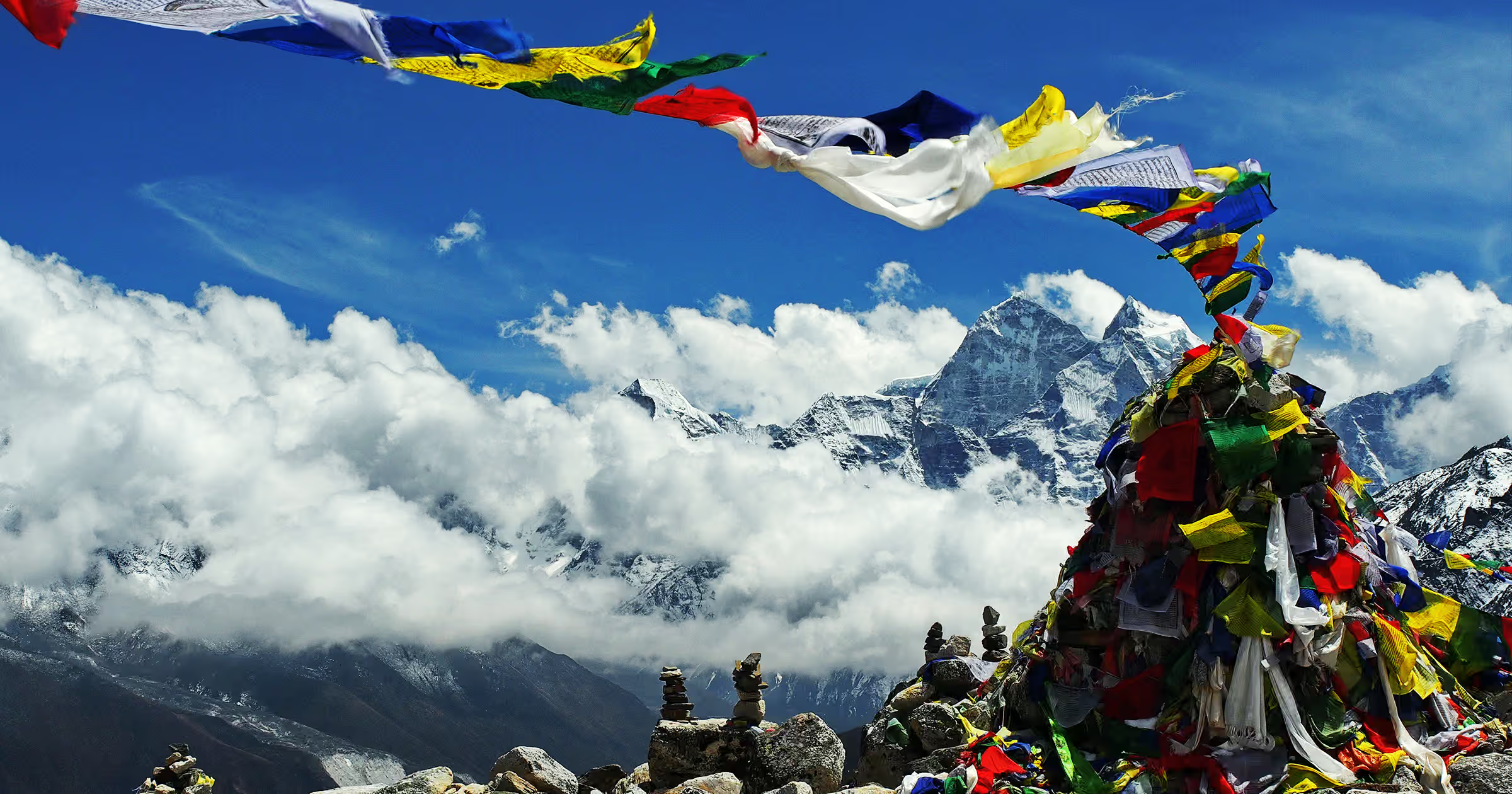
When exploring high mountain trails, you might have seen colorful prayer flags fluttering above monasteries, bridges, mountain passes, and rooftops. These colorful fluttering flags are called Prayer flags in Nepal.
Likewise, you will also encounter carved stones also known as Mani stones and a small chorten standing quietly beside the trail. All are a vital part of Tibetan Buddhism and all Nepalese people.
Mani stones and prayer flags are not only a beautiful decoration but are an expression of faith, compassion, protection, remembrance, and connection with the natural world. Understanding them can change the way you experience a trek.
A prayer flag becomes more than a splash of color against a blue sky, and a mani wall becomes more than an obstacle to walk around. They become messages written into the landscape. Continue reading our blog for more details regarding the Mani stones and Prayer flags:
What are Mani Stones in Nepal?
When exploring remote mountainous trekking trails of Everest, Manaslu, or Upper Mustang, you will see people whose culture and traditions are influenced by Tibetan Buddhism. There you will see Chortens and Mani stones.
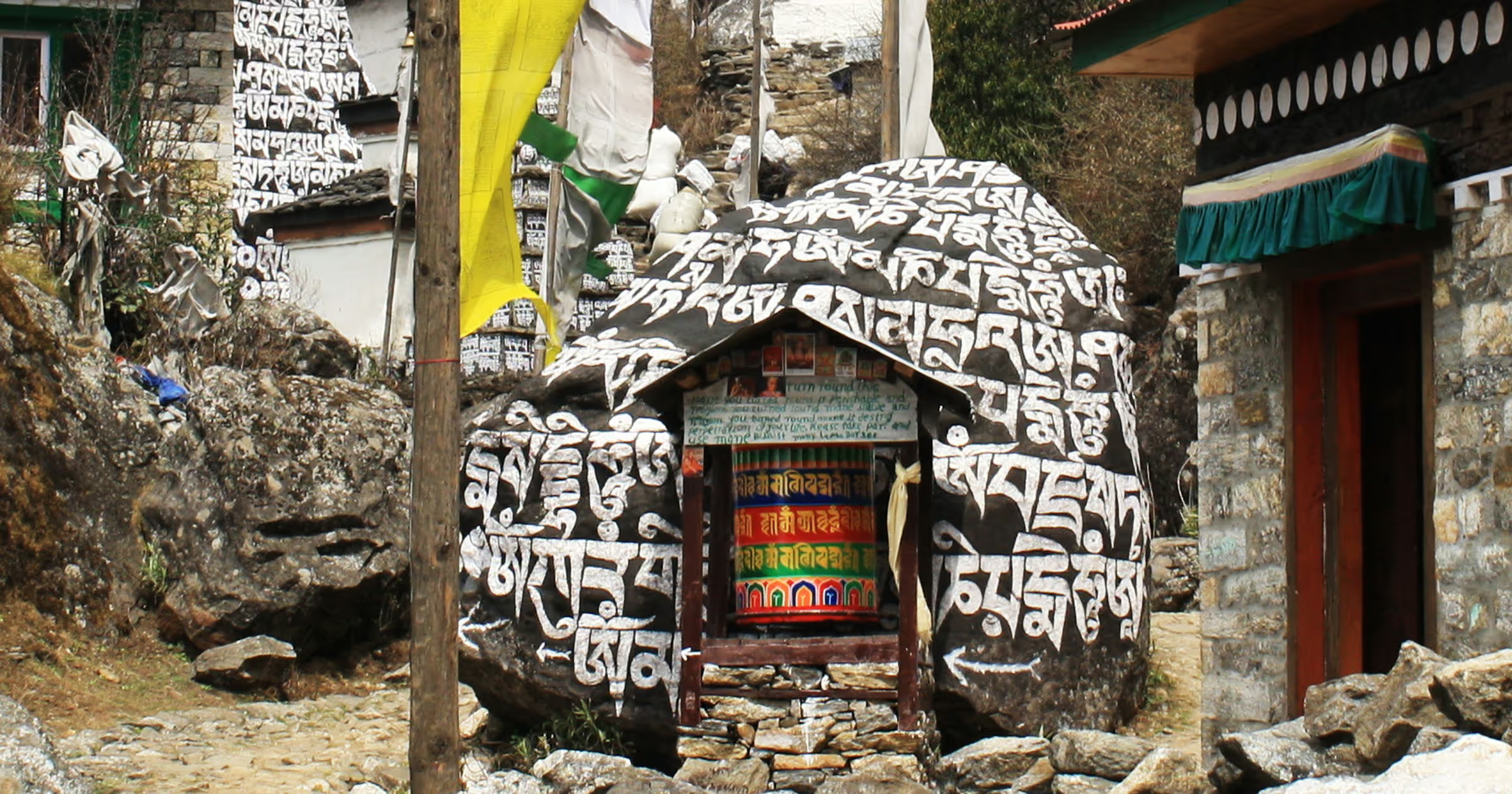
Mani stones in Nepal are stones or stone slabs that are carved with Buddhist mantras, prayers, sacred images, or auspicious symbols by hand, using a hammer and chisel. Only those skilled craftsman does the carving on the sacred stones while concentrating on the mantra and this process is itself is a form of meditation.
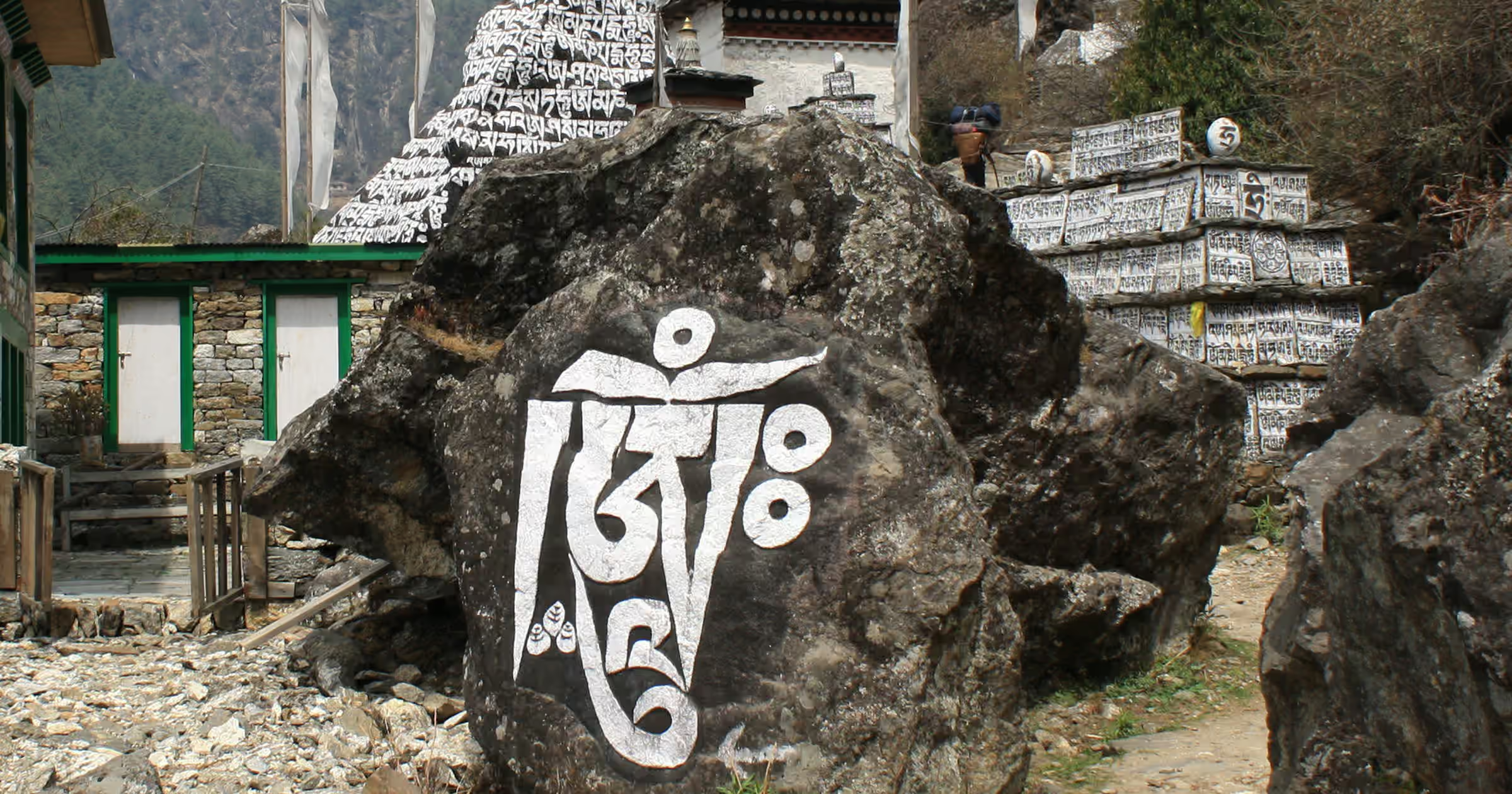
Mani is derived from Sanskrit which comes from “Six word Dharani” sutra, “Om Mani Padme Hum” often associated with the Bodhisattva of Compassion in Tibetan Buddhism.
Stones which are inscribed with the word Mani are often called as Mani Stones in Nepal. The Mani stones also known as Om Mani Padme Hum belong to native religion, Bons, where followers worship mountain gods and stones.
There is a belief that chanting words inscribed on the Mani stones help you bring good luck and happiness. Mani stones in Nepal used to represent abodes of deities, protection of local tribes and boundary makers and locals used to place them on roads, bridges, and passes for safety and good luck.
These stones slowly grew into sacred walls and even today, when Tibetan pass by these sacred stones, they add other stones like a prayer. These flat and round mani stones in Nepal often inscribed by Tibetan script, Buddhist symbols, and sacred mantras like “Om Mani Padme Hum” are part of local people living in remote mountains of Nepal.
The sacred mantra “Om Mani Padme Hum” refers to:
- Om : Universal sound
- Mani: Jewel
- Padme: Lotus
- Hum : Unity of wisdom and compassion
It refers” Hail to the jewel in the Lotus” and written form of prayer and meditation.
Mani Walls: More Than Stone Boundaries
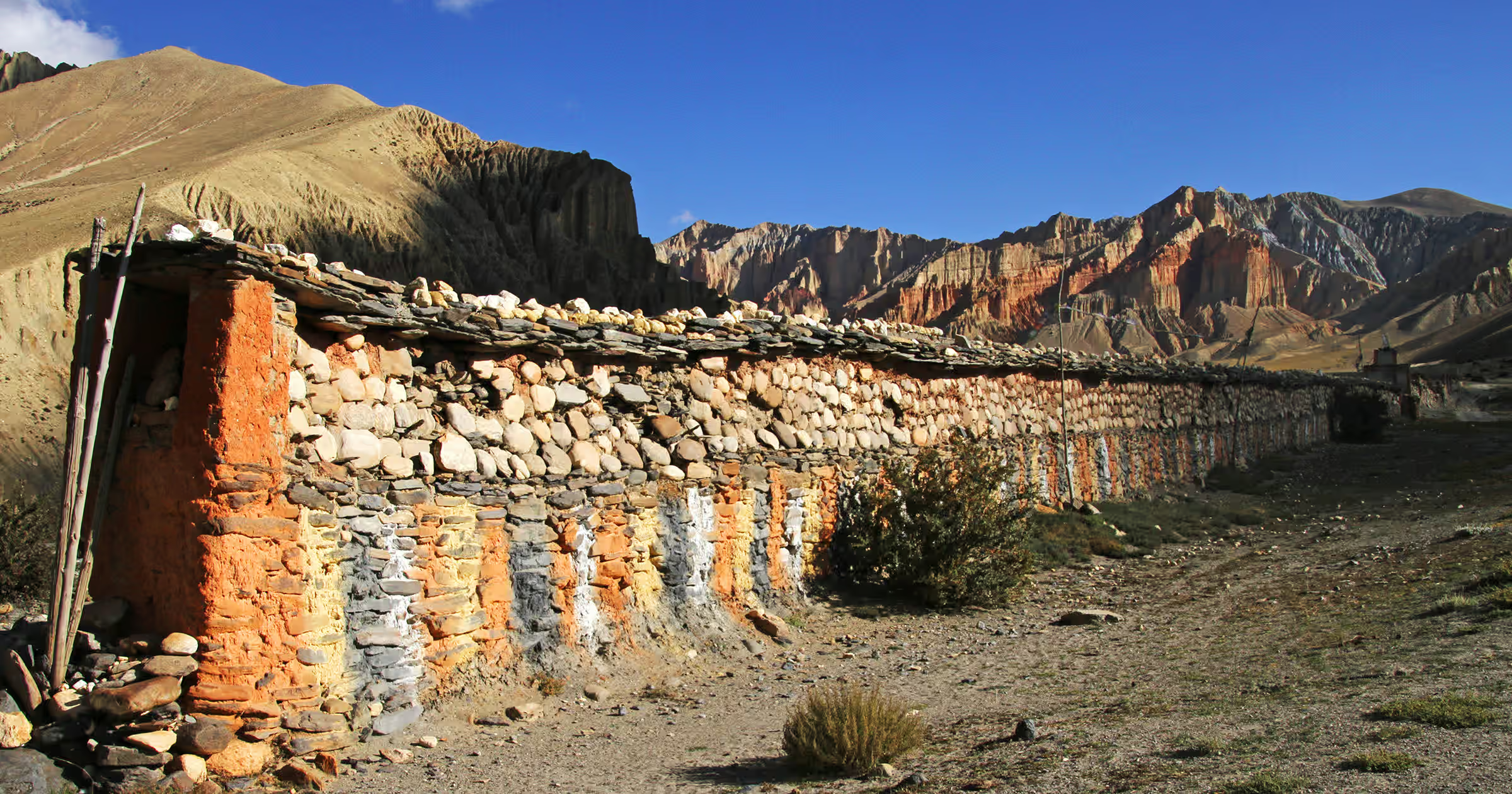
A collection of carved stones arranged into a wall or elongated structure is called Mani Walls. You will see them commonly along trekking routes in areas with strong Tibetan Buddhist traditions.
The role of mani wall is not only to divide one side of a path from another but it has a deeper spirituality. Mani walls play a vital role in reminding trekkers or visitors who pass them of Buddhist teachings and compassion.
You will encounter Mani walls in Nepal in sacred spaces, village approaches, routes, passes, and other important points in the landscape. These stones may look ordinary to foreigners but they hold religious significance to the community.
You should never climb or touch a mani wall for photography or for your entertainment purpose. If you do so, you are not only disrespecting the walls, but you are also disrespecting the teaching of Buddha and the whole community who follows Tibetan Buddhism. You should never:
- Remove a carved stone,
- Sit on the wall,
- Step over it,
- Treat as a climbing platform.
How to Walk around Mani Walls or Mani Stones in Nepal?
You should always keep mani wall on your right and rotate around it from left to right in a clockwise direction. This mandatory practice is known as circumambulation, or kora, which is widely observed around Buddhist religious structures.
There is also a cosmological reason behind it, circumambulation in clockwise direction by keeping sacred object like mani walls or stones is often follows the direction of Buddhist cosmos, the direction of the sun across the sky, the direction of circumambulation around a stupa, and the direction in which merit flows. If the trail provides a clear route around a mani wall, follow the local convention and pass it respectfully rather than climbing over it.
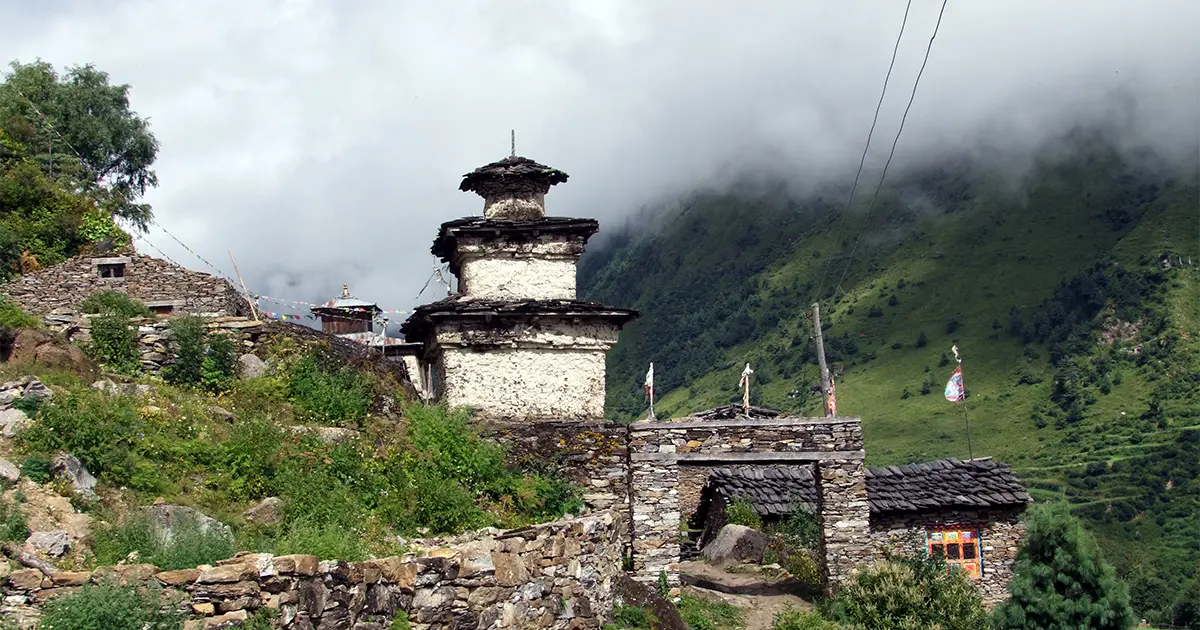
You may also encounter prayer wheels near mani walls which you should turn clockwise as well. When you are unsure what to do, you should observe what local people, guides, or porters are doing and simply follow them.
What are Prayer Flags in Nepal?
A colorful rectangular cloth printed with mantras, prayers, sacred imagery, and auspicious symbols many of which are strung together and hung between buildings, on bridges and on mountain passes and peaks is called prayer flags in Nepal.
If mani stones are the Himalayas’ messages carved in stone, prayer flags are their messages carried by the wind. Prayer flags in Nepal come in five different colors and every one of them has Buddhist script inscribed in it.
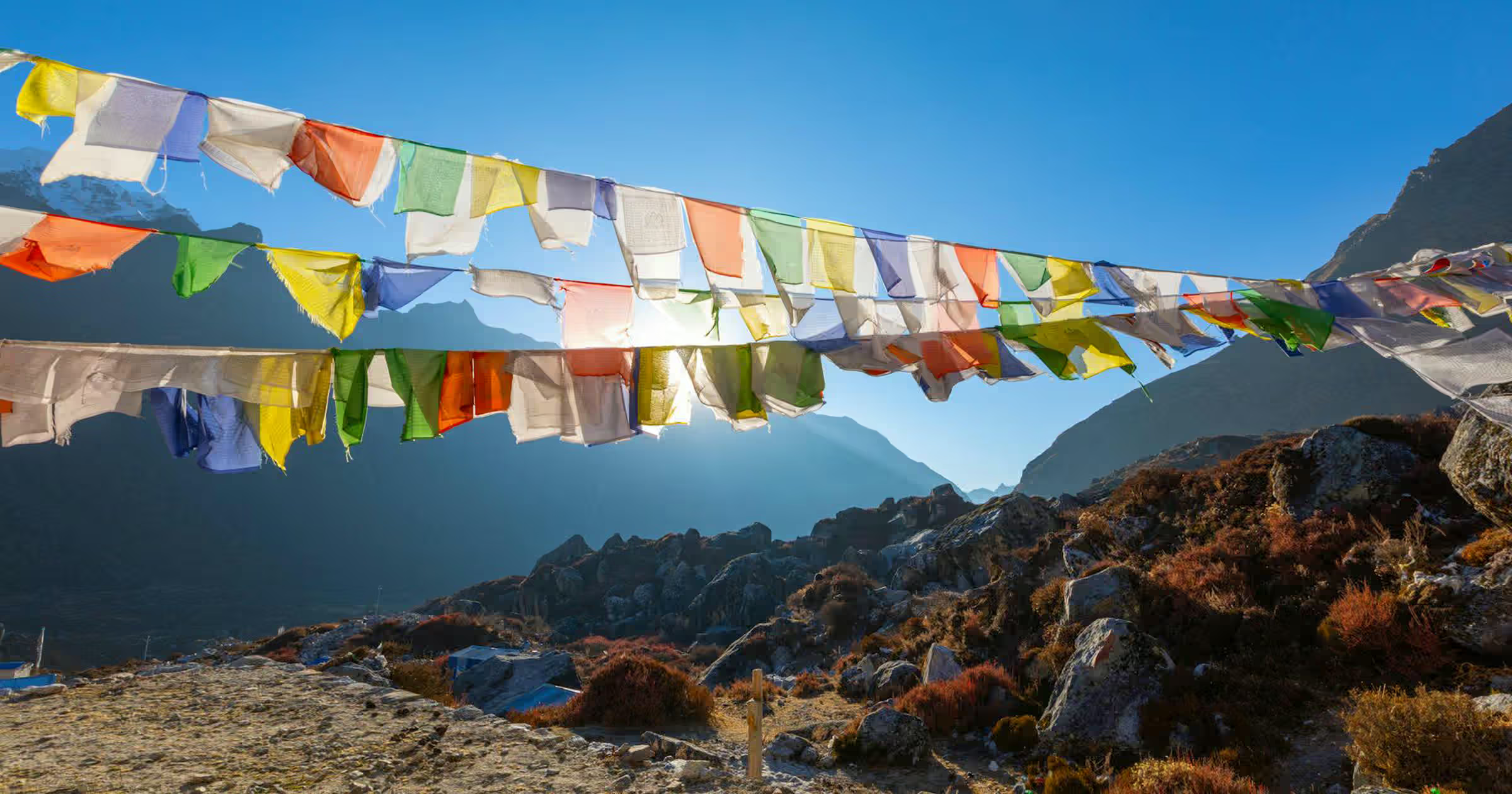
Every piece of Buddhist prayer flags have different colors with different meanings and symbols. The color sequence of prayer flag is always same, that is Blue, white, red, green, yellow.
Most traditional prayer flag in Nepal sets are:
- Blue: It represents space or the vastness of the sky and symbolizes broad mind and infinity.
- White: This color is associated with air and is a symbol of purity and compassion.
- Red: This flag is associated with fire, energy, and transformation.
- Green: The color is connected with water which brings harmony and balance.
- Yellow: Often seen as Earth which symbolizes fertility and stability.
The prayer flags in Nepal also contain symbols, figures, and sacred mantras which are considered to flow with the winds while spreading blessings in the surrounding. They represent silent prayers which seek peace, strength, and compassion.
Origin of Prayer Flag in Nepal
When Gautam Buddha wrote prayer in the battle flags for his divine warriors who were fighting with Asuras, it originated the prayer flag to use as a symbol of their peaceful dedication. In Nepal, long before these battles, locals used to write sutras on cloth banners which is believed to have transformed into tradition of prayer flags which later spread through monastic communities to Tibet.
Tibetan communities started this tradition long before 800 CE but it was until 1040 CE, that the prayer flag became prevalent among Tibetan influenced locals. Historical records also says that, Atisha, an Indian monks initiated writing prayers on the fag which later spread to Nepal from Tibet.
Symbols
Different symbols inscribed in prayer flags in Nepal symbolize different things. The symbol of Wind horse represents the speed and transformation of bad luck into good luck whereas three jewels is a symbol of Buddha, Buddhist teaching, and follower of Buddhism.
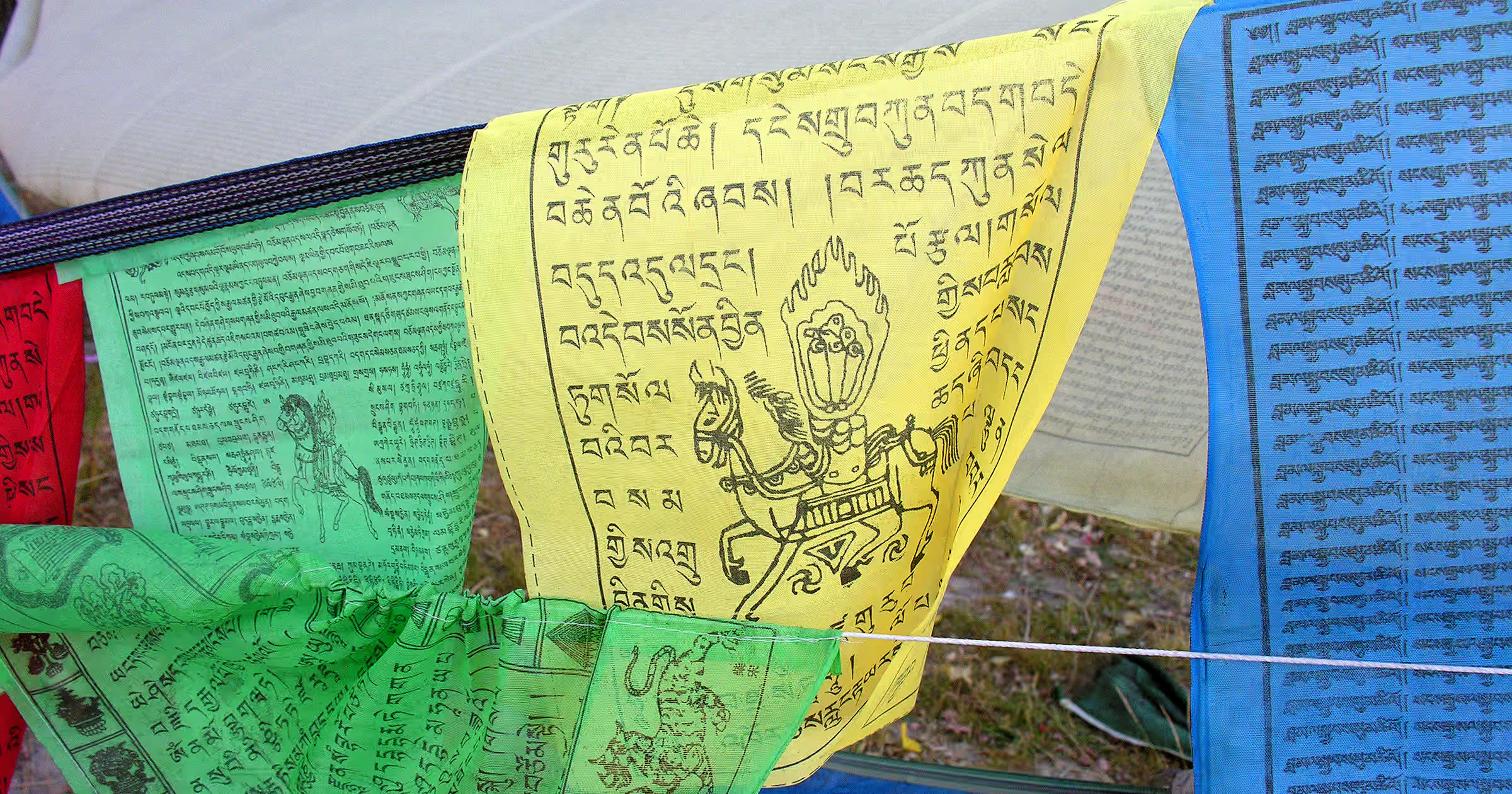
The flags also possess symbols of different animals which have different meanings.
| Symbol | Meaning / Significance |
|---|---|
| 🐉 Dragon | Symbolizes power and protection. |
| 🦅 Garuda | Symbolizes intelligence and clarity. Garuda is a bird which is known for its sharp vision and curiosity. |
| 🐅 Tiger | Considered fearless, symbol of bravery and strength on prayer flags. |
| 🦁 Snow Lion | Represents fearlessness and delight, reflecting the strength and courage of the lion. |
Difference Between Vertical and Horizontal Swinging Prayer Flags
| Vertical Prayer Flags | Horizontal Prayer Flags |
|---|---|
| It is known as “Darchog.”The flags are quite large and comes in square or rectangle shape. | It is also known as “Lung Ta” or Wind Horse flags. |
| Mostly hung from a pole and then strung vertically towards rooftops, ground, mountaintops. | They are mostly strung horizontally along a rope or line. |
| Widely seen in high mountain passes, roof of monasteries, temples, and sacred sites. | Commonly seen across bridges, rooftops, monastery, stupas, trails, and mountain landscapes. |
| The colorful prayer flags hangs from the pole in lower direction. | Several square or rectangular flags are connected in a row and are hung high to low between two places. |
| Traditionally, it is associated with protection, blessings, and the spreading of prayers. | Traditionally associated with spreading prayers and positive energy through the wind. |
Spiritual Importance of Prayer Flag
The prayer flags are sacred flags and often made from hemp and cotton fabric. The artisan carefully chooses the materials so that the prayers, images, and symbols which will be printed on it will remain visible.
The artisans print images and sacred mantras on the prayer flag by dipping a woodblock into ink and printing in the flags. The lower portion of the woodblock are made in such a way that artisans can carve texts and images underneath it.
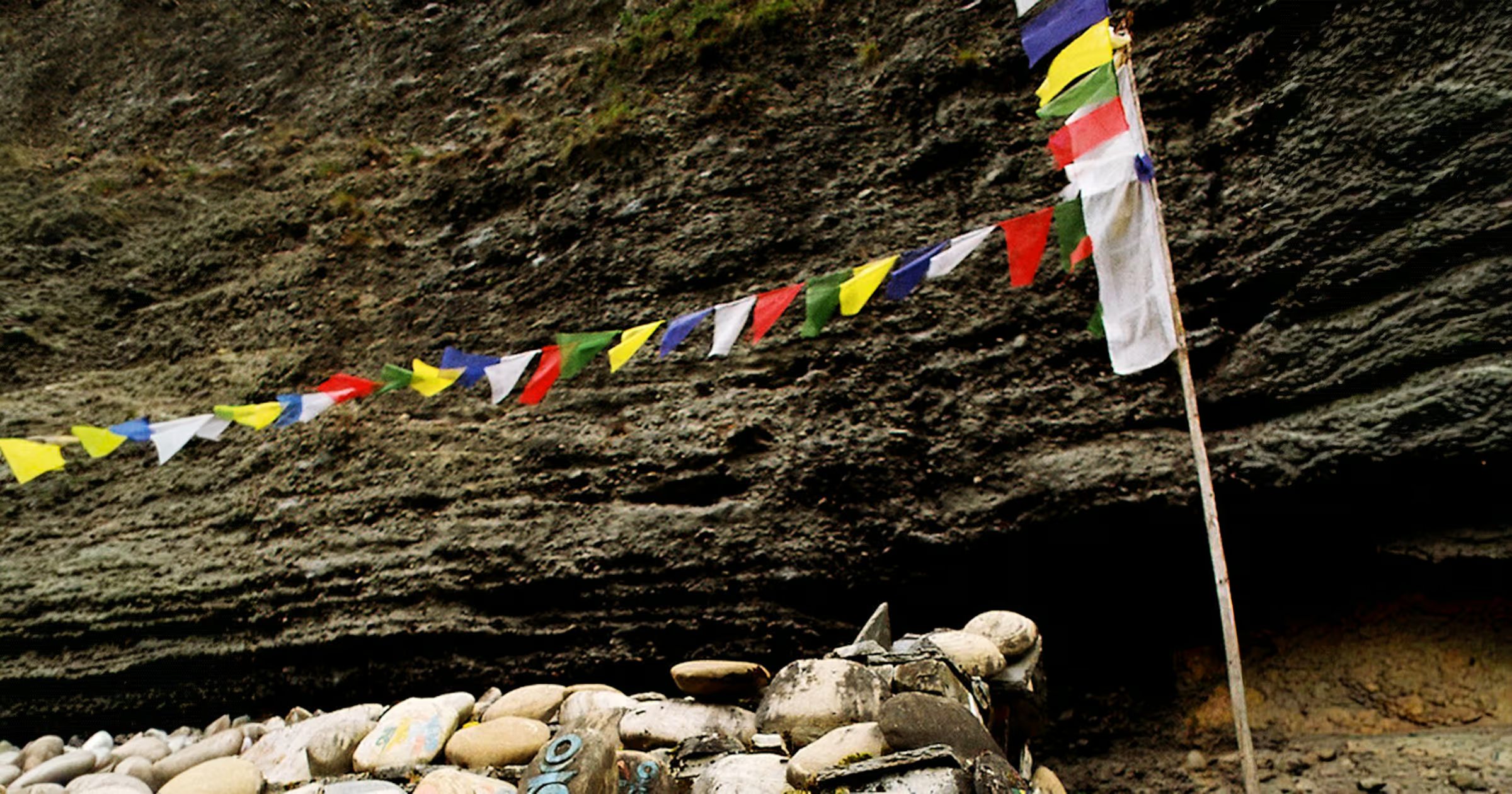
The Buddhist people of the mountain believe that the mantras and sutras written on it will allow flowing of blessing , good luck, and compassion in the surrounding atmosphere with the fluttering of the prayer flags. Within a certain period of time, the symbols, mantras, and inscriptions written on it goes on fading which also symbolizes that everything on Earth is temporary.
The placement of new prayer flag is always done in an auspicious days such as:
- Lhosar (Tibetan New Year)
- Full Moons,
- Important Buddhist Anniversaries.
When placing new flag, old ones are left to deteriorate naturally. And, new prayer flags are hung beside the faded and shredded prayer flags.
Practical Etiquette Tips for Spiritual Trekking in Nepal
When trekking to Himalayan Buddhists region, you need to show respect towards the locals and their culture and traditions. To make your visit more culturally sensitive make sure follow these simple Etiquette.
Dos
- Walk around mani walls and religious monuments in a clockwise.
- Keep sacred objects on your right when appropriate.
- Follow your guide’s instructions at monasteries and religious sites.
- Photograph prayer flags and mani stones respectfully.
- Always ask permission before photographing people involved in religious practices in monasteries and Gompas.
- Make sure you take time to learn what the symbols mean rather than treating them as decorations.
Dont’s
- Climb, sit, or stand on mani walls or mani stones.
- Remove carved stones from a wall or pile.
- Treat prayer flags as ordinary souvenirs or decorations.
- Step over sacred objects unnecessarily.
- Place your feet toward religious objects when sitting nearby.
- Assume every colorful flag or stone has exactly the same meaning.
Planning to Witness Mani stones and Prayer Flag in Nepal in 2026?
Or Call/Message on WhatsApp +977 98434 13619
Note: Always treat section or some parts of religious sites like Mani stone, Mani walls, prayer flag, etc. as a sacred object than as a decoration.
The Gods of the Pass
The phrase “Gods of the Pass” is a poetic title given to the mani stones and prayer flags in Nepal. When exploring high altitude region, trekkers and climber are often exposed to freezing winds, altitude sickness, and unpredictable weather condition. In Nepal, mountain passes are adorned with colorful prayer flags and mani walls, which are believed to appease the mountain gods and bring safe passage, good health, and good fortune to travelers.
So, next time when you witness a row of prayer flags at a mountain pass take a moment to listen to the wind. The faded and shredded flags next to new prayer flags makes you understand that disappearance is part of their story.
Slow down and do a clockwise circumambulation when you see a Mani wall and make sure you respect the artisan who invested their time, skill, and devotion when seeing a weathered stone carved with Tibetan script. In high mountains, faith is not always contained inside the walls of temples and monasteries but is also found in carved into stone, woven into cloth, carried by the wind, and placed directly beside the trekking trails in Nepal.
These powerful sacred markers of the Himalayas not only catches your attention but will make your journey more meaningful and help you understand the spiritual culture and traditions of the mountain villages. Are you ready to witness these Gods of the Pass ?Make sure you contact Awesome Holidays Nepal for a safe, unforgettable, and well-organized Himalayan adventure tailored to your trekking goals for upcoming Autumn season.
FAQs
Expand AllWhat are mani stones in Nepal?
Mani stones are flat stones where “six word Dharani” Om Mane Padme Hum is inscribed with other Tibetan symbols.
What do prayer flags mean in Nepal?
Prayer flags in Nepal carry Buddhist prayers, mantras, and blessings. With the fluttering of the flag, it spread the prayers for all beings.
What does Om Mani Padme Hum mean?
The Om Mani Padme Hum is a sacred Buddhist mantra associated with Avalokiteshvara, the bodhisattva of compassion. It represents the cultivation of compassion and spiritual wisdom.
Why do prayer flags have 5 colors?
The prayer flags have 5 colors because it represent the Five Elements and the Five Pure Lights of Tibetan Buddhist philosophy.
What are the 5 colors of prayer flags and their meaning?
The five colors of prayer flags are blue, white, red, green, and Yellow. The color blue is for space, white for air, red for fire, green for water, and yellow for earth.
How should you walk past a mani wall in Nepal?
You should walk around a mani wall by keeping the wall on your right side. Always do Kora or circumambulation in a clockwise direction.
What is written on mani stones?
Buddhist mantras such as “Om Mani Padme Hum,” along with prayers, sacred texts, Buddhist figures, and auspicious symbols are written on mani stones.
What is the difference between Lungta and Darchog prayer flags?
Lungta refers mainly to horizontal strings of prayer flags carried by the wind. Darchog generally refers to vertically mounted prayer flags attached to poles.
Why are prayer flags hung at mountain passes in Nepal?
Prayer flags are hung at mountain passes because these exposed locations allow the wind to carry their prayers and blessings across the surrounding landscape.
What is the spiritual significance of mani stones?
The spiritual significance of Mani stones is that it express Buddhist devotion and compassion. It also provides a visible reminder of spiritual teachings and the aspiration to benefit others.
Can you touch mani stones while trekking?
No, you cannot touch mani stones while trekking in Nepal.
What direction should you walk around a mani wall?
You should always walk around a mani wall in a clockwise direction.
Are prayer flags only Buddhist?
Prayer flags are associated with Tibetan Buddhist whose roots trace back to the ancient, pre-Buddhist Bön tradition of Tibet.
Where can you see prayer flags in Nepal?
Yes, you can see prayer flags in Nepal. you will encounter them in monasteries, stupas, villages, trekking trails, bridges, mountain passes, and Himalayan regions influenced by Tibetan Buddhist culture.
What do prayer wheels do in Nepal Buddhism?
Prayer wheels rotation symbolizes the activation or spreading the prayers and mantras contained within them. They are traditionally turned clockwise as a devotional practice.
Why are prayer flags important in Tibetan Buddhism?
Prayer flags are important in Tibetan Buddhism because they connect prayer, compassion, spiritual aspiration, and the natural movement of wind while spreading blessings throughout the surrounding environment.
What happens when prayer flags fade or become tattered?
When prayer flags fade and deteriorate from wind, sun, rain, and snow. Their gradual disappearance is traditionally accepted as part of their purpose and can also reflect the Buddhist idea of impermanence and then new prayer lag is hanged as per special occasion.
What does Lungta mean in Tibetan?
In Tibetan language, Lungta (རླུང་རྟ་) means “wind horse”. It is a mixture of two words, “lung” meaning wind or vital energy and “ta” refers to horse.
What is a gompa in Nepal trekking?
A gompa is a Tibetan Buddhist monastery or temple which serve as both spiritual hubs and community centers.
What is the kani gateway in Nepal trekking villages?
A Kani gateway is a traditional stone or wooden arched gateway which are found at the entrances of Tibetan Buddhist villages in trekking regions of Nepal. It marks the spiritual and physical boundary between the outside world and the sacred space of the community.
Related blog posts
Discover a choice of tourist destinations loved by most of our visitors. Whether you're on a jungle safari to spot rare animals or walking through a world heritage site, these well-planned itineraries cover the major highlights of Nepal.

 call an expert at: