
Birendra Lake: The Glacial Lake Below Manaslu – Complete 2026 Trekking Guide
 Sristi Adhikari
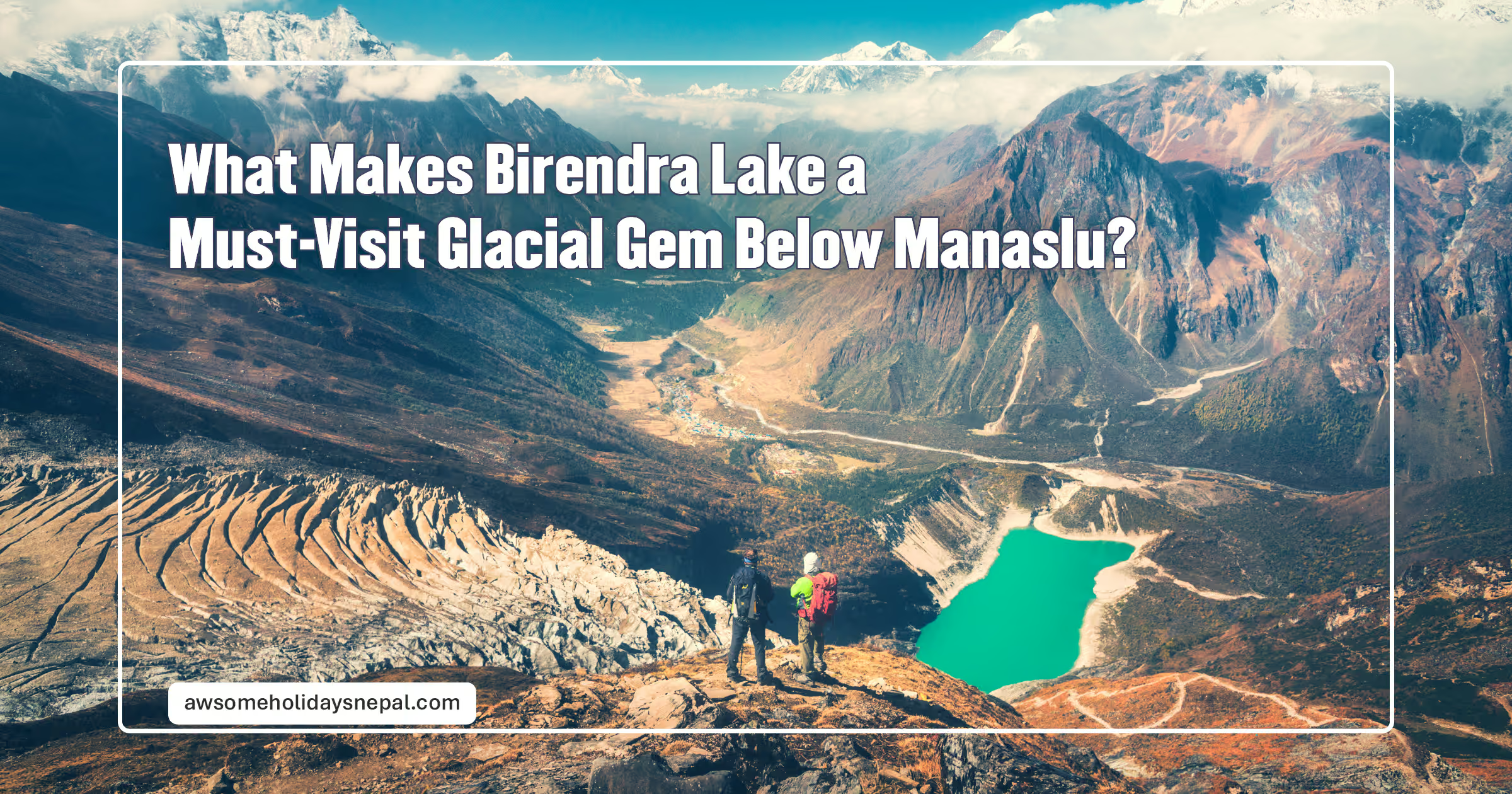
Birendra Lake also known as Birendra Tal is a pristine glacial lake located near the Samagaun in the Manaslu Conservation Area. Sitting beneath the towering Manaslu massif (8,163 m), the turquoise glacial lake offers trekkers a remarkable combination of mountain scenery, glacial landscapes, alpine wilderness, and Tibetan-influenced Himalayan culture.
Trekkers doing Manaslu Circuit trek mostly visit Birendra (Tal )Lake as an acclimatization excursion from Samagaun Village in the Gorkha District. The route to Birendra Tal provides an opportunity to walk higher without committing to a full-day expedition, while the lake’s setting gives you an impressive introduction to the glacial environment surrounding Manaslu.
Discover everything regarding Birendra Lake Nepal from its location, altitude, to best season and practical preparation, by reading our blog in detail.
Facts of Birendra Lake
- Local name: Birendra Tal
- Region: Manaslu, Gorkha District, Nepal
- Protected area: Manaslu Conservation Area
- Nearest major village: Sama Gaun / Samagaun
- Lake type: Glacial lake
- Altitude: 3,650–3,700 m
- Typical access: Short side hike from Sama Gaun
- Trekking difficulty: Easy to moderate, depending on conditions
- Main attraction: Turquoise glacial water and Snow capped mountain views of Manaslu
- Best seasons: Spring and autumn
- Accommodation at lake: No regular teahouse facilities
Where is Birendra Lake Located in Nepal?
Birendra (Tal )Lake is located beneath the shadow of Mount Manaslu in Gorkha District, within the Manaslu Conservation Area of northern Nepal. Birendra Taal is a freshwater lake and it sits near Samagaun village which is located at an elevation of 3,530 meters and the village is one of the most important acclimatization stops for the Manaslu Circuit Trek.
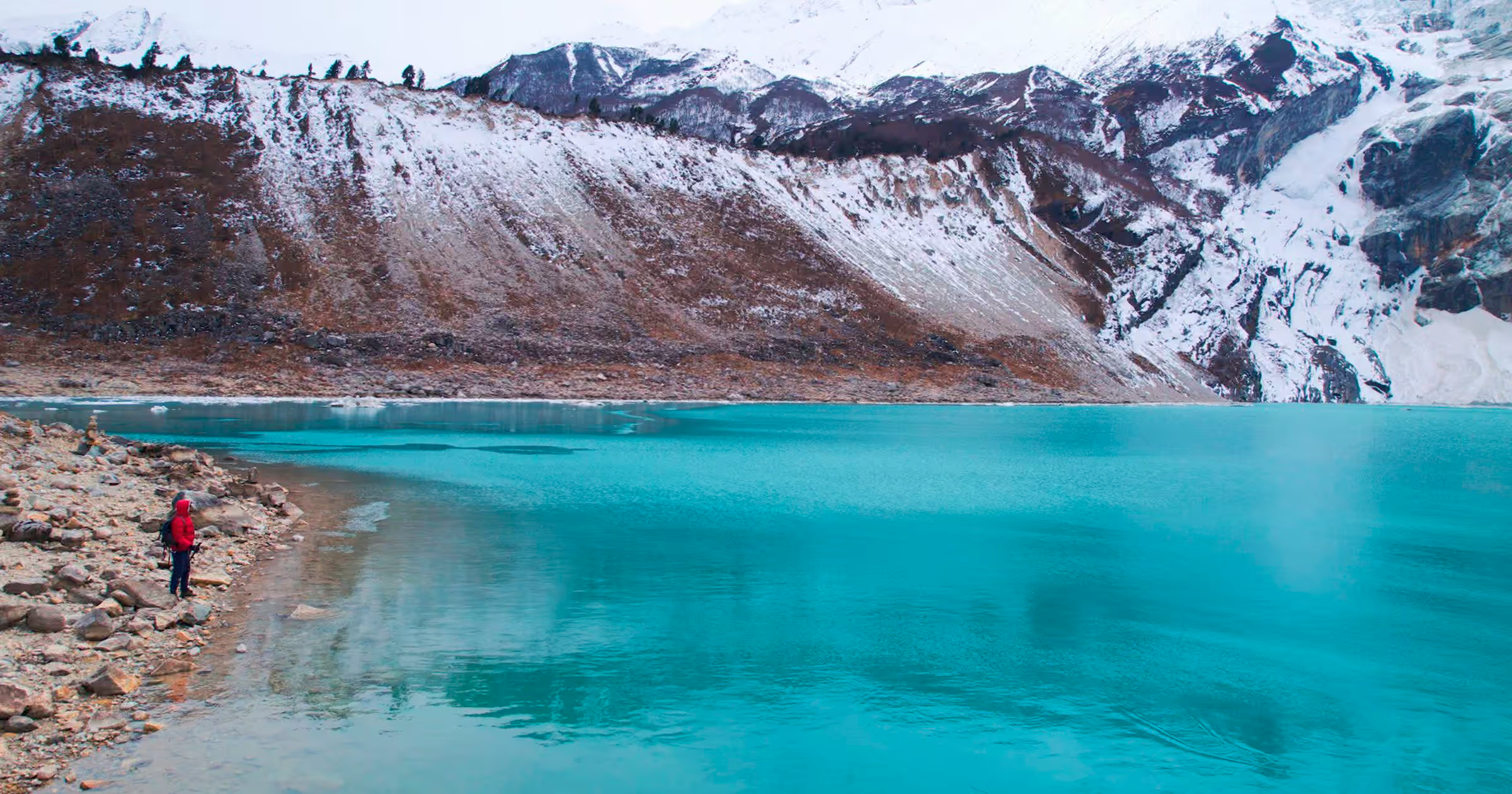
As the lake is formed by the melting of the Manaslu glacier it is one of the most stunning glacial lakes in Nepal. The total distance from Samagaun to Birendra Lake is only around 2.5 km. It is only a 1 to 2 hour trek from Samagaun to reach Birendra (Tal )lake.
Birendra Lake Altitude
Birendra (Tal )Lake is approximately 3,691 (12,110 feet) meters above sea level. This pristine freshwater lake sits only around 150–170 meters higher than Samagaun. Samagaun village is located at an elevation of 3,530 meters which is why hiking to the lake makes you gain an elevation that is useful for acclimatization.
With an altitude of 3691 meters, the crystal-clear Birendra Tal offers you a best view of the surrounding mountain on its surface along with a forest, and most importantly the tranquil and serene environment.
Beauty of Birendra Tal, Nepal
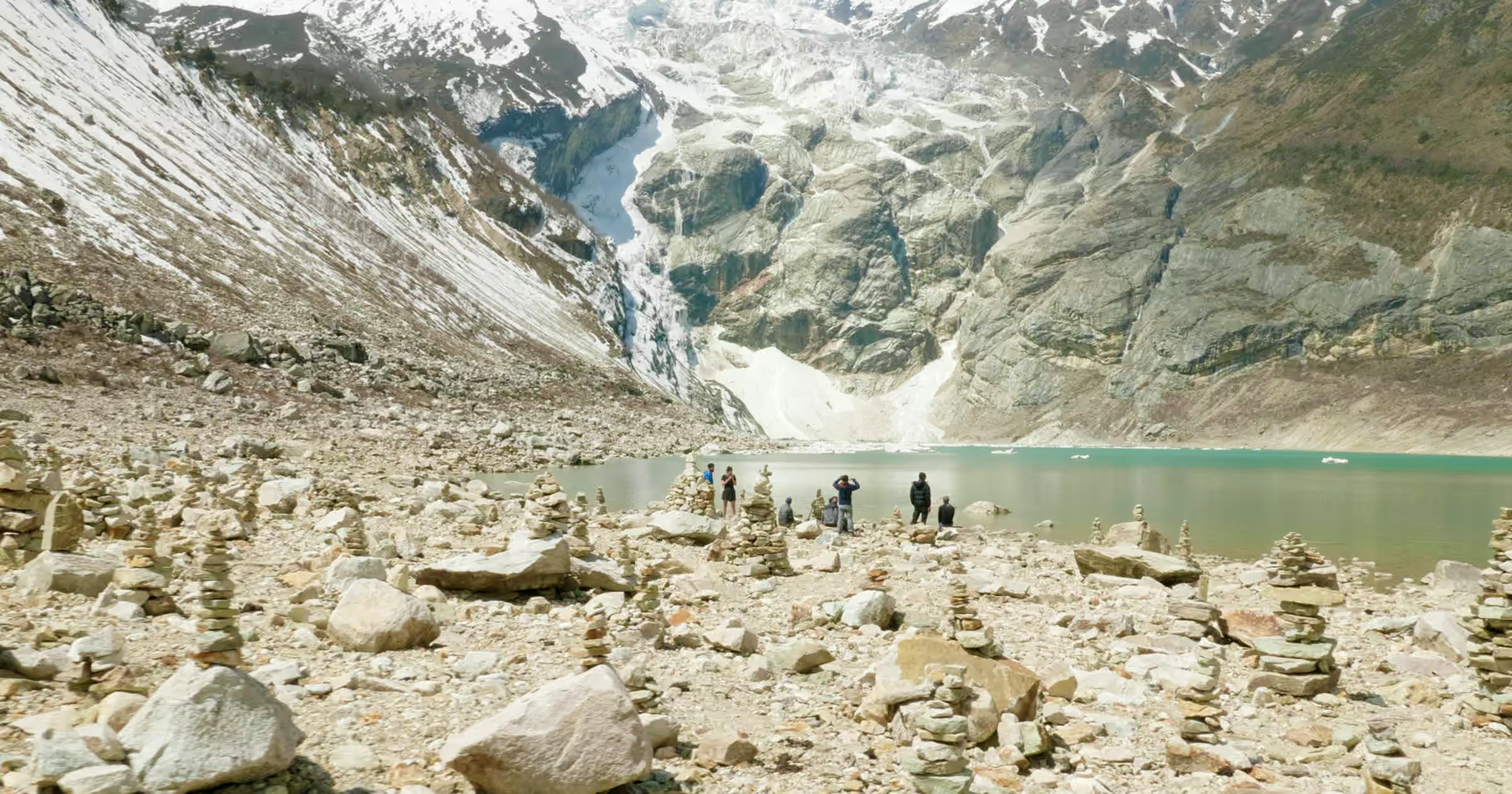
The immediate feature which stands out for the Birendra lake is its color. With a short hike from Samagaun, one can reach the Birendra (Tal )Lake, a glacial wonder at the base of the Manaslu Glacier.
Upon reaching you will encounter fluctuation in lake color like shades of turquoise, green, and deep blue color according to the sunlight and season. This alpine lake is surrounded by a steep glacial ridges which showcases layers of rocks and ice whereas on the other side it opens to remote lands with sparse human settlement.
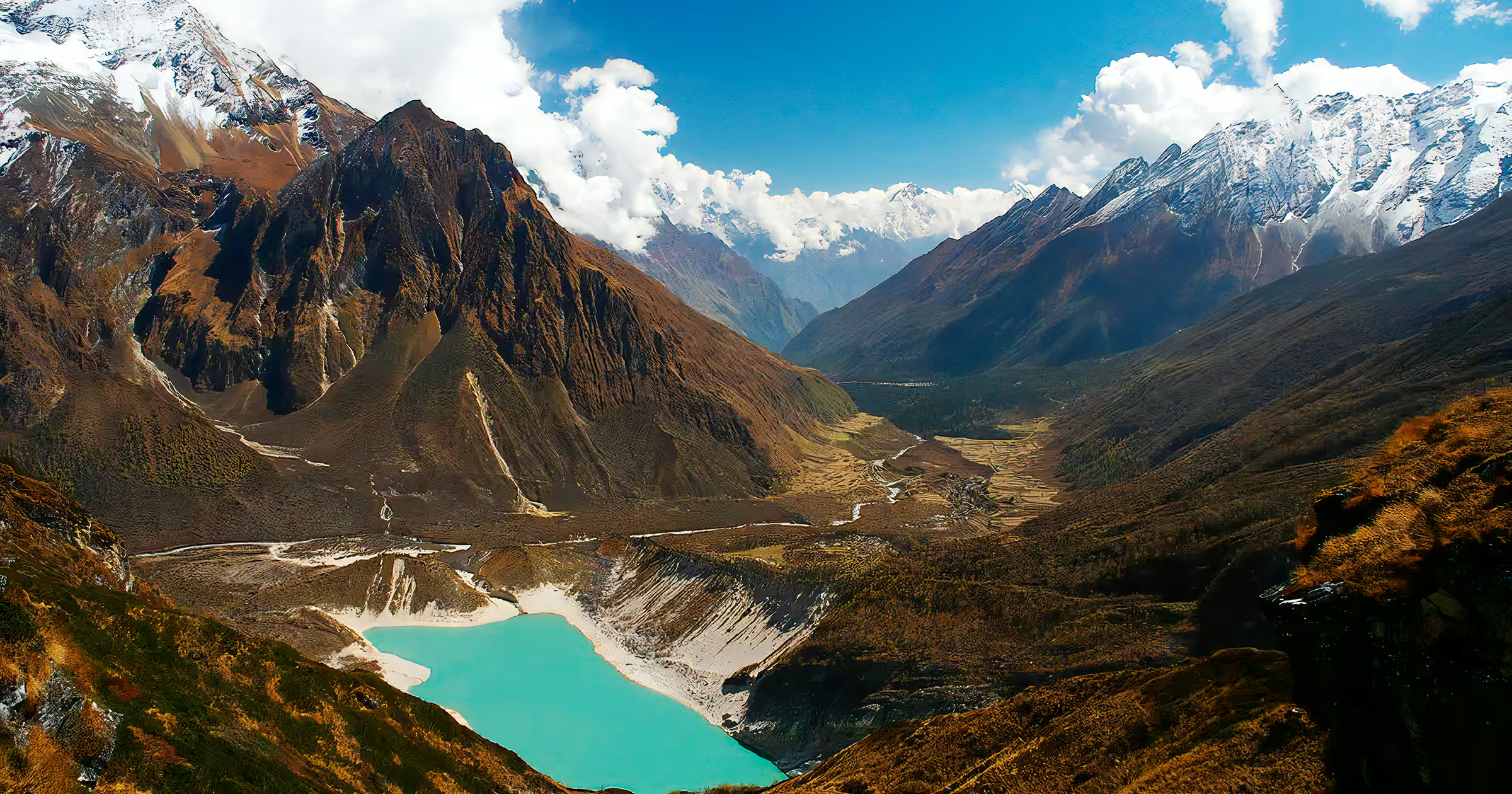
From the shore, you will see grey moraine walls, brown alpine vegetation, snow-capped peaks along with the refreshing turquoise lake which will imprint in your heart in such a way it will last throughout your life.
Why is Birendra Lake Called So?
Birendra Lake or Birendra Tal is called so because it is named after the former King, Birendra Bir Bikram Shah Dev of Nepal. The name was given in an honor of King Birendra as in Nepal, there is a tradition of naming notable or historical places after respected Monarchs.
This glacial lake below Manaslu is formed naturally and acts as a sacred landscape for the local Nubri of Samagaun. In remote mountain regions like Samagaun, Himalayas and water forms like lake, glacier, river, and streams are highly considered as living elements which are connected to spirituality, tradition, and daily life.
Due to this belief it has been well preserved and is one of the least explored alpine lakes in Nepal.
How to Reach Birendra Lake?
You can reach Birendra Tal, a glacial lake in Nepal via trekking from Samagaun. First, you need to reach Samagaun, a small village located in the route of Manaslu Circuit trek.
The typical route outline for Birendra Taal looks like:
- Sama Gaun → Birendra (Tal )Lake → exploration and photography → return to Sama Gaun
If you are in Kathmandu, you can reach Samagaun from following ways:
Kathmandu to Arughat Bazaar
You can catch a bus, or book a shared private jeep from Kathmandu to Arughat. If you booked a public bus or micro, it will cost you NPR 1200 to 1500 per person whereas a shared private jeep may cost you NPR 2,000 to NPR 3,500 according to the seat count. Within 7 to 8 hours, you will reach Arughat Bazaar.
Arughat Bazaar to Soti Khola
As soon as you reach Arughat Bazaar, you will again hop on another bus for Soti Khola. Within 1 to 2 hours, you will get to enjoy the scenic view of the river and surrounding hills and Mount Manaslu ranges until you reach Soti Khola.

Soti Khola to Samagaun
Samagaun is the trailhead of Manaslu Circuit as well as Manaslu Base Camp trek. You will start trekking for longer hours for around 5 to 6 days to reach Samagaun from Sotikhola and you will traverse across stops like:
- Machha Khola (870 m),
- Jagat ( 1340m ),
- Deng( 1860m),
- Namrung( 2630m),
- Shyala( 3500m),
- Pyungen Monastery( 4,000 m),
- Finally to Samagaon (3,530 mm).
Samagaun to Birendra lake (Tal)
As you reach Samagaun or Sama village, you will have your first acclimatization day for both Manaslu Circuit Trekking or Manaslu Base Camp Trek. During the acclimatization day in Samagaun, you will be resting and will also go on a Birendra Tal hike which is formed by the melting of Manaslu Glacier.
Samagaun makes you reach the proglacial lakes of Nepal with around 2 to 3 hours of hike. The lake sits only 1.5 to 2km away from Sama Village, you need to maintain a steady pace as you will traverse in the rocky and uneven path until you reach the lake.
And, be careful near the lake, as the path can be damp, icy or slippery, so wear good grip sturdy boots and check the ground with your hiking poles before you step.
Best Time To Visit Birendra Tal
When you are planning to explore within Manaslu Conservation areas, you should plan a trip around March to May and September to November. This season offers best weather conditions like mild and stable weather, blue skies, moderate temperature which favor longer hour trekking to multiple hours.
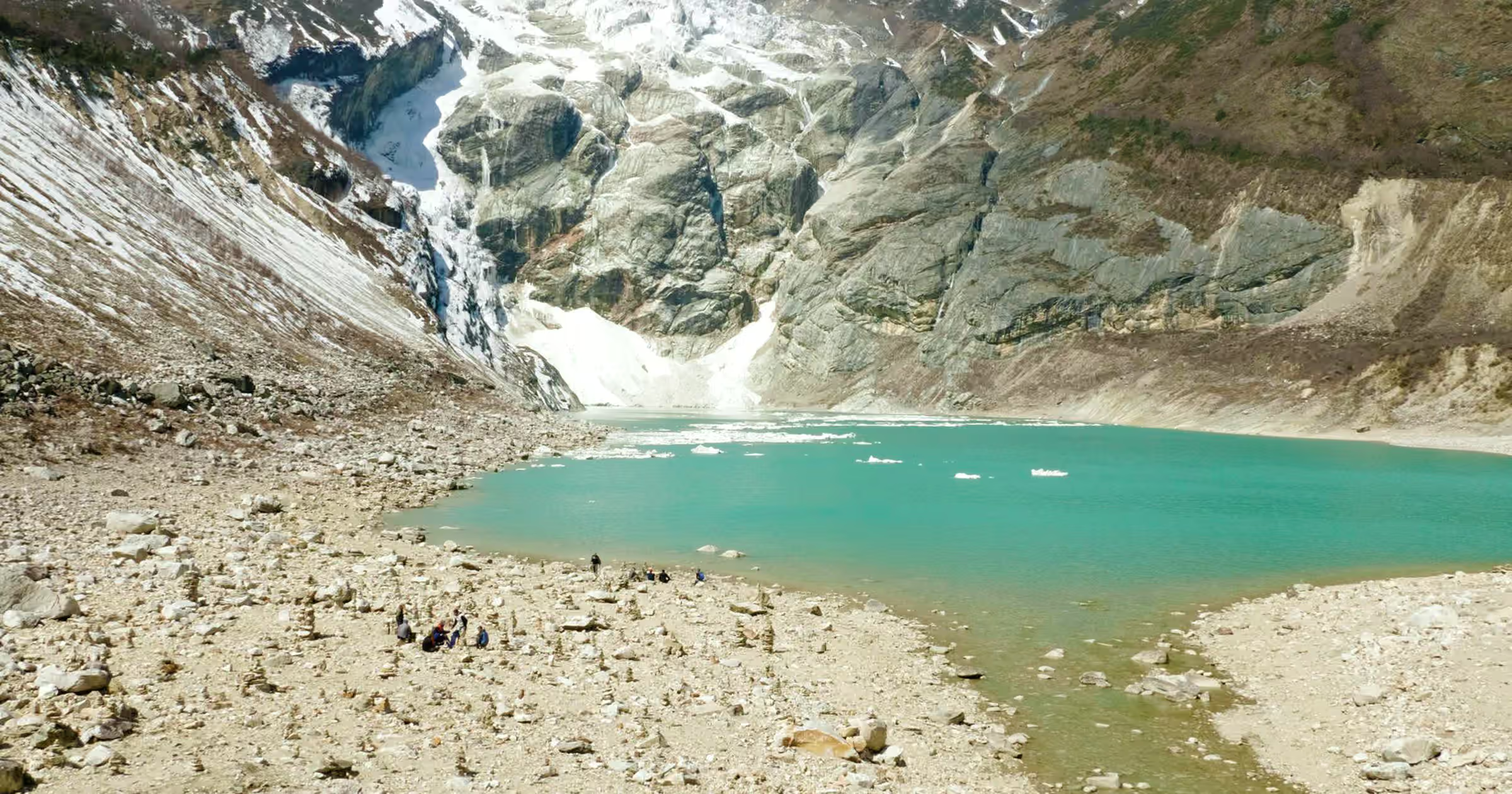
Whereas winter (Dec to Feb) creates a very different experience but the snow and freezing temperatures can make the lake and surrounding trails considerably more difficult. Some upper-area facilities may also have limited operations during the coldest period.
Experienced trekkers can visit in winter with appropriate preparation, but conditions should be checked locally before leaving Sama Gaun. Similarly, in Monsoon(June to August), the heavy rainfall may cause landslides which will block the trekking trails.
Also, you have to deal with mosquitoes, leeches , and other bug attacks so, we suggest you not to plan in this season though it is possible.
Nearby Attraction of Birendra Tal
Birendra Tal is one of the larger landscapes which features the glaciers, mountain viewpoint, yak pasture, and different traditional mountain villages. Some of the attraction which you should not miss when on a Birendra (Tal )lake hike are mentioned below:
Manaslu Glacier and Mountain Views
You will definitely get the views of Manaslu glacier as you stand on the shore of Lake. It is only 500m north from the lake and can be reached within 10 to 15 minutes.
We suggest you to only enjoy the glacier via eyes, do not attempt to walk over the ice pinnacles and crevasses. You can also enjoy some time mesmerizing the beauty of surrounding mountain views of:
- Mount Manaslu,
- Simnang Himal,
- Manaslu North,
- and Naike Peak
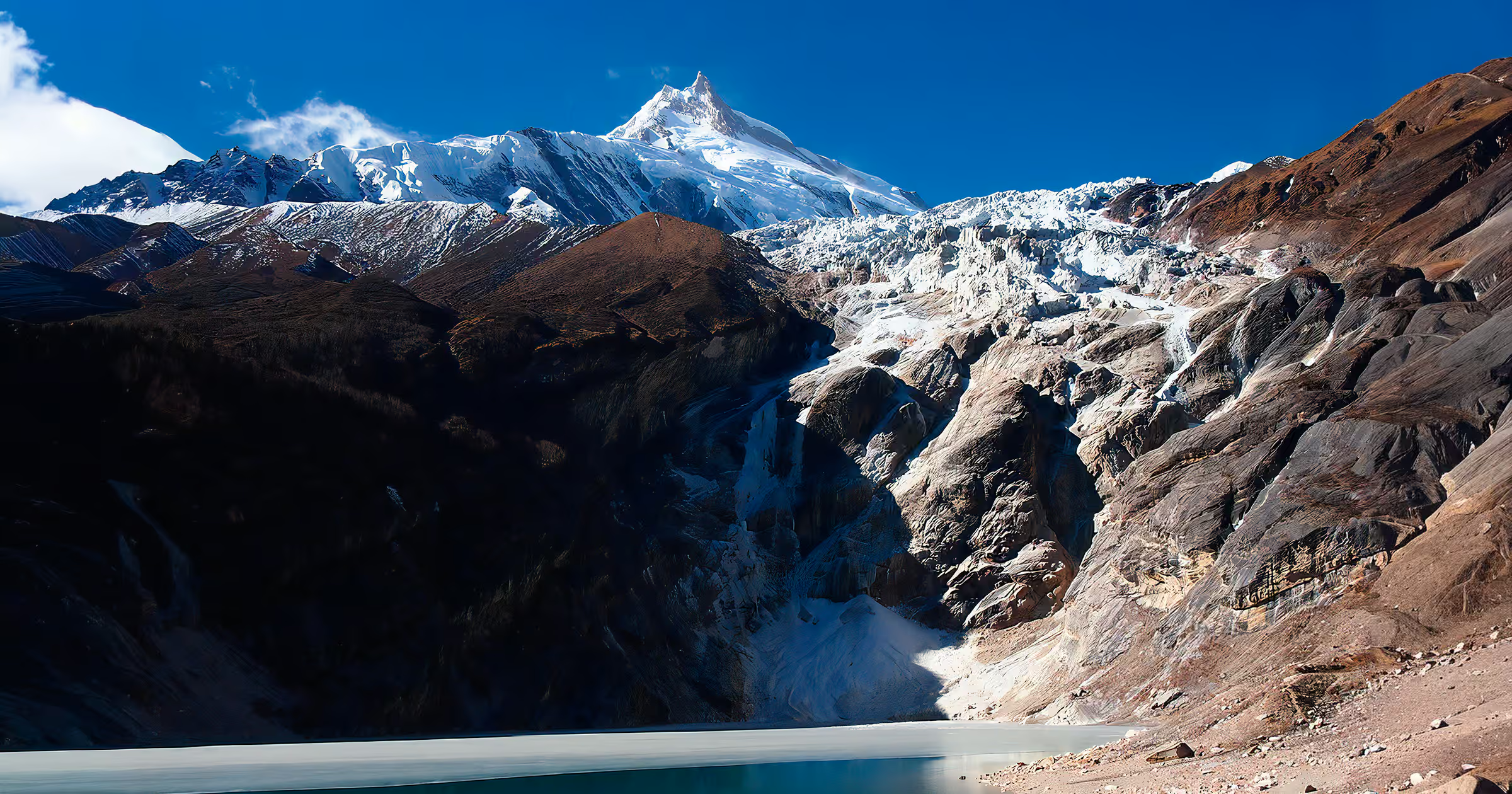
Rocky Alpine Terrain
You will be exposed to the rocky landscape of the Upper Manaslu region. The sparse vegetation of the high altitude makes you encounter rock, low alpine vegetation which you will barely see in any other region.
Wildlife and Natural Beauty
As these alpine lakes fall inside the Manaslu conservation area, you will occasionally encounter one of the rare Himalayan wildlife. Though sighting of them is never guarantee, you will be considered lucky if you encounter:
- Snow leopard,
- Musk deer,
- Himalayan tahr,
- Blue sheep,
- Himalayan serow,
- Marmots
If you are bird enthusiasts, you will get to observe them in their habitat.
Kermo Kharka (Yak Pasture)
Kermo Kharka is one of the traditional high-altitude grazing areas which is located around 3km northeast from the lake. It is situated at an elevation of around 3,900 to 4,000 m where you will encounter herders grazing their yak from late Sep to early October.
You can reach it within 2 hours of walking from Birendra Taal. This pasture land provides you a best view of South Manaslu where you can spend some quiet time for reflection, or you can just enjoy the beauty of wide lands with a backdrop of hills and mountains.
Sama Gaun Village
Sama Gaun also known as Sama Village is a small traditional Gurung village where you will be sleeping after exploring Birendra Taal. This is one of the last substantial villages you will encounter before you step into the high glacial region of Manaslu.
This small village is beautifully decorated with stone and wooden homes which interlink with each other via narrow alleys. Here, you can even participate in the evening Tibetan Buddhist prayer ceremonies.
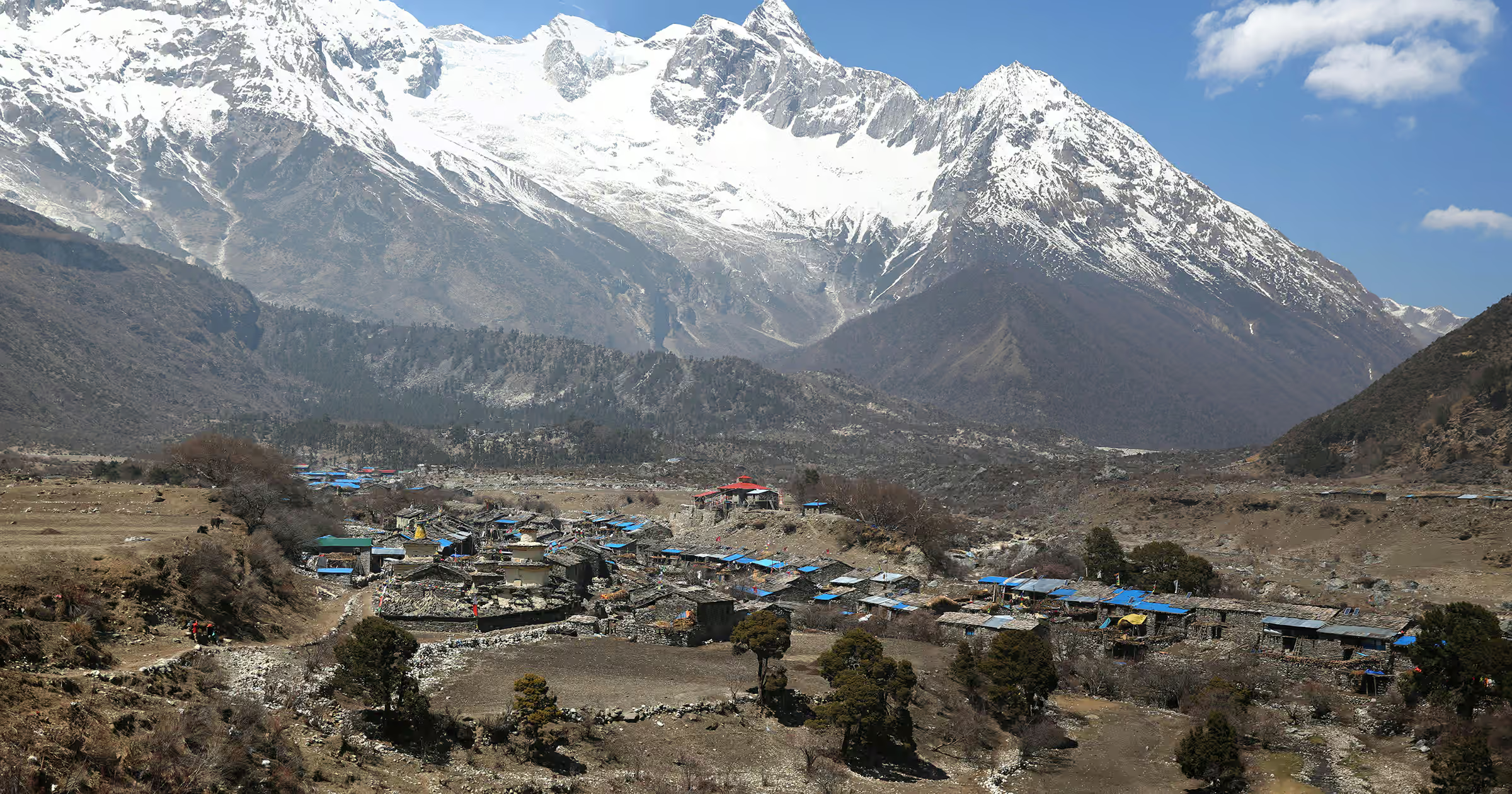
Sama Gompa
You will encounter Sama Gompa also known as Sama monastery(3,600m) from far away with its fluttering prayer flag as it is located on a rocky knoll. We suggest you wake up early in the morning and attend a puja ceremony held in this small gompa and spend some time watching monks doing their rituals and listening to chants of Tibetan mantras.
Pungyen Gompa
Pungyen Gompa, a remote nunnery is one of the most rewarding cultural and scenic side trips which lies at 4km north from Birendra Taal. With an elevation of 4,000 m it offers spectacular mountain scenery and offers a different experience from Birendra Taal.
Dharmasala Ridge
Dharmasala, also known as Larkya La Phedi, is the high-altitude settlement which is only 2km north of Birendra Taal. This is not a casual afternoon excursion from Birendra (Tal )Lake.
Instead, Dharmasala belongs to the later section of the Manaslu Circuit and becomes relevant when continuing toward Larkya La.
Samdo Village
If you walk 3 to 4 hours from Birendra(Tal ) lake you will reach this small settlement named Samdo village. It is located 6km north of Birendra Tal and lies at an elevation of 3860 m above sea level.
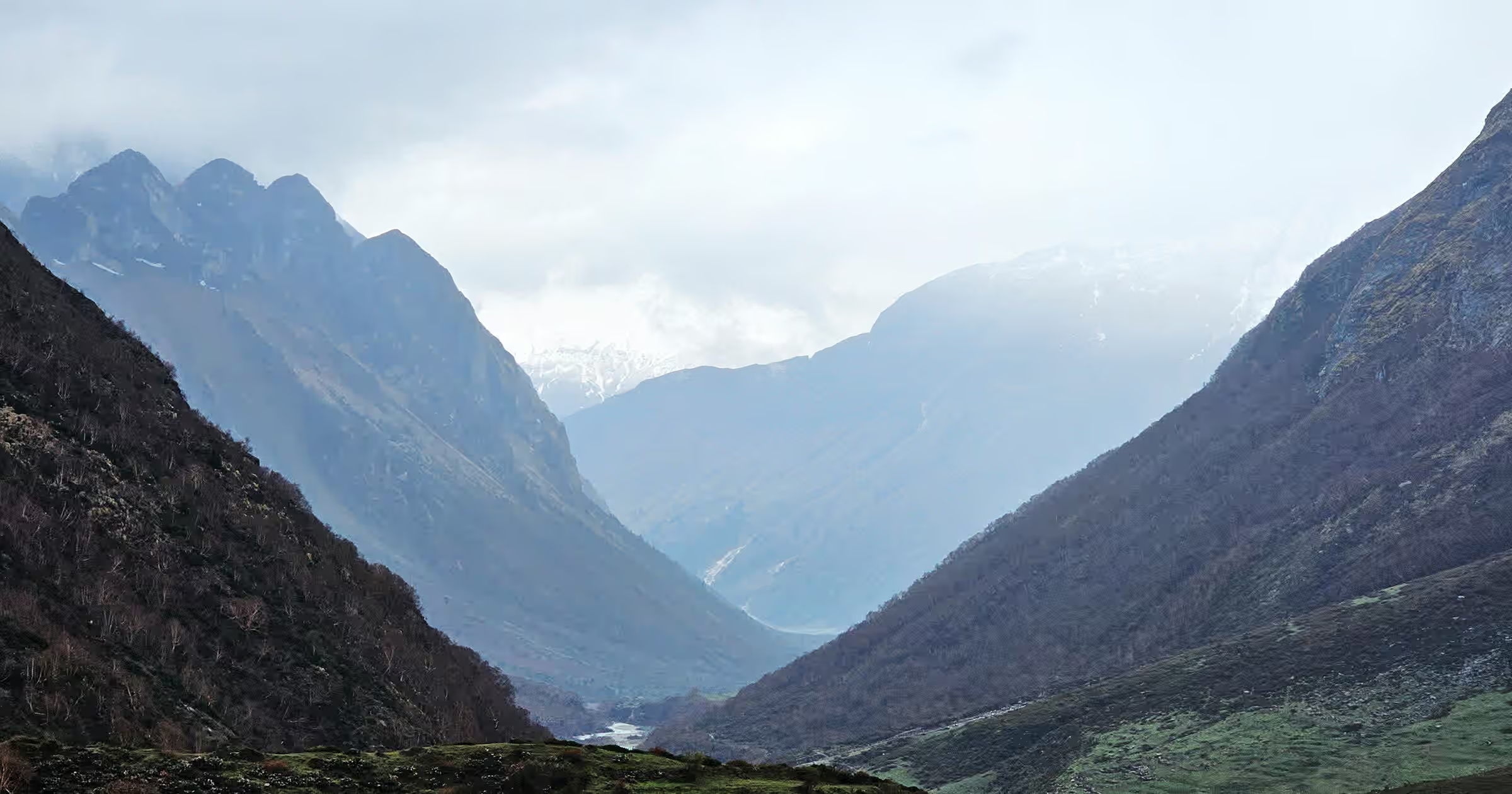
It is also situated at the border of Nepal and Tibet, you can even get the view of Tibetan Pastures and mountain pearls like Nyak kang. Although Samdo is not a quick side trip from Birendra(Tal ) Lake, it is an important nearby attraction for trekkers continuing around the Manaslu Circuit.
Things to do Near Birendra Tal
Early Morning Hike
If you begin your hike before sunrise, you will encounter a calm lake and when the first rays of sun hits its surface it acts like a mirror and offers the perfect reflection of Manaslu glacier and surrounding moraines. We suggest you spend some time there and enjoy the crisp mountain air and witness how lakes transform from deep teal in the morning to turquoise in daylight.
Starting early gives you enough time to enjoy the surroundings without rushing back to Sama Gaun.
Photography
Birendra Lake is an excellent location for landscape photography. The strongest subjects you can capture behind your lens are:
- Turquoise glacial water
- Manaslu and surrounding peaks
- Glacial formations
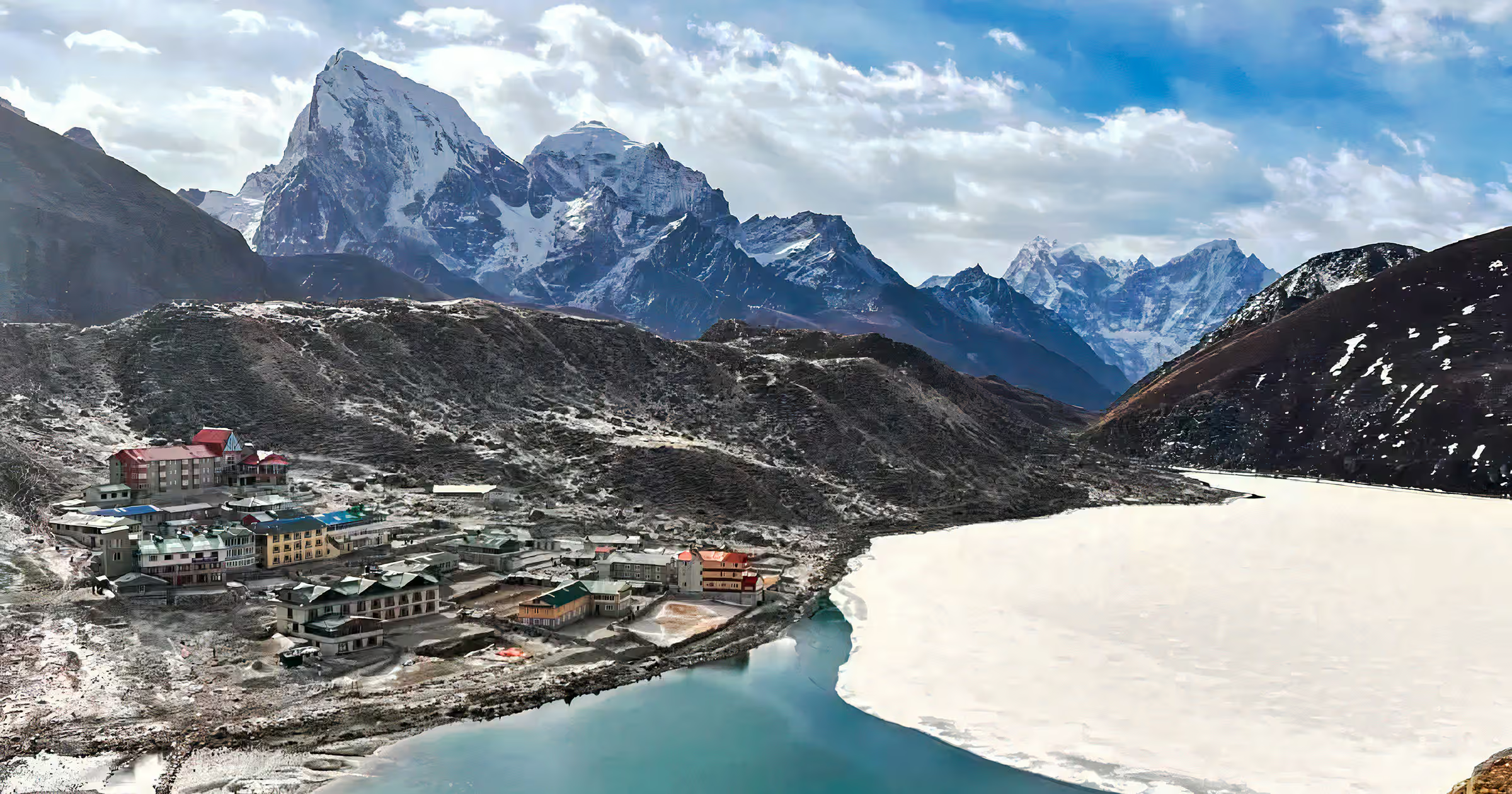
- Rocky alpine slopes and yak pastures
- Prayer flags and Buddhist cultural elements
- Reflections on calm water
- Mountain light during sunrise
We suggest you capture the east side of the lake as soon as it gets its first beam of sunlight.
Short Acclimatization Hike
This is perhaps the most practical reason to visit Birendra Tal. A hike from Sama Gaun to a higher elevation and back allows trekkers to spend time walking above their sleeping altitude without having to spend the night higher.
Every trekker, trekking to higher regions must follow the simple principle of gaining altitude during the day and returning to a lower sleeping elevation. Trekking to Birendra Taal in day time and sleeping at Samagaun makes you follow this principle.
Witness Sunset
Sunrise can be one of the most memorable experiences around Birendra (Tal )Lake as you can watch the transition into deeper blue from bright turquoise color. The first light gradually reaches the surrounding peaks, turning the cold grey landscape into layers of gold, white and blue.
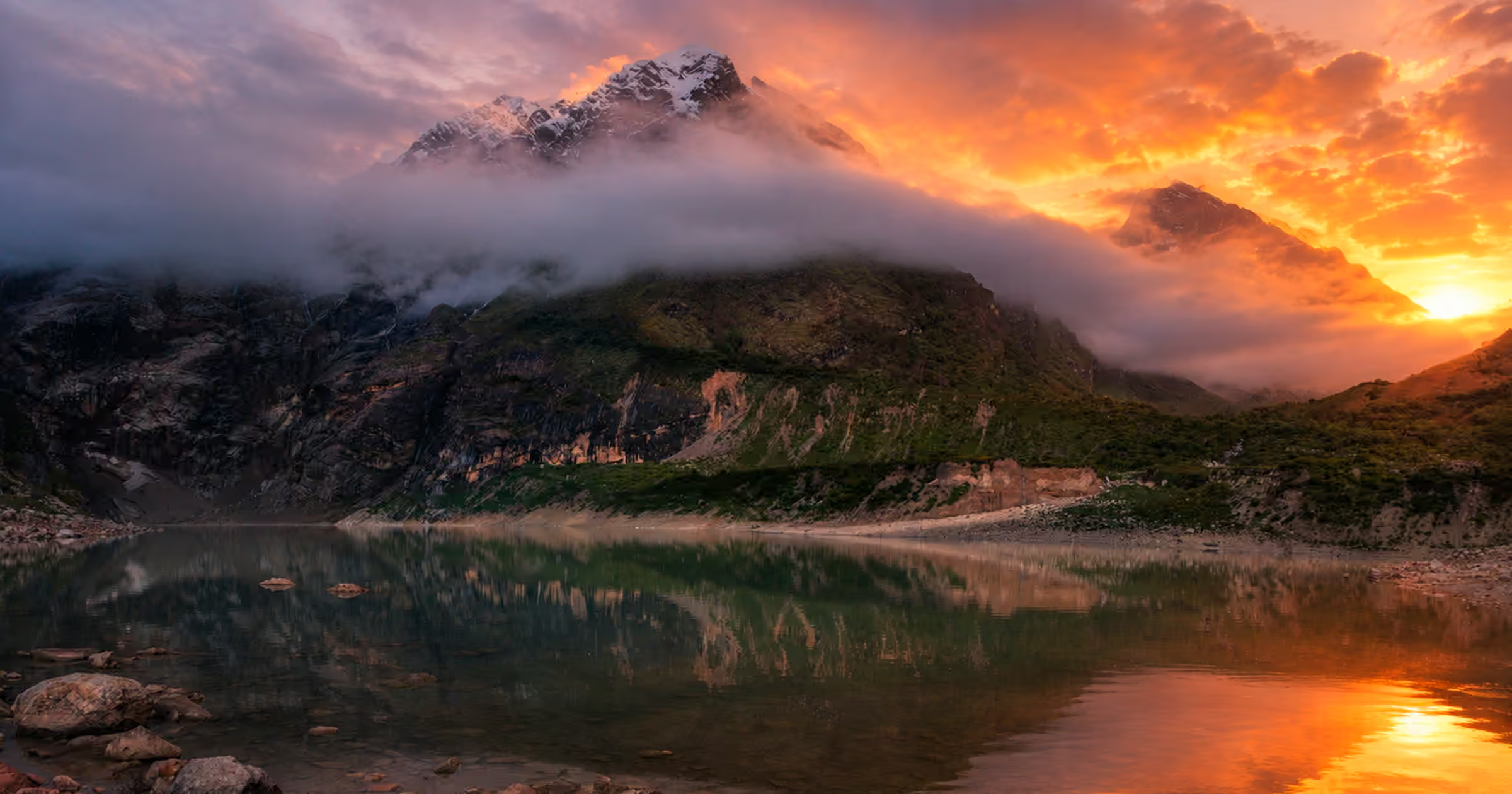
However, sunrise hikes to Birendra Taal of Manaslu require additional caution. Darkness, freezing temperatures and icy sections makes the trail more difficult.
We suggest you only visit with your guide when planning at dawn.
Practical Travel Tips for Birendra Lake
- Consider Birendra (Tal )Lake far more than a sightseeing opportunity only.
- Focus on slow and steady pace rather than taking it as a marathon.
- Bring a reusable bottle or hydration system and focus on drinking enough water.
- Make sure you have enough clothing as the lake feels cold due to its elevation and exposure.
- Make sure you wear sunscreen, sunglasses as the high altitude offers intense sunlight.
- Bring trekking shoes with good grip as you will be walking in rocky and uneven sections.
- Use trekking poles when traversing in loose rocky ground.
- Download important information regarding the trail beforehand and do not depend on mobile connectivity at higher altitudes.
- Carry enough Nepalese rupees as higher altitude regions of Manaslu’s teahouses and homestays only accept cash.
- Pack your waste in your backpack and do not pluck any vegetation or poke wildlife when spotted.
- Always ask permission before photographing people, monasteries or religious ceremonies.
- Walk clockwise around religious monuments such as mani walls and do not touch prayer objects unnecessarily.
- Always make sure you are traveling with an experienced guide and book them from a certified trekking agency like Awesome Holidays Nepal.
- Always walk on designated trekking trails and near eyesight for your group or trekking leaders.
Planning to Explore Birendra Lake Nepal in 2026?
Or Call/Message on WhatsApp +977 98434 13619
- If you feel unwell, do not continue climbing just because you are near your destination. Otherwise you will suffer from life threatening risk like HAPE or HACE.
- Have respect towards locals, their practices and beliefs.
- Always eat in the same teahouses where you are planning to stay overnight as remote homestays and teahouses earn more from food than accommodation.
- Make sure you check all the required documents and permits before stepping on the trailhead.
Conclusion
One of the most rewarding short side trips to Birendra lake on the Manaslu Circuit trek allows you to witness the vivid glacial water, extreme solitude, and close up views of snow-capped mountain peaks and surrounding glacial moraines. This high altitude glacial lake accessibility from Samagaun makes it an ideal acclimatization hike.
Instead of spending the whole day in bed, we suggest you take some rest and begin a hike to this lake so that your body can adapt for the upcoming high altitude trekking days. Likewise, plan your trekking itinerary during spring and autumn and make your visit to this Birendra Taal in Nepal one of the memorable parts of your trekking journey in 2026.
If you are ready to experience the turquoise beauty of these alpine lakes in Nepal, make sure you contact Awesome Holidays Nepal for a more meaningful and safer trip.
FAQs
Expand AllWhere is Birendra Lake located?
Birendra (Tal )Lake is located beneath the shadow of Mount Manaslu in Gorkha District, within the Manaslu Conservation Area of northern Nepal.
Is Birendra Lake and Birendra Tal the same?
Yes, Birendra Lake and Birendra Tal are the same.
What is the altitude of Birendra Lake?
Birendra (Tal )Lake has the altitude approximately 3,691 (12,110 feet) meters above sea level.
How far is Birendra Lake from Samagaun?
Birendra (Tal )Lake is 1.5 to 2km far away from Samagaun (Sama Village).
How long does it take to hike from Samagaun to Birendra Lake?
It takes around 2 to 3 hours of hike to reach Birendra (Tal )Lake from Samagaun.
Can beginners hike to Birendra Lake?
Yes. Beginners with reasonable fitness can usually hike to Birendra (Tal )Lake.
Is Birendra Lake part of the Manaslu Circuit Trek?
Yes. Most trekking agency include hike to Birendra (Tal )Lake in their Manaslu Circuit Trek itinerary.
Do I need a guide for Birendra Lake?
Yes, hiring a guide is mandatory in remote trekking trails like Birendra (Tal )Lake of Manaslu region.
Do I need a permit for Birendra Lake?
Yes. You will need Manaslu Restricted Area Permit (RAP)and Manaslu Conservation Area Permit (MCAP) for Birendra (Tal )Lake.
Is Birendra Lake in a restricted area?
Yes, Birendra (Tal )Lake is in a restricted area within the Manaslu restricted trekking region.
What happened at Birendra Lake in 2024?
On April 21, 2024, a massive ice-debris avalanche fell from the Manaslu Glacier into Birendra (Tal )Lake which resulted in the flash flood in Budhi Gandaki river.
Is Birendra Lake safe after the 2024 flood?
Yes, but you need to follow current local safety guidance and check conditions before visiting.
What is a GLOF in Birendra Lake?
A GLOF refers to Glacial Lake Outburst Flood which occurs when there is a sudden release of water from glacial lake. A GLOF in Birendra (Tal )Lake was caused when a massive chunk of ice and snow avalanche crashed into the Birendra lake. This causes a giant wave surge which makes the overflow of lakes water casing flood in Budhi Gandaki river.
Why is Birendra Lake turquoise?
The fine glacial rock particles which are suspended in its meltwater of Birendra (Tal ) Lake scatter sunlight in such a way that it create its distinctive color of Turquoise.
Can you swim in Birendra Lake?
No. It is not recommended to swim in Birendra (Tal )Lake.
Why is it called Birendra Lake?
It is called Birendra (Tal ) Lake because it is named after King Birendra of Nepal which is locally known as Birendra Tal.
What is the best time to visit Birendra Lake?
Spring (March–May) and autumn (September–November)is the best time to visit Birendra (Tal )Lake.
Is Birendra Lake good for acclimatization?
Yes, Birendra Lake good for perfect acclimatization hike.
Can I camp near Birendra Lake?
Camping directly beside Birendra Lake may be restricted or unsafe. We suggest you to camp nearby Samagaun.
What time of day is best for Birendra Lake photos?
We suggest early morning for photography because the light is softer and you can see the clear reflection of mountain, and the surrounding peaks on the water surface.
Related blog posts
Discover a choice of tourist destinations loved by most of our visitors. Whether you're on a jungle safari to spot rare animals or walking through a world heritage site, these well-planned itineraries cover the major highlights of Nepal.

 call an expert at: