
Nepal Plane Crashes: Why Does Nepal Suffer So Many Air Disasters?

 Sristi Adhikari
Nepal Plane Crashes have repeatedly captured global attention, raising serious questions about aviation safety. Every year thousands of travel enthusiasts visit Nepal to explore its rich cultural heritage, breathtaking mountain landscapes, vibrant traditions, and for world-class trekking adventures.
From fatal crashes in remote Himalayan region to accidents near Kathmandu, Nepal Plane Crashes continue to highlight the unique risks faced by pilots, airlines, regulators, and both domestic as well as International passengers. Nepal Plane Crashes are not only influenced by bad weather or pilot error.
Instead, it involves a combination of rugged Himalayan geography, rapidly changing weather conditions, aging infrastructure, operational challenges, and regulatory shortcomings. As Nepal tourism is dependent on domestic air travel, the respected authorities should focus on improving Nepal aviation safety as a national priority.
In this article, we are going to have a look at the reason behind the Nepal plane crashes and Nepal aviation safety in detail.
Why do Planes Crash in Nepal?
Planes crash in Nepal quite often in recent decades. The sole gateway to Nepal, Tribhuvan International Airport is also ranked as the most technically demanding platform on the earth and the credit goes to a ridgeline approach of the Kathmandu valley. Nepal has suffered from 42 deadly plane crashes since 1964. Planes crash in Nepal is initiated mainly by following factors:
Challenging Mountainous Terrain
Nlepal is a small and beautiful country which is home to eight of the world’s fourteen highest mountains. The airports are either located in deep valleys, remote hills, or in mountainous ridges which are mostly covered by heavy clouds.
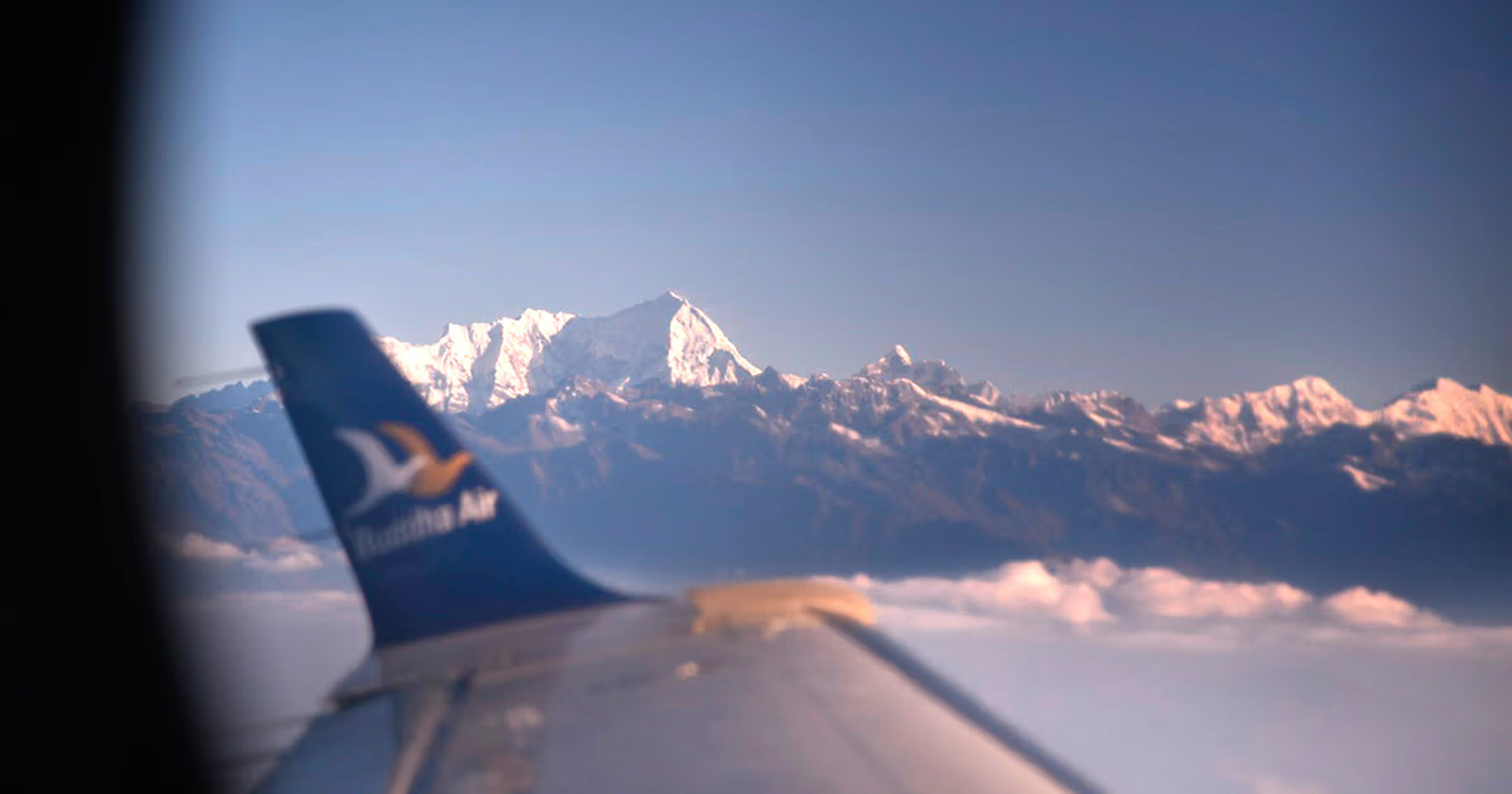
Due to this challenging terrain, within a second the weather fluctuates so rapidly that it affects the flow of air in increased intensity which makes it difficult to navigate. The pilots have to suffer from:
- Sharp turns during approach
- Steep descents
- Visual flying in mountainous terrain
- Limited escape routes during emergencies
Unpredictable Weather Conditions
Weather is another major reason behind Nepal Plane Crashes. Airports like Lukla are highly influenced by rapidly changing mountain weather which make it difficult to operate the airstrip. Conditions can change within minutes due to:
- Dense fog
- Strong mountain winds
- Low visibility
- Sudden cloud formation
- Heavy Rainfall or mist.
Tabletop Runways
Being a mountainous country, it lacks flat terrain so most of the runways including the main gateway to Nepal, TIA also has tabletop runways with:
- Short runways
- Sloped landing strips
- Narrow valleys
- Limited navigation equipment
They are constructed in such a way it has sheer drops in both ends which is why it offers difficult operating conditions, requiring specially trained pilots. As a result most of the Nepal plane crashes happen either at the time of landing or take off.
Ageing Aircraft
Almost every plane flying within the sky of Nepal is 20 years old. Nepal airlines have not invested much in the upgrade and maintenance of the air fleet due to high import costs and rugged operational demands.
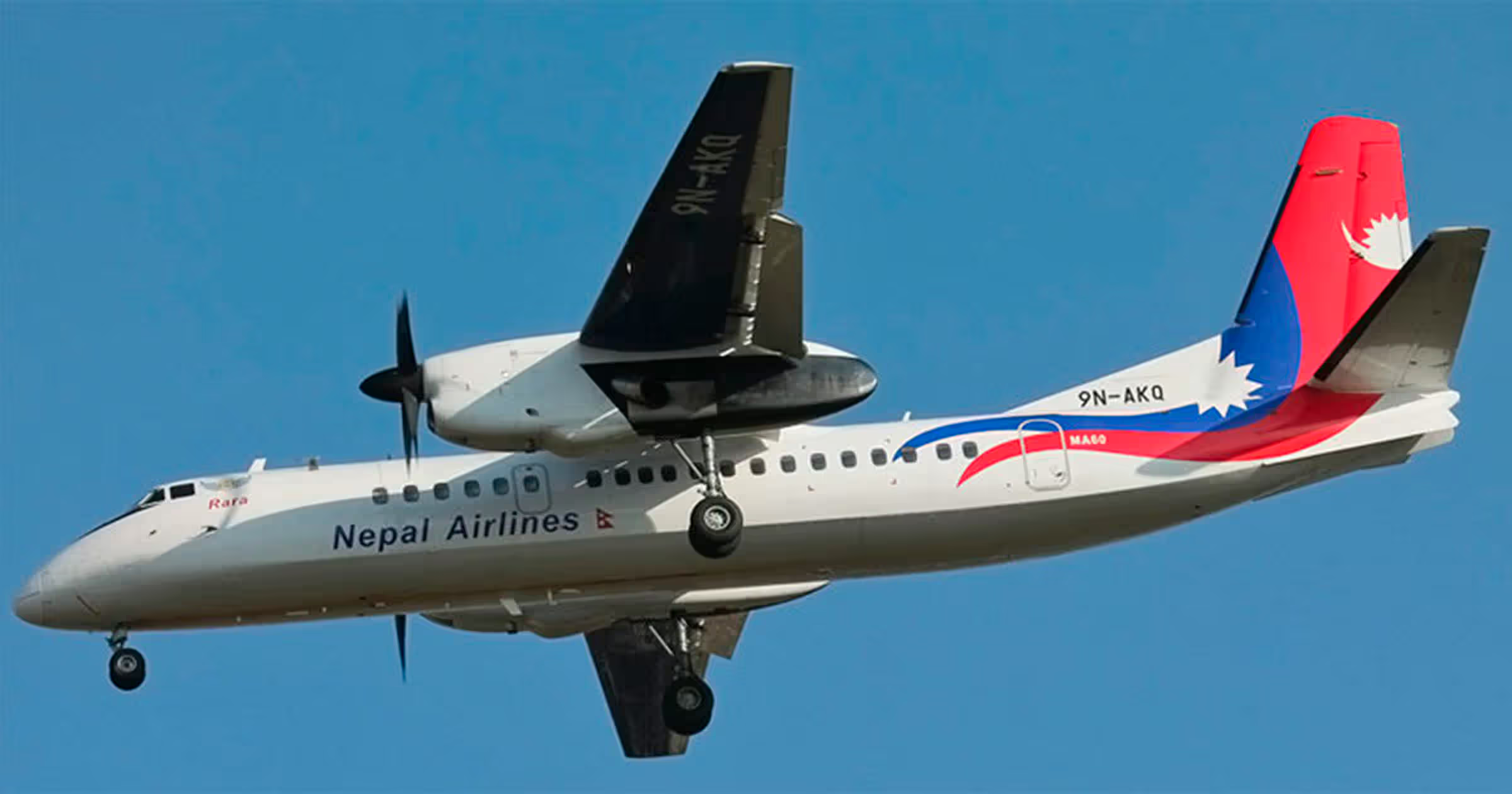
This is why it could not follow the safety protocols and European Union banned Nepal airlines to fly in the Sky of Europe.
Dependency on Visual Flight Rules
Several remote airports such as Lukla airports, Jomsom airport, etc also lack advanced landing systems. As a result, pilots frequently rely on Visual Flight Rules (VFR), meaning they must maintain constant visual contact with terrain while taking full responsibility of obstacle and terrain clearance. When weather changes unexpectedly, safe navigation becomes much more difficult and results in Nepal Plane Crashes.
Crew Management and Training
Pilots need to receive sufficient training to fly in the sky and so is done by Nepal Pilots. The Nepal plane crash es resulted due to poor decision making of the pilots and co-pilots.
Yeti Airlines tragedy of 2026 and Saurya Airlines crash in 2025 are the result due to human errors along with systemic safety shortcomings, challenging geography, and regulatory gaps.
Regulation and Oversight
Nepal aviation services and regulation are handled by a single entity, CAAN. Unlike other countries, Nepal lacks separate authorities for regulation of airlines and airport management systems. This results in corruption and lack of interest by concerned authorities for safety protocols.
Planning a Nepal Trip in 2026?
Or Call/Message on WhatsApp +977 98434 13619
Nepal Air Crash History
Nepal reported around 19 Nepal Plane Crashes in its 24 years of flying history. Nepal air Crash is due to treacherous terrain, unpredictable Himalayan weather conditions, and use of an aging plane without any maintenance. Lets go in detail regarding Nepal air crash history so that it will help you understand why aviation safety remains under intense scrutiny.
- On July 31, 1992, Thai Airways Flight 311 crashed in Langtang National Park which is located in the north of Kathmandu valley. It took the lives of all 113 passengers and the accident happened due to the air traffic controller’s poor English and captain’s lack of awareness towards the situation.
- A Pakistan International Airlines Flight crashed into the Mahabharat range before landing at TIA on September 28, 1992. It killed 167 people on board, when pilots initiated their descent too early.
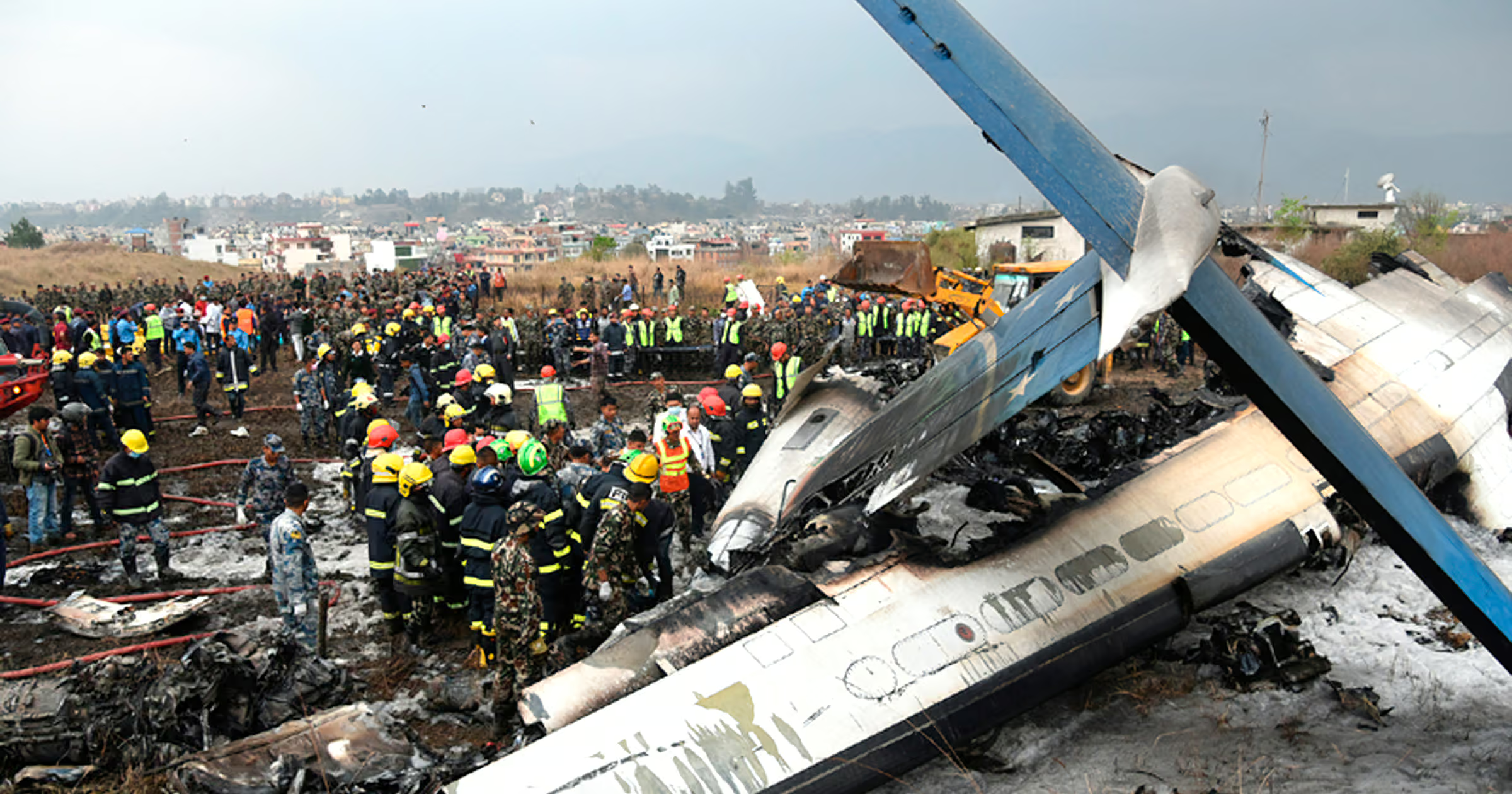
- A Bombardier Q400 operated by US-Bangla Airlines (UBG) crashed at the time of landing at TIA on March 12, 2018. The crash took the life of 51 out of 71 passengers and it happened due to pilot disorientation and a loss of situational awareness of the flight crew.
Domestic Plane Crash in Nepal since 2020
Tara Air Twin Otter Crash (2022)
When Tara air’s DHC-6 Twin Otter flew from Pokhara airport to Jomsom airport, it lost contact with air traffic shortly after takeoff, it collided near a mountainside of Thasang, Mustang and suffered from a major accident on May 29, 2022. This Nepal Plane Crashes resulted in the death of 22 passengers on board.
Yeti Airline Crash in Pokhara (2023)
On January 15, 2023, Yeti Airlines departing from Kathmandu crashed at newly opened Pokhara International airport. It took the lives of all 72 passengers on board and the airplane got into an accident when it fell into the gorge of Seti Gandaki River.
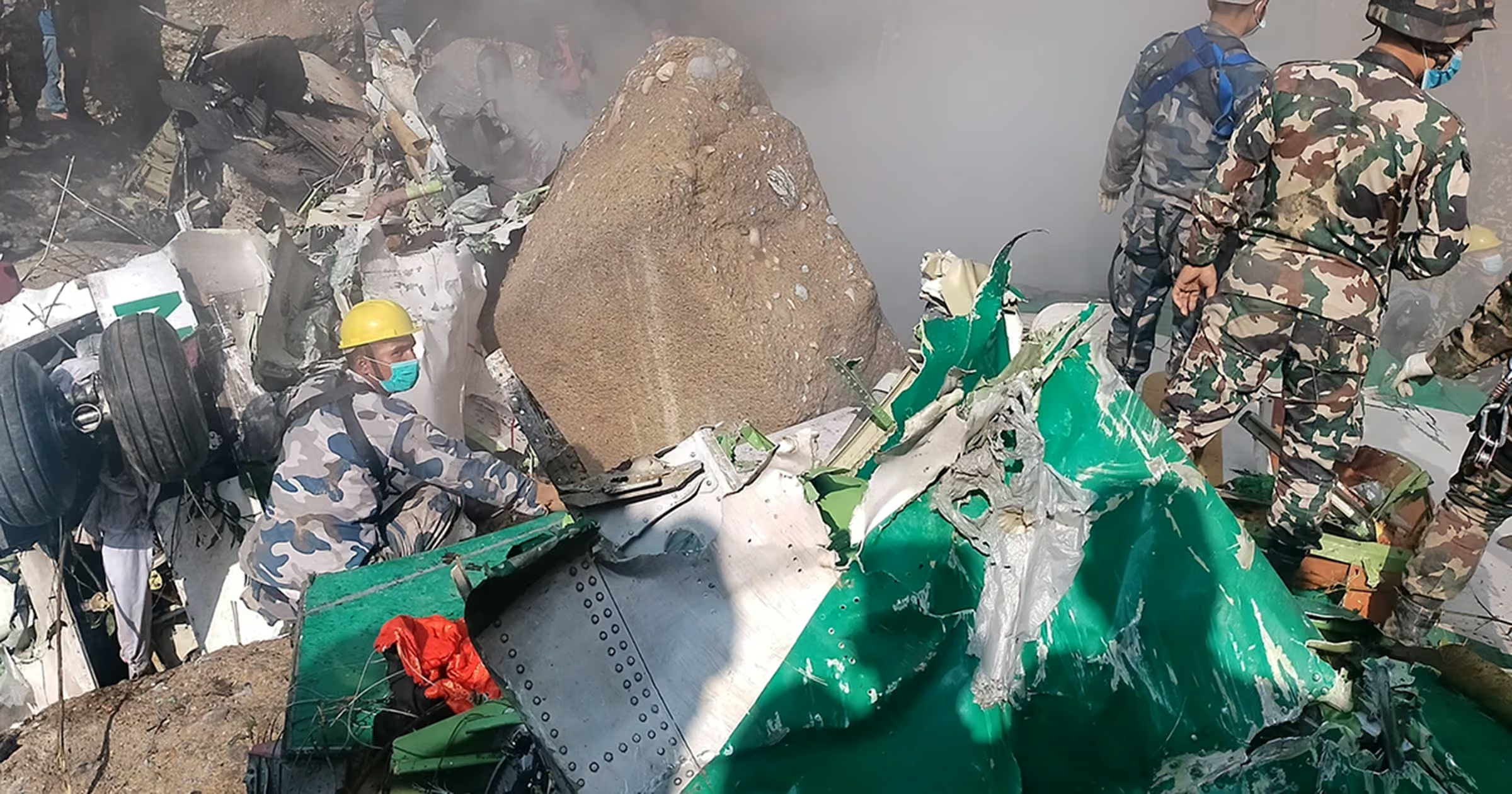
The investigation reported that when the Captain accidentally moved both conditions levers to feather position instead of extending the flap for landing resulting in the cut off of the engine thrust. Since 1992, it has become one of the deadliest Nepal plane crashes ever faced.
Saurya Airlines CRJ200 Crash (2024)
On July 24, 2024, Saurya Airlines crashed shortly after takeoff in Kathmandu. It crashed when it lost control at the time of take-off, when it was flying to Pokhara for maintenance. The flight was non-scheduled and took the lives of 18 people out of 19 on board.
Plane Crash Nepal 2026: The Latest Aviation Incident
When Buddha aircraft was landing at Chadragadhi airport from Kathmandu, the plane overshot the runway and plunged into the grassy terrain of the gorge on 2nd January, 2026. There were 51 people on board and out of them 7 including the co-pilot were injured and others were found safe.
The plane skidded off the runway as it touched down the runway much farther than intended. Although the accident was very different from previous catastrophic accidents, this repeated event renewed debate over runway safety, operational procedures, and emergency preparedness in Nepal’s aviation sector.
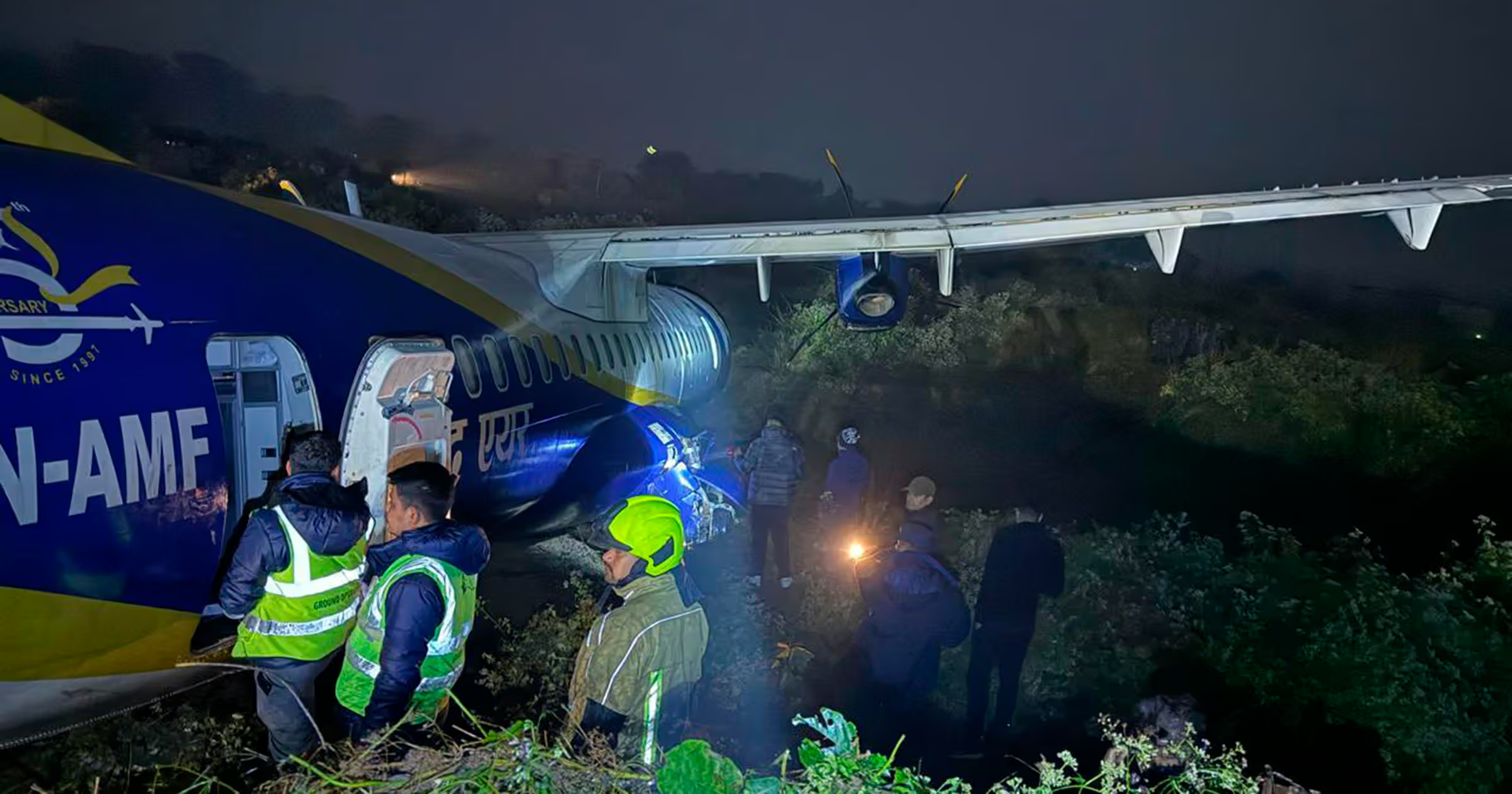
The Nepal Plane Crash 2026 incident at Bhadrapur airport could have turned into taking the life of 51 innocent ones so, responsible authorities of the CAAN should focus on ensuring that aviation safety. As it requires constant improvement so that accidents may become survivable.
What is Being Done to Enhance Nepal Aviation Safety?
Nepal aviation safety is slowly improving and has been focused as a long-term objective by the Civil Aviation Authority of Nepal (CAAN), a government aviation organization. To reduce, Plane Crash in Nepal, following things are being followed:
- Strict enforcements like banning flight during dangerous weather conditions and checking clearing pads before take off.
- Better training for pilots and other crew members.
- Mandatory pilot proficiency checks.
- The aircraft will only fly after passing the safety management system (SMS).
- Greater monitoring and long term implementation of National Aviation Safety.
- Air traffic control and technology is getting upgraded along with the Collision Avoidance System (ACAS).
- Airport infrastructure also includes enhanced weather forecasting.
- Greater alignment with International Civil Aviation Organization (ICAO) recommendations.
Conclusion
Nepal Plane Crashes are one of the most complex issues faced by both national and international passengers. There is no single answer for the most repeated question: Why do planes crash in Nepal?
In Nepal, air crashes fault cannot be given only to human error because it is also highly influenced by geography, weather, infrastructure, and operational challenges. Likewise, being a mountainous Country, Nepal is highly dependent on tourism which is highly influenced by domestic as well as international travelers who need to use airports just to reach trekking trails of Nepal.
Without airports foreigners have to spend many days on overland routes just to reach the trailhead. Ultimately, ensuring safer skies in Nepal is highly important and it requires cooperation among airlines, regulators, airport authorities, pilots, and policymakers.
With sustained commitment to safety, Nepal will surely attract travels from all around the globe, and they can have one of the most memorable travel journey free from Nepal plane crashes worries in 2026 and in the upcoming years.
FAQs
Expand AllWhy are plane crashes so common in Nepal?
Plane crashes are so common in Nepal because of :
- rugged Himalayan terrain,
- rapidly changing weather,
- challenging airports, and
- limited navigation infrastructure.
What are the main causes of plane crashes in Nepal?
The main causes of plane crashes in Nepal are:
- Adverse weather conditions,
- mountainous geography,
- controlled flight into terrain (CFIT),
- pilot decision-making,
- technical issues, and
- operational challenges at remote airports.
Is it safe to fly in Nepal in 2026?
Yes. It is safe to fly in Nepal in 2026.
How many plane crashes have happened in Nepal since 2000?
Since 2000, 19 plane crashes happened in Nepal which took the life of 360 people.
What caused the Yeti Airlines crash in 2023?
The Yeti Airlines Flight 691 crash was due to human error. The pilot mistakenly moved both engine condition levers into the feathered position instead of selecting the flaps. As a result, it cut power to the engines, led to a loss of thrust, and caused an aerodynamic stall.
Are Nepalese airlines safe for tourists?
Yes. Nepalese airlines are safe for tourists.
What are tabletop runways and why are they risky in Nepal?
The airstrips which are built on hilltops, ridges, or plateaus with steep drops or deep gorges on one or more ends is called tabletop runways. The tabletop runways of Nepal is Tenzing-Hillary Airport and Tribhuvan International Airport and they are risky because of:
- Extreme Terrain
- Unforgiving Margins
- Volatile Weather
- High Altitude Effects.
Which is the safest airline in Nepal 2026?
Buddha Air is the safest airline in Nepal for 2026.
Why was Nepal banned from flying to Europe?
Nepal was banned from flying to Europe because according to the EU, it considers Nepal’s aviation oversight and safety standards are below international requirements.
Has Nepal improved its air safety record since 2024?
Yes, Nepal is improving its air safety record since 2024 with strengthened regulations, pilot training, and airport infrastructure.
What happened in the Saurya Airlines crash 2024?
The Saurya Airlines crash in 2024 is due to incorrect speed and weight calculation. It got crashed when it was illegally operated with airline staff for ferry maintenance to Pokhara.
Are Buddha Air or Yeti Airlines safer?
Both, Buddha Air and Yeti Airlines is safer as they are strictly following the Nepal aviation rules and protocols.
How many people have died in Nepal plane crashes?
Around 964 people lost their lives in Nepal plane crashes as of now.
What are the most dangerous airports in Nepal like Lukla?
Airports of Lukla, Jomsom, Simikot, Dolpa, and Talcha are considered as the most dangerous airports in Nepal.
Do pilots in Nepal receive enough training?
Yes. Pilots in Nepal undergo extensive licensing and recurrent training to be eligible for flying.
Is helicopter travel safer than planes in Nepal?
Both helicopter travel and airplane travel safety depends on weather conditions and dedication of pilots in Nepal.
Has the EU lifted the ban on Nepali airlines?
No. EU is yet to lift the ban on Nepali airlines.
Why did the Tara Air flight crash in 2022?
The Tara Air Flight 197 crashed due to controlled flight into terrain after the aircraft encountered poor weather and impacted a mountainside.
Can climate change worsen plane crashes in Nepal?
Yes, climate change worsen plane crashes in Nepal.
Have there been any plane crashes in Nepal in 2025 or 2026?
No. There are no plane crashes reported in Nepal in 2025 or 2026.
Related blog posts
Discover a choice of tourist destinations loved by most of our visitors. Whether you're on a jungle safari to spot rare animals or walking through a world heritage site, these well-planned itineraries cover the major highlights of Nepal.



 call an expert at: