
Nepal Language Guide 2026: Unlock Authentic Kathmandu Valley Experiences with Nepali Phrases
 Sristi Adhikari
Are you planning a cultural tour or adventure activities in Nepal in the year 2026? But, wondering how to make your communication more respectful and confident among locals. Then, you opened the right page!
This Nepal Language Guide is designed in such a way it will definitely help travelers build meaningful interactions through simple communication. The real magic of Nepal lies not only in Himalayan views and UNESCO world heritage sites but is also in connecting with its people.
English is mostly understood in urban areas like Kathmandu, Pokhara, among adults and youth, if you learn Nepali phrases, it will help you have one of the most memorable interactions among locals in Nepal travel in 2026. If your goal is to Learn Nepali phrases, read our blog for Nepal language guide for better conversations, and unforgettable cultural experiences.
Which Language Spoken in Nepal?
In Nepal, Nepali (नेपाली) language is widely spoken as an official language. More than 2/3rd of the country’s population communicate via Nepali language while the remaining have a different language which varies as per ethnicity.
There are more than 120 ethnic groups, each has its own unique language, culture, traditions, and way of life. This remarkable diversity is one of the country’s greatest strengths, with communities living together in harmony while preserving their distinct identities and rich cultural heritage.
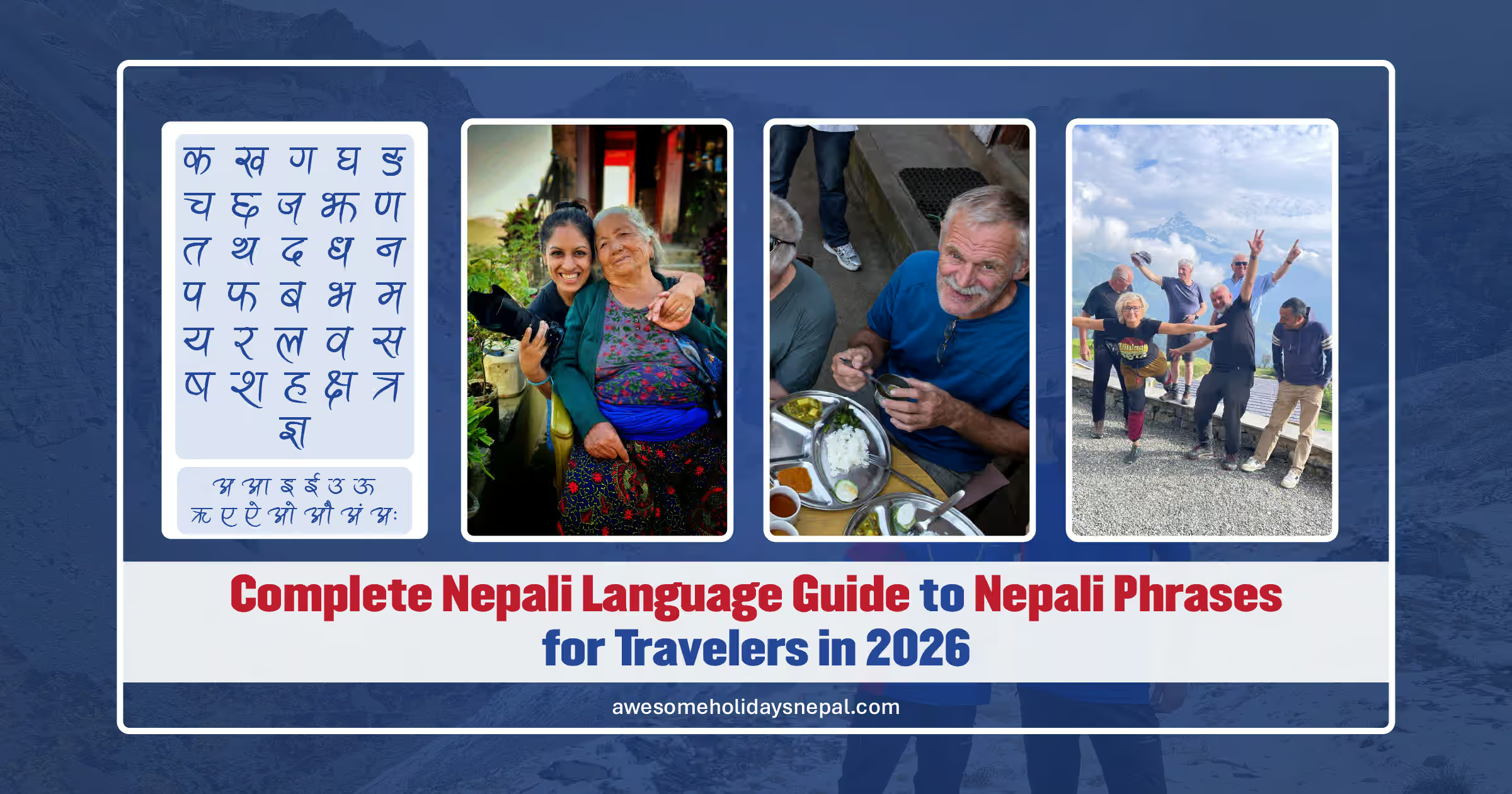
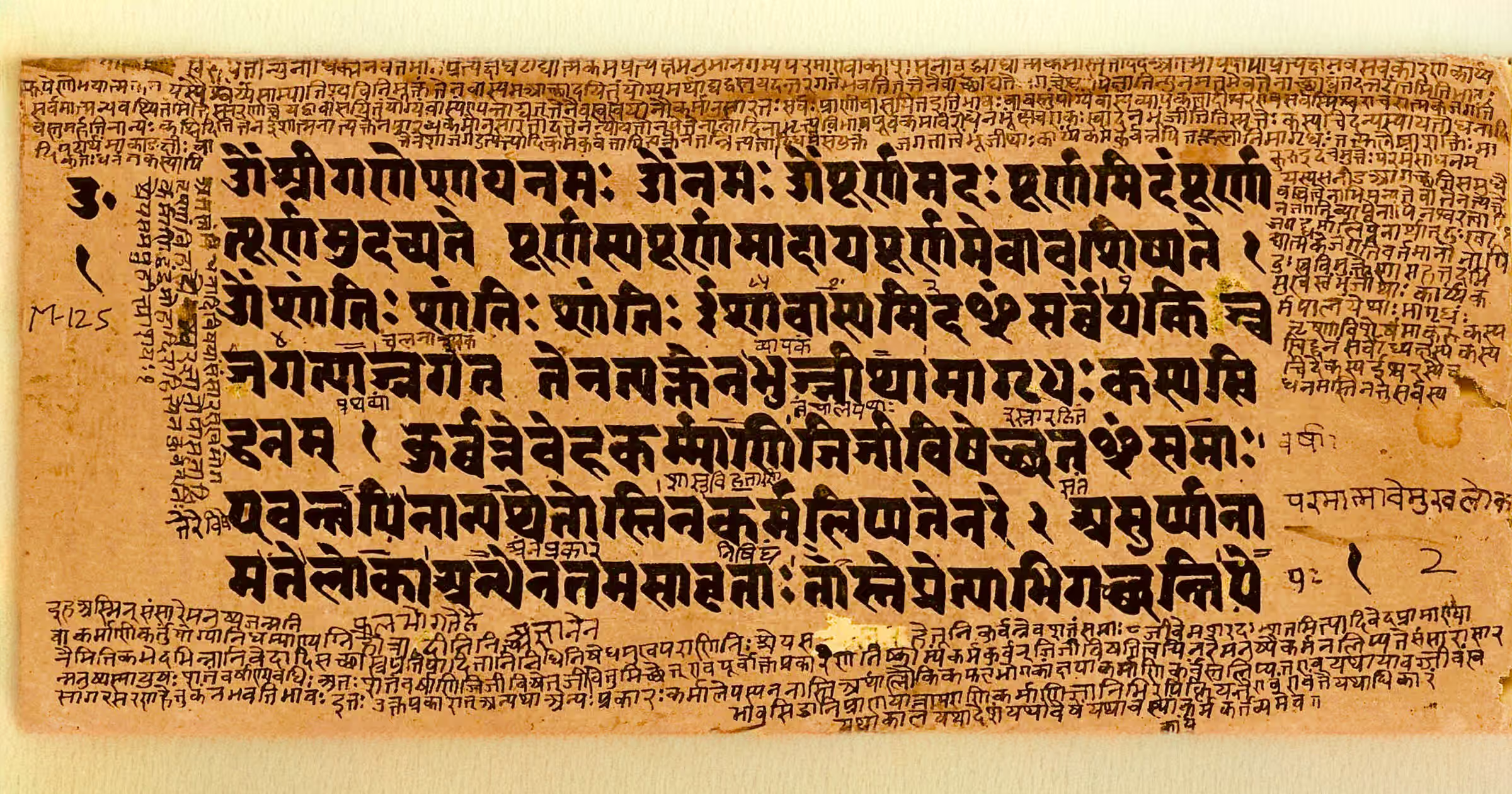
Nepali language is a part of the Indo-Aryan language family and uses the beautiful Devanagari script which is similar to Hindi and Sanskrit. Foreigners who are traveling to Nepal for different purposes don’t need to master the Devanagari script, reading our Nepal language guide makes you pronounce the Nepali phrases with easy Romanized pronunciation.
Why Every Traveler Needs a Nepal Language Guide in 2026?
A comprehensive Nepal Language Guide helps foreigners to communicate with locals who are not familiar with English language or when traversing across the rural villages communities. English is commonly understood in hotels and tourist centers among youth and adults.
However, local markets, tea shops, temples, and villages are the backbone of Nepalese culture, where you will get to know Nepal beyond its famous mountains and tourist destinations. The Nepal Language Guide not only makes your journey more enjoyable, but also helps you connect with local people while making you have one of the deeper experiences through simple local phrases in Nepal.
You should also learn Nepali phrases because of following reasons:
Deeper connection with Locals
It will build trust when communicating with locals if you learn Nepali phrases.
Safe and Smooth Journey
A Nepal Language Guide will help you have one of the most smooth journey from ordering food, paying in cafe or transportation or shopping in local market.
Connecting Hearts
Even with basic Nepali word you as a travelers can have double conversation with locals, small kids wandering in village roads, bring smile on the face of old age parents of the village.
Appreciation for Locals
When you local phrase in Nepal, it will show how much you appreciate Nepal, their culture, and locals that you learned greeting symbol and other common expressions.
Improved Confidence
If you are exploring Patan heritage sites, doing Kathmandu Valley travel or Bhaktapur travel, knowing local phrases in Nepal help you feel more comfortable in unfamiliar places.
Better Food
You can tell what type of food you want either it is Veg or non-veg, and order more confidently.
Useful Travel Companion
As travelers look for deeper cultural experiences, a Nepal Language Guide helps them discover Nepal beyond mountains and famous attractions in 2026.
What Nepali Phrases to Learn for Visit Nepal 2026?
If you learn Nepali phrases before your Himalayan journey or cultural tour in Nepal, you can experience the nation like a local. Some of the most useful phrases you will be needed when exploring urban cities or rural mountain communities of Nepal is described below in opur Nepal language guide.
Greetings: Make a Great First Impression
Nepalese are popular worldwide for their warm hospitality and talking with us quite easy. You can simply initiate a conversation with beautiful a smile on your face. Placing your palm together near your chest and saying “Namaste” is one of the most cultural respectful gesture you can do to Nepali people.
| English | Nepali (नेपाली) | Pronunciation |
|---|---|---|
| Hello | नमस्ते | Na-mas-tey |
| Good Morning | शुभ प्रभात | Shu-bha Pra-bhat |
| Evening | शुभ साँझ | Shu-bha Saan-jha |
| I am fine | म सन्चै छु। | Ma San-chai Chhu |
| Thank You | धन्यवाद | Dhanya-bad |
| Yes | हजुर | Ha-jur |
| No | छैन / होइन | Chai-na / Hai-na |
In Nepal, relationship is highly valued and every relationship has unique terms as per their age and gender.
| English | Nepali (नेपाली) | Pronunciation |
| Sir / Respectful male address | दाइ / सर | Daa-e / Sir |
| Madam / Respectful female address | दिदी / म्याडम | Di-di / Madam |
| Brother (older male) | दाइ | Daa-e |
| Sister (older female) | दिदी | Dii-dii |
| Younger brother | भाइ | Bha-i |
| Younger sister | बहिनी | Ba-hini |
| Father | बुबा / बाबा | Bu-ba / Ba-ba |
| Mother | आमा | Aa-ma |
| Grandfather | हजुरबुबा | Ha-jur-bu-ba |
| Grandmother | हजुरआमा | Ha-jur-aa-ma |
| Friend | साथी | Saa-thi |
| Teacher | शिक्षक / गुरु | Shik-shak / Gu-ru |
| Elder / Respected person | हजुर | Ha-jur |
| Child / Little one | बच्चा | Ba-chha |
| Uncle (respectful older male) | काका | Ka-ka |
| Aunt (respectful older female) | काकी | Ka-ki |
| How are you? (respectful) | तपाईंलाई कस्तो छ? | Tapai-lai Kas-to Chha? |
| What is your name? (respectful) | तपाईंको नाम के हो? | Tapai-ko Na-am Ke Ho? |
Shopping Souvenir and Bargaining Phrases in Local Markets
Buying souvenir to your loved ones is an important aspect of Nepal travel in 2026. For this, if you few learn Nepali phrases, it will make your shopping more enjoyable no matter whether you are exploring traditional market of Asan or Thamel or in trekking trails of Everest, Annapurna or Langtang region.
| English | Nepali (नेपाली) | Pronunciation |
|---|---|---|
| How much is this? | यो कति हो? | Yo Kati Ho? |
| It’s too expensive. | धेरै महँगो छ। | Dhe-rai Ma-han-go Chha |
| Can you lower the price? | अलि सस्तो हुन्छ? | Ali Sas-to Hun-cha? |
| I like this. | मलाई यो मन पर्यो। | Ma-lai Yo Man Par-yo |
| I’ll take it. | म यो लिन्छु। | Ma Yo Lin-chhu |
Note: If you politely bargain with shopkeeper they will give you some discounts on your purchase.
Order Like a Local in Restaurant and Cafe
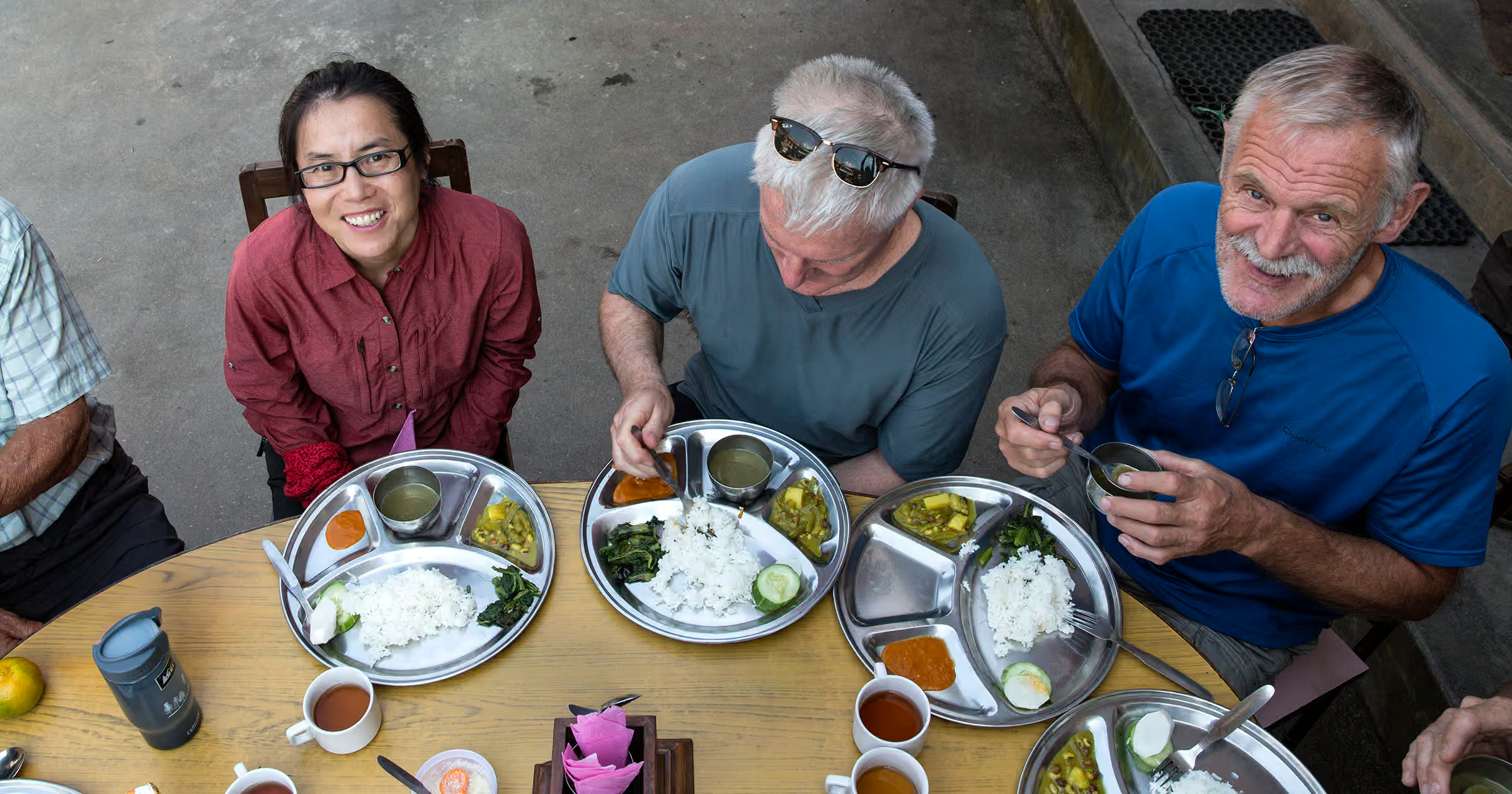
Food is an very important part of the Nepali culture and learning following Nepal language guide will surely make your dining experience more enjoyable than stressful in 2026.
| English | Nepali (नेपाली) | Pronunciation |
|---|---|---|
| I would like Dal Bhat. | मलाई दालभात चाहिन्छ। | Ma-lai Dal Bhat Chaa-hin-chha |
| Tea, please. | चिया दिनुहोस्। | Chii-yaa Dinu-hos |
| Coffee, please. | कफी दिनुहोस्। | Coffee Dinu-hos |
| Is this spicy? | यो पिरो छ? | Yo Pii-ro Chha? |
| Water, please. | पानी दिनुहोस्। | Pani Dinu-hos |
| The bill, please. | बिल दिनुहोस्। | Bill Dinu-hos |
| It was delicious! | धेरै मिठो थियो। | Dherai Mitho Thi-yo |
| I am vegetarian. | म मासु खादिनँ। | Ma Maa-su Kha-dina |
| I don’t eat pork. | म बङ्गुर खादिनँ। | Ma Ban-gur Kha-dina |
After leaving the hotel, cafes or homestays, make sure you complement the staff or owner if present saying, “Dhe-rai Mi-tho”.
Directions and Travel to Find Your Way Around Nepal
This Nepal language guide not only make your getting around Kathmandu easier but it will make your travel less confusing and more fun while talking with passengers or bus staff all over the nation.
| English | Nepali (नेपाली) | Pronunciation |
|---|---|---|
| Where is…? | … कहाँ छ? | … Kaa-haan Chha? |
| Please take me here. | मलाई यहाँ लैजानुहोस्। | Ma-lai Ya-haan Lai-jaanu-hos |
| Turn left. | बायाँ मोड्नुहोस्। | Ba-yaan Modnu-hos |
| Turn right. | दायाँ मोड्नुहोस्। | Daa-yaan Modnu-hos |
| Go straight. | सिधा जानुहोस्। | Si-dha Jaanu-hos |
| Stop here, please. | यहाँ रोक्नुहोस्। | Yaa-haan Roknu-hos |
| Where is the bus stop? | बस स्टप कहाँ छ? | Bus Stop Ka-haan Chha? |
Travel tips: Show your preferred location or destination in your mobile app, and use above mentioned Nepal Bhasa guide for communication.
Essential number and Money for Daily Transaction
When doing Nepal travel in 2026, you need to do money transaction as soon as you land to until your departure. As you Learn Nepali phrases, these numbers and transaction terms will quickly become some of the most useful expressions either it is for paying transportation fare, billing in restaurant or hotel or for buying food.
| English | Nepali (नेपाली) | Pronunciation |
|---|---|---|
| One Rupee | एक रुपैयाँ | Ek Ru-paiya |
| Ten Rupees | दस रुपैयाँ | Das Ru-paiya |
| Fifty Rupees | पचास रुपैयाँ | Pa-chaas Ru-paiya |
| One Hundred Rupees | एक सय रुपैयाँ | Ek Sa-ya Ru-paiya |
| Five Hundred Rupees | पाँच सय रुपैयाँ | Paa-nch Sa-ye Ru-paiya |
| One Thousand Rupees | एक हजार रुपैयाँ | Ek Ha-jaar Ru-paiya |
When doing transaction, Learn Nepali phrase listed below:
| English | Nepali (नेपाली) | Pronunciation |
| Here is the money. | यो पैसा लिनुहोस्। | Yo Pai-sa Linu-hos |
| Keep the change. | बाँकी राख्नुहोस्। | Baaki Raakh-nu-hos |
| Do you accept card? | कार्ड चल्छ? | Card Chal-chha? |
| I will pay in cash. | म नगद तिर्छु। | Ma Na-gad Tir-chhu |
| Can I pay by QR? | क्यूआरबाट तिर्न मिल्छ? | QR Bata Tir-na Mil-chha? |
| I need a receipt. | मलाई बिल चाहिन्छ। | Ma-lai Bill Chahin-chha |
What is the Difference Between Nepal Bhasa vs Nepali Language?
Nepali is the official language and the most widely spoken language across the country. However, Nepal is a multilingual, multicultural, multi-religious, and multi-ethnic country where diverse communities live in such a harmony that they are also supporting each other to preserve their unique languages, traditions, beliefs, and cultural identities.
Among these, Nepal Bhasa also known as Newari Newari language holds a special place in the Kathmandu Valley.
Nepal Bhasa (Newari): The Traditional Language of Kathmandu Valley
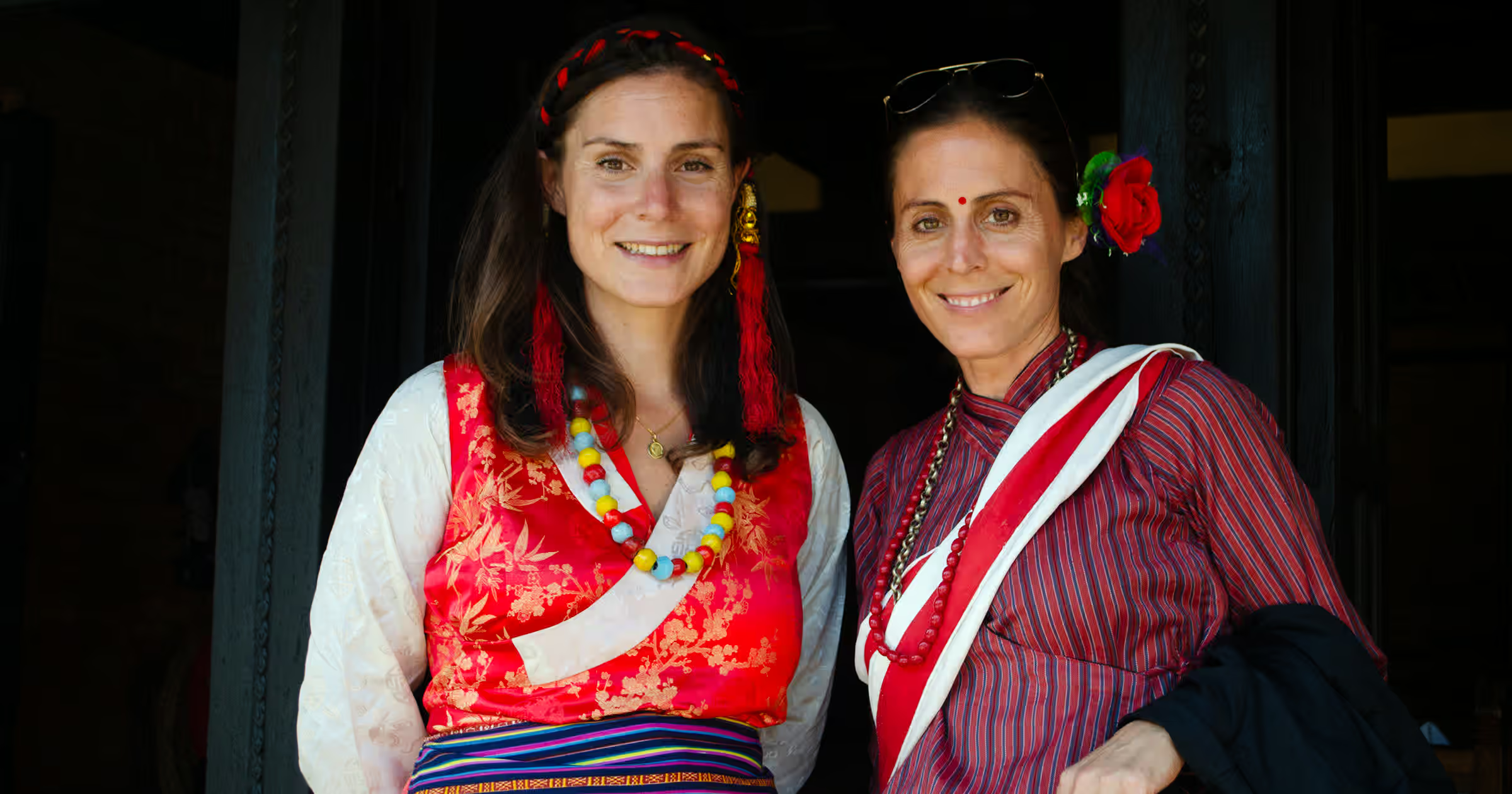
Nepal Bhasa, commonly known as Newari or Newar language, is the traditional language of the Newar community. Newar are the indigenous people of the Kathmandu Valley and their historical roots are deeply connected with the ancient cities of Kathmandu, Patan (Lalitpur), and Bhaktapur.
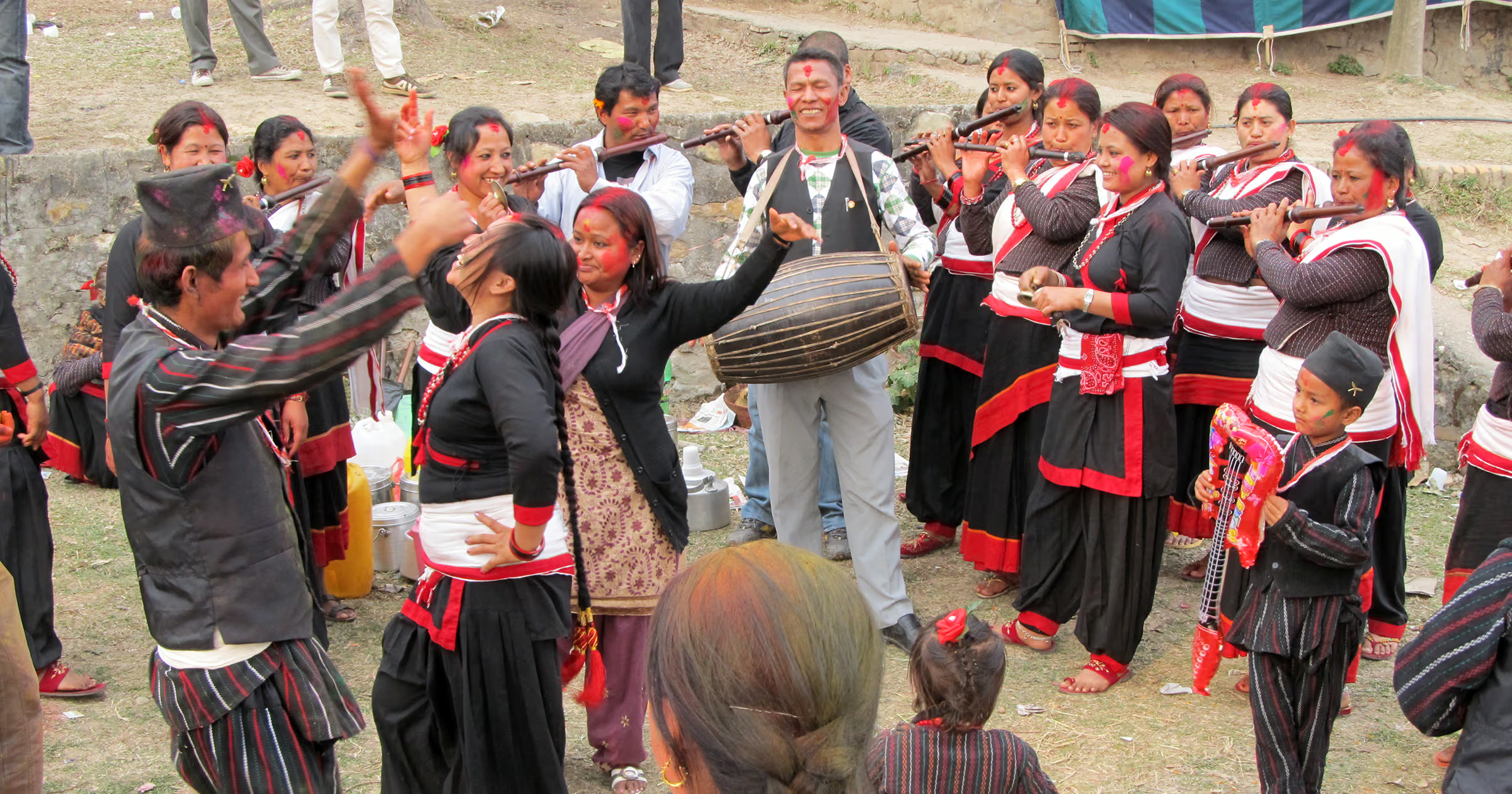
Nepal Bhasa belongs to the Sino-Tibetan language family and has its own unique vocabulary, pronunciation, and cultural identity which represents centuries of Newar art, festivals, architecture, cuisine, and traditions. When doing Nepal travel in 2026, if you learn Nepal Bhasa also known as Newari language, it can create a memorable interaction with Newar locals of Kathmandu valley and nearby valley.
| English | Nepal Bhasa | Pronunciation |
|---|---|---|
| Hello | ज्वजलपा | Jwa-ja-la-pa |
| Thank you | सुभाय् | Su-bhyaa |
| Yes | खं | Kha-m |
| No | मखु | Ma-khu |
You can show appreciation towards Nepal Bhasa and Newari culture, if you interact saying above mentioned.
Tips to Learn Nepali Phrases Faster for Nepal Travel in 2026
This Nepal Language Guide helps foreigners an easy methods to learn Nepali phrases fast so that they can communicate with locals, know about their culture and tradition, learn traditional way of cooking and farming practices etc.
- Make sure you practice five phrases every day.
- Try to speak with local shopkeepers when you are travelling or trekking even with guide and porters.
- Listen carefully to pronunciation and communicate politely in a smooth tone.
- Repeat phrases aloud when practicing and record for checking.
- Use flashcards.
- Watch Nepali travel videos on you tube for better understanding.
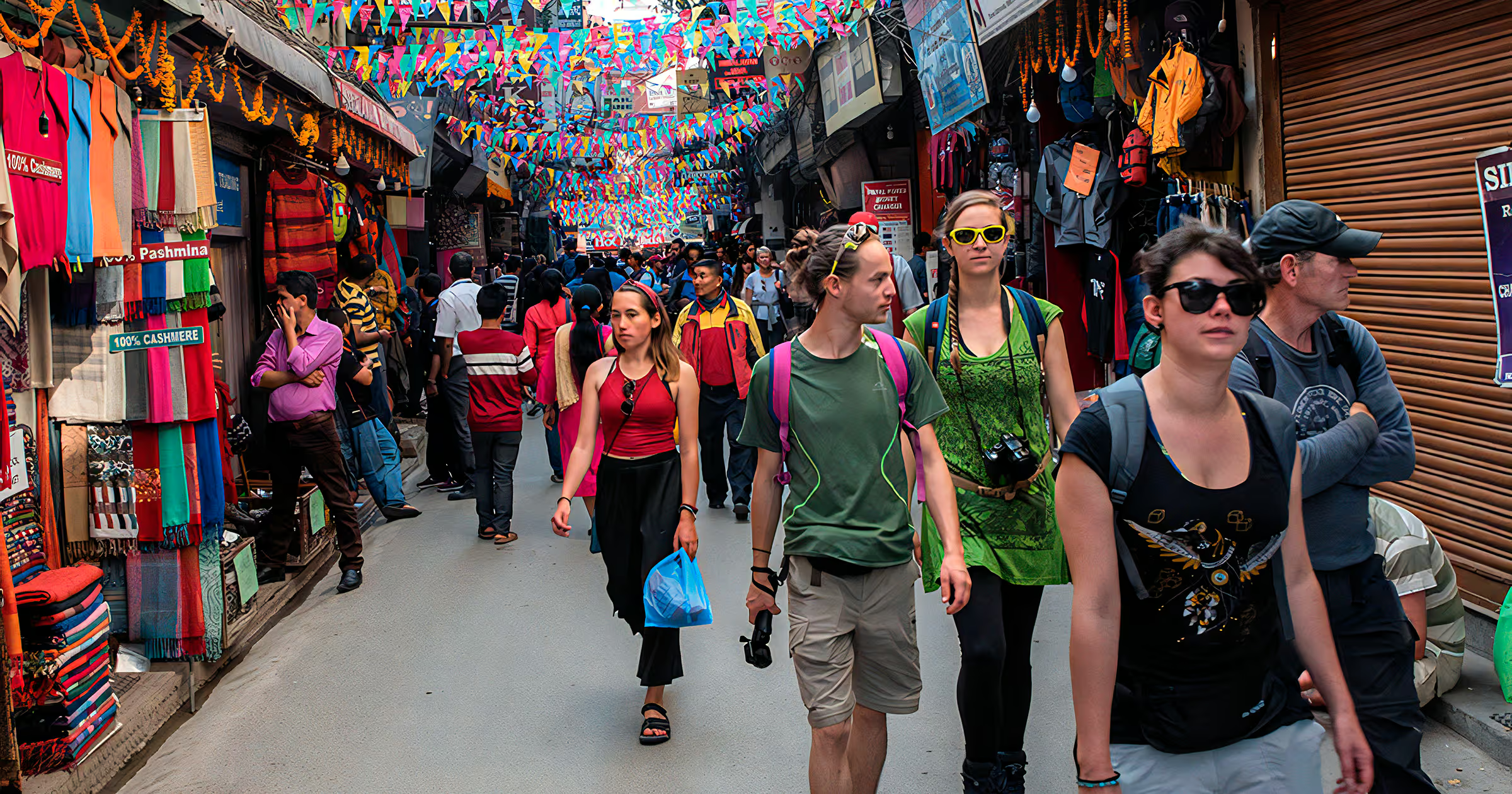
- Learn while walking around Kathmandu valley by communicating with those who smile at you or wave you on the streets.
- Don’t fear making mistakes as locals might find it amusing and they will make you spell correctly.
- Practice greetings often with your travel mate, guide, porters.
- Use Nepali whenever possible.
Common Mistakes to Avoid in 2026
Even experienced and frequent travelers make mistakes during communication. So, learn Nepali phrase patiently and take tips from following things during your Nepal travel in 2026:
- Do not speak too quickly.
- Speak slowly in a soft tone.
- Avoid mixing Hindi and Nepali unnecessarily.
Planning a Cultural Trip to Nepal in 2026?
Or Call/Message on WhatsApp +977 98434 13619
- Do not ignore pronunciation.
- Forgetting polite expressions and speaking rudely.
- Do not assume that everyone is familiar with English.
Final Verdict
Travelling to Nepal is not limited to visiting historic landmarks but it is all about connecting with people, celebrating their culture and traditions in 2026. We hope that our Nepal language guide will help you have one of the most memorable journey when interacting with locals of remote trekking trails to city areas.
Your small act of greeting in Nepali language brings smile in local people of all age, so we suggest you to learn above mentioned phrase before and practice throughout your trip. Communication is Key and do not hesitate to interact with local people to unlock the authentic heart of Nepal in 2026.
Feel free to contact Awesome Holidays Nepal to plan your next Nepal trip in 2026.
FAQs
Expand AllWhat is Nepal Bhasa?
Nepal Bhasa is renowned as the Newari language. It is the traditional language of the Newar community who are an indigenous group of Kathmandu Valley.
Is Nepal Bhasa the same as Nepali?
No. Nepal Bhasa and Nepali are different languages. Nepali is the national language of Nepal while Nepal Bhasa belongs to the Newar community.
Where is Nepal Bhasa spoken in Nepal?
Nepal Bhasa is spoken mainly in:
- Kathmandu Valley,
- Lalitpur (Patan),
- Bhaktapur,
- and other Newar settlements.
Why learn Nepal Bhasa for traveling?
You should learn Nepal Bhasa for traveling because:
- It help to connect with local communities,
- Understand Newar culture, and
- Create more meaningful experiences in the Kathmandu Valley.
How do you say hello in Newari language?
You should say “Jwajalapaa,” by placing your both palm together just infront of your chest to say Hello.
What are essential Newari phrases for tourists?
The essential Newari phrases for tourists includes:
- Jwajalapaa (hello),
- Subhya (thank you),
- Yes (Kha-m)
- No (Ma-khu).
Do I need to learn Nepali or Nepal Bhasa?
You should learn Nepali Bhasa as it is widely understood throughout the Nation.
Is English spoken in Kathmandu Valley?
Yes. English is understood in hotels, restaurants, trekking agencies, and tourist areas of Kathmandu Valley.
What language is spoken in Bhaktapur?
A Bhaktapur travel guide should mention that the main language spoken in Bhaktapur is Nepal Bhasa (Newari). Nepali is also widely spoken and English is commonly used in tourist areas.
How to greet locals in Kathmandu?
You can greet locals in Kathmandu by saying:
- “Namaste” in Nepali or
- “Jwajalapaa” when communicating with Newar communities.
What does Jwajalapaa mean in Nepal Bhasa?
Jwajalapaa means hello and is used to respectfully welcome or acknowledge someone in Nepal Bhasa.
Can I travel Nepal without knowing Nepali?
Yes. You can travel Nepal without knowing Nepali, but you need to hire a licensed guide if you want to interact with locals.
What language do Newar people speak?
Newar people speak Nepal Bhasa with their communities and family member while interacting with other ethnic group they use Nepali language.
How many people speak Nepal Bhasa?
Nepal Bhasa is spoken by hundreds of Newar community in Nepal.
Is Nepal Bhasa difficult to learn?
Yes, mastering Nepal Bhasa is difficult but you can learn basic phrase easily.
What are basic shopping phrases in Newari?
The basic shopping phrases in Newari includes:
- How much is this?: Thukeyā guli? (थुकेया गुलि?)
- Is it expensive?: Thwa makhaṅ lā? (थ्व मखं ला?)
- Make it a bit cheaper:Bhaticā mho yānādisaṅ (भतिचा म्हो यानादिसँ)
- I will buy this: Ji thwa kāye (जि थ्व काये)
- Do you have [item]?: Chanta [item] du lā? (छन्त [item] दु ला?)
How to say thank you in Nepal Bhasa?
Say “SuBhya” for thank you in Nepal Bhasa.
Where to learn Nepal Bhasa before traveling?
You can learn Nepal Bhasa through language classes, local cultural organizations, online resources, and language-learning materials focused on Newari culture.
Why is Nepal Bhasa important in Kathmandu Valley?
Nepal Bhasa important in Kathmandu Valley because it helps in the preservation of history, traditions, festivals, arts, and identity of the Newar people.
How to show cultural respect in Kathmandu?
You can show cultural respect in Kathmandu by:
- Greeting locals politely,
- Learning basic local phrases,
- Respecting religious customs, and
- Appreciating Nepal’s diverse cultures and traditions.
Related blog posts
Discover a choice of tourist destinations loved by most of our visitors. Whether you're on a jungle safari to spot rare animals or walking through a world heritage site, these well-planned itineraries cover the major highlights of Nepal.

 call an expert at: