
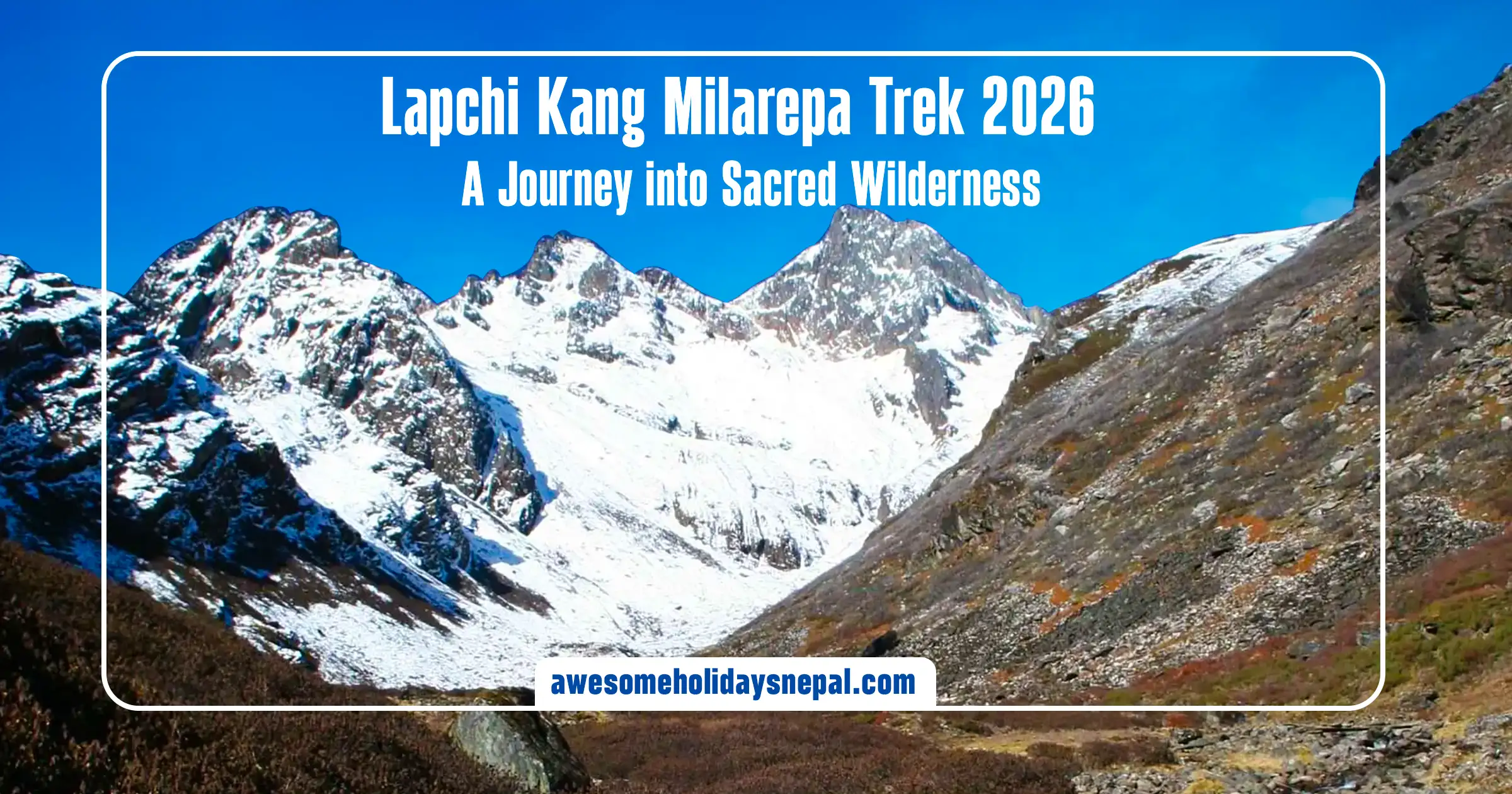
Lapchi Kang: The Milarepa Pilgrimage Trek Almost No Foreigner Has Done (2026 Guide)
 Sristi Adhikari
Are you searching for undiscovered Himalayan trails whether as a pilgrim seeking sacred landscapes or a nature and wildlife enthusiast looking for remote wilderness in 2026? Then, Lapchi Kang Milarepa Cave Trek is ideal for you.
Tucked away in the remote Himalayan region of Nepal near the Tibet border, Lapchi Kang offers a rare combination of spiritual heritage, dramatic mountain scenery, secluded valleys, and pristine wilderness. The region is deeply associated with the revered Tibetan Buddhist yogi Milarepa, who is believed to have meditated in caves here, making the journey especially meaningful for pilgrims and those interested in Himalayan Buddhist culture.
Far from Nepal’s busy trekking routes, the trail leads through remote landscapes where traditional villages, rugged mountain terrain, forests, and sacred sites create an experience that feels genuinely off the beaten path. If you are seeking a Himalayan adventure that combines pilgrimage, nature, culture, and exploration, continue reading our blog for more details why Lapchi Kang Milarepa Cave Trek is one of Nepal’s lesser-known mountain destinations.
Quick Glance of Lapchi Kang Trek
- Trek Location: Dolakha district, Rolwaling region, Nepal–Tibet border
- Trailhead: Lamabagar
- Maximum elevation: 4,900 m at Lapchi Kang
- Trek duration: 10 to 16 days
- Difficulty: Challenging
- Accommodation: Camping and homestays
- Best time to visit: March to May, September to November
- Permits: Gaurishankar Conservation Area Permit and Restricted Area Permit
Where is Lapchi Kang?
Lapchi Kang village is located in the northern part of Dolakha District in Bagmati Province, Nepal. The sacred valley lies in the remote Rolwaling Himalayan region, under the protected Gaurishankar Conservation Area.
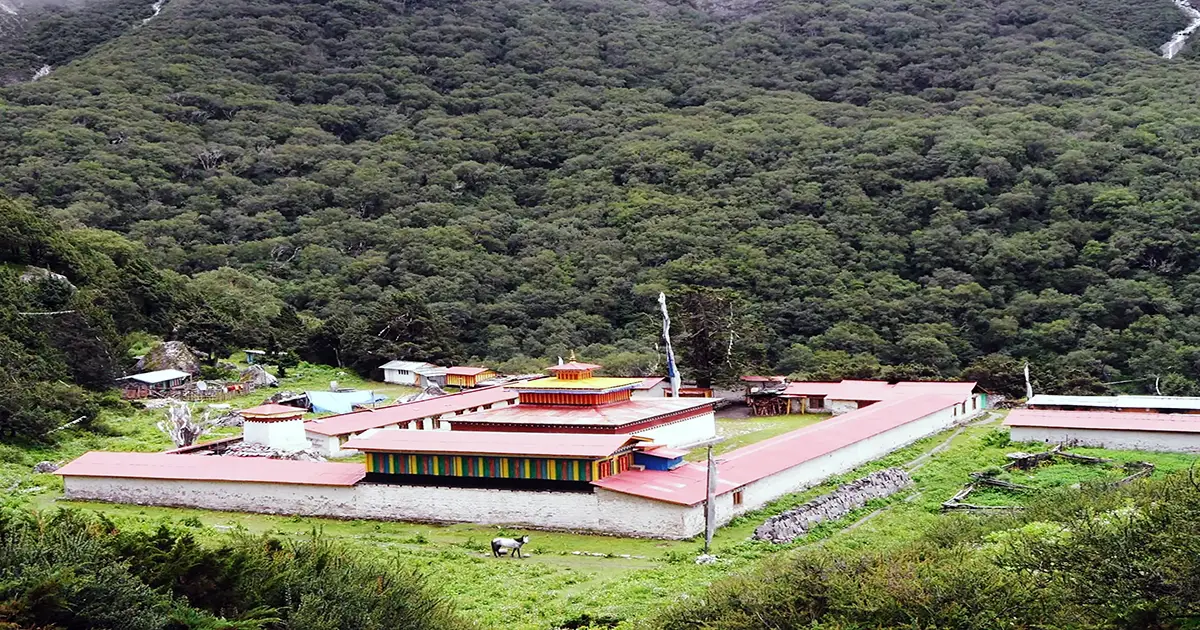
It is also known as Lapchi valley and is located at an altitude of about 4,900 meters near the Tibetan border. Lapchi valley lies 140 km northeast of Kathmandu and is surrounded by the snow capped mountain range of Lapchi Kang, deep river valleys, alpine meadows, and dense Himalayan forests.
Spiritual Importance of Lapchi Kang
Lapchi Kang holds immense significance in Tibetan Buddhist traditions and is considered as one of the three important spiritual sites with Mount Kailash and Tsari. The remote mountain landscape of Lapchi valley is connected with generations of meditation practitioners.
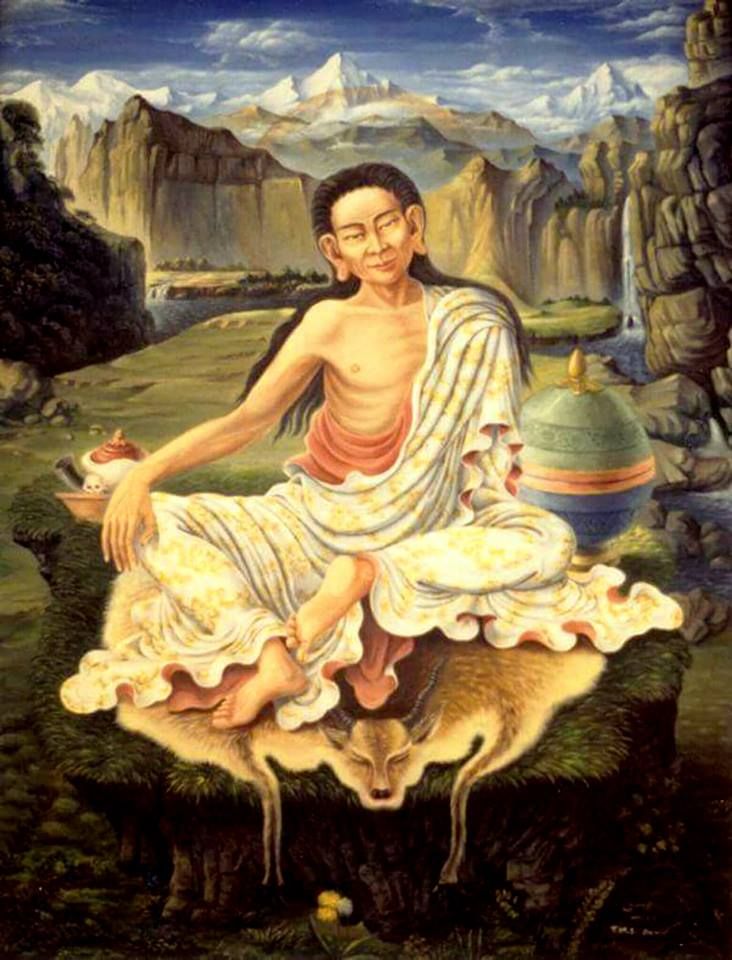
The valley is also connected with Chakrasamvara practice which later became an important meditational retreats for Drikung Kagyu school of Tibetan Buddhism during the 12th and 13th centuries. Likewise, Lapchi valley is famous for Milarepa Cave which is traditionally associated with the great yogi Milarepa and his practice of solitary meditation.
The great yogi Milarepa is believed to live on wild nettle while meditating and composing spiritual songs and finally got profound realization. As a result, trekking to Lapchi valley has become a pilgrimage site for followers of Tibetan Buddhism from:
- Nepal,
- Tibet,
- Bhutan,
- and around the world.
Where is Milarepa Cave?
Milarepa cave also known as “Milarepa’s Meditation Cave” or “Milarepa’s Hermitage” or “Lapchi Chuwar Cave” is a sacred place located near Lapchi village. Rechen Puk (Rechen Cave), is the main highlight of the Lapchi Kang Milarepa Cave Trek.
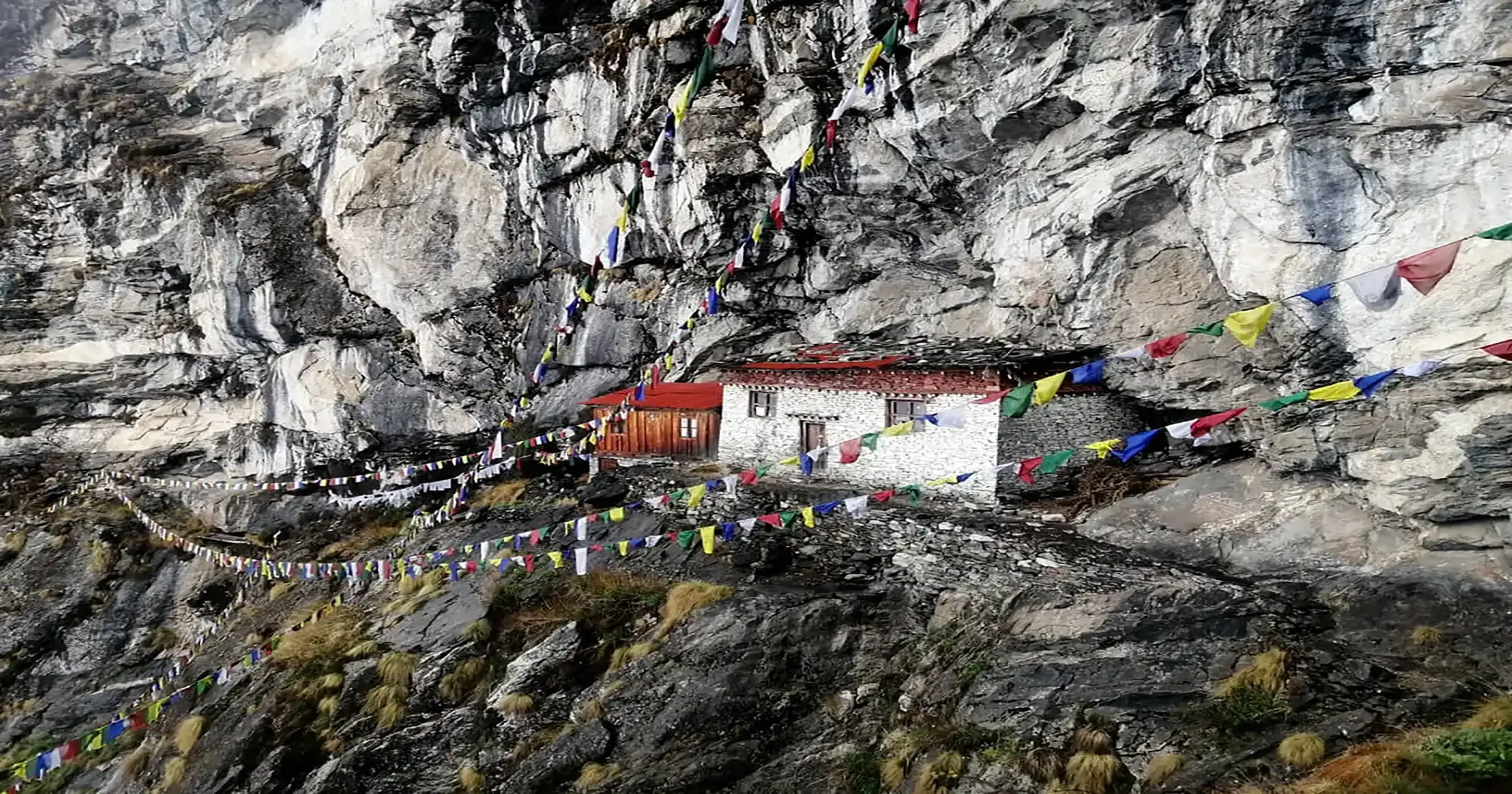
The Milarepa cave is located at an elevation of roughly 3,600 meters to 4,900 meters and is connected with a historical figure, Milarepa and is highly revered by Tibetan Buddhist communities. Jetsun Milarepa (1052–1135 CE) was a revered Buddhist saint who spent much of his life in deep meditation after receiving teachings and guidance from his spiritual master, Marpa Lotsawa.
The teaching of Milarepa emphasizes:
- Disciplined practice,
- Compassion,
- Detachment,
- and the possibility of spiritual transformation.
Due to this reason, the cave has been attracting monks, pilgrims, and trekkers seeking meditation, blessings, and a connection to one of Tibetan Buddhism’s greatest masters.
As a result, Milarepa cave has been one of the most popular retreat destinations among those who want to experience spiritual practice, the natural world, and freedom from attachment.
What Makes the Lapchi Kang Trek Different From Other Nepal Treks?
Lapchi Kang trek is different from other Himalayan treks of Nepal because of its legendary sacred status and spirituality. The trek takes you to the remote Rolwaling Himalayan region where you will explore pristine trails without having to cross another group of trekkers while allowing to experience an extraordinary sense of solitude.
This spiritually significant landscape is associated with the Buddhist master Milarepa which is regarded as one of the important sacred Himalayan destinations after Mount Kailash and Tsari in Tibet.
A Quieter Himalayan Experience
Unlike classic Everest and Annapurna trails, the trekking trails of Lapchi Kang receive much less international trekking traffic and have limited visitor infrastructure. The gentle breeze while traversing inside the pine trees, distant sound of bird’s chirping, and rushing river and whistling sound of wind across the valley offer you a peaceful and immersive experience in nature.
Furthermore, you will barely see other groups of backpackers which offer less crowds in viewpoint and in sacred religious sites.
A Journey with Spiritual Meaning
The sacred Milarepa cave and monasteries add different dimensions to your Lapchi Kang trek. The trekking trails offer you enough time to reflect on your inner self and connect with nature.
The serene and spiritual power of the region makes you forget all of your life worries and you will get a deep sense of clarity.
Remote Settlements and Traditional Mountain Life
You will get to stay in the picturesque mountain village where locals spend their day to day life animal husbandry and agriculture. Trekkers also get to witness how locals do barley, buckwheat, and potato farming and are living life happily without any modern infrastructures.
Wilderness Without a Summit Obsession
Lapchi is especially appealing to travelers who want to experience the Himalayas without making a summit the central purpose of their journey. The focus can instead be on walking, observing, learning, and spending time in a landscape that encourages patience.
Chance to Explore Milarepa’s Sacred Meditation Caves
The main highlight of the Lapchi Kang Milarepa Cave Trek is to explore a sacred meditation cave which was once inhabited by Yogi Milarepa. You will get insight into the tradition surrounding the Milarepa’s life and why it holds immense significance in Tibetan Buddhism.
Lapchi Monastery and other Buddhist Sites
Trekkers can explore 845 years old Lapchi monastery which are also known as Choraghefiring. It is believed that Milarepa himself built the monastery on a steep rock-hewn hill more than 800 years ago.
You can also see the footprint of Milarepa at Rekcheng monastery and every 12 years a fair is held where thousands of pilgrims from all around the world pay visit. Other caves you will be exploring here are:
- Yuthok Cave
- Ze Phung Cave
- Dul-Dul Cave
- Lungten cave
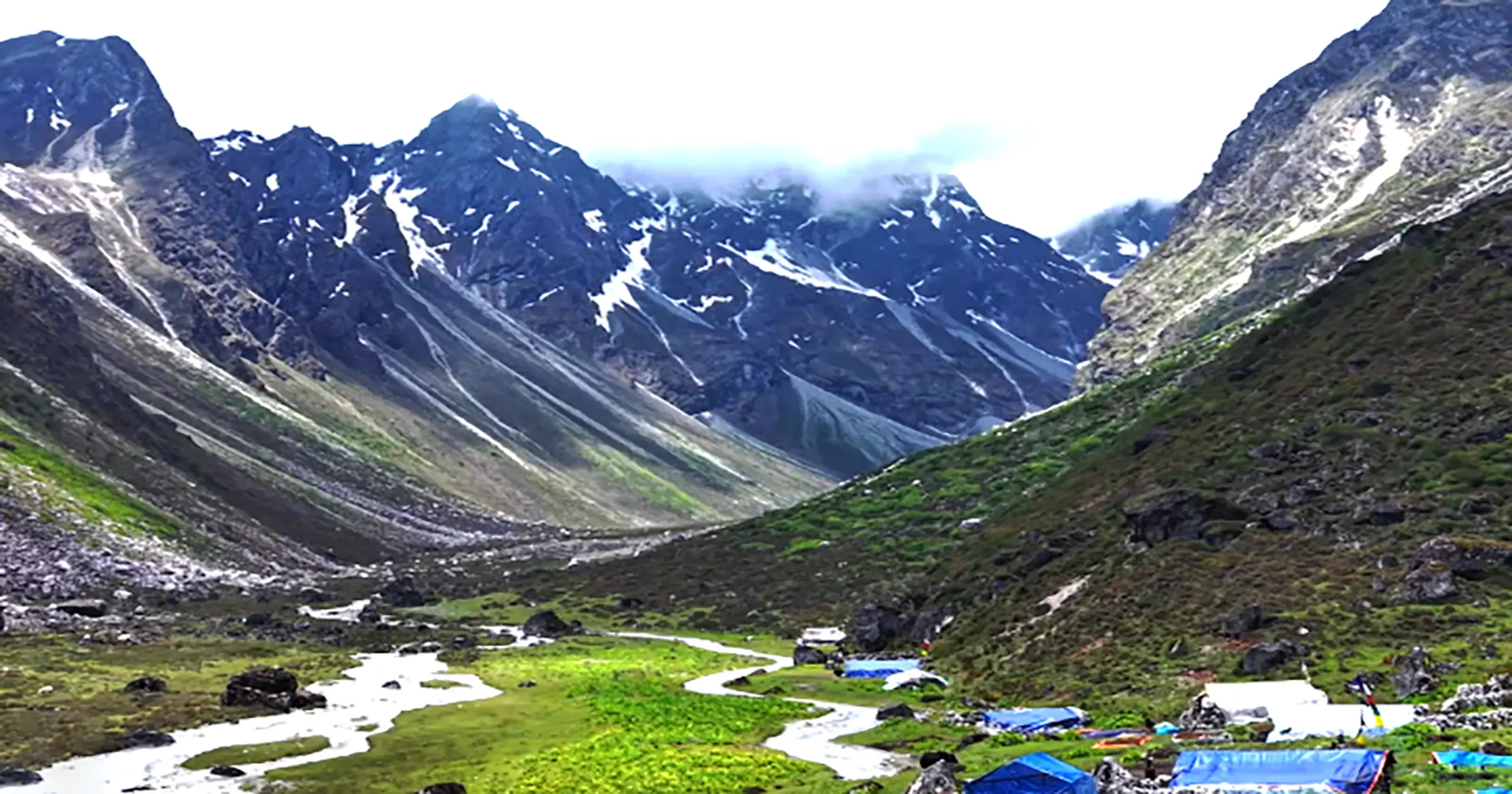
Best Gaurishankar Himalayan scenery
Throughout the trails of the Lapchi Kang trek, you will be rewarded with Gaurishankar mountain along with:
- Ama Bamare Himal,
- Rolwaling
- Melungtse,
- Cookur Rock face
- Three sacred peak of Lapchi Kang Peak (Karpo Bumye, Nagpo Bumye, and Serpo Bumye).
Lapchi Kang Trek Route
Lapchi Kang trek begins from Lamabagar in Dolakha district and makes you traverse across traditional mountain villages, suspension bridges, lush forests, alpine meadows, and rugged Himalayan terrain before reaching the sacred Lapchi Gumba and Milarepa Cave near the Nepal Tibet border.
Lapchi Kang trek also known as the Rolwaling trek follows the routes:
- Kathmandu →Lamabagar → Lumnang / Lower Lumnang→ Lapchi Rest Camp → Lapchi Khola→Lapchi Gumba →Lapchi valley → Rechen Monastery (Rechen Gompa)→ Milarepa’s Sky Cave (Sephuk / Ze Phug)→ Shunedemu Valley (Fulbari) →Lapchi Chuwa→Charikot → Kathmandu
Lapchi Kang Trek Itinerary
Lapchi Valley Trek is one of the best off-the-beaten-path treks in Nepal and depending on your travel styles the itinerary can be customized. Here is the 5-Days Lapchi Kang trek itinerary:
- Day 1: Drive from Kathmandu to Lamabagar
- Day 2: Trek from Lamabagar to Lapchi Gumba
- Day 3: Trek to Lapchi Valley from Lapchi Gumba
- Day 4: Lapchi Valley to Charikot Trek
- Day 5: Drive back from Charikot to Kathmandu
If you want deeper cultural and spiritual experience, we also offer 7-Days Lapchi Trek Itinerary in 2026:
- Day 1: Drive from Kathmandu to Lamabagar
- Day 2: Trek from Lamabagar (Tsho Sham) to Lower Lumnang
- Day 3: Trek from Lower Lumnang to Lapchi Monastery and Village
- Day 4: Explore Milarepa Caves and Hike to Manjushree Lake
- Day 5: Trek to Lower Lumnang from Lapchi Village
- Day 6: Lower Lumnang to Lamabagar
- Day 7: Drive from Lamabagar to Kathmandu
If you want to trek to Lapchi valley while exploring every aspect of the region, we also offer 19-days trek. The 19-Days Lapchi valley trek itinerary looks like:
- Day 1: Drive from Kathmandu to Lamabagar (1,991 m)
- Day 2: Trek from Lamabagar to Bisma Kharka (2,481 m)
- Day 3: Trek to Samling (3,425 m)
- Day 4: Trek from Samling to Mendo Sherma (3,903 m)
- Day 5: Trek to Ama Bamarie Kharka (4,200 m)
- Day 6: Explore Ama Bamarie Base Camp Area (4,000m)
- Day 9: Thang Kharka to Numnang village (2,723 m)
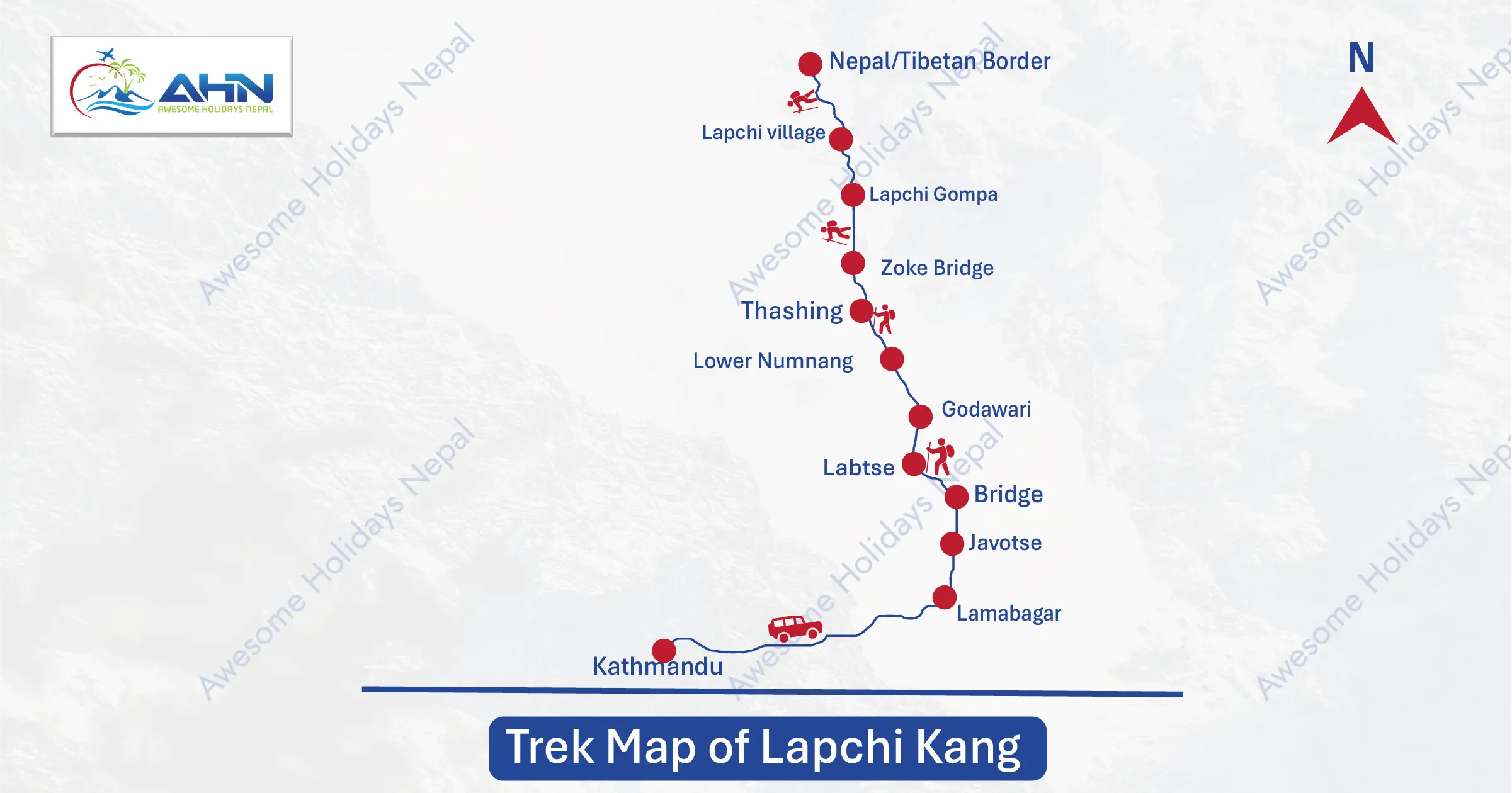
- Day 10: Numnang to Lapchi Monastery (3,004 m)
- Day 11: Day trip along the upper Lapchi river gorge to the Tibet/Nepal border
- Day 12: Exploration of Dudul Cave, Milarepa’s Footprint, Mountain Spring (4,200 m) and Retreat Centre
- Day 13: Acclimatization Day
- Day 14: Explore Lapchi Monastery to Lapchi Kharka(4,100 m)
- Day 15: Day Trip to Glacier (4,300 m)
- Day 16: Trek to Manjushiri Lake
- Day 17: Lapchi Kharka to Numnang
- Day 18: Return to Lamabagar
- Day 19: Drive from Lamabagar to Kathmandu
Best Time to do Lapchi Valley Trek
The best time to do Lapchi valley trek or Milarepa cave trek is from spring (March to May) and Autumn (September to November).
Spring (March to May)
The mild weather condition of Spring brings vibrant bloom of Rhododendron forest along the lower trail and clear skies condition offer best mountain views of Gauri Shankar and Melungtse. You will also get to witness the vibrant bloom of wildflowers in the Shunedemu meadows.
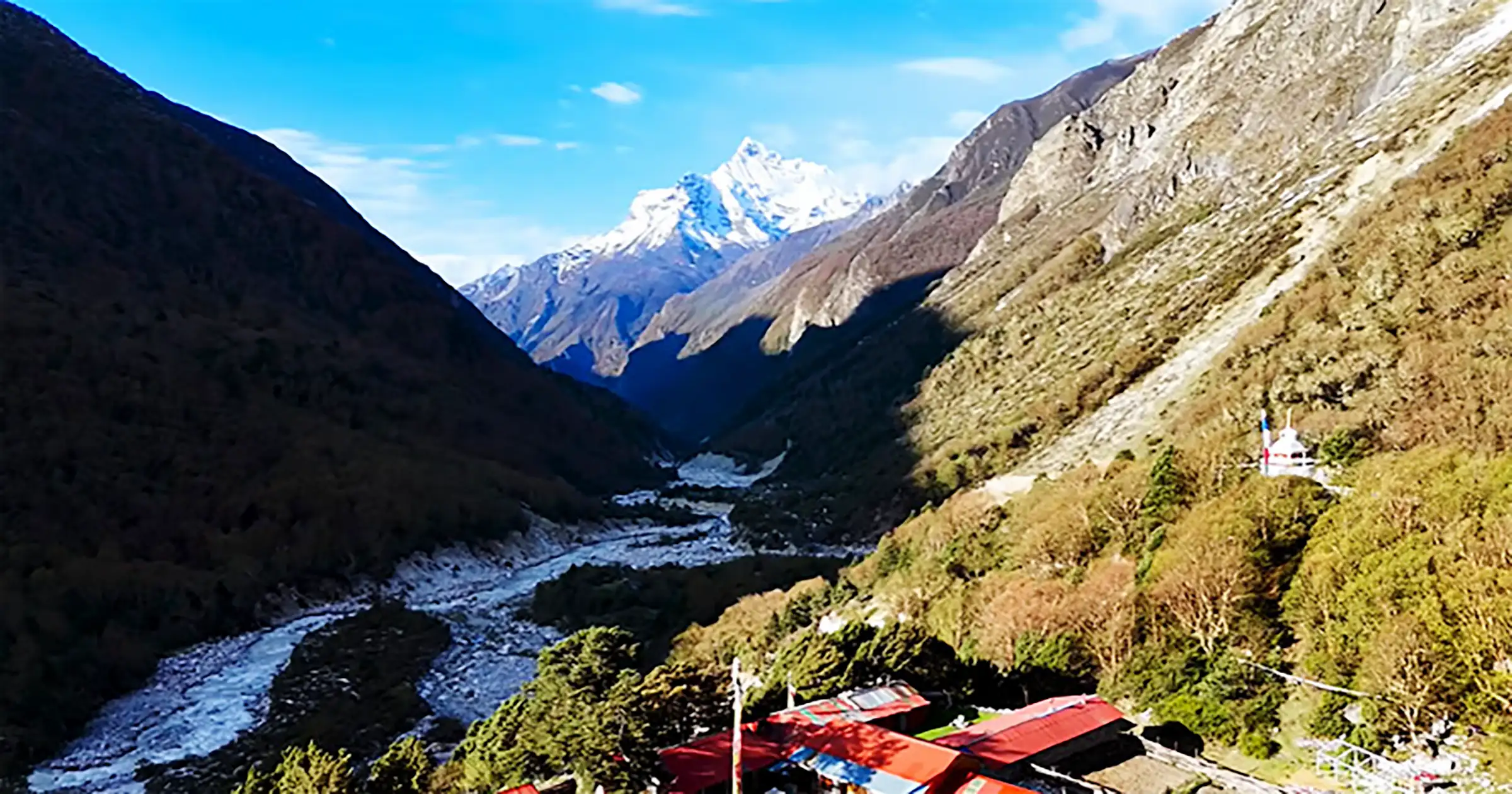
The vivid greenery of the forest and moderate temperature is perfect for a longer hour of trek to Lapchi Kang pilgrimage.
Autumn (September to November)
Another best time to do Lapchi valley trek is Autumn as it is the post monsoon window which offers clear skies and mountain views. The weather become more stable and favors longer hour of trek to Rolwaling region.
Monsoon (June to August)
Heavy rainfall in the Eastern and Central Himalayas of Nepal make roads and trails difficult to access. The season causes high chances of landslides in Tama Koshi river gorge and makes slippery paths, and delays affecting access to remote valleys like Lapchi Kang.
Trekking in the shaded forest trail makes you prone to leeches and mosquito bites. The mountain gets entirely covered by clouds and the visibility is also quite poor, so we recommend you to avoid the season.
Winter(December to February)
Winter can bring severe cold, snow, and difficult access to higher sections of the route. Available teahouses may get closed due to extreme cold and camping in frozen surfaces is also quite difficult. So, we suggest trekkers to avoid these season.
Difficulty Level of Lapchi Kang Milarepa Cave Trek
The Lapchi Kang Trek is a challenging remote mountain journey. It is not only the walking distance that matters but steep paths, uneven ground, limited facilities, changing weather, and the lack of immediate access to medical services make the trek more demanding than ABC and Upper Dolpo trek.
You should be comfortable with several hours of walking on consecutive days and prepared to carry a daypack over rough terrain of remote mountains. There are no teahouses in most of the trails, so you need to bring your own camping setup.
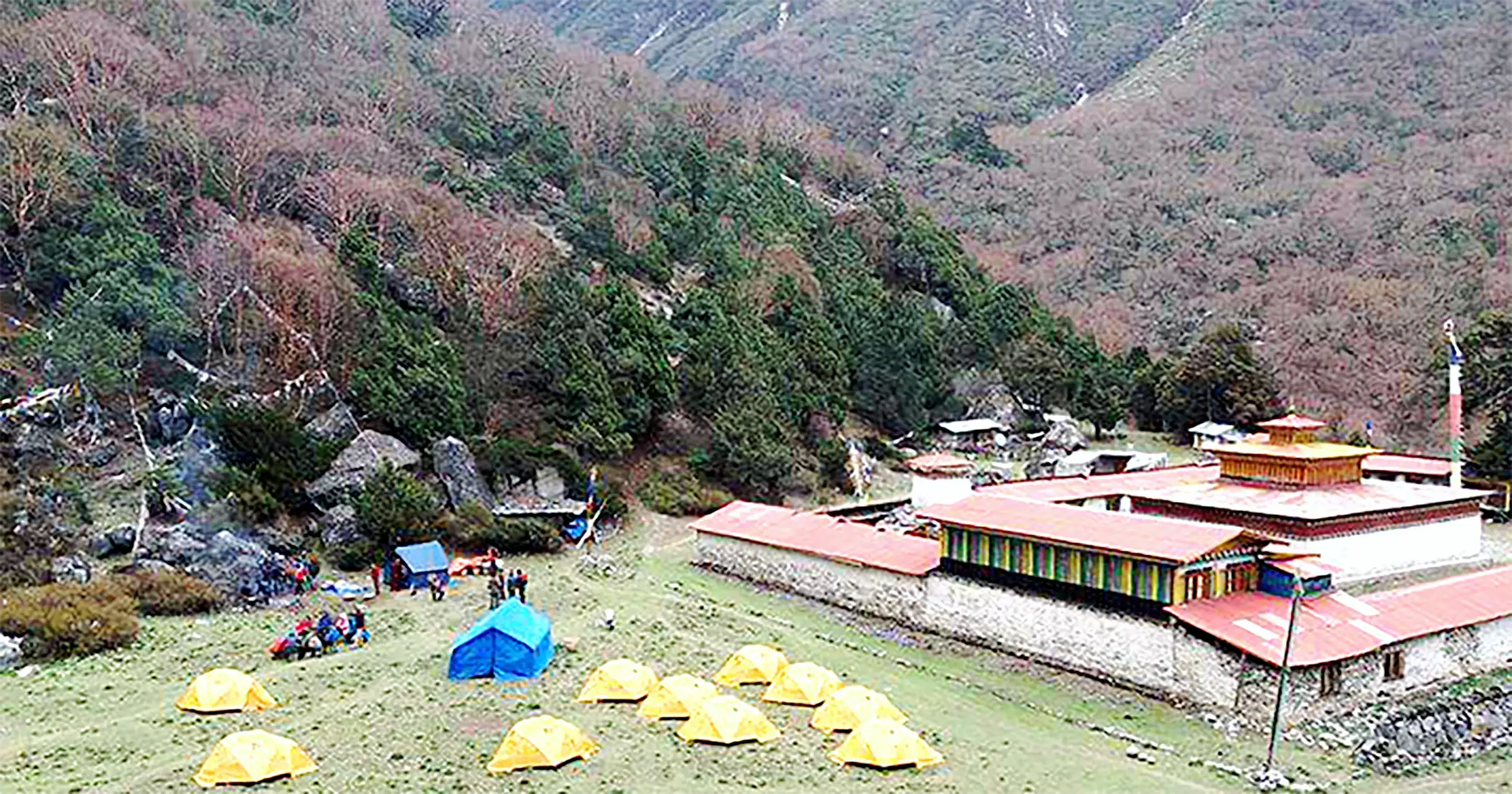
As you move higher above Lumnang, you will be walking in raw terrain, so you need to hire an experienced trekking guide and must have enough physical fitness so that you can complete the trek without any difficulties.
Before departure, build your fitness through:
- Regular walking, gradually increasing distance and elevation.
- Hill walking or stair climbing for longer hours.
- Strength exercises for your legs and core.
- Practice longer hikes with the footwear and heavy backpack during the weekend.
Permits Requirements
Lapchi lies in a remote, border-adjacent area which falls inside the restricted zone of Nepal. So, you need to have a Restricted Area Permit to enter inside the Rolwaling or Lapchi Kang along with Gaurishankar Conservation Area Permit (GCAP).
In Nepal, you cannot trek and receive permits alone as an individual trekker, especially in restricted areas. Hiring a licensed guide via a registered Nepali trekking agency, which makes you eligible for buying a permit.
Accommodation Options in Lapchi Kang Trek
During your trekking days, you will be spending overnight in villages like Lumnang, Lapchi village, and Lamabagar where you get basic teahouse accommodation.
Lamabagar
You will be sleeping in a basic dormitory style room with other group members in community homestays of Lamabagar. Here, you will get basic facilities and have to share a common bathroom.
You won’t get hot shower service but the front view of the river. The soothing sound of the river flowing allows you to get deep sleep even though rooms are not heated.
Lapchi Village
Here, you will be sleeping in an alpine teahouse or guest house. You will get a basic twin-sharing room which should be shared with other trekkers.
The teahouses offer you a basic foam mattress and blanket where you will have to adjust in a common squat style toilet without hot shower facilities. It is one of the highest places where you will be spending night throughout the trek so bring enough sleeping gear as it tends to get extremely cold at night.
Lumnang
Lumnang is a small village which offers you a small taste of the local life in the mountains. Here, you will get basic facilities in the teahouses similar to Lamabagar.
Working Monastery
There is an option of staying in a monastery near Rechen Gompa or Milarepa cave network. It allows deeper immersion in the spiritual side of Lapchi but you need to sleep in a dormitory shared room or in large hall rooms.
As you will spend overnight under the same roof with practicing monks, you need to follow a monastic code of conduct but we guarantee you that evening monastic chants will make you get one of the deep sleeps here.
Camping
Those who extend their trek from Lapchi to Lha Lung, and Godawari, have to stay in tents. All of the camping arrangement will be done by trekking agency like Awesome Holidays Nepal’s crew, so you can enjoy the sporadic glimpse of the mountain and nearby landscape.
Food and Drinking Water
A balanced diet is very important when trekking for longer hours to remote mountains. You will be eating simple, fresh and energy rich meals during your trekking days no matter whether you are staying in a teahouse or in tented camps.
For breakfast you will get Tibetan bread, chapati, porridge, muesli, pancakes, eggs prepared in various styles along with tea or coffee whereas you will be eating similar items in both lunch and dinner. We suggest you stick to the traditional staple dish Dal bhat which comes with seasonal vegetables, curries and pickles where you will also get to eat other items like fried rice, noodles, thukpa (Tibetan noodle soup), potato dishes, pasta etc.
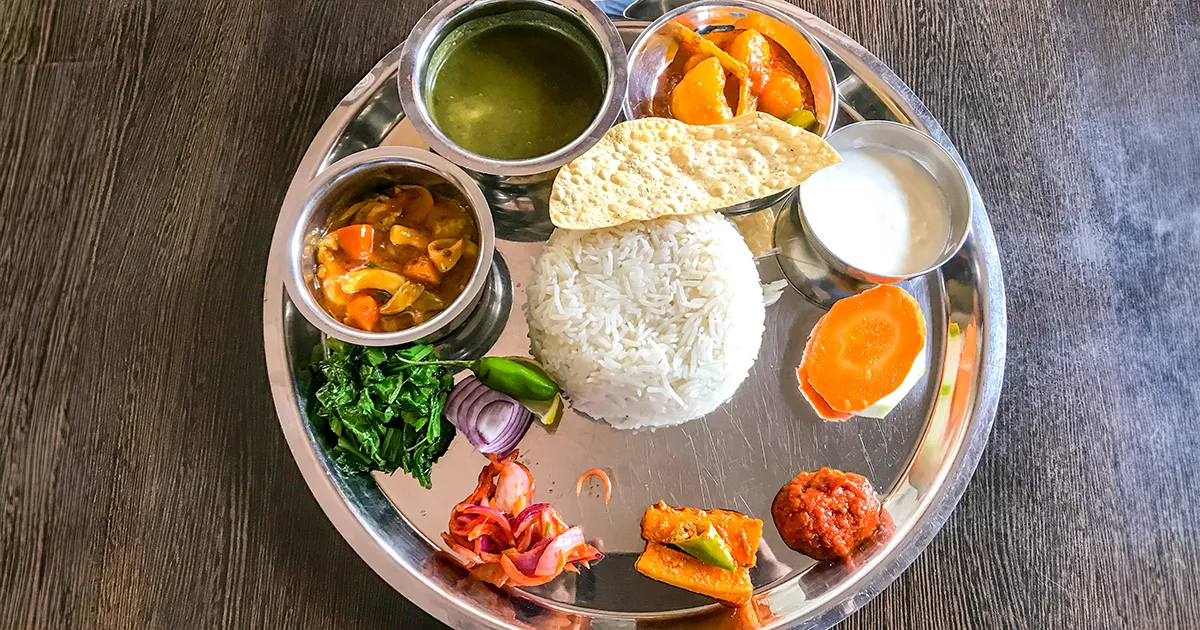
For drinking water, you will barely find any shops selling bottled water as soon as you leave Lamabagar. You will witness multiple sources of water throughout your trekking trails like glacier fed stream, mountain spring, and Lapchi river.
You can drink the water but first you need to purify it before drinking. We suggest you to bring Sawyer squeeze or life straw for sediment with chlorine or iodine dioxide tablets. UV steripen is also highly useful as it will help neutralize bacteria and viruses of the water.
If you find purification of water quite hassleful, we suggest you bring a two reusable 1 liter water bottle and refill it in the houses and near the monastery with boiling water.
Geography and Wildlife
The trekking trails of Lapchi valley is one of those routes where you will be traversing across an untamed ecosystem without having to cross another group of backpackers. This offers you a chance to witness one of the rare wildlife in the Gaurishankar Conservation Area (GCA) within Rolwaling Himalayan range of Nepal.
The region is far from modern development which results in preservation of biodiversity. Throughout the trekking trails you will witness a diverse range of flora and fauna.
You will be starting your trek from the lower region near Tama Koshi river side, where you will be hiking for multiple days through subtropical valleys, towering waterfalls, and dense bamboo forests. After that, you will step in the alpine zone where you will be welcomed by alpine meadow, dramatic rock cliffs, along with the mesmerizing mountain views of Ama Bamare.
Lapchi is popular as the snow-leopard territory. Its sightings are extremely rare, but you will get a unique sense of adventure when trekking inside the territory of one of the elusive animals.
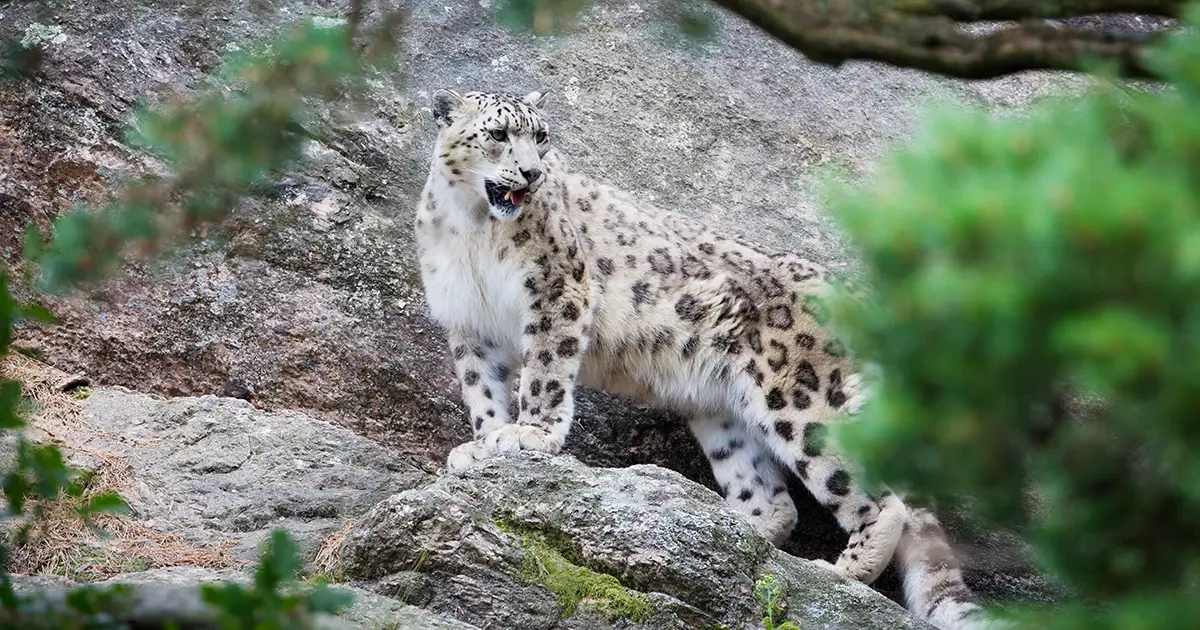
Beside, snow leopard, Gaurishankar Conservation area and Rolwaling Himalayan range is home to wild animals like:
- Blue Sheep (Bharal),
- Himalayan Tahr,
- Musk Deer,
- Langur Monkeys,
- Himalayan Weasel,
- Himalayan Black Bear etc.
If you are bird enthusiasts and enjoy birdwatching, the trails allows you to witness following birds species:
- Himalayan Monal (Lophophorus impejanus)
- Tibetan Snowcock (Tetraogallus tibetanus)
- Blood Pheasant
- Snow Pigeon
- Various eagles and raptors
- Alpine songbirds
Packing List for Milarepa Cave Trek Nepal
The comfortable Milarepa cave trek demands you to have enough preparation in terms of packing list. The packing list determines what kind of experience you will get in your journey.
You should bring only essential items while focusing on practicality, layering, and adaptability.
| Category | What to Pack |
|---|---|
| Clothing | Moisture-wicking T-shirts, thermal base layers, fleece jacket, insulated down jacket, waterproof and windproof outer shell, trekking pants, warm hat, sun hat or cap, gloves, comfortable undergarments, extra socks |
| Footwear | Broken-in waterproof trekking boots, camp shoes or sandals, gaiters (season dependent) |
| Trekking gera | 30–40 L daypack, duffel bag, trekking poles, headlamp with spare batteries, UV-protection sunglasses, water bottles or hydration bladder, dry bags |
| Sleeping gear | Four-season sleeping bag, sleeping bag liner, inflatable pillow |
| Personal extras | Sunscreen, lip balm, wet wipes, toothbrush and toothpaste, quick-dry towel, hand sanitizer, toilet paper |
| First Aid | Personal medications, Diamox (if prescribed), blister treatment, pain relievers, bandages, rehydration salts |
| Other Essentials | Passport, travel insurance certificate, permit copies, passport-size photographs, cash in Nepali Rupees |
Responsible Travel Tips Before you Explore Gaurishankar Conservation Area
Lapchi valley trek makes you traverse across the Conservation area and towards the sacred landmarks where trekkers need to be responsible and follow some rules and code of conduct. Here are list of tips which trekkers should follow for sustainable and responsible tourism impact in 2026:
- Always trek with responsible trekking guides via a government certified trekking agency.
- Make sure you wear appropriate clothing when visiting monasteries and sacred sites.
- Always walk clockwise when doing circumambulation of stupas, mani walls, and chhorten.
- Maintain silence when exploring sacred caves and monasteries.
- Do not touch or click photographs of monks or locals doing rituals without permission.
- Make sure you carry your both degradable as well as non-biodegradable waste in your backpack and throw them only in designated bins.
- Avoid zero use of plastic.
- Do not poke, feed or disturb wild animals when spotted and also avoid plucking vegetation just to capture them behind your lens.
- Always support local accommodation and have meals in the same place where you are planning to stay overnight.
- Respect locals, their culture and traditions.
Conclusion: Follow the Quiet Path to Lapchi Kang
Lapchi Kang trek is one of the off the beaten path treks in Nepal which make you explore the rugged mountain terrain without any crowds. From walking underneath the shadow of Gaurishankhar Himalayan ranges to exploring a cave which was once used by legendary yogi Milarepa, it delivers an experience which only few travelers will ever see.
Lapchi allows you to witness a place where solitude still matters, religious traditions remain meaningful, and travel requires patience as well as curiosity. Its remote terrain, altitude gain and spiritual weight is best suited for those who are physically fit, can adjust in basic teahouse accommodation, interested in Buddhist pilgrimage route, enjoy the solitude, spiritual history, and want to do digital detox by exploring less crowded trails in 2026/27.
For a meaningful Lapchi Valley trek, plan your adventure with Awesome Holidays Nepal so that our experienced team make sure you have one of the memorable journeys in the Rolwaling region.
FAQs
Expand AllWhat is the Lapchi Kang trek?
Aremote Himalayan pilgrimage trails which make you explore rugged landscapes, Buddhist heritage, monasteries, and sacred caves associated with Milarepa is known as the Lapchi Kang trek.
Where is Lapchi Kang / Lapchi Valley located in Nepal?
Lapchi Kang village is located in the northern part of Dolakha District in Bagmati Province, Nepal.
What is the Milarepa Cave in Lapchi?
The Milarepa Cave is a sacred meditation site where the revered Tibetan Buddhist yogi Milarepa is traditionally believed to have meditated and practiced spiritual austerities.
Why is Lapchi Kang a sacred pilgrimage site?
Its long Buddhist history, meditation caves, ancient monasteries, and connections with revered Buddhist masters such as Milarepa makes Lapchi Kang a sacred pilgrimage site in Nepal.
What is the best time to trek Lapchi Valley / Lapchi Kang?
The best time to do Lapchi valley trek or Milarepa cave trek is from spring (March to May) and Autumn (September to November).
What permits are required for Lapchi Kang trek?
Restricted Area Permit along with Gaurishankar Conservation Area Permit (GCAP) are required for Lapchi Kang trek.
Is a guide mandatory for the Lapchi trek?
Yes, as it is inside the restricted zone. You need to have a licensed guide to buy RAP and traverse in the trails of the Lapchi trek.
What is the cost of the Lapchi Kang Milarepa Cave trek 2026?
Depending trip duration, group size, and transportation choice, the Lapchi Kang Milarepa Cave trek cost varies from $675 to $1,650+ per person in 2026.
Are there teahouses or is it camping only on Lapchi trek?
Yes, teahouses is available in this trek.
What is the maximum altitude on Lapchi Kang trek?
The maximum altitude on Lapchi Kang trek is 4,900 m.
Is the Lapchi Kang trek suitable for beginners or first-timers?
With enough physical fitness and mental preparation, even beginners can complete Lapchi Kang trek easily.
Can you see Milarepa’s footprints / handprints in the caves?
Milarepa’s sacred footprints on upper walls and ceilings, alongside newly documented handprints can be seen in the caves.
How crowded is the Lapchi Valley trek compared to Everest or Annapurna?
Lapchi Valley is less developed which offer the quieter experience unlike developed and crowded trails of Everest and Annapurna.
Is Lapchi Kang trek possible in winter or monsoon?
Yes, Lapchi Kang trek possible in winter or monsoon but you need to suffer from unpredictable weather condition and blockage of trails due to extreme snow or landslide.
Lapchi Kang vs Mount Kailash / Tsari pilgrimage – differences?
Lapchi Kang is a Nepal-based Buddhist pilgrimage route centered on local sacred sites and Milarepa traditions. In contrast, Mount Kailash and Tsari are major Tibet’s pilgrimage destinations.
Do I need a Tibet visa for Lapchi Kang (Nepal side)?
No. You won’t need a Tibet visa for Lapchi Kang.
What are the four main gompas / sacred sites on the Lapchi trek?
Ze Phung Cave, Dul-Dul Cave ,Rechen Gompa (Rechen Phug), and Choera Gompa (Chöra Gephel Ling) are the four main sacred sites on the Lapchi trek.
How many days for a full Lapchi Kang Milarepa Cave trek from Kathmandu?
Having 7 to 13 days is best for a full Lapchi Kang Milarepa Cave trek from Kathmandu.
Is Lapchi part of Rolwaling / Gaurishankar Conservation Area?
Yes, Lapchi part of both Rolwaling and Gaurishankar Conservation Area.
Why have almost no foreigners done the Lapchi Kang trek?
Its remote location, limited infrastructure, difficult access, permit requirements, challenging terrain, and relatively low international tourism exposure makes Lapchi receive less foreigners than other trekking trails.
Related blog posts
Discover a choice of tourist destinations loved by most of our visitors. Whether you're on a jungle safari to spot rare animals or walking through a world heritage site, these well-planned itineraries cover the major highlights of Nepal.
 call an expert at: