
Where to See Himalayan Musk Deer in Nepal
 Sristi Adhikari
The Himalayan Musk Deer in Nepal is one of the most mysterious and elusive mountain mammals. It has shy nature due to which this wildlife species inhabit deep inside Rhododendron forests, alpine meadows, and rugged mountain landscapes ranging from 3,000 and 4,200 meters.
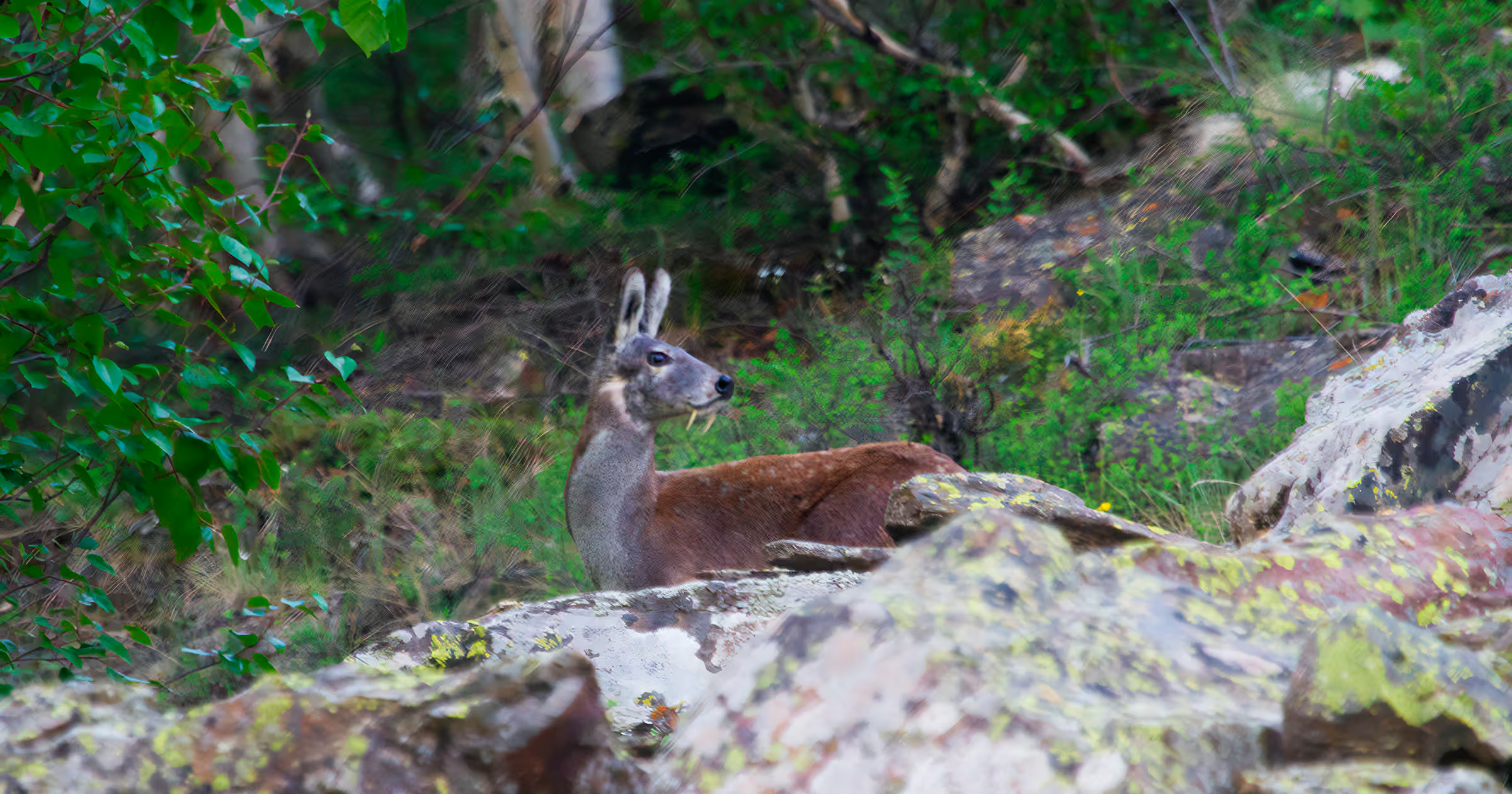
This elusive and shy animal is rare and they are found in cold forests of temperate-to-subalpine region of the eastern, central, and far-western Himalayas. Himalayan Musk deer has distinct long canine teeth that resemble small tusks which make it different from other species of deer with antlers.
The Himalayan Musk deer prefers to rest in the daytime, while they become more active in the early morning and in evening hours. This behavior makes its sighting less as compared to other Himalayan wild animals during trekking.
There are many trekking trails which offers an unique chance to spot Himalayan Musk Deer in Nepal such as Langtang, Sagarmatha, Kanchenjunga, Gaurishankhar, and Makalu Barun, so we suggest nature lover, photographers, and trekkers who want to do ethical Musk Deer tracking in Nepal to visit one of these trekking routes in 2026.
What is a Himalayan Musk Deer?
The Himalayan Musk Deer is a rare species of deer that lives in the high-altitude subalpine and alpine forests of the Himalayas. This species of Deer are quite shy in nature and are much smaller than others. If you are planning to spot rare Musk Deer trek in Nepal, you must know about their shapes and how they appear, and what behavior they show in the dense forest of Himalayas.
Shape and Size
Himalayan Musk Deer in Nepal appear quite smaller than other Deer species. The adult Musk Deer has a body length of around 86 to 100 cm while their shoulder is about 50 cm tall.
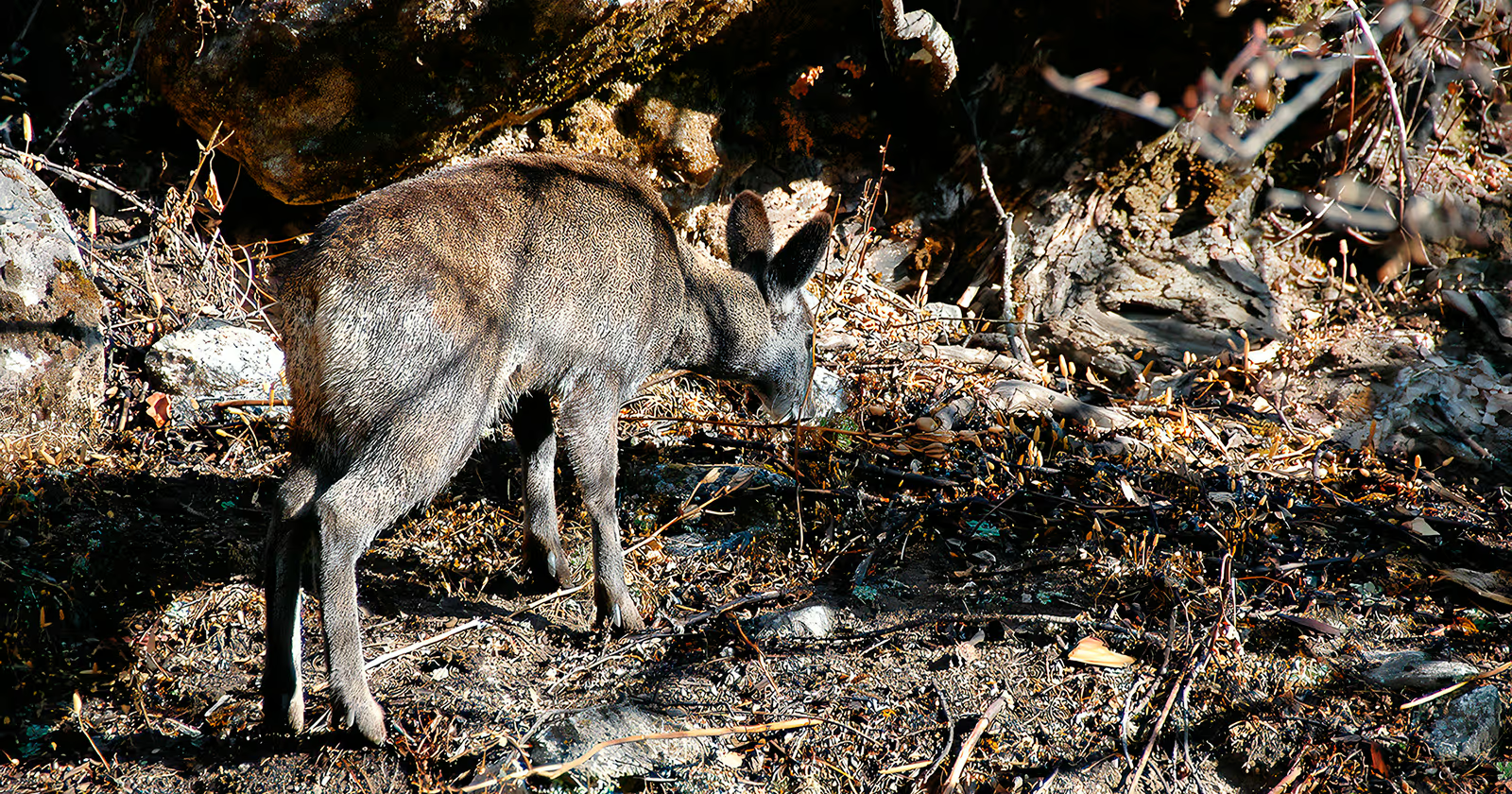
On average, Himalayan musk deer body weighs around 10 to 18 kg. Their hind leg is quite longer and muscular than forelimbs and both limbs produce a bounding gait when climbing the rocky cliffs.
A solitary shy animal, the Himalayan musk deer has small and pointed face with large ears and short tails.
Body Color and Camouflage
The Himalayan Musk Deer in Nepal are active during Dusk and down. Their dorsal body color is sandy dark brown to greyish yellow while their frontal body is quite pale.
The fur of adult Himalayan Musk deer offer natural camouflage which protects them from predators and is difficult to spot in dappled forest light. Their body hair has unique cells which store air and these cells protect them against extreme cold weather of high mountainous regions.
The endangered Musk deer can live in deep snow even at -20 Degrees Celsius without using body energy. Their newly born fawns have spots in their bodies but as they grow it goes on disappearing.
Distinct Canine and No Antlers
The male Himalayan Musk deer’s unique feature is that they have a pair of long canine teeth that continuously grow downward from the upper jaw. Their teeth resemble a small tusk which make them unique among other deer species.
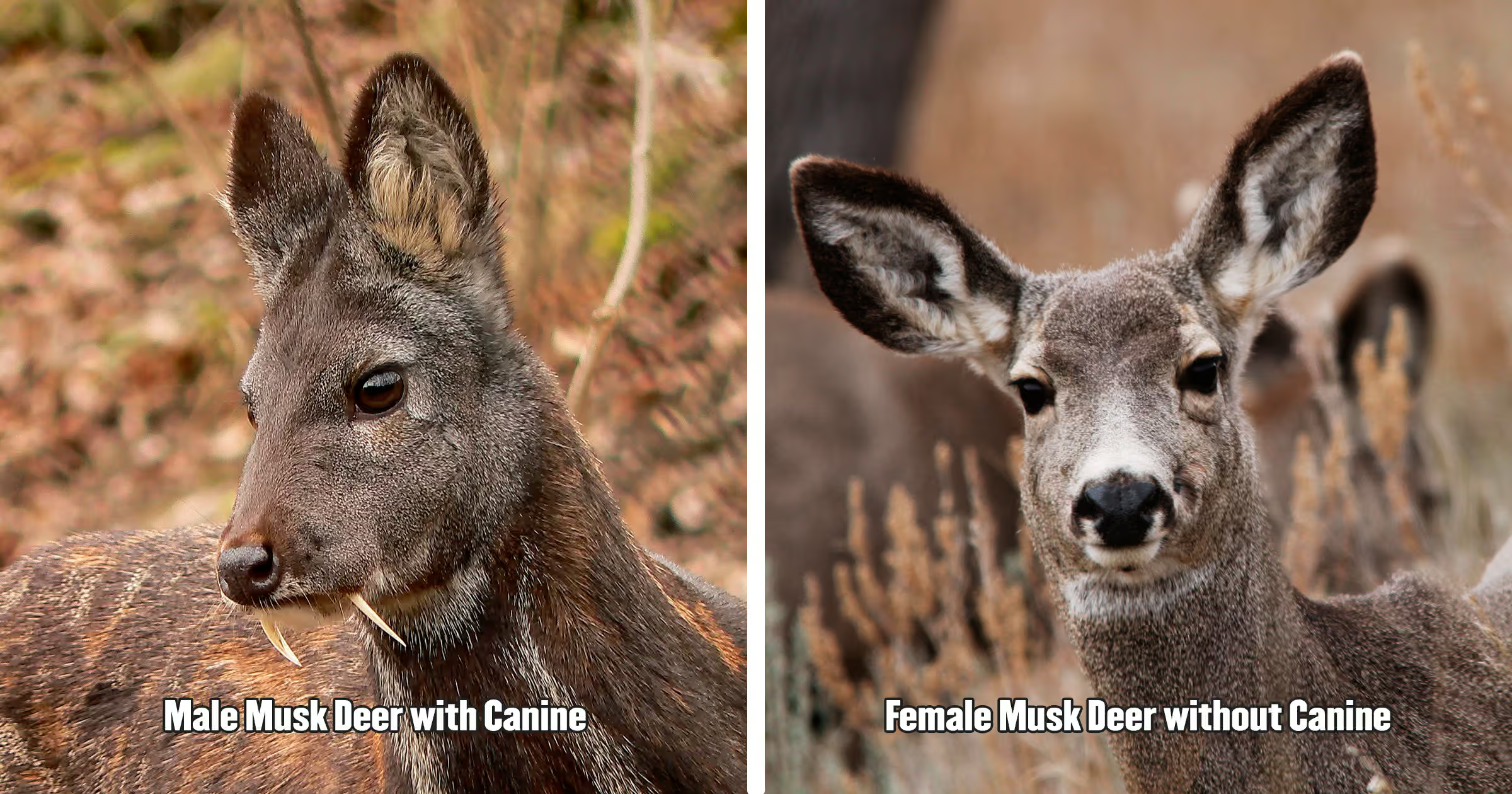
These pairs of teeth grow continuously which can even reach around 10 cm throughout their life and they use these teeth as a primary weapon when they have to fight with other males during breeding season. Whereas, female and young Musk deer do not have these tusks.
Animal Behavior of The Himalayan Musk Deer
The Himalayan Musk Deer are predominantly crepuscular. They are most active in the early morning and in the evening hours. The secondary time frame of Musk deer activity is also most at midnight where it gets very dark.
The Himalayan Musk Deer have a solitary nature and they overlap territories only in the breeding season(November to Mid-January). These rare species of Himalayan mammals are highly vigilant and their olfactory perception is quite higher than human beings.
When they sense danger they hide in the dense forest without moving and they perfectly camouflage the environment. If they sense a human predator they quickly run towards the rocky terrain with their explosive bounding flight.
Where to see Himalayan Musk Deer in Nepal?
The ethical tracking of Himalayan Musk Deer in Nepal demands patience, experienced local guides, enough mental and physical preparation, and trekking through suitable mountain habitats. Being a nocturnal and crepuscular, these rare species of Musk deer are only active during dawn and dusk.
It spends much of its time moving quietly through steep mountain forests of fir, Rhododendron, pine, oak, birch, and juniper trees between 2,500 and 4,500 meters. Also, thick vegetation of the Himalayan forest offers them to stay hidden during the day hours.
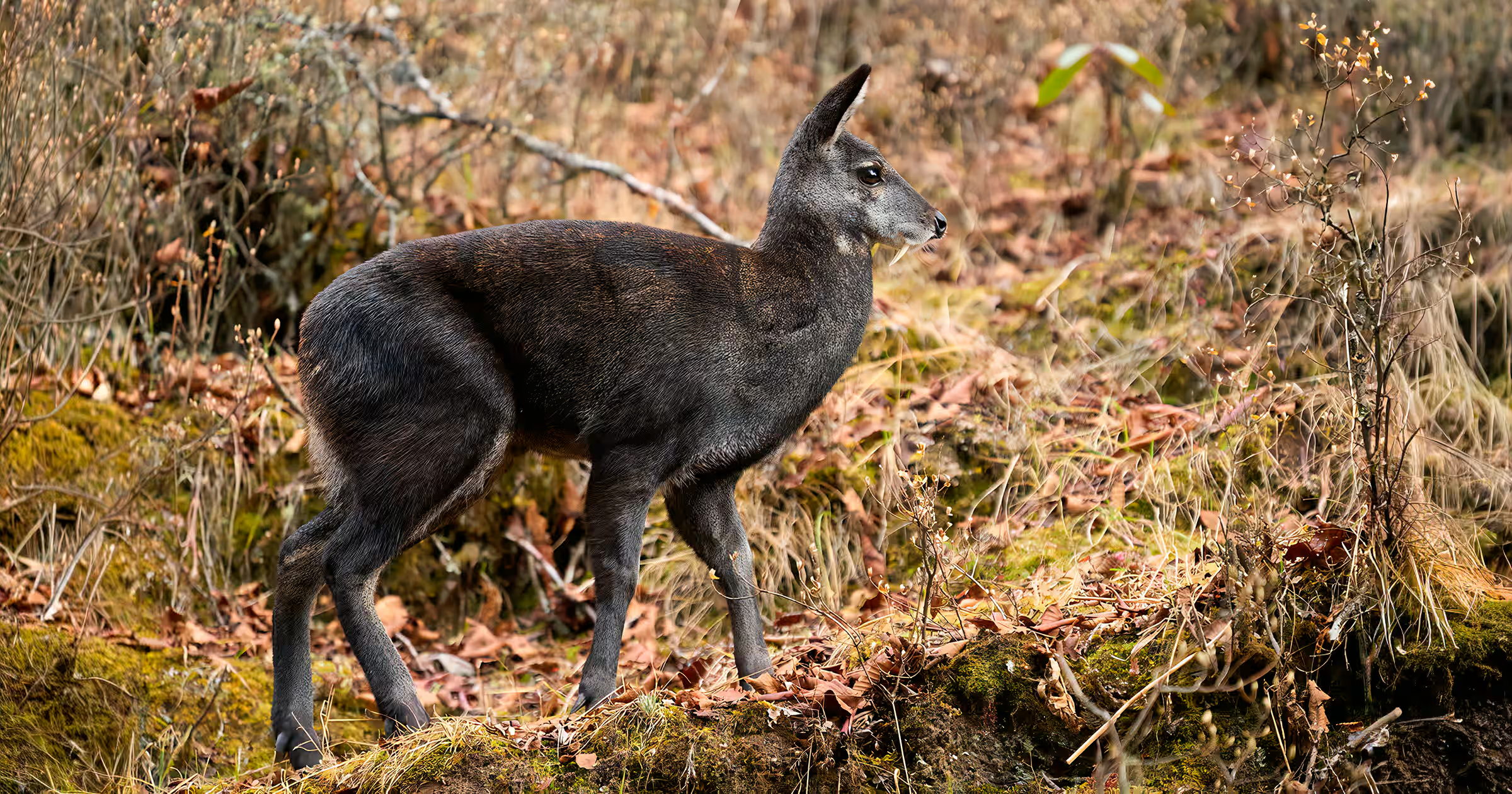
These endangered animals feel safe in the thick Rhododendron forest and Nepal’s mid-hills and Himalayan region have plenty of vibrant Rhododendron trees. Himalayan Musk Deer in Nepal are also found in alpine regions filled with shrubs, grasses and rocky slopes without tall trees.
Nepal Government has set up many National park and conservation areas in order to protect and conserve the rare and endangered wildlife species like Himalayan Musk deer. Some of the important areas where you can see Himalayan Musk Deer in Nepal are:
- Langtang Region
- Everest or Khumbu region
- Makalu region,
- Kanchenjunga region,
- Manaslu region, and
- Western Nepal.
Best Trekking Areas for Himalayan Musk Deer Tracking Nepal
When doing Himalayan Musk Deer Tracking in Nepal, you need to select the right trekking region which holds the same importance as selecting the right season. The Himalayan Musk Deer in Nepal mostly inhabit remote mountain forests, steep slopes, dense Rhododendron woodlands, and subalpine habitats which range approximately from 2,500 and 4,500 meters above sea level.
Since these shy mammals avoid human activity and mostly hide inside the dense forests, trekking in protected conservation areas with healthy forest ecosystems is the best opportunity for sightings of Himalayan Musk Deer in Nepal. We have listed out some of the best trekking areas which offer chances of sighting or movement of these rare and endangered Himalayan wildlife below but we cannot guarantee that you will see them regardless of regional choice or season:
Sagarmatha National Park
Sagarmatha National Park is internationally known as the home of Mount Everest, and is one of the most important trekking areas for Himalayan Musk Deer Tracking in Nepal. The nearby forests of Namche Bazaar, Khumjung, Tengboche, and Phortse provide suitable habitat where careful travelers may encounter these elusive animals.
Among them, Phortse village which sits at an elevation of 3800 meters is our first recommendation. You need to detour from the main trail of EBC from Namche Bazaar to reach this village which is located just above the Dudh Koshi river.
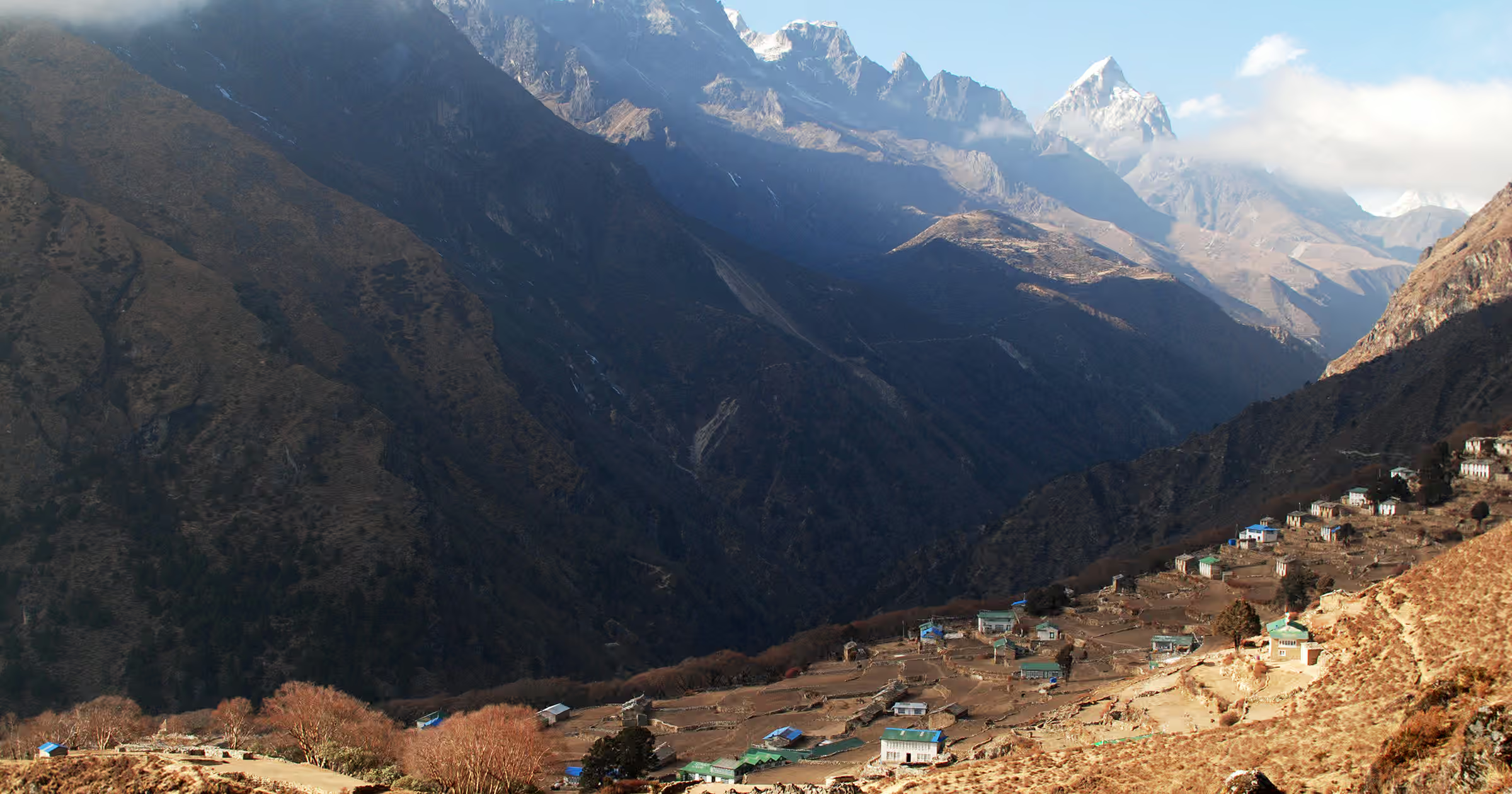
As Phortse village is mostly inhabited by the Sherpa community who follow Tibetan Buddhism. According to them, any kind of wildlife is considered a manifestation of the holy divine and for many generations, they avoid harming wild creatures.
As a result, the Sagarmatha region offers one of the densest populations and highest sighting probability of Himalayan Musk deer in Nepal. Due to less human settlement and Musk deer even can be spotted grazing in the surrounding of Phortse village viewpoints in early morning and evening of winter.
Beside, Himalayan Musk Deer, you can also spot wild animals like Himalayan tahr, Himalayan monal pheasants, snow leopard. When choosing Phortse for Musk Deer tracking you can choose Standard luxury Phortse itineraries and should make up your mind for basic accommodation in remote mountainous trails.
Langtang National Park
Langtang National Park is another best wildlife destination which offers the tracking of Himalayan Musk Deer in Nepal. It is located in the north of Kathmandu and the trekking in the combined snow-capped mountains, ancient forests, alpine meadows, and glacial valleys not only rewards you with the sighting of musk deer but it also offers tracking of Red Panda.
The trekking trails of Langtang Valley make you traverse through oak, pine, bamboo, and Rhododendron forests between 2,500 and 3,500 meters where probability of spotting Musk Deer is most during the early morning or late evening.
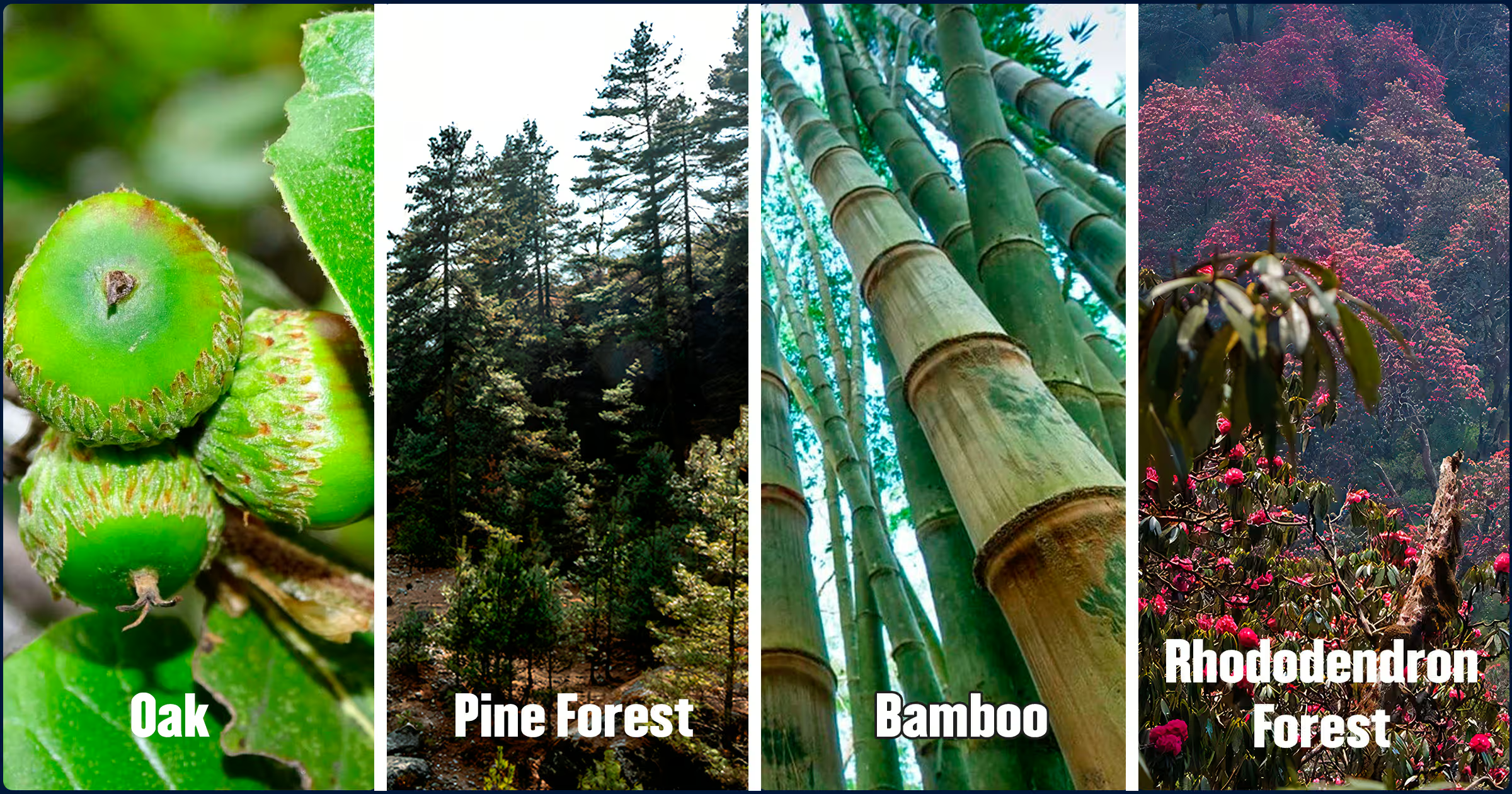
Langtang National Park is home to Himalayan black bears, red pandas, Himalayan tahrs, langurs, and more than 250 species of birds which stretches from subtropical to alpine meadows. As a result, every trekking day is an opportunity to discover the remarkable biodiversity of Nepal.
Standard Langtang trekking runs 10 to 12 days where you can extend further for more cultural depth and wildlife encounters.
Manaslu Conservation Area
Manaslu Conservation Area offers excellent conditions for Himalayan Musk Deer Tracking Nepal with its serene and less-explored trekking trails like Tsum Valley. The pristine ecosystem with a distinct six climatic zone of tropical lowlands forest of 1000 meters to high arctic above 4,500 meters of Manaslu region offers:
- Rugged terrain,
- Dense forests, and
- Relatively less crowded trails.
This untouched environment offers wildlife that continues to thrive. Similar to Phortse village, the local communities who inhabit Lho, Shyala, and Sama Gaun also follow strict Tibetan Buddhism which restricts killing any life forms which results in the dense population of wildlife in this region.
You will have high chances of Himalayan Musk Deer spotting during Tsum Valley Trek nearby villages like:
- Chhokangparo,
- Nile, and
- Mu Gompa.
So, if you are into remote trail which are free from trekkers, Manaslu Trek and Tsum valley trek offer you the best kind of adventure for tracking Himalayan Musk Deer in Nepal.
Shey Phoksundo and Upper Dolpo
The trans-Himalayan terrain of Upper Dolpo is another best trekking destination which you should visit to track Himalayan Musk Deer in Nepal. The semi-desert terrain to alpine meadows of the Upper Dolpo especially Shey Phoksundo lake periphery have documented one of the highest encounters of Himalayan Musk deer in Nepal.
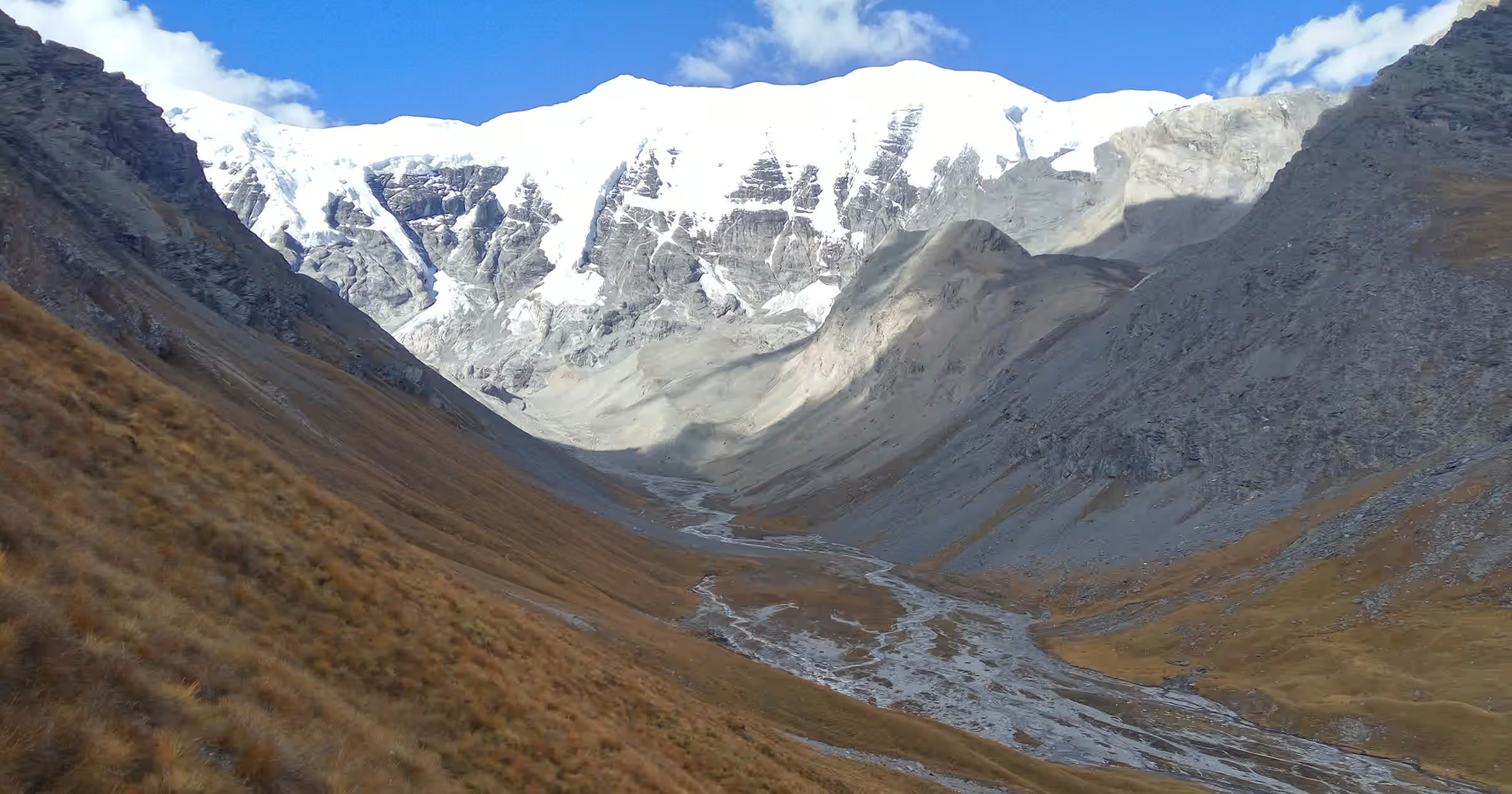
Trekking to Dolpo demands a high level of preparation and you need to travel both airways and overland routes just to reach the Trailhead which in minimum takes 9 to 11 days. Besides Himalayan Musk deer, the trekking trails of Phoksundo region allow you to encounter some rare Himalayan wildlife like snow leopards, blue sheep, and Himalayan tahr.
Gaurishankhar Conservation Area
Gaurishankhar Conservation Area is home to Lapchi Valley, which is one of the most rewarding trekking destinations for tracking Himalayan Musk deer. The locals of Lapchi Valley strictly follow Tibetan Buddhism which is specifically influenced by the Kagyu and Drikung Kagyu lineages.
The village is itself less populated and villagers practice semi-nomadic herding and they migrate to lower regions in winter season, which allows endangered and rare wild animals like Himalayan Musk deer to freely roam in the high valleys. According to camera trap research, Lapchi Valley has documented a huge number of Musk Deer population along with other rare animals like Himalayan black bears, snow leopards, Bharal, etc.
Trekking to Lapchi Valley from Kathmandu demands around 11 to 14 days so that you can get the opportunity of Musk deer sighting. In addition to this, you can also do full camping in the wide meadows of the Gaurishankar Conservation Area during your visit in 2026.
Best Time to See Musk Deer Nepal
Musk Deer show high activity during the winter season which is why it is considered as the best time to see musk deer in Nepal.
Winter (December to February)
The winter season is the strongest period for tracking Himalayan musk deer in Nepal. The season brings heavy snowfall at higher elevation which pushes animals like Musk Deer to lower forest areas in between 3,500 and 4,000 meters, making them easier to spot, while thinner vegetation provides better visibility.
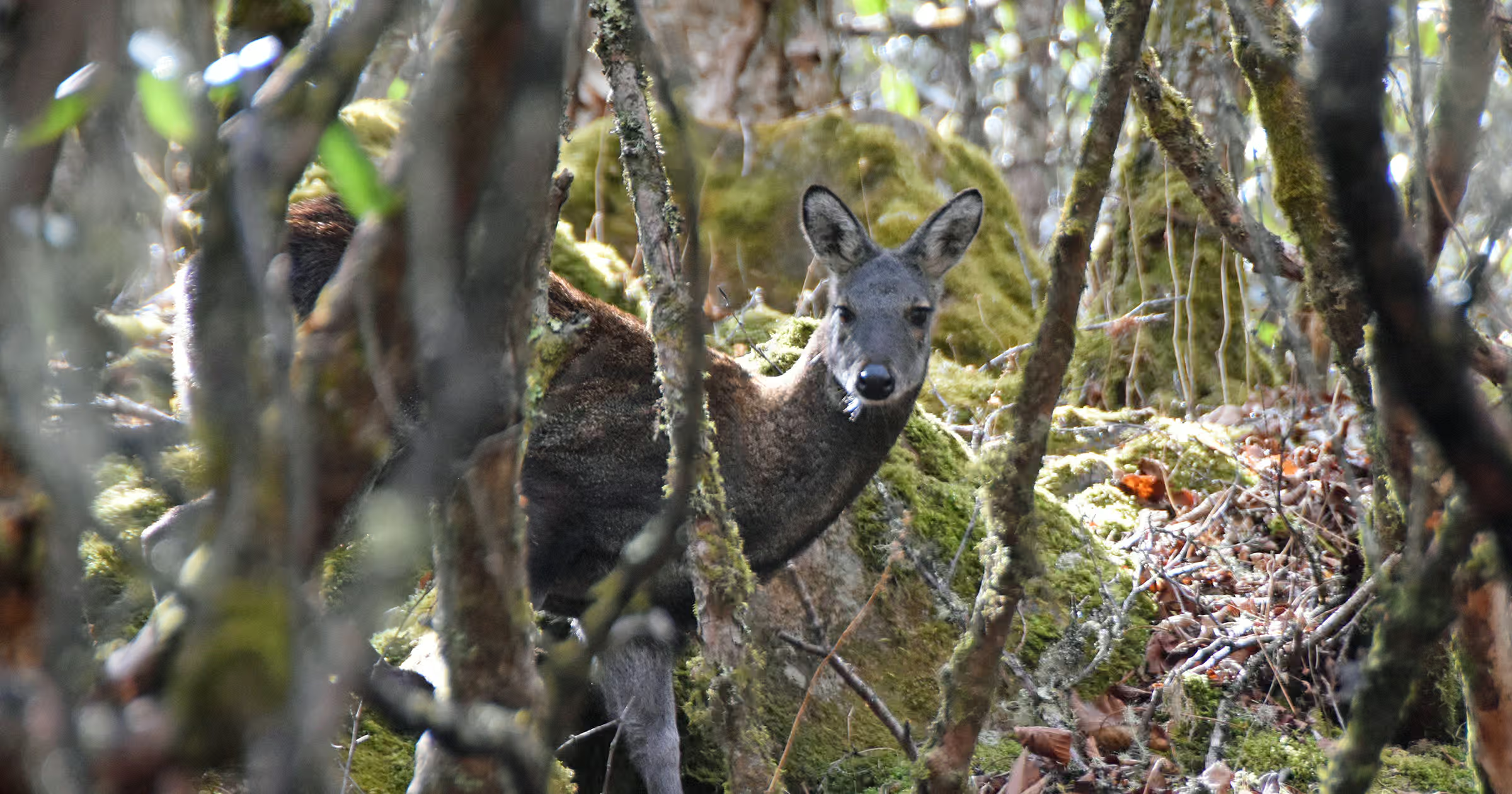
Also, November to Mid-January is the breeding season of Musk deer, and males become more active and often move around at dawn and dusk which increases the chances of sightings and you can even get to smell their unique scent. Local Himalayas pastoralists leave the high mountainous region and migrate to the lower region with their livestock which makes the wild animals to freely graze.
When doing Musk deer tracking in this season you have to face freezing daytime temperatures of -5 Degrees Celsius to -20 Degrees Celsius and you have to bring every sort of winter gear to cope with this extreme cold temperature.
Spring (March to May)
Spring is another best season for tracking musk deer as they continue feeding in lower subalpine forests before moving to higher elevations. This season is right after the breeding season, post rut males are less active.
However, the freshly grown vegetation attracts the Himalayan Musk deer in feeding zones which offer a good chance to spot them in lower regions.
Autumn (September to November)
Autumn brings clear skies and stable weather, but it is not the best season for spotting Himalayan Musk Deer in Nepal. The season starts right after the end of monsoon, thick vegetation of the dense forest provides excellent cover and camouflage them in higher forested areas. This makes their sightings less common even though lucky one can spot them.
Summer or Monsoon (June to August)
The monsoon season is the least favorable time for Himalayan musk deer tracking in Nepal. Heavy rainfall, dense vegetation, fog, and slippery trails reduce visibility and make access to their habitat more challenging. During this season, musk deer remain scattered across higher alpine areas, making sightings rare.
Practical Tips for Tracking Himalayan Musk Deer in Nepal
The successful tracking of Himalayan musk deer in Nepal requires trackers to understand about animal behavior and respect of their natural habitat. Make sure you follow these tips when doing musk deer tracking trek in Nepal:
- Start your journey before sunrise or continue trekking even after sunset.
- Make sure you maintain peace and avoid loud conversations.
- Always carry binoculars for distant observation instead of going closer to them.
- Focus on wearing neutral-colored clothing that helps you blend into the forest.
- Always hire licensed and knowledgeable local guides who are quite familiar with recent animal movements.
- Make sure you stay on designated trails to minimize disturbance.
- Always respect park regulations and never feed or follow wild animals.
Conservation Efforts to Protect Himalayan Musk Deer in Nepal
The rare and endangered Himalayan Musk deer is protected in their own habitat via National parks and conservation areas. Nepal government is strictly monitoring these wildlife and has restricted the hunting or trading of this endangered Himalayan species.
Even so, the Himalayan Musk deer in Nepal is being illegally hunted and poached at an alarming rate for its valuable musk pod. To reduce illegal poaching, conservation organizations and park authorities are focusing on identifying the places with greatest threats via:
- use of camera traps,
- scientific monitoring,
- and field surveys.
Planning to Spot Himalayan Musk Deer in Nepal in 2026?
Or Call/Message on WhatsApp +977 98434 13619
This helps understand musk deer populations and strengthens the anti-poaching measures in particular areas of Himalayas. Beside this, Community participation is another key part of musk deer conservation in Nepal.
The government along with other non-Governmental organization is making locals aware about the importance of wildlife in eco-system, how to initiate sustainable livelihood without hampering forest, and reducing deforestation to ensure Himalayan Musk Deer can thrive in the mountainous region of Nepal.
Conclusion
The Himalayan Musk Deer in Nepal is not only a rare species of wild animal but it also symbolizes the rich mountain diversity of the Country. The shy nature of Himalayan Musk deer makes its sighting quite rare but once you know about the hours and best season, you will be rewarded with the sighting of true treasures of Himalayas.
The Himalayan musk deer is getting rare day by day because poachers and illegal hunters kill them for its valuable musk glands which are used in traditional medicines and perfumes. Also habitat loss due to deforestation, human settlements, livestock grazing is making forests thin day by day which is why it is listed as Endangered on the IUCN Red List.
So, trekkers and wildlife enthusiasts should focus on practicing responsible trekking approaches and should focus on taking memories back home without disturbing their habitat. If you are also planning to Track Himalayan Musk Deer in Nepal, contact Awesome Holidays Nepal for a more planned and safe journey filled with lifetime memories in 2026.
FAQs
Expand AllWhere can trekkers spot Himalayan musk deer in Nepal?
Trekkers can spot Himalayan musk deer in Nepal in Langtang National Park, Sagarmatha National Park (especially around Phortse), Upper Dolpo, Manaslu, Tsum Valley, Rara National Park, and the Lapchi Valley.
What is the best time of year to see Himalayan musk deer in Nepal?
Winter (December to February) is the best time of year to see Himalayan musk deer in Nepal.
Can you see Himalayan musk deer on the Everest Base Camp trek or in Phortse?
Yes. The forests around Phortse on the Everest Base Camp route are best for observing Himalayan musk deer.
Is Langtang National Park good for spotting musk deer and red pandas?
Yes. Langtang National Park is one of Nepal’s premier wildlife destinations for spotting musk deer and red pandas.
What are the top locations for Himalayan musk deer tracking in Nepal 2026?
Everest region, Langtang National Park, Upper Dolpo, Tsum Valley, Manaslu Conservation Area, Lapchi Valley, and Rara National Park are best locations for Himalayan musk deer tracking in Nepal 2026.
How endangered is the Himalayan musk deer and why is it hunted?
The Himalayan musk deer is an endangered species that is listed on the IUCN Red List. It is mainly threatened by illegal hunting for its valuable musk gland, which is used in traditional medicine and perfumes.
What is the success rate for spotting musk deer on Nepal treks?
The success rate for spotting musk deer on Nepal treks is quite high which depends on season, location, weather, and guide expertise but there is no guaranteed sighting.
How to ethically track and photograph Himalayan musk deer without disturbance?
You should observe musk deer quietly from a safe distance, avoid approaching or feeding them, and follow your guide’s instructions to ethically track and photograph Himalayan musk deer.
Can beginners join a musk deer trekking trip in Nepal?
Yes, beginners with a reasonable level of fitness can join many musk deer trekking trip in Nepal.
Where is the highest probability of seeing musk deer – Phortse, Langtang, or Dolpo?
Phortse and Langtang are generally considered the most reliable locations for musk deer sighting. While Upper Dolpo also offers sightings in more remote and less-visited habitats.
Is there a dedicated Musk Deer Trek in Manaslu or Tsum Valley?
Wildlife-focused itineraries in the Manaslu and Tsum Valley regions are available and can be customized according to your travel interest in Nepal.
What national parks in Nepal protect the Himalayan musk deer?
Langtang National Park, Sagarmatha National Park, Rara National Park, Shey Phoksundo National Park, and several conservation areas protect the Himalayan musk deer in Nepal.
How much does a musk deer tracking trek in Nepal cost?
It cost ranges from USD $1,200 to $4,000 per person for a musk deer tracking trek in Nepal mountainous regions.
What permits or preparations are needed for remote areas like Upper Dolpo or Lapchi?
Special trekking permits, conservation area or national park entry permits along with experienced guides, and proper preparation for high-altitude travel are needed for remote areas like Upper Dolpo or Lapchi.
Do Himalayan musk deer have antlers or tusks?
Male Himalayan musk deer do not have antlers but they have long, curved canine tusks.
What do Himalayan musk deer eat and when are they most active (crepuscular)?
Himalayan musk deer mainly feed on grasses, leaves, lichens, mosses, shrubs, and herbs. They are most active during dawn and dusk, making them a crepuscular species.
Can you combine musk deer tracking with other Himalayan wildlife tours?
Yes, many wildlife tours combine musk deer tracking with other Himalayan wildlife tours.
Are there conservation projects or anti-poaching efforts supported by trekking in Nepal?
Yes. Responsible trekking contributes to conservation through park fees, community tourism initiatives, wildlife monitoring, and anti-poaching programs in protected areas.
How rare is it to see Himalayan musk deer compared to blue sheep or Himalayan tahr?
Himalayan musk deer are significantly more elusive and difficult to spot than blue sheep or Himalayan tahr due to their shy nature and cryptic camouflage in dense forests.
How do local communities in Phortse or Lapchi help protect musk deer?
They participate in anti-poaching efforts, protecting forest habitats, promoting sustainable tourism, and raising awareness about wildlife conservation.
Related blog posts
Discover a choice of tourist destinations loved by most of our visitors. Whether you're on a jungle safari to spot rare animals or walking through a world heritage site, these well-planned itineraries cover the major highlights of Nepal.



 call an expert at: