
Gai Jatra Festival Nepal: A Complete Guide to the Festival of the Cow (2026–2027)
 Sristi Adhikari
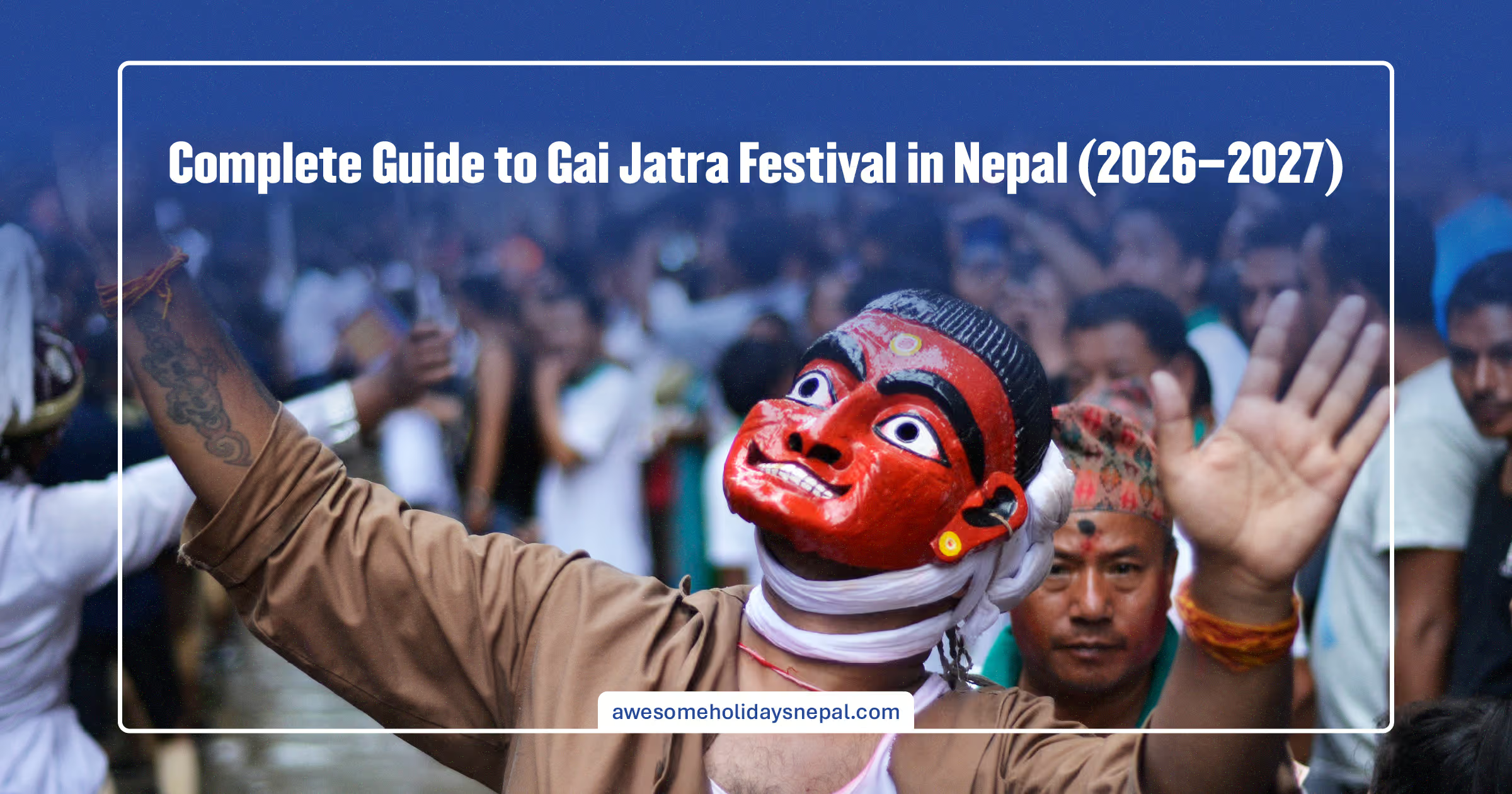
Gai Jatra festival also known as the Cow Carnival, Cow Festival, or Sa Paru is one of the most popular festivals which is celebrated throughout Nepal. The Gai Jatra celebration is done to honor family members who have passed away in the preceding year.
The carnival offers a communal way for families to express grief while celebrating life. During Gai Jatra, the procession of cows is taken out from that house who are grieving for their lost ones and is believed to be done for guiding the departed soul to the after life by cow.
If you are planning a cultural tour in Nepal, make sure you also attend the Gai Jatra festival with sensitivity and respect as it is highly connected to bereavement.
Gai Jatra at a Glance
- Festival Name: Gai Jatra
- Meaning: Festival of the Cow
- Nepal Bhasa name: Sa Paru
- Main purpose: Remembering loved ones who died in the preceding year
- Main community: Newar community, although people from many backgrounds participate
- Main region: Kathmandu Valley
- Major celebration areas: Kathmandu, Patan, and Bhaktapur
What is Gai Jatra Festival in Nepal?
The Gai means “cow” and Jatra means “procession or festival” which refers to the “Festival of Cow”. In Newari language (Nepal Bhasa), it is also termed as Sa Paru where “Sa” refers to “Cow” and “Paru” means “Pratipada Tithi”.
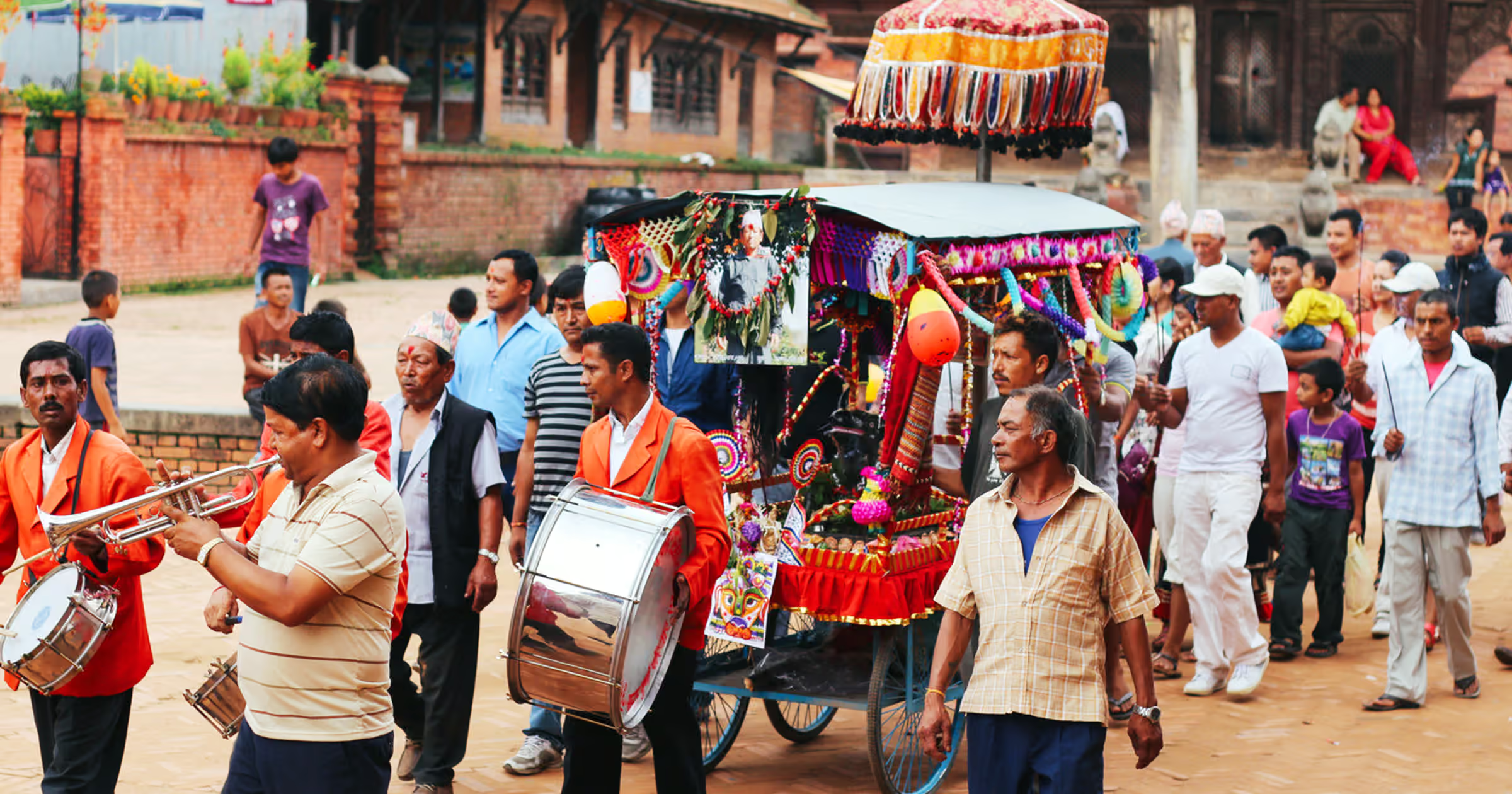
Pratipada Tithi refers to the first day of the lunar fortnight. Every year, on this day procession of cow is taken out from the house who have lost their family members in the past year.
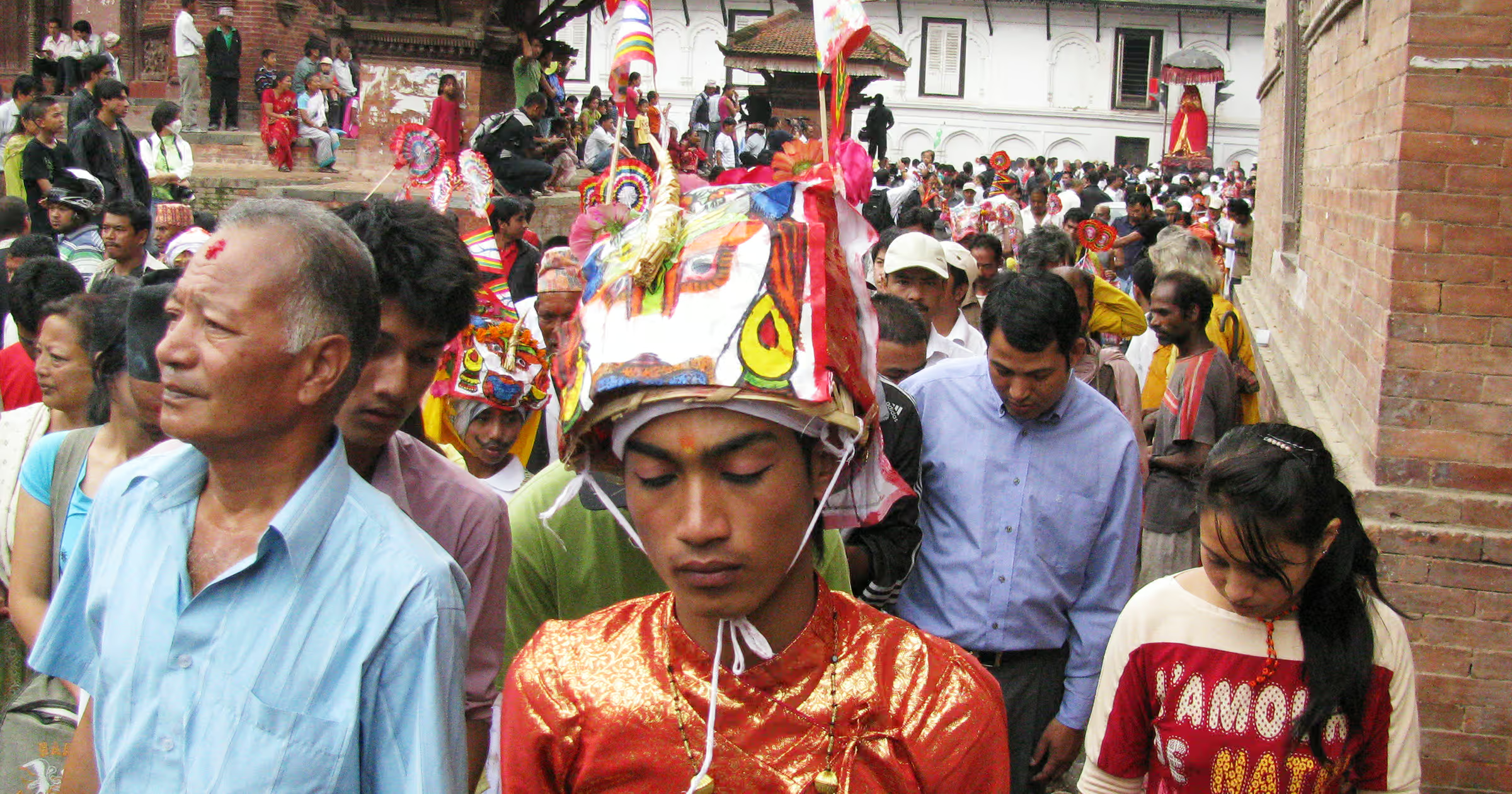
The young boy from grieving family dress as a cow and show the parade throughout every hooks and corners of streets. Doing this cow parade is believed to guide departed soul into afterlife safely.
What is the Date of Gai Jatra Festival Nepal 2026?
- Nepali Calendar Date: Bhadra 13, 2083 BS
- Gregorian Calendar Date: August 29, 2026 AD
- Falls in: Saturday
- Tithi: Pratipada (Krishna Paksha)
Gai Jatra festival in Nepal is mainly celebrated by the Newar community and is enjoyed by every ethnic group. This year, Gai Jatra, or festival of cows, is celebrated on the 13th of Bhadra (13/05/2083) which falls right after Nepali Rakshya Bandhan also known as Janai Purnima(Bhadra 12, Friday: 12/05/2083).
Whereas as per English or Gregorian Calendar, Gai Jatra falls on 29th of August, 2026(Saturday).
Gai Jatra Festival’s History and Origin
The festival of Cow started in the 17th century Malla period and has been practiced as of today. When King Pratap Malla’s son died tragically, his beloved wife was so sad that she stopped smiling.
In order to bring a smile to his wife’s face, King declared the parade involving cows, where he asked every family member to join this cow parade who had lost their loved ones. He wanted the queen to realize that she was not the only one who was suffering from grief and death was inevitable.
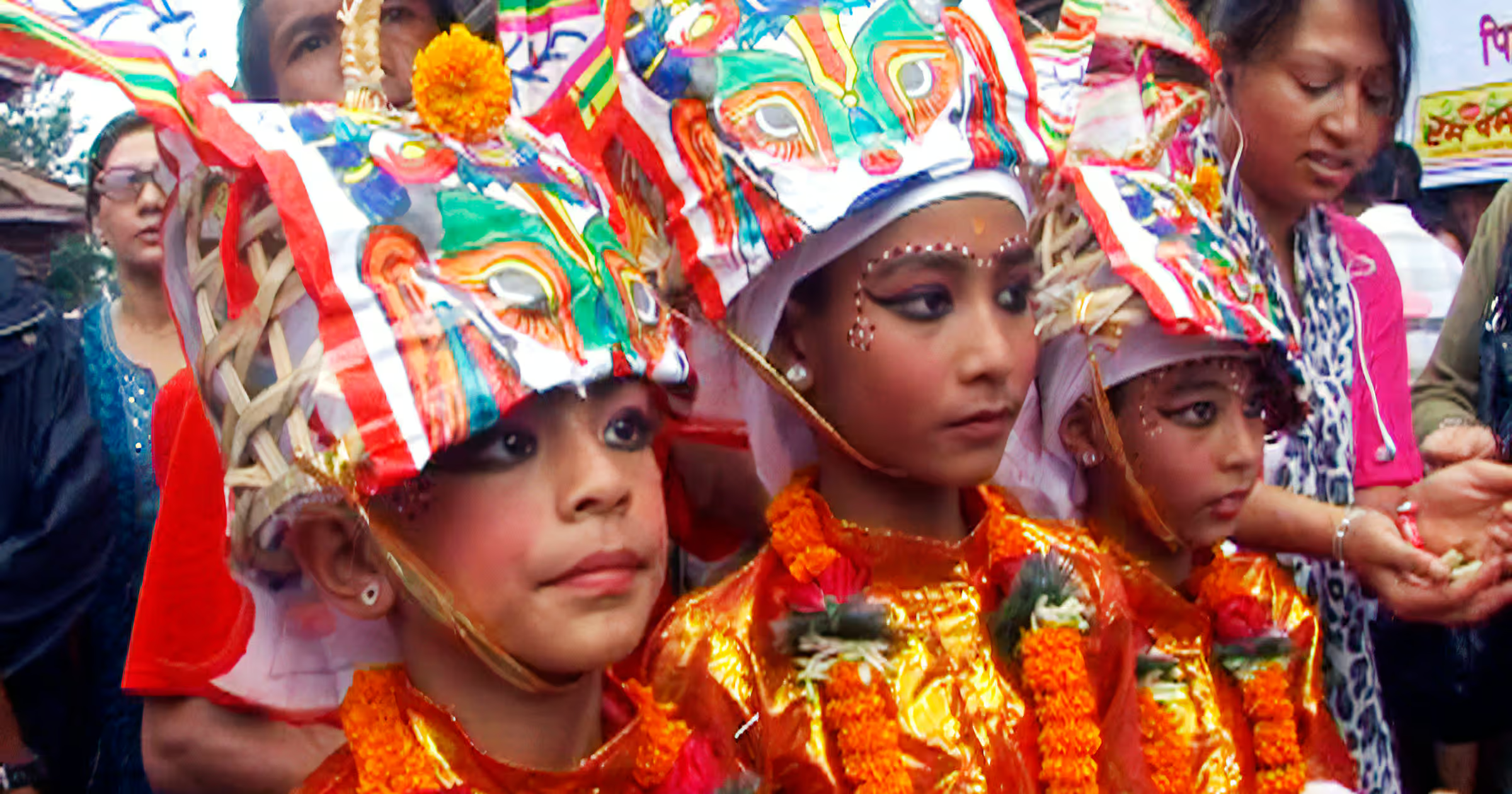
Locals started adding humorous acts to make the queen smile and finally she smiled. The success of the Gai Jatra made the King decide that it will be conducted every year and this is how the celebration of the Gai Jatra Festival began.
In Hinduism, cow is highly revered and symbolizes the Earth. It is believed that it gives and feeds which is a symbol of life and life support. Cow is also believed to guide the departed soul to the after life.
Mythological Origin
According to Buddhist Manuscript, a woman who was grieving for her beloved son untimely death made her to visit Lord Gautam Buddha. At that time, Gautam Buddha was in middle of teaching session, there grieving mother cried and begged him to bring back her son’s life back.
Then, Lord Buddha gave her a task to bring a handful of mustard seed from that particular home where no one had died. If she successfully bring, he will sprinkle over her son dead body which will bring him back to life.
She began her search of such home but even after strolling all around the village she could not find it finally realize that death is inevitable. Once you get borne you have to die one day.
Origins in Death Rituals
Gai Jatra is also celebrated to worship Yamaraj (Yama), god of the death. According to Hindyu religious book, Garuda Purana, the soul of death should cross a mythical river, “Vaitarani” to reach after life.
And, cow will help the soul of deceased to cross this river, so that he will reach the realm of Yama, the god of death. Another death ritual related to Gai Jatra festival is “Brishotsarga”. During this ritual, family member set ox and bull free which will help the deceased soul to have a peaceful after life.
How is the Gai Jatra or Cow Festival Celebrated in Nepal?
Cow Procession
The festival of Gai Jatra begins with a cow procession which is taken out from those houses who lost their loved one in the preceding year. They dressed their adult or child family members as a cow making horns and tails.
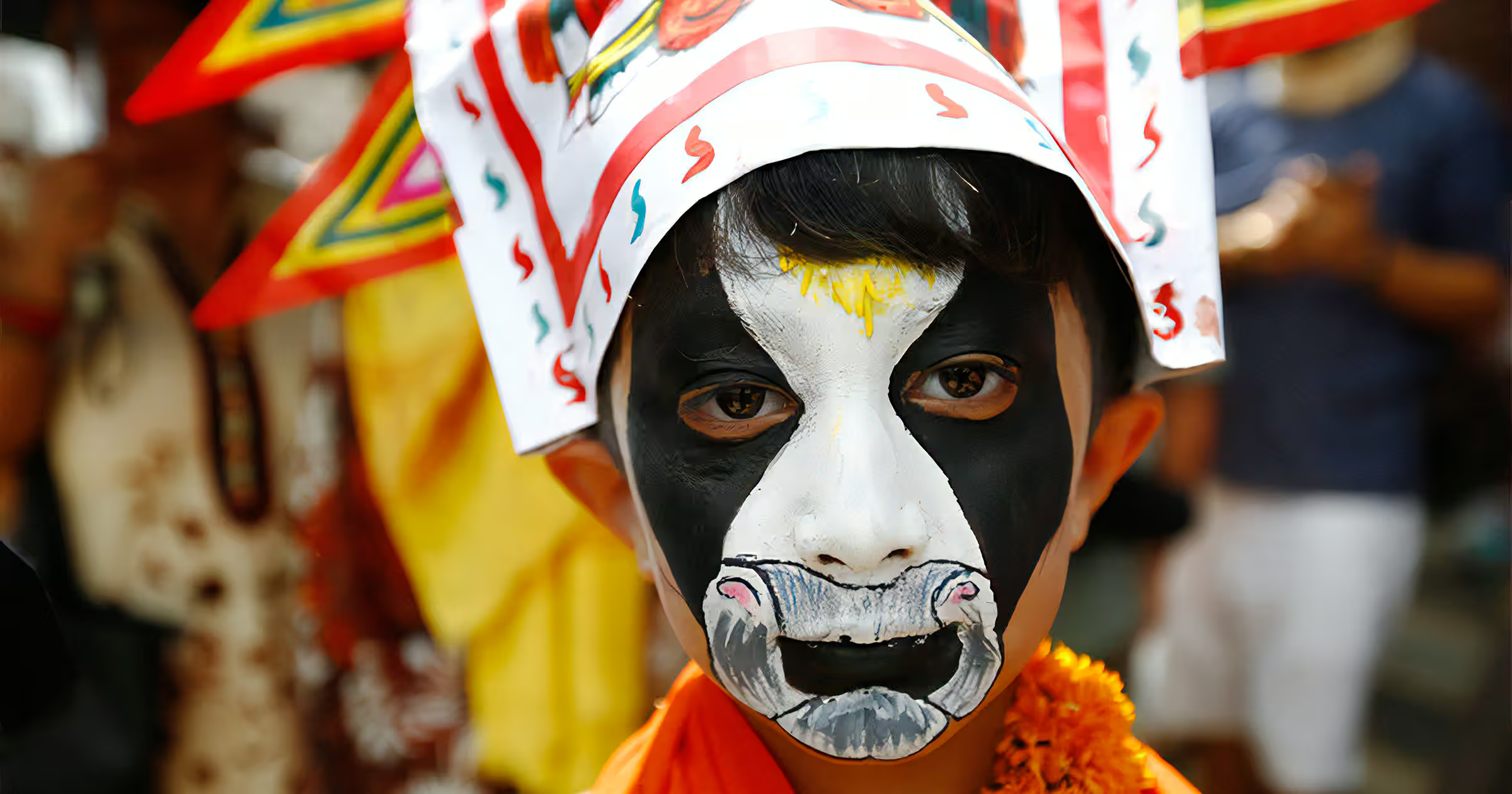
Then, a cow procession along with others will depict their parade throughout the neighborhood and nearby areas. During the cow parade, family members offer food while chanting prayers as blessings for the departed soul’s journey to afterlife.
Some families also depict cows using bamboo and those families who lost their child would create a sign of makeshift cow out of a bamboo basket. Likewise, those who lost their women family members will show a cow parade wearing red and blue clothes and if that is a pregnant woman they will bring a calf in the Jatra.
Satire, Comedy and Depiction
In Nepal, Gai Jatra has been evolved as a “festival of free speech”. Local citizens, comedians, street performers disguised as politicians, public figures and mock them for their social habits, and current issues via comedy, parody, mimicry, and other public performances.
This form of humor and satire offers a way to face difficult realities and create emotional relief to the grieving family.
Gai Jatra and LGBTIQ+ Community in Nepal
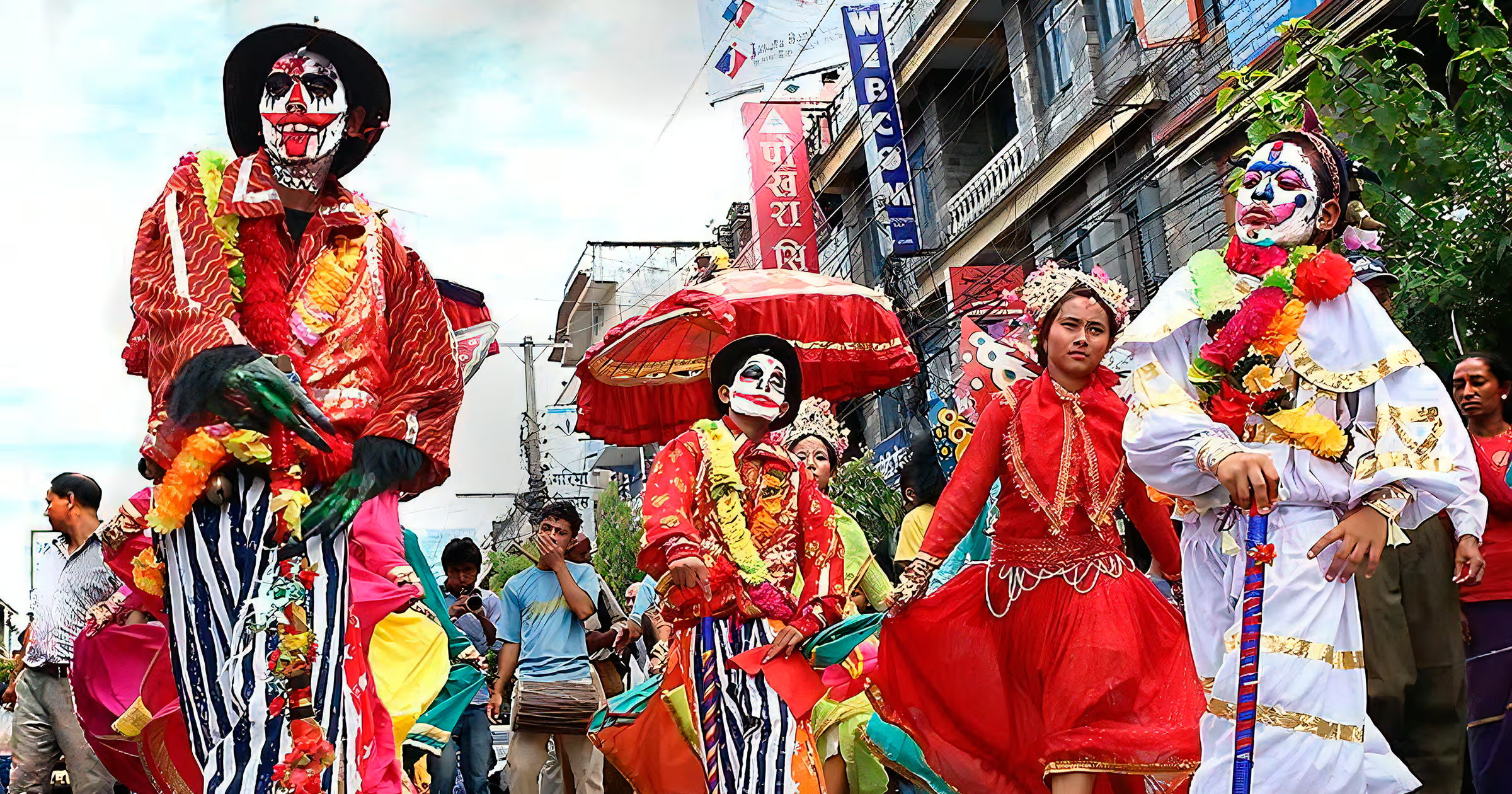
Gai Jatra is also used to celebrate identity where LGBTIQ+ community also offers parades wearing colorful costumes and heavy makeup. Since 20210, Blue Diamond society is leading the Gai Jatra third gender march with visibility marches which is making conservative society for inclusion of third gender.
Where to Experience Gai Jatra in Nepal
Gai Jatra, the festival of cow is celebrated throughout Nepal, if you are planning to experience in Kathmandu valley make sure you visit following places:
Kathmandu
One of the most dynamic events of the Gai Jatra festival is celebrated in Kathmandu and you can witness it in places like Asan, Basantapur, Kathmandu Durbar Square. Visitors will encounter a cow procession where children are dressed as cows, satirical street comedy acts, and rituals of honoring their lost loved ones.
Bhaktapur
In Bhaktapur Gai Jatra lasts for around eight days and ends in Krishna Janma Asthami. The celebration also features the famous “ Taha-Macha Parade” where they display the picture of their lost ones in symbolic chariots while performing Ghintang Ghisi dance.
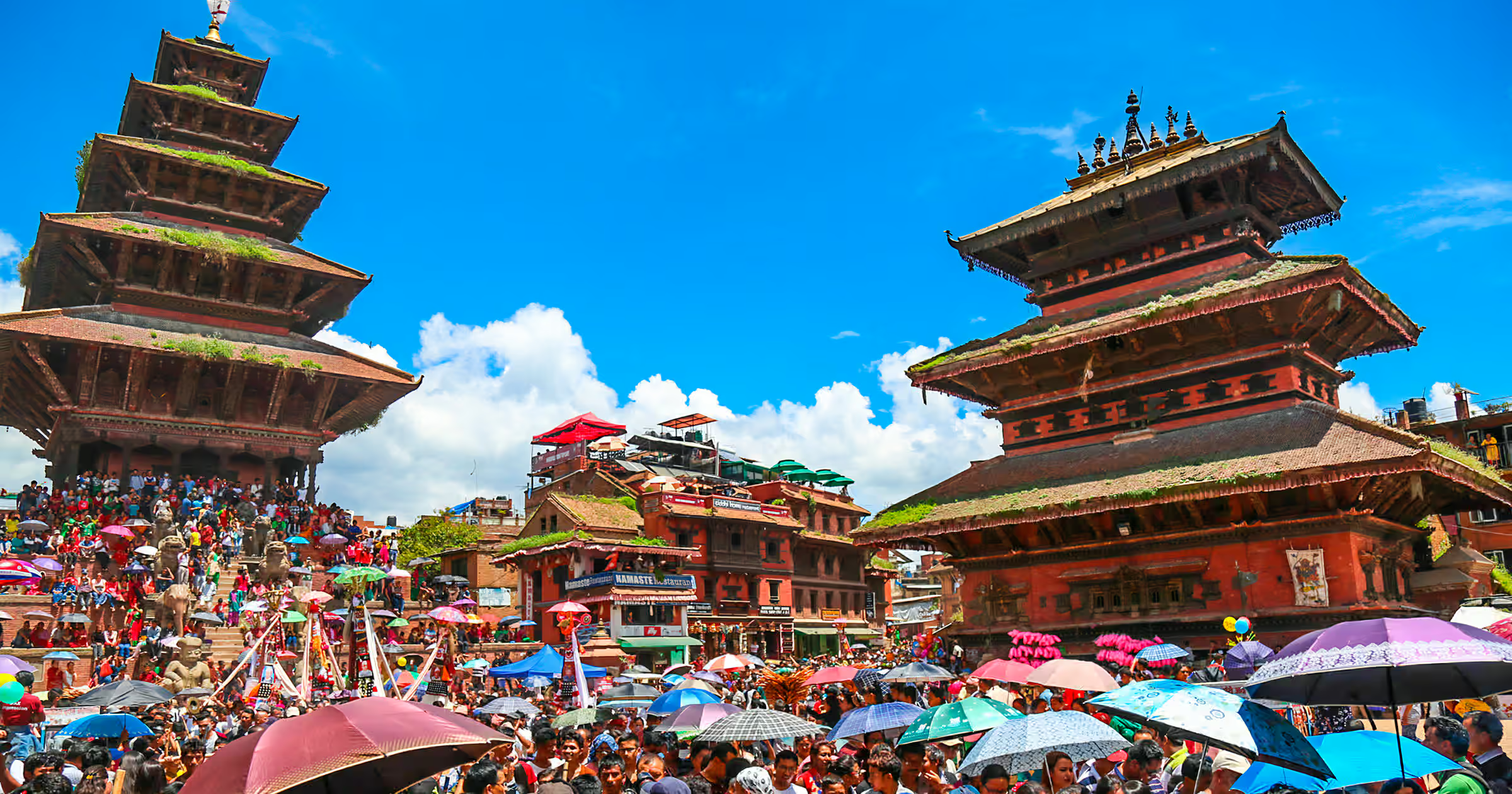
The old Newar city of Bhaktapur becomes alive with sounds of traditional drums, Bhairab Chariot, vibrant costumes, and well-preserved centuries old rituals.
Patan
Patan celebrates Gia Jatra in a quiet way but you will get to witness the deep Newar culture in a small procession.
Kirtipur
Kirtipur also participates in Gai Jatra traditions but more in an intimate way. Local community members dressed as a cow, in vibrant costumes, do comedy and satirical performances while incorporating religious symbolism into the celebration.
Delicacies to Try during Gai Jatra Festival Celebration
During Gai Jatra festival we suggest you to taste following authentic Newari Cuisines:
Samay Bhaji
Newari celebration is incomplete without Samay Baji and you should definitely try it. It comes with food items like:

- Chatamari: A Newari style pizza which is topped with sunny side egg.
Beaten rice - Wa: A pancake made from paste of black gram or mung beans.
- Black soybeans,
- Spicy potato and Cucumber Achar
- Fried/Boiled egg on top
- Chhoila
- Palu: Finely cut ginger
- Bodi ko Achar with Green leaves,
Chhoila
Chhoila mostly comes in the small portion in Samay Baji set. You can also order it separately and it is mostly made up of buffalo meat which is grilled first and then mixed with spices.
You can also try Chhoila made from Chicken, duck, mushroom, and muttons.
Juju Dhau
Juju Dhau also known as “King of Curds” is another must try delicacies when attending Newari festivals like Gai Jatra in Nepal. Unlike regular curds or yogurt, Juju Dhau is rich in flavor and its consistency is also quite thick.
Having its scorching summer sun makes you feel refreshed so that you will last till the end of the Gai Jatra celebration.
Types of Gai Jatra Dances
Gai Jatra is celebrated mainly for a day in many places but in Bhaktapur it lasts for around eight days. The Gai Jatra festival begins with different kinds of dance performances.
Bhairav Dance
Bhairava dance is mostly performed in Madhyapur Thimi, Bhaktapur where a devotee is dressed up as a Bhairava deity. The Bhairava character dance is also included in other dance forms like:
- Nil barahi Pyakhan
- Nava Durga Dance,
- Mahalaxmi Dance.
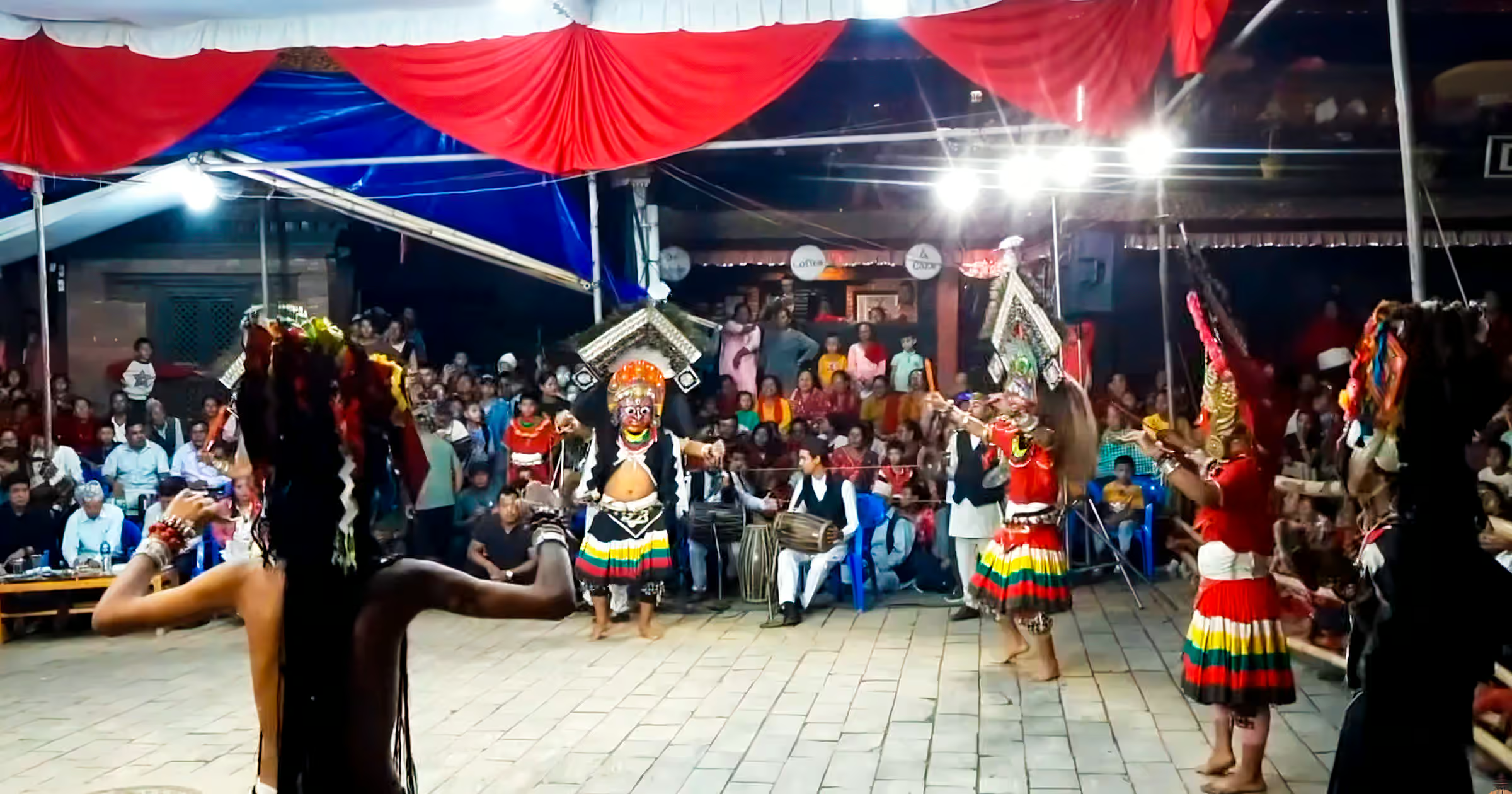
This dance is believed to be done for removing bad luck from ghosts and spiritual demons.
Kawana Pyakhan
Kawana Pyakhan is a traditional Newari dances which is mainly performed in Bhaktapur. Here, Kawana refers to a skeleton and two kids dressed up in skeleton costumes for the dance. They dance by facing each other in the festival.
Bhalu Naach/Pyakhan
In nasamana Tole of Bhaktapur, Bhalu Naach is performed mostly. The dancer wears a costume of Bhalu (bear) and imitates the movements of a bear, using their hands as forelimbs while moving around in circles.
Khichha Pyakhan
For Khichha Pyakhan, the participants wear dog costumes and dance using both hands and legs like a dog.
Lakhey Dance
The main performance of Gai Jatra festival is Lakhey Dance. Lakhey is a fierce demon which has sharp teeth, red or black haired mane and glowing face and is a protector of towns and young children.
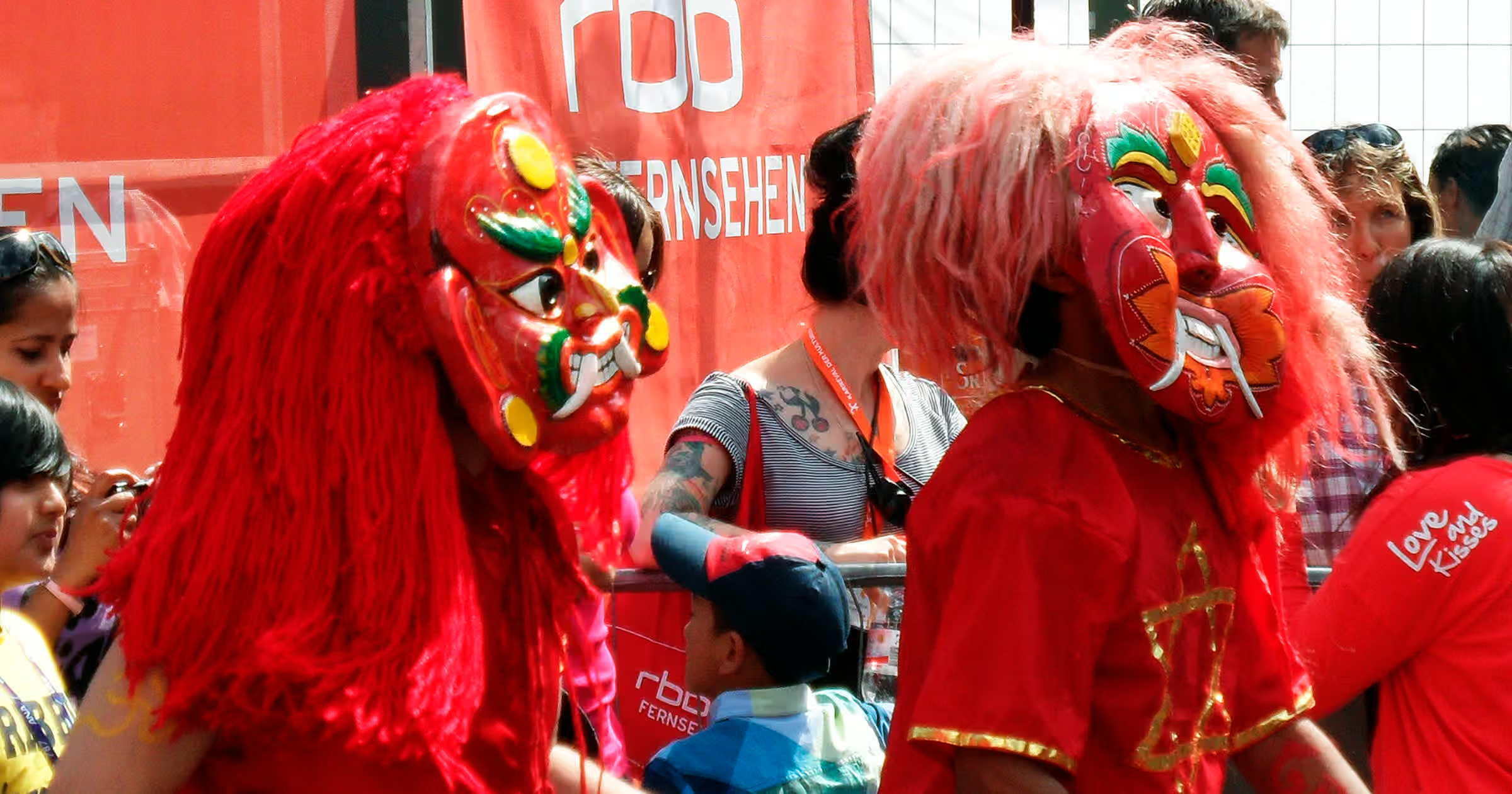
Locals believe that Lakhey dance is done to chase away bad spirits from towns. The participants wear a mask of Lakhey with a huge mane of yak hair and their dress is made up of vibrant colors and has specialized cloth pieces or frills attached near their wrists and fingers to accentuate their wild, expressive arm movements during the dance.
Alongside Lakhey, a small boy called Jhyalincha also dances around the fierce Lakhey who teases and taunts him. Lakhey chases him down the road in anger while dancing in the heavy rhythm of traditional drums named Dhime and Cymbals.
Nil Barahi Dance
Nil Barahi dance is also mostly performed during Gai Jatra in Bhaktapur. It is believed that fierce guardian deity, Nil Barahi appeared herself in the Bhaktapur and taught the dance to locals.
During this dance, performers cannot eat, drink, or talk throughout the dance which lasts for 12 to 15 hours a day. The dance continues for 3 days and once a participant is finalized he cannot leave the dance form in the middle.
This dance symbolises the peace which resulted after a tiring and dreadful war with demons. The shrestha family of bode should perform this Nil Dance and 19 performers from 19 different families should prepare for the dance.
The Nil Barahi dance is done with inclusion of other deities like:
- Barahi,
- Bhairava,
- Ganeshas (Surya Binayak, Jal Binayak, Ashok Binayak, and Kal Binayak),
- Kumari,
- Simha,
- Gatekeepers, and
- Jokhale.
Mahakali Dance
Mahakali dance started during the reign of Pratap Malla, Malla Dynasty. When Pratap Malla witnessed the fierceful fight between Goddess Mahakali, Mahalaxmi, and Kumari with the demons, he expressed his wish to record the whole battle through a dance.
Planning to Attend Gai Jatra Festival Nepal in 2026?
Or Call/Message on WhatsApp +977 98434 13619
As of now, people enact the fight with a dance while wearing huge masks in festivals of Gai Jatra.
Mahalaxmi Dance
In Newar settlement of Bhakatpur like Bhaktapur Nagar and Nagadesh, Mahalaxmi dance is performed where a dancer dresses up as a Mahalaxmi. The dancer holds a weapon in her hand and dances in the middle of the stage.
After some time, when the dancer strikes her pose with Madal beats, that particular site is purified and considered to grow jamara for Dashain.
Suggested Travel Itinerary for Gai Jatra Festival 2026
Arrive Day Before the Festival
- Explore Kathmandu valley.
- Visit UNESCO world Heritages sites like Kathmandu Durbar Square.
- Learn how to greet in Newari language (Nepal Bhasa)
Festival Day: Gai Jatra
- Go to Kathmandu or Bhaktapur Durbar square early in the morning for a cow parade.
- Then, try street delicacies and enjoy the dances in mid-day
- Watch comedy and satirical act in the evening
- Then, join gathering held in Durbar Square
After Gai Jatra
- Visit nearby cities like Patan, Kirtipur, etc
- Immerse in Newari culture by visiting museums and heritage sites.
Respectful Tips for Tourists Attending Gai Jatra Festival in Nepal
- Make sure you visit early in the morning for less crowds.
- Do not judge the grieving family members
- Always ask for permission before clicking pictures of Lakhey and other customized performers.
- Make sure you have enough cash and offer Lakhey cash after receiving blessing.
- Make sure you wear comfortable clothes as you will be standing and walking extensively.
- Be prepared for crowded streets and keep your belongings safe.
- Do not wear expensive jewelry as you have to traverse in the huge crowded streets where it may get lost.
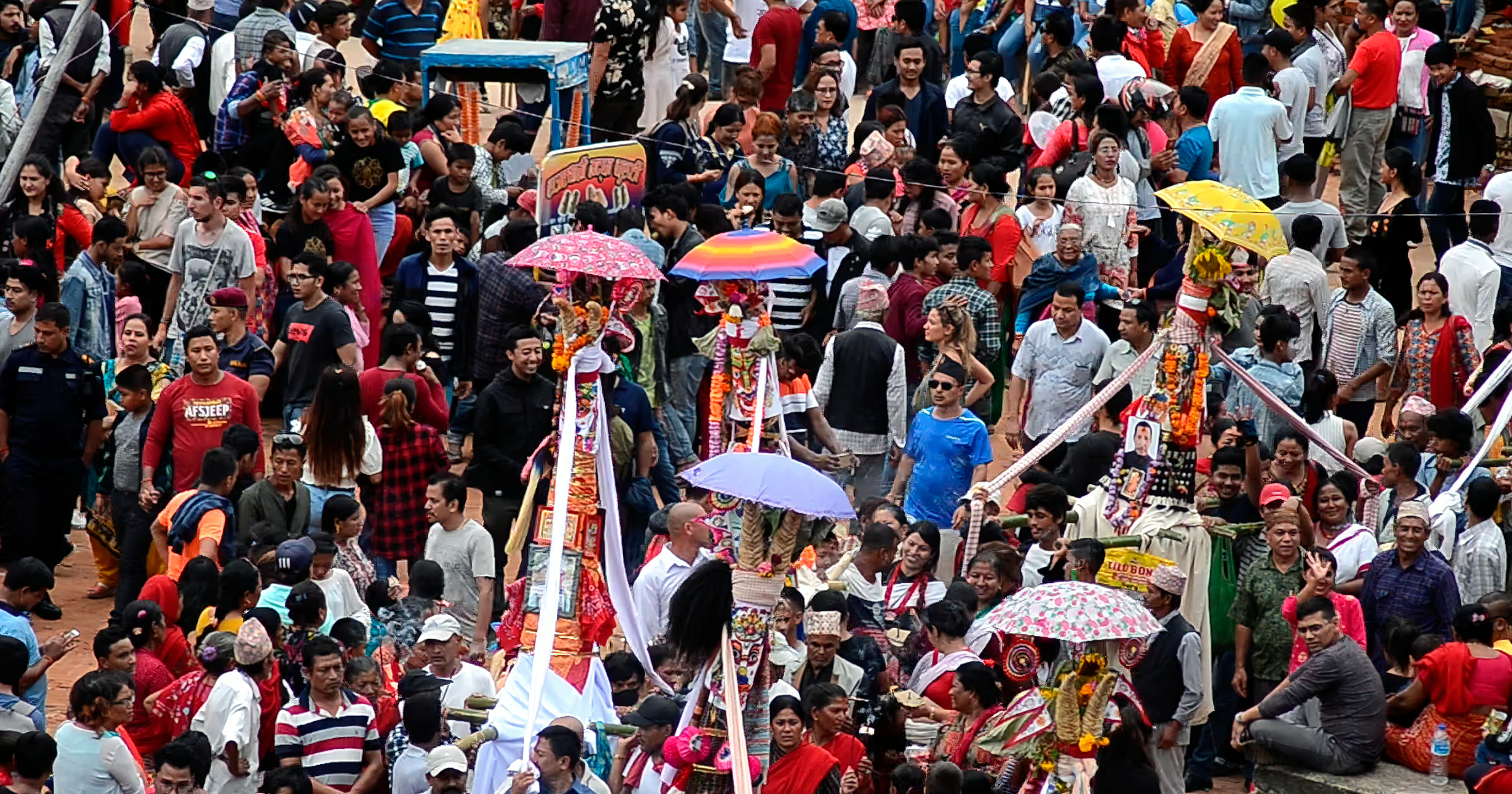
- Always wear modest clothing before joining the crowded cow procession in busy areas of the Valley.
- Make sure you experience a pre-celebration by planning an early visit.
- Book your accommodation in advance.
- Hire a local guide for deeper cultural context.
- Do not block the procession for a photograph.
- Avoid touching costumes, offerings, or religious objects.
- Follow instructions from local participants or authorities.
- Stay until satirical performances and comedy shows.
Final Verdict on Festivals of Cow
The Gai Jatra Festival is much more than a festival of cows but it is a celebration of remembrance, community, culture, humor, and the acceptance of life’s inevitable cycle. This festival balances both happiness and sadness with humor, satire, and public celebration and helps grieving family members embrace the loss.
The festival of Gai Jatra also reminds us that while loss is universal, people do not have to face it alone. The festival of cows transforms city streets into vibrant stages, where cow processions, the sounds of traditional instruments, and lively cultural performances bring the streets to life.
It falls annually in the month of July/August and if you are planning to explore Nepal in summer, do not miss the opportunity to witness this rare mixture of traditional ritual, satirical act, and shared humanity. We suggest you come with curiosity, observe with respect, and take the time to understand the meaning behind the colorful processions of Kathmandu valley.
Also, remember Awesome Holidays Nepal to experience and enjoy this vibrant festival of Gai Jatra in 2026/2027.
FAQs
Expand AllWhat is Gai Jatra festival?
A traditional Cow Festival where families who lost a loved one in the past year commemorate them through street parades, music, and shared laughter is called Gai Jatra festival.
When is Gai Jatra 2026 in Nepal?
Gai Jatra falls on 29th of August, 2026(Saturday).
Why is Gai Jatra celebrated in Nepal?
Gai Jatra is celebrated in Nepal to honor and remember those a family member who passed away in the past year.
What does "Gai Jatra" mean in Nepali?
The Gai means “cow” and Jatra means “procession or festival” which refers to the “Festival of Cow”.
Who started the Gai Jatra festival?
The festival of Gai Jatra was started by King Pratap Malla in the 17th century Malla period.
How many days does Gai Jatra last?
Gai Jatra is celebrated mainly for one day whereas in Bhaktapur it last till eight day.
Where is Gai Jatra celebrated in Nepal?
Gai Jatra is celebrated mainly in the Kathmandu Valley, particularly in Kathmandu, Patan (Lalitpur), and Bhaktapur.
How is Gai Jatra connected to death and mourning?
As the festival honor those who lost loved ones during the previous year and begins with a cow processions and rituals. It also commemorate the deceased and ease the pain of mourning.
Why is Gai Jatra called the "festival of satire"?
Traditionally the festival has been celebrated with humor, comedy, cartoons, and public performances to criticize social and political issues, Gai Jatra is called the “festival of satire”.
Is Gai Jatra a public holiday in Nepal?
Yes, Gai Jatra is a public holiday in Nepal.
What is the connection between Gai Jatra and comedy/humor?
Gai Jatra with comedy and humor act help people to deal with grief of losing their loved ones.
Can tourists watch or participate in Gai Jatra?
Tourist can only watch Gai Jatra processions, cultural performances, and street celebrations more respectfully.
What should tourists wear or avoid during Gai Jatra?
We suggest tourist to wear a comfortable and modest clothing which will cover the shoulder and knee parts of the body.
Is it respectful to take photos during Gai Jatra?
Yes. Tourist should ask permission before photographing grieving families, children, or sensitive religious rituals during Gai Jatra.
What is the Gai Jatra Pride/Third Gender Parade?
In Gai Jatra Pride/Third Gender Parade, members of LGBTQ+ and third-gender people do the open marches and satire act to promote visibility, equality, and acceptance.
What is Matiyaa festival in Lalitpur?
A traditional Newar festival which is celebrated in Lalitpur where devotees carry oil lamps and pay visit to Buddhist shrines to honor deceased relatives is known as Matiyaa festivals.
What is the best time to arrive in Nepal for Gai Jatra?
Arriving two days before Gai Jatra is recommended because you can experience the preparations, processions, and explore cultural activities in Kathmandu Durbar Square.
Is Gai Jatra a Hindu or Newar-only festival?
Gai Jatra is a traditional Hindu festival which is most celebrated in Newar communities within Kathmandu valley.
What is the significance of the cow in Gai Jatra?
The cow in Gai Jatra acts as a sacred guide which will help the souls of recently deceased family members cross Baitarani river safely into the afterlife.
Which festivals around the world are similar to Gai Jatra?
Festivals around the world that are similar to Gai Jatra are:
- Día de los Muertos (Day of the Dead) – Mexico
- Obon Festival – Japan
- Qingming Festival (Tomb-Sweeping Day) – China
- Undas (All Saints’ Day / All Souls’ Day) – Philippine etc.
Related blog posts
Discover a choice of tourist destinations loved by most of our visitors. Whether you're on a jungle safari to spot rare animals or walking through a world heritage site, these well-planned itineraries cover the major highlights of Nepal.


 call an expert at: