
Annapurna Death Rate (2026 Data): Why People Get the “Deadliest” Mountain Wrong
 Sristi Adhikari
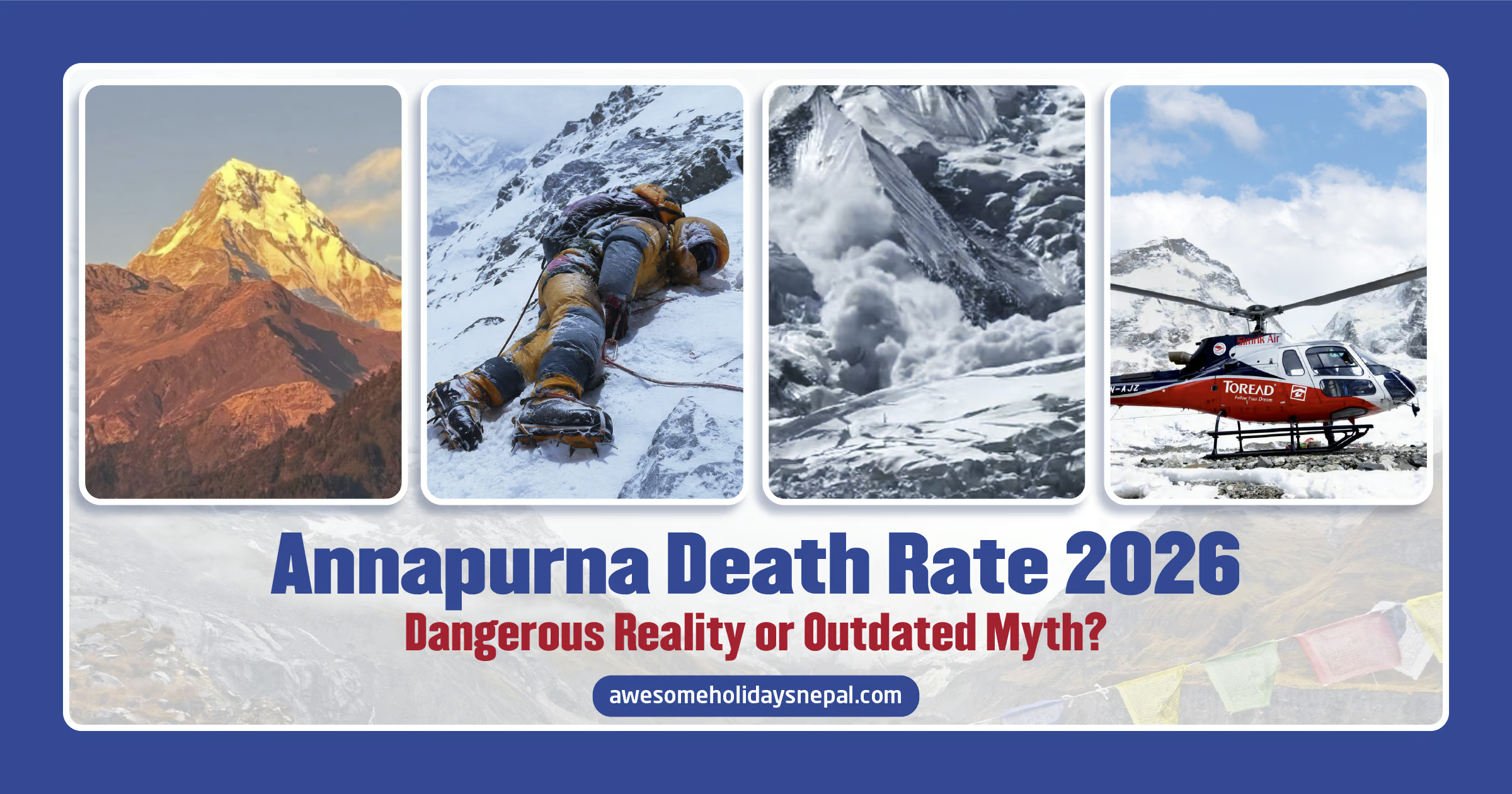
Among one of the world’s beautiful Mount Annapurna Death Rate of “one in three climbers” has terrified climbers for decades. This statistics make Annapurna I gain a reputation as the world’s deadliest mountain.
But the real story behind the Annapurna Death Rate is more complicated and far more misunderstood. Annapurna I remains one of the most dangerous 8,000-meter peaks on Earth because of avalanches, unstable ice, technical terrain, and unpredictable weather but as of today there is significant decrease of the infamous historic Annapurna fatality rate.
Many trekkers and climbing enthusiasts misinterpret the data of the Annapurna death rate and even compares Annapurna with Everest so we are here to help you understand Why Annapurna is considered so dangerous along with details of changing climbing statistics to modern expedition safety of the legendary Himalayan peak.
Why Annapurna Have the Highest Death Rate?
Annapurna I is more prone to avalanche as the climbing terrain is very steep, which makes fixation of technical gear difficult. This results in the higher Annapurna Death Rate during the mountain expedition and gets the name of the deadliest mountain in the world even though Everest’s elevation is higher than it.
Technical Difficulty
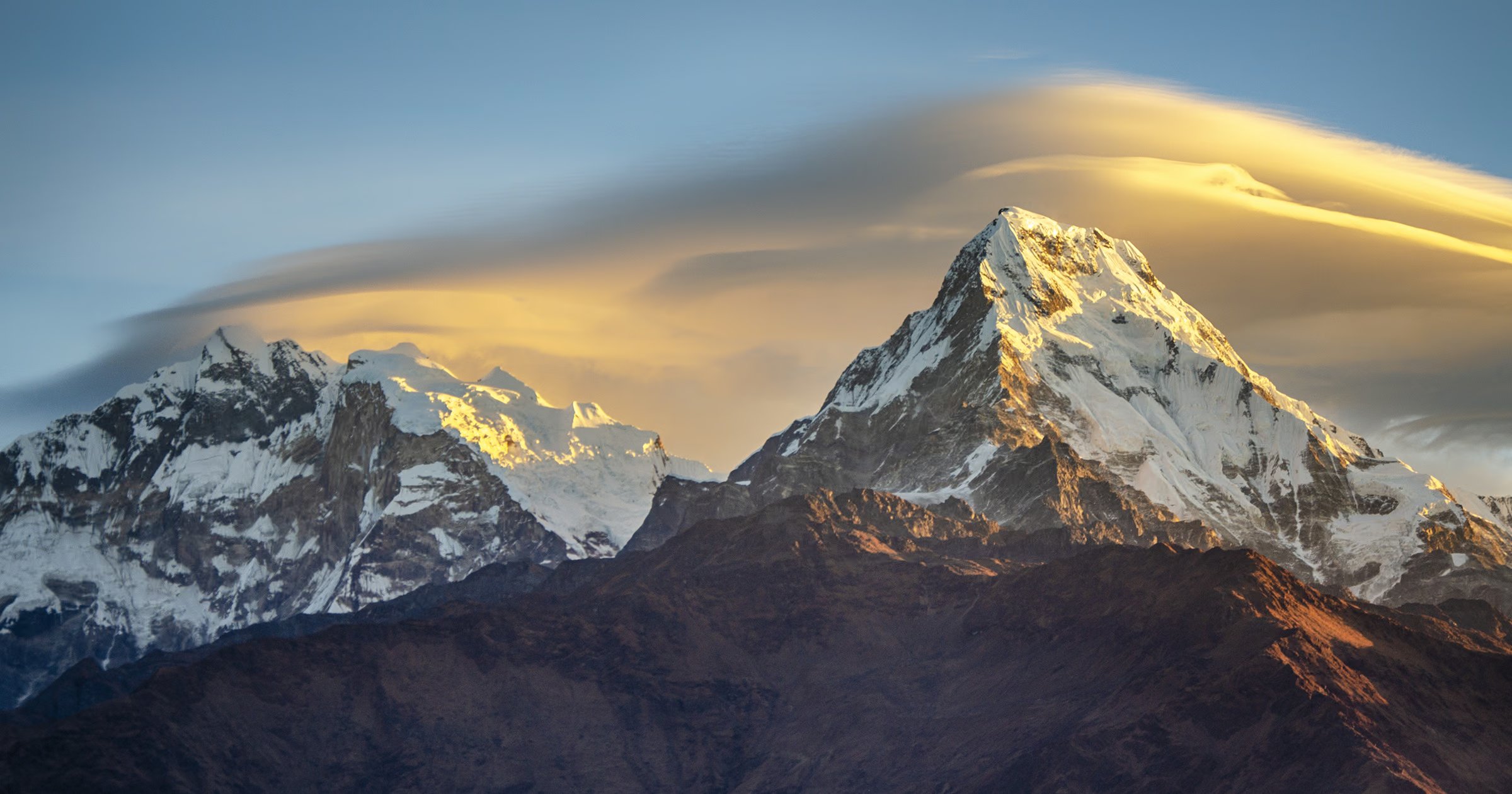
When climbing the south face of the Annapurna I, there is no flat section, narrow couloirs, and the terrain rises nearly 3,000 meters vertically. Due to this, there is no fixed -rope highway section and hanging snow on the cliff’s edge make you more prone to risk and falls.
Likewise, the north face also demands a technical skill and risk tolerance similar to south face, so every expeditors have to continue the journey without any rest days at intermediate camps. This contributes heavily to the Annapurna climbing statistics that make the mountain notorious among elite mountaineers.
Unpredictable Weather Windows
Mount Annapurna is located in the Gandaki Province of north-central Nepal at an elevation of 8,091 meters from sea level. The constant changing weather conditions of Annapurna brings strong wind and storm within an hours.
This increases the chances of avalanches in the routes and snow is losing its layers due to climatic conditions followed by increased Annapurna Death Rate .
Avalanche
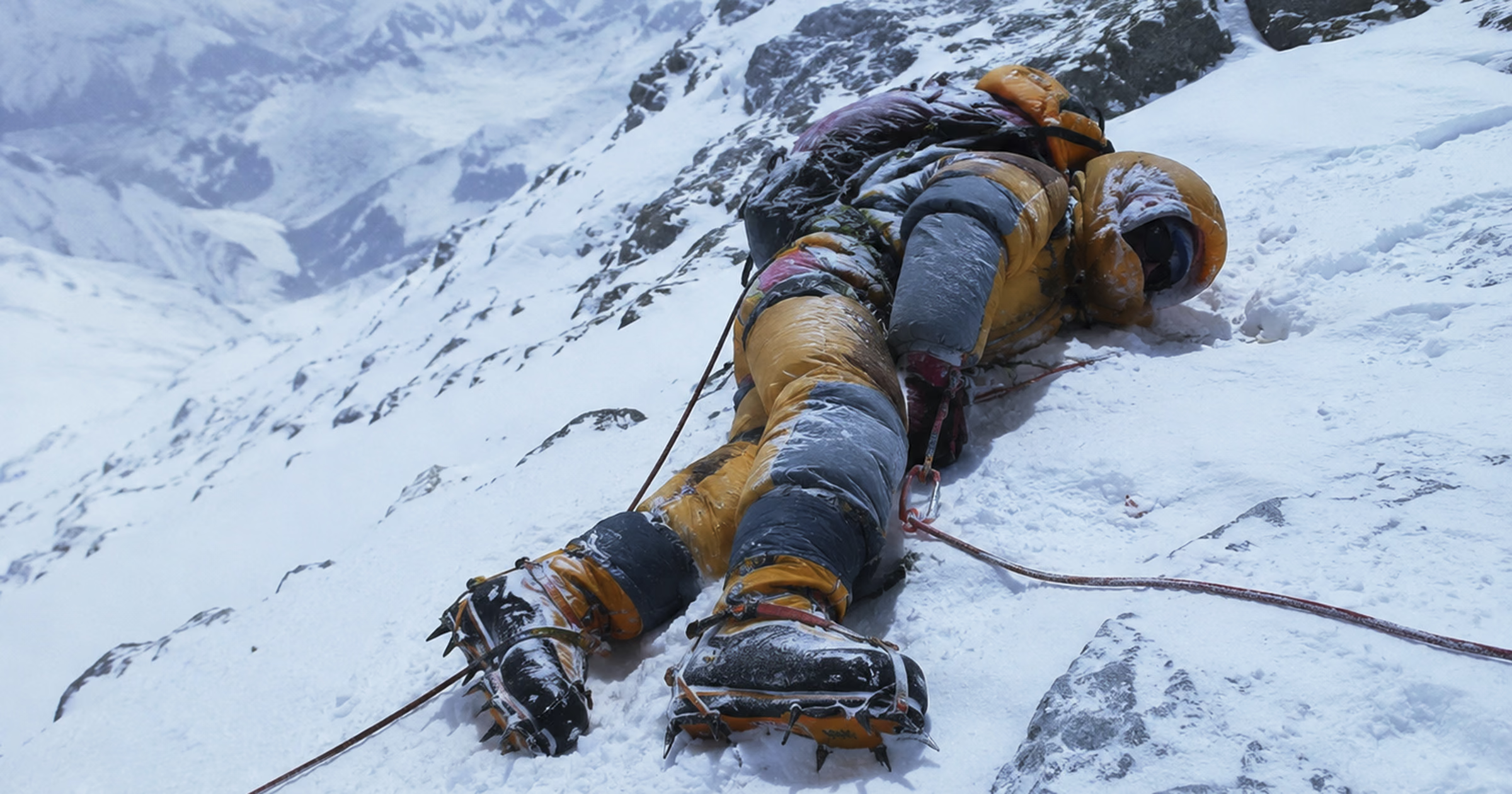
The leading cause of the death on Annapurna I is the Avalanches. The standard climbing routes of the Mount Annapurna has unstable snow slopes and hanging serac, which make climber more exposed to stepping on these loose snowy section. In between Camp II and Camp III, several Annapurna Avalanche deaths occurs.
Limited Rescue Condition
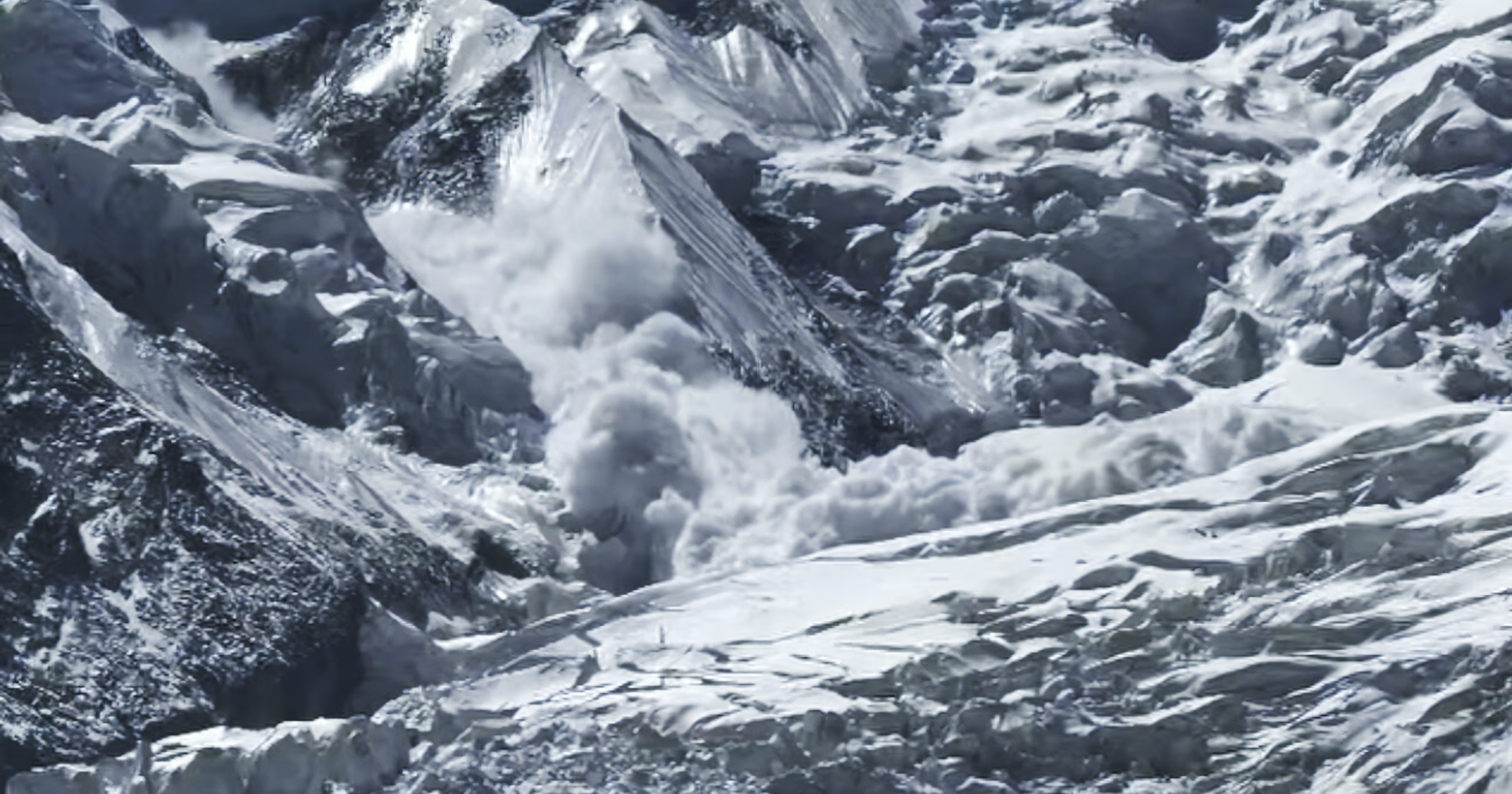
Unlike Everest expedition, there is limited rescue access which increases the Annapurna death rate. Annapurna is quite isolated and unpredictable which makes the rescue mission bit challenging.
So, it takes longer time to get respond from the rescue at the time of emergencies. Resulting in the higher death rate in the Mount Annapurna climbing routes.
Longer Exposure in the Death Zone
The Death Zone is the high-altitude area where oxygen pressure is too low for human survival for longer periods. It is the zone above 8,000 meters (26,247 ft), so does the Annapurna I summit is located.
If stayed for longer hour where there is thin air and lower oxygen availability, body will start to difficulty adjusting and automatically, you will feel heavy and fuzzy making you more prone to life threatening situation like High-Altitude Cerebral Edema (HACE) and High-Altitude Pulmonary Edema (HAPE), along with frostbite and extreme exhaustion.
Annapurna climber become more exposed to this situation as walking on the steep terrain is very difficult which make you suffer from Acute Mountain sickness.
How Many People Died on Annapurna?
The fatal vertiginous and fragile ground, frequent avalanche, unpredictable weather conditions, and difficulty adapting takes the life of many mountain climber increases the Annapurna Death Rate over the year.
Annapurna I
The Annapurna I death rate is very high among all other eight thousand mountains. In its early climbing decade, Annapurna I had one death for every successful summits. Annapurna climbing statistics in between 1950 to 2006 reports that out of 150 successful summit, 58 people couldn’t return home. Louis Lachenal and Maurice Herzog also got the victory here.
This makes about 38.7 % of fatality to summit ratio which is why Annapurna I earned the title of the deadliest mountain in the world. In 2012, 61 death occurred out of 252 who did the summit climb which make Annapurna fatality rate to 31.9 %.
In 2022, the fatality rate decreased to 19.7 % where 365 people successfully got the victory and 72 people died midway. Likewise, the fatality rate dropped to 19.7%, by 2024 with 476 summits and 73 deaths count. According to the Himalayan database of Annapurna climbing statistics, death rate decreased to ~13.4% where 559 expeditors climbed the summits and 75 deaths has been recorded as of 2026.
From 2022, there has been significant decrease of the fatality rate and it is due to better logistic, weather forecasting, climbing experience, and rescue support.
Annapurna II Death Rate
Annapurna II, an another challenging peak after Annapurna I has the estimated death rate of around 25%. Due to technical difficulty, adverse weather conditions, and rough terrain, it has been taking the life of many mountaineers over the years.
Annapurna Success Rate vs Death Rate
| Category | Statistics (2026 Data) |
|---|---|
| Total Successful Summits | 559 |
| Total Recorded Deaths | 75 |
| Annapurna Death Rate | ≈13.42% |
| Annapurna Success Rate | ≈86.58% |
| Death-to-Summit Ratio | 1 death for every 7.4 summits |
| Ranking Among 8000m Peaks | One of the highest death rate 8000m peak |
| Main Cause of Fatalities | Avalanches & unstable snow conditions |
| Compared to Everest | Much higher fatality rate than Everest |
As of early 2026, 75 climbers have died on Annapurna I, while 559 climbers have successfully summited. However, the raw numbers only tell part of the story. The mountain’s reputation was built during earlier decades when weather forecasting was very poor, fixed ropes were limited, climbing gear was less advanced, and avalanche prediction was very primitive. This is the reason why in the early year, the Annapurna got the highest death rate 8,000m peak.
Why the Annapurna Death Rate Improved?
The Annapurna death rate has been significantly decreased in the past decades which is due to following reasons:
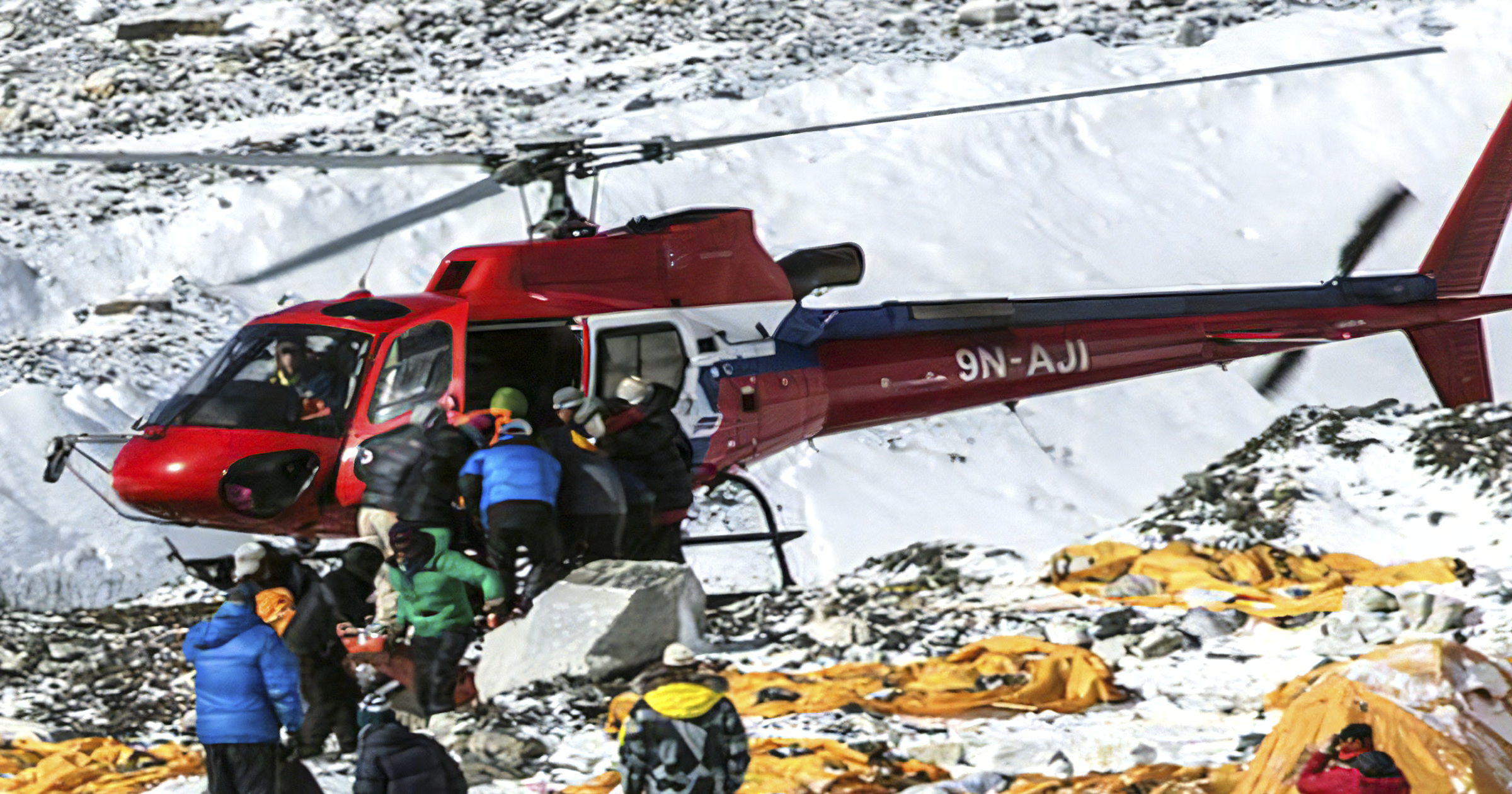
- Advancement of the weather forecasting,
- Modern avalanche risk assessments,
- Safer expedition planning by Sherpa climbing guide and teams,
- Improvement of climbing equipment and satellite comms.
- Faster rescue via Helicopter evacuations.
Why is Annapurna So Dangerous?
Unfavorable climate, certain climbing difficulties, and frequent avalanches are the main reason Mount Annapurna is renowned as the deadliest mountain in the world. The higher death rate and 75 recorded death until now makes it one of the most dangerous mountain.
Other 8,000 meters mountains like K2 and Nanga Parbat have high death rate due to other technical difficulties, but it could not surpass the the Annapurna Death rate and difficulties.
Final Verdict on The Annapurna Death Rate
The Annapurna Death Rate remains is one of the most discussed statistics in the section of mountaineering and is also one of the most misunderstood. High risk of avalanche, technical terrain, remote conditions makes Annapurna one of the extremely dangerous summit.
The latest 2026 Annapurna climbing statistics show a fatality-to-summit ratio closer to 13.42%, not the sensationalized 30–40% figures often repeated online. So when discussing the Annapurna Death Rate, context matters. Annapurna is still deadly but understanding why it is dangerous is far more important than repeating outdated numbers. If you want to plan a safer expedition to Mount Annapurna, then feel free to contact Awesome Holidays team for more information and details in 2026.
FAQs
Expand AllWhy do people confuse the Annapurna Circuit with climbing Annapurna I?
People become confuse the Annapurna Circuit with climbing Annapurna I because of the the same mountain name but earlier is trekking and later is climbing or expedition.
Why was Annapurna the first 8,000-meter peak climbed?
Maurice Herzog and Louis Lachenal found a possible summit route before other major Himalayan mountains were successfully explored which is why Annapurna became the first 8,000-meter peak climbed.
Is trekking the Annapurna base camp dangerous?
The Annapurna Base Camp trek is there is high risk of altitude sickness, landslides, and weather changes.
Do tourists die on the Annapurna Circuit?
Yes, tourists do die on the Annapurna Circuit.
What is the true death rate of Annapurna I as of 2025/2026?
The true death rate of Annapurna I as of 2025/2026 is around 13–14% based on modern summit-to-death statistics.
Why is the 32% death rate for Annapurna no longer accurate?
The 32% death rate for Annapurna no longer accurate because of successful summits in recent decades.
Has Annapurna become safer in recent years?
Yes. The better forecasting, modern equipment, improved expedition logistics, and faster rescue operations makes Annapurna more safer in recent years.
How many people have successfully summited Annapurna I?
As of 2025/2026, more than 550 climbers have successfully summited Annapurna I.
How many deaths have occurred on Annapurna in total?
Roughly 75 recorded deaths have occurred on Annapurna in total.
Is Annapurna more dangerous than Mount Everest?
Yes, Annapurna is statistically more dangerous than Everest.
Which has a higher death rate: K2, Nanga Parbat, or Annapurna?
Historically Annapurna has had one of the highest death rates than K2 and Nanga Parbat.
Why is Annapurna deadlier than Everest?
The constant avalanche exposure, unstable snow conditions, and technically difficult terrain makes Annapurna deadlier than Everest.
Is Annapurna the hardest mountain to climb?
Yes, Annapurna is the hardest mountain to climb.
Why do climbers die on Annapurna?
Avalanches, falling ice, severe weather, altitude sickness, or exhaustion results in the death of climbers on Annapurna.
How do avalanches make Annapurna so deadly?
Avalanches make Annapurna deadly because climbers must pass beneath unstable snow slopes and hanging seracs for long periods.
What is the most dangerous section of Annapurna I?
The area between Camp II and Camp III is the most dangerous section of Annapurna I.
Does Annapurna have a "Death Zone" like Everest?
Yes, Annapurna has a Death Zone above 8,000 meters where oxygen levels become dangerously low for human survival like Everest.
How does weather impact the Annapurna death rate?
Sudden storms, heavy snowfall, and unstable snow conditions impact the Annapurna death rate.
Who died on Annapurna in recent years?
Several climbers and Sherpas have died on Annapurna in recent years.
Who were the first people to climb Annapurna?
Maurice Herzog and Louis Lachenal were the first people to climb Annapurna in 1950.
Related blog posts
Discover a choice of tourist destinations loved by most of our visitors. Whether you're on a jungle safari to spot rare animals or walking through a world heritage site, these well-planned itineraries cover the major highlights of Nepal.



 call an expert at: