
Is Nepali Hard to Learn for English Speakers? A Realistic Guide for Travelers

 Sujata Pokhrel
Is Nepali hard to learn for English speakers? That’s the most frequently asked question from visitors willing to spend more time exploring Nepal’s Himalayan beauty. And if you are planning a trip to Nepal, chances are you’ve asked yourself this at least once.
Nepal feels linguistically different from the Western world, and at first glance, any piece of writing in Nepali can feel intimidating.
As someone who has spoken Nepali my entire life, I find it unjust to say it’s effortless for everyone. But it’s actually true in certain ways. Learning Nepali isn’t as difficult as learning French, German, or Mandarin; it’s pretty easy to learn!
Let’s go through the blog to better understand why some people find the answer to “Is Nepali hard to learn?” and the reasons behind it, and actual solutions.
Is Nepali Hard to Learn for Real?
For most English speakers, Nepali falls into the “moderately challenging but very learnable” category.
It’s not as familiar as Spanish or Dutch, where sentence structures and vocabulary often overlap with English. But it’s also far less complex than languages like Mandarin or Arabic, which require entirely new tonal systems or writing logics.
What makes Nepali interesting is that your experience depends on how deep you want to go. If your goal is to become fluent, yes it will take time and consistency. But if your aim is to communicate during travel, even basic Nepali goes a long way.
Reasons that Make Nepali Challenging
From the script to pronunciation differences, there are several reasons that make speaking Nepali challenging even though you can understand after certain time. Some of these reasons are as following:
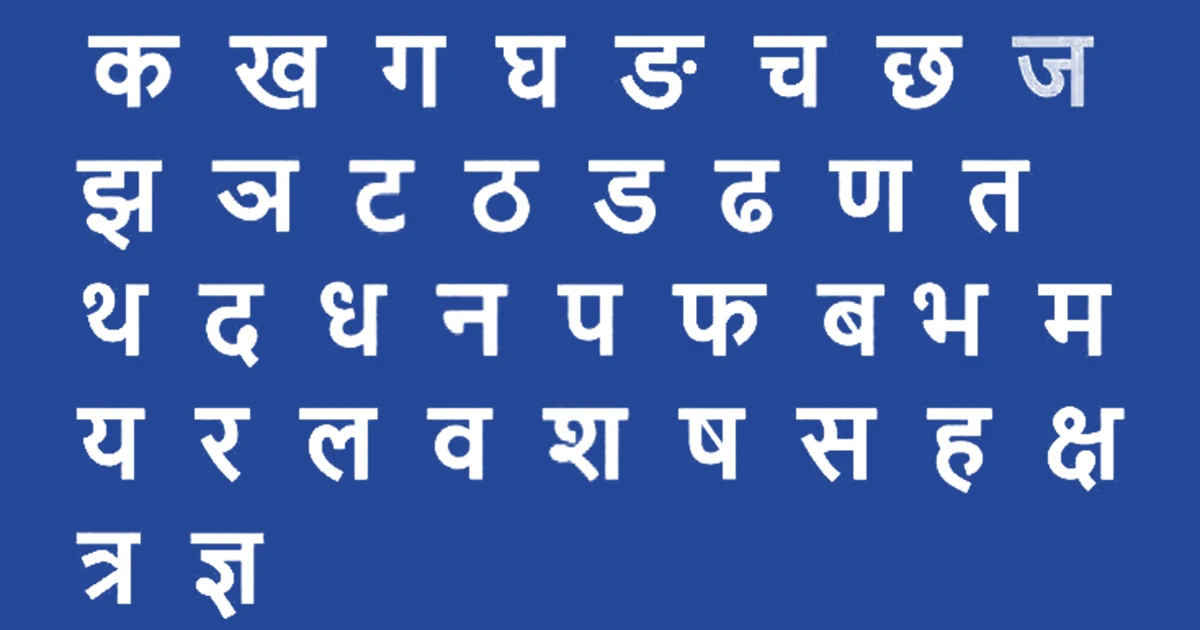
The Devanagari Script
One of the first things learners notice is that Nepali doesn’t use the Latin alphabet. Instead, it uses the Devanagari script, the same writing system used in Hindi.
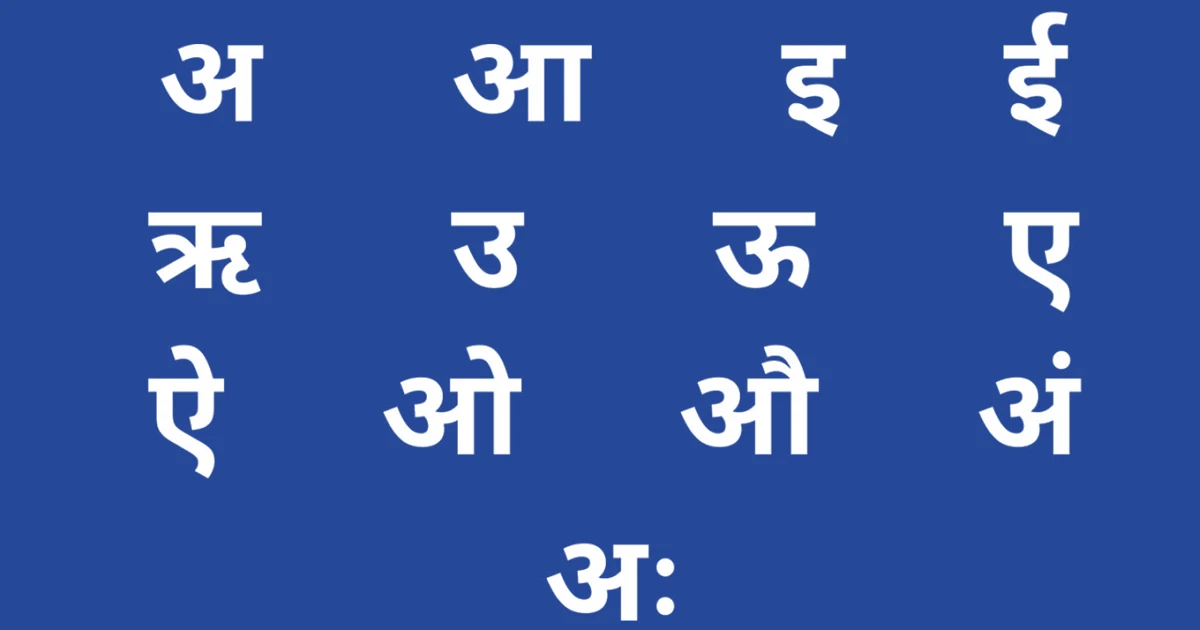
At first, it can feel like starting from scratch. Street signs, menus, and local buses may suddenly look unreadable.
However, here’s the practical reality: most travelers don’t need to fully learn the script. You can speak and understand basic Nepali using Romanized versions (written in English letters). Over time, you might recognize common words naturally without formally studying the script.
Pronunciation Differences
Nepali has sounds that don’t exist in English, especially when it comes to aspirated and retroflex consonants.
For example, subtle differences in how you pronounce “t” or “d” can change meanings. This can feel tricky at first, especially if you’re relying only on reading instead of listening.
But the good news? Nepali speakers are generally very forgiving. Even if your pronunciation isn’t perfect, people usually understand your intent—and often appreciate your effort.
Complex Sentence Structures
Nepali follows a Subject–Object–Verb (SOV) structure, which is different from English. For example, if we say “I eat food” in English, it translates as “I food eat” when you say it in Nepali.
This reversal takes some getting used to. In the beginning, your brain may try to “translate” everything word-for-word, which can slow you down.
The easiest way around this is to learn phrases instead of constructing sentences from scratch. Once you start hearing patterns repeatedly, the structure begins to feel natural.
Honorifics and Politeness Levels
Nepali has multiple ways to address people depending on respect and familiarity. Even something as simple as “you” can change depending on who you’re speaking to. For example, if you are talking to someone elder, it’s “hajur or tapai”, it’s for someone your age or younger one, it becomes “tme” and for someone inferior, it becomes “ta”.
This reflects Nepal’s culture, where respect and hierarchy matter in communication.
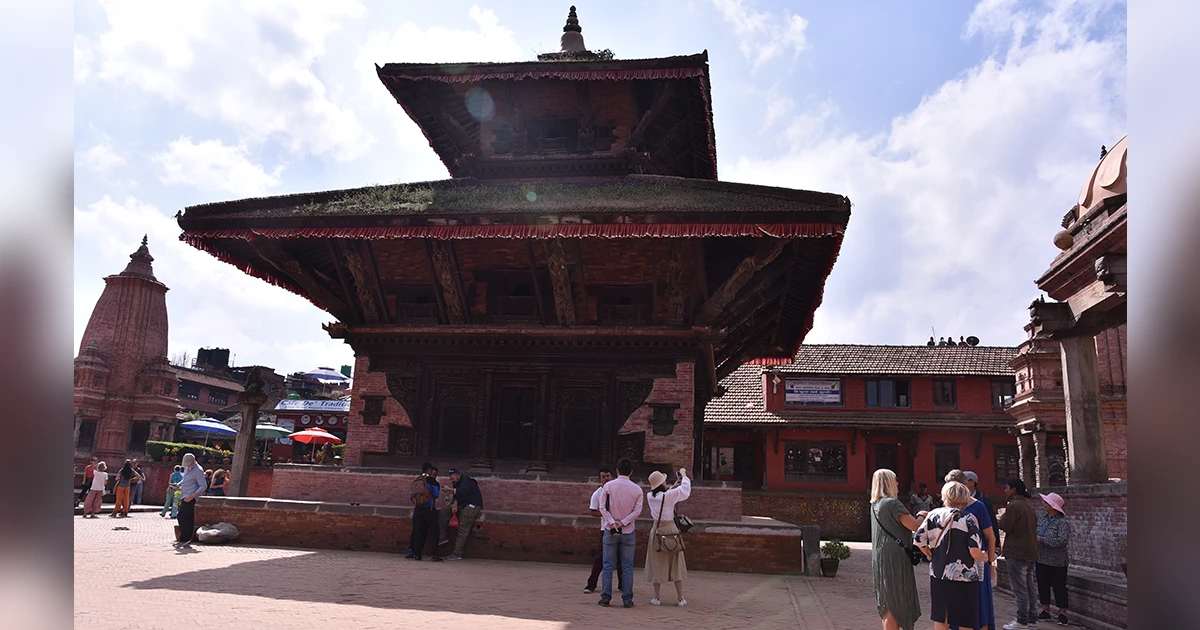
For travelers, though, you don’t need to master all levels. Using polite forms consistently is enough and locals will often guide you if needed, especially in local areas such as heritage sites, museums, and markets.
Why Some People Still Think Nepali is Easier to Learn
Despite the challenges in politeness and subject verb agreement, some people say learning Nepali was way easier than they expected and here’s why:
It’s Phonetic Language
Unlike English, Nepali words are pronounced the way they are written. There are far fewer “silent letters” or unpredictable pronunciations.
Once you learn how a word sounds, you can usually read it correctly and vice versa. This makes speaking much more intuitive over time.
No Use of Articles
Nepali doesn’t use “a,” “an,” or “the.” That’s one less grammatical rule to worry about.
For English speakers, this removes a surprisingly common source of confusion when learning new languages.
Limited Grammar Use
While Nepali grammar can become complex at advanced levels, basic communication doesn’t require mastering all rules.
You can get by with simple sentence forms, basic verbs, and a small vocabulary. Even broken sentences are often enough to express what you need.
Broken Nepali is Accepted
This might be the most encouraging part.
In Nepal, people genuinely appreciate it when visitors try to speak Nepali even if it’s not perfect. There’s no expectation of fluency, and small mistakes are rarely judged.
In fact, speaking a few words often leads to warmer interactions, better service, and more meaningful conversations.
How Much Nepali Do Travelers Actually Need?
For most trips, you don’t need to “learn Nepali” in the traditional sense. In city areas. most people already know English language so conversations can be easier.
A handful of phrases can cover a large portion of real-life situations, especially in cities and popular destinations. However, knowing some Nepali becomes more useful when you are visiting to local markets or traveling to rural areas, where you might interact with people who only know the regional language. It might also be necessary while trekking beyond major tourist routes or while interacting with older locals who may not speak English.
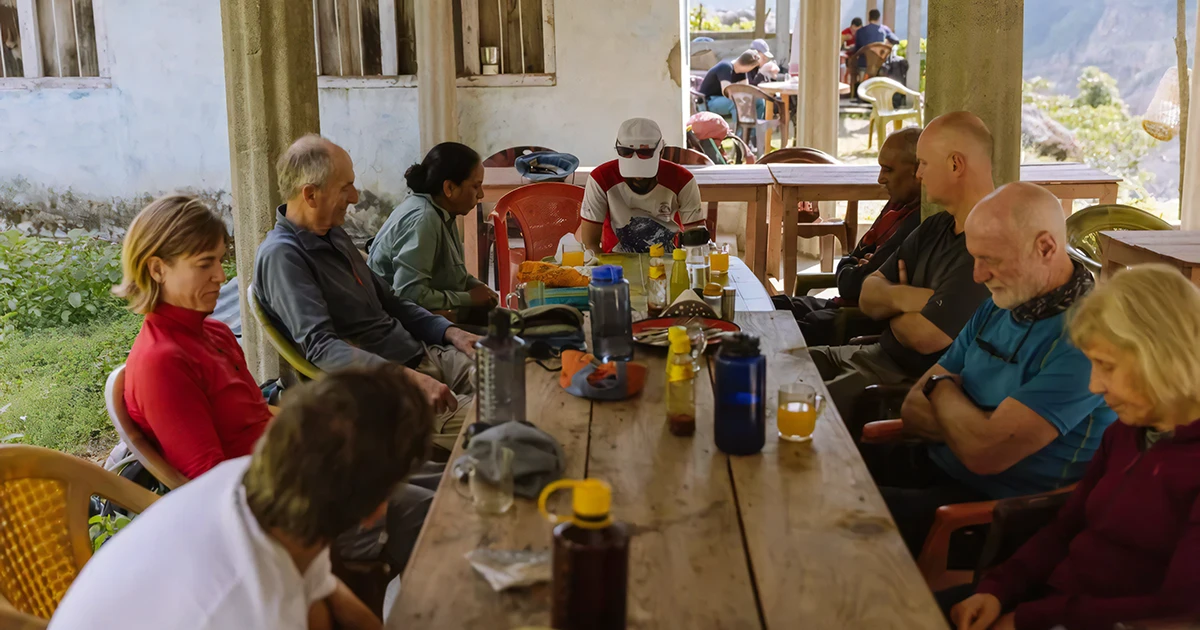
In short, the more you step off the beaten path, the more valuable Nepali becomes.
Essential Nepali Phrases for Travelers
Learning just a few expressions can make your experience smoother and more enjoyable. Even using these occasionally can create instant connection with locals. Some of the common greetings and expressions are:
- Namaste – Hello / Greeting
- Dhanyabad – Thank you
- Kati ho? – How much is it?
- Malai yo chahinchha – I want this
- Paani cha? – Is there water?
- Khana mitho cha – The food is tasty
Can You Travel to Nepali Without Knowing the Language?
Yes, absolutely.
In places like Kathmandu and Pokhara, English is widely spoken, especially in hotels, restaurants, and tour services. You can comfortably travel, book activities, and navigate your trip without speaking Nepali.

That said, language becomes more relevant in smaller towns and villages. In those settings, even a few Nepali words can make a big difference, not just practically, but culturally.
Tips for Learning Nepali Quickly
If you want to pick up some Nepali before or during your trip, keep it simple and practical.
Focus on speaking rather than reading or writing. Start with common words and phrases you’ll actually use. Listening through videos or conversations is far more effective than memorizing grammar rules.
Once you arrive in Nepal, try using what you know. Even small attempts help reinforce learning much faster than passive study.
Does Learning Nepali Enhance Your Trip
Without a doubt, yes.
Language opens doors that remain closed to most tourists. A simple greeting can turn a transaction into a conversation. A few local words can transform how people respond to you.
More importantly, it shows respect. It signals that you’re not just passing through you’re trying to engage with the culture, even in a small way.
And in a country like Nepal, where hospitality is deeply rooted, that effort rarely goes unnoticed.
Final Verdict: Is Nepali Hard or Not?
Nepali isn’t the easiest language for English speakers but it’s far from the hardest.
Yes, the script is different. Yes, pronunciation and sentence structure take time. But for travelers, the bar is much lower than fluency. With just a bit of effort, you can learn enough Nepali to enrich your experience, connect with people, and navigate daily situations with ease.
So instead of asking whether Nepali is hard to learn, a better question might be:
“How much do you want to get out of your trip?” Because even a little Nepali can take you a long way.
FAQs
Expand AllIs Nepali hard to learn for English speakers?
Nepali is moderately challenging, but not overwhelmingly difficult. It feels unfamiliar at first because of the script and sentence structure, yet for travel purposes, it’s very manageable. Most English speakers can pick up useful Nepali faster than they expect.
How difficult is Nepali compared with other languages English speakers learn?
Nepali sits somewhere in the middle. It’s harder than Spanish or French due to fewer shared similarities with English, but easier than languages like Mandarin or Arabic. For basic communication, it’s quite approachable.
Why does Nepali feel difficult for some beginners?
The initial difficulty usually comes from three things: a new script, different pronunciation, and reversed sentence structure. These make the language feel unfamiliar at first, even though it becomes easier with exposure.
Is Nepali grammar hard for English speakers?
At an advanced level, Nepali grammar can be complex. But for everyday communication, it’s relatively simple. You don’t need to master full grammar rules to speak basic Nepali effectively.
Is Nepali pronunciation difficult to master?
Some sounds are new to English speakers, especially aspirated and retroflex consonants. However, pronunciation improves quickly with listening and practice, and locals usually understand even imperfect attempts.
Is the Devanagari script hard to learn?
It can feel challenging at the beginning because it’s completely different from the English alphabet. But it’s logical and phonetic, so once you learn the basics, it becomes easier to recognize patterns.
Do I need to learn Devanagari before I can start speaking Nepali?
No, not at all. You can start speaking Nepali using Romanized versions of words. Many travelers communicate effectively without ever learning the script.
How long does it take to learn basic Nepali?
You can learn basic phrases in a day or two. With consistent practice, most people can handle simple interactions within one to two weeks
How long does it take to learn enough Nepali for travel in Nepal?
For travel purposes, a few days to a couple of weeks is usually enough to learn essential phrases. You don’t need deep knowledge to get around comfortably.
Can English speakers learn conversational Nepali without living in Nepal?
Yes, it’s possible. With online resources, videos, and practice, you can build conversational basics. However, being in Nepal helps you improve faster through real-life interaction.
Is Nepali harder to learn than Hindi?
They are quite similar in structure and script. If anything, Hindi might feel slightly easier due to more learning resources and global exposure, but the difference isn’t significant.
Is Nepali harder to learn than Spanish or French?
Yes, for most English speakers. Spanish and French share vocabulary and grammar roots with English, while Nepali does not. Still, Nepali is very learnable for practical use.
What is the hardest part of learning Nepali?
For most learners, the biggest challenge is adjusting to sentence structure and pronunciation. The script can also feel intimidating early on, though it becomes easier over time.
Are Nepali honorifics confusing for beginners?
They can be at first because Nepali uses different forms of “you” based on respect. However, beginners can simply stick to polite forms and avoid confusion.
Why do honorifics matter when speaking Nepali?
Honorifics reflect respect and social relationships, which are important in Nepali culture. Using the right form shows politeness and cultural awareness.
Can I learn spoken Nepali without learning to read and write?
Yes, absolutely. Many travelers focus only on speaking and listening, which is enough for most situations.
How much Nepali do I actually need before visiting Nepal?
Learning a little Nepali is enough before visiting Nepal. Even knowing 10–20 useful phrases can make your trip smoother and more enjoyable.
Can I travel in Nepal using only English?
Yes, especially in cities and tourist areas. English is widely spoken in places like Kathmandu and Pokhara. However, Nepali becomes more useful in rural areas.
Is learning a few Nepali phrases worth it for travellers?
Definitely. Even basic phrases can improve interactions, show respect, and often lead to friendlier experiences.
What level of Nepali is useful for trekking in Nepal?
Basic conversational Nepali is helpful, especially for remote trekking routes. Simple greetings and practical phrases are usually enough.
Is Nepali useful for Everest Base Camp or Annapurna trekkers?
Yes, though not essential. Guides and teahouse staff often speak English, but Nepali helps you connect more with locals along the way.
Can I learn enough Nepali in 3 months for a Nepal trip?
Yes, more than enough. With regular practice, you can build strong basic conversation skills within three months.
Can I learn enough Nepali in 6 months for everyday conversations?
Yes, six months of consistent learning can get you to a comfortable conversational level, especially if you practice speaking regularly.
What are the best ways to start learning Nepali as a beginner?
Start with common phrases and everyday vocabulary. Use videos, apps, and listening practice. Focus on what you’ll actually use rather than trying to learn everything at once.
Should I focus on speaking, listening, reading or writing first?
Focus on speaking and listening first. These skills are the most useful for travelers and help you build confidence quickly.
What common mistakes do English speakers make when learning Nepali?
Many learners overthink grammar, ignore pronunciation, or hesitate to speak out of fear of making mistakes. Keeping things simple and practicing regularly works better.
Are there polite and informal forms in Nepali?
Yes, Nepali has different levels of formality. These are used depending on age, relationship, and respect.
When should I use respectful forms like tapai instead of timi?
Use tapai when speaking to strangers, elders, or in formal situations. It’s safer and more polite, especially for travelers.
What basic Nepali phrases should travellers learn first?
Start with greetings like Namaste, polite words like Dhanyabad (thank you), and practical phrases like asking for prices or directions. These cover most everyday interactions.
Is Nepali worth learning even if I only plan a short trip to Nepal?
Yes, even for a short visit. A few words of Nepali can make your experience more personal, meaningful, and enjoyable.
Related blog posts
Discover a choice of tourist destinations loved by most of our visitors. Whether you're on a jungle safari to spot rare animals or walking through a world heritage site, these well-planned itineraries cover the major highlights of Nepal.


 call an expert at: