
Bhaktapur Pottery Square: A Guide to Nepal’s Master Artisans at Work
 Sujata Pokhrel
A visit to the Bhaktapur pottery square is one of the most calming and culturally rich experiences you can have in Nepal. Away from the rush of busy streets, the square offers a glimpse into a slower rhythm of life where centuries-old craftsmanship continues much as it did generations ago.
Clay pots sit neatly arranged in the sun, potters spin their wheels with quiet concentration, and the scent of damp earth lingers in the air. Preserving a tradition that dates back hundreds of years, the master artisans of Bhaktapur have earned admiration from visitors around the world.
Pottery in Bhaktapur is not merely a craft; it is a living heritage passed down through families, shaping both the identity and economy of the community. Let’s get through the blog to better understand the story of Bhaktapur’s pottery square and its story.
Basics of Bhaktapur Pottery Square
Bhaktapur Pottery Square is one of the most recognizable cultural spaces in the city. Unlike many historical landmarks that are preserved mainly as monuments, this square remains a fully active workspace where traditional crafts are practiced daily.
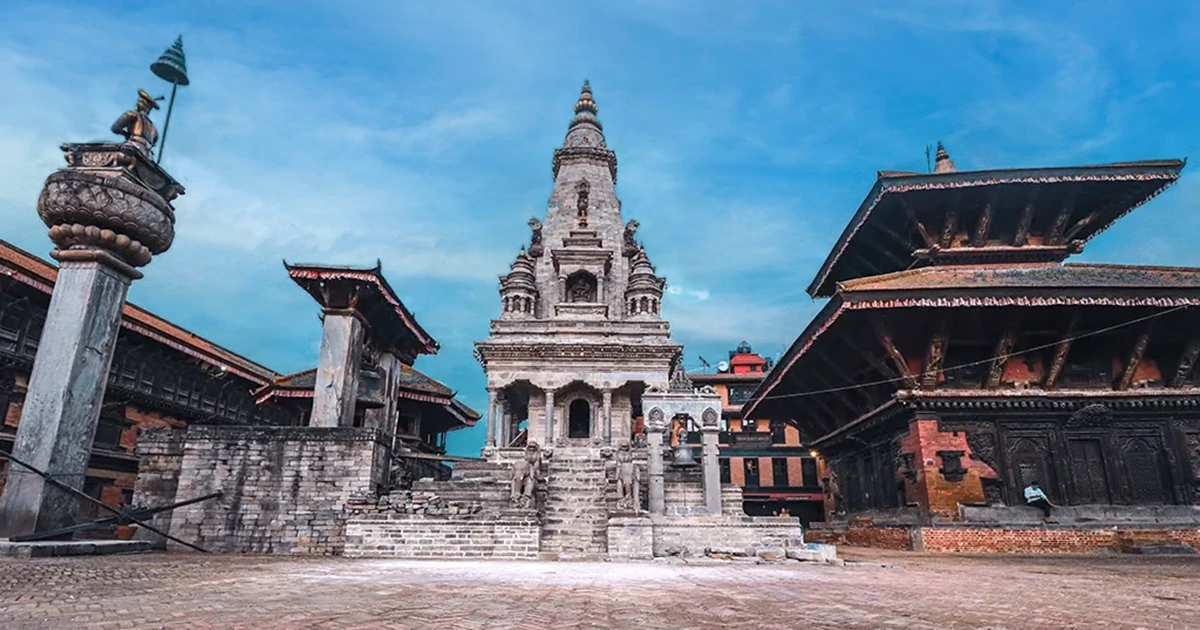
Open courtyards filled with clay pots drying in the sun create a striking visual scene. Local potters sit beside wooden wheels, shaping clay into bowls, jars, and decorative items with steady, practiced movements. Surrounding the square are small workshops and homes belonging to the potter community, giving the area a vibrant yet authentic atmosphere.
Visitors who walk through the square quickly realize that it is not simply a tourist attraction. It is a working cultural space where tradition continues to thrive.
What is Bhaktapur Pottery Square?
Bhaktapur Pottery Square is a historic courtyard where local artisans produce traditional clay pottery using techniques that have remained largely unchanged for generations. It serves as both a workplace and a cultural showcase of Bhaktapur’s long-standing pottery heritage.
The square functions as a communal workshop for potters who belong to the Newar community, the indigenous inhabitants of the Kathmandu Valley. Throughout the day, you can see artisans shaping clay on spinning wheels, smoothing surfaces with simple tools, or arranging freshly molded pots in neat rows to dry.
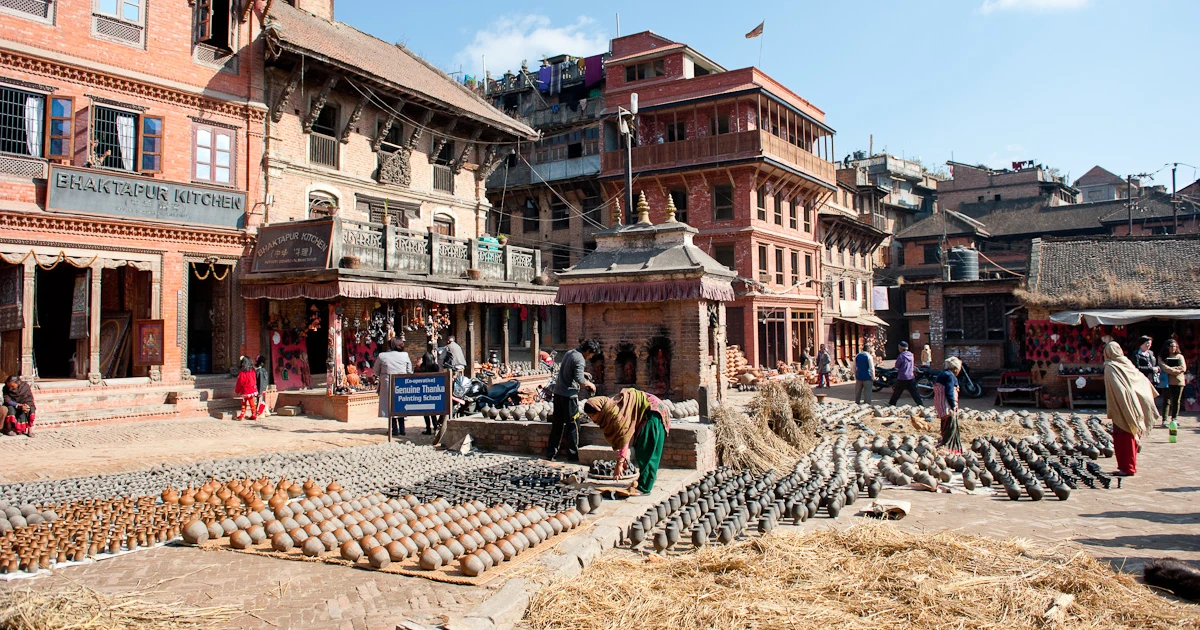
The simplicity of the craft combined with the dedication of the artisans creates a mesmerizing scene that draws travelers interested in culture, photography, and traditional craftsmanship.
Where is Pottery Square Located?
Bhaktapur Pottery Square lies within the historic city of Bhaktapur, about 13 kilometers east of Kathmandu. The square sits just a short walk from the famous Bhaktapur Durbar Square, one of the most important cultural landmarks in Nepal.
Because of its proximity to Bhaktapur’s main heritage sites, many visitors combine a visit to Pottery Square with exploration of temples, courtyards, and traditional streets nearby.
History of Pottery in Bhaktapur
Pottery has been an essential part of life in Bhaktapur for centuries. The craft is closely linked to the Newar community, whose artisans developed a reputation for producing durable household pottery as well as ceremonial vessels used in religious rituals.
Historically, clay pots were used throughout Nepal for storing water, cooking food, and performing religious offerings. Potters in Bhaktapur supplied these everyday necessities to nearby towns and villages.
Even today, many families in the square belong to generations of potters who have inherited the craft through oral knowledge and hands-on practice. Though modern materials like metal and plastic have replaced clay in some households, the tradition remains alive thanks to cultural pride and growing interest from visitors.
How is Traditional Pottery Made?
The pottery-making process in Bhaktapur follows several traditional steps, each requiring patience, skill, and a deep understanding of clay.
Preparing the Clay
The process begins with the preparation of clay, which is typically collected from riverbeds or clay-rich soils around the valley. The raw clay is mixed with water and kneaded repeatedly to remove air bubbles and achieve a smooth, workable texture.
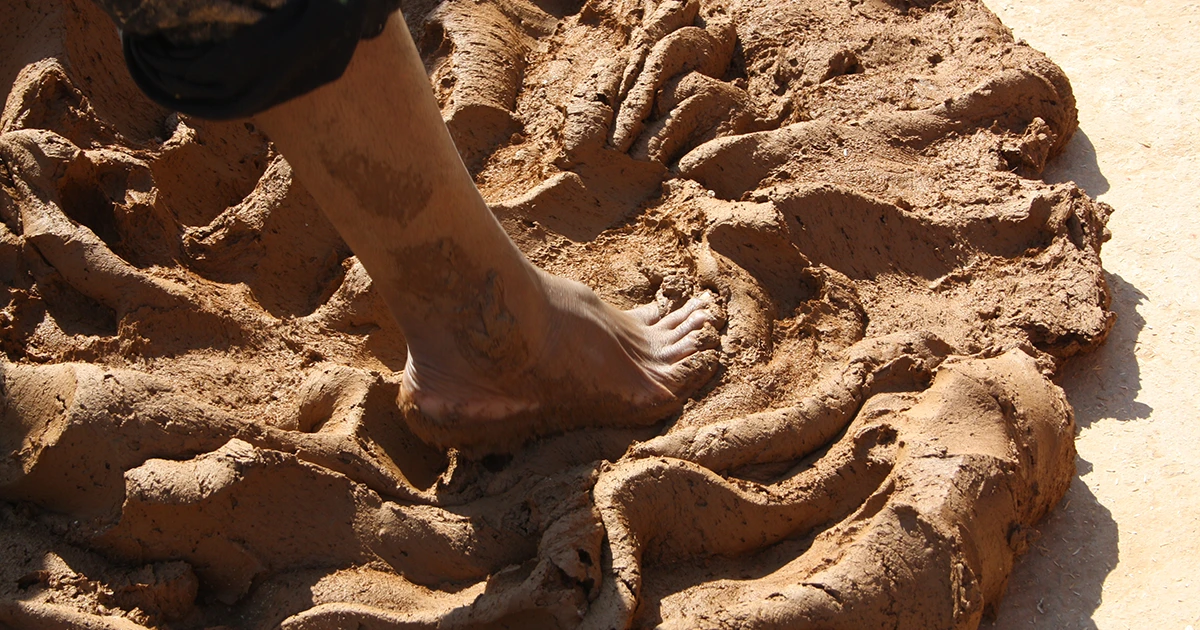
This preparation stage is essential because the quality of the clay determines how well the pottery will hold its shape during later stages.
Wheel Throwing
Once the clay is ready, potters shape it using a traditional spinning wheel. The wheel is often powered manually by hand or foot, and the potter must maintain a steady rhythm to keep the clay balanced.
As the wheel spins, the artisan carefully guides the clay upward using both hands, forming symmetrical shapes such as pots, bowls, or jars. Watching this stage is often the highlight for visitors because of the remarkable precision involved.
Shaping and Detailing
After the basic form is created, the potter refines the shape by trimming edges and adding decorative details. Simple tools made from wood or metal help smooth the surface and carve patterns.
Some pieces are designed for everyday household use, while others are made as decorative items for visitors.
Sun Drying
Once shaped, the pottery must dry slowly under the sun. Rows of fresh clay pots are arranged across the square where they remain for several hours or even days, depending on weather conditions.
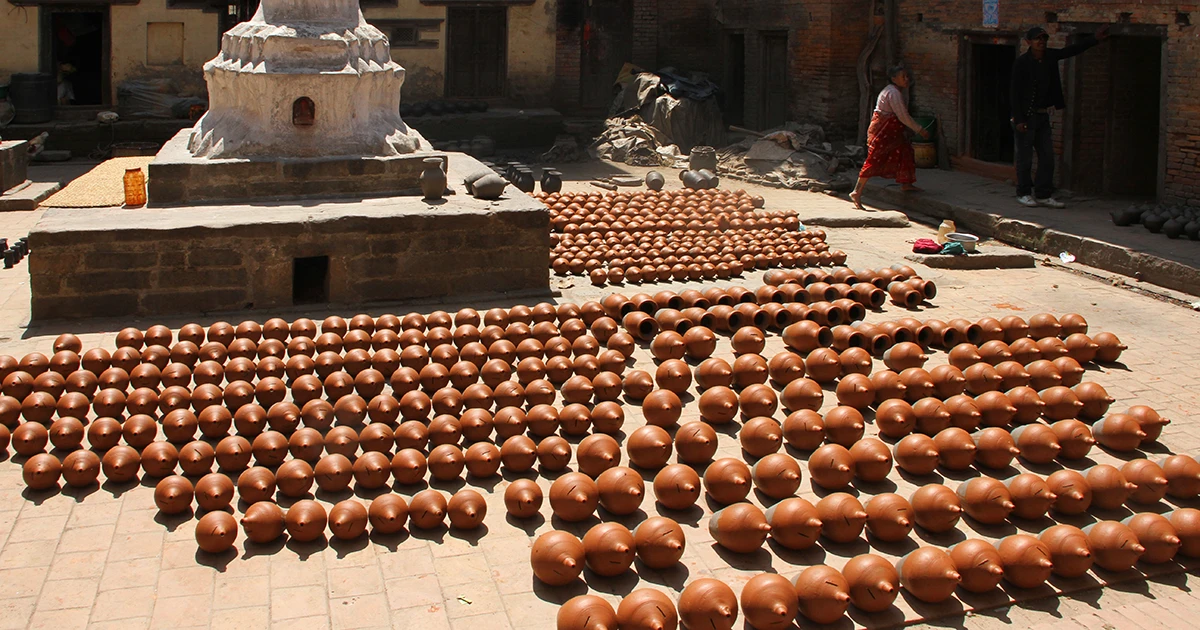
This stage is responsible for the iconic sight of hundreds of terracotta-colored pots covering the ground of Pottery Square.
Firing the Pottery
After drying, the pots are placed inside traditional kilns made from brick or clay. The kiln is heated using wood or straw, and the pottery is fired at high temperatures to harden the clay.
Firing transforms the fragile clay into durable pottery that can be used for cooking, storage, or decoration.
Different Types of Pottery You’ll See
Visitors exploring the square will notice a variety of pottery shapes and sizes. Each piece reflects the practical needs and cultural traditions of Nepalese households.
Some of the most common items include:
- Traditional water storage pots
- Cooking vessels
- Clay lamps used during festivals such as Tihar
- Flower pots and decorative planters
- Small souvenirs crafted specifically for tourists
Watching the Artisans at Work
One of the most rewarding parts of visiting Pottery Square is observing the artisans as they work. Their movements appear effortless, yet each gesture reflects years of practice and skill.
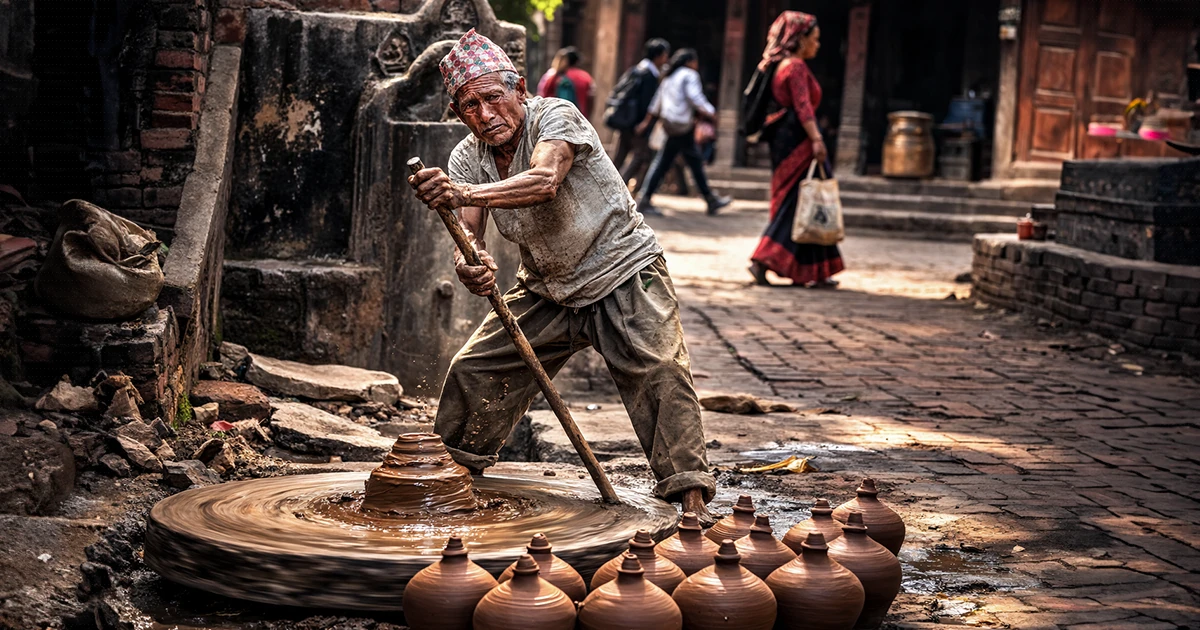
Many potters are happy to answer questions or demonstrate their technique for curious visitors. Watching a lump of clay transform into a perfectly shaped pot within minutes is both fascinating and inspiring.
Pottery Workshops for Visitors
Some workshops in the square allow visitors to try pottery making themselves. Under the guidance of local artisans, travelers can sit at the wheel and attempt to shape clay into a bowl or small pot.
Although beginners often struggle to achieve perfect shapes, the experience provides a deeper appreciation for the craftsmanship involved in traditional pottery.
Best Time to Visit Pottery Square
The best time to visit Bhaktapur Pottery Square is during the morning or early afternoon when artisans are actively working.
Dry weather is particularly ideal because many pots are left outside to dry in the sun. During the monsoon season, pottery production may slow due to increased humidity and rainfall.
Spring and autumn generally offer the most pleasant weather for exploring the area.
Photography at Pottery Square
For photographers, Pottery Square is one of the most visually captivating locations in Bhaktapur. The patterns formed by rows of clay pots create unique compositions, while the warm earthy tones contrast beautifully with the surrounding brick buildings.
When taking photos, it’s important to remain respectful. Asking permission before photographing artisans is always appreciated and helps maintain a friendly interaction.
How to Reach Bhaktapur Pottery Square?
Bhaktapur Pottery Square is easily accessible from Kathmandu and other parts of the valley. Once inside the historic city, the square is just a short walk from the main heritage area.
Travelers can reach Bhaktapur by:
- Local buses from Kathmandu
- Taxis or ride-sharing services
- Private vehicles or guided tours
Entry Fees and Visitor Information
Visitors entering Bhaktapur typically pay a heritage entry fee to access the city’s historic zones. This fee helps fund the preservation of temples, monuments, and cultural sites throughout Bhaktapur.
Pottery Square itself does not usually require a separate ticket, but visitors may choose to support artisans by purchasing pottery or participating in workshops.
Cultural Importance of Pottery in Bhaktapur
Pottery remains deeply connected to everyday life and religious traditions in Bhaktapur. Clay vessels are still used in festivals, household rituals, and temple offerings.
Beyond its practical uses, pottery represents the craftsmanship and resilience of the Newar community. By maintaining these traditional methods, Bhaktapur’s artisans preserve a living link to Nepal’s cultural heritage.
For many visitors, witnessing this tradition firsthand offers a deeper understanding of the artistry and dedication behind everyday objects.
Soak into Century Old Artistry
Bhaktapur Pottery Square offers far more than a simple sightseeing stop. It is a place where history, craftsmanship, and community come together in a vibrant cultural setting.
From watching master artisans shape clay on spinning wheels to wandering through rows of sun-drying pots, the experience provides a unique window into Nepal’s traditional way of life.
For anyone visiting the Kathmandu Valley, a stop at Bhaktapur’s Pottery Square is a chance to slow down, appreciate centuries-old artistry, and witness a craft that continues to shape the cultural identity of Nepal.
FAQs
Expand AllWhere is Pottery Square in Bhaktapur?
Pottery Square is located inside the historic city of Bhaktapur, a short walk from the famous Bhaktapur Durbar Square. The square sits in a traditional neighborhood where local potters have worked for generations, making it easy to include in a walking tour of Bhaktapur’s heritage area.
Can tourists try making pottery in Bhaktapur?
Yes, many small workshops around Pottery Square offer short pottery experiences for visitors. Under the guidance of local artisans, tourists can sit at a spinning wheel and try shaping clay into simple forms like bowls or small pots.
What is the best time of day to visit Bhaktapur Pottery Square?
Morning and early afternoon are usually the best times to visit. During these hours, artisans are actively shaping clay on their wheels and arranging freshly made pots to dry in the sun. Visiting earlier in the day also offers softer lighting and a quieter atmosphere for exploring and photography.
How much does a pottery class cost in Bhaktapur?
A short pottery session at Pottery Square is generally affordable, with prices typically ranging from around $5 to $15 depending on the workshop and duration.
What is the history of Bhaktapur Pottery Square?
Pottery has been practiced in Bhaktapur for centuries as part of the Newar cultural tradition. The square developed as a communal working space where potter families could shape, dry, and fire their clay vessels.
What kind of clay is used in Bhaktapur pottery?
Potters in Bhaktapur typically use locally sourced clay found in the soil and riverbeds of the Kathmandu Valley. The clay is carefully mixed with water and kneaded until it becomes smooth and workable, allowing artisans to shape it easily on the wheel.
How is the pottery dried and fired in Bhaktapur?
After shaping the clay, the pottery is placed outside in the square to dry naturally in the sun. Once the pieces harden slightly, they are fired in traditional kilns built from brick or clay. The kiln is heated with wood or straw, turning the soft clay into durable ceramic pottery.
What can you buy at Bhaktapur Pottery Square?
Visitors can purchase a wide variety of handmade clay products, including cooking pots, decorative vases, flower planters, small souvenir items, and traditional oil lamps often used during festivals such as Tihar.
Do the artisans at Pottery Square speak English?
Some artisans, especially those who regularly interact with tourists, can speak basic English. While not everyone is fluent, communication is usually easy with simple conversation, gestures, or demonstrations during pottery workshops.
Is Bhaktapur Pottery Square open every day?
Yes, Pottery Square is generally open every day because it functions as a working neighborhood rather than a formal museum. Artisans typically work during daylight hours, although activity levels may vary depending on weather or local festivals.
How far is Bhaktapur from Kathmandu?
Bhaktapur lies about 13 kilometers east of Kathmandu. The journey usually takes around 30–45 minutes by car or taxi, depending on traffic conditions.
Can you ship pottery from Nepal to other countries?
Some shops and exporters in Bhaktapur can help arrange international shipping for larger pottery purchases. Small souvenirs can often be packed safely in luggage, while bigger items may be shipped through courier or cargo services.
Who are the Prajapati people in Bhaktapur?
The Prajapati community is traditionally associated with pottery in Bhaktapur. Members of this caste have practiced clay craftsmanship for generations and are responsible for producing many of the pots and ceramics seen in Pottery Square today.
How long do you need to explore Bhaktapur Pottery Square?
Most visitors spend about 30 minutes to an hour exploring the square. However, those interested in photography, cultural observation, or pottery workshops may stay longer to watch artisans at work and interact with the local community.
How are traditional Nepali ceramics painted?
Some ceramic pieces are left in their natural terracotta color, while others may be decorated with simple patterns or painted after firing. Decorative pottery intended for souvenirs or home décor sometimes includes colorful designs or glazed finishes.
Is the Bhaktapur entrance fee required for Pottery Square?
Yes. Visitors must pay the city heritage entry fee to enter the historic areas of Bhaktapur. Once inside the city, Pottery Square can be visited without an additional charge.
Related blog posts
Discover a choice of tourist destinations loved by most of our visitors. Whether you're on a jungle safari to spot rare animals or walking through a world heritage site, these well-planned itineraries cover the major highlights of Nepal.



 call an expert at: