
Medicinal Herbs of Western Nepal: Traditional Uses, Local Knowledge and Conservation
 Sristi Adhikari
Did you know that remote villagers in Western Nepal still depend on Medicinal herbs to treat disease, boost immunity, and support overall well-being? Villages in the Western and Far-western regions do not have modern hospitals, so they have been treating themselves with what is available in alpine meadows and dense mountain forests.
Those who have botanical curiosity, we suggest that you visit the western district of Nepal, such as Dolpa, Humla, Jumla, and Mugu, where you can find hundreds of valuable herbs used in traditional healing systems in 2026. Knowledge of Medicinal plants in Western Nepal has been passed down orally through traditional healers, shamans, and village elders for centuries.
Nowadays, even scientists, trekkers, and the global herbal medicine market are also keeping an eye on Western Nepal medicinal plants. Continue reading the blog, for details on importance of Himalayan biodiversity and health care practices traditionally in Nepal.
Rich Diversity of Medicinal Herbs of Western Nepal
The high mountains, alpine meadows, and forest ecosystems of western Nepal create ideal conditions for medicinal plants to thrive. According to the reports of Ethnobotanical studies, it has been reported that dozens of herbal medicinal species are found in districts like Dolpa, Humla, and Jumla that have been traditionally used to treat various illnesses.
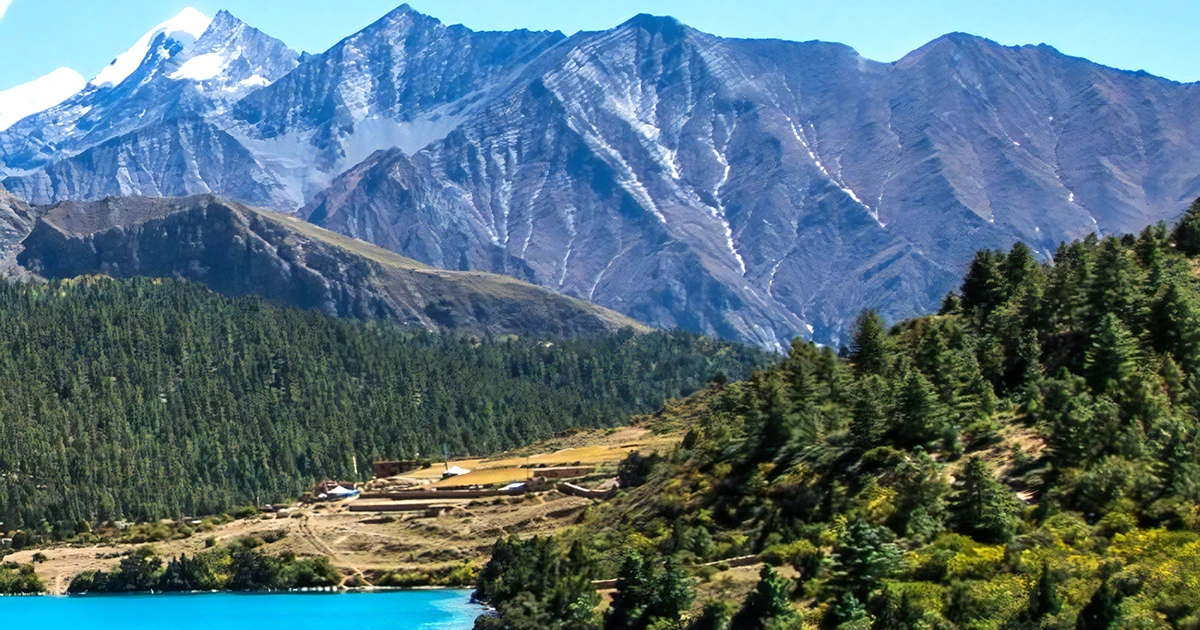
Locals of rural mountain communities have to walk for two to three days only to receive modern healthcare facility. Medicinal Herbs of Western Nepal remain the primary source of treatment.
They use local herbal remedies commonly for treating digestive problems, respiratory diseases, wounds, fever, and altitude-related illnesses. Many of these herbs grow at high elevations between 2,500 and 5,000 meters, making them unique to the Himalayan ecosystem.
Important Medicinal Herbs of Western Nepal
Yarsagumba (Cordyceps sinensis)
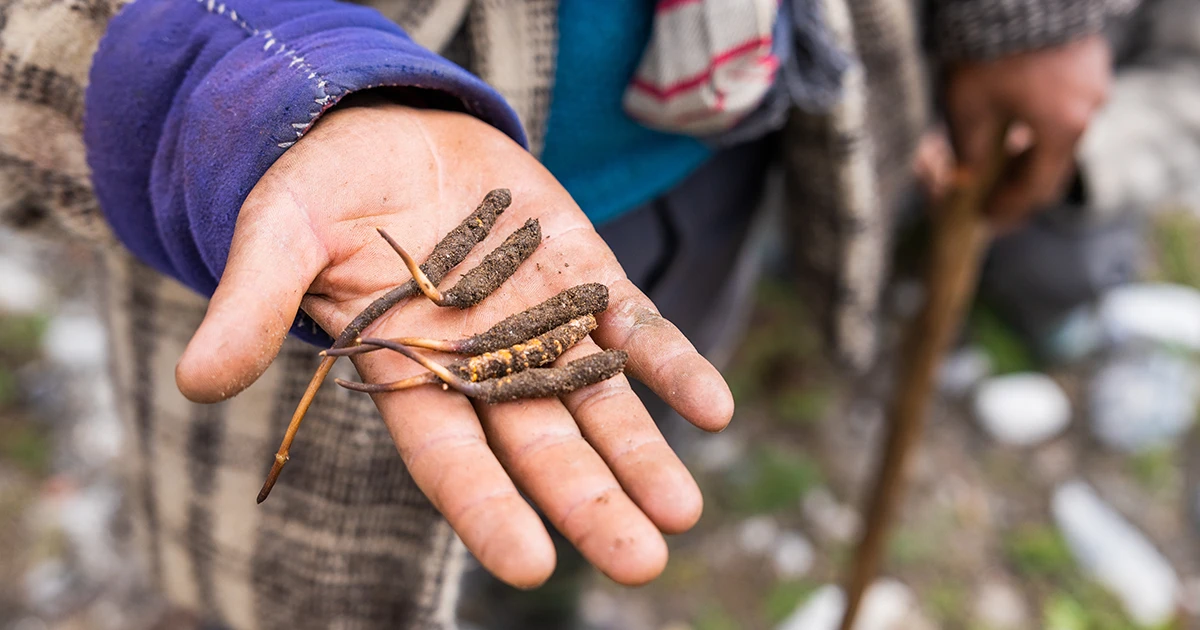
It is one of the most famous Medicinal Herbs of Western Nepal and is often called “Himalayan Viagra.” It grows in alpine meadows at elevations of around 3,000–5,000 meters and is highly valued for its medicinal and economic importance.
It is believed to improve stamina, strengthen the immune system, and help treat respiratory and kidney-related diseases. Due to this, it has high market value, and Yarsagumba collection is done by Himalayan locals for day-to-day livelihoods.
Kutki (Picrorhiza kurroa)
Kutki is another significant plant among the Medicinal Herbs of Western Nepal. It grows in the Himalayan trails from an altitude of 2,700 to 4,500 meters in places like Darchula, Dolpa, Jumla, Mugu, Bajang, Rukum, Myagdi, Manang, Gorkha, Rasuwa, Sindhupalchowk and Sankhuwasabha.
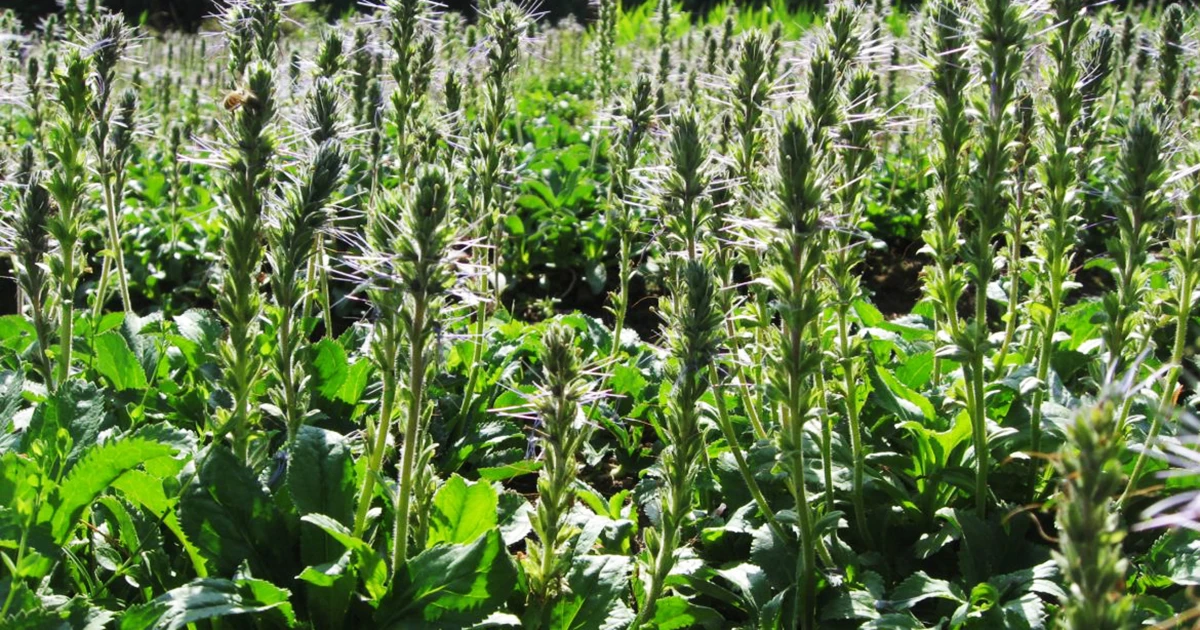
The root of Kutki Nepal is widely used in traditional medicine for liver disorders, fever, digestive issues, and inflammation. Due to excessive harvesting and growing commercial demand, Kutki has become increasingly rare in the wild.
Sugandha Kokila (Cinnamomum glaucescens)
Sugandha Kokila is an aromatic plant found in parts of western Nepal like in Dolpa, Jumla, Mugu, Mustang, Manang, and also in Rasuwa, and Taplejung. Its berries are used to extract oil which is used in the production of perfumes, soaps, and traditional medicine.
Local communities use this oil as a stimulant and for treating minor health conditions. It is also one of Nepal’s promising medicinal and aromatic plant products which has high export potential.
Himalayan Mint (Mentha royleana)
Among the commonly used Medicinal Herbs of Western Nepal, Himalayan mint plays an important role in everyday herbal remedies.
Traditionally, it has been used for treating digestive problems such as vomiting, diarrhea, and stomach pain. It is also consumed as herbal tea for its cooling effects and respiratory relief.
Jatamansi (Nardostachys jatamansi)
Jatamansi Nepal is commonly found in high-altitude Himalayan regions. The root of this plant is used as traditional medicine because it is believed that it has calming and therapeutic properties. Local people use Jatamansi to treat stress, anxiety, insomnia, and certain neurological disorders.
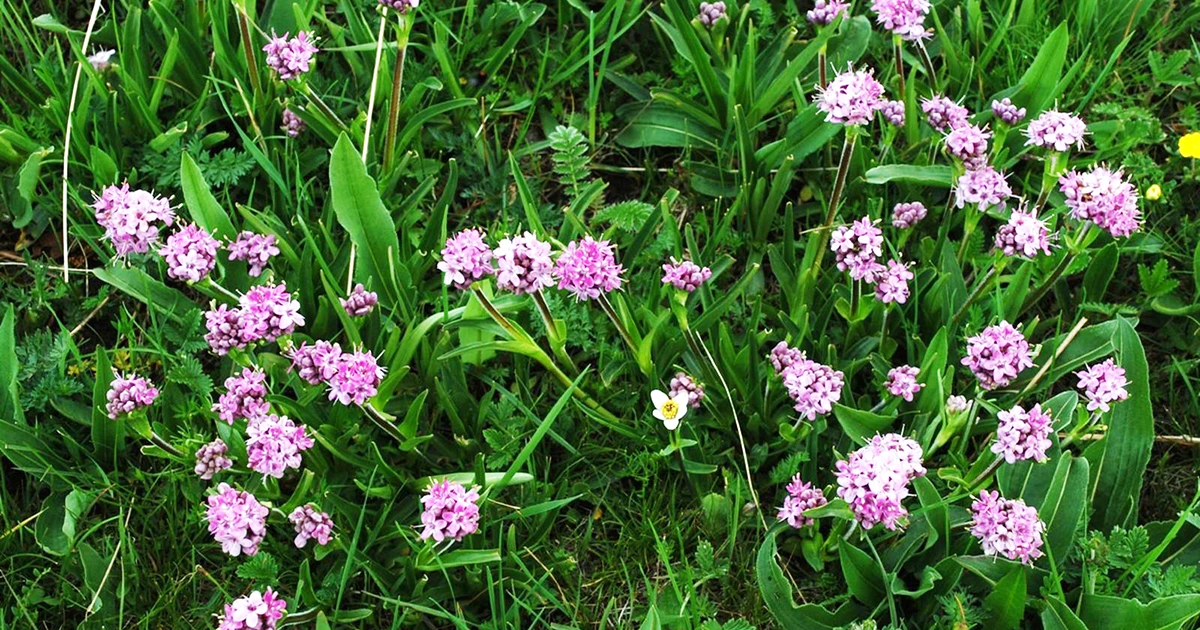
It is also valued for improving memory and supporting mental health. Due to this, it has an increasing demand which results in overharvesting. Jatamansi has become vulnerable in the wild, highlighting the need for conservation of Medicinal Herbs of Western Nepal.
Lauth Salla (Taxus wallichiana)
Lauth Salla, also known as the Himalayan yew, is another valuable species among the Medicinal Herbs of Western Nepal. This tree’s bark and leaves contain compounds used in the treatment of serious diseases, including cancer.
In traditional practices, parts of the plant have also been used to treat respiratory problems and fever. However, excessive harvesting has greatly reduced its natural population, making the protection of Medicinal Herbs of Western Nepal like Lauth Salla increasingly important.
Bhojpatra (Betula utilis)
Bhojpatra is a high-altitude tree that holds both medicinal and cultural significance among the Medicinal Herbs of Western Nepal. Traditionally, its bark was used as writing material for ancient manuscripts and religious texts. It’s bark and leaves are believed to have antiseptic and healing properties.
Other Important Medicinal Herbs
The other protected medicinal plants of Nepal which has higher export potential and are used as traditional medicines are:
- Panch Aunle (Dactylorhiza hatagirea)
- Chiraito (Swertia chirayita)
- Sugandhawal (Valeriana jatamansi Jones)
- Sarpagandha (Rauvolfia serpentina)
- Jatamansi (Nardostachys jatamansi)
- Okhar (Juglans regia)
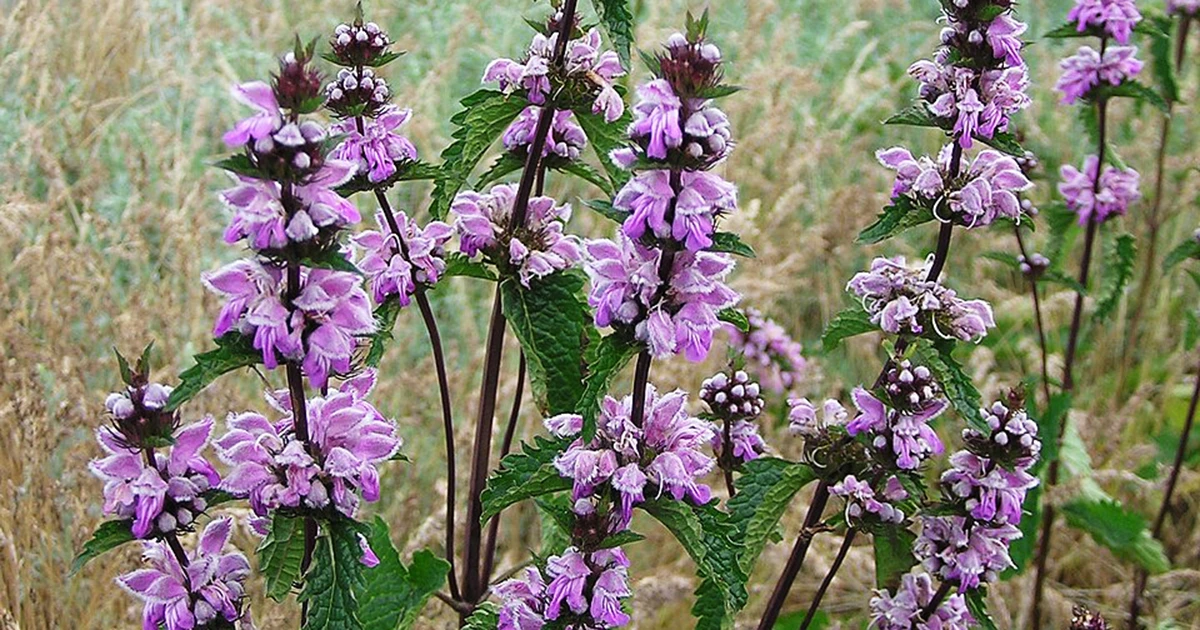
- Kuro (Phlomoides hamosa)
- Talispatra / Abies spectabilis
- Himalayan Blue Poppy
- Satuwa / Paris Polyphylla
- Bikh / Aconite Aconitum spicatum
Traditional Knowledge and Cultural Importance
The Medicinal Herbs of Western Nepal is highly connected with indigenous knowledge systems. Traditional healers like Amchi, Baidhya, or Dhami play an important role as they identify plants, prepare remedies, and diagnose illnesses of the locals.
The information about Medicinal Herbs of Western Nepal is typically passed from one generation to the next through observation and apprenticeship as of now. In many villages, elders know exactly when to harvest herbs, how to dry them, and how to prepare them for medicinal use.
This traditional knowledge plays an essential part in the cultural heritage of local communities in Nepal.
Economic Importance of Medicinal Herbs of Western Nepal
As of now, Medicinal Herbs of Western Nepal have become important sources of income for rural households.
- Locals communities collect herbs, and they sell them to traders and export them for use in herbal medicines, cosmetics, and natural health products.
- The herbs like Yarsagumba, Kutki, and other alpine plants have very high market value and generate a significant amount of income.
There is a high demand of medicinal herbs, which increases pressure on natural resources. So, we also have to focus on their conservation and sustainable management, even with proper use in local livelihoods.
Conservation Challenges
Despite their importance, many Medicinal Herbs of Western Nepal are facing serious threats like overharvesting, habitat loss, climate change, and illegal trade. Due to this, there is huge decline in several valuable species.
Some plants, including Kutki, have become increasingly rare due to excessive collection from the wild. Without proper conservation strategies, people are overharvesting them, which results in a risk to Medicinal Herbs of Western Nepal.
Conservation and Sustainable Use
The Medicinal plants can be conserved if there is collaboration between local communities, conservation organizations, and government authorities. Some important strategies to follow for the sustainable use and conservation of important medicinal herbs are given below:
- Focus on sustainable herb harvesting practices
- Encouraging community-based forest management in every corner of Nepal.
- Cultivating medicinal plants instead of wild collection
- Documenting indigenous knowledge about medicinal plants
- Supporting a local herbal company
Conclusion
The Medicinal Herbs of Western Nepal is not only a source of income, but it also has traditional wisdom and cultural heritage of the locals. People have been depending on these herbs for bread and butter for centuries in the remote Himalayan region of Nepal.
But these medicinal herbs have been receiving serious threats due to overharvesting, climate change is causing their habitat loss, and greedy people are trading them illegally.
So, their preservation is highly important, and every community and government organization should be focused on their preservation and sustainable use. These valuable herbs should be conserved so that it will help to benefit people and ecosystems alike in the future.
FAQs
Expand AllWhat makes western Nepal important for medicinal herbs?
Western Nepal is important for medicinal herbs because it is enriched with immense biodiversity where you can found a high concentration of endemic species, particularly in high-altitude Trans-Himalayan regions like Dolpa and Mustang.
Which districts of western Nepal appear most often in medicinal-plant research?
Darchula, Baitadi, Dadeldhura, and Bajhang are districts of western Nepal which appear most often in medicinal-plant research.
Are medicinal herbs found only in high-altitude western Nepal?
No. Medicinal herbs are not found only in high-altitude western Nepal.
Are Dolpo, Humla, Baitadi, and Darchula all part of the same herb story?
Yes, Dolpo, Humla, Baitadi, and Darchula all part of the same herb story.
What is Amchi medicine in Nepal?
Amchi medicine is also known as Sowa Rigpa which treats diseases caused by imbalances in ‘wind,’ ‘bile,’ and ‘phlegm’ using natural herbs, minerals, and therapies like moxibustion.
Is Amchi medicine only associated with Dolpo?
No. Amchi medicine (Sowa-Rigpa) is not only associated with Dolpo.
What is a Baidhya in the Nepalese context?
Baidhya refers a traditional Ayurvedic practitioner, physician, or healer who diagnose and treat diseases with the use of herbal medicine and ancient Vedic knowledge.
Is medicinal-plant knowledge in western Nepal mostly written or oral?
Medicinal-plant knowledge in western Nepal is mostly oral.
Which herbs are most commonly associated with western Nepal?
The most commonly associated herbs with western Nepal is Yarsagumba (Cordyceps sinensis) Kutki (Picrorhiza kurroa) Sugandha Kokila (Cinnamomum glaucescens) Himalayan Mint (Mentha royleana), etc.
Is chiraito found in western Nepal?
Yes, Chiraito is found in western Nepal.
What is jatamansi and why is it widely discussed?
Jatamansi also known as Spikenard is a critically endangered herb found in the high-altitude of around 3,200 to 5,000 meters. It is widely discussed because of its medicinal, aromatic, and economic properties.
What is Kutki and why does it matter in conservation discussions?
Kutki is a medicinal herb found in the alpine Himalayan region at an altitudes between 3,000 and 5,000 meters. It is a conservation discussions because it is being endangered due to illegal harvesting and habitat loss.
Is panchaule a protected species in Nepal?
Yes, Panchaule is a protected species in Nepal.
What plant parts are most commonly used in traditional remedies?
Plant parts like leaves, roots, and bark are most commonly used in traditional remedies.
Are western Nepal’s herbs mostly wild-harvested or cultivated?
Western Nepal’s medicinal and aromatic plants (MAPs) are wild-harvested.
Are some medicinal plants in Nepal legally protected?
Yes, several medicinal plants in Nepal are legally protected due to illegal harvesting.
Are any herbs banned from export from Nepal?
Yes, narcotic plants and specific herbs like walnut and orchid, are banned from export from Nepal.
Can tourists legally buy medicinal herbs in Nepal?
Yes, tourists can legally buy medicinal herbs in Nepal.
Can medicinal herbs have side effects or toxicity?
Yes, medicinal herbs can absolutely have side effects and toxicity.
Can travellers carry herbs out of Nepal in their luggage?
Yes. Travellers can only carry processed or dried herbs (spices) out of Nepal in their luggage.
Related blog posts
Discover a choice of tourist destinations loved by most of our visitors. Whether you're on a jungle safari to spot rare animals or walking through a world heritage site, these well-planned itineraries cover the major highlights of Nepal.



 call an expert at: