
How to Cut Down EBC Trek Cost: 10 Best Budget Hacks
 Sujata Pokhrel
Are you thinking of ways to trek to Everest on a budget? If so, there are a few hacks you must know to cut down the EBC trek cost. Not only does this take you to your dream destination, but it also saves you money without compromising your experience.
It is pretty evident that witnessing the world’s tallest peak is a once-in-a-lifetime adventure for many. But many enthusiastic climbers worry about budget constraints. However, with efficient planning and smart decisions, it’s actually possible to pull off a cheap Everest Base Camp trek.
Whether you are a solo traveler, a student, or simply someone looking for an Everest Base Camp trek on a budget, cutting costs does not mean cutting corners on experience. With just small adjustments to your timing and intense research, you can get the best deal at the lowest prices.
Go through this blog to get the most practical guide to help you manage your EBC trek cost wisely while still enjoying the magic of the Khumbu valleys.
Hacks to Budget EBC Trek Cost
Hack 1: Choose the Right Trekking Season
It is well known that peak seasons like spring and autumn offer the most stable weather for trekking. However, these also come with high costs for flight, accommodation, and guides.
If you’re aiming for an Everest Base Camp trek on a budget, consider shoulder seasons such as early December or late February. While temperatures are colder and conditions slightly more challenging, accommodation prices drop, and you may even find better Everest Base Camp trek deals due to fewer trekkers on the trail.
Hack 2: Avoid Those Expensive All-Inclusive Packages
Many trekkers assume that booking a fully inclusive package is the safest option, especially for their first trek. However, these packages often increase the Everest Base Camp trek price by adding up unnecessary services such as luxury hotels, private transport, or fixed meal plans.
Instead, consider a semi-independent approach. If you book permits, teahouses, and meals as you go, it allows you to control daily expenses. Hiring a guide or porter separately also gives you the flexibility to negotiate rates and tailor services to your actual needs. This approach is particularly effective for those seeking a cheap Everest Base Camp trek without sacrificing safety or local expertise.

Hack 3: Be Smart About Flights to Lukla
Flights between Kathmandu and Lukla are one of the costliest part of your Everest Base Camp trek budget. Since the prices keep fluctuating depending on demand, weather, and season, nothing is fixed. During peak trekking months, flight delays and cancellations are even common, and often lead to costly last-minute arrangements.
To minimize this cost, book flights well in advance and remain flexible with your schedule. Alternatively, trekking from Jiri eliminates the need for a Lukla flight altogether. While this adds several days to your itinerary, it significantly reduces airfare costs and offers a more traditional trekking experience through rural villages and lesser-traveled trails.

Hack 4: Plan Your EBC Trek in Groups
Trekking in a group can dramatically lower individual expenses. When you share the cost of guides, porters, and accommodation, your overall Everest Base Camp trek budget becomes far more manageable. Group trekking also provides better bargaining power when negotiating service rates along the trail.
Additionally, many trekking agencies offer discounted Everest Base Camp trek deals for groups, making it an ideal option for friends, families, or travelers willing to join a fixed departure group. Beyond cost savings, group trekking adds a social element that often enhances the overall experience.
Hack 5: Stay Flexible With Your Itinerary
A rigid trekking schedule can quickly escalate costs, especially in the Everest region where weather disruptions are common. Fixed itineraries often force trekkers to stay in expensive lodges or pay for rushed transportation.
By keeping your Everest trek itinerary flexible, you can adjust rest days based on your health and weather conditions, choose affordable teahouses, and avoid unnecessary expenses. Flexibility also allows you to take advantage of less crowded villages that often offer better prices. This approach is especially useful for anyone trying to control their Everest Base Camp trek price.
Hack 6: Hire Local Guides and Porters
Hiring local guides and porters is not only ethical and community-supportive, but also cost-effective. Local professionals generally charge less than international trekking agencies while offering deep knowledge of the terrain and weather conditions.
Their experience often helps you find reasonably priced teahouses and avoid overpriced services on the trail. For trekkers planning an Everest Base Camp trek on a budget, this is one of the most reliable ways to reduce costs while enhancing safety and cultural understanding.
Hack 7: Eat Local and Simple on the Trail
Food costs increase steadily with altitude due to transportation challenges. Imported and processed foods are especially expensive and can quickly inflate your daily expenses.
To keep your EBC trek cost under control, stick to locally prepared meals such as dal bhat, noodle soups, and Tibetan bread. These meals are not only affordable but also filling and well-suited for high-altitude trekking. Carrying snacks from Kathmandu further reduces the need to buy costly items along the trail.

Hack 8: Rent Out the Trekking Gears in Kathmandu
Trekking gear can be surprisingly expensive if purchased near the trailhead. Shops in Lukla or Namche Bazaar often charge much higher prices due to transportation costs and limited supply.
To keep your Everest Base Camp trek budget under control, rent or buy gear before heading to the mountains. In fact, it is more convenient to rent out the trekking gears if you aren’t a regular trekker. Not only does it cut your gear cost but also cuts down extra baggage while travelling.
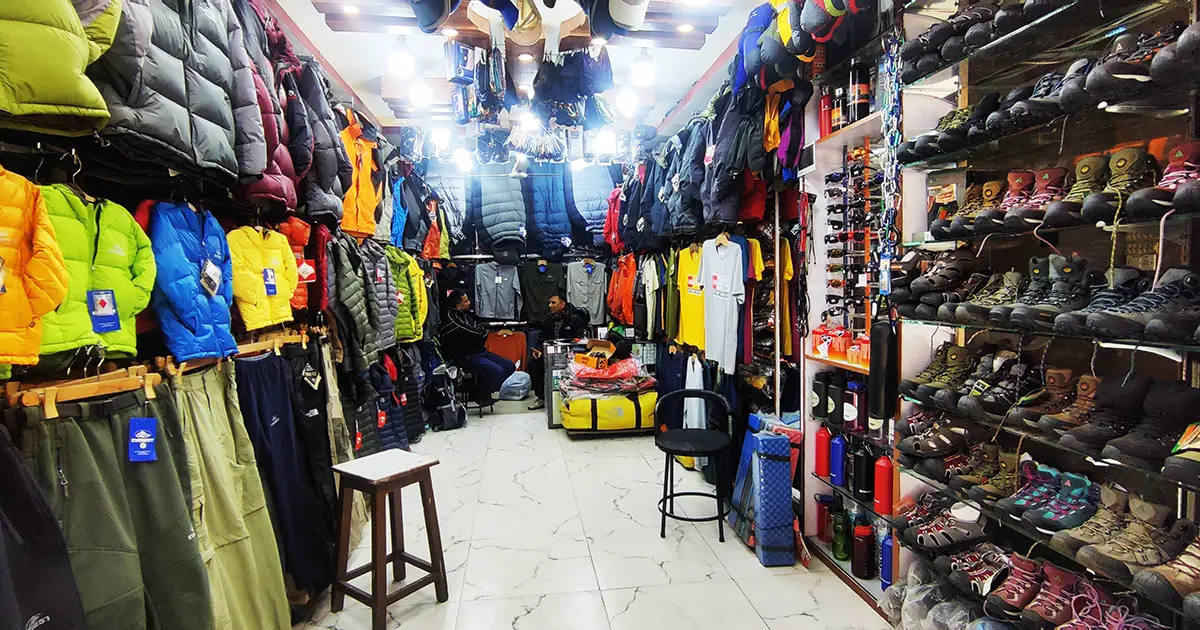
Thamel has countless trekking stores offering affordable rentals for sleeping bags, down jackets, and trekking poles. Besides, comparing prices across shops can save you a noticeable amount before the trek even begins.
Hack 9: Carry Enough Cash From Kathmandu
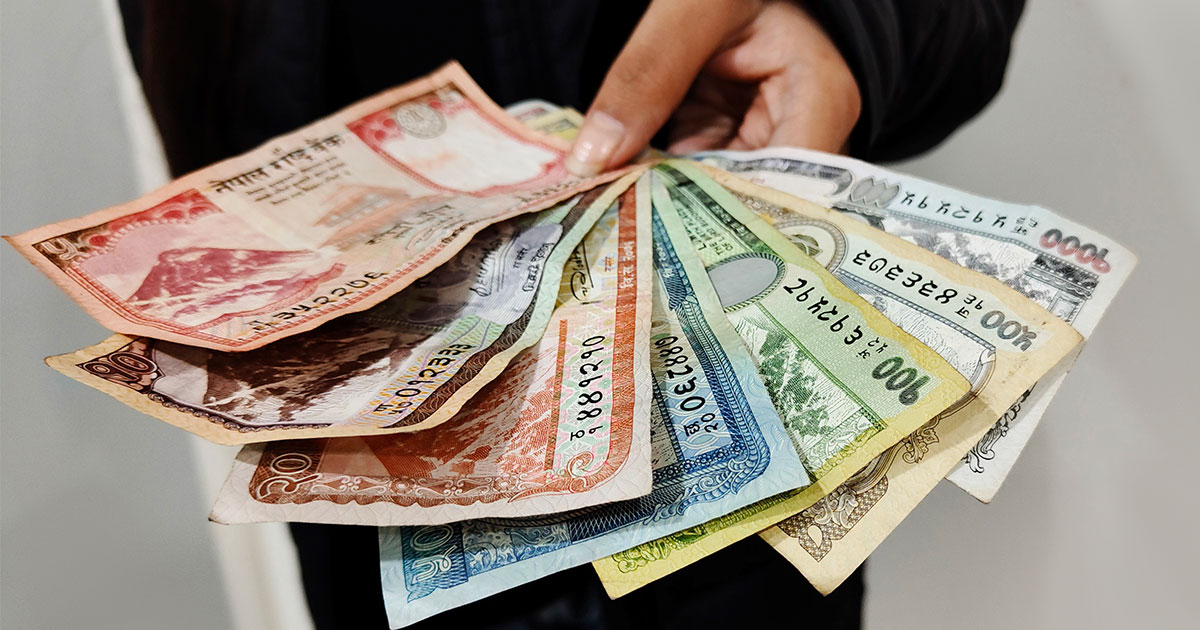
There are no ATMs beyond Namche Bazaar, and even those can be unreliable. Relying on money exchange or emergency cash withdrawals along the trail can be costly.
Carrying sufficient cash from Kathmandu helps you avoid high exchange rates and unexpected service fees. This simple preparation step keeps your daily spending predictable and prevents unnecessary additions to your EBC trek cost.
Hack 10: Limit Luxury Extras at High Altitude
As altitude increases, so does the cost of comfort. Hot showers, charging electronic devices, Wi-Fi access, and bottled water are all charged separately in most teahouses.
If you are planning an Everest Base Camp trek on a budget, limit these extras whenever possible. Using a power bank, purifying water instead of buying bottles, and skipping daily hot showers can reduce daily expenses without affecting the trekking experience.
Wrapping it Up
Trekking to Everest Base Camp does not have to be expensive. With smart planning and a clear understanding of where costs can be reduced, this iconic journey becomes far more achievable. Choosing the right season, staying flexible, and avoiding unnecessary services can make a noticeable difference to your overall budget.
Saving money does not mean missing out on the experience. In fact, budget trekking often feels more authentic. Local teahouses, simple meals, and support from local guides create deeper connections with the mountains and the people who live there. These moments are often more meaningful than luxury comforts.
An Everest Base Camp trek on a budget is about making wise choices, not cutting corners. With the right approach, you can enjoy the same views, trails, and sense of achievement, at a much lower cost. Take a look at our blog on “How to Choose the Best Everest Base Camp Trekking Package“, to get a more clearer insight on budgeting.
Plan right to get most out of less. Enjoy budget trekking to Everest!
FAQs
Expand AllHow much does the Everest Base Camp trek cost in total?
Most trekkers spend anywhere from about USD 1,200 to USD 2,500 for the full Everest Base Camp trek when all major expenses are included, such as permits, Lukla flights, food, accommodation, guide/porter support, and basic gear. Budget-friendly packages can start as low as around USD 800–1,300 if you shop smart and travel in a group.
What are the biggest hidden costs on the Everest Base Camp trek?
Following are the hidden or extra costs on Everest base camp trek:
- Wi-Fi and charging fees at teahouses (USD 3–10 per day).
- Hot showers (USD 3–8).
- Bottled or mineral water and snacks, especially at higher altitudes.
- Extra nights in Kathmandu or Lukla due to flight delays.
- Tips for your guide and porter.
Is it cheaper to fly to Lukla from Kathmandu or Ramechhap?
Flying from Ramechhap is often cheaper than flying directly from Kathmandu, but it requires a longer road transfer to reach the Ramechhap airstrip. Flights from Kathmandu to Lukla tend to cost more, especially in peak seasons. Comparing both options early can help you save on your overall Everest Base Camp trek budget.
Can I do Everest Base Camp on a budget without compromising safety?
Yes, you can trek on budget without sacrificing safety if you hire a licensed local guide and trek at a good pace with proper acclimatization. Make sure to carry all necessary trekking gears and cut costs on luxurious guesthouses or extravagant meals.
How much money should I carry for food, water, and extras on the trek?
On the trail, most trekkers spend about USD 25–40 per day on meals, drinks, and small extras. Meal costs increase with altitude, and simple items like bottled water or an energy drink are pricier at higher tea houses.
Is it better to rent trekking gear in Kathmandu or bring my own?
For most people, renting gear in Kathmandu is cheaper and more convenient if you don’t trek often. Rental prices for essential items are modest (e.g., USD 3–5 per day per item). However, if you already own good quality boots or technical layers, bringing them lowers your costs even more.
How much do a guide and porter cost for the Everest Base Camp trek?
The guide and porter costs for the Everest base camp varies, a licensed guide costs about USD 35-40 and a porter costs around USD 25 per day. Though it isn’t mandatory to tip, its better to carry around USD 15 for guides and USD 10 for porters.
How can I save money on drinking water and hot showers on the trail?
It is advisable to carry a water purifier or purifying tablets and refill your water bottles instead of buying the bottled water as it is more cost-friendly. You can skip hot showers in some days, as cold showers are much more cheaper.
What is the cheapest time of year to trek to Everest Base Camp?
The best and cheapest time is during shoulder trekking seasons, such as early December or late February—when prices for flights and teahouse accommodation dip, and trails are less crowded. Peak spring and autumn seasons have more stable weather but higher costs.
Are budget Everest Base Camp packages worth it, and what should they include?
Yes, the budget Everest Base Camp trek packages can be worthy if they include the following:
- Lukla flights
- All Permits
- Tea house accommodation
- Meals on the trail
- Licensed guide (and porter if needed)
Related blog posts
Discover a choice of tourist destinations loved by most of our visitors. Whether you're on a jungle safari to spot rare animals or walking through a world heritage site, these well-planned itineraries cover the major highlights of Nepal.

 call an expert at: