
Jim Morrison vs Andrzej Bargiel Everest Ski Descent: What Affects Everest Ski Descent Success Rate?
 Sujata Pokhrel
What is the Everest ski descent success rate? This question might have popped up in your mind after seeing the trending news about Andrzej Bargiel’s oxygen-less ski descent down Mount Everest.
Everest is commercialized; that’s a bitter truth today. More than a dreamy destination, it has become a hub for making new records. This has not only made the Khumbu region crowded and controversial, but also made it more popular than ever.
Given the difficulty of the route even for trekkers, the Everest ski descent success rate isn’t that good yet. But recent historic records made on two different sides of Everest over a span of a few weeks might change that graph of success.
Let’s go through the blog to better understand the possibility of ski descents, the Everest ski descent success rate, and the downsides of such attempts.
Everest Ski Descents: Is it Even Possible?
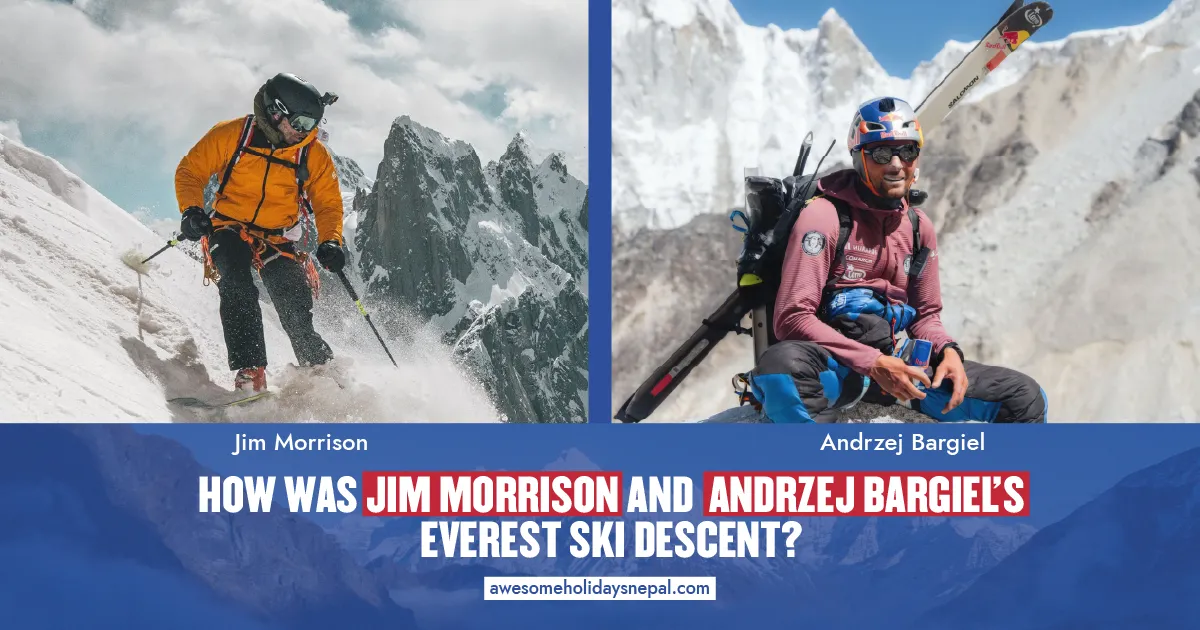
Imagine gliding down the narrow, steep ridges of 8888 an 8888-meter-tall peak, sounds impossible, right?.Yeah, it was until Jim Morrison and Andrzej Bargiel’s Everest ski descent, which was more than successful; it was record-breaking! These records do provide evidence that skiing down Everest is possible, but under extremely rare conditions.
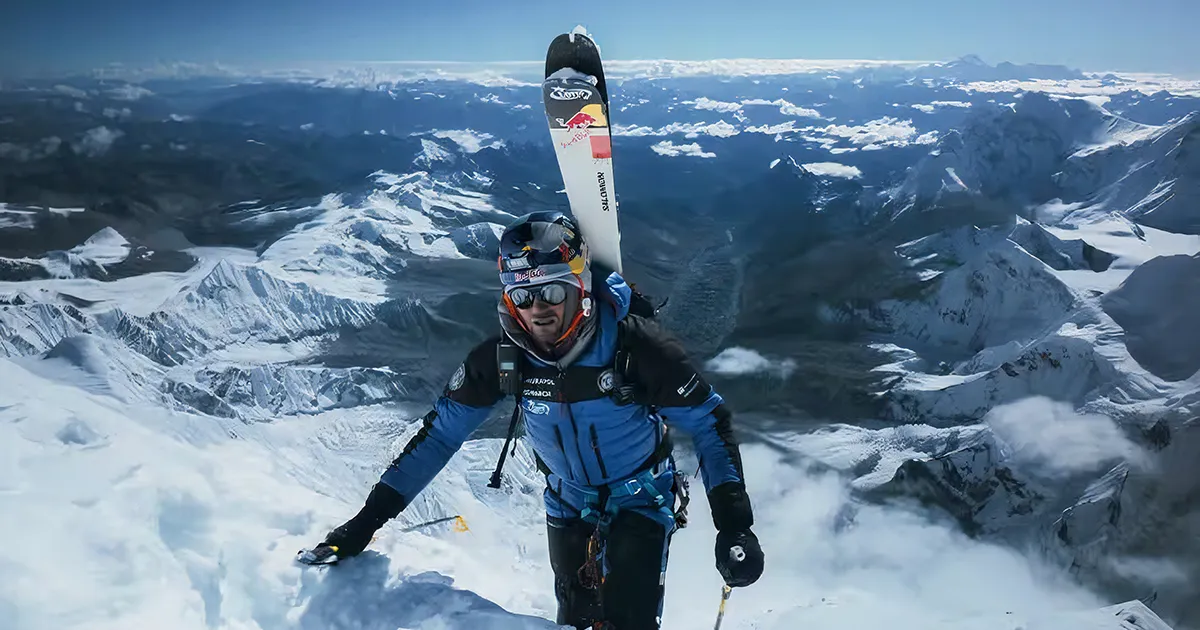
The snow fall, weather conditions, and your physical fitness must work in a perfect synchrony to make this adventurous descent over Everest a record breaking success. But even with overall preparation, there is no guarantee of succeeding on Everest.
Despite all the difficulties, people have still attempted to do unique descends from the summit. But before getting to comparison of the descents of two different athletes, let’s analyze different routes for Everest Ski descent.
Different Routes of Everest Ski Descent
Since Everest has 3 different faces, its obvious to have several routes to descend down the peak. Primarily, there are four major lines through which you can do ski descent on this peak.
Hornbein Couloir
The Hornbein couloir is the very steep, narrow and avalanche-prone section of the North face of Everest. Since the North face itself is the most challenging route to summit on feet, gliding on a ski is definitely going to be challenging. It is considered extremely dangerous, and many adventurers who have skied successfully from the other side find it difficult to do so on Hornbein couloir.
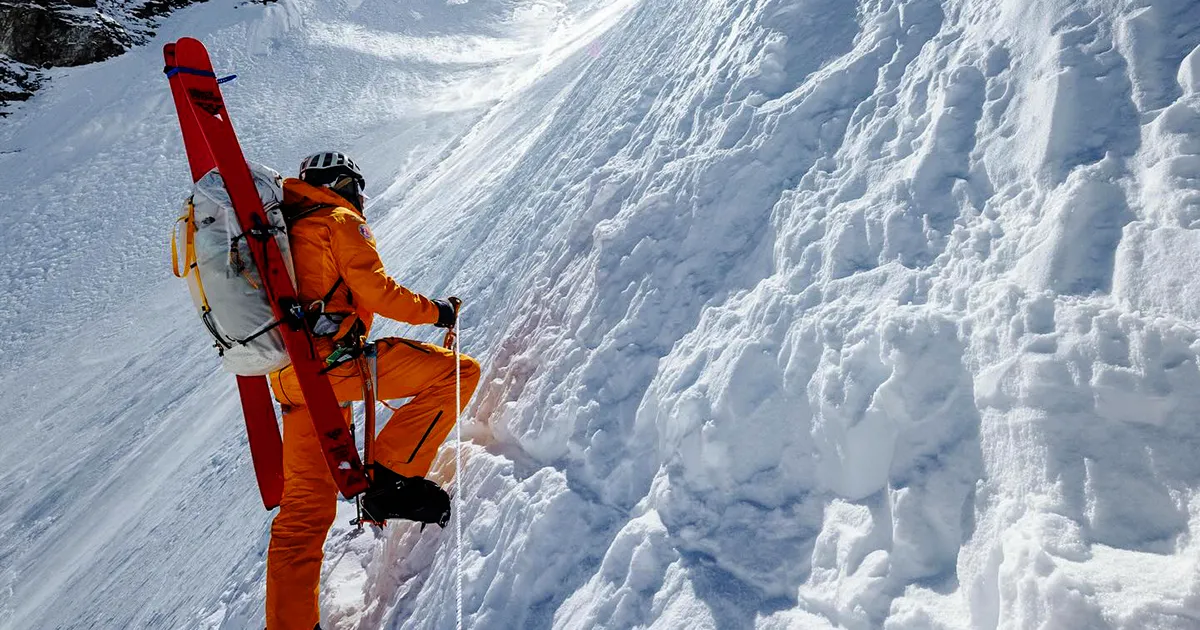
Given the difficulty, the ski descent through Hornbein couloir has a very small success rate of less than 10%. The snowpack, exposed rocky section, and a long narrow funnel makes it lest forgiving ski route.
Marco Siffredi who successfully skied down the Everest summit through south face met a fatal end while trying the same stunt on Hornbein couloir. However in 2025, Jim Morrison successfully skied on this treacherous route.
Norton Couloir
The Norton Couloir is also a route of the North face of Everest, however it is more stable than Hornbein despite being higher in elevation. It has a higher success rate of which is approximately about 20 to 30%.
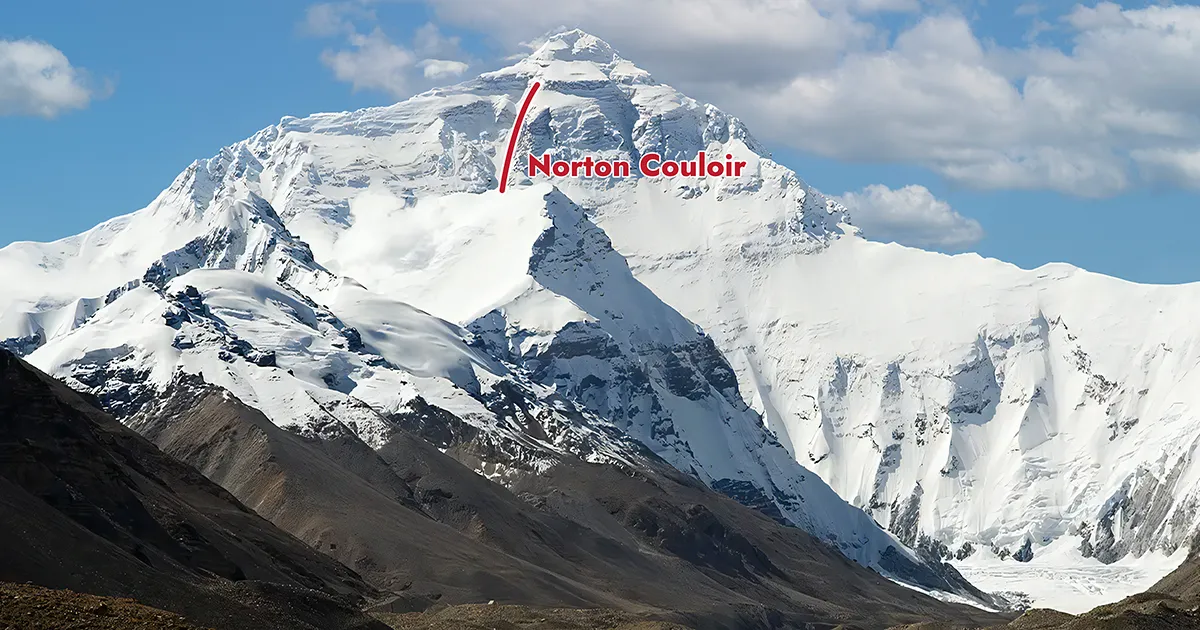
The French mountaineer and snowboarder Marco Siffredi successfully descended down this route on a snow bord, becoming the first one to make this record.
South West Face
The Southwest Face of Everest is one of the most unpredictable and dangerous ski descent routes on the mountain. One of the most hazardous and erratic ski descents on Everest is the Southwest Face. Every turn feels fragile and risky due to the terrain’s chaotic mix of exposed rock, hard ice, and shifting snow.
This face route came into highlight after Yuichiro Miura attempted to do a ski descent but met a crash. However, due to the difficulties faced, it isn’t preferred for skiing on Everest.
South Col Route
The South Col route that falls on the Southeast ridge or the Lhotse face of Everest is the most preferred route for descent, whether on ski or on foot. It is the same route that Andrzej Bargiel chose to make a historic record this September without any supplemental oxygen.
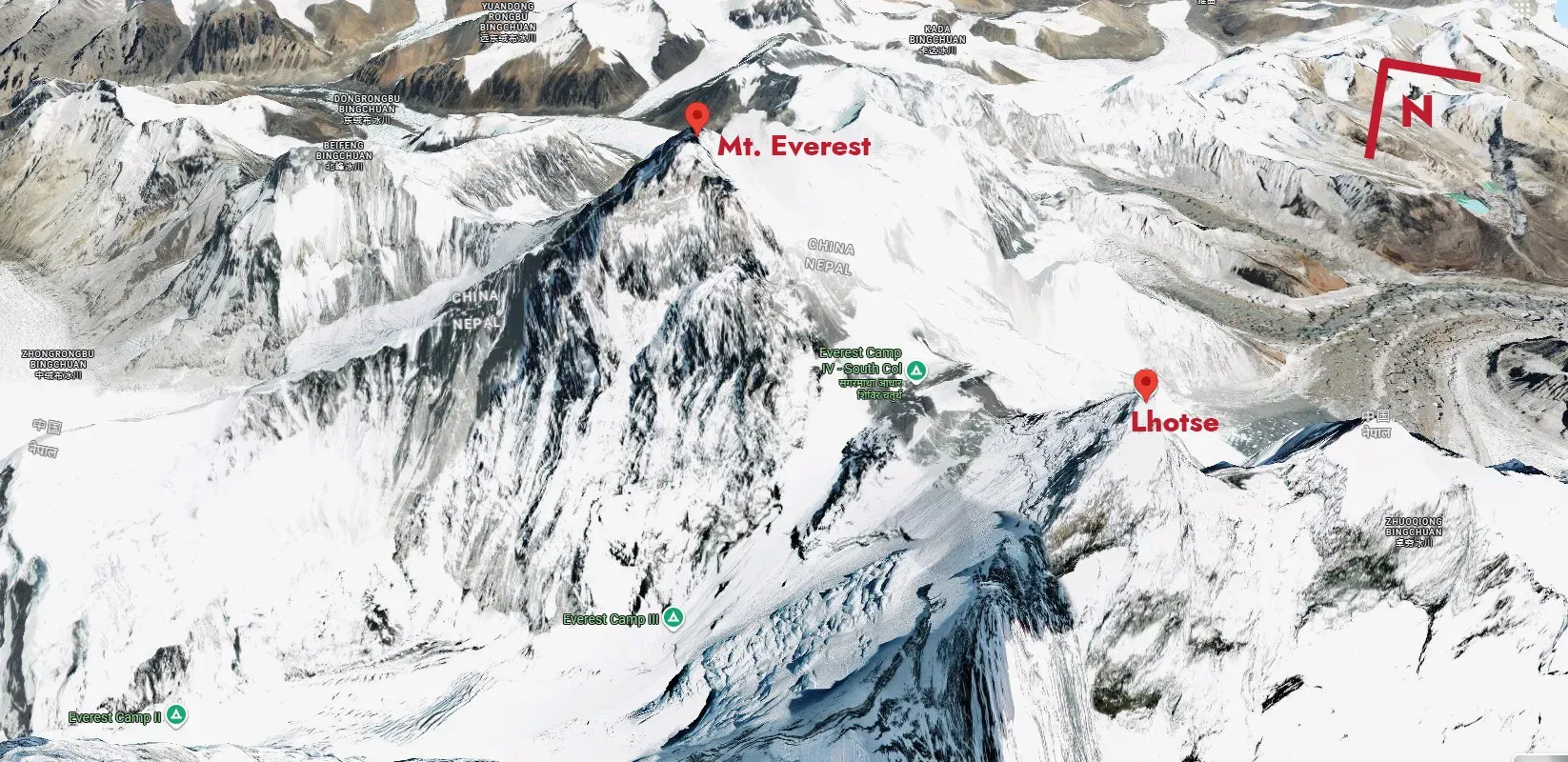
Since the route on this side is more manageable and predictable, it was possible to make this record-breaking history. It has the highest success potential with a percentage of 40 to 50%. Here snow tends to be more consistent and the decision points and exit options are more convenient.
Factors Affecting Ski Descent on Everest
Many factors contribute to increase the Everest Ski Descent success route. Some of these factors are discussed below:
Favorable Weather Conditions
Weather can make or break a ski descent on Everest, and every season plays by its own rules. While autumn brings clearer skies but harder, icier slopes, spring typically offers the most forgiving snowpack.
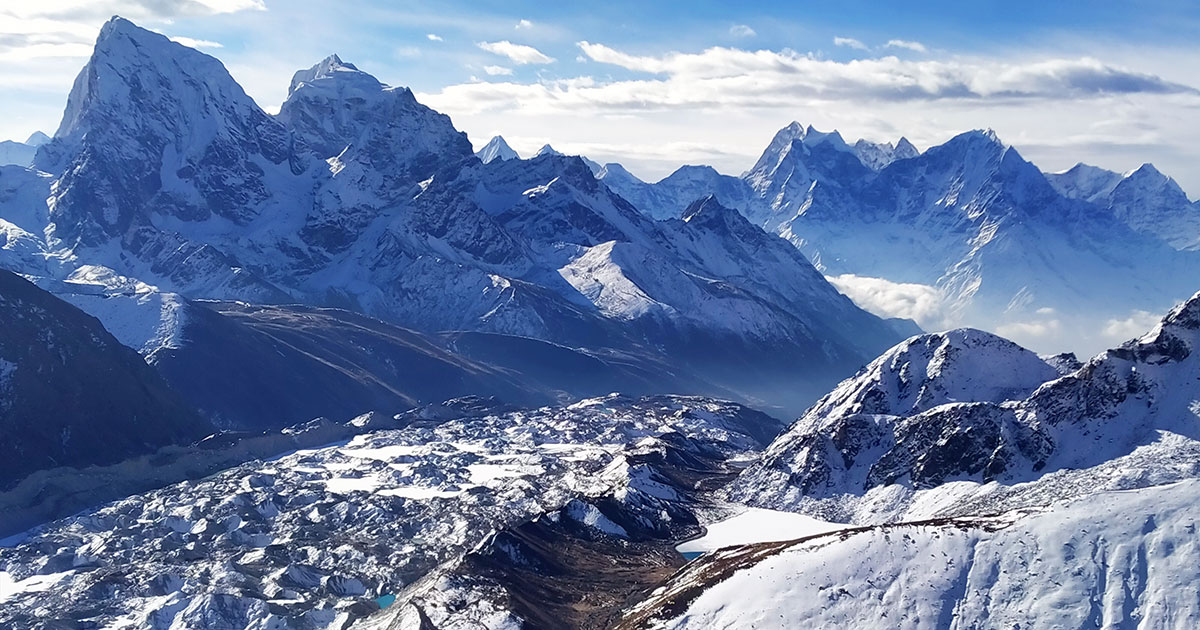
On the other hand, skiing is practically impossible in winter due to the extreme cold and strong winds. Due to these variations, climbers choose their season according to their objectives; some wait for short fall windows, like Bargiel did for his descent, while others rely on the stability of spring or the firm snow of autumn for technical lines.
Choice of Route
Whether a ski descent on Everest is successful or unsuccessful depends on the route chosen. Every path has its own set of difficulties, such as exposed rock, avalanche risk, steepness, snow stability, and the availability of alternatives in case the circumstances suddenly get worse.
While the Hornbein Couloir is extremely dangerous, the South Col is generally regarded as the safest of the main routes. The Southwest Face is the most unpredictable, while the Norton Couloir is in the middle. Thus, choosing the incorrect route is a common cause of unsuccessful descents.
Use of Supplemental Oxygen
For high-altitude skiers, using extra oxygen is an extremely individual decision. Using oxygen can make a descent much safer because it improves coordination, keeps the mind clear, and lowers the risk of frostbite.
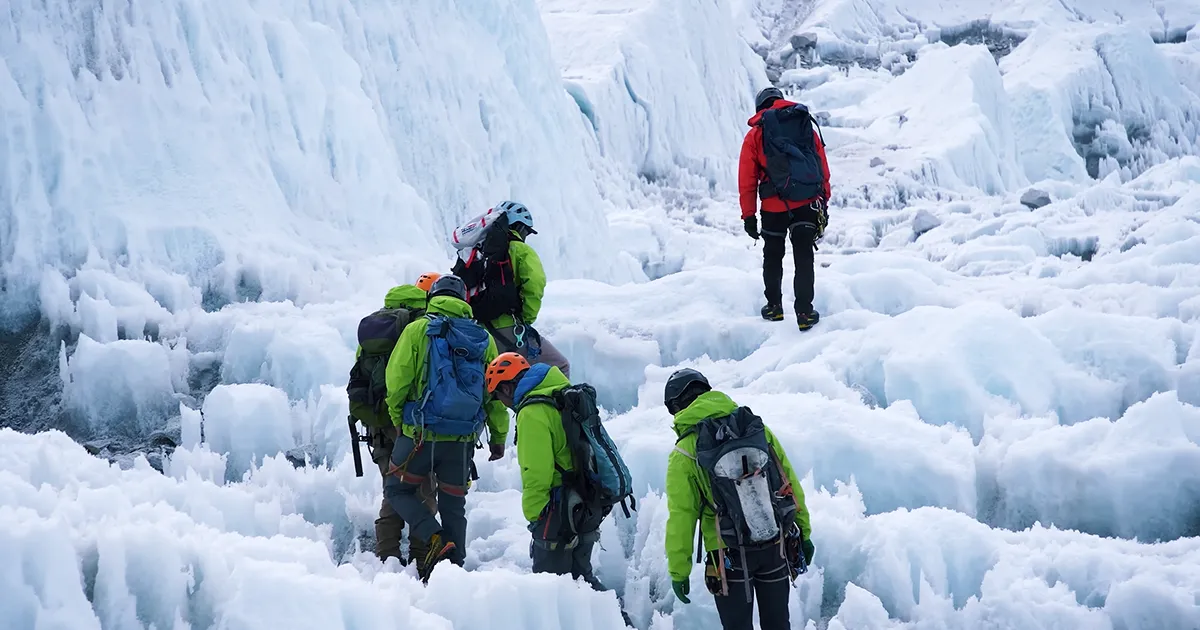
However, the ones who want to go without oxygen look for more pure way of descent and put up with much more mental and physical strain. Because of this, oxygen-free descents are extremely uncommon and admired. In fact, the Sherpas working as icefall doctors barely use oxygen to climb Khumbu Icefall.
Physical and Mental Alertness
Skiing at 8,000 meters requires mental sharpness in addition to physical fitness. Nothing really prepares you for how oxygen deprivation slows your thoughts and interferes with your judgment, even though training helps develop endurance and strong reflexes.
While their bodies are battling fatigue, skiers must be able to quickly assess the terrain, make quick decisions, and maintain composure under pressure. Maintaining mental clarity is often just as important as technical ability.
Technical Support
Good support and technology are essential for the latest ski descents on Everest. While route planning tools and guide expertise reduce uncertainty on hazardous slopes, detailed weather forecasting aids teams in selecting the ideal window.
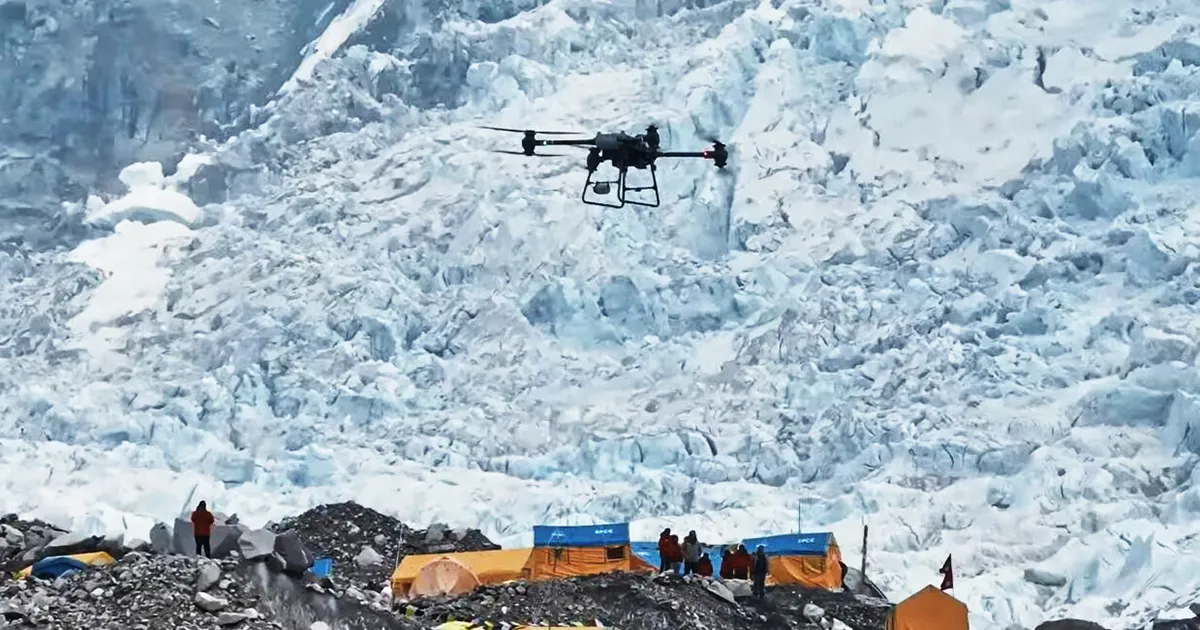
Additionally, a lot of climbers use drones to track serac movement, scout ahead, and check for unstable snow—information they could never see from the ground. In recent years, safety has significantly increased thanks to this combination of cutting-edge technology and human experience.
Acclimatization Pattern
Before attempting any ski descent on Everest, one must properly acclimate. Climbers sleep at higher elevations, move between camps slowly, and give their bodies time to adapt to the thinner air. When done properly, this procedure helps shield the brain and lungs from altitude stress.
However, altitude problems can quickly become disastrous if they are hurried or neglected, leading to disorientation, a loss of coordination, and even potentially fatal conditions like HACE or HAPE. Rather than skiing errors, poor acclimatization is the cause of many unsuccessful attempts.
Read the blog on What is Altitude Sickness to know the downside of improper acclimatization.
Records of Ski Descent on Everest
A few notable records has been made in ski descent on Everest. Some of these are:
- Andrzej Bargiel (2018): First continuous full ski descent from the summit
- Davo Karničar (2000): Summit to Camp II ski—historic but not continuous
- Marco Siffredi (2001): Successful snowboard descent via Norton Couloir
- Marco Siffredi (2002): Fatal attempt in Hornbein Couloir
- Yuichiro Miura (1970): Survival crash on the Southwest Face
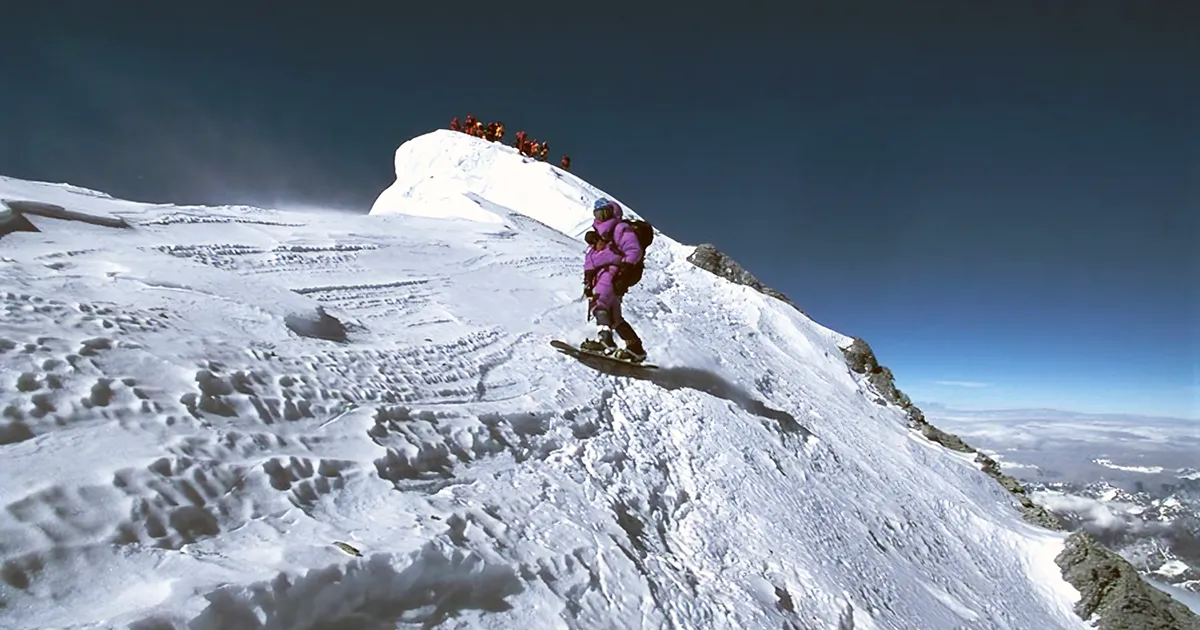
Comparing Ski Descents of Andrzej Bargiel and Jim Morrison
In 2025, two daring summiteers made the decision to make historic descent in the spring season for Everest climbing but with completely different routes. Here’s a subtle comparison of Andrzej Bargiel and Jim Morrison’s ski descent:
| Basis of Comparison | Andrzej Bargiel | Jim Morrison |
|---|---|---|
| Route Used | South Col Route (Southeast Ridge + Lhotse Face) | Explored South Col area; known for skiing Lhotse Face |
| Supplemental Oxygen | No oxygen used | Uses oxygen depending on climb; no Everest ski descent completed |
| Type of Descent | Full, continuous descent from summit to Base Camp | No full Everest descent yet; attempted key sections |
| Technical Support | Extensive drone use for mapping and safety | Relies more on traditional scouting and experience |
| Season Chosen | Early autumn window (stable, consolidated snow) | Prefers spring/autumn based on conditions |
| Terrain Mastery | Excellent in steep, mixed terrain at high altitude | World-class steep skier, especially on Lhotse Face |
| Record Achieved | First complete Everest ski descent | First full Lhotse Face ski descent (4th tallest peak) |
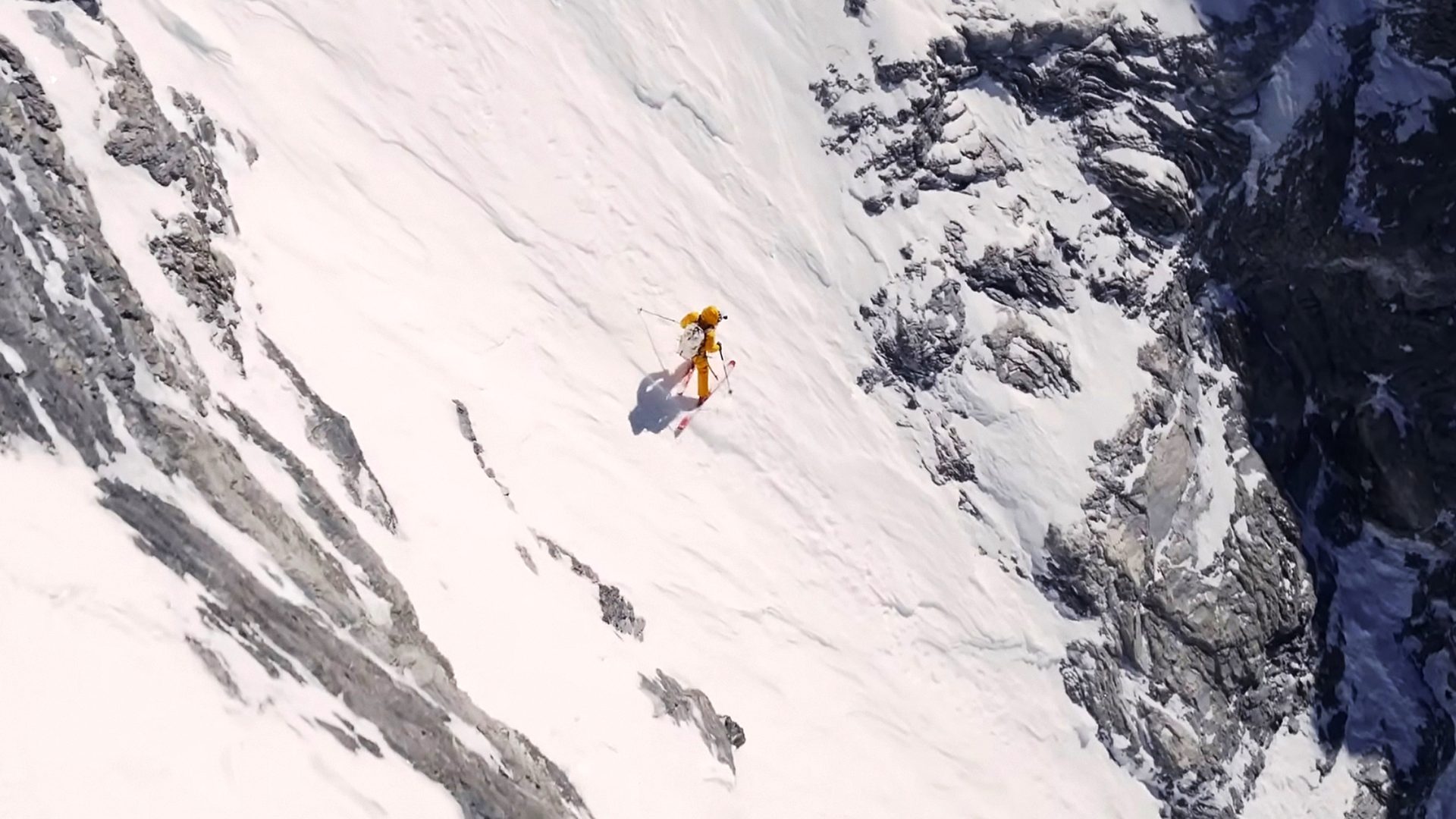
Will Everest Ski Descent Success Rate Increase in Years to Come?
It is too early to say about success of the ski descent routes on Everest as only a handful have dared and lesser have made it out alive. With blooming technology, the weather and route status to the peak of Everest is becoming more convenient information to get.
Thus, with proper training, a well though acclimatization and top notch gadgets to analyze as well as prevent catastrophic situations, ski descent might increase in future. But its equally important to keep in mind that Everest is always unpredictable and hence the tables can turn around any day.
A Deadly Historic Event
Everest ski descents sit on the fine edge between triumph and catastrophe. For some like Andrzej Bargiel, the mountain offered a once-in-a-lifetime window of perfect conditions. For others like Marco Siffredi, the mountain’s unpredictability took everything away.
Jim Morrison and Andrzej Bargiel show us what’s possible when skill, timing, and courage align. Their stories aren’t just about setting records but more about respecting a mountain that constantly reminds us who’s really in control.
Dare to adventure to Everest with Awesome Holidays Nepal!
FAQs
Expand AllWho skied down Everest first, Bargiel or Morrison?
Andrzej Bargiel skied down Everest first in September 2025, followed by Jim Morrison a few weeks later. In fact, Andrzej achieved this feat without oxygen right after summiting the Everest with his guide Dawa “Speeds” Sherpa.
Did Jim Morrison really ski Everest without oxygen?
No, there is no confirmed information if Morrison skied Everest without supplemental oxygen. But he did ski down the most challenging North face of Everest via the treacherous Hornbein Couloir.
When did Andrzej Bargiel ski down Everest?
Andrzej Bargiel skied down the Everest on September 22, 2025 without any supplemental oxygen becoming the first one to make this record. He completed the descent in two days, making a stop at Camp II the first night before continuing on September 23.
What is the difference between Bargiel and Morrison Everest descents?
Bargiel skied the South Col route, which is longer but more predictable. Morrison tackled the Hornbein Couloir, a far more technical and dangerous line. Their routes and styles highlight very different strengths in ski mountaineering.
Has anyone skied Everest from the summit without supplemental oxygen?
Yes, Andrzej Bargiel is the first person to summit Everest without supplemental . His no-oxygen descent is considered one of the cleanest and boldest achievements in ski mountaineering. Very few athletes in history have attempted something similar.
How long did Andrzej Bargiel take to ski down Everest?
Bargiel took a little over four days for the full climb and descent. The ski portion itself happened in two parts, split between night and morning due to safety concerns. His pacing was slow and controlled because he was skipping oxygen.
Is Jim Morrison’s Everest ski descent verified?
Yes, Jim Morrison’s descent is documented and verified. His team recorded the route and the conditions throughout the climb. The North Face line he skied is widely recognized as one of Everest’s most dangerous ski paths.
Who holds the record for fastest ski descent of Everest 2025?
There is no officially recorded “fastest” descent for 2025. However, Morrison completed his ski descent from the summit in a little over four hours. This makes him one of the fastest skiers on the mountain, though it is not formally recorded as a speed record.
How was Bargiel Everest ski descent route vs Morrison?
Bargiel chose the South Col route, which offers wider terrain and more controlled snow conditions. Morrison descended the steep Hornbein Couloir, known for its high technical difficulty.
Can you ski down Everest from the very top?
Yes, it is possible to ski down Everest from the very top, but only under perfect conditions and with elite experience. The route from the summit is extremely steep and exposed. Only a small number of climbers have successfully skied from the very top.
How many people have skied down Mount Everest?
Only a handful of mountaineers have skied significant sections of Everest. Even fewer have completed full summit descents. Because of the extreme risks, successful ski descents remain extremely rare.
Some of the notable people are Jim Morrison, Andrzej Bargiel, Marco Siffredi and Yuichiro Muira.
How was Andrzej Bargiel K2 and Everest ski descents?
Andrzej Bargiel’s K2 and Everest ski descents both were groundbreaking. He skied K2 in 2018 and Everest in 2025, completing both without the use of supplemental oxygen. These achievements earned him global respect for his speed, precision, and clean climbing style.
Why is Bargiel’s Everest descent considered cleaner?
Bargiel’s Everest descent considered cleaner because he did not use bottled oxygen at any point. He also completed the descent in a continuous, self-sufficient style without relying heavily on external support.
What are Everest ski descent death zone risks?
The death zone has dangerously low oxygen, which slows the body and impairs judgment. Skiers face reduced coordination, slower reaction times, and a higher chance of altitude-related illnesses.
Which is the Best Everest ski descent documentary?
The upcoming documentary on Jim Morrison’s Hornbein descent is currently the most anticipated to be one of the best Everest descent documentary. It will showcase the technical challenges and the steep terrain he faced.
What is Bargiel Everest time vs Morrison time?
Bargiel’s total expedition took several days because he climbed and skied without oxygen. Morrison’s ski run from the summit was much faster, taking just over four hours. Their times differ due to route difficulty, style, and chosen strategy.
Who first completed ski descent of Everest from summit?
Davo Karničar completed the first full ski descent from the summit in 2000 using supplemental oxygen. Later, Andrzej Bargiel became the first to do it without oxygen in 2025. Both achievements are considered milestones in mountaineering history.
What is the different between skiing Everest south side vs north side?
The south side has wider snow slopes and more predictable terrain. The north side is extremely steep and technical, especially in the couloirs. Most successful descents have taken place on the south side because the risks are slightly lower.
Did Andrzej Bargiel make a new Everest record in 2025?
Yes, Bargiel made a historic record by skiing from the summit to Base Camp without supplemental oxygen. His clean style and route choice set a new benchmark for future high-altitude skiers. It is one of the most respected achievements of the year.
Related blog posts
Discover a choice of tourist destinations loved by most of our visitors. Whether you're on a jungle safari to spot rare animals or walking through a world heritage site, these well-planned itineraries cover the major highlights of Nepal.

 call an expert at: