
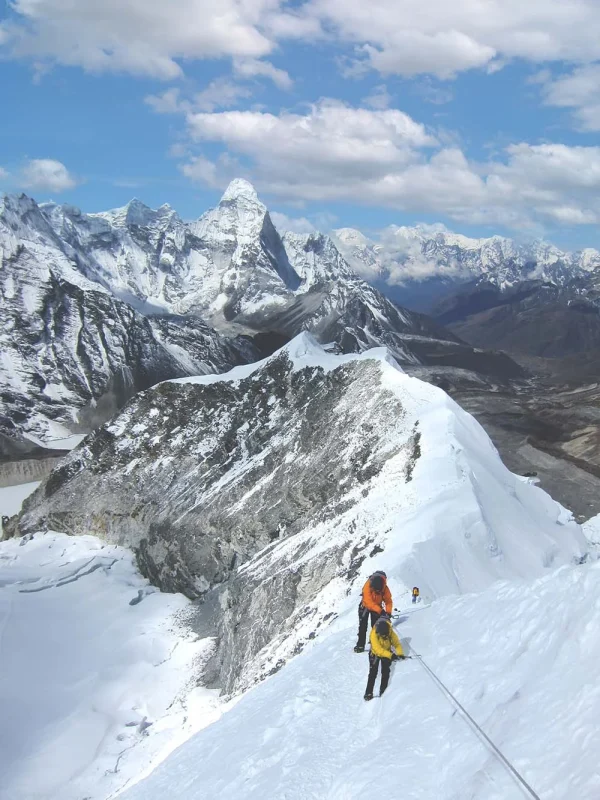


Climb through one of the fascinating peaks of the Everest region, offering a one-of-a-kind sight of most peaks. Whether you are preparing your body for the summit or want to experience trekking in the Himalayas, Island Peak is the one.
Everest Base Camp Trek with Island Peak Climbing

Destinations
4+

Trip Durations
17 Days

Trip Difficulty
Challenging

Meals
Breakfast, Lunch, Dinner

Activities
Hiking,Trekking

Accomodation
Hotel and Tea House

Max Altitude
6189m

Best Season
Fall and Spring

Start/End Point
Kathmandu
Everest Base Camp Trek with Island Peak Climbing overview
Island Peak, also known as Imja Tse among the locals, is one of the most effortless yet worthwhile expeditions for adventure enthusiasts. Standing at an elevation of 6189 meters, the peak offers quite a thrilling experience of the pristine lands, rich cultural heritages, and fantastic mountain views of all the surrounding peaks of the Everest region.
After successfully summitting this peak, you will be able to catch a captivating view of the highest mountains like Mount Everest (8848.86 mtrs.), Kanchenjunga (8586 mtrs.), Lhotse (8516 mtrs.), Makalu (8481 mtrs.), Cho Oyu (8188 mtrs.), Manaslu (8167 mtrs.), Dhaulagiri (8167 mtrs.), Annapurna I (8091 mtrs.), and Shishapangma (8013 mtrs.).
Despite being a little technical climb, this journey to Island Peak is easily attainable even though you do not have prior experience of mountain expeditions. Whether you are preparing to summit the Eight-Thousanders or want to experience climbing a peak, Island Peak is the right option.
The Everest Base Camp Trek with Island Peak Climbing is a 16-day journey that begins with a scenic yet thrilling flight to the Lukla Airport, which is infamous as one of the most dangerous in the world for having the shortest runway near the hills. Your actual trek starts right after the 45-minute flight lands, and you get introduced to the chilly breeze of the high altitude on your hike up to Phakding, your destination for the day.
The next morning, we trek to Namche Bazaar and end the day exploring the Sherpa settlement filled with bustline hordes of fellow trekkers, summiteers, and trek guides. We will rest the night enjoying the sherpa hospitality, served with good food and a local lifestyle. Continuing the ascend, we will trek in the following days to Sherpa villages like Tengboche, Dingboche, and Chhukung, which fall on our trail to the Island Peak. These villages serve as our resting stops and offer cultural experiences of the Tibetan and Sherpa people who reside in the high mountains.
You will also be able to visit the Buddhist monasteries and learning centers dedicated to the legendary mountaineers Edmund Hillary and Tenzing Norgay Sherpa.
After passing the Chhukung Ri and spending the night in the Chhukung village, we march towards the Island base Camp. We will build up a tent and spend that very night in the base camp, enjoying the cold breeze and preparing our bodies for the summit the next day.
On this day, we will begin our climb early in the morning, reach the summit of Island Peak in daylight, and trek back to Chhukung village to rest out, as staying in the base camp at such a high altitude might not be the best option. From here onwards, we begin our descent following the same route through Sherpa villages, then to Namche, and back to Kathmandu.
Everest Base Camp Trek with Island Peak Climbing highlights
As peak climbing seasons (March-May and October-November) often have extended air traffic, the flight to Lukla will take off from Ramechhap/Manthali airport instead of Kathmandu airport. This alternative airport is approximately 6 hours’ drive from Kathmandu.
Meanwhile, the flight will take off from the Kathmandu Airport in other seasons.
Everest Base Camp Trek with Island Peak Climbing Key Attractions
- Scenic flight from Kathmandu to Lukla, with stunning aerial views of the Himalayas.
- Trekking through the diverse landscapes of Sagarmatha National Park, a UNESCO World Heritage site.
- Cultural immersion in Namche Bazaar, the bustling Sherpa town and gateway to Everest.
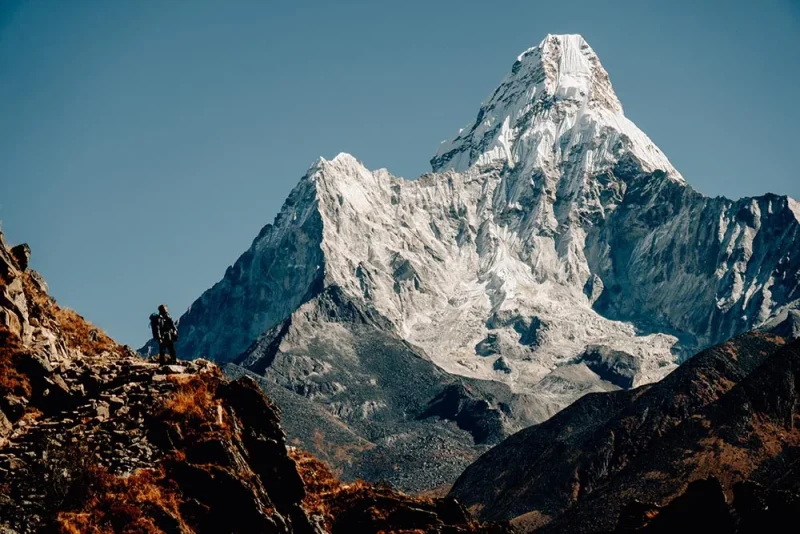
- Visit Tengboche Monastery, the spiritual center of the Khumbu region, with breathtaking views of Everest and Ama Dablam.
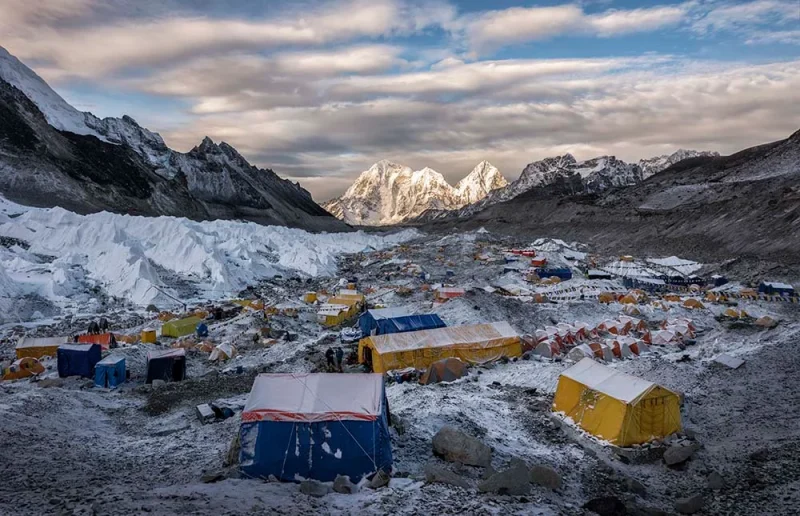
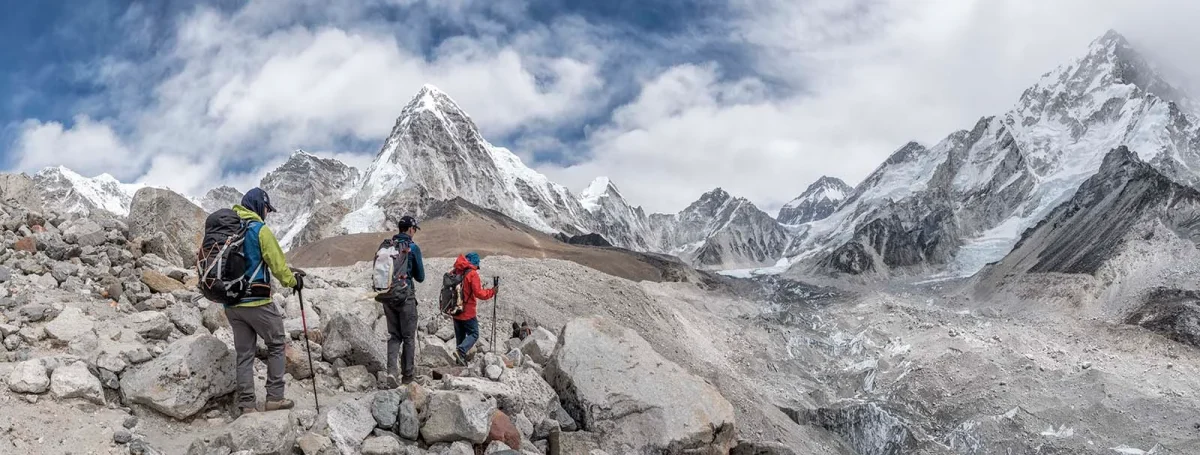
- Stop at the launching point for the Everest summiteers, the Everest base camp. It offers a view of the Khumbu Icefall, Khumbu Glacier, and iconic peaks like Lhotse, Nuptse, Pumori, etc.
- Sunrise hike to Kala Patthar; the ultimate viewpoint for unobstructed views of Mount Everest and the surrounding giants.
- Acclimatization days in Namche Bazaar and Dingboche, offering hikes to nearby viewpoints with panoramic vistas.
- Trek to the three highest passes of Everest, Kongma La Pass (5535 meters), Renjo La Pass (5360 meters), and Cho La Pass (5420 meters).
- Panoramic views of the Everest from Kalapathar and Everest View Hotel, the highest one in the Khumbu region.
- A chance to encounter the rich biodiversity of the Sagarmatha National Park in the Everest region.
- Climbing Chhukung Ri and summit the Island Peak
Everest Base Camp Trek with Island Peak Climbing Itinerary
Expand All
Day01
Arrival in Kathmandu
Upon arrival at Tribhuvan International Airport in Kathmandu, you will be greeted by our representative and transferred to the hotel. One of the vibrant cultures of Nepal will be introduced to you through a welcome dinner at one of the typical Nepali restaurants with a cultural show. During dinnertime, there will be a briefing about your trek details, giving an idea of the thrilling journey ahead in Nepal. This introduction is supposed to set the tone for your adventure, filled with cultural exploration and excitement about what lies ahead.
Hotel
Dinner
Max. Altitude: 1350m/4429ft
Walking Time: N/A
Day02
Fly to Lukla and Trek to Phakding
Early in the morning, we will catch a flight to Lukla, which offers a panoramic view of the beautiful Himalayan ranges. After landing in Lukla, we will trek to Phakding through various landscapes and charming villages. You will have your first trekking experience in this beautiful territory rich in nature and culture. The flight will take 45 minutes as soon as it takes from Kathmandu, and hiking to Phakding will take around 3.5 hours. Spend the night in Phakding and acclimate to the Himalayan breeze to begin your adventurous journey ahead in Nepal.
Tea House
Breakfast,Lunch,Dinner
Max. Altitude: 2610m/8563ft
Walking Time: 3hrs
Day03
Phakding to Namche Bazaar
Starting the trek from Phakding, we will pass the Dudh Koshi River and cross a few suspension bridges adorned with prayer flags of bright colors. We will pass through Sagarmatha National Park, a UNESCO World Heritage site full of natural beauty. You will witness wide views of the surrounding peaks as you trek further up to the Sherpa town and principal center of the Everest region, Namche Bazaar. The day offers a cultural experience and excellent scenery in the trek to Everest Base Camp. After trekking a distance of 12km for about 7 hours, we will rest out the day at Namche Bazaar while enjoying the Sherpa food, tradition, and hospitality.
Tea House
Breakfast,Lunch,Dinner
Max. Altitude: 3440m/11287ft
Walking Time: 6hrs
Day04
Acclimatization Day in Namche
Rest for acclimatization at Namche Bazaar. You can visit the Sherpa Culture Museum to learn about the place and its rich heritage or take some short walks to nearby viewpoints or shop in the local markets-all of these things offer breathtaking panoramas of Mt. Everest, Lhotse, and Ama Dablam. This is a critical rest day; after all, you need to take in all the beauty of the area to enjoy a successful trek to Everest Base Camp.
Teahouse
Breakfast,Lunch,Dinner
Max. Altitude: 3440m/11287ft
Walking Time: 5hrs
Day05
Trek to Tengboche
The following day, we will trek from Namche Bazaar to Tengboche, where you can savor stupendous views of Everest, Nuptse, and Ama Dablam. Walk through dense and luscious rhododendron forests, the trail adding color splashes to your trek by lighting up in a flush of red. As you approach Tengboche, you can expect to meet the quiet and spiritual ambiance of the famous Tengboche Monastery, set with stunning backdrops of the Himalayas. You will witness how beauty meets cultural discovery for a serene and magnificent experience amongst mountains. This trek to Tengboche covers a distance of 6 km and takes around 6 hours starting from Namche.
Tea House
Breakfast,Lunch,Dinner
Max. Altitude: 3860m/12665ft
Walking Time: 6hrs
Day06
Trek to Dingboche
Moving forward, we will continue the trek for about 7 hours from Tengboche to Dingboche, crossing trails through the most varied landscapes and covering a distance of 8 km. After trekking past the forests and across the Imja Khola River, we will first descend and then ascend in another climb to the traditional village of Pangboche. Going even higher, we will reach Dingboche, within the wonderful Imja Valley. This area provides stunning views of Lhotse, Ama Dablam, and Island Peak, offering an incredible vista on your journey to Nepal.
Tea House
Breakfast,Lunch,Dinner
Max. Altitude: 3860m/12665ft
Walking Time: 6hrs
Day07
Acclimatization day at Dingboche
Spend a day acclimatizing in Dingboche, which is an important place to prepare for the higher altitude ahead. Take up some small hikes to the hills around; they will reward you with spectacular high-altitude landscapes and unbelievable scenic views of the Everest massif. Here in Dingboche, you will find a very tranquil setting—ideal for relaxation, exploration, and taking in the glory of the Himalayas even more on your journey. This day’s highlight is making the ascent in a successful and enjoyable manner on your holiday in Nepal.
Tea House
Breakfast,Lunch,Dinner
Max. Altitude: 4410m/14469ft
Walking Time: 5hrs
Day08
Dingboche to Lobuche
Begin a challenging trek to Lobuche from Dingboche while passing through hard routes in a slow ascend amidst shrub landscapes. You catch fantastic views of the Khumbu Glacier, which forms another high point on your Everest journey at high altitudes. After climbing over rocky terrain, you will reach Lobuche, a small place close by the tall peaks, where because of heavy rigors and thinning air, this segment of your trek toward the Everest Base Camp will become tough but highly rewarding. This day really captures the essence of your Nepal adventure: physical challenge and breathtaking natural beauty.
Tea House
Breakfast,Lunch,Dinner
Max. Altitude: 4910m/16109ft
Walking Time: 6hrs
Day09
Trek from Lobuche to Gorak Shep and Everest Base Camp, then return to Gorak Shep
We start our day trekking from Lobuche to Gorak Shep, which is our last stop before reaching Everest Base Camp. After a short rest in Gorak Shep, we’ll continue our journey to Everest Base Camp, where climbers gather before attempting to summit the world’s highest peak. Here, we’ll take in the awe-inspiring views of the Khumbu Icefall and the surrounding Himalayan giants. After soaking in the breathtaking scenery, we’ll return to Gorak Shep for an overnight stay, marking a significant milestone in our Everest Base Camp trek and overall Nepal adventure.
Tea House
Breakfast,Lunch,Dinner
Max. Altitude: 5364m/17598ft
Walking Time: 8hrs
Day10
Hike from Gorak Shep to Kala Patthar and trek down to Dingboche
Our day begins with an early morning hike to Kala Patthar, where we’ll witness a stunning sunrise over Everest and the surrounding peaks. This viewpoint offers the most spectacular views of Everest and the Khumbu Glacier, making it one of the highlights of our trek. After taking in the breathtaking scenery, we’ll descend to Gorak Shep for breakfast before continuing our trek down to Dingboche. As we journey through beautiful alpine landscapes, we’ll have time to reflect on the incredible experiences of our Everest Base Camp trek, making this a rewarding day in our Nepal adventure.
Tea House
Breakfast,Lunch,Dinner
Max. Altitude: 5550m/18209ft
Walking Time: 8hrs
Day11
Dingboche to Chhukung
On this day, after breakfast, we will trek to Chhukung, passing through the stone-walled field of the Imja Khola valley. Chhukung is a small village located on the northeast side of Chhukung at an elevation of 4730 meters from sea level. The trail to this high-mountain village gradually increases uphill and offers fascinating views of the Island Peak and Amphu Lapcha. It will take you about 3 hours to cover a 4-kilometer distance on this hilly trail.
Tea House
Breakfast,Lunch,Dinner
Max. Altitude: 4,730m/15,520 ft
Walking Time: 3hrs
Day12
Trek to Island Peak Base Camp
After spending a day resting and acclimatizing at the Chhukung resort, we will continue the trek to Island Base Camp. It will take around 4 hours to cover the distance of 5.6 kilometers from Chhukung to Island Base camp. We will set our tents and spend this particular night in the base camp to better acclimatize and prepare for the trek the next day.
Tea House
Breakfast,Lunch,Dinner
Max. Altitude: 5087m/16690ft
Walking Time: 4hrs
Day13
Island Peak Summit and trek down to Chhukung
On this grand day, we will wake up early, freshen up, have our breakfast, and prepare for the climb in the morning. We will summit the top of the mountain and enjoy the fantastic views of all the eight highest mountains in Nepal, including Mount Everest. With a victorious spirit in our hearts, we will descend the peak and trek back to Chhukung village, where we stayed a day before. You will cover a total distance of 11 kilometers over a time of 11 hours to complete the summit and return.
Tea House
Breakfast,Lunch,Dinner
Max. Altitude: 6,189m/20,305ft
Walking Time: 11hrs
Day14
Trek Back to Dingboche (4730 meters)
The following day, we will continue the descent and trek to Dingboche, covering a distance of 4 kilometers, which will take around 3 hours. We will rest the day in the Dingboche village as it might be challenging to trek longer distances after a tiring summit day.
Tea House
Breakfast,Lunch,Dinner
Max. Altitude: 3860m/12665ft
Walking Time: 3hrs
Day15
Descend to Namche
On this day, we will continue our journey and descend to Tengboche village. Covering a distance of 8 kilometers will take us just 5 hours, as it is easier to climb down the trail. If you haven’t visited the famous Tengboche monastery during the ascent, this day is just the right opportunity to explore it. Along with the mountain views, the region is also a good spot for birdwatching.On this day of the trek, we will return to Namche Bazar while enjoying the Sherpa lifestyle, monasteries, and chortens on the trekking trails. It will take around 4 hours to cover the distance of 6 km along this trail. After reaching the Sherpa capital, you can choose to rest at the guesthouse or stroll around the local market to buy some souvenirs to commemorate your Everest experience.
Tea House
Breakfast,Lunch,Dinner
Max. Altitude: 3440m/11287ft
Walking Time: 8hrs
Day16
Trek Back to Lukla
On our final trekking day, we’ll continue our descent from Namche Bazaar to Lukla, passing through the familiar lush landscapes that have become a part of our Everest adventure. As we return, we’ll feel a deep sense of accomplishment, having completed this incredible journey.
Upon arriving in Lukla, we’ll bid farewell to the Everest region and prepare for our flight back to Kathmandu, marking the conclusion of our unforgettable Nepal trip. This trek will take about 8 hours to complete, starting right away after the morning breakfast. We will stay in Lukla that day to catch a flight early the next day.
Tea House
Breakfast,Lunch,Dinner
Max. Altitude: 2860m/9383ft
Walking Time: 6hrs
Day17
Fly Back to Kathmandu
We’ll start our day with an early morning flight from Lukla to Kathmandu, where we’ll again be treated to scenic views of the Himalayas—a final reminder of our incredible journey. Upon arrival in Kathmandu, we’ll transfer to our hotel and enjoy a day of relaxation or take the opportunity to explore more of the city’s vibrant culture and attractions. This day marks a peaceful and reflective end to our Nepal adventure, allowing us to unwind after our trek. Today is the last day of the Everest Base Camp Trek with Island Peak Climbing.
Hotel
Breakfast,Dinner
Max. Altitude: 1350m/4429ft
Walking Time: N/A
Everest Base Camp Trek with Island Peak Climbing Cost Includes
- Private vehicle pickup and drop off at Airports (both domestic and international)
- A professional English-speaking trekking guide throughout the trek.
- 3-night stay (3-star Hotel) in Kathmandu with Breakfast.
- Porter for trekking and climbing with all food, accommodation, and insurance. 2:1 ratio for Guest to Porter
- All meals during your trekking expedition at Island Peak, i.e., Breakfast, Lunch, and Dinner.
- Comfortable twin-sharing tea house accommodation in the mountains.
- Stay in the tent at Island Peak Base Camp
- All necessary permits for the Island Peak summit, including Sagarmatha National Park permit, Khumbu Municipality permit, and Island Peak permit.
- Airfare for your flight to and from Lukla.
- Flight ticket for your summit guide.
- All government taxes and Company service charges
- Sleeping bag and down jacket (If you required)
- Duffel bag to carry your needful ( Porters will carry 2 bags )
- First Aid Kit Box
- Oximeter to update every day with Water Purification Tablet
- Climbing Sherpa for the smooth and successful climb of Island Peak
- All necessary climbing gear and equipment for Island Peak
Everest Base Camp Trek with Island Peak Climbing Cost Excludes
- Meals in Kathmandu except for the welcome/farewell dinner (can be arranged on request with additional charge)
- International flight fares and airport departure tax.
- Bottled water or any beverage.
- Tourist visa for entry in Nepal.
- Wifi, Battery charging and hot showers if used in the local tea houses above Namche Bazaar
- Travel insurance and the emergency evacuation service charges.
- Personal expenses, including personal gear or equipment.
Everest Base Camp Trek with Island Peak Climbing date and time
Select a Departure Month
| Dates | Availability | Price | ||
|---|---|---|---|---|
|
From: Wed, 1st Apr, 2026 To: Fri, 17th Apr, 2026 |
12 |
US$ 2290 |
Join now | |
|
From: Sat, 4th Apr, 2026 To: Mon, 20th Apr, 2026 |
12 |
US$ 2290 |
Join now | |
|
From: Wed, 8th Apr, 2026 To: Fri, 24th Apr, 2026 |
12 |
US$ 2290 |
Join now | |
|
From: Sat, 11th Apr, 2026 To: Mon, 27th Apr, 2026 |
12 |
US$ 2290 |
Join now | |
|
From: Wed, 15th Apr, 2026 To: Fri, 1st May, 2026 |
12 |
US$ 2290 |
Join now | |
|
From: Sat, 18th Apr, 2026 To: Mon, 4th May, 2026 |
12 |
US$ 2290 |
Join now | |
|
From: Wed, 22nd Apr, 2026 To: Fri, 8th May, 2026 |
12 |
US$ 2290 |
Join now | |
|
From: Sat, 25th Apr, 2026 To: Mon, 11th May, 2026 |
12 |
US$ 2290 |
Join now | |
|
From: Wed, 29th Apr, 2026 To: Fri, 15th May, 2026 |
12 |
US$ 2290 |
Join now |
| Dates | Availability | Price | ||
|---|---|---|---|---|
|
From: Sat, 2nd May, 2026 To: Mon, 18th May, 2026 |
12 |
US$ 2290 |
Join now | |
|
From: Wed, 6th May, 2026 To: Fri, 22nd May, 2026 |
12 |
US$ 2290 |
Join now | |
|
From: Sat, 9th May, 2026 To: Mon, 25th May, 2026 |
12 |
US$ 2290 |
Join now | |
|
From: Wed, 13th May, 2026 To: Fri, 29th May, 2026 |
12 |
US$ 2290 |
Join now | |
|
From: Sat, 16th May, 2026 To: Mon, 1st Jun, 2026 |
12 |
US$ 2290 |
Join now | |
|
From: Wed, 20th May, 2026 To: Fri, 5th Jun, 2026 |
12 |
US$ 2290 |
Join now | |
|
From: Sat, 23rd May, 2026 To: Mon, 8th Jun, 2026 |
12 |
US$ 2290 |
Join now | |
|
From: Wed, 27th May, 2026 To: Fri, 12th Jun, 2026 |
12 |
US$ 2290 |
Join now | |
|
From: Sat, 30th May, 2026 To: Mon, 15th Jun, 2026 |
12 |
US$ 2290 |
Join now |
| Dates | Price | Availability |
|---|---|---|
|
Select Date:
Please select the date
|
US$ 2290 |
Everest Base Camp Trek with Island Peak Climbing Map

Trip Video
Everest Base Camp Trek with Island Peak Climbing Gallery


Packing List for Everest Base Camp Trek with Island Peak Climbing
The key is to prioritize lightweight, durable, and versatile gear. It's important to test and familiarize yourself with your equipment before embarking on a trek. If you find a particular brand that meets your criteria for quality, that's great, but always prioritize functionality and reliability.

General
- Sleeping bags (zero degrees)
- Backpack with rain cover (recommended size about 35-45 liters)
- Sleeping bag liner
- Duffel Bag (can be rented)

Basic Clothing
- Warmers and technical fabric base layer
- Comfortable pants
- Sleeping wear/night suits
- Undergarments & sports bra
Warm Clothes
- Body warmer tops and pants
- Fleece jacket/pullovers
- Warm pants
- Wool or technical fabric
- Hard shell outer gloves
- Warm caps/Knitted hats

Feet Protection
- Hiking socks
- Liner socks
- Wool or
- Casual shoes
- A pair of slippers
- Ice cleats/Microspikes (for trekking on wet surfaces, specifically from November to March)
- Gaiters (for winter treks)

Snow Rain Protection
- Waterproof/Windproof jackets
- Waterproof/Windproof pants
- Hard-shell outer gloves
- Raincoats

Sun Protection
- Caps or Sun hat
- Sunglasses
- Shades (preferably polarized)
- Sunscreen

Trekking Gears
- Hiking poles
- Headlamps
- Technical fabric short and long sleeve shirts
- Technical fabric base layer for lower body
- Hiking pants
- Hiking shorts

Essential Medicine and First-Aid
Even though your trekking guide will carry the necessary medications for altitude sickness and first aid kits to help in case of any accidents, you also need to have personal kits. A personal first aid kit needs to have the following elements:
- Cough syrups
- Ointment
- Cough syrup
- Ointments
- Antiseptic creams
- Mosquito repellents
- Electrolyte

Other Necessities
- Toiletry kit
- Passport
- Extra copies of passport-sized photos (required for permits and other docs)
- Reusable water bottle
- UV water purifier or Water purification tables
- Hydration bladder
- Towel
- Pillowcases
- Waterproof bags (for carrying money and necessary documents)

Optional Equipments
- Cameras and mobile phones
- Power banks (preferably solar-charged)
- Binoculars
- Pee funnel and pee bottle
- Whistle
- Thermos bottle for hot drinks and water
- Binoculars
- Cards/books/diaries
Everest Base Camp Trek with Island Peak Climbing FAQs
Expand AllHow difficult is climbing the Island Peak?
Island Peak is moderately difficult to climb and is graded a 2B in difficulty. You will require a good level of fitness and basic mountaineering skills to use ice axes and crampons to climb this peak. Even though it isn’t a difficult peak to climb, you need to have some technical skills.
How long does it take to climb the Island Peak?
With a standard package, it takes 13 days to climb the Island Peak and return to Kathmandu. The time taken to ascend the peak depends on how you customize your itinerary, rest days, and acclimatization days for the expedition.
How much does the Island Peak climb cost?
What is the success rate of the Island Peak?
Since the peak is just 6000 meters high, has well-established routes, and is a relatively less technical summit, the success rate of the Island Peak is above 80%. If you choose the right trekking company with an experienced guide, climbing Island Peak will be a piece of cake.
Is Island Peak dangerous?
Being a high-altitude mountain covered with snow, it is obvious that climbing Island Peak is a little challenging and not without danger. However, the less technical slops and easy uphill make it a comparatively less dangerous peak to climb.
Can you climb Island Peak without a guide?
No, you cannot climb the Island peak without a guide even though you are a polished and experienced expedite.
How many people have died climbing Island Peak?
Less than 1% of the total people who have climbed Island Peak have died on the climb. Since climbing this peak isn’t technically difficult as the highest peaks like Everest, the fatality rate is really low.
What kind of fitness level is required?
To summit the Island Peak, you will require a moderate fitness level since you will walk at least 6-7 hours a day. You will also require good cardiovascular endurance and muscular strength to ascend easily through rough terrain.
If you aren’t somebody who doesn’t perform physical training regularly, it is better to start training at least ¾ months in advance. Ensure you include cardio, flexibility exercises, and strength training in your workout to prepare your body for the trek.
What permits are required?
To enter the Everest region, you will need the Sagarmatha National Park Entry Permit and the Khumbu Pasang Lhamu Municipality Entry Permit. These passes can be obtained easily from the Tourism Board of Nepal or the Lukla or Monjo check post if you are already in Lukla.
You will also require the Island Climbing Permit issued by the Nepal Mountaineering Association (NMA) to climb the peak.
How much does the climb cost?
A standard 13-day Island Peak summit costs approximately $ to $ per person. However, the cost may vary depending on how you customize your food and accommodation, the variation of the trekking package, and the routes you choose.
The trekking cost doesn’t include any personal expense or charge for the services made upon request. Please check the packages for the price and find the amenities/services offered.
Do I need travel insurance for climbing Island Peak?
Yes, you would need travel insurance to climb the Island peak. As the peak has an altitude of over 5000 meters, there is always a risk of natural disasters like glacial flooding, avalanches, and landslides.
Besides, the lower temperature and scarce oxygen at higher elevations often cause altitude sickness, frostbites, and other medical emergencies. Having trekking insurance helps a lot in such scenarios.
Can I customize my itinerary?
Yes, you can customize your itinerary according to your needs. We can add or subtract the acclimatization days, optimize the trekking route, and shorten or elongate the trek as you prefer.
However, if you have booked for our regular trekking package that moves as a group, customizing the itinerary just for an individual isn’t possible.
What is the best way to train for the Island Peak climbing?
Some of the best ways to train for the climb are through regular cardio, focusing on breathing exercises, strength training, lifting weights, hamstring sketching exercises, and so on. You can switch to climbing stairs instead of lifts, walking, or jogging instead of driving to smaller distances to prepare your body.
Additionally, going on regular hikes or climbing up the hills can be the best way to train for the trek.
What kind of gear do I need?
To climb Island Peak, you will need lightweight and warm clothing, trekking poles, hiking boots, headlamps, sleeping bags, sunglasses, toiletries, and solar batteries.
Do I need vaccinations?
Getting any vaccinations to trek to the Everest region isn’t mandatory. However, you can check your country’s travel regulations and vaccinate yourself before visiting Nepal.
You can get routine vaccines, including Malaria, Japanese Encephalitis, Hepatitis A, Hepatitis B, Typhoid, Rabies, and Cholera vaccines.
What currency should I carry?
You will need Nepalese rupees for any personal expenses other than those offered by the trekking company for your Everest three-pass trek. However, having some USD or your home currency as a backup for emergencies or returns is better.
Exchange your currencies for Nepali rupees in Kathmandu to find the best rates.
Do I need a visa for Nepal?
To travel to Nepal, you will need a “Tourist Visa.” This visa is available on arrival for most foreign visitors except those from African countries, Afghanistan, and refugees with travel documents.
Check the official website of the Department of Immigration for information regarding On Arrival and other tourist visas in Nepal.
Do I need to book in advance?
Though it might not be mandatory, booking your base camp trek in advance is better to ease the process, specifically if you plan for trekking seasons, as mentioned above.
Booking in advance secures your spot and ensures you and your trekking company are well-prepared for the trek. However, getting the trekking permits, booking accommodation and transport, and getting your visas might take time.
Is it possible to trek solo?
It is possible to trek solo to the Everest region; however, you must be well prepared to adapt to the exciting yet exhilarating trek. You will need additional physical and mental strength to do so.
A solo traveler must get the required documents to get the permit.
What is the Island Peak climbing route like?
The Island peak climbing route has rocky paths in circuits that follow through the snowline and follow a section that needs to be crossed using ropes in a tram through glaciers and terrains with crevasses. You will also face a headwall just before the summit ridge, which makes it a little challenging to climb.
What kind of accommodation is available?
While you have the option of standard, three-star, and five-star accommodation in Kathmandu, the options might be restricted on the trekking route. Along the route, you will most likely find tea houses with clean rooms.
And yes, getting private rooms or rooms with attached bathrooms is possible, but you will have to pay an extra charge.
How do I get to the starting point?
If you want to trek through the regular route via Namche Bazaar, you can get to the starting point of the three-pass trek via a flight from Kathmandu to Lukla airport. If you prefer the alternative route through Jiri, you must travel by road to Jiri.
Is there electricity and Wi-Fi available?
Yes, electricity and Wi-Fi are available in most teahouses en route to the Island Peak. However, accessing internet services and charging your devices at these stops might be costly, and the reliability of the connection is questionable, too.
It is better to carry solar batteries and buy an Airlink package to access the internet in most locations at higher altitudes. Internet charges increase with ascending elevation.
How much luggage can I carry?
On the flight to Lukla from Kathmandu, you can carry up to 15 kg (33) pounds, including your backpack or duffel bags. If your luggage exceeds this limit, you might be charged up to USD 5 per kg for the extra weight.
Since you will have to trek a longer distance daily, we suggest you pack lighter.
What is the food like on the trek?
The guesthouses and teahouses primarily serve Nepali, Tibetan, and Sherpa cuisines, including Rice, Pulses, Bread, Noodles, Soup, Pasta, and Pastries. You will also get an option of drinks and continental cuisine.
Are there showers available?
Yes, showers are available on the lower areas en route to the Island Peak for an extra charge of $5-$8. Even the remote villages offer you a pail of hot water to shower for a few dollars, but it’s recommended that you avoid showering at higher elevations.
Can I charge my electronics?
Yes, there are provisions for charging your electronics in rest houses, teahouses, or local stays. However, after you pass Lukla and Namche Bazaar, you might have to pay a charge of around USD 1-5 per device.
Besides, remember to carry the required adapters (C type and D type) to fit in your chargers.
What kind of toilets are available?
You will find clean but basic squat toilets in the teahouses en route to the Island base camp. You can also find private areas along the trail to relieve pressure in emergencies.
Is it possible to do laundry on the trek?
Yes, doing laundry in some tea houses along the trek is possible with a minimal charge. You can also do the laundry at some acclimatization stops, such as Namche and Dingboche, but the water will be freezing.
Packing enough clothes is better than looking for laundry in elevations where the water is almost cold.
Can I buy snacks and drinks on the trek?
It is less likely to find a store to buy snacks and drinks on the trek as it is a remote area inhabited by fewer people. However, the tea houses along the trail sell biscuits, candies, and other food you can snack on.
We advise you to carry protein bars, dried nuts, and fruits to snack when you want. You can bring a refillable bottle with a filter to drink water from sprouts or springs along the way.
Are there ATMs along the trail?
No ATMs are available along the trail, but you may find a few in Namche Bazaar or Lukla.
Is it possible to shorten the climb?
If you feel exhausted or want to shorten the trek, fly back from Gorakshep to Kathmandu via helicopter. This option is also available if you have a limited number of days and want to experience Everest base camp.
Can I extend my trek to other areas?
Yes, you can extend your Island Peak climb to other areas, such as Island Peak, Pikey Peak, Ama Dablam, and other neighboring peaks to Everest.
How do I deal with altitude sickness?
If you get altitude sickness on your way to the Island peak, let your trekking guide know about the situation. The guides are prepared with first aid required for such a situation.
Rest for a while at the same spot and take the anti-sickness medications. After you feel a little better, you can descend to a lower altitude. If the situation worsens, request the guide contact the head office in Kathmandu for a helicopter rescue.
What should I pack for the trek?
You should pack warmer clothes, trekking gear, all your necessary medications, and your travel documents for the trek. Additionally, you should pack protein bars, dry nuts, and fruits for snacking on the trek, along with a refillable water bottle.
Even though the company will provide you with packaged water bottles along the journey, it is convenient to carry your own.
Are there medical facilities along the way?
Medical facilities are very limited en route to the Island Peak Climb. Limited medical services are available at major stops such as Namche Bazaar, Khumbu Valley, and Gorak Shep.
We suggest you carry all necessary medications in your backpack before you board the flight to Lukla.
Is it safe to drink the water?
Water from natural sources looks clean in the Everest region, but drinking it might be unsafe. To make it potable, you can purify the water using bottle filters, chlorinate it, or boil it.
What should I do in case of an emergency?
In an emergency, you should contact our trekking guide. Our guides are equipped with oximeters and necessary first-aid kits and are trained to handle emergencies.
Besides, the guides will have all the necessary contacts to contact emergency rescue services such as helicopter rescue, air ambulance, or land rescue.
How can I prevent altitude sickness?
The best way to prevent altitude sickness is to rest properly after your trek, acclimatize to the altitude, stay hydrated, and avoid alcohol while on the trek.
What should I do if I experience altitude sickness?
Whenever you feel sick due to altitude, stop immediately and rest for a while. Hydrate yourself and take medications to ease the pain.
You should never try to ascend or descend right away whenever you are experiencing altitude sickness. Let your trekking guide know about your situation and request an emergency rescue if the condition worsens.
What medications can help with altitude sickness?
Acetazolamide (usually sold under the name Diamox) can help you with altitude sickness. As it reduces the severity of any observed symptoms and helps you adjust to high altitudes quicker, Diamox is often suggested for treating acute altitude sickness.
Some other medications that can also help are Dexamethasone, Nifedipine, and Ibuprofen. It is safe to consult your physician and take the medicines in advance to prevent allergies or any undesired reaction against the drugs.
What other health concerns should I be aware of?
You should be aware of any medical conditions that you might have before planning the trek. If you have pulmonary diseases, asthma, or any other breathing-related illness, it’s better to get it checked and prepared in advance with medication and stimulatory exercises.
Additionally, you should be aware of any allergies you might have before your trek. To prevent illness on the route, it is always best to avoid food, drinks, or agents that can instigate a hypersensitive reaction in your body.
Is it safe to trek alone?
Honestly speaking, it isn’t too safe to trek alone in the wilderness. If you are planning to trek to high-altitude destinations like Everest, the three-pass trek, which can often have unpredictable weather, is prone to natural calamities, and involves risky and rough terrain, it isn’t safe to travel solo.
If you know the route very well and are mentally and physically prepared to trek alone, go for it. Otherwise, it is recommended that you take along a travel guide who knows the route well to have a smooth trekking experience.
What should I do if I get injured?
If you get injured during the trek, stop for a break and take the necessary first aid. If you have a serious injury that needs immediate attention, call for emergency rescue with the help of your trekking guide.
Are there any dangerous animals on the trek?
Since the trekking route takes you through national parks and conservation areas, it is obvious to see animals on the route. Although it is less likely to find a dangerous animal on the trail, it isn’t impossible. Leopards, cheetahs, musk deers, etc., can often inhabit mountainous regions.
Traveling in groups in such forest areas is better than coming across one. But if you did, don’t just run or instigate the animal; let it pass before you make a move.
What is the weather like on the summit?
The weather can be quite unpredictable if you are trekking to a mountainous region above an elevation of 5000 meters, such as the Everest three-pass trek. Usually, the temperature is lower and can drop to freezing at night.
Besides, the higher elevation areas can often have snow storms, soft rains, and chilled breezes.
Is the trek physically demanding?
Yes, indeed! The Island Peak climbing takes you to an elevation above 6000 meters, where the temperature is low, oxygen is scarce, and the terrain is rough and risky. You must be physically fit and mentally composed to complete the trek successfully.
Everest Base Camp Trek with Island Peak Climbing Reviews
How was your experience?
Please share your experience of traveling with Awesome Holidays Nepal.
Login to ReviewWhat makes this trip different ?
 Environment-Friendly Initiative

- Awesome Holidays Nepal believes in contributing to the wellness of the environment while promoting adventure and tourist destinations in Nepal.
- For every visitor who books a trip or trek with us, we plant a fruit tree in barren lands in collaboration with community forests.
Giving Back to the Community

- Awesome Holidays believes that the native residents know any destination better than an outsider. Thus, the guides, porters, and travel companions who will serve you through the trek or tours are local residents of that particular region.
- As a part of our communal service, Awesome Holidays is also contributing to the welfare of street dogs by feeding them every week.

 call an expert at: