
The Legendary Yeti Myths: Everest Mystery Stories Heard on the Trek

 Sujata Pokhrel
The Everest region isn’t home only to the tall peaks but also to mysterious creatures that have lived on in Everest’s legends for decades. Yes, that’s right! Every trekker who has visited the Everest region has heard of the legendary yeti myths or witnessed figurines that indicate its existence.
Many villages of the Khumbu region are a living museum of stories about yeti, deep spirituality, and mysteries. The elusive snow-being that supposedly roams around the high valleys of the Khumbu region.
You’ll discover that the Yeti is more than just a myth; it’s a cultural element ingrained in Sherpa identity. Whether you’re hiking to Namche Bazaar or ascending higher toward Tengboche and beyond, the stories of mysterious creatures run all around.
Let’s go through the blog to learn more about the yeti myths and the Everest mystery.
Yeti: A Symbol of the Wilderness
The Yeti is more than just a creature to the Sherpa people; it’s a part of a much wider spiritual realm. Khumbu has always been a place where religion and nature coexist, and the mountains themselves are deeply honored. According to Sherpa folklore, the Yeti (locally known as “Meh-Teh”) is a powerful, chaotic, and often misunderstood guardian spirit of the high Himalayas.
According to folklore, the Yeti is a protector spirit of the Himalaya, sometimes chaotic and unpredictable, but also deeply connected to the wellbeing of the mountains. They believe it only shows up to people who need to see it, such as travelers in peril or monks or shepherds. It is a creature that exists between the material and spiritual realms, and for Sherpas, that boundary is frequently blurry in the quiet, high-altitude Everest valley.
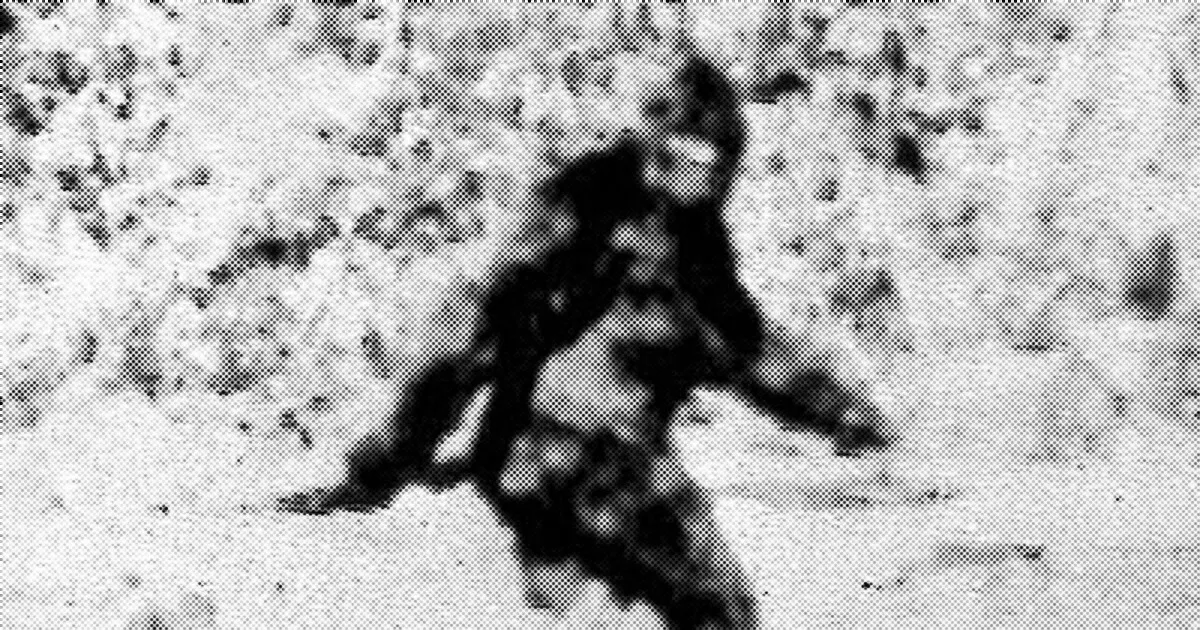
Is Yeti Myth or Fact?
Trekkers often ask this question. But in the Khumbu, the answer is not so simple.
Beyond concrete evidence, Sherpas believe that the Yeti is real. In the mountains, it serves as a messenger, a guardian of equilibrium, and occasionally a warning sign. The stories are intended to convey values, beliefs, and the sacredness of their surroundings rather than to prove existence.
They see the Yeti as both a creature and a reminder that there are mysteries in nature that humans may never fully comprehend.
Popular Yeti Myths of the Everest Region
There are many Yeti stories in the Khumbu region, each influenced by the local environment and the experiences of the storytellers. These myths usually revolve around encounters in isolated valleys, deep forests, and high-altitude plateaus that are rarely visited. Since Sherpas believe that the mountains are living, breathing places with their own protectors is reflected in these Yeti myths, which are more than just stories.
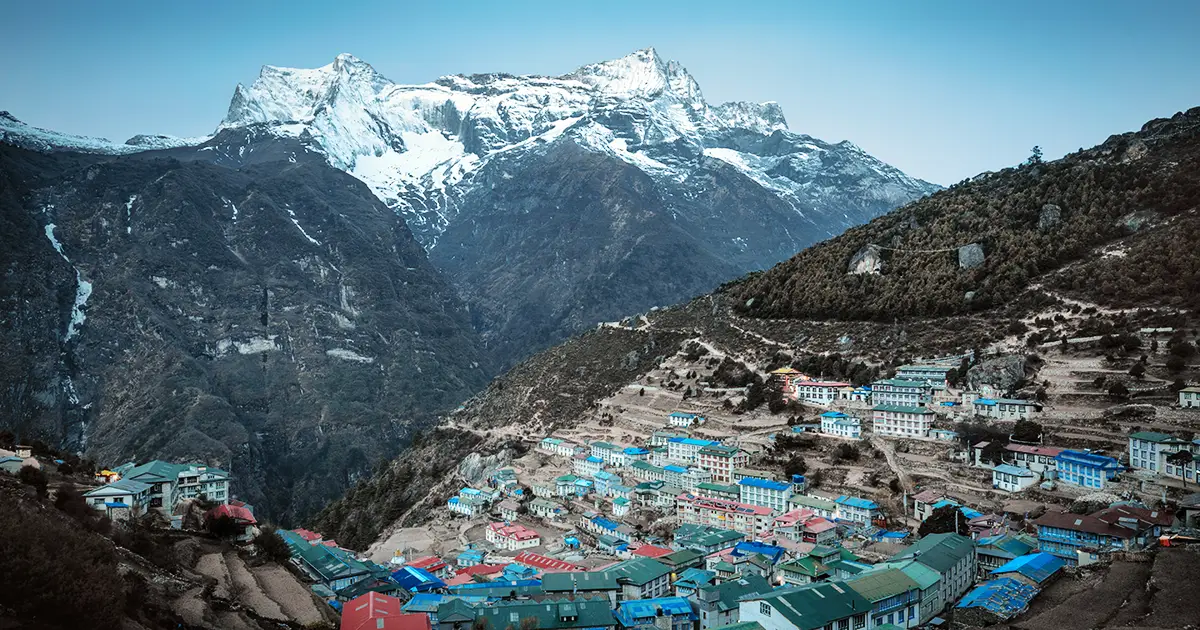
Some of the most common myths about yetis are as follows:
- Guardian of Sacred Places: Many people think the Yeti safeguards pristine forests, monasteries, and caves from harm or disrespect.
- Dweller of Hidden Valleys: It is believed that yetis live in dense forests and inaccessible ice valleys where the natural environment is entirely untouched.
- Warning of Danger: A Yeti sighting is often associated with upcoming storms, avalanches, or a warning to take shelter.
- Shape-Shifting Spirit: According to some myths, the Yeti is a shape-shifting creature that can take on human, animal, or shadowy forms.
Famous Evidence of Yeti in the Everest Region
Global interest in the Yeti has grown over the years due to a number of artifacts, sightings, and recorded encounters. Even though scientists disagree, this “evidence” continues to be a significant cultural icon for the area. Some of the monasteries of the Everest region and important landmarks hold some concrete relics that are supposed to be evidence of the existence of yeti.
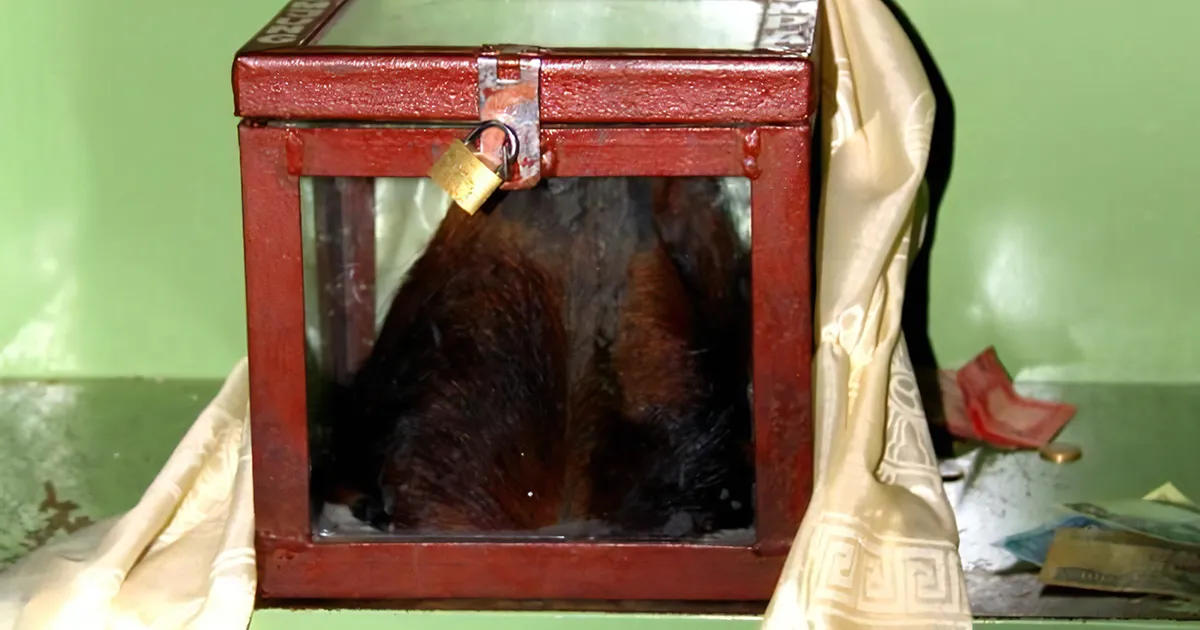
Yeti Scalp Inside Pangboche Monastery
The Yeti scalp preserved within Pangboche Monastery is one of the most famous artifacts that was once thought to demonstrate the existence of the Yeti. Its reddish-brown dome-shaped structure attracted global curiosity. Even though the scientific analysis suggests this artifact was created from the animal parts, Sherpas still view it as a culturally significant treasure.
Yeti Footprints in Fresh Snow
Many expeditions, including those associated with Sir Edmund Hillary and Tenzing Norgay Sherpa, reported finding large, human-like footprints in untouched snow during the early years of Himalayan exploration. Similar sightings have also been reported by Sherpa guides: enormous prints that appear in locations where no known animal could have walked and are spaced wider than human steps.

Eric Shipton’s Ape-like Footprint
While scouting the route for the first Everest expeditions in 1951, British mountaineer Eric Shipton took a picture of a huge footprint. The image sparked fascination around the world and became one of the most well-known pieces of “Yeti evidence” ever documented. The print’s size, shape, and placement are still highly debated.
Reinhold Messner’s Close Encounter
During his time in the Himalayas, renowned mountaineer Reinhold Messner reported seeing what he thought was a Yeti. While hiking alone at night, he reported seeing a big, swift-moving creature. His story led to multiple expeditions seeking answers and rekindled global interest in the mystery.
Yeti Skullcap in Khumjung
Another interesting artifact in Khumjung Monastery, the Yeti skullcap, attracted a lot of interest. It is still a significant cultural symbol for the area, despite later scientific research casting doubt on its origins. Trekkers can gain insight into the deep spirituality of Sherpa customs by visiting the skullcap.
How do Trekkers Experience the Myth?
Not only do hikers hear Yeti stories, but they also sense them woven into everyday trail experiences. Throughout the trek, you can hear these myths at the teahouses in stories shared by the porters and guides. These stories have been passed on through the generations by the ancestors of Everest region.
During evenings in teahouses, guides and porters share tales passed down from their ancestors. Trekkers hear about mysterious footprints, strange calls from forests near Dibuche, or unusual shadows spotted near high passes. Many hikers say that once they hear these stories, the nighttime forests and snowy valleys suddenly feel different, alive with possibility.
Some trekkers describe:
- footsteps echoing in distant forests,
- large prints appearing overnight on the snow,
- unexplained sounds during windy nights,
- or the sensation of being watched while walking alone at dusk.
Whether these moments are caused by wildlife, wind, or imagination, they add to the allure of trekking in the Everest region.
More Than a Legend, a Cultural Soul
The Yeti embodies the spirit of the Khumbu. It stands for wildness, Everest mystery, and reverence for the mountains. The Yeti enhances the Everest trek experience, regardless of one’s belief in it as a creature or a symbolic protector.
By the time trekkers return to Lukla, they often realize that believing in the Yeti is not about physical proof. It is about understanding the deep connection between the Sherpa people and their sacred landscape, where stories, spirituality, and nature blend beautifully.
Visit Everest to witness these stories firsthand! Check amazing trekking packages of the Everest region at Awesome Holidays Nepal for more!
FAQs
Expand AllAre yeti dangerous?
Since yetis are still mythical creatures without any strong evidence of existence, its hard to say if they are dangerous. However, in Sherpa tradition yeti is seen as a powerful spirit of the mountains, something to be respected rather than feared.
Where do yeti live?
As per the folklores, yetis live in the Himalayan wilderness, especially in thick forests and remote snow-covered valleys. These are areas far from regular trekking routes, which adds to the sense of mystery.
Are yetis mythical creatures?
Yes. Although stories about yeti feel vivid and personal, the Yeti is considered a mythical being rooted in cultural and spiritual beliefs rather than scientific evidence.
Are yeti monsters real?
There’s no verified proof of a monstrous Yeti living in the Himalayas. Most descriptions come from legends, old stories, or misidentified animal tracks.
Where is yeti myth from?
The Yeti myth comes from Himalayan communities, especially the Sherpa and Tibetan people. These people have shared these stories for centuries as part of their cultural identity.
Are yetis real or mythical?
Yetis are mythical. While the stories are emotionally powerful, the Yeti is understood today as a symbolic figure tied to the mountains and their unseen forces.
Is yeti a mythology?
Yes, the Yeti is a figure from Himalayan mythology. It represents nature’s mystery and strength rather than a physical creature roaming around.
Where did the yeti myth come from?
The Yeti myth originated through generations of oral storytelling. Elders, monks, and porters passed down tales of strange sounds, footprints, and spiritual encounters in the high-altitude forests.
Which villages in the Khumbu are best for hearing Yeti and mountain legends?
Villages like Namche Bazaar, Khumjung, Pangboche, and Tengboche are known for their storytelling traditions. Teahouses and monasteries in these places often share old legends after dinner.
Are the Yeti stories on the Everest trek based on real sightings?
Most yeti stories come from local experiences, unexplained prints, or events passed down over time. Whether they were real sightings or natural phenomena is part of the ongoing mystery.
Is it safe to trek in the Khumbu region at night when people talk about spirits and Yeti?
Yes, it’s safe to trek in Khumbu region at night. The stories add atmosphere, but trekkers are more likely to worry about cold temperatures, poor visibility, or wildlife, not mythical beings.
What do Sherpas say about the Yeti?
Many Sherpas describe the Yeti as a spiritual force rather than a physical monster. They believe it embodies the wildness of the mountains and must be treated respectfully.
Has anyone seen the Yeti on Everest trek 2025?
No, till date no one has really seen the yeti on Everest trek 2025. Still, trekkers may hear fresh tales from locals, as these stories remain an active part of the region’s culture.
Why do Sherpas believe in the Yeti?
Sherpa belief in yeti comes from a blend of Buddhist teachings, ancestral stories, and their deep connection to the land. For them, the Yeti symbolizes unseen powers of nature.
Can you see Yeti tracks on Everest Base Camp trek?
Trekkers sometimes notice unusual animal prints in snow, but these almost always belong to local wildlife like yaks, wolves, or snow leopards. No confirmed Yeti tracks have been found.
Do climbers still report Yeti sightings 2025?
No verified reports exist, but occasional stories still surface. The remoteness of the high Himalayas keeps the legend alive and fascinating for many visitors.
Related blog posts
Discover a choice of tourist destinations loved by most of our visitors. Whether you're on a jungle safari to spot rare animals or walking through a world heritage site, these well-planned itineraries cover the major highlights of Nepal.


 call an expert at: