
Mansarovar and Rakshastal: Twin Lakes of Mount Kailash and Their Opposite Energies

 Amrit K. Aryal
Pilgrims on the tour to the high, barren land of Tibet are amazed by the amazing view of the twin lakes of Mount Kailash. The two lakes sitting side by side are of opposite nature, which surprises the pilgrims to Kailash.
When people reach the high barren land of Tibet, the first thing that surprises them is how the landscape suddenly shows two huge lakes sitting almost beside each other. One is bright. One is strangely dark. One called Lake Mansarovar, which many religions praise as a pure holy lake in the Himalayas. Another is Rakshas Tal, widely known as the demon lake of Tibet. These two are often mentioned together as the twin lakes of Mount Kailash, yet everything about them feels opposite.

Nature exists in a balance between two opposite natures of energy. Cultural and religious aspects always explain the opposite forces that appear side by side. Light and shadow, days and night, calm and agitation, Sweet and bitter, positive and negative, as proton and electron exist side by side.
Lake Mansarovar and Rakshastal give the feeling of this pattern of opposite forces. On the land of Mount Kailash, this contrast exists as told by monks, pilgrims, and traveller researchers during their Kailash Mansarovar Yatra.
This blog will take us to the mythology, facts and significance of the two twin lakes of Mansarovar.
How Mansarovar Became the Sacred Lake
Ancient texts have described Lake Mansarovar as the lake first imagined by Brahma, which came into existence. So, Brahma is considered the creator of Mansarovar, Manas meaning the mind of Brahma, and Sarovar means lake. Mansarovar holds clear freshwater collected from the melting of snow from Lake Mansarovar. The bright turquoise colour shows during the bright sunlight as the light is reflected from its round shape.
Due to this round shape, it is also called the Sun Lake. The shape symbolises perfect wholeness in many cultures, not only in the Hindu community but also in Buddhist communities around Tibet. This round structure often becomes a symbol of the cosmic cycle. Mansarovar Lake is a source of positive energy. Many practice meditation near its banks because the whole region feels still and peaceful.

The spiritual significance of Mansarovar does not depend only on mythology. The ecology and geographic location of the lake also contribute to the visit of pilgrims. Birds can fly above the lake, which is not the case for Rakshas Lake. Animals walk freely. The ecosystem is alive. Pilgrims can take a ritual bath and even drink the sweet water. It is one of the rare high altitude lakes where pilgrims feel comfortable walking close to the shore. This living energy creates its own spiritual environment.
Rakshastal. The Lake of Darker force
A short distance from Lake Mansarovar lies a completely different sight. Rakshas Tal or Rakshastal, which translates as the Lake of Demons. There are several myths related to Rakshastal and its existence. The most popular one is the tale associated with King Ravana performing his hard penance here. He stayed on one of the islands of this lake to gain boons and boons from Lord Shiva.
The intense, painful penance filled with desire and ambition pleased Lord Shiva. This hard meditation of Ravan created high negative energy that the lake absorbed that heavy energy. So, people often get afraid to go near the dark lake. This energy level makes Rakshastal, opposite to Mansarovar. The water of the lake absorbs light, making it look darker. This is because the water of the lake is too salty with a high concentration of salt.
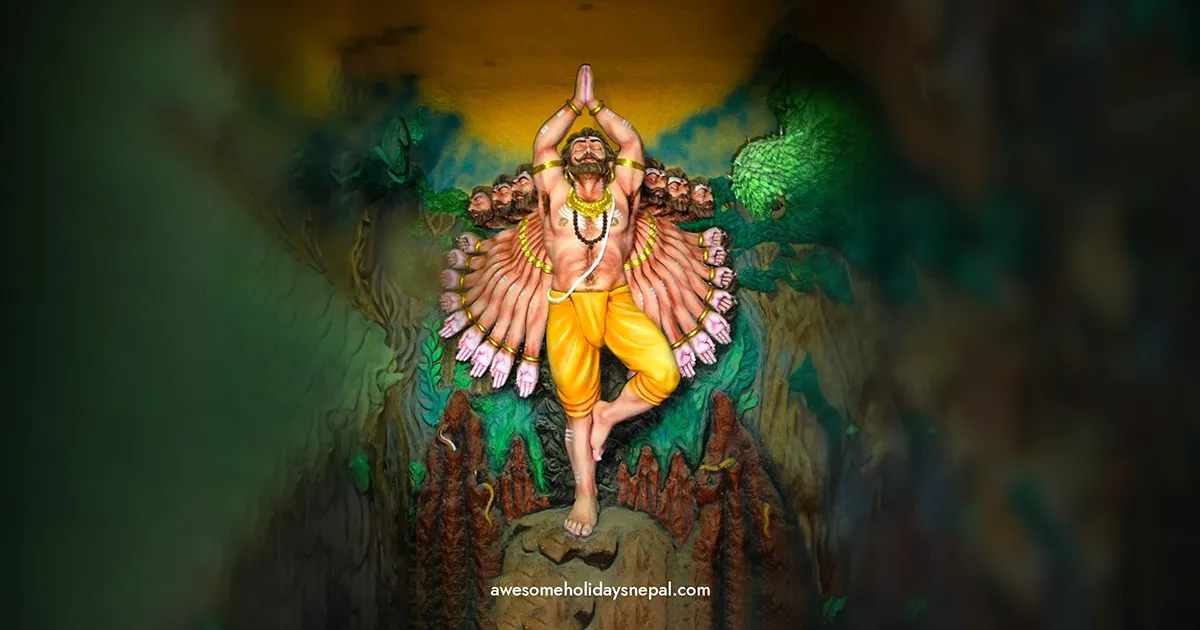
The water in Rakshastal is salty. It is sometimes described as black because the deeper zones trap light differently. Birds do not fly over it. There are no fish. Life avoids it. Even the shape differs. Rakshastal appears like a rough crescent, which makes people connect it with the Moon Lake idea. Many Tibetans call it the Moon Lake, which stands opposite the Mansarovar Sun Lake of the Kailash region. Local Tibetans also have stories to tell. They also feared and avoided touching or using the water because the lake was believed to be cursed and bring misfortune. Even today, guides stop pilgrims from touching the water of Rakshastal during the Kailash Mansarovar Yatra.
Twin Lakes of Mount Kailash, Two Neighbours with Opposite Forces
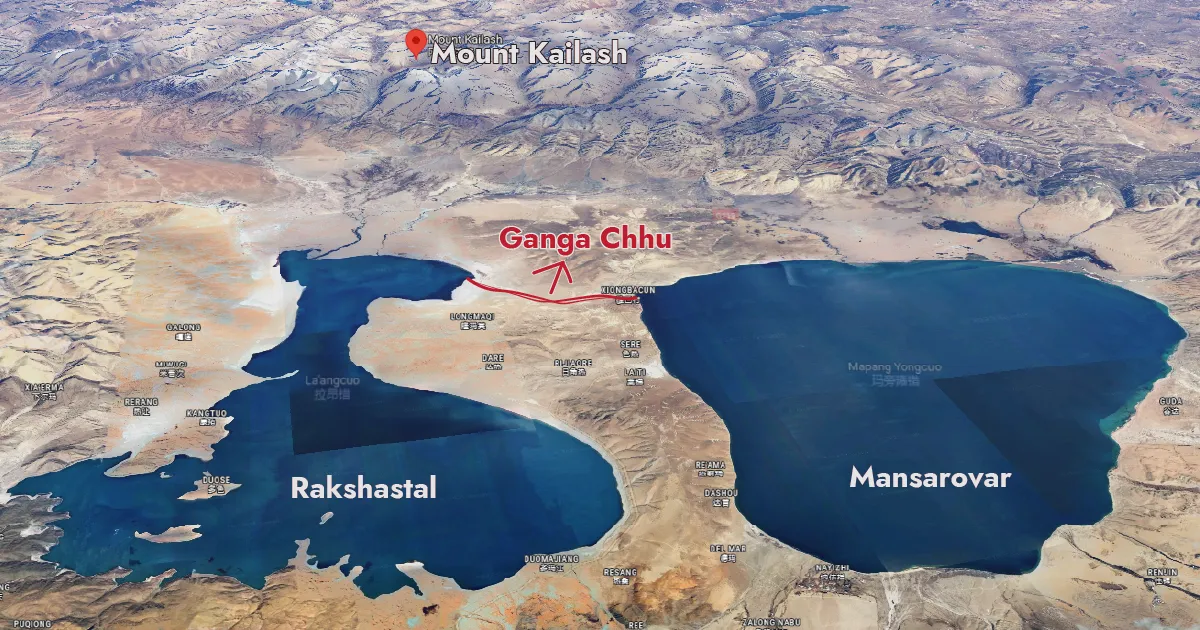
When you look at these lakes on a map, you see how close they sit, next to each other in an alignment. But the difference between Mansarovar and Rakshastal remains huge. Though they are close to each other, a few kilometres apart, they have different geological structures. Mansarovar receives freshwater from melting snow and streams. Rakshastal has no major outlet and has been trapping more amount of salt for thousands of years.
So, the taste of the water from lakes is different. That is the scientific explanation for the common question of why Mansarovar is sweet and Rakshastal salty. The different shapes of the lakes also play a role. Mansarovar is round like a circle. Rakshastal sharp crescent. The round shape of Mansarovar reflects sunlight evenly, creating a bright turquoise colour. On the other hand, the crescent shape of Rakshatal traps sunlight, creating a dark effect.

Another question often raised by the pilgrims during the Kailash Yatra. Why don’t bird fly over Rakshastal? Why would they when there is no fish on the Rakshastal? The high marine level of the lake does not allow any fish to survive. Hindus relate this incidence of rejection of life to Ravana’s penance; the story spreads that the lake rejects life. In this way, the two lakes stand like a visible symbol of positive and negative energy associated with lakes. One lake supports life, whereas another rejects it as a poison.
Small Stream linking Mansarovasr and Rakshastal
A small natural channel Ganga Chhu, flows from Lake Mansarovar to Lake Rakshastal. This small stream passes the pure water from Mansarovar to Rakshastal, so that the pure water will normalise the dark energy of Rakshastal. Ancient monks have tales that the two lakes are connected underground. Only spiritual purity can touch the darker sides of existence, but the water is not enough to dilute the salty water without a significant volume. This explanation may not have modern scientific proof, but the tales pass from generation to generation and support the central idea of opposite energies in Mansarovar and Rakshastal.
Distance, Height and Travel Information
For travellers of the Kailash Mansarovar Yatra 2026, both lakes are easily accessible, remaining at an altitude of around 4,550 to 4,600 meters. The distance between Mansarovar and Rakshastal is small, and can even be covered by walking in hours, from the closest point. The region around these sacred lakes in Tibet appears vast. But once you stand near them, you feel how close the contrast lies. One lake is glowing in the bright light, but one lake sits hidden in the dark.
Closing Summary
Mansarovar and Rakshastal stand as a vivid example of the contrasting energies that exist in nature and belief. These Kailash Mansarovar lakes show how two places can remain physically close yet spiritually opposite. One becomes a divine lake in the Land of Tibet. One is popular among Hindus around the world, and the other stands as a Lake of Demons. One lake holds purity from Mount Kailash, and the other holds a memory of Ravana’s penance at Rakshastal.
Together, they form one of the most important symbolic zones connected with Kailash. Anyone preparing for the Kailash Mansarovar Yatra 2026 benefits from understanding not only the route and the travel facts but also the deeper cultural understanding tied to these sacred and cursed lakes of Tibet
FAQs
Expand AllWhy is Rakshastal called Ghost Lake?
Rakshastal is called the ghost lake because there is no life in or above the lake, and old legends relate to the evil spirits that roam around the lake.
What is the difference between Mansarovar and Rakshastal?
Mansarovar and Rakshastal are different aspects, such as type of water, colour, shape, energy, wildlife presence and spiritual significance.
Can people bathe in Rakshastal?
No. Rakshastal is avoided for any type of ritual use. Even if you are not supposed to just touch the water.
Why is Rakshastal water black?
It is the depth, high amount of salt, and mineral content responsible for its dark colour. This high concentration of salt allows less reflection of light, creating a dark appearance of the lake.
Which lake has positive energy?
Lake Mansarovar is believed to have positive energy, while Rakshastal holds negative energy.
Who created these lakes?
Mansarovar is created by Brahma, but the creator of Rakshastal is unknown.
Is Rakshastal really cursed?
The negative energies accumulated around Rakshastalis are no less than a curse that many traditions have described.
Why is touching the Rakshastal water discouraged
The water of Rakshastal is so dense that it might create health issues when touched.
Which deity is linked with Mansarovar
Mansarovar is highly connected to Shiva, Tonpa Shenrab, and local Dakinis.
Why did Ravana choose Rakshastal?
Ravana performed a penance at Rakshastal to receive boons from Lord Shiva.
What is the Mystery of Rakshas Tal?
The absence of life and its unnatural stillness create a mystery in Rakshastal.
Can people drink Mansarovar water?
Most Pilgrims often take a small ritual sip and bath to rinse the body and soul.
Why do the shapes of the two lakes differ?
The two shapes have different natural formations. These shapes are later connected with myths and shapes of the Sun and Moon.
Which lake represents the Sun and Moon
Lake Mansarovar represents the Sun, and Lake Rakshastal represents the Moon.
How far is Rakshastal from Mansarovar?
Rakshastal from Mansarovar are at a short distance, often reachable within minutes by walking.
Is Rakshastal deeper than Mansarovar?
Some parts of the lake are deeper, but the data might vary by season.
Why birds avoid Rakshastal?
There are no fish in the lake. So, birds prefer other lakes with a rich source of food.
Are they connected underground?
They are connected on the surface through a narrow channel called Ganga Chhu, but not through an underground network.
Why is Mansarovar sweet and Rakshastal salty?
Mansarovar is a freshwater lake, whereas Rakshastal is a salty lake.
Related blog posts
Discover a choice of tourist destinations loved by most of our visitors. Whether you're on a jungle safari to spot rare animals or walking through a world heritage site, these well-planned itineraries cover the major highlights of Nepal.

 call an expert at: