
Shiva and Nandi at Mount Kailash: Meaning, Mythology, and Spiritual Significance
 Amrit K. Aryal
This is the dream of every believer of Lord Shiva, to complete the Kailash Kora and feel the eternal energy of Shiva and Nandi. Why? Why is Mount Kailash so sacred that everyone wants to visit?
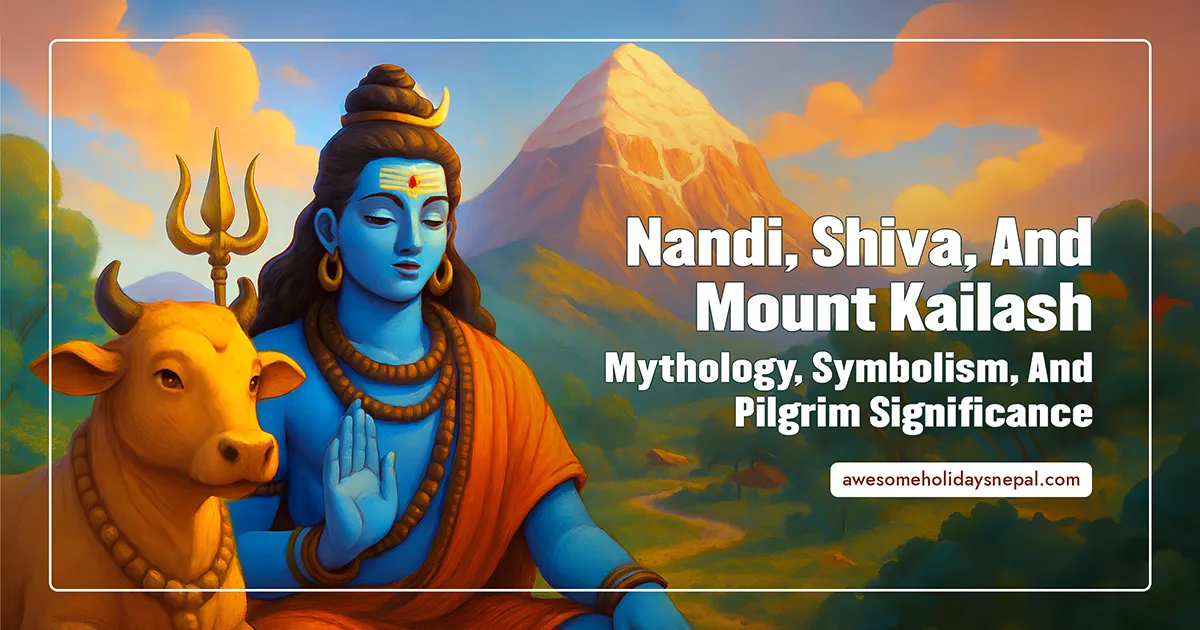
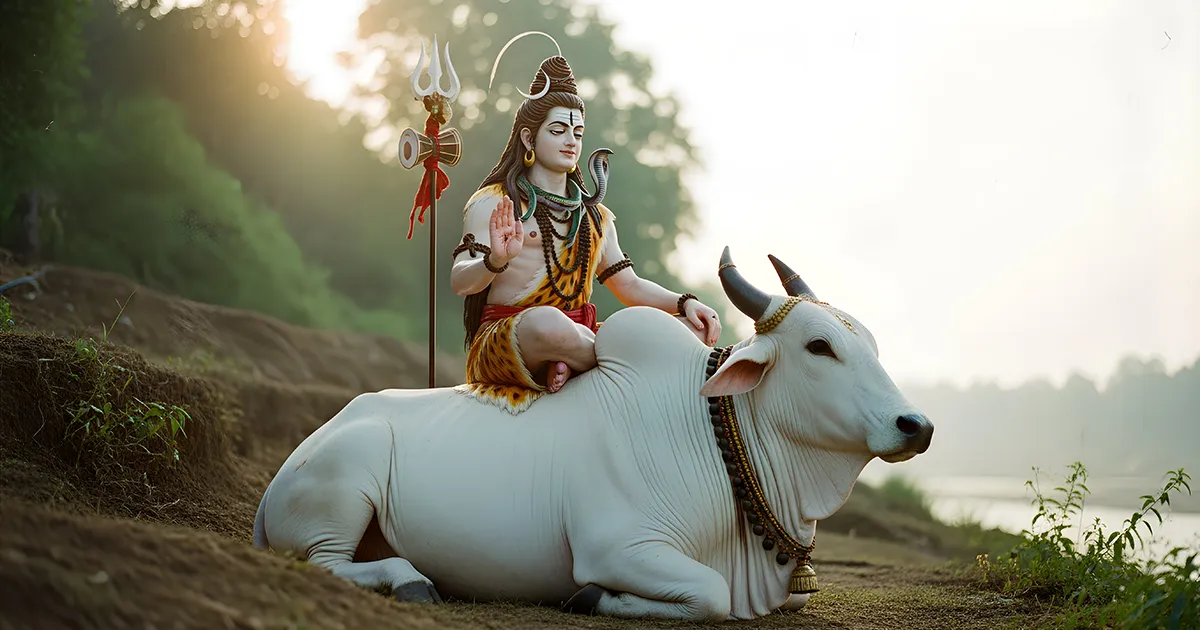
Is it because lord Shiva abodes here? Or there is something auspicious sitting in front of lord Shiva. He is Nandi, the bull, sitting quietly in front of Shiva, watching Lord Shiva, when he is meditating at Kailash.
To understand the spiritual significance of Mount Kailash, the idea becomes incomplete without understanding the devotion and dedication of Nandi. You cannot look at the mountain alone.
Mount Kailash: The Silent Axis of the World
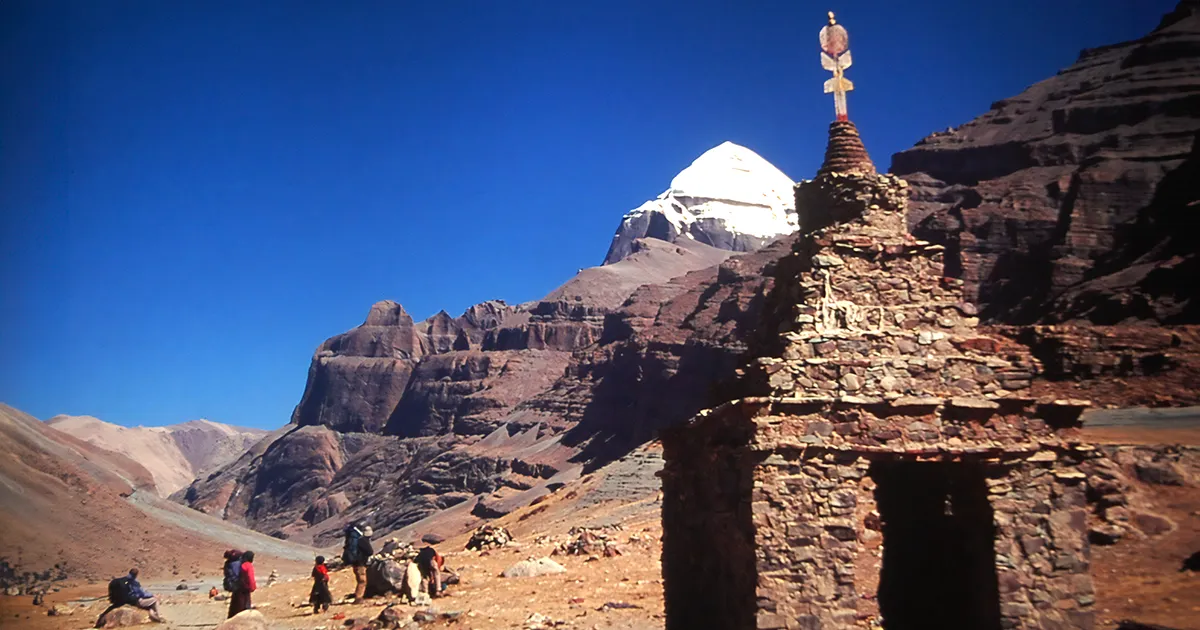
For Hindu believers, Mount Kailash, as described in Purans, is a spiritual, religious, and cosmic mountain. Due to its divinity, no humans have been able to climb it. The mountain is described in the Shiva Purana as the celestial dwelling of Shiva, and Shiva himself is defined as the first yogi who sits beyond time, beyond ego, beyond destruction and creation alike.
There are various mentions of Mount Kailash and Lord Shiva in the Skanda Purana and the Shiva Purana. According to these, Lord Shiva resides in Mount Kailash with his consort Mata Parvati, accompanied by the ganas, Nandi being the Ganapati.
The mountain represents the stillness and center of existence of life. The mountain is sacred not only because Shiva resides here. In the broader Indian cosmology, Kailash is often compared with Mount Meru, the central cosmic axis, and the pillar of the universe. The mountain symbolizes verticality, alignment, and stability. This mountain is a connection between the earth and the divine realm.

This is the reason why Kailash remains unclimbed till now. Some people believe no humans have the capacity to conquer the mountains and reach the top of Kailash. It may not be physically impossible, but it is spiritually meant not to be conquered.
People have conquered the tallest mountains in the world above 8000m, but Kailash is 6,638 meters, yet they are unable to climb it. In mid 1980s, when allowed to climb Mt. Kailash in Tibet (sacred to Hindus, Jains, and Buddhists), Reinhold Messner responded, “If we conquer this mountain, then we conquer something in people’s souls.
I suggest they go and climb something a little harder. Kailash is not so high and not so hard.” But in 2001, the appeal was denied to climb the mountain by a Spanish Team.

Shiva and Mount Kailash: Beyond Geography
The connection between Shiva and Mount Kailash is not geographical; it is symbolic. Shiva is the ascetic form of the destruction of illusion. He represents the consciousness that remains when everything else dissolves. He is one of the three supreme lords in Hindu mythology.
Mount Kailash is a mirror that reflects the calm of nature. It is cold, untouched, and silent. There is no life, no lush vegetation, and no human settlements at the peak. So, the spiritual meaning of Mount Kailash is inward.
Pilgrims who complete the Kailash Parikrama or the Kora are not just circumambulating a massive rock, but also revolving their spiritual representation.
Shiva and Nandi
When we talk about Shiva, there is one name always associated with him. It’s Nandi or the Nandi Maharaj. He is a bull representation of Lord Shiva himself. Nandi also represents the vehicle of lords shiva. He is called the Vahana, the mount.
But representing Nandi as the “vehicle” is not sufficient to describe him. This single word can mislead about the spiritual significance of Nandi. Nandi is not only a means of transportation, but he is also the universal representation of devotion embodied.
As described by the Shiva Purana, Nandi was born to a Sage named Shilada after intense penance. Shilada wanted a son who would be immortal, not born from a womb and emerge from a sacred yajna, the fire ritual. Shiva himself appeared and replied, “I shall become your son by the name of Nandi, not born from a woman”.
This story tells us that Nandi is not just a normal bull; he is the divine consciousness taking form. After taking the life form, he meditated on the bank of the Narmada River, earning the blessing to become Shiva’s gatekeeper and companion for eternity.
People often take the relationship between Shiva and Nandi as master and animal. But it is a guru- chela (teacher-student) relationship, the most pure relationship in the spiritual world.
Why does Nandi always Sits Facing Shiva?
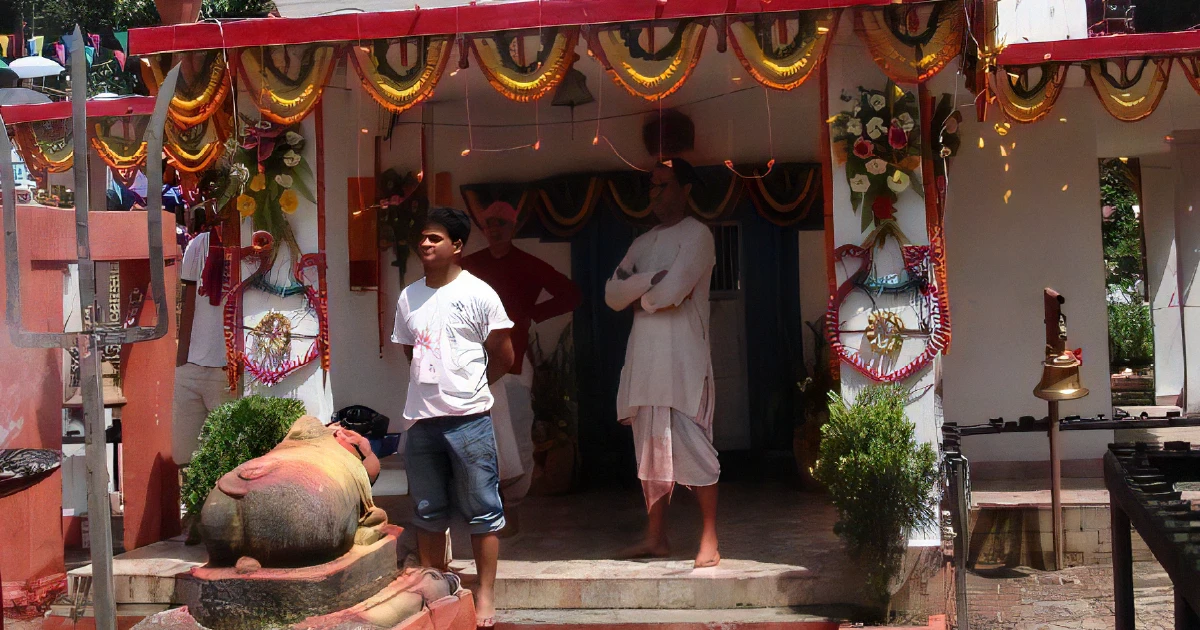
If you ever visit any Shiva temple, you can find Nandi, the bull, facing the main shrine of Shiva mor the Linga in the south direction. And something to notice, he does not turn sideways, never wandering around, leaving Shiva alone.
Symbolically, this is the representation of unwavering focus, stillness, and awareness. It is the foremost thing a pilgrim does in a Shiva temple that you tell something in the air of Nandi.
Tell him to inform Shiva that their devotees have arrived at the door. Nandi was there doing the same thing in Kailash. Nobody would get entry inside without the permit from Nandi. Nandi is the messenger for Shiva.
Does it have a spiritual meaning, too?
Yes, spiritually, this gesture carries the meaning that before approaching consciousness (the Shiva), one must cultivate discipline, humility, and devotion like Nandi does.
The Symbolism of the Bull in Hindu Civilization
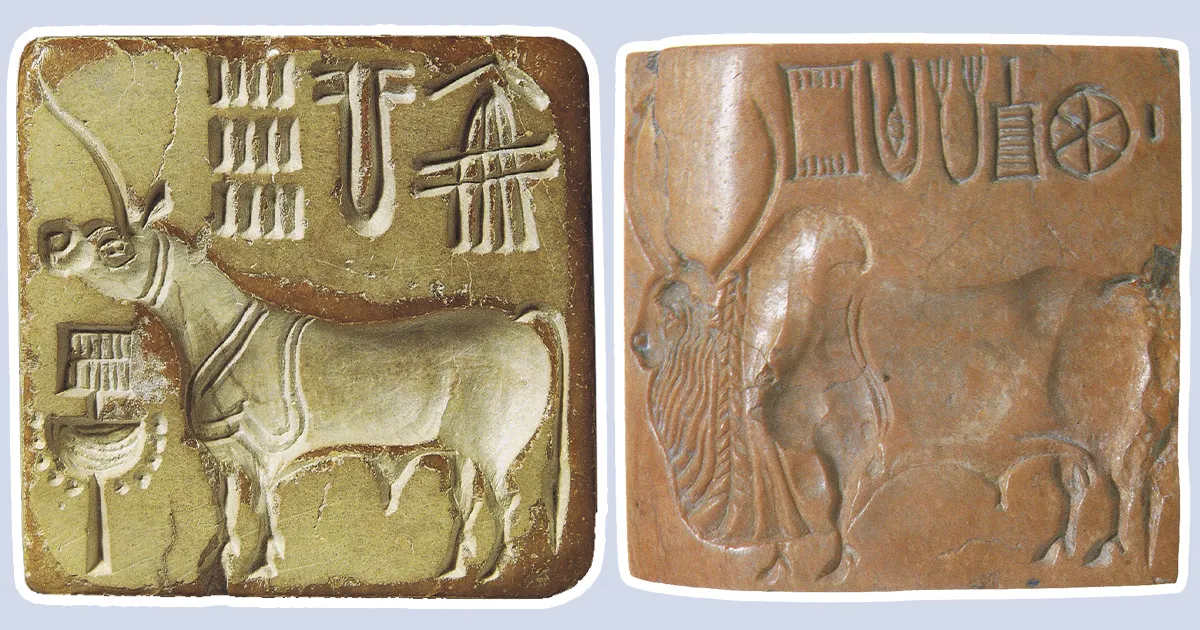
The significance of the bull goes beyond mythology. The bull and cow have shaped Indian civilization materially and spiritually for thousands of years. Archaeological seals from Mohenjo-Daro depict powerful bulls with curved horns, symbols of strength and fertility.
Agrarian life depended on bulls for ploughing, transport, and survival. The cow has become a symbol of nourishment and motherhood. Even today, the cow holds national symbolic status in Nepal and India.
In Vedic symbolism, the bull represents dharma, standing on four legs: austerity, purity, mercy, and truthfulness. These four qualities are often linked with Nandi. So, the choice of Bull as a transport by Shiva is not a random imagery, but a civilizational metaphor.
Nandi and Kailash: The Inner Kora
This is the moment of truth. There lies a hill inside the Kailash Kora, a place of deeper connection. Mount Kailash represents transcendence, and the Nandi Pahad represents. The ultimate stillness. Nandi Pahad lies there, representing the same discipline, devotion, and facing that stillness.
People choose to go for the inner Kora in Kailash, another trek in the harsh terrain in the Mount Kailash region. But, unfortunately, the inner kora is closed now for security reasons. The harsh climatic zone, extreme cold and thin air make the inner kora more risky and difficult. Here, the message is clear: before you achieve Lord Shiva, you must become as devotional as Nandi.
Wrapping Up
Pilgrims who undertake the Kailash Parikrama often speak of silence becoming louder than speech. This is a journey where you give up your ego and transcend yourself into a lighter self without pride.
As you are in the high terrain of Dolma La Pass, think of how Nandi faces Shiva in stillness. at the end, the mountain does not move, the Nandi and the Nandi Pahad do not move, but the pilgrim moves with honesty, and slowly the pilgrims become rigid like the Nandi at the high altitude trail of the Kailash Trek.
FAQs
Expand AllWhy is Mount Kailash considered sacred?
Mount Kailash is considered sacred because it is believed to be the abode of Lord Shiva, and the central axis of the universe in multiple religious beliefs. The mountiand represents purity, transcendence, and the axis of the universe. The mountains are untouched, unclimbed and spiritual.
Why do Hindus call Mount Kailash Shiva’s abode?
The Shiva Purana has described Kailash as the eternal dwelling place of Shiva and portrayed the site as a meditation point, where he performs his cosmic dance and lives with his family and gana.
What does Mount Kailash symbolise in Hindu belief?
Mount Kailash symbolises the cosmic axis and represents Mount Meru, a cosmic pillar of the universe. The mountain represents ultimate consciousness beyond material life.
What is the spiritual meaning of Mount Kailash for pilgrims?
For pilgrims, MountKailash represents inner purification. Circumambulating around the mountain is believed to dissolve sins and karmic burdens, fostering humility, endurance, and devotion.
What is the connection between Shiva and Mount Kailash?
Kailash was chosen by lord Shiva as his abode so that nobody would disturb him while he is in deep meditation. The mountain’s isolation and purity reflect Shiva’s transcendental state.
What is the Kailash mythology in simple terms?
In simple terms, Kailash mythology describes the mountain as the divine home of Shiva, the centre of the universe, and a place where earth connects with cosmic realms.
Who is Nandi in Hinduism?
Nandi is the sacred bull, the transporter, devoted companion of Lord Shiva. He is also the chief of Shiva Ganas and represents a symbol of unwavering devotion.
What does Nandi represent spiritually?
Nandi represents discipline, faithfulness, strength, humility, and unidirectional devotion toward the divine.
Why is Nandi called Shiva’s vahana (vehicle/mount)?
Nandi is called Shiva’s vahana because he serves as the divine mount for Shiva. Symbolically, he represents the spread of consciousness of Shiva.
Why do Shiva temples place Nandi facing the main shrine?
Nandi faces the Shiva Lingam to symbolise eternal devotion towards the divinity. He represents concentration, surrender, and spiritual alignment.
What is the significance of the Nandi bull in Shaivism?
In Shaivism, Nandi is a guardian, gatekeeper, embodiment of dharma, and a great teacher called Nandikeshvara.
Why do devotees pray to Nandi before praying to Shiva?
Nandi is the messenger of Lord Shiva. Visitors and pilgrims whisper prayers into the ears of Nandi, believing he will convey them to Lord Shiva.
Related blog posts
Discover a choice of tourist destinations loved by most of our visitors. Whether you're on a jungle safari to spot rare animals or walking through a world heritage site, these well-planned itineraries cover the major highlights of Nepal.


 call an expert at: