
Sherpa Monastery in Everest: Rituals that Trekkers May Witness on EBC Trek
 Sristi Adhikari
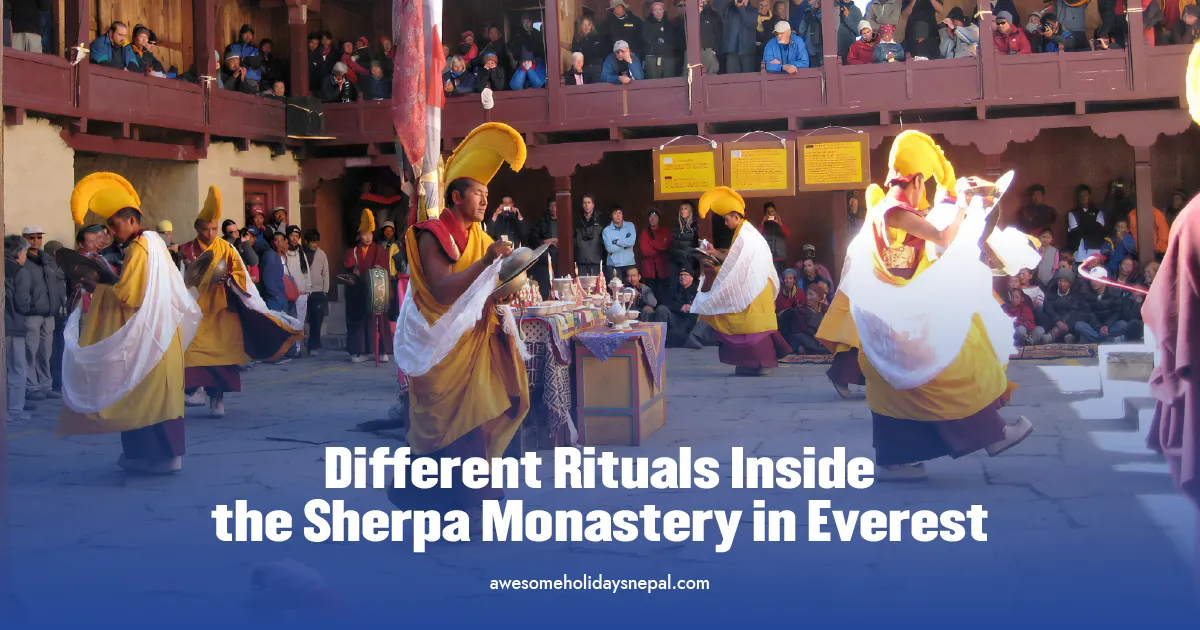
The Everest Base Camp trek is much more than a trek; it is an opportunity to get an insight into the rituals of Sherpa culture and heritage. Fluttering prayer flags, rhythmic chants of monks in the Sherpa Monastery, Tengboche Monastery, and Pangboche Monastery of the Everest hold deeper meanings to the Everest Base Camp trek.
The journey to the base of the world’s highest mountain also offers a century-old Buddhist practice in the Sherpa settlement of the Everest. The Sherpa monastery and architectural landmarks of the Everest region add to the beauty of the EBC trek. If you are searching for a more cultural awakening adventure to the Everest, and wondering what is included, continue reading to quell your curiosity.
Significant Sherpa Monastery and Its Rituals
Pangboche Monastery
Pangboche monastery, also known as the Pangboche Gompa, is the spiritual crown of the Sherpa communities in the Khumbu region. The deep-rooted traditions, ancient relics, and blessings, along with the view of the most sacred mountain, Ama Dablam, make it popular among adventure enthusiasts like trekkers and expeditions.
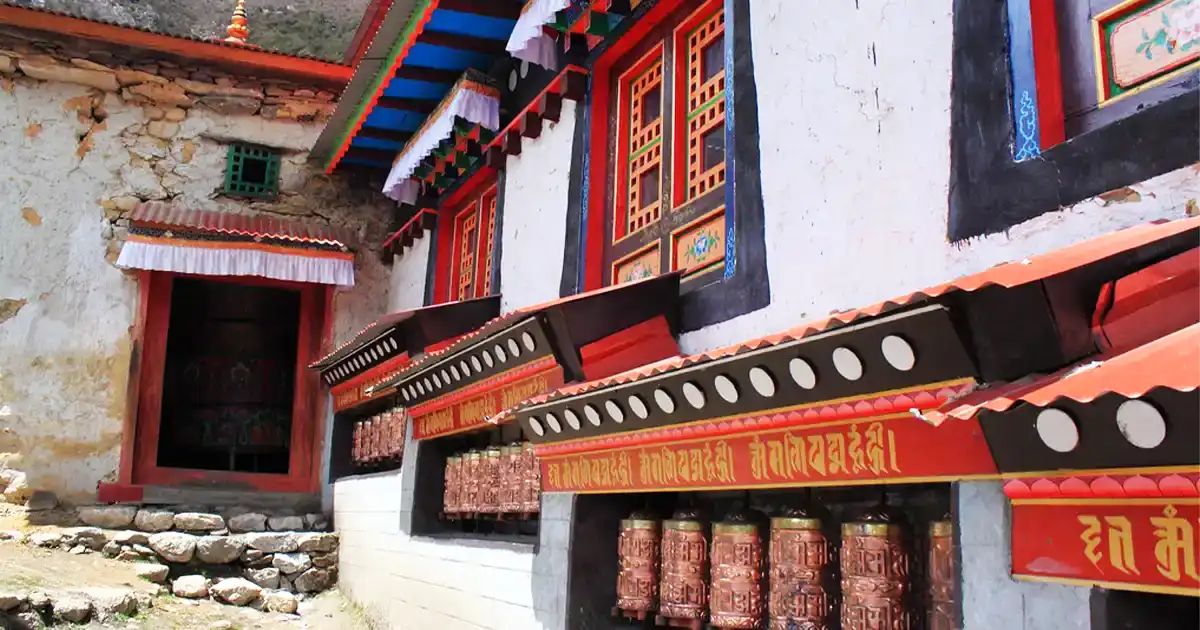
It was founded by Lama Sange Dorje and is a centre of cultural and historic immersion of the Sherpa in the Everest region.
Rituals Performed at Pangboche
Blessing Ceremony
This blessing ceremony is usually done for the trekkers and climbers on their journey’s success. Here, at first, a senior monks perform chanting while reading the Tibetan Buddhist scriptures. He will sprinkle holy water over the climbers and trekkers for purification and protection, followed by offering a khada around your neck.
The trekkers and climbers can offer a butter lamp or a donation. These rituals of the Sherpa show a glimpse of Buddhism in the Everest region.
Daily Pooja Ceremony
Monks gather twice a day, morning and evening, to perform a pooja ceremony where they chant ancient mantras by beating drums, blowing conch shells and long horns (dungchen). They also offer a butter lamp, and anyone can enjoy this while sitting quietly at the back of the hall.
Mani Rimdu Preparation
Monks of Pangboche usually perform a preparatory puja for the Mani Rimdu, and they participate by making a mandala and reciting the Guru Rinpoche texts.
Rituals for Mountain Deity
Monks of Pangboche perform ceremonies for the mountain deity, Ama Dablam, and Chenrezig Buddha, also known as the Buddha of compassion. They offer a colourful ritual cake known as torma and burn incense outside the monastery.
Special Ceremonies
Trekker’s at Pangboche monastery can encounter special ceremonies like funeral rites, symbolic life release rituals, and naming ceremonies of Sherpa newborn babies.
Tengboche Monastery
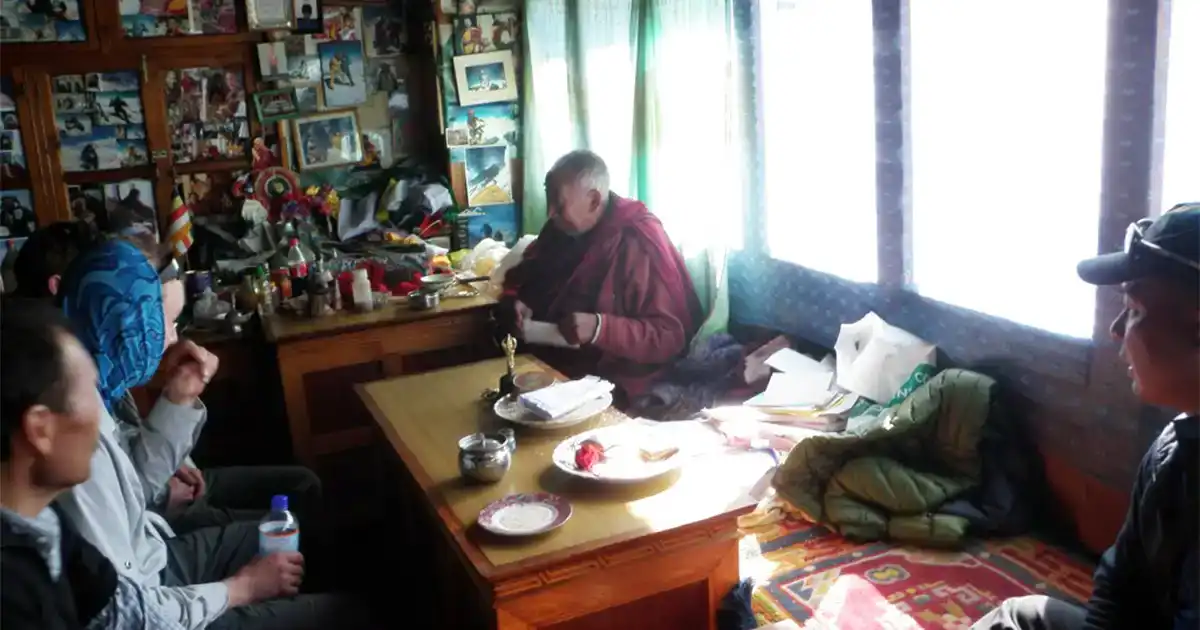
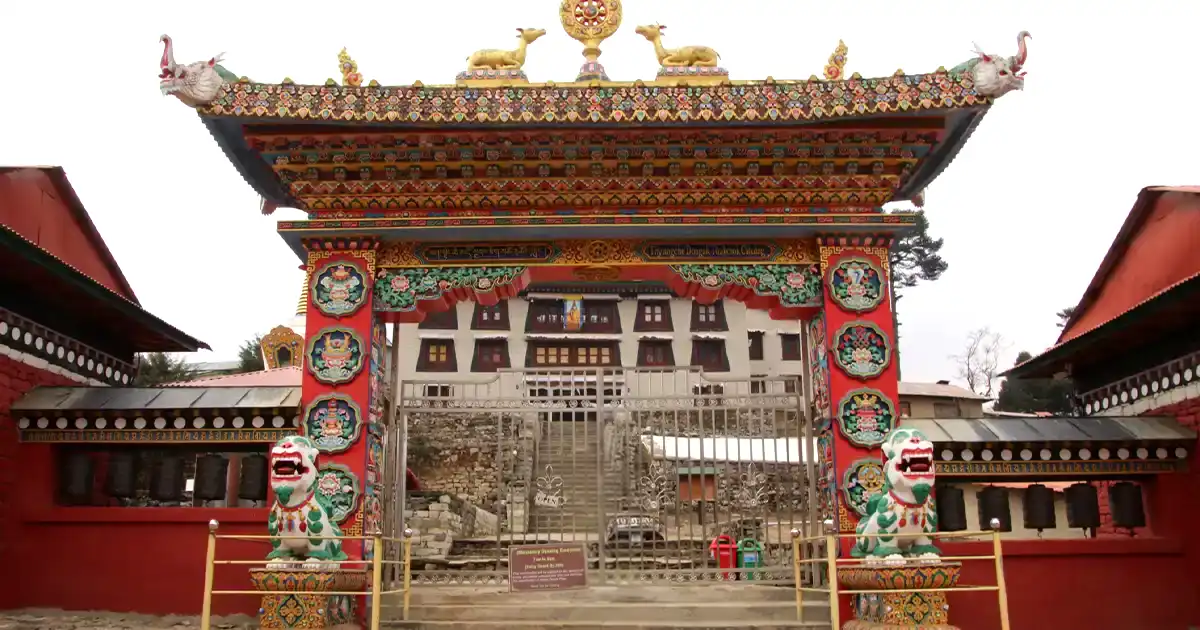
Tengboche monastery, also known as Dawa Choling Gompa, is one of the most famous monasteries found on the trail of the Everest Base Camp Trek. It is located at an altitude of 3867 meters above sea level and offers a breathtaking view of mountains like Everest, Lhotse, Ama Dablam, and Nuptse.
Besides these, the deeply rooted Sherpa traditions are the main attraction of this monastery. It is the main monastery of more than 40 smaller Khumbu gompas. This monastery safeguards the ancient manuscript, sacred thangkas, and Tibetan Buddhist spirituality, Sherpa history, and much more.
Different Rituals Performed at Tengboche Monastery
Morning and Evening Rituals
EBC trekkers can participate in the morning and evening rituals of the Tengboche monastery. Within the monastery, trekkers can experience monks chanting Tibetan scriptures, a rhythmic drumbeat and cymbals, followed by the sound of the long horn, dungchen.
Mani Rimdu Festival
The Mani Rimdu festival is celebrated according to the Tibetan Lunar calendar and falls mainly in the month of October/November. You can enjoy the monks’ Cham masked dance and witness the fire puja done for the purification. The unique sand mandala creation and ritual dismantling, as well as receiving blessings from the head monks/lama, are popular rituals of the Mani Rimdu festival.
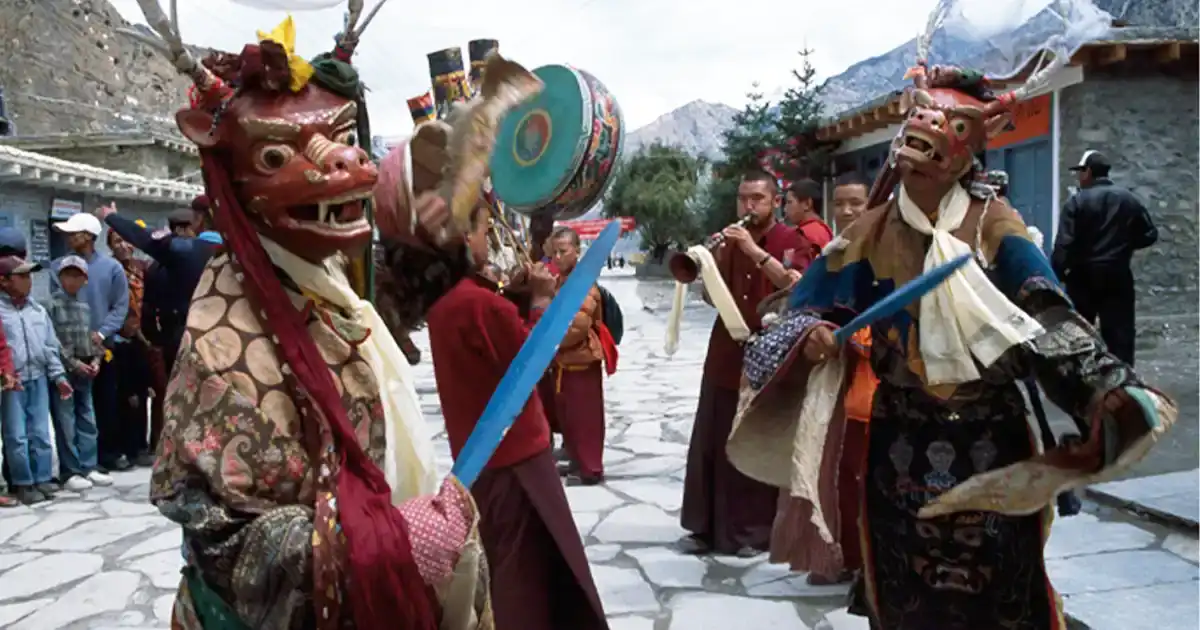
They also perform a symbolic reenactment of the good over evil, along with the dramatic showcase of Sherpa Buddhist ritual art.
Rituals for Deities
Monks of the Tengboche perform a puja ceremony in honour of deities for their protection and blessing. They do puja for the mountain deity, Ama Dablam, Guru Rinpoche, and Chenrezig. Sherpa believes that doing puja and offering to the deities helps in the spiritual balance in the Khumbu region.
Butter Lamp Lighting
Lighting a butter lamp is done for a wish for safe passage, in memory of the lost one. Everyone can do this ritual inside or outside of the prayer halls.
Blessing Rituals
Most of the trekkers and Everest climbers stop in this monastery to take blessings for the success of their journey. The head monks or lamas first purify you by sprinkling holy water while other monks chant a protective mantra. You will receive a khada around your neck as a blessing, and then you can also offer a butter lamp lighting.
Prayer Wheel Circumambulation
Every Sherpa monastery, gompa, and village has a prayer wheel. The clockwise spinning of a prayer wheel while chanting” Om Mane Padme Hum” is believed to release prayer with good karma and compassion.
Tips for Respectful Visits to Sherpa Monasteries
Dress Modestly
While visiting the Sherpa monastery, trekkers should always cover their shoulders and knees. Plus, make sure to remove hats and sunglasses inside the monastery periphery. Avoid wearing shoes inside the prayer halls or in offering areas.
Walk Clockwise
Sherpa Buddhist culture demands Tibetan customs of walking in the clockwise direction in stupas, mani stones, prayer wheels, and monastery courtyards. Always spin the prayer wheels in a counterclockwise direction.
Be Quiet and Calm
Monasteries are the places where you should lower your voice, as they are the centre for meditation and chanting. Do not stand in the way of monks and do not interrupt them when they are chanting and meditating.
Photography Etiquette
You should always ask for monks’ consent before taking a picture with them or inside the monastery. Also, sacred statues or ceremonies are prohibited from being captured and always turn off the flashlight while taking pictures.
Don’t Touch Sacred Objects
You should avoid touching and pointing sacred objects like statues, scriptures, prayer items, and thangkas inside the Sherpa monasteries of the Everest region.
Donations Are Welcome but Not Required
Almost every monastery has a small donation box, and a small donation is always expected, but it is not compulsory. Offering money while attending a puja ceremony inside a prayer hall is mandatory, and you will get a reward of butter tea with cookies afterwards.
Be Mindful of Personal Space
Monk’s personal space should be respected, and one should avoid touching their robes. Make sure not to point your shoe soles toward monks or the shrine while sitting.
Respect Tobacco and Alcohol Restrictions
Monasteries inside the Khumbu region restrict tobacco and alcohol consumption. Do not enter the monastery periphery if you are intoxicated.
Learn a Few Local Customs
You should learn a few customs, like saying Tashi Delek, which means Hello.
Other Popular Sherpa Monastery
- Thame Monastery
- Khumjung Monastery
- Deboche Nunnery
The Cultural Rituals Beyond the Everest Trails
The most popular Sherpa monasteries, like Pangboche and Tengboche, offer the Everest trekkers a peaceful counterbalance. The tiring and long hours of the trek to Everest can only be overcome by the peaceful sound of chanting monks, the fragrance of incense, and the glow of a butter lamp. Participating in the Sherpa monasteries’ rituals or festivals is a unique opportunity to gain insight into the Tibetan Sherpa way of life, beliefs, and traditions.
Inside a Sherpa monastery, trekkers can connect with themself by observing monks chanting and participating with locals offering to the deities. One can get an insight into old Buddhism and how spirituality plays a role in maintaining harmony and resilience in the Sherpa communities of the Everest region.
FAQs
Expand AllWhat Sherpa rituals can trekkers witness on the Everest Base Camp trek?
Trekkers can witness Sherpa rituals like daily monastery chants and incense, sacred landmarks like Mani walls, Chortens, prayer flag ceremonies, and pre-expedition Pujas for safety for the Everest Base Camp trek.
Which monasteries on the Everest trek are best for observing rituals?
Tengboche monastery of the Everest trek is best for observing rituals.
Can trekkers attend a puja ceremony inside a Sherpa monastery?
Yes, trekkers can attend a puja ceremony inside a Sherpa monastery.
Is there any special blessing for trekkers heading towards Everest Base Camp?
Yes, there is no special blessing for trekkers heading to the EBC trek.
When is the Mani Rimdu festival at Tengboche?
The Mani Rimdu festival at Tengboche was celebrated on November 5th, 6th, and 7th in 2025.
Do Sherpa monasteries charge an entry fee?
There is no specific entry fee for the Sherpa monastery in Everest.
What etiquette should trekkers follow inside a Sherpa monastery?
You should dress modestly, turn on the silence mode on your phone and removes hoes and leather hat before entering the monasteries.
Are monastery visits included in Everest trekking packages?
Yes. The Everest trekking packages also include monastery visits.
How early do monks begin rituals in Sherpa monasteries?
Monks in Sherpa monasteries begin their daily rituals usually at 6 AM.
Can trekkers learn more about Sherpa Buddhism during the trek?
Yes. Trekkers can learn about the Sherpa Buddhism during the EBC trek.
Related blog posts
Discover a choice of tourist destinations loved by most of our visitors. Whether you're on a jungle safari to spot rare animals or walking through a world heritage site, these well-planned itineraries cover the major highlights of Nepal.
 call an expert at: