
Saga to Mansarovar: Distance, Travel Route, and What You’ll Experience on the Way
 Amrit K. Aryal
Traveling from Saga to Mansarovar is a spiritual journey on the Kailash Mansarovar Yatra. Pilgrims from Kathmandu via the Kerung route are accommodated at Saga before stretching to Lake Mansarovar.
In this blog, we will explore Saga city, the path from Saga to Mansarovar, the distance we will travel, the Kailash Mansarovar overland route we take, and what we can expect during our journey from Saga to the shores of Lake Mansarovar.
Where is Saga?
Saga is a small town in Tibet, a major stop on the Kailash Mansarovar Yatra. We drive from Kerung to Saga, crossing the Nepal-China Border, with proper acclimatization in Kerung. At an altitude of 4,640 meters (15,223 feet), Saga sits in the Shigatse prefecture in southern Tibet.
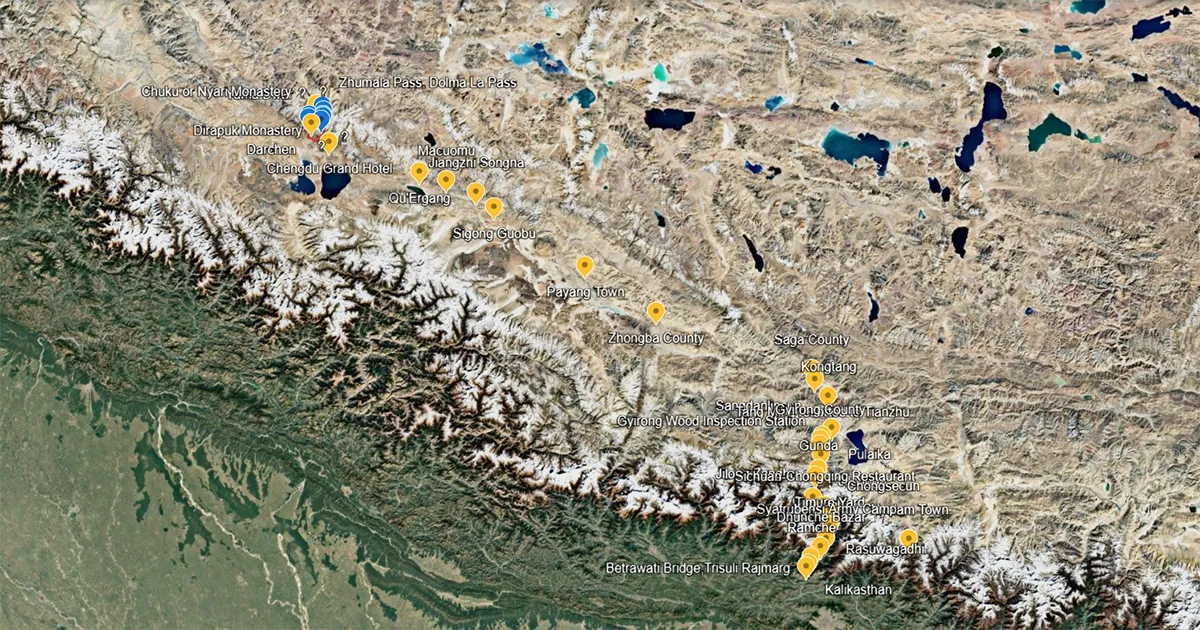
Tibetans call it the city of happiness. Close to the Yarlung Zangbo River, Saga is an important place for resting and acclimatizing. As we ascend from Kerung, there is a gradual increase in altitude. So, Saga serves as a special point for adjusting to the changing environment in the Tibetan land.
Saga to Mansarovar Distance and Road Details
The Mansarovar Lake travel route starts from Saga. The drive from Saga to Mansarovar Lake begins in earnest, opening into the wide Tibetan plateau, on the China National Highway G219. The road from Saga to Lake Mansarovar is about 496 km, taking almost 7 hours on a beautiful day. Kailash Mansarovar overland route on the G219 is more than 10, 000 km long highway providing a mix of smooth and paved as well as unpaved sections. From Saga to Zhongba, the length is around 166 km, mostly paved with asphalt. From Zhongba to Paryang, it is almost 80 km, with similar road features. From Paryang to Hor Qu Village (via Mayum La Pass), the road is about 220 km, with winding mountain roads and high plateau terrain. And from Hor Qu Village to Mansarovar, it is 30 km long more rugged, rocky terrain. Some itineraries even provide camping options between Saga and Mansarovar.

What to Experience from Saga to Mansarovar
High-Altitude Tibetan Landscapes and Passes
Leaving Saga takes us to a vast, high-altitude plateau, deep, wide valleys, open sky, and a chance to observe a wide variety of vegetation. The winding roads will take us to high passes and sweeping mountain vistas. Snow-capped peaks such as Gurla Mandhata, and various holy places, pilgrims would like to visit before reaching Lake Mansarovar during their Kailash Mansarovar overland route.
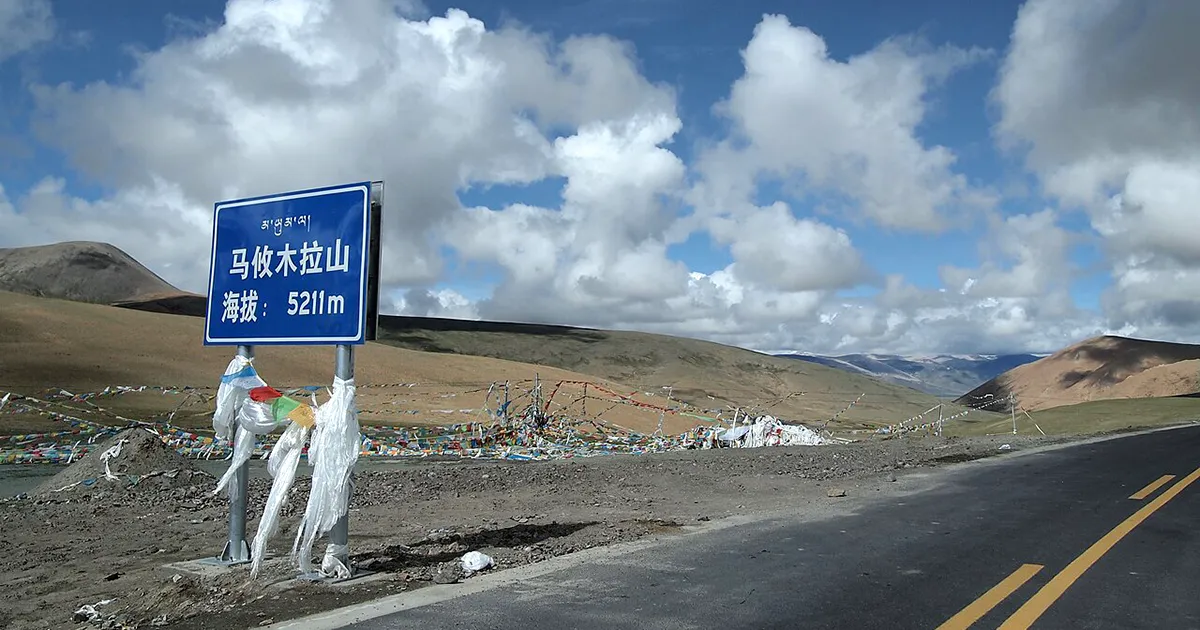
Mayum La Pass is one of the major high-altitude passes that we will cross on the route, offering a wonderful view of the Tibetan plateau. A significant change is seen in the landscape, from desert-like dryland to snow-capped peaks and mountains. As we descend closer to Lake Mansarovar, the landscape becomes more rugged, and the road is a mix of smooth paved and rocky tracks.
Cultural Stops at Tibetan Villages
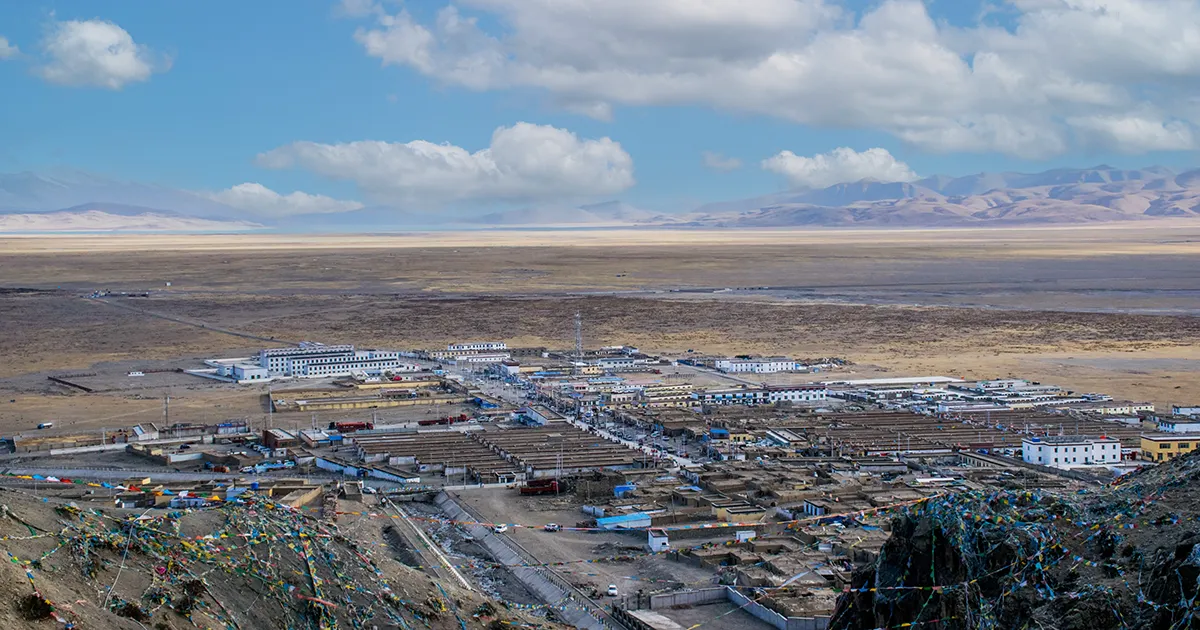
As we travel, we will pass through small Tibetan villages rich in cultural and religious values. These remote villages are the settlements of Tibetans, with nomadic traditions, Tibetan architecture, and are blessed with the prayer flags of dharma. Towns like Saga, Taklakot (Purang) are also famous for acclimatization with the exploration of cultural and traditional insight.
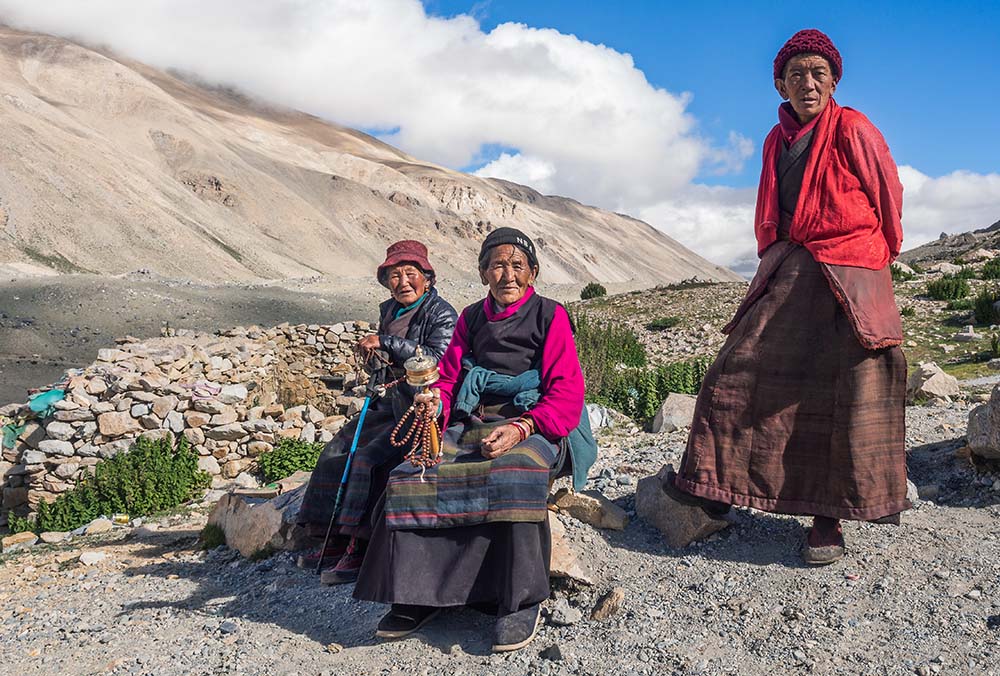
Taklakot is also a place known for key checkpoints. These villages also carry natural and spiritual weight. The hotels, guesthouses provide basic accommodation and meals. Hor Qu Village is another stop near Lake Mansarovar, one of the last stops before reaching Mansarovar’s shore.
The Sacred Lake: Mansarovar
On reaching Lake Mansarovar (4,588 m), the hardship of the journey finally pays off. Lake Mansarovar is a freshwater lake, sitting side by side with Lake Rakshastal. These two lakes, sitting almost at the same height and same landscapes, are different from each other.
Mansarovar is a freshwater lake and is considered a holy whereas the Rakshas lake is a salty lake with negative energy. The presence of such irony lakes is considered a balance of energy in the Kailash region, maybe a perfect yin-yang.
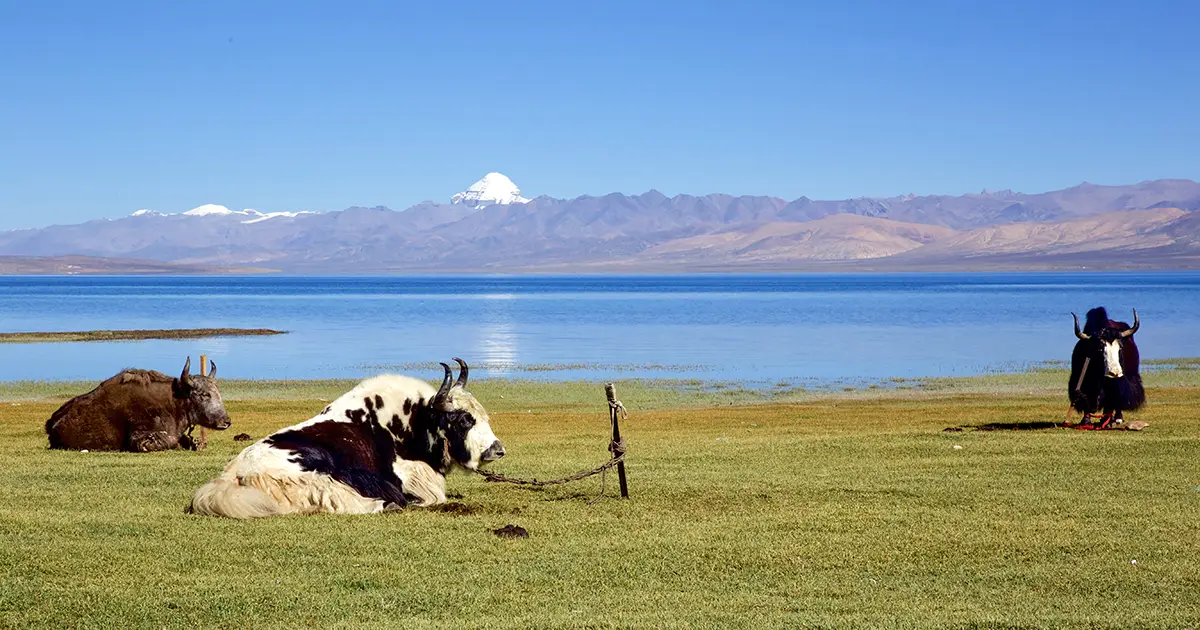
Rakshastal is also called the lake of demons, as Ravan did his meditation in one of the islands of this lake. As per the Hindu mythology and the Ramayan, Ravan was the king of the demons from Lanka. He was a devotee of Lord Shiva who performed a hard ritual to please Lord Shiva. Tibetans call this lake “Lagngar Cho”, which means the “Lake of poison”. Since the lake is stagnant, the water in the lake is highly concentrated, and no life can survive in the lake. Scientifically, this lake is an Endorheic lake, meaning there is no exit of the water from the lake.
On the other side lies the Mansarovar lake, a lake where pilgrims perform rituals like puja, take a holy bath, and wash their hands. Many of them also bring the sacred water (jal) for their family and friends. Many pilgrims would like to make a vehicle-based parikrama (circumambulation) around Mansarovar Lake with a wish for spiritual liberation.
This lake is considered a holy lake for believers of Bon, Buddhism, Hinduism, and Jainism. Their rituals and beliefs might be different, but all of them have a common goal to get spiritual satisfaction.
Mount Kailash Kora
The visit to Lake Mansarovar is not the end of the journey but the start of another adventure. After Lake Mansarovar, the journey continues to Darchen. It is also known as the base camp for Mount Kailash. After resting at Darchen, pilgrims head to Yamadwar, where the Kailash kora continues for three days.
Day One: Darchen to Dirapuk
The first day of Kailash Kora is a 12 km journey from Darchen to Dirapuk. The north face of Mount Kailash is seen on this day, the most auspicious face of Mount Kailash. Those who are not willing to complete the Kailash kora due to health issues, observe the north face of Kailash and return to Darchen and wait for the companion travellers. Some even chose to ride on a horse or a yak to complete the Kailash Kora.
Pilgrims, after reaching Dhiraphuk, get accommodated at Dhiraphuk. The meal is warm and simple. Low volume of oxygen in the atmosphere might show some impact on our bodies. So, staying hydrated and listening to the rhythm of our body. Many of them even visit the Dhiraphuk monastery for prayer.

Day Two: Dirapuk to Zutulphuk
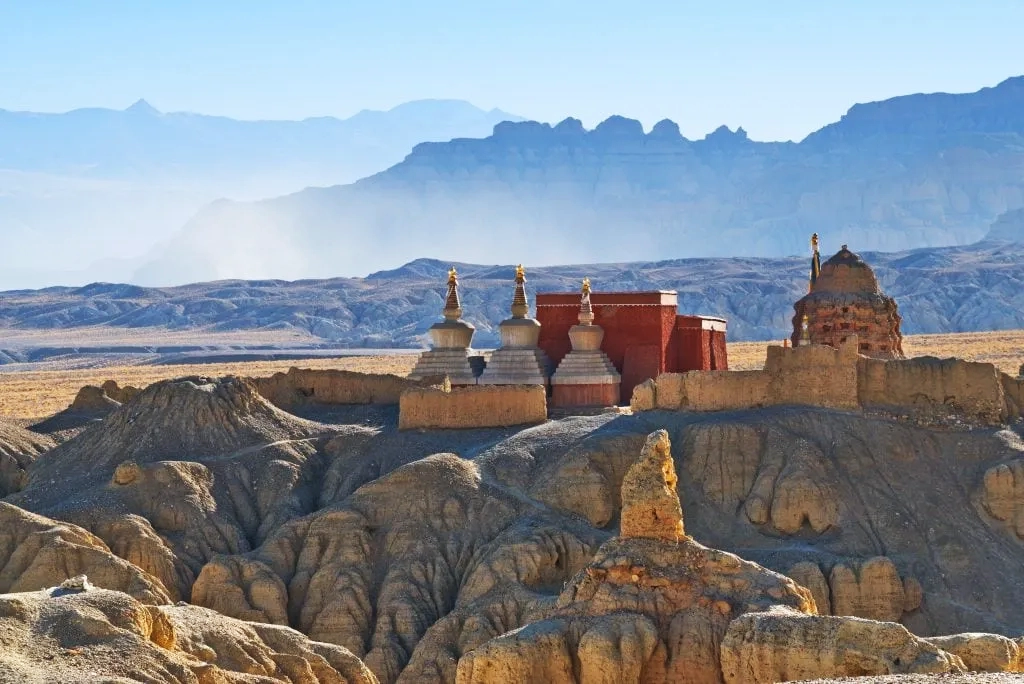
On the second day, the journey starts from Dirapuk and continues to Zutulphuk via Dolma La Pass (5,630 m). This is the most difficult section in the Kailash Kora. Ascending the Dolma La is the most difficult stretch. After crossing Dolma LA, one can witness the Gauri Kunda, another sacred pond in the Mount Kailash Mansarovar Yatra. Then the pilgrims head to Zutulphuk, where they will spend the night, preparing for the next day.
Day Three: Zutulphuk to Darchen
This is the easiest day during the Kailash Kora. The stretch is about 8 km, taking about 3 hours to complete. Merging with the rest of the team members at Darchen, the entire team returns to Dongba or Saga.
Final Words
The trek to Kailash Mansarovar is not as simple as we think. This is a testament to physical endurance and mental stability. Kailash Kora is not just a trek; it’s a deep symbolic journey. The transition from Saga to Lake Mansarovar reflects a spiritual transformation, leaving our materialistic and earthly feelings, opening our consciousness behind the high, sacred plateau and lakes.
The best Mansarovar Lake altitude sickness tips are to get acclimatized, which is critical during your high-altitude journeys. As we gain altitude, the low volume of oxygen in the air makes it difficult to cope with the changing environment. So, stop at places like Saga or Taklakot (Purang) and get used to the surroundings.
FAQs
Expand AllHow far is Lake Mansarovar from Saga?
The average distance from Saga to Mansarovar is about 500 km by road.
How many hours from Saga to Mansarovar by road?
It takes around 7- 8 hours to reach Mansarovar from Saga by road, depending on the weather and the tour itinerary.
Is there a helicopter from Saga to Mansarovar?
No, a regular helicopter service from Saga to Mansarovar is not available. Almost every pilgrim uses overland transport to go to Mansarovar from Saga.
What is the best time to travel from Saga to Mansarovar?
May to September is the best time of the year to travel from Saga to Mansarovar during the Kailash Mansarovar Yatra.
Can Indians travel from Saga to Mansarovar?
Yes, Indians too can travel from Saga to Mansarovar, with certain permits and a group visa via a licensed travel company in Nepal and in Tibet. They must use only the vehicles from Tibet, via a travel company.
What is the road condition from Saga to Mansarovar?
The road from Saga to Mansarovar is mostly asphalt for large stretches. There are some gravel and rough roads on the way in some segments of the road. Mountain passes like Mayum La have winding, high-altitude terrain
What is the altitude of Saga and Mansarovar Lake?
The altitude of Saga is 4,640 m above sea level, and Lake Mansarovar lies at a height of 4,583 m.
What are the Permits required from Saga to Mansarovar?
In order to do the Kailash Mansarovar Yatra via Saga, you will need a Tibet Travel Permit, Alien’s Travel Permit, and sometimes a Military Permit, only be applied for through a registered travel agency in China.
What are the Hotels or stay options between Saga and Mansarovar Lake?
There are hotels and guesthouses in Saga and other stops during your Kailash Yatra. There are some guesthouses with facilities around Chiu Monastery on the lake shore of Mansarovar.
What is the oxygen level from Saga to Mansarovar?
At an altitude of over 4,500 m, there is a risk of altitude sickness. You need to plan an efficient acclimatization to stay safe from altitude sickness. Confirm whether your tour groups have carried enough oxygen cylinders with them.
What is the cost of a private jeep from Saga to Mansarovar Lake?
The cost of a private jeep depends on the tour company, how remote the trip is, and how many people share. The vehicle and the nationality. The private vehicles must be owned by local Tibetans.
What to see between Saga and Mansarovar?
There are high-altitude plateau landscapes, arid land, rivers, Yak and nomad settlements, and passes like Mayum La Pass. and some smaller lakes.
Can we do Saga → Mansarovar in one day?
Yes, though the journey will be longer (8-9 hours), it is possible to travel from Saga to Mansarovar in a day, if the condition of the road is good enough.
What is the Weather in Saga - Mansarovar in May–June?
The weather in Saga to Mansarovar is generally good with clear skies, less snow, but very cold during the night.
Related blog posts
Discover a choice of tourist destinations loved by most of our visitors. Whether you're on a jungle safari to spot rare animals or walking through a world heritage site, these well-planned itineraries cover the major highlights of Nepal.
 call an expert at: