
Nepali Marriage Rituals: Traditional Wedding Customs Explained Across Communities
 Sujata Pokhrel
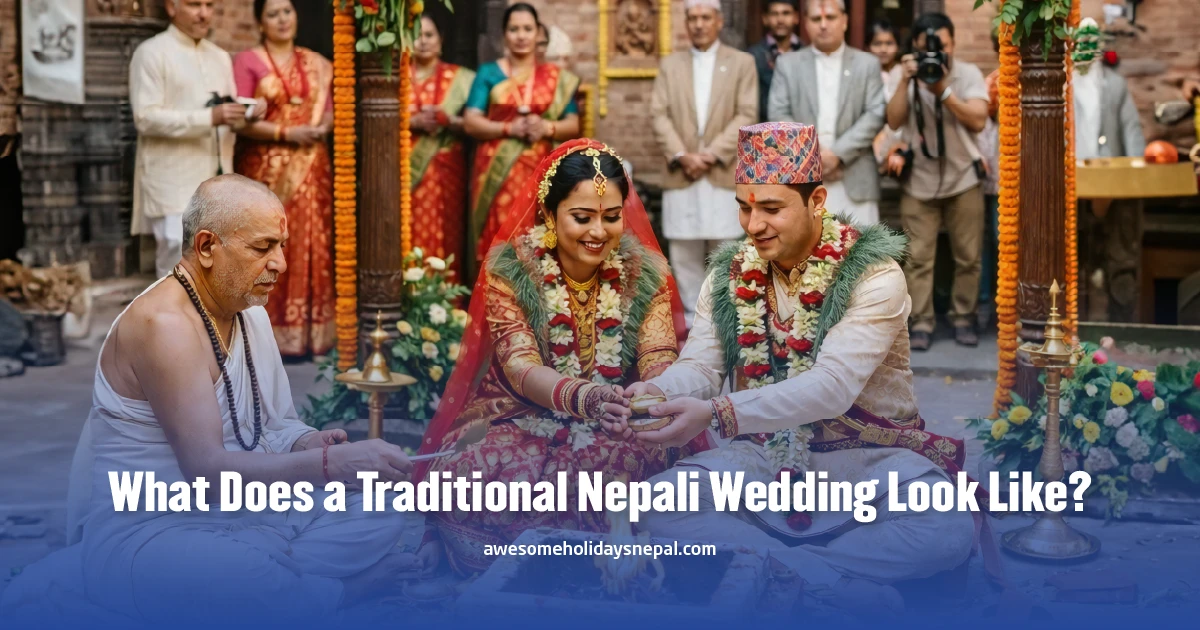
What does a traditional wedding in Nepal look like? Not quite usual like a white wedding at all!
Nepali weddings are not just about two people coming together, they are layered, symbolic, and deeply rooted in community life. If you are a foreigner visiting Nepal for the first time, then wedding rituals across different cultures might amuse you. For a first-time visitor, the diversity can feel almost overwhelming.
From grand, day-long events to ceremonies symbolizing different elements, the wedding rituals are very diverse. Each ceremony carries meaning, honoring ancestors, invoking blessings, or symbolizing the union of families rather than just individuals.
Let’s get through the blog for figuring out Nepali marriage rituals.
Nepali Marriage Rituals Across Different Cultures
Nepal is home to dozens of ethnic groups, religions, and traditions. This diversity is reflected most vividly in weddings. While love and union remain the core idea, the way people celebrate it varies widely.
In many communities, astrology determines the wedding date. Families consult priests to choose an auspicious time, known as muhurta. Ritual purity, offerings, and blessings from elders are considered essential. Music, food, and gathering are equally important, turning weddings into major social events.
Despite the differences, one thing remains constant: a Nepali wedding is never just a ceremony, it is an experience.
Hindu Nepali Wedding Rituals
Among Hindu communities, especially the Khas Arya groups, weddings are elaborate and deeply symbolic.
The celebrations often begin with pre-wedding rituals like “mehendi” (henna application) and “haldi” (a turmeric ceremony believed to purify and bless the couple). These events are lively, filled with laughter, songs, and family bonding.
On the wedding day, the groom arrives in a procession known as the “janti”. Accompanied by music and dancing, this is one of the most energetic parts of the celebration. The bride’s family welcomes the procession with rituals and offerings.
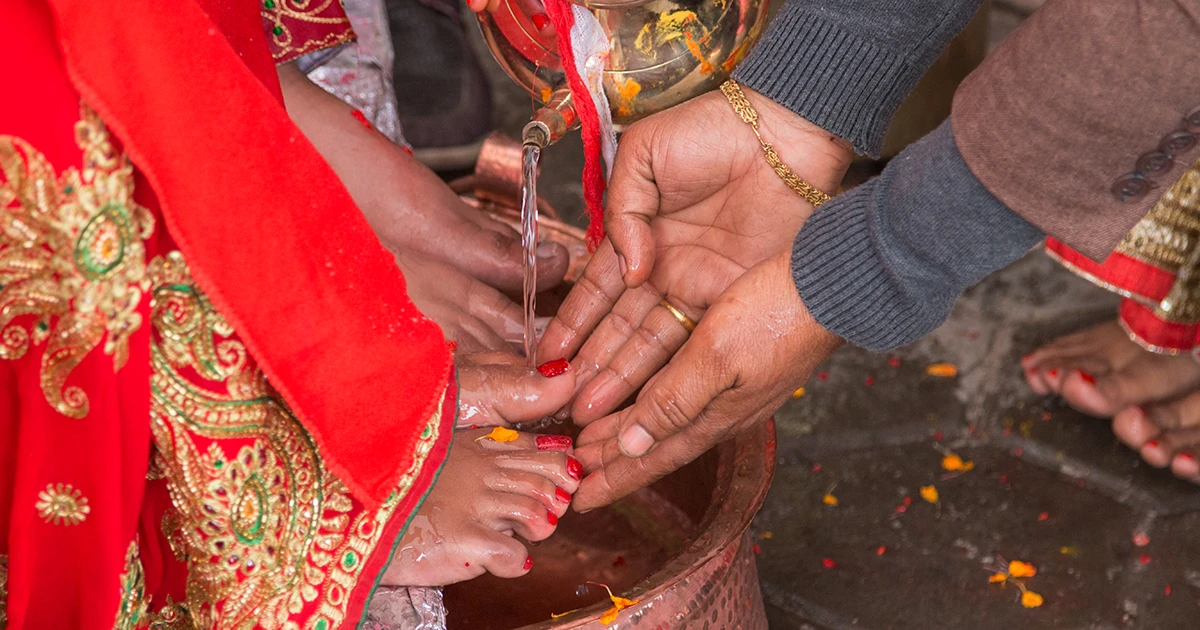
At the heart of the ceremony is the sacred fire, around which the couple performs rituals guided by a priest. One of the most emotional moments is “kanyadaan”, where the bride’s parents formally give her hand to the groom. The groom then applies “sindoor” (vermillion powder) in the bride’s hair parting and places a pote (green bead necklace) around her neck, symbols of marriage and commitment.
The ceremony concludes with the bidai, when the bride leaves her parental home, often an emotional farewell that highlights the deep family bonds in Nepali culture.
Newari Wedding Traditions
Newar weddings, primarily found in the Kathmandu Valley, stand apart due to their unique multi-stage rituals.
One of the most fascinating customs is “Ihi”, where young girls are symbolically married to a bel fruit. This ritual ensures that a Newar woman is never considered widowed, as the bel fruit represents an eternal husband.
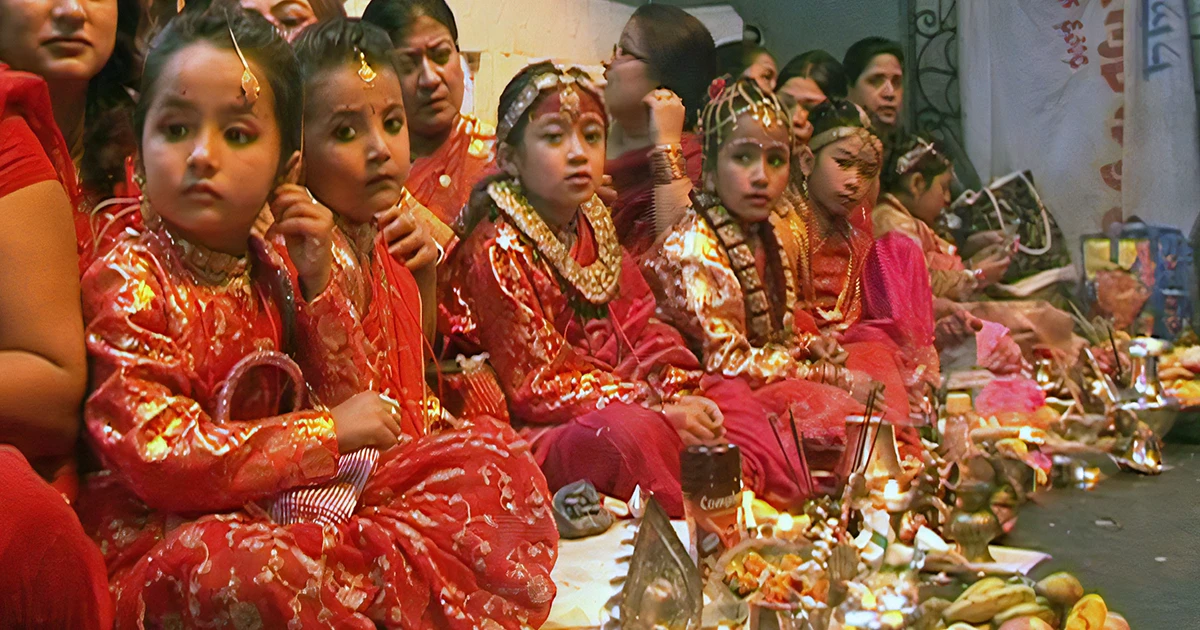
Another pre-marriage ritual, “Bara Tayegu” (often called the Gufa ceremony), involves a period of seclusion symbolizing purification and transition into adulthood.
When the actual marriage takes place, it is more about formalizing a social union than creating a spiritual bond, since that has already been symbolically established. The ceremonies are rich in tradition, with distinctive attire, intricate rituals, and elaborate feasts that reflect Newar culture’s deep connection to heritage and community.
Food served in traditional Newari wedding is another main highlight. It isn’t a regular buffet spread but a hearty meal served on a platter in a sequential order in a traditional way is a thing. Apart from that Newar food is anyway very good to enjoy all the time.
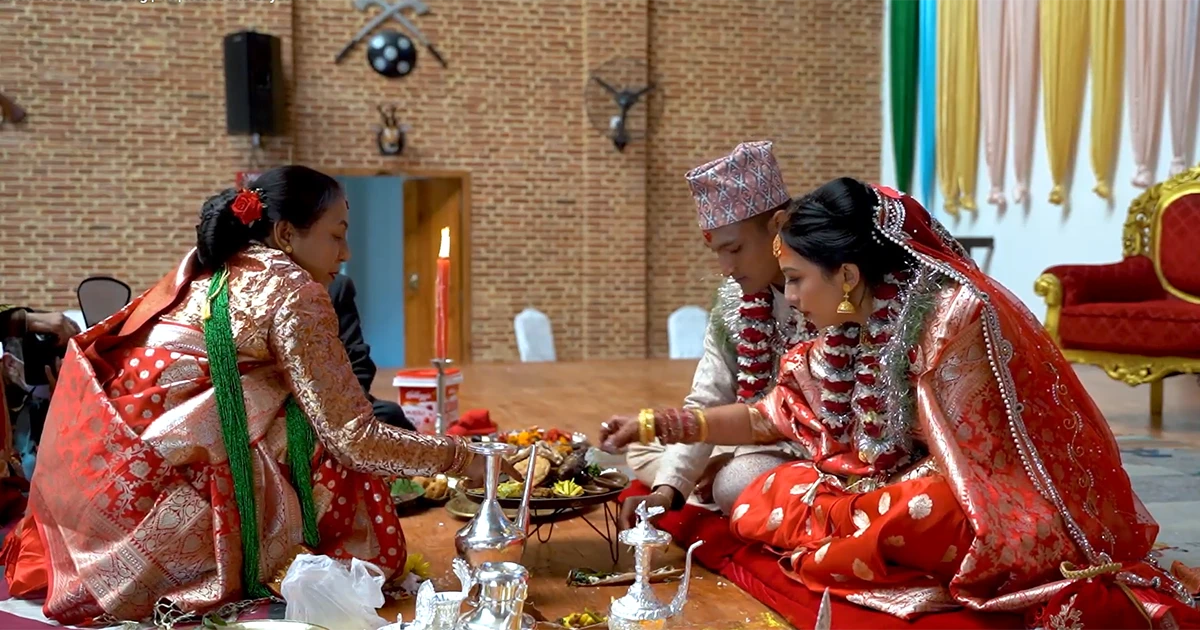
Mongolian Wedding Rituals
The wedding traditions in communities with Mongolian roots, such as Gurung, Tamang, Rai is quite different. More than ritualistic, the weddings are symbolic with less rigid ceremonies compared to the typical Hindu wedding. Rituals may include ancestral blessings, offerings to nature, and symbolic exchanges between families.
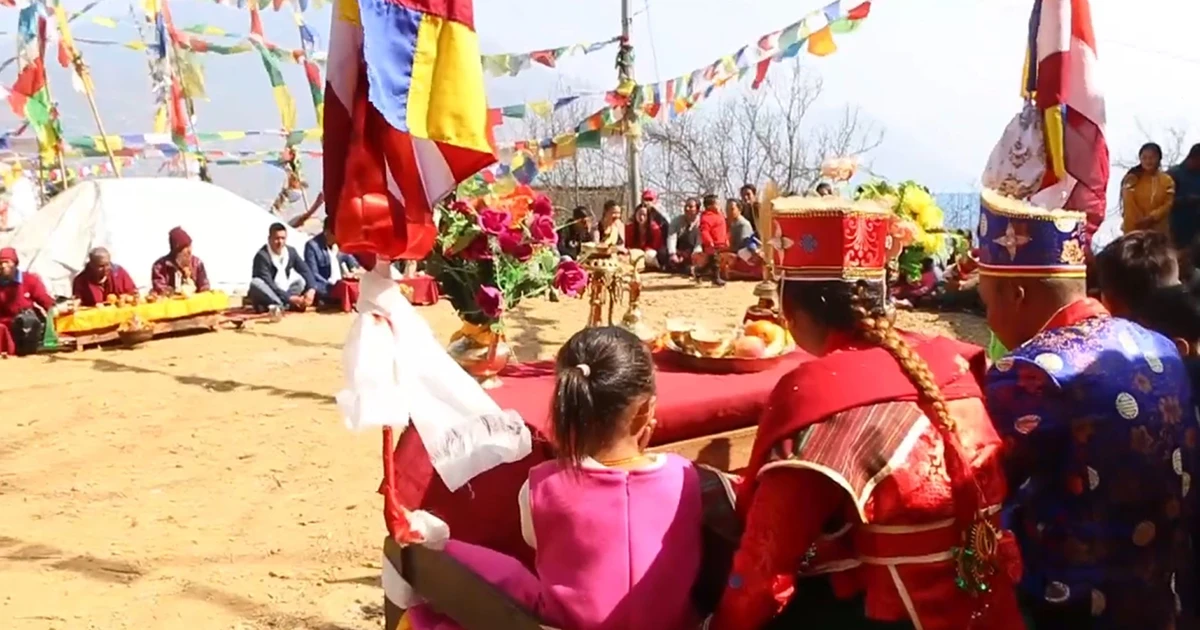
In these weddings, music and dance play a central role. Traditional instruments and folk songs are not just entertainment, they are part of the ritual itself. In some communities, the concept of a bride price exists, symbolizing respect and appreciation for the bride’s family.
Alcohol, especially locally brewed varieties, is often an important part of the celebration, shared among guests as a sign of unity and joy.
Sherpa and Tibetan Wedding Rituals
In Himalayan communities like the Sherpas, weddings are influenced by Tibetan Buddhist traditions.
These ceremonies are typically more understated but deeply spiritual. Monks or lamas may be involved, offering prayers and blessings. Astrology again plays a role in determining auspicious dates.
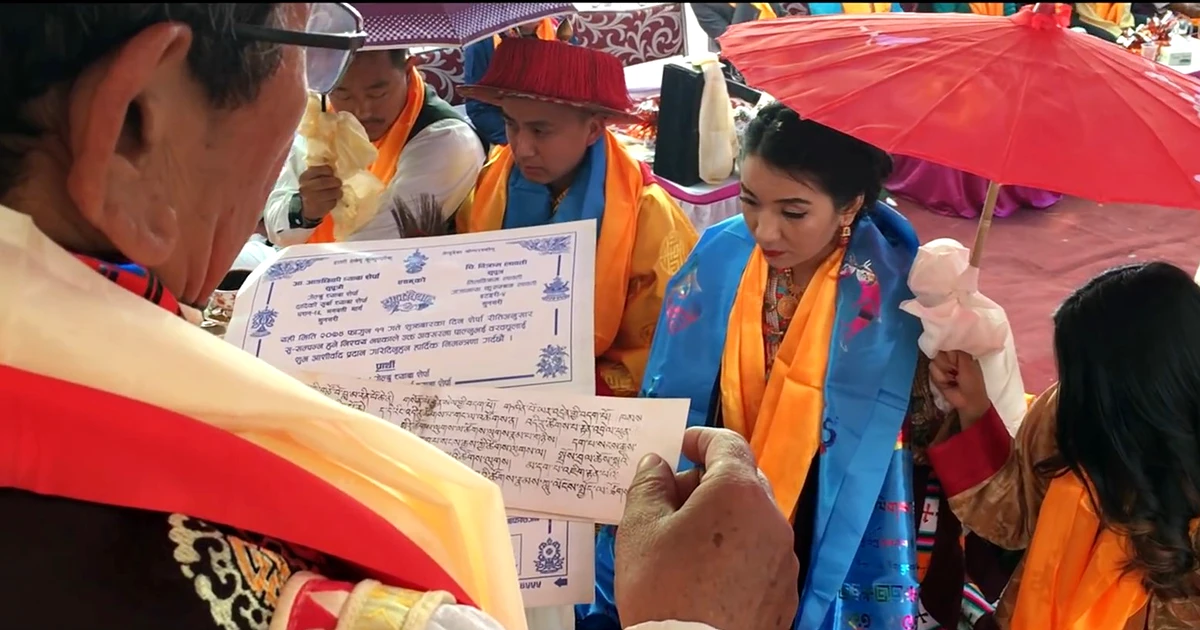
A key element is the exchange of “khata”, the ceremonial scarves symbolizing goodwill and respect. Rather than elaborate rituals around a fire, the focus is on blessings, harmony, and community participation. Celebrations often include communal feasts, dancing, and singing, reflecting the warmth and simplicity of mountain culture.
Marwadi Wedding Rituals
The Marwadi community in Nepal, originally from Rajasthan, brings a distinctly vibrant and opulent style to weddings.
These weddings are very grand, colorful, and meticulously planned with rituals and celebrations lasting over a week. Rituals closely follow traditional Hindu practices but with their own regional variations. Events like “sangeet” (musical evening) and “baraat” (groom’s procession) are lively and festive.
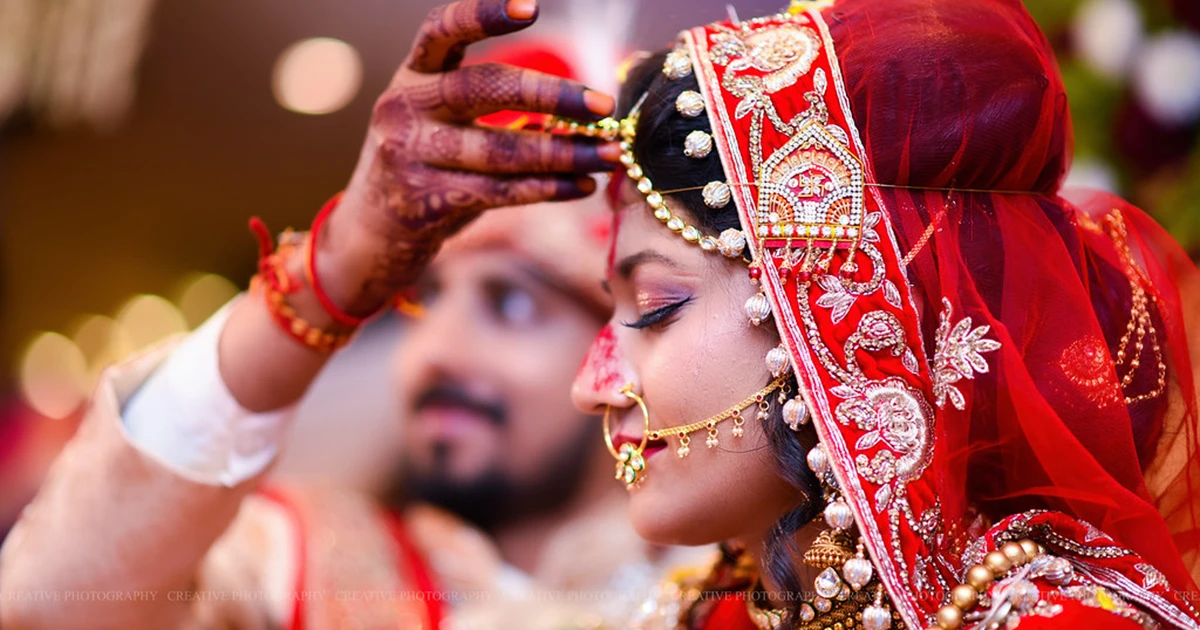
The bride’s attire is usually elaborate, often featuring rich fabrics and intricate jewelry. Ceremonies can extend over several days, with each event adding a different layer of celebration.
Marwadi weddings are known for their scale and attention to detail, blending tradition with a strong sense of festivity.
Tharu and Ethnic Wedding Rituals
In the Terai region, the Tharu community and other ethnic groups celebrate weddings in ways that are closely tied to nature and agricultural life.
Rituals often reflect the rhythms of rural living, with symbolic elements connected to the earth, harvest, and seasons. Traditional attire, music, and dances are integral parts of the ceremony.
These weddings can span multiple days, with entire villages participating. The sense of community is strong, guests are not just observers but active participants in the celebration.
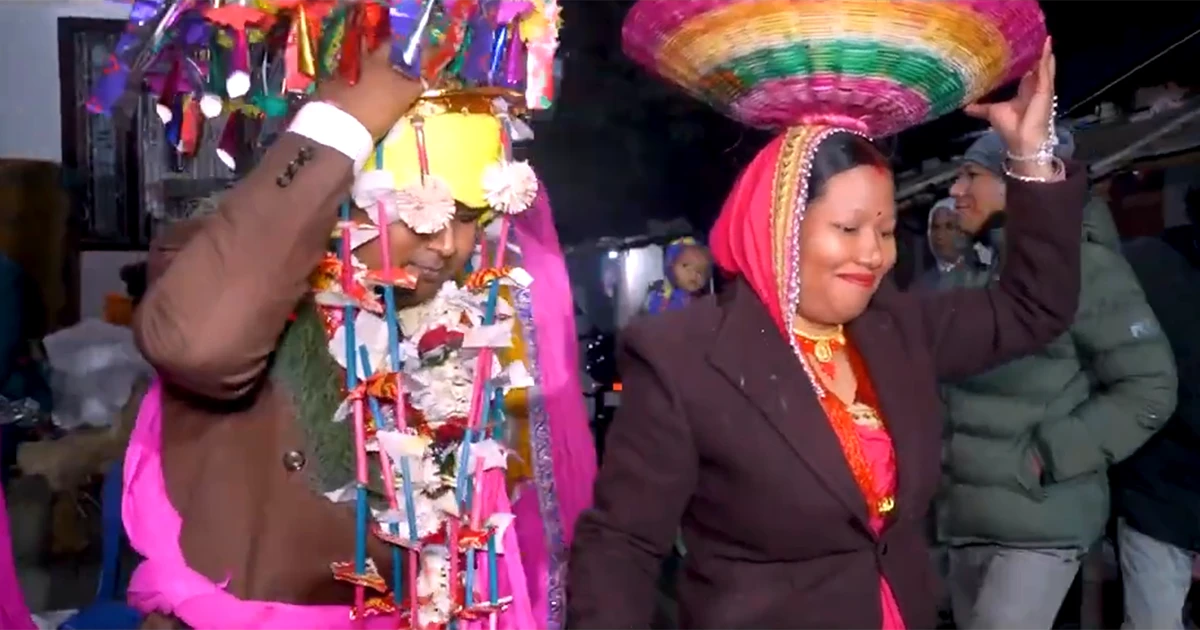
There is a simplicity and authenticity to these weddings that make them especially memorable.
Modern Influences on Nepali Weddings
Like many traditions around the world, Nepali weddings are evolving.
Urban couples are increasingly blending traditional rituals with modern elements. Destination weddings, professional photography, themed decorations, and even Western-style receptions are becoming more common.
At the same time, many families strive to preserve key rituals, ensuring that cultural identity is not lost. The result is often a fusion, where ancient customs meet contemporary lifestyles.
Social media has also played a role, influencing how weddings are planned and shared, but the essence of celebration and togetherness remains unchanged.
An Amalgam of Celebration and Tradition
A Nepali wedding is not defined by a single style or ritual, it is a tapestry woven from countless traditions, beliefs, and histories.
Whether it is the sacred fire of a Hindu ceremony, the symbolic marriages of Newar culture, the rhythmic dances of indigenous communities, or the quiet spirituality of Himalayan weddings, each tells its own story.
What ties them all together is the spirit of celebration. Weddings in Nepal are not just about two individuals, they are about families, communities, and generations coming together.
For a visitor, witnessing a Nepali wedding is more than just attending an event. It is stepping into a living tradition, where every ritual, every song, and every shared meal carries meaning.
And perhaps that is what makes Nepali marriage rituals so unforgettable, they are not just ceremonies, but expressions of life, culture, and connection.
FAQs
Expand AllWhat are Nepali marriage rituals?
Nepali marriage rituals are a series of traditional ceremonies that mark the union of two individuals and their families. These rituals often include religious practices, symbolic acts, and community celebrations, reflecting Nepal’s cultural and ethnic diversity.
Is there one standard Nepali wedding ceremony?
No, there isn’t a single standard ceremony. Wedding traditions in Nepal vary widely depending on ethnicity, religion, region, and family customs, so each wedding can look quite different.
How do Nepali wedding rituals vary by community?
Different communities follow distinct practices. Hindu weddings focus on sacred fire rituals and priest-led ceremonies, Newar weddings include unique pre-marriage rituals like Ihi, while Himalayan and indigenous groups emphasize community feasts, music, and ancestral traditions.
What happens at a traditional wedding in Nepal?
A traditional wedding typically includes the groom’s procession, rituals performed by a priest, symbolic acts like applying sindoor, and blessings from elders, followed by feasting and celebration.
How long does a Nepali wedding usually last?
Nepali weddings can last anywhere from a single day to several days, depending on the community and the number of rituals involved.
What are the main stages of a Nepali wedding ceremony?
Most weddings include pre-wedding rituals, the main ceremony, and post-wedding traditions such as the bride’s farewell and reception.
What happens before the wedding day in Nepal?
Before the wedding, families often hold engagement ceremonies, perform rituals like mehendi and haldi, and prepare through religious practices and family gatherings.
What happens during the wedding ceremony itself?
The main ceremony includes the groom’s arrival, ritual exchanges between families, priest-led ceremonies, and symbolic acts that formalize the marriage.
What happens after the wedding ceremony in Nepal?
After the ceremony, there is usually a farewell for the bride, followed by her arrival at the groom’s home and sometimes a reception or feast.
Why are Nepali weddings often multi-day events?
They involve multiple rituals that hold cultural and religious significance, along with social gatherings that bring extended families and communities together.
What does janti mean in a Nepali wedding?
Janti refers to the groom’s procession as he travels to the bride’s home with family and friends, often accompanied by music and dancing.
What is the role of the groom’s procession in Nepali weddings?
The procession symbolizes the groom formally coming to claim the bride and marks the beginning of the wedding ceremony.
What does swayambar mean in a Nepali wedding?
Traditionally, swayambar refers to a ceremony where a bride chooses her groom, though in modern contexts it is more symbolic or referenced culturally.
What is kanyadan in Nepali wedding traditions?
Kanyadan is a ritual where the bride’s parents formally give their daughter to the groom, symbolizing trust and the transfer of responsibility.
What does sindoor symbolise in many Nepali weddings?
Sindoor symbolizes marriage and the husband’s long life. It is applied by the groom to the bride’s hair parting during the ceremony.
What is potey and why is it important in some Nepali marriages?
A potey is a green bead necklace worn by married women, especially in Hindu communities, symbolizing marital status and prosperity.
What does dubo mala mean in a wedding context?
Dubo mala is a garland made from sacred grass, symbolizing longevity and blessings for the couple.
What is sagun in a Newar wedding?
Sagun is a ceremonial offering of auspicious food items like eggs, fish, and alcohol, given as blessings for prosperity and good fortune.
What is mukh herne in Nepali wedding traditions?
Mukh herne is a post-wedding ritual where the bride and groom formally see each other after certain ceremonies, often followed by blessings and gifts.
What is bidai in a Nepali wedding?
Bidai is the emotional farewell when the bride leaves her parental home to join her husband’s family.
Why do many Nepali brides wear red?
Red is considered an auspicious color symbolizing love, prosperity, and fertility in many Nepali cultures.
What music is traditionally played at Nepali weddings?
Traditional music varies by community but often includes folk songs, drums, and cultural instruments, along with modern music in urban weddings.
What food is commonly served at Nepali weddings?
Food varies widely but often includes rice, lentils, meat dishes, pickles, sweets, and regional specialties depending on the community.
Are all Nepali weddings Hindu?
No, Nepal is culturally diverse, and weddings may follow Hindu, Buddhist, Kirati, or other indigenous traditions.
What is the difference between a Hindu Nepali wedding and a Newar wedding?
Hindu weddings center around fire rituals and priest-led ceremonies, while Newar weddings include unique pre-marriage rituals like Ihi and emphasize different symbolic traditions.
What are Newari wedding rituals?
Newari weddings involve multiple stages, including symbolic marriages in childhood and elaborate cultural ceremonies later in life.
What is Bel Bibaha?
Bel Bibaha is a ritual where a Newar girl is symbolically married to a bel fruit, representing an eternal union.
What is Ihi in Newar culture?
Ihi is another name for Bel Bibaha, the symbolic marriage performed before adulthood.
Is Bel Bibaha the same as a regular marriage?
No, it is a symbolic ritual and does not replace the actual marriage that happens later in life.
Do all Nepali communities follow the same wedding customs?
No, customs vary significantly across Nepal’s many ethnic and cultural groups.
How are wedding dates chosen in Nepal?
Dates are often chosen based on astrology and consultation with priests to ensure auspicious timing.
What role does astrology play in Nepali weddings?
Astrology helps determine compatibility between the couple and selects the most favorable date and time for the ceremony.
What role do family members play in Nepali wedding rituals?
Families are deeply involved, organizing ceremonies, performing rituals, and supporting the couple throughout the process.
Are arranged marriages still common in Nepal?
Yes, arranged marriages are still practiced, especially in traditional families, although they are evolving.
Do love marriages happen in Nepal?
Yes, love marriages are increasingly common, particularly in urban areas.
What is the difference between a traditional and modern Nepali wedding?
Traditional weddings follow strict cultural rituals, while modern weddings may blend traditions with contemporary elements like receptions and themed events.
How are village weddings and city weddings in Nepal different?
Village weddings tend to be more traditional and community-focused, while city weddings often incorporate modern styles and conveniences.
Can foreigners attend a Nepali wedding?
Yes, foreigners are usually welcomed warmly if invited and can experience the culture firsthand.
What should a guest wear to a Nepali wedding?
Guests should wear modest and respectful attire, often traditional clothing if possible.
What gifts are appropriate for a Nepali wedding?
Common gifts include cash, household items, or symbolic presents, depending on the relationship with the couple.
What are some common etiquette rules for wedding guests in Nepal?
Guests should respect rituals, follow dress norms, and show courtesy to elders and hosts.
What should guests avoid doing at a Nepali wedding?
Avoid interrupting rituals, dressing inappropriately, or behaving disrespectfully during ceremonies.
Are non-Hindus allowed at every wedding ritual or temple visit?
Not always, some rituals or temple areas may have restrictions, so it’s best to follow guidance from hosts.
What are some common misconceptions about Nepali weddings?
A common misconception is that all weddings are the same or strictly religious, while in reality they are highly diverse and culturally rich.
Do all communities in Nepal use sindoor in marriage rituals?
No, sindoor is mainly used in Hindu weddings and is not part of all cultural traditions.
What is the legal age of marriage in Nepal?
The legal age of marriage in Nepal is 20 years for both men and women.
Why is it important to separate adult wedding traditions from child marriage issues?
Traditional rituals should not be confused with illegal practices. Modern laws strictly prohibit child marriage, and cultural traditions are increasingly aligned with legal and ethical standards.
How expensive is a traditional wedding in Nepal?
Costs vary widely, from simple community ceremonies to large, elaborate events depending on family resources and preferences.
What makes Nepali wedding traditions unique?
Their diversity, symbolism, and strong sense of community make Nepali weddings truly unique, blending spirituality, culture, and celebration in a deeply meaningful way.
Related blog posts
Discover a choice of tourist destinations loved by most of our visitors. Whether you're on a jungle safari to spot rare animals or walking through a world heritage site, these well-planned itineraries cover the major highlights of Nepal.

 call an expert at: