
Mount Kailash in Puranas, Hindu Vedas, and Religious Inscriptions
 Amrit K. Aryal
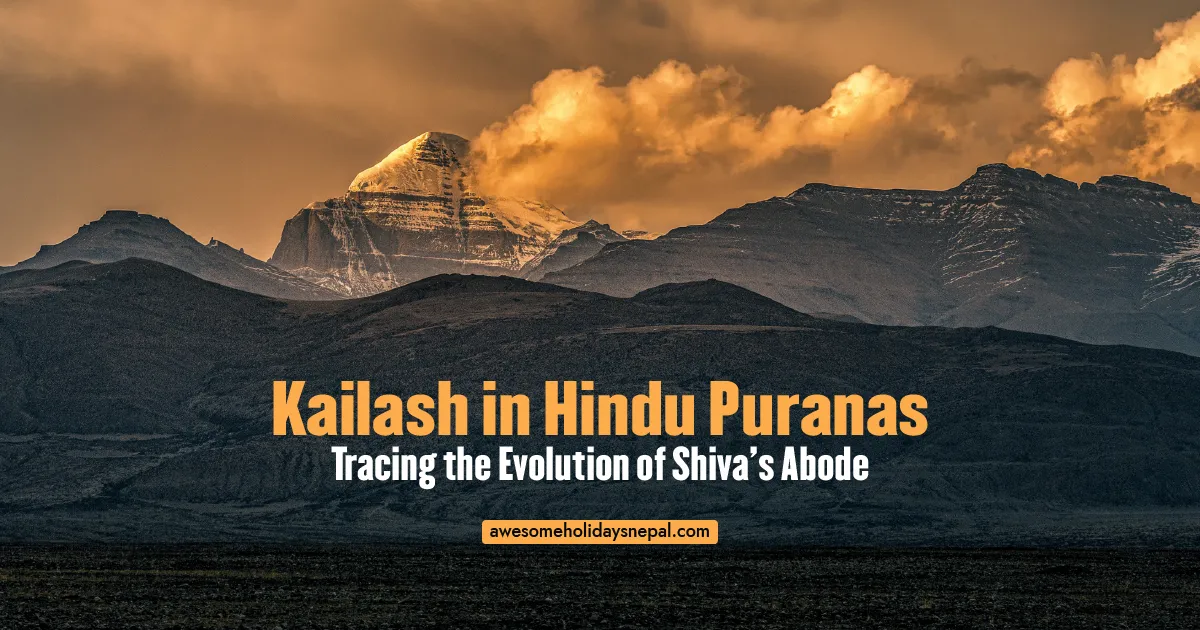
There is no single, clean list of every mention of Mount Kailash in texts. The references are scattered, sometimes unclear, symbolic, and the mentions vary due to language and script constraints. In this blog, I will explore to find out how that happened. How has the description of Mount Kailash in Puranas, Vedas, epics, and later inscriptions?
This blog will slowly take us to the idea of Shiva’s abode, Mount Kailash, and figure out who Lord Shiva is. The mentions are not limited to a book, or an epic, but a layer of different inscriptions, Vedas, Upanishads, and Puranas. All this knowledge took centuries of whispers to pass upon us, Centuries whispering into each other.

Mount Kailash in the Rigveda?
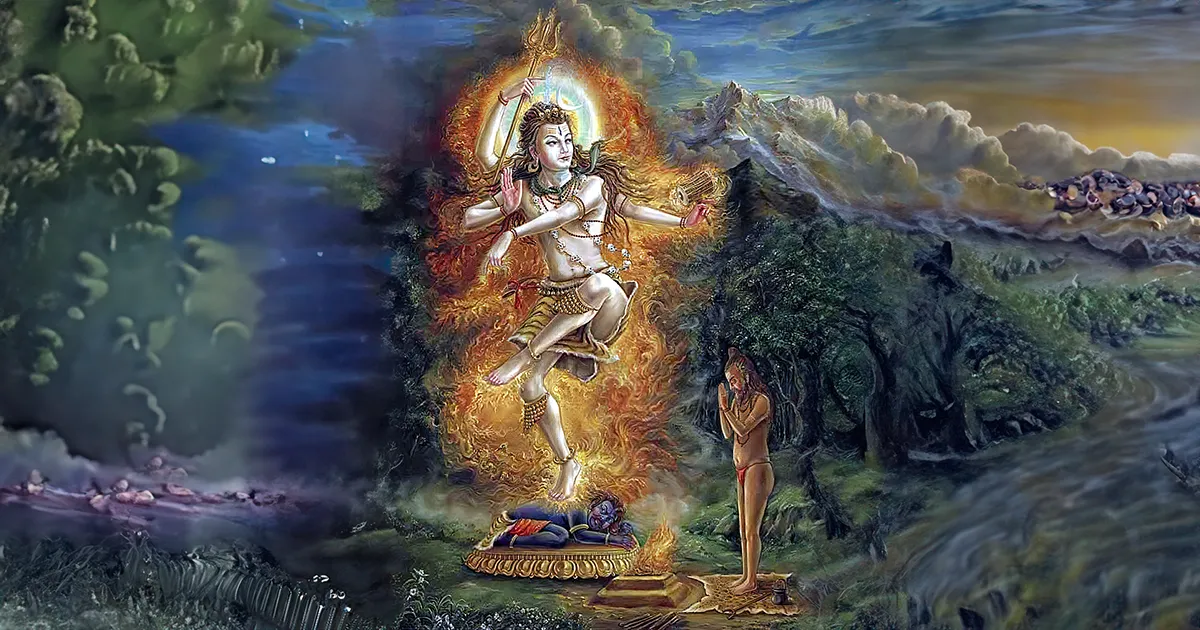
Among the oldest books in Hinduism, the Rigveda is the oldest one. It is one of the four major Vedas, written and the most ancient. The Rigveda describes the Vedic era, where there is a mention of Rudra, the god of medicine and fear. Rudra is described as the wild, fierce, storm-colored healer with a thousand herbs and has been referred to as the god of mountains and forests.
Is Rudra the Shiva?
Later, when sages and saints started praying for Rudra, they called him Shiva, so that they could calm down the forcefulness of Rudra.
What about Kailash?
There is no direct mention of Mount Kailash in the Rigveda, but there are some hints. It says Rudra roams lonely in the highlands, and winds surround him. The Rigveda describes that he is mostly found in the remote terrain. This could be a hint that his shadows are a part of the mythology of Mount Kailash in Puranas. This idea is the small beginning point of the evolution of Mount Kailash in Hindu texts.
Mount Kailash in Mahabharata: Kailash enters the map
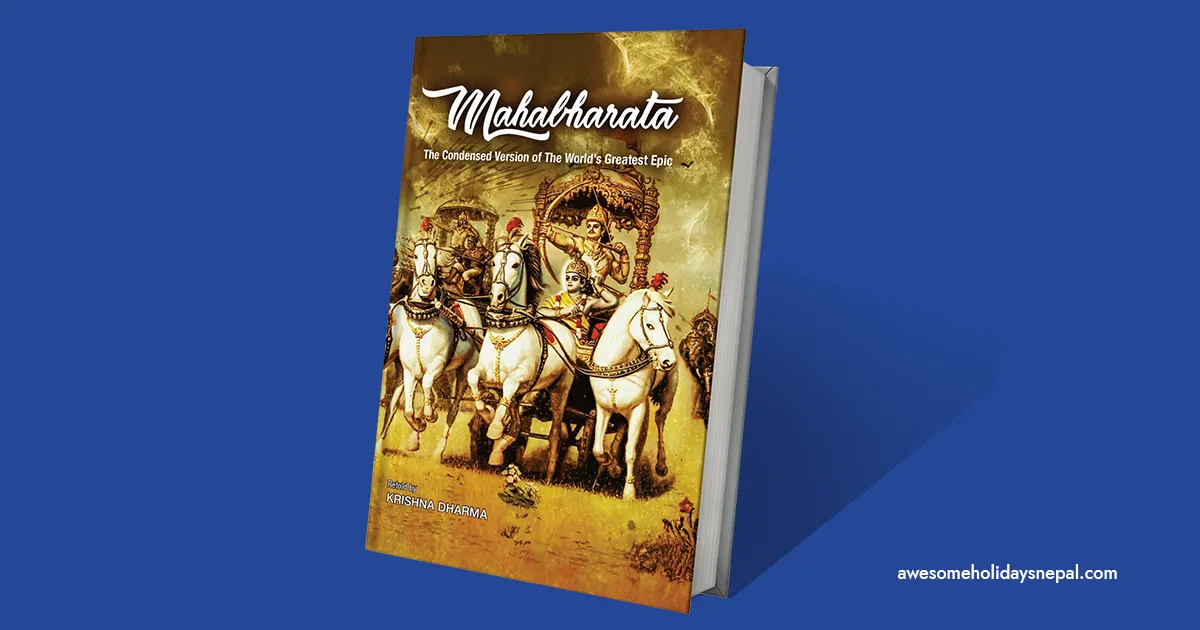
Mahabharata, the longest epic of the Hindus, has clearly used the word Shiva. His appearance is frequent in the epic. Arjun had a battle over prey with lord Shiva, disguised as Shiva. During their hidden trip for 13 years, the Pandavas often wandered the regions near Kailash Parvat. Arjuna did his deep meditation, “Tapasya,” in the Himalayan wilderness. Mount Meru has been described as a cosmic mountain, often referred to as Mount Kailash Parvat.
Mount Kailash Parvat in Ramayana
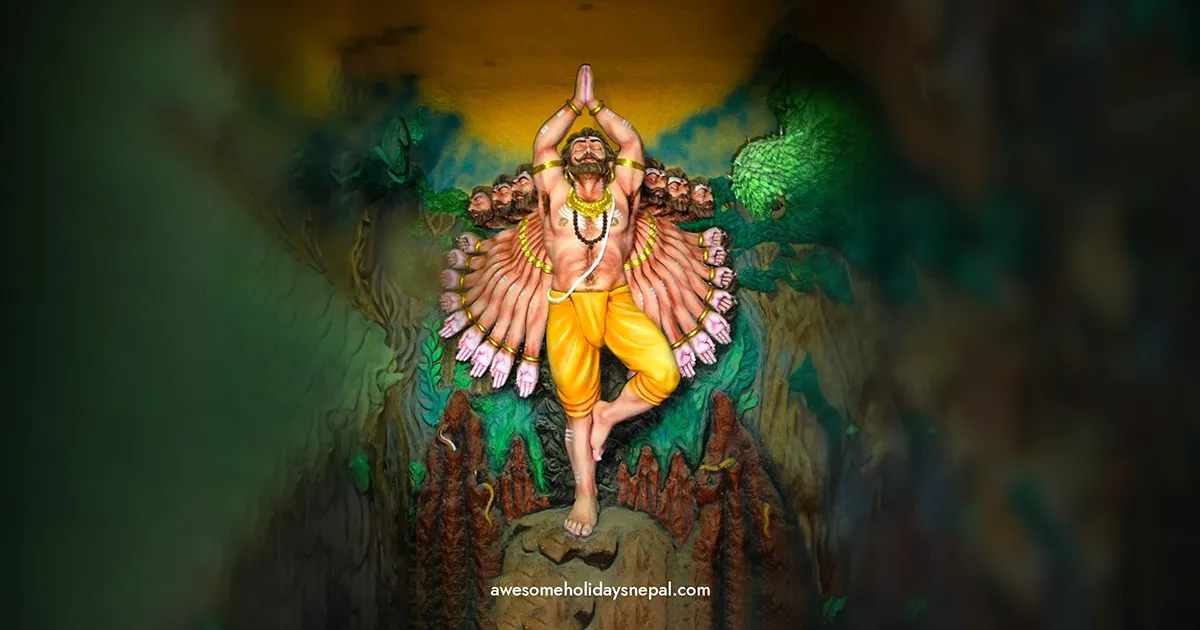
Lankesh Ravan, the king of Lanka, did his meditation on one of the islands in Lake Rakshastal. The myth says that Dashanan tried to lift Mount Kailash, challenging Lord Shiva. Unperturbed, Shiva pressed it down, trapping his toe. Ravana, in much pain, roared so loud that Shiva called him Ravan, one who could roar. This story is common in the Ramayan and many Puranas.
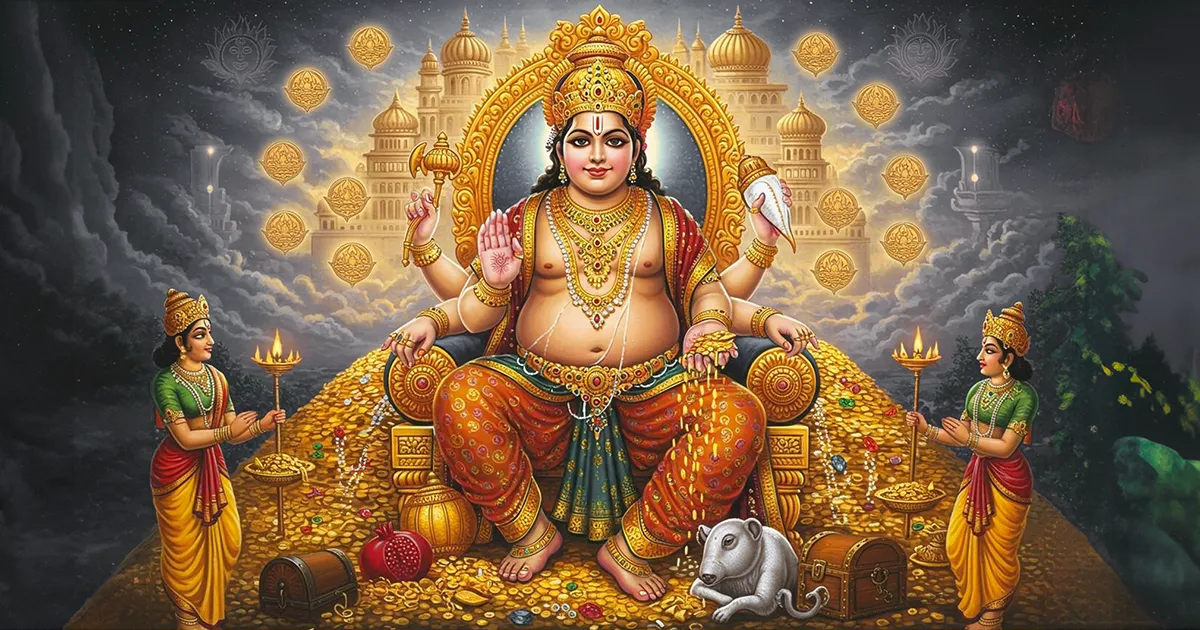
In the Ramayana, Sugreev also mentions a mansion of Kuber built on Mount Kailash. This beautiful palace is designed by the greatest architect, Vishwakarma. He gives directions to a tunnel in Mount Krauncha, chiseled by Skanda. Kuber directs the monkey army to move ahead through the three mountains in the Kailash region. From Kailash to Krauncha, there are other mountain peaks, namely Mount Kaama and Mount Maanasa.
The Birth of Shiva’s Kailash
Where does the idea of Mount Kailash in Puranas come from?” This question is the heart of all your answers.
Kailash Parvat in Skanda Purana
Among all sources that describe Kailash, the Skanda Purana – Manasa Khanda is the one with the richest description of Kailash Parvat. The Manasa Khanda of Skanda Purana describes Mount Kailash as the supreme mountain, which was created from the divine mind of Brahma. He said, Let there be a mountain, and there was Kailash. As found on a source, the Skanda Purana describes the Himalaya as, There are no other mountains like Himachal, because it has Mount Kailas and Lake Mansarovar.
Skanda Purana describes the cleansing and purification of sins on making a pilgrimage in this region. Spirits, and souls of dead people, Siddhas, and Yakshas also roam in the region in search of salvation and liberalization. These tales create the foundation of the Kailash Mansarovar mythology.
Kailash in Shiva Purana
The Shiva Purana has kept a straightforward idea of Mount Kailash. It is mentioned that Kailash Parvat is the eternal abode of Lord Mahadev, who resides there with his wife and two children.
He holds a gang of some divine attendants known for their fierce and untamed nature. This gang comprises spirits, ghosts, demons, skeletons, and 64 Bhairava and 64 Yoginis. Lord Ganesh is depicted as the team leader, often called Ganapati. At this point, Mount Kailash in Puranas becomes the anchor of Hindu geography.
What is the role of Shiva Ganas?
The Ganas are the guardians of Kailash. They are the vigilant protectors of Shiva’s sacred palace, ensuring the sanctity of his Divine space. They are the cosmic Warriors in battles such as the destruction of Dakshya’s yagna. They also synchronize with the dance of Shiva Tandava to match Shiva’s unparalleled wrath, reflecting the Eternal rhythm of creation and destruction.
Kailash in Bhagavata Purana
This one is more poetic. The Bhagavata Purana has the most artistic and poetic portrait of Shiva’s abode, Mount Kailash. It says that Lord Shiva sits under a giant banyan tree. Two divine rivers are flowing, namely Nanda and Alakananda. Shiva is surrounded by Kinnaras, Siddhas, and Gandharvas singing and dancing. In the center, Shiva is sitting peacefully, smeared in ash. He calls himself Bhuteshwor. This is where the Difference between Physical and Spiritual Kailash becomes obvious.
Kailash in Padma Purana
The Beauty of Mount Kailasa is also described in Chapter 11, Uttara Khanda of the Padma Purana. King Jalandhar, the demon, born out of the Ashes of Shiva after visiting Kailash, has described Kailash. He proceeds to Kailash with his army of sixty thousand Mahapadma soldiers. This happened when Shiva had left the main peak of Kailash to Lake Mansarovar, with Parvati, Kartikeya, Ganesha and his attendants for a vacation
There, Jalandhara felt the breezes mixed with the fragments of the divine filaments and the pollen of Mandakini (a type of hibiscus flower).
Jalandhar, on seeing the footprints of heavenly apsara and siddha women, felt their feet like the bright, shining, beautiful Ashoka flowers and felt a strong sense of arousal and temptation. The beauty of Kailasa and the women around him hit him hard, emotionally and sensually. He found Shiva’s ganas everywhere, busy singing, playing, and enjoying the beauty of Kailasa. Jalandhar felt Kailash Parvat full of romance, music, and divine intimacy.
Mount Kailash as Axis Mundi
Across Mount Kailash in Puranas (There are traditionally 18 major Puranas and 18 minor Puranas) in Hindu mythology, there are references to Kailash as Meru Parvat, which has been referred to as the cosmic mountain. Meru Parvat, being the center of the universe, remains as the Axis Mundi. This balances the position and rotation of Earth in the solar system. This cosmic identity increases the significance of Kailash in Hinduism dramatically.

Difference between Physical and Spiritual Kailash
Mount Kalash, as described in mythological talks and the Kailash now in Tibet of China, is it the same spiritual giant? Mount Kailash is a 6,638-meter-tall mountain no one has ever climbed. It lies a few miles away from the twin lakes, Mansarovar and Rakshastal. The mountain is the source of the four major rivers in Asia, namely the Sutlej, the Brahmaputra, the Karnali and the Indus.
Every year, thousands of pilgrims visit Mount Kailash to perform the Kailash Parikrama. Not only Hindus, but this is also a sacred place for Jains, Buddhists, and Bon followers.
Mount Kailash in Puranas, described as a Spiritual Kailash
Kailash Parvat, as exists in the highest loka (realm), is the home of Lord Shiva, where he resides eternally, with his ganas of Siddhas, Yakshas, Kinnaras, Bhut, Pishachi, Bharivas. This is the root of how devotees see the mountain today and express their devotion.
Kailash Kora and Lord Shiva
Mount Kailash, as we make our trip for kora, we often ask about its history and link with lord Shiva. Diving into the history and centuries-old religious texts gives me a weird chill in my spine.
Finding the abode of Lord Shiva in Kailash during the Mount Kailash Mansarovar Kailash kora may be a dream for all Kailashis. The peak is not so high, but the spiritual feeling of it linked with lord shiva is just awesome.
FAQs
Expand AllWhere is Lord Shiva’s abode mentioned in the Puranas?
Shiva’s home appears in old piles of texts, mostly in the Shiva Purana, Ramayana, Mahabharata, the Skanda Purana, and the Vishnu Purana, where Kailash is quietly noted as the peaceful abode of Lord Shiva.
Is Mount Kailash mentioned in the Vedas?
The name Kailash does not show up straight in the Vedas. There are hints of it as a northern shining mountain, a holy peak loved by Rudra.
Why is Mount Kailash considered the abode of Shiva
As per the Rig Veda, Rudra sits calmly on the peak of Mount Kailash. People often talk about the calmness and silence of the mountain and relate it to Lord Shiva.
Which Purana describes Kailash Mansarovar in detail
Mount Kailash and Mansarovar are more described in the Skanda Purana. Chapter after chapter, it describes how the lake was born from the mind of Brahma, how the mountain shines, and how the gods come and go, how Shiva rules this area.
How did Kailash become Shiva’s permanent abode?
Tales explain how Shiva roams around the world and how he chose this lonely mountain. Stories tell how he chose it after roaming many worlds. This place was also liked by Parvati and Sati. This sacred place became their home and stayed there forever.
Is Mount Kailash the same as Meru Parvat
In many stories, Mount Kailash is mentioned as Mount Meru as the cosmic pillar.
Why has no one climbed Mount Kailash?
Local people believe that the mountain does not let anyone climb on it. Some people even tried, but there were storms, and they felt some strange force stopping them from climbing.
When did Shiva start living on Kailash according to scriptures
Early scriptures, the Vedas and the Puranas mention that Shiva lived there from the earliest yuga of the creation of the world. There are no specific historical dates, but it is said it be long before humans existed on Earth.
How is Kailash described in the Mahabharata?
The Mahabharata has described a bright, snowy peak near the Gandhamadana region. Pandavas walked there in search of Shiva. Legends say.
What is the connection between Ravana and Mount Kailash
Ravana did his meditation near Mount Kailash, and he even tried to lift Mount Kailash to impress Shiva. But, Shiva pressed it with his toe, trapping Ravan’s finger. He cried in pain and sang the Shiva Tandava Stotram.
Is Lake Mansarovar created by Brahma or Gauri?
There are two sides to the story. Some say that Brahma imagined it first, while others say that Gauri purified the waters.
Why is Kailash called the navel of the universe
Mount Kaialsh till date is described as the central axis of the world. This point keeps the balance in the movement of the Earth around the sun.
Which gods tried to disturb Shiva on Kailash?
Legends say that Kamadeva once tried to break Shiva’s meditation after the death of Sati, but he was burnt by Shiva.
How many times is Kailash mentioned in Ramayana
Ramayana mentions Mount Kailash a few times when describing the northern regions and journeys of sages.
Is Kailash Parvat older than Himalayas according to Puranas
Not sure about the Puranas, but geologists have strong proof to suggest Mount Kailash was older than the Himalayas.
What is the story of Kubera and Mount Kailash
Kubera’s palace, Alaka, was somewhere nearby Mount Kaialsh. He was also a devotee of Lord Shiva. So, Shiva blessed him with wealth and guardianship of treasures.
Is Mount Kailash staircase to heaven Swarga
Some texts mentioned that the gods and devas walk around Kailash on the way to higher realms. So, this could be a hint that Kaialsh is boarding the stairs to heaven.
Related blog posts
Discover a choice of tourist destinations loved by most of our visitors. Whether you're on a jungle safari to spot rare animals or walking through a world heritage site, these well-planned itineraries cover the major highlights of Nepal.

 call an expert at: