
Monasteries Around Mount Kailash: Not to miss during the Kailash Kora

 Amrit K. Aryal
Some journeys are worth remembering. Sometimes they are planned, and sometimes they just happen. Journey to Kailash Kora is a spiritual journey, to circumambulate Kailash and witness the five Monasteries Around Mount Kailash. The Kailash kora is not just a trek but a much deeper spiritual opening of the inner you.
There are five Monasteries Around Mount Kailash. Yes, I counted when I did the Kailash Kora. I mean, there are many, but the most significant one. Some are hidden in the shadow of the mountain folds of Mount Kaialsh and nearby rocks.
The three monasteries in the outer kora are open for visitors, but the two in the inner kora are closed for the moment due to security reasons. These monasteries are not only a heritage for Tibetan Buddhism but also a break for pilgrims during the days Kailash Kora. But this is your schedule.
The mountains will slow you down and provide you with less oxygen to breathe. Are you ready to face challenges and complete the kora? These monasteries will give you a spot to meditate and energize to complete the kora. Here, let’s learn about the five Monasteries Around Mount Kailash.
Monasteries Around Mount Kailash
These five Monasteries Around Mount Kailash, everyone talks about it.
- Choku Monastery
- Drirapuk Monastery
- Zuthulphuk Monastery
- Selung Monastery
- Gyangzha Monastery
Choku Monastery: The First Monastery to Visit during the Kailash Trek
Choku Monastery, the first monastery around Mount Kailash, you will visit during your Kailash Kora. The trek starts from Darchen. And just 8 km away, there lies the Chuku Monastery.
Besides the plain land, on the cliff above the Lha Chu River, there is the first stop for Chuku Monastery. You might feel the thin air, under the shadow of Kailash, and the vast sky above, make you feel a bit excited. Situated at a height of 4,875 meters, the locals call it Nyari Monastery with a softer slanting trail, good for stretching your legs, a warm-up for the rest of your trek to Dolma La Pass or Zhumala Pass.
It was built in the 13th century by the Drigungpa sect and named after the monk Choku Rinpoche. One can feel the smell of butter lamps and aged stones. Three things to observe here: the Choku statue, the conch shell, and the teapot. It is also said that these sacred things were tried to be stolen during the 17th century. Some also believe that magical power stopped the invading soldiers from looting the artifacts.
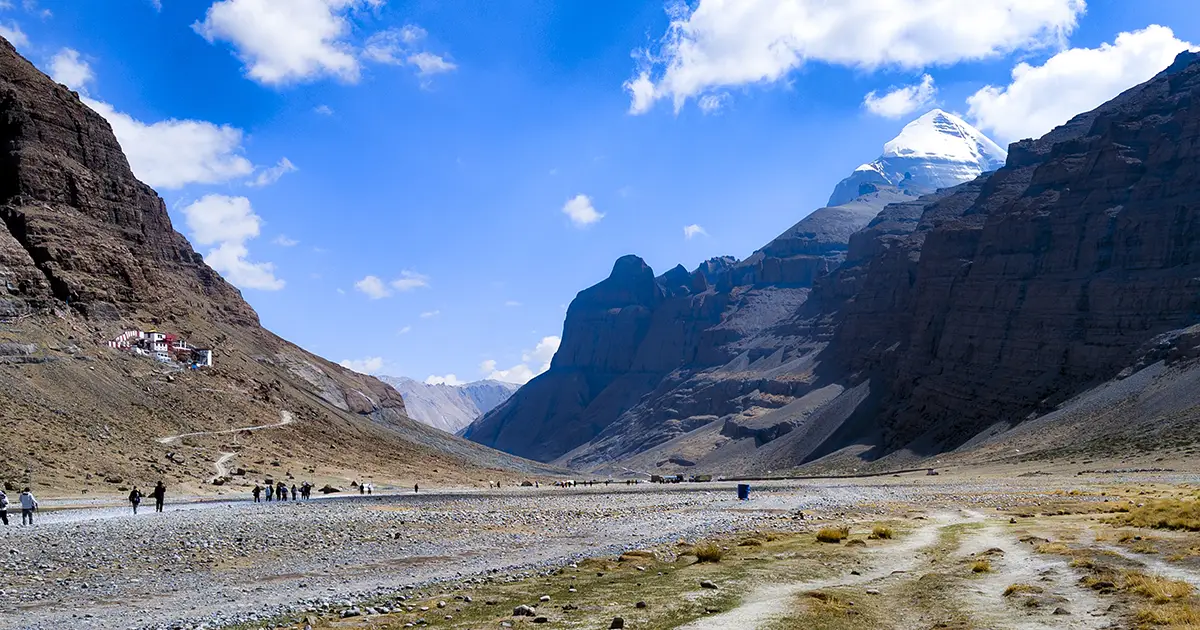
The light statue of the monk became unconditional heavy like a mountain during their misdeed. Also, when they tried to boil water, it became red like blood. Ya, it’s hard to believe, but once you are in the monastery, you can feel the energy of the holy place. It does not cost any entry fee, you can just enter, pray, and get some rest.
Drirapuk Monastery: The First Lodge Point of Kailash Trek
By the time you reach Drirapuk, you’re tired. Your first night is to be spent here. Drirapuk Monastery lies at an altitude of 5,210m above sea level. The high altitude starts to make you weaker due to the thin air and the long walk. Your breath is faster, your legs are crying, and even the soft sound of air seems louder.
Locals call it Drirapuk, meaning the cave of the female yak horn how it got its name. It is said that there were marks of horns on the walls of the cave, but you may not find it now. The original structure of the monastery is not found, as it was reconstructed after 1986. The architecture now is simple yet full of whispers.
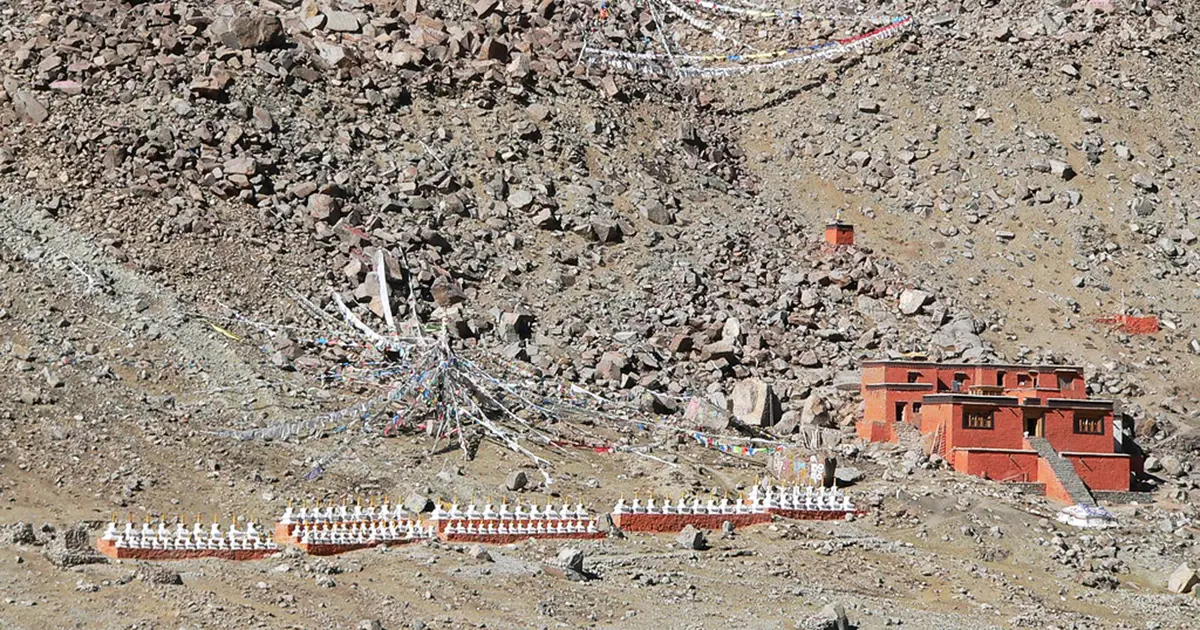
After walking 12 km from Choku Monastery, the trail takes you through the river, a narrow canyon, flat land, and some slopes, burning your calories. And when you are exhausted, there lies the Drirapuk, an oasis in the desert. The guesthouse, near the monastery made up of stones, provides you with simple, basic food such as noodles and soup.
One can view the north face of Mount Kailash from here. The sharp edges, the perfect shot, and the closest view of the stars, not available anywhere. You can feel the presence of God in the mountain, resting on the peak now. Nothing stops you from entering there, no fees, no gates. Just walk there, with a butter lamp, calm face, and peaceful mind.
Zutulpuk Monastery: The Last Lodge Point of Kailash Trek
Zutulpuk or Dzultripuk, the dialects differ. Call it whatever you find comfortable. The Zutulpuk stands there at an altitude of about 4,790 m. About 11.3 kilometers away from Darchen is the last spot where you spend a night during the kora. There lies the Zutulpuk monastery, the last of the Kailash Outer Kora Monasteries.
Rest at Zutulpuk prepares you to cross Drolma La Pass, the highest point during the Kailash Kora, at a height of 5,700 m. The trek from Drirapuk to Zutulpuk is somewhere around 24 kilometers, but feels like an eternity. The monastery of Zutulpuk was first built in the 13th century and again reconstructed in 1983. The old murals, mani wheels, Thangks, and the prayer flags in the monastery make the place more spiritually perfect for meditation.
You can hear a lot of stories related to Milarepa, a tantric Buddhist monk. His tales are popular in the land of the Himalayas and Tibet. There are handprints and footsteps of Milarepa in the Milarepa meditation caves. People are found touching the rocks and expressing sentiments, and sometimes being too emotional.
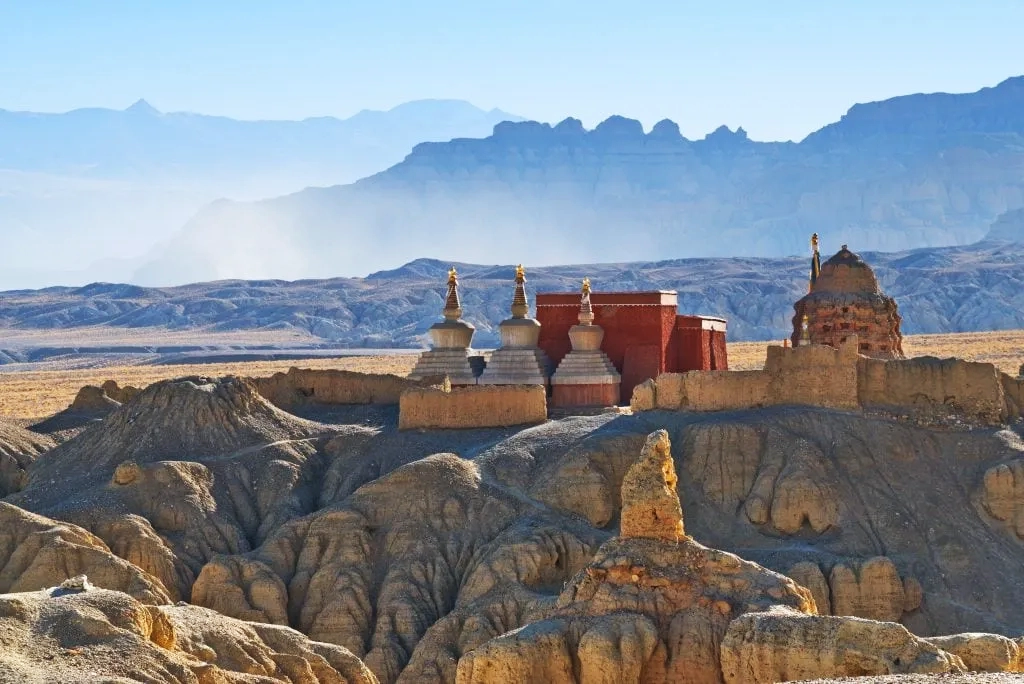
There is a big iconic rock on the way, which is said to have been placed by Milarepa. Listening to the legends will help you pass the ascent of the Dolma La pass. The hotels are accommodation here is better than in Drirapuk. The warm blankets, cozy beds, and tiredness throughout the day make you sleep earlier.
Surviving the last night around the Mount Kailash Kora Monasteries route feels holy because your feet survived. The Monasteries Around Mount Kailash are not just a place to worship but a spot to rest your head. As in previous monasteries, there is no big entrance fee and no queue. only the wind and a few lamas and travelers with tired smiles.
Planning Kailash Mansarovar Yatra in 2026?
Selung Monastery: the First Monastery on Inner Kora
Selung ( Se Lung) stands at a height of 5,000 meters, is the first of the Inner Kora Mount Kailash Sacred Sites, the start of that hidden path pilgrims whisper about.
Some say the Selung monastery is older than 7 centuries or maybe more. Since then, the monastery is used as a meditation hub by monks. The monastery is so simple without big halls, no fancy walls or golden roofs. Many of the wall stones are worn out and replaced, holding the prayer flags and the belief.
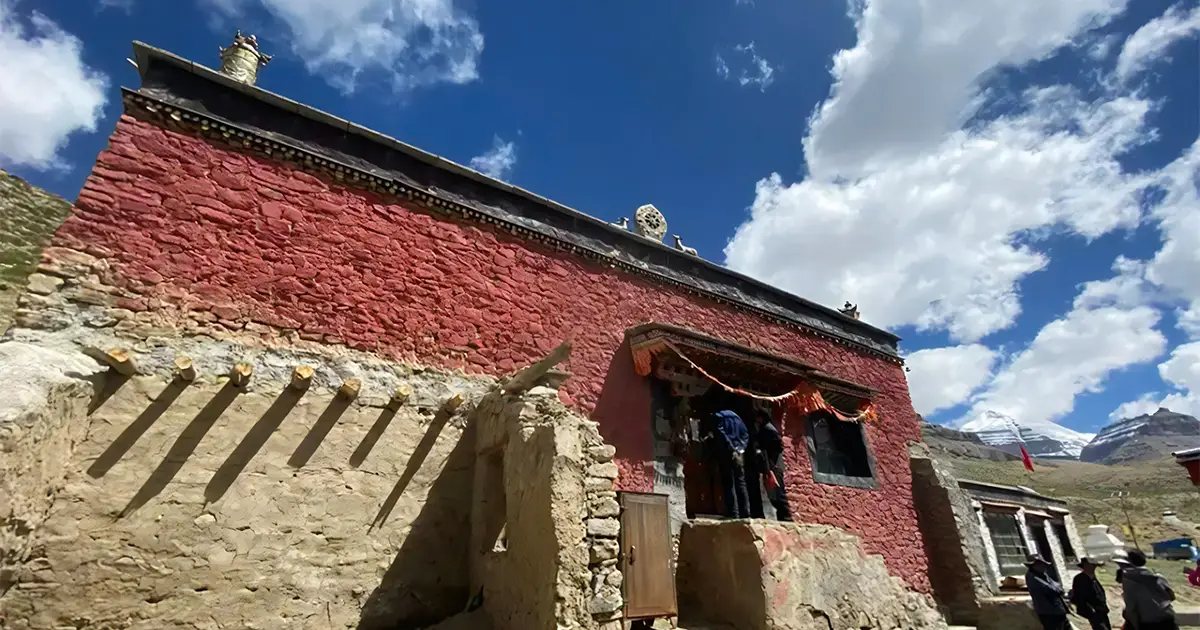
Walking west of Mt. Yinjietuo from Selung monastery, toward the base of the holy mount Kailash, you might catch a natural swastika like sight, only made by ice cracks. Just a few steps and you see the 13 Golden Chortens. Inside, there are the relics and ashes of Gyangdrak’s old rulers.
Selung Monastery, though not grand like the other Buddhist Monasteries in Tibet, carries another kind of weight. a quiet one. Since the inner Kora is closed now, most of the Tibet Kailash Mansarovar Monastery Tour groups don’t include it.
Gyangzha Monastery: The Largest and Oldest Monastery in Kailash Kora
Gyangzha Monastery is the largest of all the Monasteries Around Mount Kailash. The records also claim that this is the oldest too. At an elevation of 5,300 m from te sea level, it was made in the 13th century.
The monastery belongs to the Drigung Kagyu sect of Tibetan Buddhism, one of the lineages that echoes through the Buddhist Monasteries in the Tibetan region. This is also called the red robe monastery, as the monks used to fill it in red robes once.
One must go down from Mt. Yinietuo’s east face, back toward Selung, turning east again to reach the Gyangzha monastery. Climbing above 5000 m again, uff…. Your head goes heavy, your legs reject, and your lungs never fill.
But as you see the Gyangzha monastery, it’s just a wow. The murals with the stories, old statues, relics, and old scriptures tied in cloth are worth the visit.
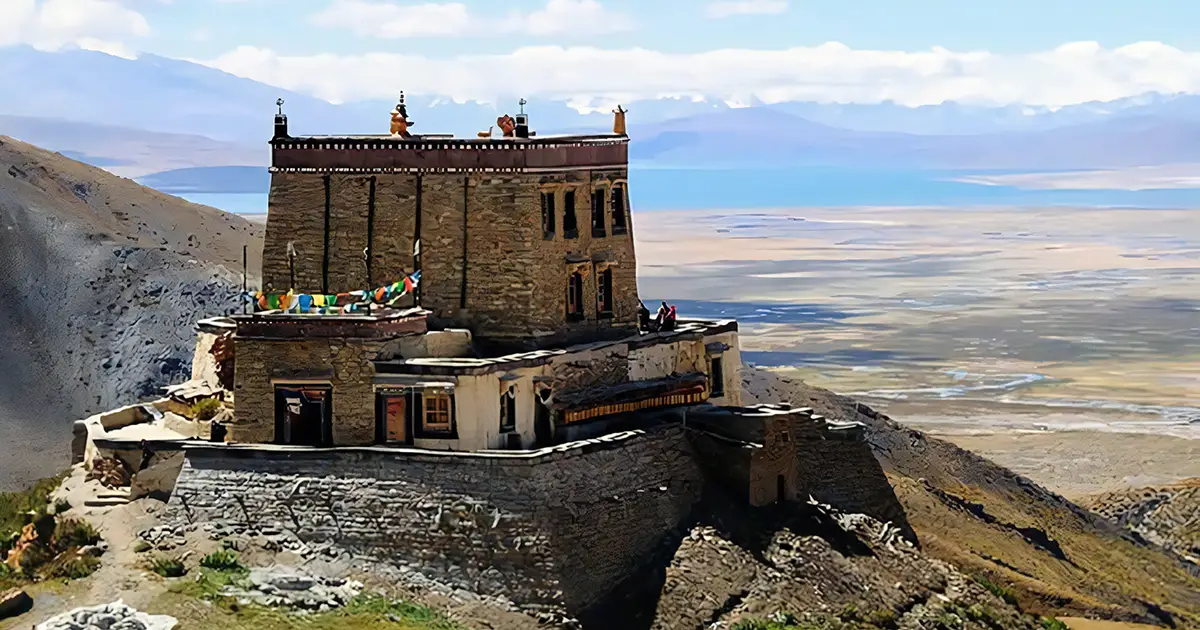
Walls thick with stories, faded murals, chipped but still breathing color. Some old statues still smile, like they know more than you ever will, relics too — old scriptures tied in cloth, worn thin by time and fingers of believers. Locals believe this was made solely for meditation and to continue the practices.
Made from a mix of stone and wood, with sharp corners, small windows, the place feels both ancient and alive, unique in its own way.
Travel Notice:
The inner kora of Mount Kailash is closed to tourists for now. No visitors can have access to Gyangzha Monastery, and Selung Monastery is restricted.
Best Time for Kailash Kora
Completing the kora around the holy Mount Kailash takes you above 5,000 meters, which is a critical height for many pilgrims. So, trekking in the winter is not a question. The roads will be filled with snow like the thickest wool of sheep. Hence, the best season is May to September. The sky is open, the sun is warm, the view is clear, and not very cold at night.
From April to mid-October, though, it’s something else. The sky opens up blue, the sun is warm in the day, and it is chilly at night. That’s the window when the pilgrims start to move, circling the Sacred Sites of Mount Kailash, step by step. At the best time, you will witness the beauty and spirit of the Buddhist Monasteries in Tibet Kailash, from Chuku to Drirapuk, shining like quiet fires in the wind.
A Journey of Faith
Mount Kailash is not just a pile of snow; it’s like a circle of faith wrapped in silence. Every step you walk in Kailash Kora breaks you physically, then mends you emotionally and psychologically.
The Monasteries Around Mount Kailash are not just old stones or faded walls, they are the keepers of whispers, prayers, and hopes left centuries ago.
The cold bites, the wind hurts, but the stillness of Mount Kailash heals. Just walk humbly at a slower pace, leave no trace but your footprints. You will remember this journey, though the mountain won’t.
Contact us to know about the Kailash Mansarovar Yatra Package.
Har Har Mahadev!
FAQs
Expand AllWhat are the most important monasteries to visit in Mount Kailash?
Among all, there are five major monasteries to visit in Mount Kailash, namely Choku Monastery, Drirapuk, Zutulpuk, Selung, and Gyangzha Monastery.
How many monasteries are there around Mount Kailash?
There are five monasteries to visit in Mount Kailash, which are in record. But there are more hidden in the hills and behind the rocks. Also, there are smaller Chhortens and gompas around the kora trail.
What is the significance of Chiu Monastery in Lake Manasarovar?
Chiu Monastery, which lies near Lake Manasarovar, does not lie in the kora path. Legend says Guru Rinpoche meditated there with an amazing view of Lake Manasarovar.
Can I visit all monasteries around Mount Kailash in one day?
No way. Completing the inner Kailash Kora takes three days, which only has three monasteries. The remaining two monasteries lie in the inner kora, which is now restricted to visit by the Chinese Government.
What is the best time to visit monasteries around Mount Kailash?
May to September(April to October) are the most preferred months for Kailash Kora.
Are there any hidden monasteries on the Inner Kora of Mount Kailash?
Some of the hidden monasteries are called the “ghost monasteries.” Most talk about Selung and Gyangzha, but there are more hidden meditation caves, rock shrines in the inner kora of Kailash.
How to reach Darchen Monastery from Lake Manasarovar?
You start from Lake Manasarovar, head north about 30–35 km to Darchen, the base camp. From there, you enter the Tibet Kailash Mansarovar Monastery Tour route. The roads are dusty, bumpy, but open mostly in summer.
What are the rituals performed at Tashi Dor Monastery?
Tashi Dor Monastery near Manasarovar is a small, quiet place. Local people light butter lamps, spin prayer wheels, and offer khadas (white shawls). Some even release small birds for peace and the liberalization of the souls of dead people.
Is it safe to visit monasteries around Mount Kailash solo?
It is safer, but health issues like altitude sickness, sudden weather changes can be brutal if not rescued in time. Always walk in a group or get a guide from Darchen Monastery Mount Kailash area.
Can I take pictures inside the monasteries around Mount Kailash?
Can not be said. Some monasteries allow, and some don’t. always ask the monks before taking any photographs. Most of them (Drirapuk or Zutulpuk) allow photo outside the monastery
Related blog posts
Discover a choice of tourist destinations loved by most of our visitors. Whether you're on a jungle safari to spot rare animals or walking through a world heritage site, these well-planned itineraries cover the major highlights of Nepal.
 call an expert at: