
Mera Peak vs Island Peak: Best First 6,000m Peak Choice
 Sristi Adhikari
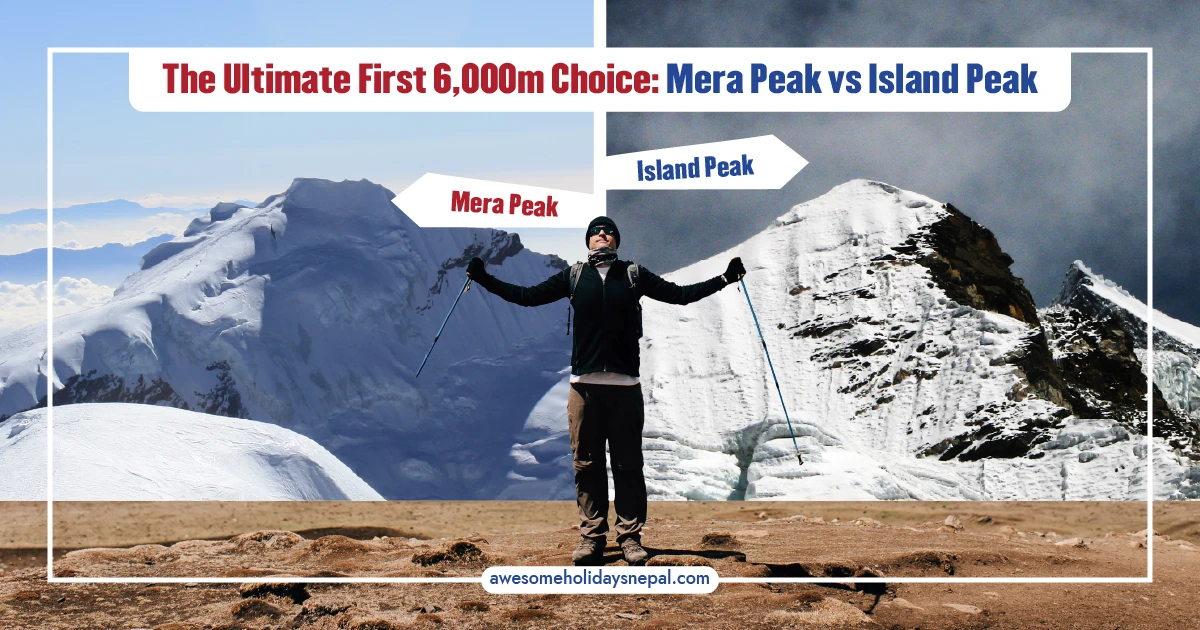
Dreaming of climbing the best first 6000 m peak, and that’s where the Mera Peak vs Island Peak debate begins. Both peaks lie in the Sagarmatha region of Nepal, still, you will get a different experience where Mera peak favors a gradual altitude gain with panoramic trekking, while Island peak deliver little more technical, adrenaline-filled climb.
When it comes to choosing between Mera Peak vs Island Peak, you should know about the physical fitness, maximum altitude, required technical skills, mental preparation, and all the obstacles you have to deal with during the 6000-meter peak climbing. As a beginner, if you want to plan a safe trekking journey to the peak of these mountains, then contact Awesome Holidays Nepal for an unforgettable high-altitude experience in Nepal.
Mera Peak, Island Peak, and Lobuche East are the best first 6000 meter peak in Nepal. Let’s break down the comparison of Mera Peak vs Island Peak to truly make the best starting point for your high-altitude adventure in Nepal:
Mera Peak or Island Peak for Beginners
Mera Peak vs Island Peak is a comparison often made by expeditors who are confused between the altitude endurance and technical skill. Mera Peak takes you to an elevation of 6,476 meters, while Island Peak, also known as Imja Tse, is located at an altitude of 6,189 meters.
Mera Peak has three summits: Mera North, Central, and South, and climbing to its peak is generally considered non-technical. You need to have enough physical fitness and endurance to reach this height, along with a proper acclimatisation.
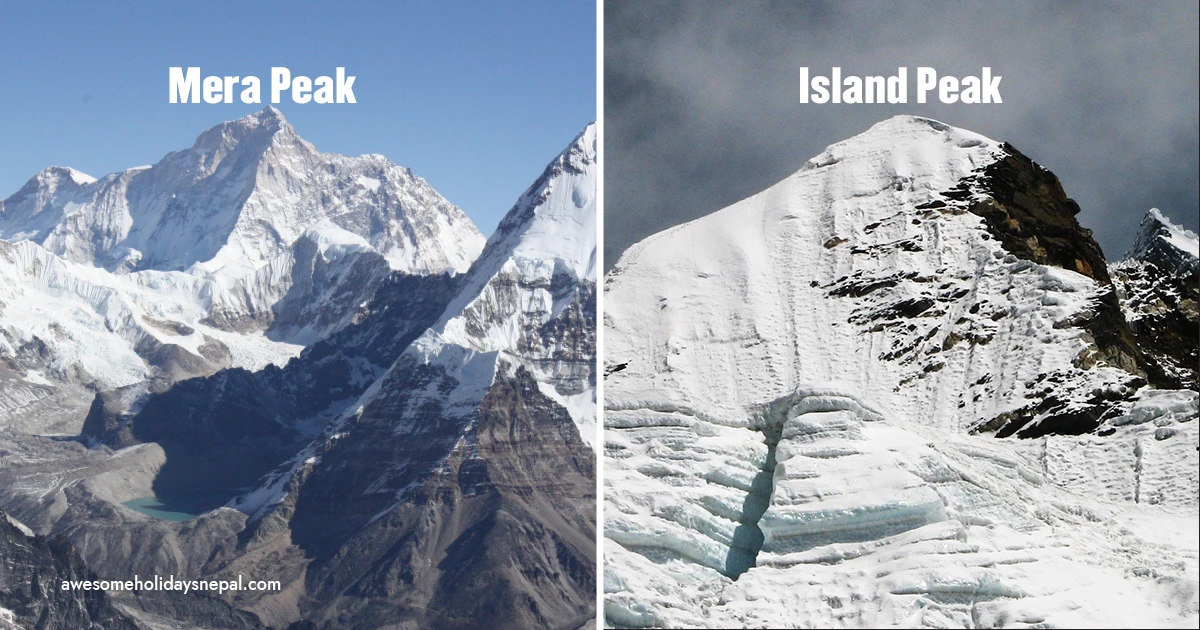
Island Peak is a moderately technical climb, with exposed ridges, fixed ropes, and headwall ascent, which demands prior mountaineering experience. In 1953, Col. Jimmy Roberts and Sen Tenzing first climbed it, and it is often considered more accessible for beginners.
Views and Scenery
The Mera Peak offers breathtaking views of five 8,000-meter giants like Mount Everest, Lhotse, Makalu, Cho Oyu, and Kanchenjunga. The trail is more remote and wild, with fewer crowds and deeper wilderness vibes, with a broad view of panoramic ranges.
The Island Peak provides a dramatic close-up of Ama Dablam, Lhotse, Nuptse, and the Everest region glaciers, and the trekking trails to Island Peak follow much of the EBC trails. Similarly, it also covers more aspects of the mountains.
Distance and Duration
The climbing duration of the Mera Peak is around 17 to 20 days, where you will be walking around 110 to 125 kilometers for the round trip. Mera Peak is long with a more gradual terrain, and you will be walking on glaciers, which demands a more careful acclimatization schedule.
However, the Island Peak climbing total duration is 14 to 16 days, and the trek total distance is around 120 to 160 kilometers, starting and ending in Lukla.
If you want to spend more time with nature, then Mera Peak will be best for you as it offers relaxed adventure, but if you are short on time, then Island Peak is suitable for you.
Which is Difficult to Climb? Mera Peak vs Island Peak
In terms of technical difficulty, Island Peak is moderately technical, and it demands the use of fixed ropes, crampon/ice-axe skills, and some steeper ice/snow sections near the summit, while Mera Peak is less technical and is primarily composed of glacier travel and endurance, not steep ice climbing.
Mera Peak’s (6,476 meters) altitude is higher, so altitude endurance is a big part of the challenge, but Island Peak (6,189 m)is lower in height, but it requires more technical effort and strength on the summit push. Mera Peak’s success rate is around 80%, while the success rate of Island Peak climbing is 85%.
If you want to experience a technical hike, then Island Peak is for you, but if you like to test your altitude endurance and have enough fitness, then Mera Peak is waiting for you.
Altitude and Acclimatisation
The difference in altitude between Mera Peak vs Island Peak is only 287 meters. Both of the treks take you above 6000 meters in altitude, where there are high chances of suffering from altitude sickness, so you have to take acclimatization seriously.
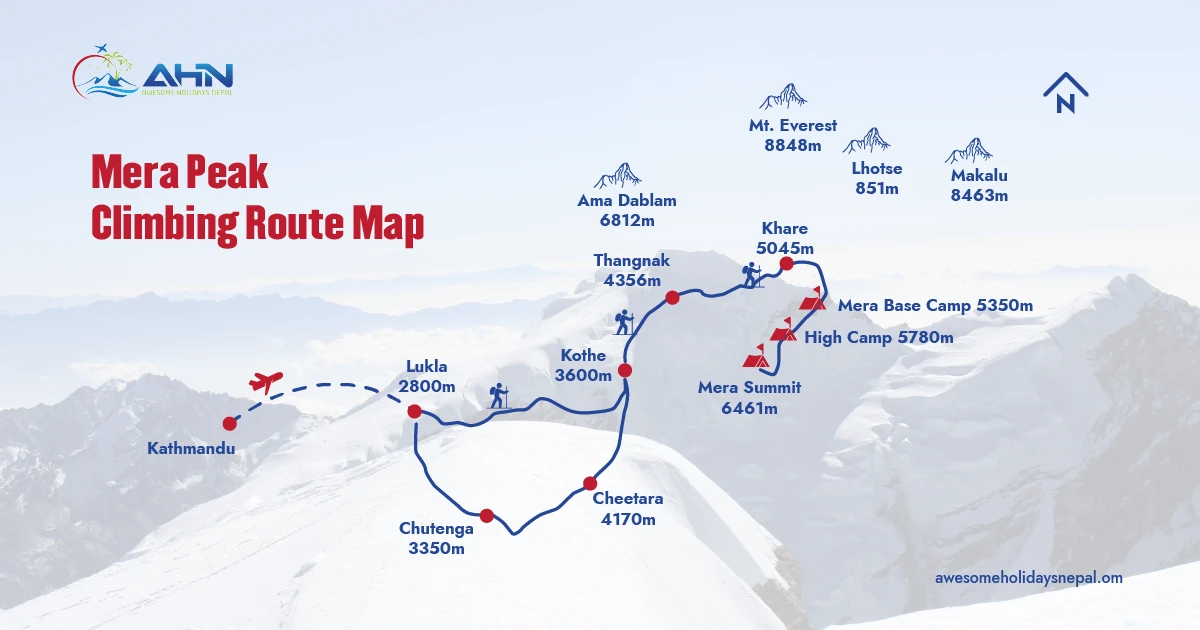
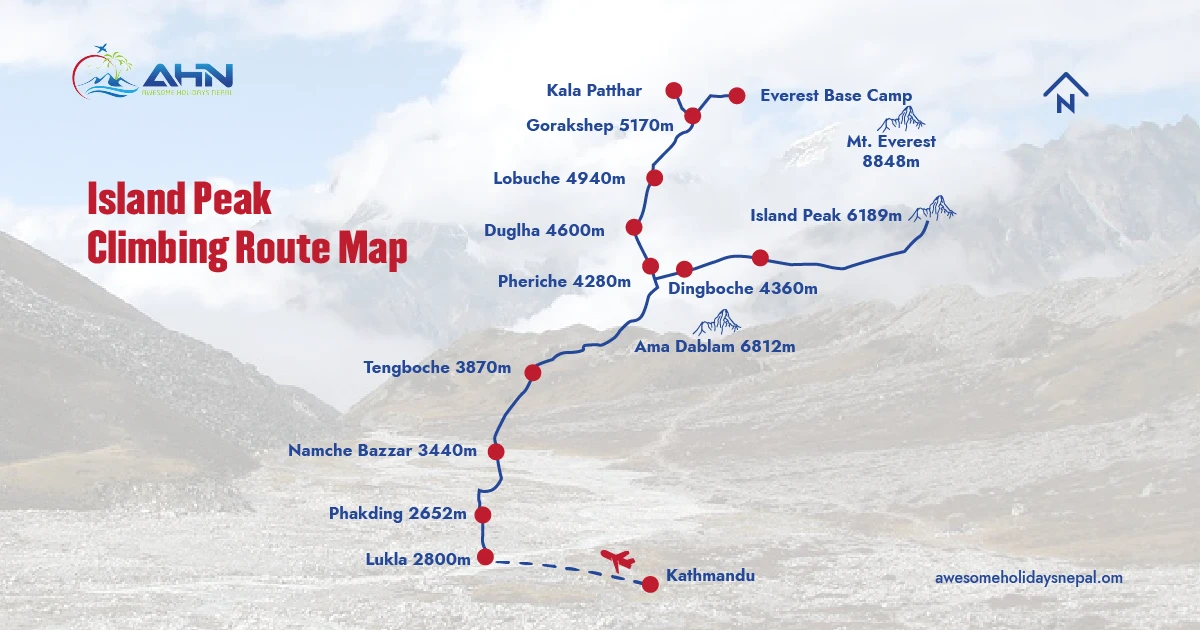
You have to add acclimatization days in Kothe (3,691m), Thagnak (4,358m), and the mandatory, multi-day stop at Khare (5,045m) for resting before the Mera Peak Climb. For Island Peak climbing, you must acclimatise in Namche Bazaar (3,440m), Dingboche (4,410m), and Chhukung (4,730m) for better rest and fueling up your body for further climbing.
Both of the climb demands a continuous summit push from base camp, which involves ascent of steep snow and ice slopes, a strenuous headwall, and an exposed ridge. This will make you fatigued, dizzy, and out of breath, so you have to take acclimatisation seriously and focus on sleeping, hydrating, and eating well in the trek.
Mera Peak vs Island Peak: Itinerary Breakdown
The itinerary breakdown of the Mera Peak Vs Island Peak is:
Mera Peak
- Days 1–2: Kathmandu → Lukla → Paiya / Panggom
- Days 3–6: Hinku Valley Ascent
- Days 7–9: High Valley & Acclimatization
- Days 10–12: Summit Push
- Days 13–17: Departure via Zatrwa La
Island Peak
- Days 1–2: Kathmandu → Lukla → Phakding
- Days 3–6: Namche and Acclimatization
- Days 7–9: Toward Island Peak
- Days 10–11: Base Camp
- Day 12: Summit Day
- Days 13–15: Departure
Cost Comparison: Island Peak vs Mera Peak
When comparing Mera Peak vs Island Peak, the costs depend on trip length, size of the group, and the level of logistical support provided, along with the guide and porters’ charges. The Mera Peak is generally expensive, and you will require around $2,000 and $3,299 for the trek. If budget is no problem, then Mera Peak is just waiting for you in 2026.
You can complete the Island Peak with a budget of around $1,400 to $2,800 per person. You will require technical gear for it in addition to the proper physical and mental preparation. You have to allocate money for buying and renting gear, also. Those beginners who are on a budget and want to explore the remote Himalayas, then Island Peak is waiting right there for you.
Overall Comparison: Island Peak vs Mera Peak
| Feature | Mera Peak | Island Peak or Imja Tse |
|---|---|---|
| Elevation | 6,476 meters | 6,189 meters |
| Difficulty Level | Moderate, non-technical | Moderate to challenging, which demands basic rock and ice climbing skills |
| Technical Skills Required | Minimal; crampons and ice axe training helpful | Some rock/ice climbing where rope work is needed |
| Acclimatization | Gentle, gradual ascent | Steeper with more altitude gain per day |
| Physical Fitness Requirement | Moderate and is suitable for fit beginners | High and fit climbers are recommended |
| Views and Scenery | Himalayan panorama, Mt. Everest, Cho Oyu, Makalu | Ama Dablam, Lhotse, Everest; stunning ridges and glacier views |
| Crowds or Popularity | Less crowded offers a quieter experience | Popular, becomes busy during peak season |
| Peak Summit Style | Broad, snowy summit or easy walking | Narrow, rocky summit ridge or more exposed |
| Risk or Safety | Low technical risk; altitude is the main concern | Moderate risk; crevasses, steep slopes, and exposure |
| Best For | First 6,000m peak, less technical experience | Those seeking adventure and some climbing skills, a more challenging first peak |
| Cost | Slightly cheaper overall | Slightly more expensive due to climbing permits & gear rental |
| Typical Trip Duration (from Lukla) | 14 to 16 days | 14 to 18 days |
Final Thoughts: Which Peak Matches Your Goals
When finalising the choice between Mera Peak vs Island Peak climbing, it depends on your preference and physical and mental fitness. If you dare to challenge the high altitude and have proper planning and preparation, then Mera Peak is the best peak climbing in Nepal for you, as it is less crowded, which gives a lifetime experience in the remote villages of Hinku and Hongu.
But if you are into more technical, then Island Peak is best for you as it requires alpine skills, and you will get to indulge in bustling Sherpa villages, as it shares the routes with the iconic EBC trek. Also, it is on the budget side and can be completed in short duration than Mera Peak.
Completing a peak expedition is not a small victory, its is a combination of meticulous planning, rigorous physical and mental training, perseverance through adversity, effective teamwork, and a bit of luck with conditions. Awesome Holidays Nepal also offers an adventure of Mera Peak and Island Peak with a full arrangement of permits, domestic flights, and logistic and you can focus on your climbing adventure only.
FAQs
Expand AllWhich is better for a first 6,000m climb: Mera Peak or Island Peak?
For a first 6,000m climb, Mera Peak will be best if you want to experince non technical climb, and Island Peak is better if you are into more technical.
Which peak is more technical: Island Peak or Mera Peak?
Island Peak is more technical than Mera Peak.
Which peak feels harder because of altitude: Mera Peak or Island Peak?
Mera Peak feels harder because of the altitude than Island Peak.
Can a fit trekker with no climbing experience do Mera Peak?
Yes, a fit trekker with no prior technical climbing experience can successfully summit Mera Peak with the necessary training and preparation.
Is Mera Peak more remote than Island Peak?
Yes. Mera Peak is more remote than Island Peak.
Which peak is safer for beginners who are nervous about exposure and steep sections?
Mera Peak is safer for beginners who are nervous about exposure and steep sections.
Which peak is better if you want to learn real mountaineering techniques first?
Island Peak is better if you want to learn real mountaineering techniques first.
What is the altitude of Mera Peak and Island Peak?
The altitude of Mera Peak is 6,476 meters, and Island Peakis 6,189 m above in altitude.
How many days should I plan for Mera Peak vs Island Peak trips?
Plan 18 to 22 days with buffer days for Mera Peak and 14 to 19 days for Island Peak.
Can a fit trekker with no climbing experience do Island Peak with training?
Yes, a fit trekker with no climbing experience can do Island Peak (Imja Tse) with proper training and guidance.
Is it smart to combine Everest Base Camp with Island Peak on the same trip?
Yes, it is a very smart move to combine Everest Base Camp with Island Peak on the same trip.
Which route has better teahouses and comfort: Khumbu (Island) or Hinku Valley (Mera)?
The Khumbu (Island) route has better teahouses and comfort than Hinku Valley (Mera).
When is the best season to climb Mera Peak for beginners?
The best seasons to climb Mera Peak for beginners:
- Spring (March to May)
- Autumn (September to November).
When is the best season to climb Island Peak for beginners?
The best seasons to climb Island Peak for beginners:
- Spring (March to May)
- Autumn (September to November).
What are the most common reasons people fail to summit Mera or Island Peak?
Acute Mountain Sickness (AMS) from improper acclimatization, inadequate physical conditioning, and extreme exhaustion are the most common reasons people fail to summit Mera or Island Peak.
Which permits are needed for Mera Peak and Island Peak?
You will need Mera Peak Climbing Permit (NMA), Makalu Barun National Park Entry Permit, Khumbu Pasang Lhamu Rural Municipality Entrance Permit, TIMS (Trekkers’ Information Management System) card if approaching through different routes for Mera Peak climbing.
You must have Island Peak Climbing Permit (NMA), Sagarmatha National Park Entry Permit, Khumbu Pasang Lhamu Rural Municipality Entrance Permit for Island Peak climbing.
Does Island Peak require Sagarmatha National Park and Khumbu permits?
Yes, Island Peak requires Sagarmatha National Park and Khumbu permits.
Does Mera Peak require Makalu Barun permits as well as an NMA permit?
Yes, Mera Peak requires Makalu Barun permits as well as an NMA permit.
Is a guide mandatory for both peaks, and what does a guide usually include?
Yes, a guide is mandatory for both peaks. Guides ensure safety and better navigation, help in logistics and permits, communication and providing cultiral and religious insights.
Do I need double boots for either peak, or are warm mountaineering boots enough?
Double boots are recommended for both Peak climbing.
Related blog posts
Discover a choice of tourist destinations loved by most of our visitors. Whether you're on a jungle safari to spot rare animals or walking through a world heritage site, these well-planned itineraries cover the major highlights of Nepal.
 call an expert at: