
Sacred Meaning of 108 in Kailash Yatra: A Cosmic Number Across Religions
 Amrit K. Aryal
Have you ever wondered why our elders, priests, and gurus, as well as the ancient scriptures, suggest that we chant a particular mantra (hymn) precisely 108 times? This suggestion becomes more vibrant as we walk on the trails of Kailash Kora, because the number 108 in Kailash has a deeper meaning. Humans develop numbers to count and measure distances.
Some of the numbers are cosmic and connect humans with the cosmic world. 108 is such a number, sacred across Hinduism, Buddhism, Jainism, yogic science, Vedic cosmology, astrology, and Himalayan pilgrimage traditions. The special number 108 in Kailash appears in the stories of Lord Shiva. What is the significance of 108 on Kailash? Let’s try to understand it slowly.
108 in Hinduism
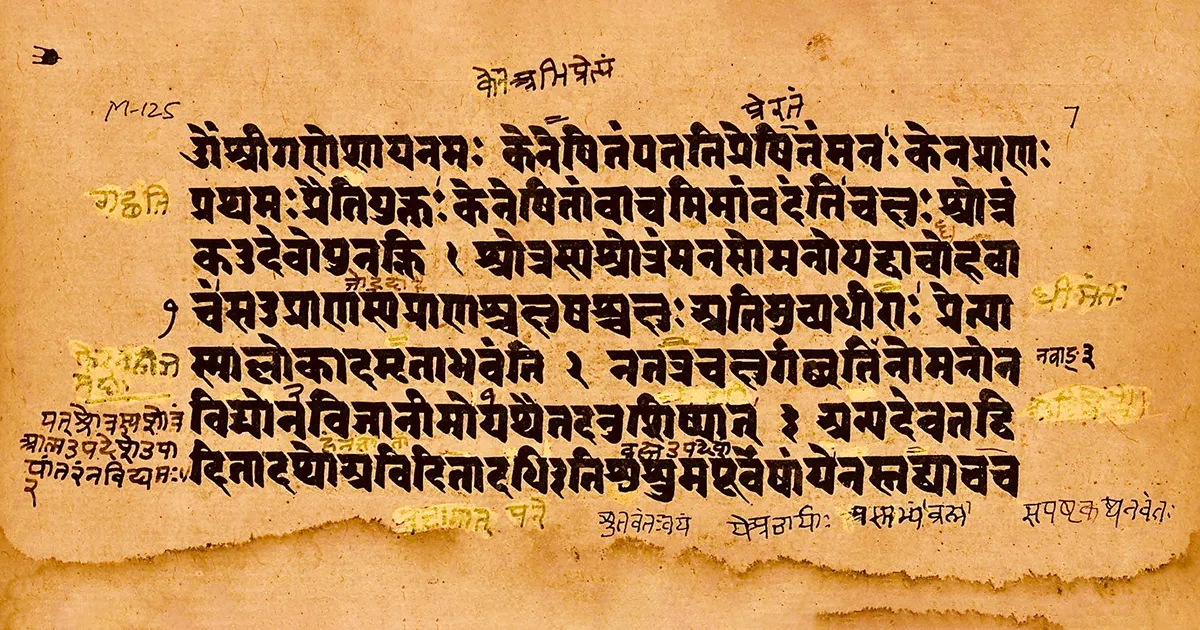
In the Vedic view, 108 represents pūrṇatā, meaning the completeness of a full cycle. There are 108 Upanishads, forming the philosophical culmination of the four Vedas naming Rigveda, Yajurveda, Samaveda, and Atharvaveda.
There are 10 Upanishads associated with the Rig Veda, 50 Upanishads associated with the Yajurveda, 16 Upanishads associated with the Sama Veda, and 32 Upanishads associated with the Atharva Veda; thus making a total of 108 Upanishads. Among them, the Principal Upanishads include the Isa, Kena, Katha, Prasna, Mundaka, Mandukya, Taittiriya, Aitareya, Chandogya, Brihadaranyaka, Svetasvatara, and Maitri.
Some of the Upanishads explore the deepest spiritual declarations, such as Tat Tvam Asi, meaning You are one, and Aham Brahmasmi, meaning I am the Brahma.
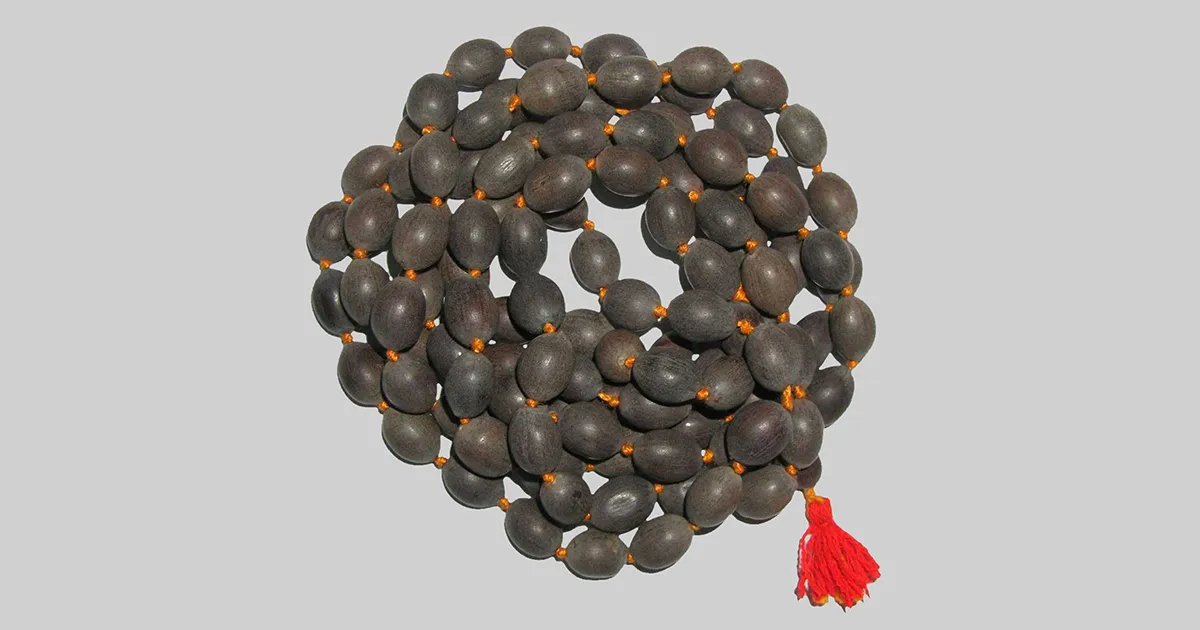
When a bij-mantra is chanted 108 times using a mala, one rotation of the mala symbolizes a complete spiritual circuit. It is the flow of energy from limited identity toward universal consciousness. So, the 108 beads in a mala are not just a decoration. Each bead marks a step inward and repetition of the cosmic cycle.
There are 108 names (nāmāvalī) of Lord Vishnu and 108 names of Lord Shiva. Reciting these names represents invoking the total manifestation of divine qualities.
Sanskrit, Sound & Sacred Structure
There are traditionally 54 letters in the Sanskrit alphabet, and each has a masculine (Shiva) and feminine (Shakti) expression.
54 + 54 =108
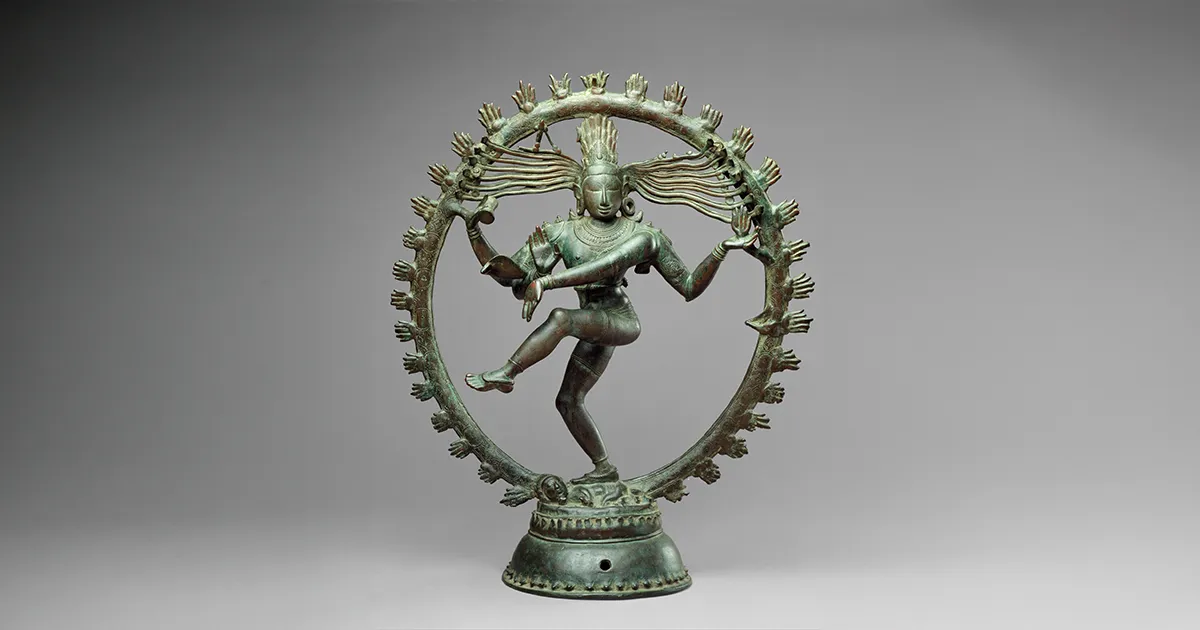
Hindus believe that Shiva is the Lord of the Dance, called Nataraj. He knows 108 forms of dance and 108 mudras (poses).
Sri Yantra:
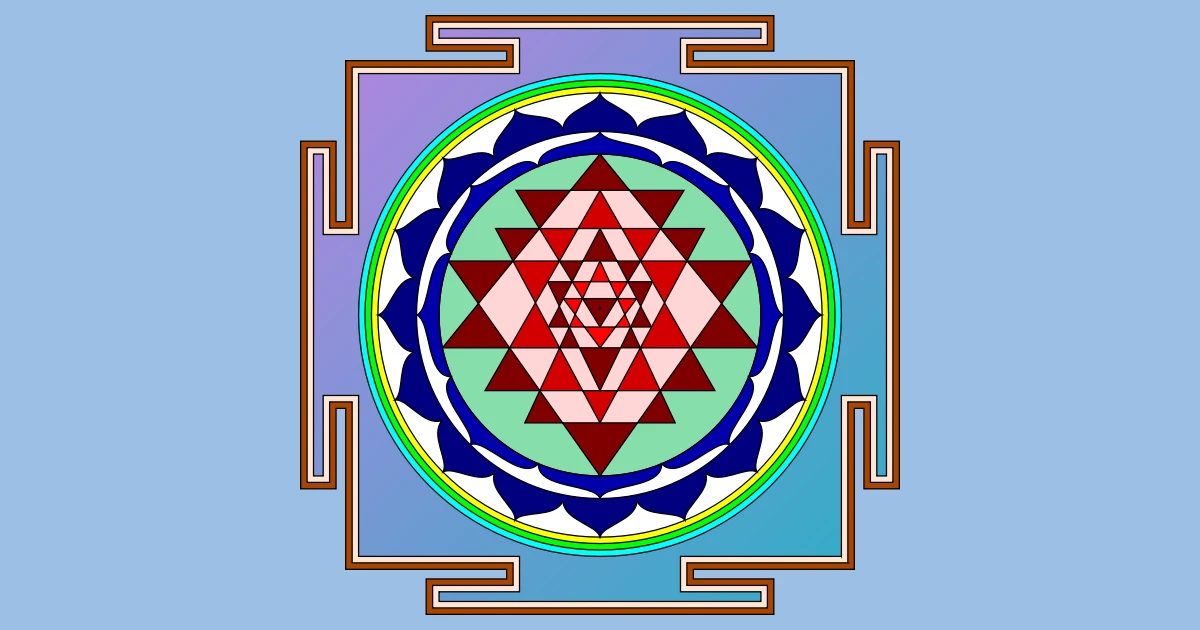
A Shreeyuantra is made up of intersecting triangles. There are 54 intersections of three lines. Each intersection point has a has masculine and feminine energy of Shiva and Shakti.
54 * 2 = 108
Thus, 108 points define the Sri Yantra as well as the human body.
108 Gopini of Krishna
Hindu mythology says that there were 108 gopinis or maid servants of Krishna. Followers of Krishna often recite the name of Radha on a mala of beads.
108 Surya Namaskar
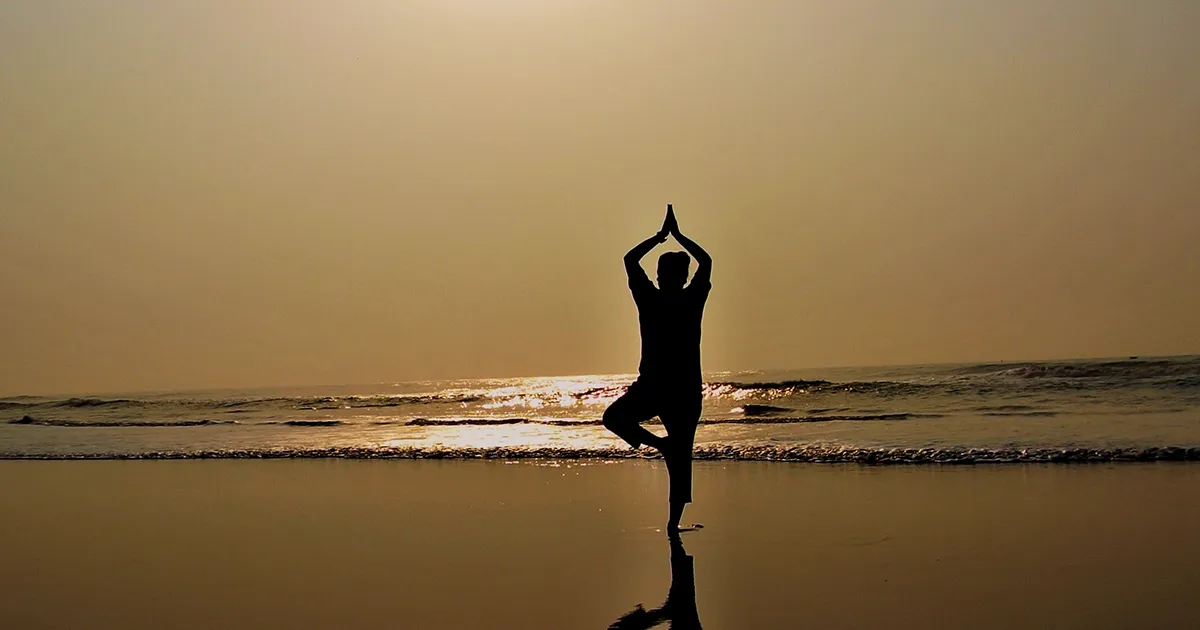
Practitioners, yogis, and meditators often perform the Surya Namsakar in nine rounds of the 12 postures.
9 * 12 = 108
This number also highlights the same number of marma points in the human body, according to Ayurveda.
Astrology & Cosmic Mathematics
In Vedic astrology, or Jyotish sastra, 12 zodiac signs have 9 planetary influences. This makes 108,
12 × 9 = 108.
The Moon travels through 27 nakshatras in total, each divided into 4 padas, reflecting the four purusharthas.
- Dharma (duty)
- Artha (sustenance)
- Kama (pleasure)
- Moksha (liberation)
27 × 4 = 108.
108 here represents the complete karmic blueprint of human experience.
108 in Chinese Cosmology
In Chinese cosmology, too, traditions speak of 108 sacred stars. Taoist and Buddhist malas often contain 108 beads, divided into sections of 36. The belief and tradition is different but reflect the same number.
108 in Astronomy
Ancient sages, geologists, and astronomers noticed a remarkable pattern in the universe.
The distance between Earth and the Sun is approximately 108 times the Sun’s diameter.
The distance between Earth and the Moon is roughly 108 times the Moon’s diameter.
The Sun’s diameter is about 109 times Earth’s diameter, very close to the number calculated by people in ancient times.
This ratio of the distances and diameters allows the Sun and Moon to appear nearly the same size in our sky, which makes total solar eclipses possible. To ancient observers, this wasn’t a coincidence. It was a cosmic geometry observed for years.
Hence, 108 in Kailash has become many alignment points between the human structure and the cosmic structure.
108 in Buddhism
In Mahayana and Vajrayana Buddhism, 108 represents the total number of mental kleshas, the divergence and mental afflictions that binds existence to the samsara.
These divergences are the human desires, such as aversion, ignorance, and attachment.
In a festival called Joya no Kane, the temple bells are struck 108 times on New Year’s Eve in Japan, symbolically clearing these afflictions. If all these emotions are added across different senses, they all make 108.
Tibetans chant the mantra Om Mani Padme Hum 108 times in Kailash, which represents a gradual purification of ignorance. Here, 108 is not just cosmic math, but a psychological map.
108 in Jainism
In Jain tradition, devotion centers around the Pancha Paramesthi:
- Arihanta – 12 attributes
- Siddha – 8 attributes
- Acharya – 36 attributes
- Upadhyaya – 25 attributes
- Sadhu – 27 attributes
The total makes 108. Jains chant the mala containing 108 beads, symbolizing reverence not to personalities, but to perfected qualities, representing completeness.
108 as a power of 9
If we add the digits, 1 + 0 + 8 = 9.
In Hindu cosmology, 9 symbolizes wholeness and cyclical time. Half of 108 is 54, and add the numbers 5 + 4 = 9.
If we add or multiply 108 by any number and add the number, it’s again 9. It means Nine always returns to itself. This is the circularity of Samsara.
Why 108 Instead of 100?
Though 100 is convenient and easy to remember, why did humans choose 108? The answer is technical. Humans did not choose it. The nature and cosmology gave the number to humans. It has appeared in the Vedas, Puranas, Upanishads, Sanskrit phonetics, Astrology, and many other places. The number has been observed in various phenomena such as temple geometry, astronomical ratios, Buddhist psychology, Jain metaphysics, and Yogic energy systems. From the early ages when humans discovered numbers, they have been continuously observing this pattern of 108. So, it has become an integral part of human life in Hindu, Jain, and Buddhist communities.
108 in Kailash
Do you remember what the length of the outer kora is? Yes, it is nearly the middle of 108. The entire Kailash kora is completed in three days. It is said that one kora purifies the sins of a lifetime.
This year is the year of the Horse. As per the Tibetan calendar, if one can complete the Kailash kora, it is multiplied by 13. Tibetan people believe that if one can complete 108 Koras in their lifetime, that attain liberation and do not have to take rebirth and stay forever in Sukhavati.
Kailash: The Axis of the Cosmic World
Hindus believe that Lord Shiva resides in Mount Kailash. Kailash is the abode of Lord Shiva, where he exists beyond time. In Tibetan Buddhism, it is called Gang Rinpoche, which means “snow jewel mountain”. As the pilgrims are walking around Mount Kailash holding a mala of 108 beads in hand, their breath aligns with 108 mantras.
Final Reflection: 108 as a Cosmological Code
So, for pilgrims visiting for the spiritual journey, 108 on Kailash is not just about chanting. It is about astrology, geometry, and a convergence point where the Vedic wisdom, Buddhist psychology, and the sacred geometry of Mount Kailash.
FAQs
Expand AllWhat does “Parikrama” mean?
Parikrama is a Sanskrit term meaning circumambulation or walk around the sacred Mount Kailash. People of other religions do the parikrama in a clockwise direction, while Bons do it in an anticlockwise direction.
What is the difference between Parikrama and Kora?
Parikrama is a Sanskrit word, while Kora is the Tibetan word. Both of them indicate the circumambulation around a sacred object.
What is Kailash Kora?
Kailash Kora is the circumambulation of the most sacred Mount Kailash, the sacred mountain in Tibet, undertaken by pilgrims for purification, spiritual merit, and liberation of the soul.
How long is one Mount Kailash circumambulation?
The outer Kora of Kailash is 52 km, usually completed in 3 days. The trail includes valleys, rivers, and the high Dolma Pass.
Why do pilgrims circumambulate Mount Kailash?
Pilgrims circumambulate Kailash to purify karma, accumulate spiritual merit, honor divine forces, and symbolically participate in cosmic cycles represented by the mountain.
Which religions consider Mount Kailash sacred?
Mount Kailash is sacred to Hinduism, Buddhism, Jainism, and the Bon religion.
Why is Mount Kailash associated with Shiva in Hindu belief?
For Hindus, Kailash is the abode of Lord Shiva. He is the supreme yogi and cosmic dancer called Nataraj. Pilgrims circumambulate the mountain to honor Lord Shiva.
How do Buddhists interpret Mount Kailash?
For Buddhists and Tibetans, Mount Kailash is revered as Kang Rinpoche, the precious snow jewel at the center of the universe.
How do Jains relate Mount Kailash to their tradition?
For Jains, it is the place where the first Tirthankar, Rishavdeva, attained liberation. The 108 attributes of the Pancha Paramesthi are honoured through ritual and meditation.
What is the Bon (Bön) connection to Mount Kailash?
For the people following Bon religion, the pre- Buddhist indigenous Tibetan spiritual tradition, regards Kailash as the axis mundi and a sacred site for ritual circumambulation.
Do all pilgrims walk clockwise around Kailash?
No, only Bonpo people walk anti clockwise direction. Hindus, Buddhists, and Jains typically walk clockwise direction.
Where does the Kailash circumambulation usually begin and end?
The Kailash Kora begins and finishes at Darchen.
What is the Dolma La Pass and why is it significant on the route?
The Drölma Pass or Dolma La Pass is the highest point on Kailash Kora at a height of 5,636 meters. Trek to Dolma La is the most difficult task during the kora.
How many days does the circumambulation typically take?
The Kailash Kora is a three-day trek around Mount Kailash, called the inner kora.
What is Lake Manasarovar and why is it sacred?
Lake Mansarovar is a freshwater lake located near Mount Kailash. It is considered sacred and religious. Bathing here means cleansing of the body and soul.
Does the Kailash pilgrimage typically include visiting Lake Manasarovar?
Yes, the Kailash Mansarovar Yatra package includes a trip around Lake Mansarovar and sometimes Lake Rakshastal. The extended trip also includes the Guge ruins.
What does “108 Parikrama” mean in the Kailash context?
108 is a spiritual and cosmic number. Completing 108 circumambulations around Mount Kailash symbolizes the full spectrum of karmic purification and spiritual liberation.
Why is the number 108 considered sacred in Hindu traditions?
108 is a number often repeated in the Vedas, Puranas, and Upanishads, indicating deities’ names and rituals. This number often connects human consciousness to the cosmos.
What are mala beads, and why do many have 108 beads?
108 beads in a mala represent completeness of spiritual, cosmic, and psychological connection. This type of mala is used to chant a mantra repeatedly.
How long can prostration style circumambulation take compared to walking?
Bon people take weeks to months to complete the kora, doing prostration, while walking the kora takes three days to complete.
Is Mount Kailash climbed?
No. Climbing Kailash is strictly prohibited to honor its religious and spiritual value.
Related blog posts
Discover a choice of tourist destinations loved by most of our visitors. Whether you're on a jungle safari to spot rare animals or walking through a world heritage site, these well-planned itineraries cover the major highlights of Nepal.


 call an expert at: