The Khumbu region is renowned for being home to the world’s highest peak, Mount Everest, but that’s not its only identity! From meditating at traditional Sherpa monasteries to embarking on the Mani Rimdu trek, there are various ways to experience the rich culture of the Everest region.
Khumbu reveres spiritual depth and ancient cultures, which is evident from the celebrations they have. Rooted in Tibetan Buddhism, festivals like Mani Rimdu and Dorje are among those that have attracted a large number of visitors. Among all, the Mani Rimdu trek is one of the finest ones, with processions carried out in three different monasteries of Khumbu.
Let’s explore the blog to learn more about the festivals of Khumbu and the Mani Rimdu trek.
Primarily celebrated in the Himalayan regions of Nepal, the Mani Rimdu festival is a sacred yet very vibrant occasion. The name is derived from two different words: “Mani“, which refers to the Buddhist enchanting “Om Mani Padme Hum“. And Rimdu means a symbolic red pill blessed during the rituals and is distributed for spiritual protection.
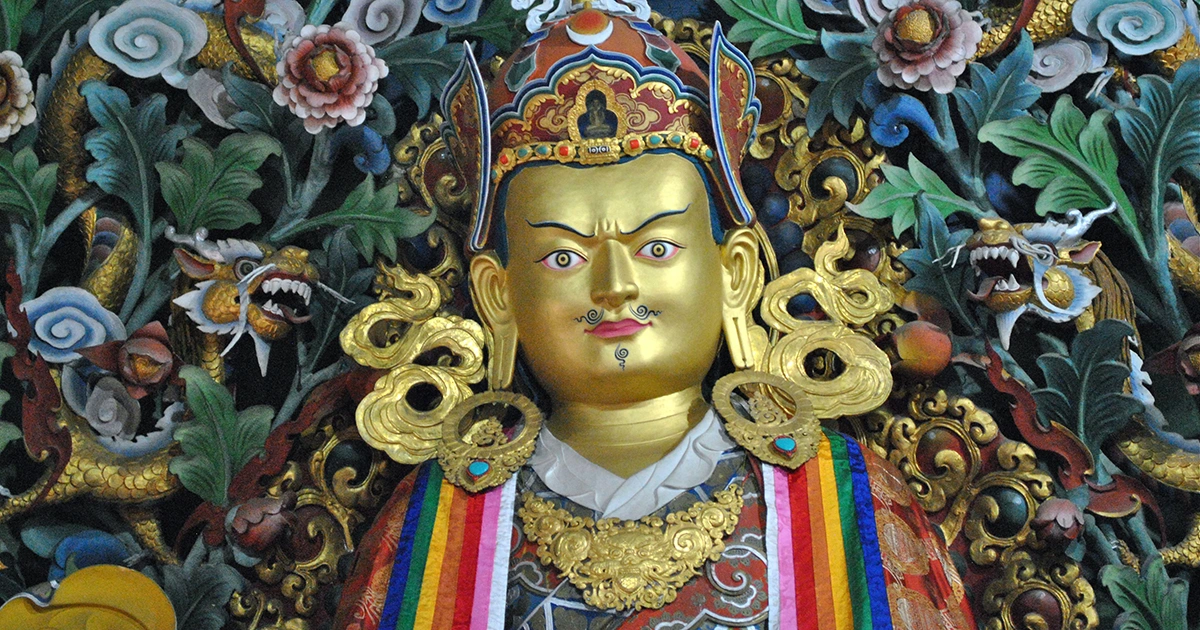
The festival represents the triumph of good over evil as well as the globalization of compassion and peace. It depicts how Guru Rinpoche (Padmasambhava) brought Buddhism to Tibet by defeating evil spirits and turning them into guardians of the religion. It is celebrated annually on the first day of the tenth month of the Tibetan lunar calendar, which typically falls between October and November in the English calendar.
Artistic Statue of Guru Rinpoche
Why is Mani Rimdu Celebrated?
Mani Rimdu is celebrated to glorify the establishment of Buddhism in Tibet. It is believed that Guru Rinpoche achieved a victory over the negative forces of Bon ( the ancient religion) and spread Buddhist teachings to the residents of the Himalayas.
Hence, this festival is celebrated to honor the mighty Guru Rinpoche and triumph of good over evil. It is basically a community celebration that includes spiritual offering while reminding the Sherpas of their connection to Buddhism.
The purpose of Mani Rimdu is:
To renew spiritual energy
To bless the community
To eliminate negative forces
To promote peace, compassion, and harmony.
How is the Mani Rimdu Festival Celebrated?
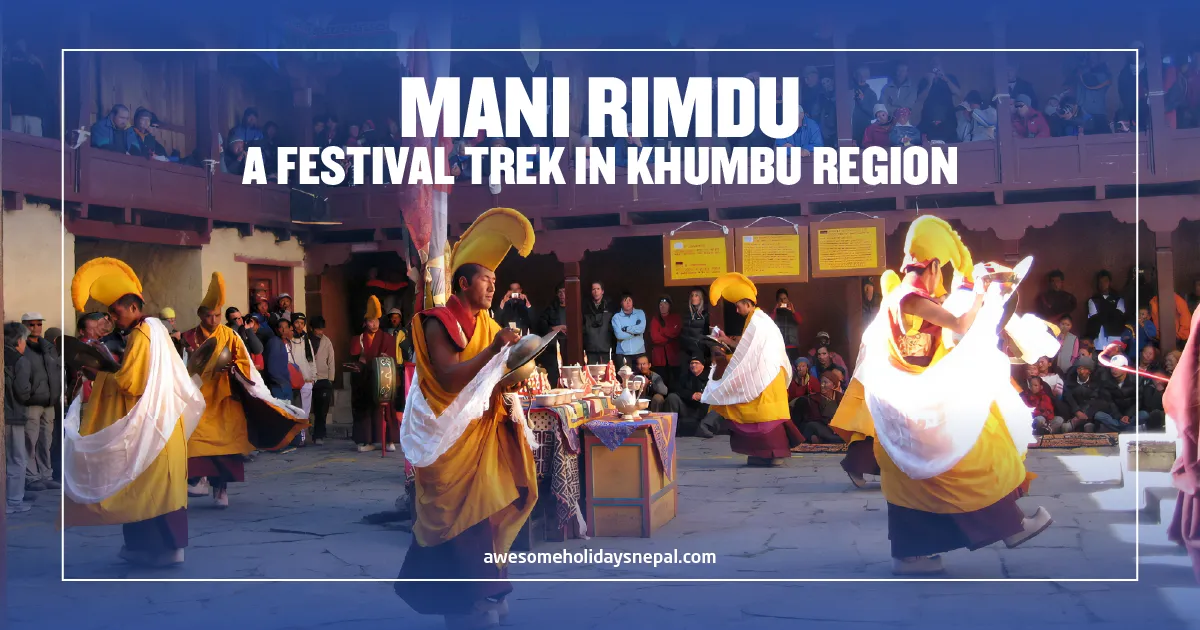
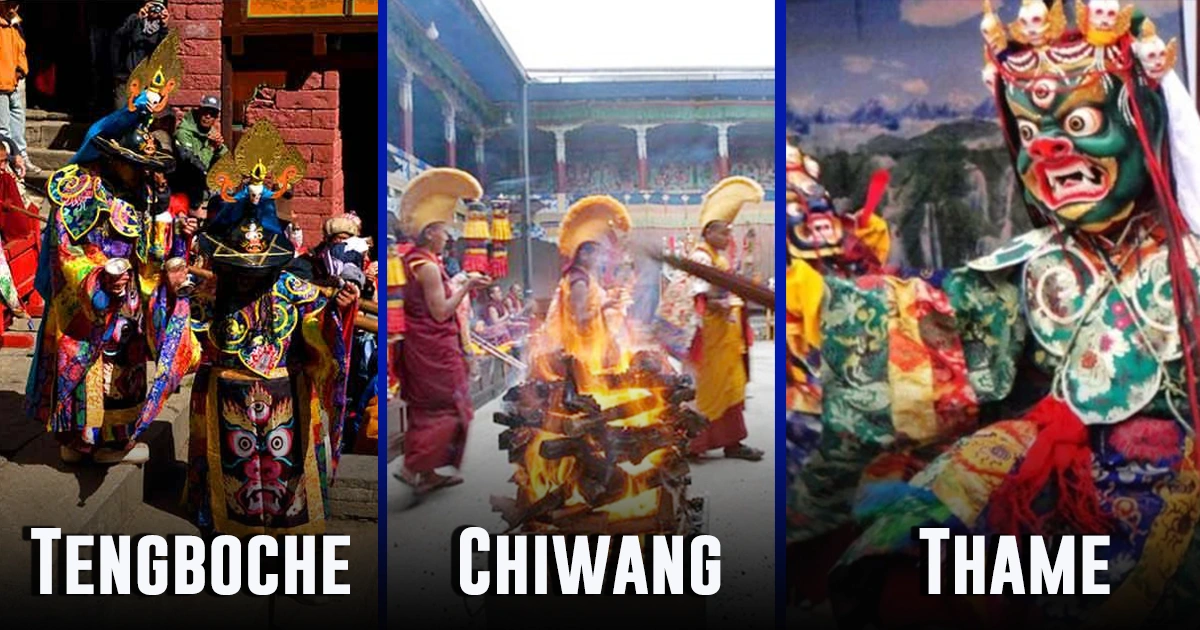
The Mani Rimdu festival is a spiritual celebration which is adorned with energetic dance performances and spiritual customs. It is held in three major monasteries of the Khumbu region, all located in three different villages scattered throughout the region. Even though Mani Rimdu festival at Tengboche monastery is popular, it is also celebrated in Thame monastery and Chiwong monastery.
Mani Rimdu celebration in different monasteries of Khumbu
Mani Rimdu a festival full of empowering ceremonies that lasts for 19 days throughout all the monasteries. However, the public celebration happens only for three days which can be enjoyed by both the locals and tourists. This festival is rooted in Tibetan Buddhism and includes a number of processions like customary Lama dances, prayers, and rituals.
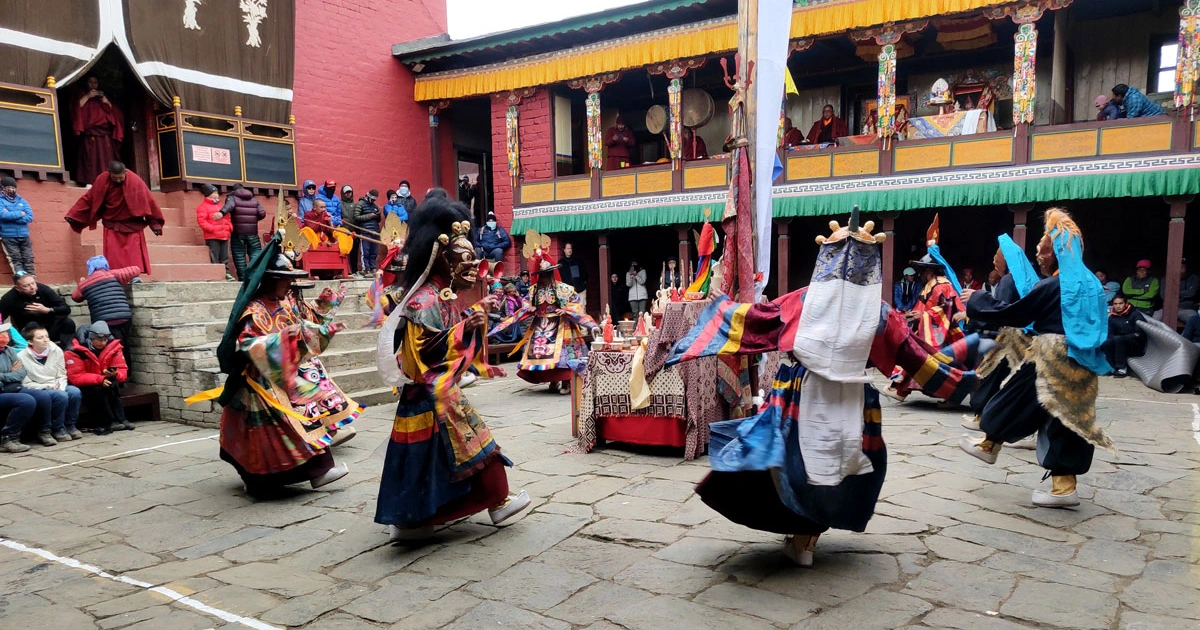
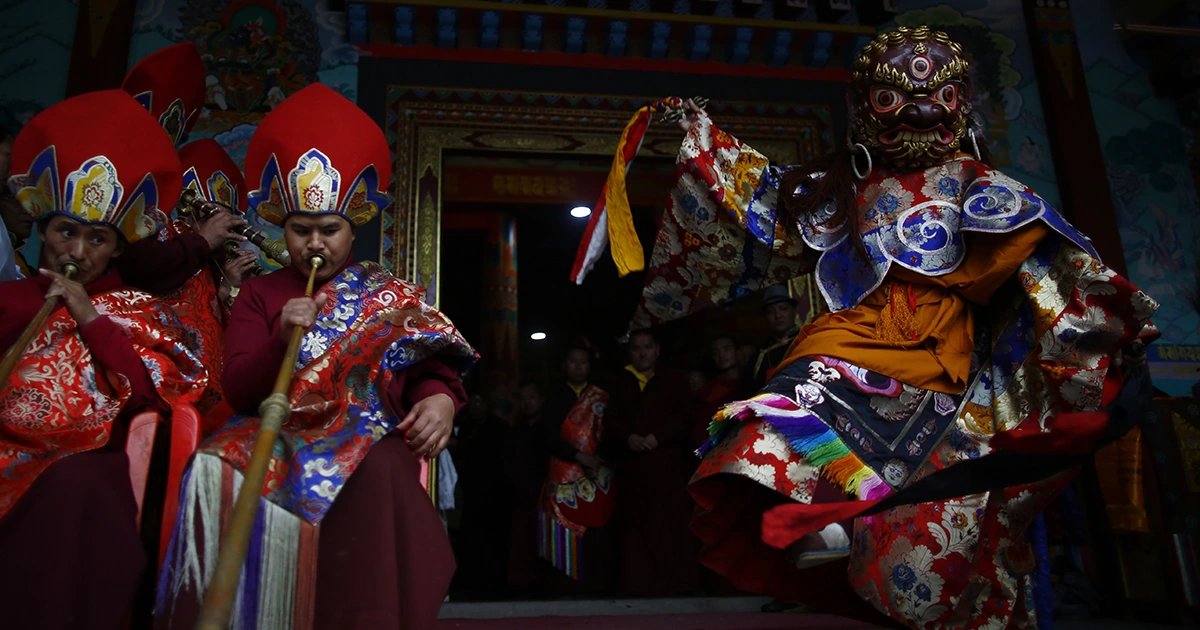
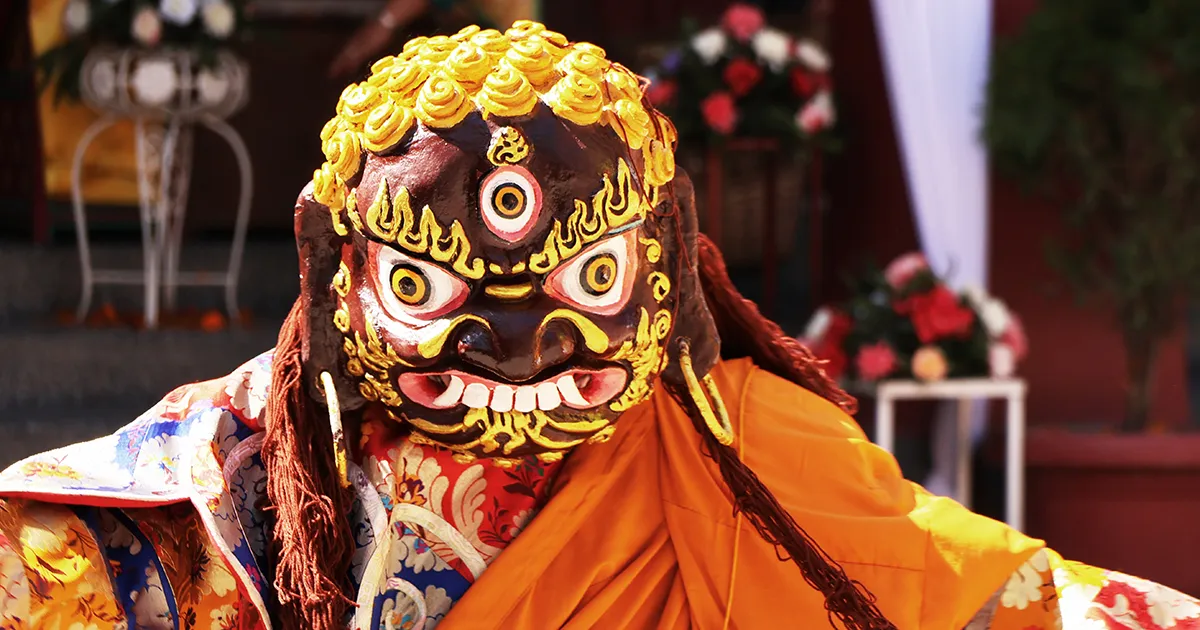
Monks dressed in mesmerizing masks and intricate costumes perform a series of different dance forms in sequential pattern. Different forms of dances happens in a series of events, each with a deep hidden meanings. These dance performances dramatize the triumph of Buddhism over Bonn religion. Similarly, it also has a prayer ceremony before holy fire and a mandala making ceremony.
Wong (The Blessing Ceremony)
The public ceremonies officially begin with the Wong ceremony also called the blessing or empowerment ceremony. The presiding lama blesses this ceremony and distributes the sacred offerings to the public participants. You will receive the Tsheerel pills (Tse Ril) and sacred Mani Rilwu (Mani Rilbu) pills which are spiritual pulls for fostering a sense of spiritual connection and well-being of the participants.
The Dance Performances
The dance performances of on this festival are very unique and layered. Since first few days are devoted to prayer and are followed by difference dance performances. Some of these dance forms are:
Cymbal Dance: Also called as Rol Chham or Rol Mo, it is more of symbolic movement of movements and strikes than just a dance. It is performed while doing the prayers. Monks adorned in their monastic attire descend gracefully executing these movements in a series of gestures and then retreat back to the monastery. In the meantime, the Lamas initiate a ceremonial ritual offering mountain incense.
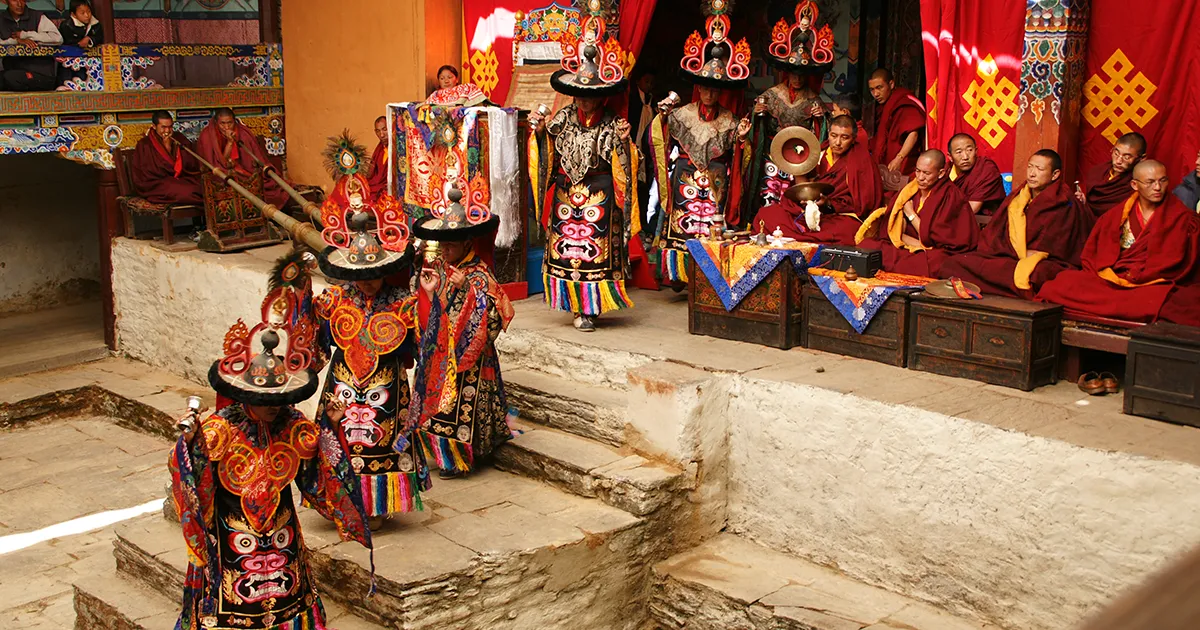
Dance of the Black Hats: In this dance form, monks putting on black hat and colorful outfits perform a dance while holding a vajra in right hand and cup in the left one. After completing dancing around the courtyard, another monk places a ball of sampa in their cups and fill it with chhang (a local liquor). Following the instructions of the ritual, these dancers toss the chhang and tongba as an offering to the deity.
Black Hat Dancers in Mani Rimdu Festival
Ti-jum Dance: It is a ritualistic performance featuring four masked dancers wielding symbolic knives, representing the act of cutting away evil influences. They wear black hats and carry small torma, a flower-shaped dough offerings that symbolize malevolent forces. Divided into two groups, with one half in black hats and the other in masks, the dancers enact a ceremonial disposal of these representations of negativity, reinforcing themes of purification and protection.
Ghing (Khing) Dance: For this performance, 4 males dressing in tight pants and shirts along with brocade upper ornaments. They put on green masks and are considered the king. Likewise women also dress up the same way but they put on red and yellow masks. Females are called the servants or heralds of Guru Padma Shambhav.
Ghing Dance Performance
In this dance, Drojo Drolo’s arrival is heralded by a procession. A monk dresses in fierce manifestation of dark red, wrathful face with bloodshot eyes represents him. The character holds a vajra in his right hand and a furba in the right.
Zor Chham Dance: This dance form serves as the grand finale of the festival, uniting themes and ritual elements from the various preceding chhams. It brings the entire sequence of dances to a powerful, cohesive conclusion, symbolizing the triumph of positive energies and blessings over harmful influences.
Durdag Cham Dance: Two skeletal figures accompanied by two dancers wearing black hats enact this dance performance. The skeletal figure carry a dough figure in a rope between them. And the black hat dancers symbolically destroy this dough figure as a part of the performance.
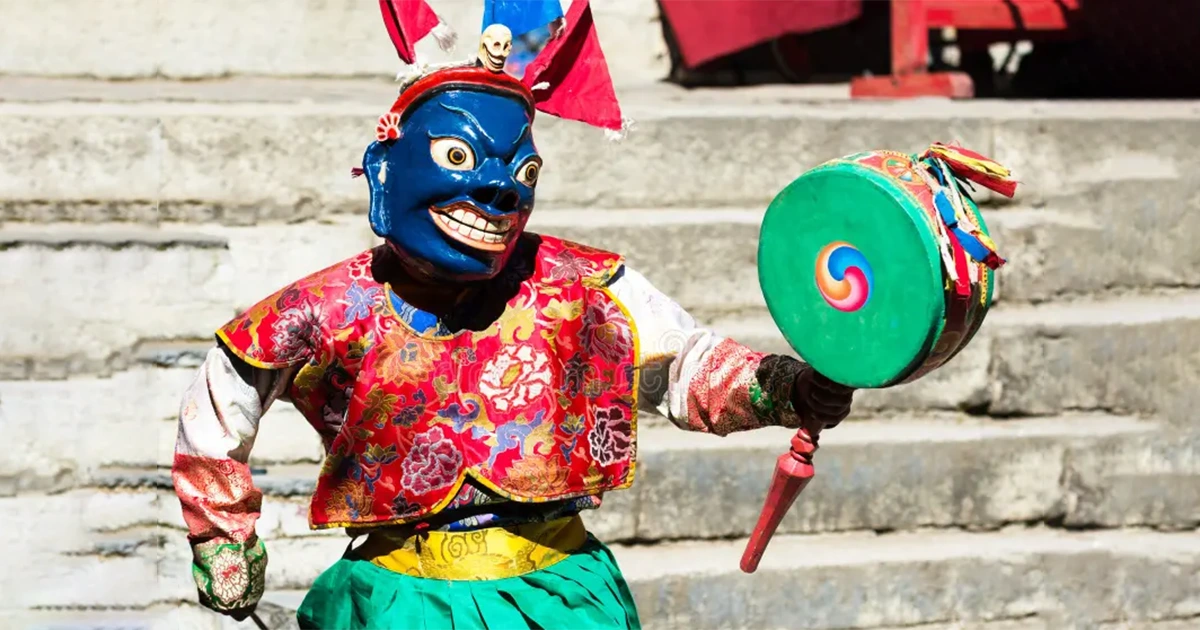
Chham Dance Performance
Drum Dance: This performance features six dancers playing traditional drums and two others playing cymbals, all dressed in the distinctive attire of the Black Hat dancers. As the rhythmic beats fill the air, monks chant the sacred Seven-Line Prayer to Guru Rinpoche along with a confession prayer, creating a powerful spiritual atmosphere.
A comic character named “Mi Tsering” also appears during the dance; portrayed as a cheerful, elderly man wearing yellow brocade robes and a white mask, he adds light-hearted humor and a moment of relief to the otherwise solemn performance.
Mahakala Dance: It is performed by eight dancers, each embodying a different protective deity. Notable figures include Siringma, the primary long-life sister associated with Mount Everest, and Mahakala, the fierce guardian deity known for safeguarding the Dharma. Their synchronized, powerful movements reflect the protective and transformative energies of these revered figures.
Mahakala Dance Performance
Zurra-Rakya Dance: In this dance, a local protective deity known as Zurra-Rakye is depicted carrying a goat horn and a long staff. He is revered as the guardian of King Palong, the mythical ruler of a hidden valley believed to remain concealed from the outside world. The performance symbolizes protection, mystery, and the spiritual guardianship of sacred landscapes.
Khandro Dance: It features graceful, flowing movements performed by five female deities known as dakinis or sky dancers. These celestial figures embody the essence of Tibetan Buddhist wisdom and feminine energy. Their synchronized steps create a serene and ethereal atmosphere, representing spiritual insight and enlightened presence.
Thog-den Dance: it is unique comedic dance that stands out for its lively and humorous tone. The main performer engages in playful verbal exchanges with his assistant and even the audience, adding an element of satire and light-hearted entertainment to the cultural ceremony. This interaction makes the performance especially memorable and engaging.
Sand Mandala Ritual
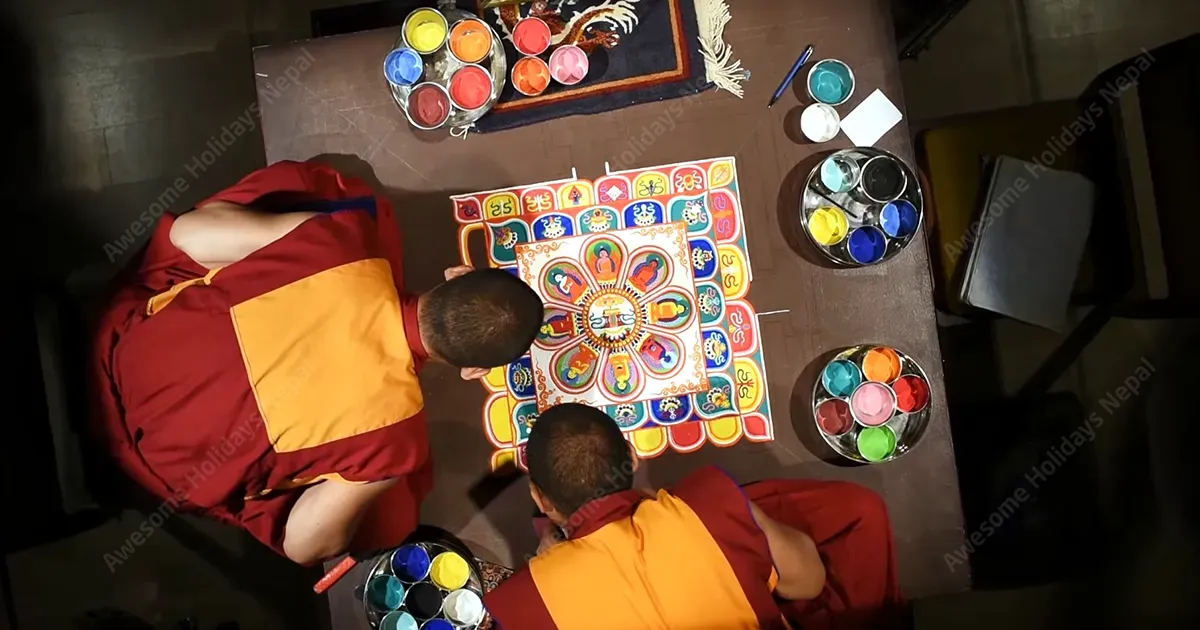
One of the festival’s most elaborate and spiritually meaningful customs is the making of the Sand Mandala. Monks patiently lay colored sand grains for hours or even days to create a sacred geometric pattern that symbolizes the palace of Gawang Do Cho, the enlightened world of wisdom and compassion. Since each line and symbol has a distinct meaning in Tibetan Buddhist cosmology, this tedious process requires complete focus, steady hands, and intense meditative awareness.
Sand Mandala Ritual of Mani Rimdu Festival
The monks meditate continuously while making this mandala to purposefully bringing compassion and good intentions into it. Positive energy is channeled into the design through their gentle chanting of the mantra “Om Mani Padme Hum,” turning it from a stunning piece of art into a dynamic spiritual tool. The mandala turns into a tangible representation of peace, kindness, and enlightenment, benefiting everyone who sees it.
The mandala is later dissolved, signifying the transient nature of everything and discharging its accumulated positive energy into the world, despite the effort put forth.
Jinsak: The Fire Puja
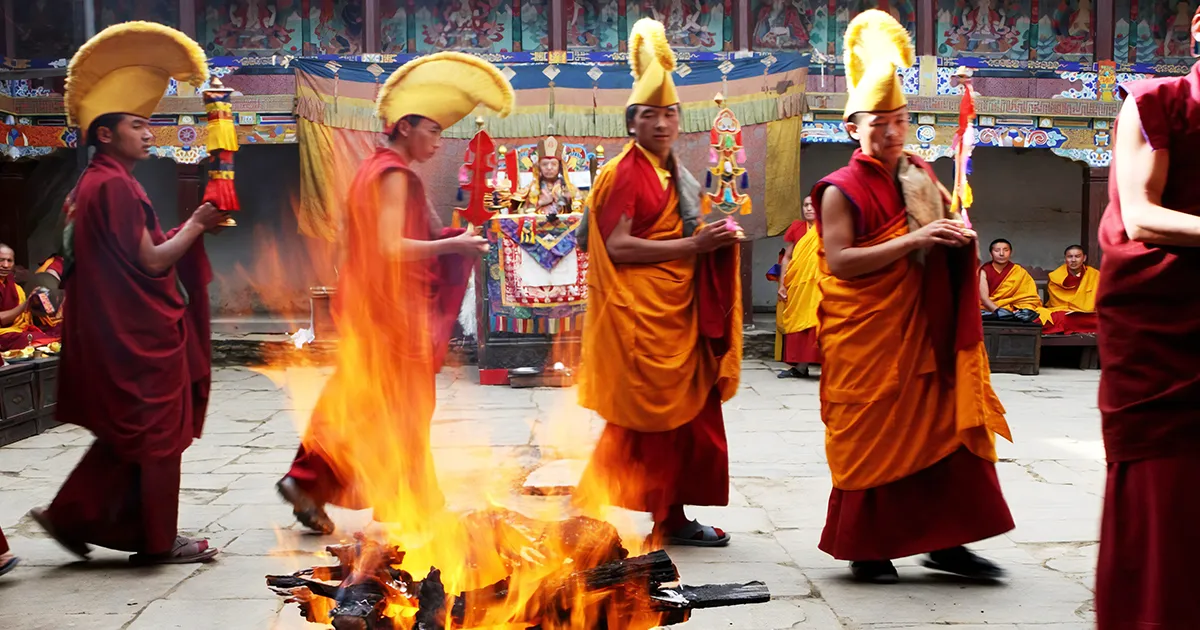
The Fire Puja, or Jinsak, is one of the most important Mani Rimdu festival rituals. Monks offer grains, herbs, and symbolic materials into a sacred fire during this ceremony in an effort to invoke blessings and appease evil forces. With a purpose of eliminating negativity and creating harmony for the community and all sentient beings, the ritual functions as a potent act of purification.
Fire Puja (Jinsak) of Mani Rimdu Festival
In addition to offering protection, the Fire Puja has significant symbolic significance. A key principle in Buddhist philosophy is the transient nature of life, which is symbolized by the offerings as they burn and turn to smoke.
Serkyem/ Ser-Kyem Ceremony (Offering to the Protectors)
Serkyem is offered to the Dharma Protectors in the middle of the ceremony during the Mani Rimdu sequence. Monks pour a special liquid, often called spiritual nectar, into a two-tiered vessel while dancers representing tantric magicians participate to symbolize the invocation of protective energies.
This ritual reinforces the festival’s emphasis on honoring guardian deities who remove obstacles and safeguard the teachings. By offering the nectar, the monks and community seek blessings and protection, preparing the spiritual atmosphere for the major masked dances that follow.
Mani Rimdu Trek Itinerary
Every year during the spring season, cultural enthusiasts from around the world trek to Everest region just to witness the three days of public celebrations of Mani Rimdu festival. Here’s a typical itinerary for the Mani Rimdu Trek:
Day 0: Arrival in Kathmandu
Day 1: Fly to Lukla and trek to Phakding
Day 2: Phakding to Namche
Day 3: Acclimatization in Namche
Day 4: Trek to Tengboche
Day 5: Attend first day of Mani Rimdu rituals at Tengboche monastery
Day 6: Experience second day of celebrations
Day 7: Final Public Celebration Day
Day 8: Return to Namche
Day 9: Descend down to Lukla
Day 10: Fly Back to Kathmandu
Departure Day
Dumje Festival: Second Major Festival
The Dumje Festival is one of the most important annual celebrations of the Sherpa community in the Khumbu region. It is celebrated in almost all villages of the lower valley of Everest region. You can witness it in villages like Namche, Khumjung, Thame, Pangboche, and so on. Usually, the festival is celebrated between May and July, right after Losar (the Buddhist new year).
Why is Dumje Festival Celebrated?
This festival is celebrated in the honor of Guru Rinpoche who is a revered tantric master. He is truly respected for bringing Buddhism to Tibet and the Himalayans. Actually the festival celebrates Guru Rinpoche’s visit to the Himalayas in which he blessed upon the locals.
Legends say that a local resident Lama Sangwa Dorje initiated this festival about three centuries ago. In recent times, this festival is celebrated in several settlements in the Everest region.
Process of Celebrating Dumje Festival
Dumje festival is celebrated for four days and different Sherpa families of each village take the turn for hosting this festival. It involves a series of rituals which are perfromed to get blessings for well-being of the community. Like Mani Rimdu, it also involves a series of procession that includes prayers, reciting mantra and presenting offerings to the deities.
Masked Dance Performers
Monks wearing colorful attires and traditional masks perform in the monasteries to create a divine atmosphere. Some of the rituals performed in this festival are:
Lhapso (Invoking the deities) in which monks chant mantras and perform sacred rituals to call upon their protective deities.
Jinsak is a fire ceremony like Mani Rimdu but the whole village performs instead of a monk.
Lokpar is a purification ceremony in which monks perform symbolic cleansing acts to purify the community.
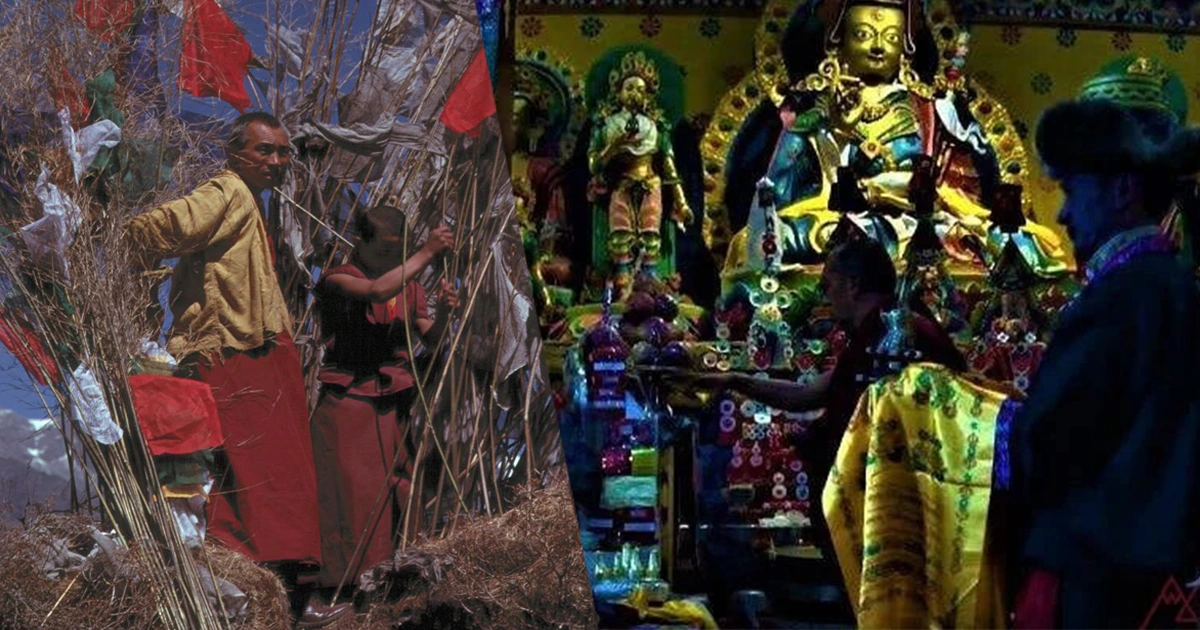
Raising the prayer flag: In this ceremony, the colorful symbolic flags are raised to bless families, live stocks and their crop produce.
Prayer Flag Raising Ceremony of Dumje Festival
The festival also includes traditional dances and feasts in which the whole community comes together to make stronger social bonding. It also signifies communal unity and preserves Sherpa culture.
Other Festivals Celebrated in Khumbu
While Mani Rimdu and Dumji festival are major occasions of the Khumbu, Sherpas of this region also celebrate a number of other local festivals. These festivals also reflect the region’s rich Buddhist heritage and local customs. Whether grand or small, these occasions help to maintain the Sherpa identity and also allow visitors to experience the vibrant Himalayan culture all year around.
Gyalpo Losar- The Sherpa New Year
One of the most important annual festival on the Sherpa calendar is Gyalpo Losar. It typically takes place in February or March and is based on the Tibetan lunar calendar. This festival marks the start of a new year and symbolizes purification, renewal, and harmony. Not just the people of Khumbu, Sherpas residing everywhere celebrate.
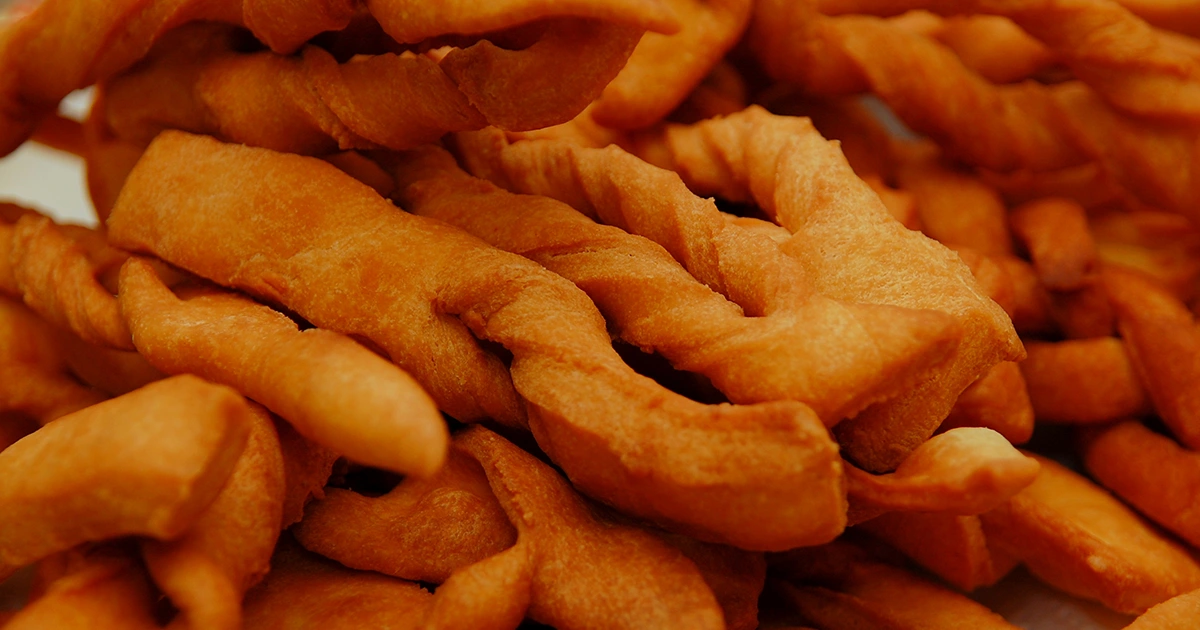
Khapse Served in Lhosar
Sherpa families get ready by cleaning their houses, preparing special foods like deep-fried pastries called khapse, and serving barley beer called chhang. While villages hold get-togethers with music and traditional dances, monasteries perform special pujas for good fortune. Gyalpo Losar is a joyful and spiritual event that combines thankfulness and celebration in an uplifting way.
Lhosar: Tibetan New Year
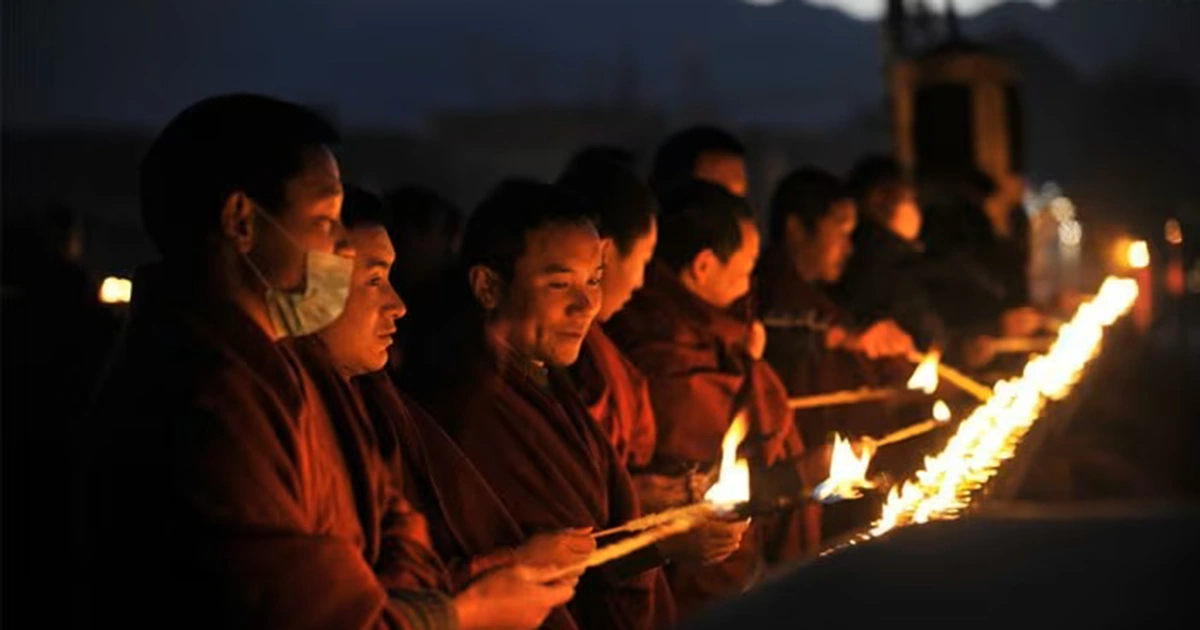
In Khumbu culture, Lhosar is observed at monasteries as a strictly religious occasion, despite occasionally being confused with Gyalpo Losar. To bring in positivity and remove obstacles for the upcoming year, monks burn juniper incense, make butter-lamp offerings, chant mantras, and perform long-day pujas.
Butter Lamp Lighting Ceremony
Trekkers have the unique opportunity to witness monastery life in its most devoted form when they visit Lhosar at Tengboche or Thame.
Everest Marathon
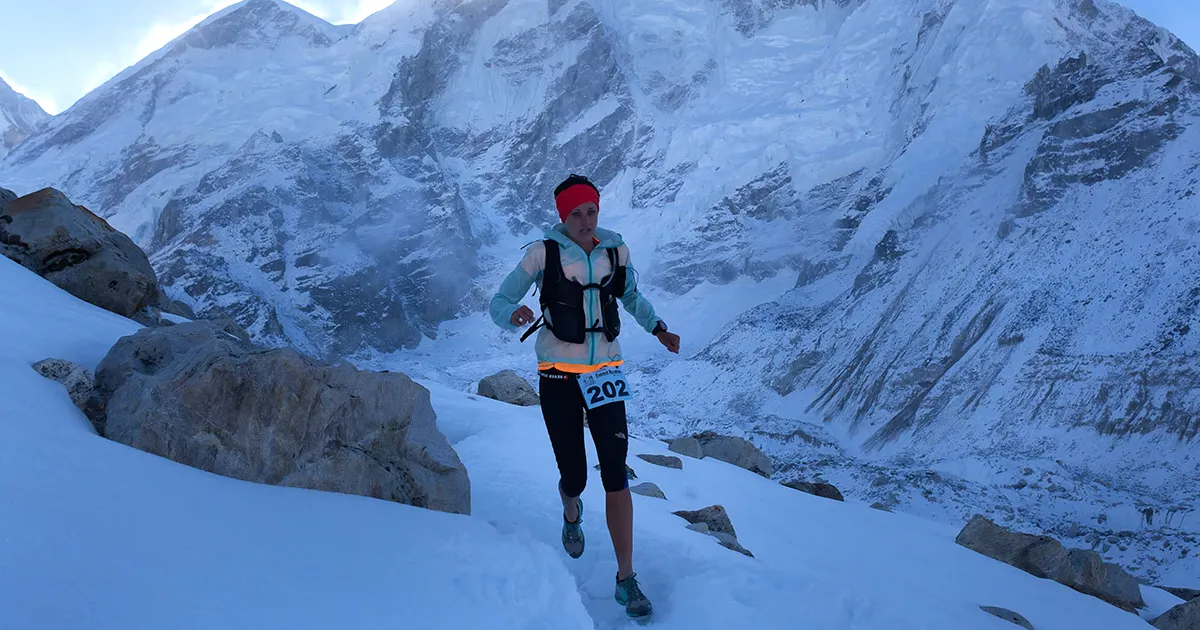
Held annually on May 29, the date of the first Everest summit in 1953, the Everest Marathon is a vibrant event that combines sports, culture, and community pride. Even though it is not a spiritual festival, but it is culturally significant.
The race is more than just a competition, with runners from all over the world competing from Everest Base Camp to Namche Bazaar. This event becomes a regional celebration as Sherpa communities organize local events, prayer ceremonies, and gatherings. It reflects the Sherpas’ enduring relationship with the mountains and their role in modern Himalayan trekking culture.
Runners in Everest Marathon
Preserving the Sherpa Traditions
The Khumbu region has long preserved the Himalayan spirituality and the traditional Sherpa culture. With treks aimed at the local festivals like Mani Rimdu, Dorje and Lhosar, not only does the tourism, rich cultural heritage of the also Khumbu flourishes.
Whenever you plan a trek to Everest, make sure to plan a few extra days to witness the culture of the region. Consult with your trekking agency to find out the festivity days for the time and use your extra acclimatization days to witness rich Sherpa festivals. Even better if you book your trip with efficient companies like Awesome Holidays Nepal.
Mani Rimdu is the most important Sherpa Buddhist festival in the Everest region. Celebrated in monasteries like Tengboche and Thame, it retells the story of Buddhism’s arrival in the Himalayas through prayers, blessings, masked dances, and ancient rituals. For Sherpas, it is a time of renewal, community, and spiritual cleansing.
When is Mani Rimdu celebrated in 2026?
In 2025 Mani Rimdu at Tengboche Monastery was scheduled for November 5–7, 2025 (based on the Tibetan lunar calendar). Since the festival dates shift every year, and the final confirmation is announced by the monastery’s head lama. For 2026, the date is speculated to be November 7 to 9 for public celebrations for Tengboche monastery. However, the date for public celebrations for Thame monastery and Chiwong monastery isn’t yet confirmed.
Where is Mani Rimdu held in the Everest region?
The festival is celebrated in three major monasteries of Khumbu like, Tengboche Monastery (the most popular for visitors), Thame Monastery, Chiwong Monastery.
How long does Mani Rimdu last?
The monks perform rituals for about 19 days, but the public celebrations last 3 days, which include dances, blessings, and the fire ceremony.
Can tourists attend Mani Rimdu?
Yes, tourists can attend the Mani Rimdu festival for watching the public ceremonies. Some inner rituals remain private, but the dances and blessings are open to respectful visitors.
What happens during the Mani Rimdu ceremony?
There a number of processing that occur during the celebration of Mani-Rimdu festival. Monks put on a distinctive and vibrant attire then perform a series of dances representing all different deities. A fire puja is held to take out all the negativity from people and some monks draw mandala out of colored sand to symbolize impermanence.
What is the significance of the Cham dance?
The Cham dance is a sacred ritual, not entertainment. Monks in vibrant masks portray deities defeating ignorance and chaos. It teaches Buddhist values through dance, rhythm, and storytelling.
Is Mani Rimdu the same as Dumji Festival?
No, Mani Rimdu festival isn’t same as the Dumji festival.
How do I get to the Mani Rimdu Festival?
Most visitors fly from Kathmandu to Lukla, then trek through Namche Bazaar to reach Tengboche. The journey takes about 4–6 days depending on acclimatization.
What should I wear to Mani Rimdu?
Wear decent clothes to wear attend the Mani Rimdu festival. Since it is located at an elevation above 3900 meters, its a good idea to layer your warm clothes to keep yourself safe.
Are there other festivals in the Everest region besides Mani Rimdu?
Yes, there are many other festivals in Everest region besides Mani Rimdu. Some of these are the Dumji Festival, Losar (the Sherpa New yar), and Everest marathon.
What is the Dumji Festival and where is it held?
Dumji Festival is a annual celebration honoring Guru Rinpoche who introduced Buddhism to Tibet and Himalayan settlements like Khumbu region. It’s celebrated in Namche, Thame, Pangboche, Khumjung, and other lower valley villages of Khumbu with feasts, dances, and village ceremonies.
How do Sherpa communities celebrate local festivals?
Sherpa communities celebrate local festivals as a community sharing duties and finances. It blends monastery rituals with strong family and village traditions. People gather for prayers, masked dances, feasts, blessing ceremonies, and community bonding. They celebrate them often wearing traditional Sherpa clothing.
What is the best time to visit Everest for cultural festivals?
Later fall and spring are the best time to visit Everest for cultural festivals. The major celebrations like Mani Rimdu and Dumje festival fall around November and June respectively.
Are there monasteries that host festivals year-round in Khumbu?
Yes, the major monasteries like Tengboche, Pangboche, and Thame hold spiritual rituals all around the year. But the major festivals like Mani Rimdu happen once a year only in a specific date.
Can I trek during Mani Rimdu and experience it?
Yes, you can absolutely trek during Mani Rimdu and experience it. Many trekkers time their Everest Base Camp or Tengboche trek to coincide with the festival.
What is the meaning of "Mani" and "Rimdu"?
“Mani” refers to the Buddhist enchanting “Om Mani Padme Hum“. And Rimdu means a symbolic red pill blessed during the rituals and is distributed for spiritual protection.
Are there restrictions for photography during the festival?
There a few restrictions for photography during the festival. Make sure to respect the “no-photo” areas and avoid flash as much as you can. Whenever you take up-close picture of monks, make sure to take their permissions.
As a polished and passionate writer, Sujata has created content for different types of businesses. She believes good content is the key to reaching out to potential clients through your website. Working as a Sr. Content Writer for Awesome Holidays Nepal, she intends to guide adventurers through the Himalayan country's lovely atmosphere and diverse landscapes with detailed itineraries and informative blogs. Besides writing, Sujata loves traveling and reading good books.
Related blog posts
Discover a choice of tourist destinations loved by most of our visitors. Whether you're on a
jungle safari to spot rare animals or walking through a world heritage site, these
well-planned itineraries cover the major highlights of Nepal.

 Sujata Pokhrel
 call an expert at: