
Lo Manthang Royal History Beyond the Palace
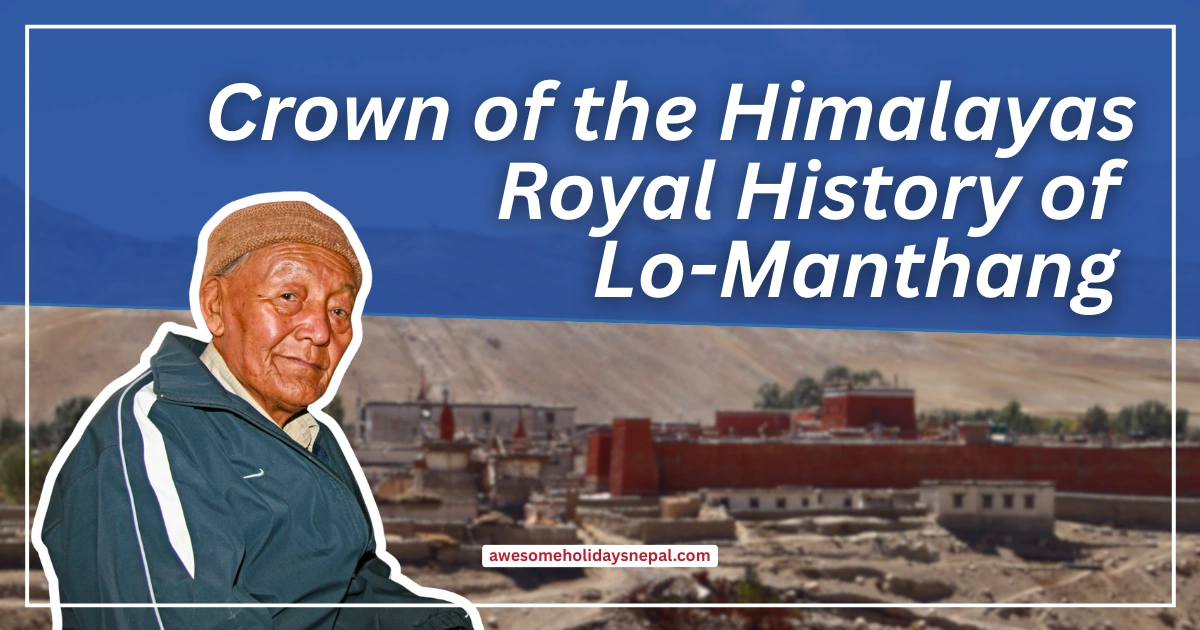
 Sristi Adhikari
Are you a history enthusiast and are interested in the Lo Manthang Royal History? Then, you are at right place.
The Lo Manthang is located in the rugged Himalaya of northern Nepal, and people living in the land while following the century-old culture of isolation, trade, spirituality, and political change makes the Lo Manthang Kingdom history. Lo Manthang stood as the capital of the Kingdom of Lo history for more than six centuries and played a vital role in the everyday lives of the Loba people, ancient monasteries, remote trade routes, religious traditions, and the fading echoes.
In this blog, we will describe more about the Lo Manthang royal history beyond the palace in detail:
Lo Manthang Real Facts
- Location: Mustang District
- Latitude: 28°33’52’’ to 29°19’52’’
- Longitude: 83°28’56’’ to 84°15’18’’
- Area: 727 sq. km
- Population: 1899 approx.
- Elevation: 3800 m above sea level
- Climate Zone: Temperate, Sub-Alpine and Alpine.
Religion and Rituals
Religion forms the spiritual backbone of Lo Manthang Royal History Beyond the Palace. In Lo Manthang, the people follow Tibetan Buddhism for centuries which shapes both leadership and community values.
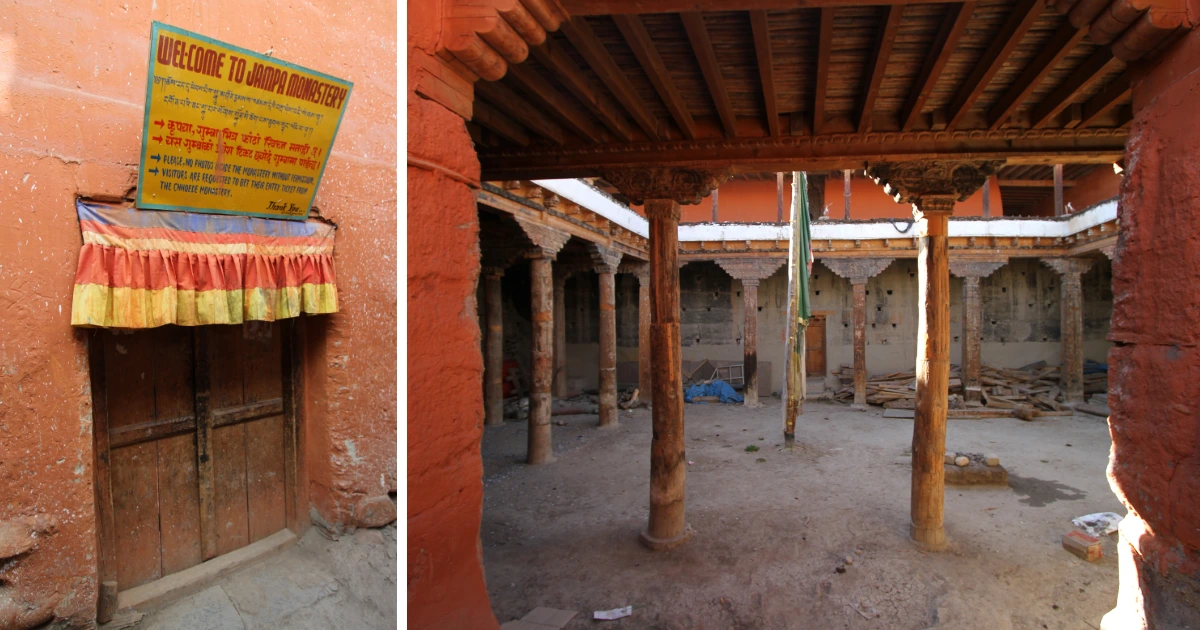
Different popular monasteries like Jampa Lhakhang and Thubchen Lhakhang preserve ancient murals, scriptures, and sacred traditions supported by former Lo kings where you can see the Tibetan influence. Similarly, celebrated rituals are not limited to grand festivals but they are part of everyday routines either it is a morning prayers or seasonal blessings for crops and livestock.
Families invite monks to perform ceremonies for births, marriages, and funerals, keeping spiritual customs alive at home. These quiet practices show that Lo Manthang Royal History was shaped as much by faith as by royal power. Beyond the palace walls, religion continues to define identity, memory, and belonging in Upper Mustang.
The Origin of the Lo Kingdom
The Lo Manthang royal history began when a visionary leader, Ame Pal, successfully established the Kingdom of Lo around 1380 AD. Ame Pal was the one who united all the small, scattered valleys, shaped by a small tribal region, into one and built the fortified city of Lo Manthang as his Buddhist kingdom.
This city is surrounded by towering mud-brick walls and guard towers, becoming the heart of the Lo Kingdom, embodying both strategic defense and royal grandeur. Lo Manthang’s walls and the palace at its center became living symbols of sovereignty.
The rich Lo Manthang royal history was written not just in decrees and alliances, but also in the very architecture and art that adorned its monasteries and homes, and art is preserved through years of seclusion and devotion.
A Kingdom Tied Closely to Tibet and Tradition
The Kingdom of Lo has very close ties with Tibet in terms of culture and spirituality. It has been following the Tibetan Buddhism and philosophies as of now. The previous rulers of the Lo Kingdom has been upholding the traditions that blended political authority with spiritual guidance.
The Lo Manthang royal history is deeply rooted in Buddhist festivals, monastery construction, and religious rituals, which remain as a major part of Mustang’s cultural identity today. When you visit the Kingdom of Lo, you can see the cultural continuity as of now, even though many empires rose and fell over the centuries which make it unique kingdom while preserving its distinct identity with a mixture of Himalayan extremes and Buddhist serenity.
Architectural and Cultural Treasures
The Lo Manthang Royal History also lives in the architecture and artifacts of the region. Within and beyond the palace walls, you’ll find ancient mud-brick homes, monasteries filled with mandalas, prayer flags fluttering over mani walls, and countless art objects and scriptures that testify to centuries of spiritual devotion. Some of the popular 15th century monasteries inside these walls are:
- Monkhar Palace: Famous as the residence of Royal family.
- Thupchen Monastery: Widely popular due to its mural and unique architecture.
- Jampa Lhakhang(Jhyampa Gompa): Has a large Maitreyan Buddha.
- Chhode Monastery: Monastic center which is still running.
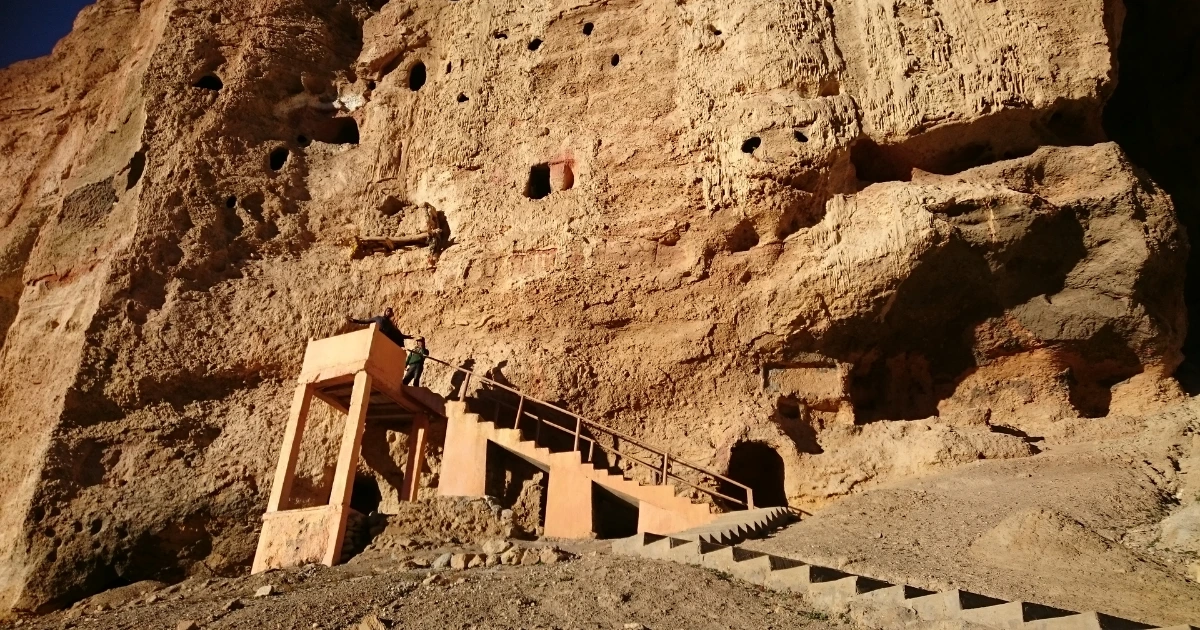
Even the Chhoser sky caves which is a complex series of cliff dwellings and burial sites followed by offering the deeper insights into the spiritual practices and everyday concerns of generations of Mustang peoples.
Celebrated Festivals
The Lo kingdom is not only defined by its palace, but also with vibrant cultures and festivals. The Lo Manthang Royal History is also seen in festivals like Tiji where the entire community gathers in the main square as masked monks perform sacred dances that symbolize the triumph of good over evil.
The performance is a form of spiritual life of the Loba community which has been passing through generation to generation. When drums echo against the mud-brick walls and colorful robes swirl in the mountain wind, you can feel how closely faith and history are connected here.
The festival reminds locals of their ancestral kings, their protectors, and the spiritual foundations that sustained the kingdom for centuries. Yartung festival, Lhosar, Dhachyang are some other festival celebrated by Lo People which keeps the story of the kingdom alive in the hearts of its people. Other small rituals, seasonal prayers, and family ceremonies also represent the Lo Manthang Royal history.
From Sovereign Rule to Semi-Independence
Although the Kingdom of Lo was free for years, things started to change in Nepal. By the 18th century, Mustang became a kind of independent state under Nepal. The royal family still made decisions for the locals which makes the history of the Lo Manthang royal family showed an proud tradition for many years.
After being a semi-independent Kingdom, the Kings of Lo kept their local culture and traditions alive for centuries. Likewise, the King of Lo used to deal with other neighboring countries in terms of politics.
The kingdom survived because of relationships, a strong army, and protecting its culture. The Kingdom of Lo also known as Upper Mustang and its people were able to keep their way of life through diplomacy, martial strength, and cultural defense.
The Last Monarch: Jigme Dorje Palbar Bista
The most compelling chapter of the Lo Manthang royal history belongs to the late King, Jigme Dorje Palbar Bista. He became a 25th king in 1964 and stood as both ruler and guardian of Mustang’s traditions.
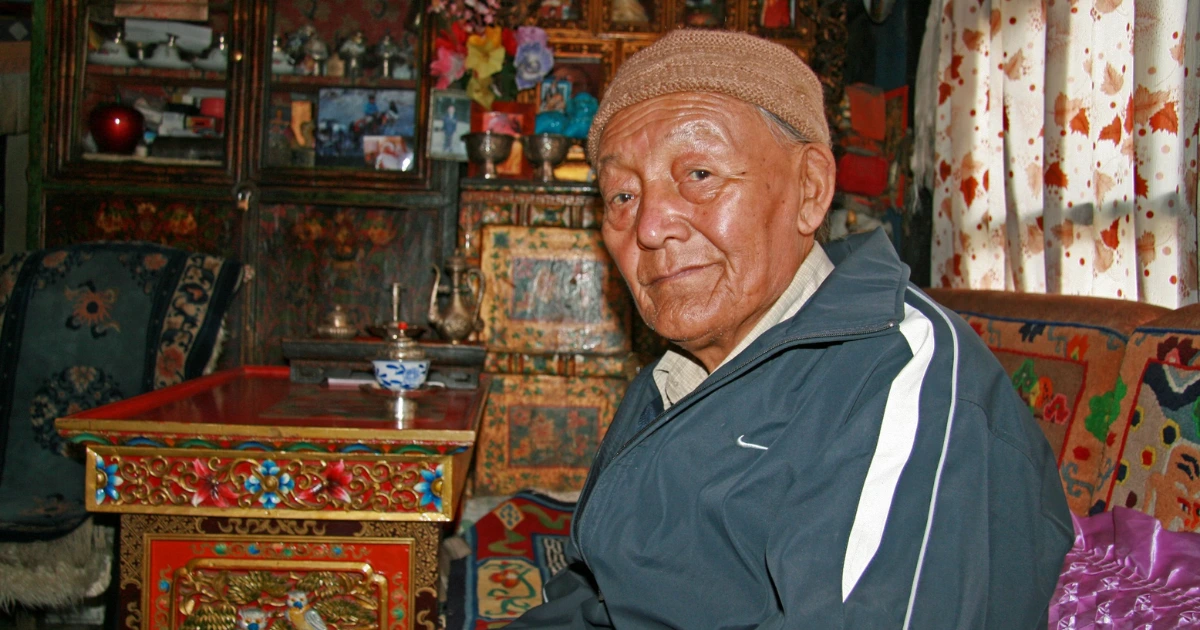
During that period, the world was rapidly changing, but Lo Manthang balanced modern pressures with deep respect for ancient customs. King Bista protected local monasteries, encouraged festivals that kept spiritual practices alive, and ensured that the heritage of the old kingdom remained vibrant even as Nepal moved toward centralization.
He ruled until 2008, when Nepal became free from all monarchies and became a federal democratic republic. But, even after the official end of royal titles, Jigme Dorje Palbar Bista continued to be revered by the people of Mustang as their cultural and spiritual leader.
It was not simply the end of rule but a transformation of how the Lo Manthang royal history lived in the hearts of its people.
Legacy That Lives On
The legacy of Lo Manthang Royal history is still prominent as it is seen in the every corners and street of the alleys, bricked walls of ancient monasteries or in the chanting of monks. The culture, heritage, and unique identity of Lo kingdom is still being protected and Jigme Dorje Palbar Bista is the one who had played a major role in it.
The Lo Manthang royal history is more than the walls and thrones of the royal palace but it is all about the way a remote villager keeping their tradition, faith, alive with resilience. If you want to visit the hidden kingdom of Nepal, and want to get deeper insight of the Lo Manthang Royal history, make sure to contact Awesome Holidays Nepal for Upper Mustang customizable and fixed packages for 2026.
FAQs
Expand AllWhat was the Kingdom of Lo, and how is it connected to Upper Mustang?
A 14th-century, independent Tibetan-Buddhist kingdom established in 1380 by Ame Pal in the Himalayas was the kingdom of Lo. The Kingdom of Lo is connected to Upper Mustang with Tibetan language, culture, and Buddhism.
Is Lo Manthang the capital of the former Kingdom of Lo?
Yes. Lo Manthang is the capital of the former Kingdom of Lo.
Why is Lo Manthang described as a “walled city”?
Lo Manthang is described as a “walled city” because King Ame Pal constructed a 6m high earthen wall inorder to protect the city in 1380 AD.
Is Lo Manthang a UNESCO World Heritage Site?
No. Lo Manthang is not in a UNESCO World Heritage Site.
Which monasteries are most associated with Lo Manthang’s historic core?
Jampa Lhakhang (14th century), Thubchen Monastery (late 15th century), and Chode (Dragkar Thegchen Ling) Gompa (18th century), are some monasteries that are associated with Lo Manthang’s historic core.
What is Thubchen Monastery and why is it significant?
Thubchen Monastery is a monastery located in the ancient walled city of Lo Manthang and was built in 15th century. It is significant because it is a 15th-century Sakya school Buddhist monastery which is popular for its immense assembly hall, ancient murals, and historical significance.
Who is commonly credited with establishing the Kingdom of Lo?
Ame Pal is commonly credited with establishing the Kingdom of Lo.
What is known about Lo Manthang’s relationship with trans-Himalayan trade routes?
Lo Manthang was a crucial, wealthy, and strategic trading hub on the ancient trans-Himalayan salt trade route linking Tibet and India and it was a protected checkpoint which controlled trade flows, with local Lobas transporting Tibetan salt to lower regions in exchange for food grains.
Was Upper Mustang an independent sovereign state historically?
Yes. Upper Mustang was an independent sovereign state historically.
When did the monarchy/titular kingship end in Nepal, affecting Mustang’s royal title?
On May 28, 2008, monarchy/titular kingship end in Nepal, affecting Mustang’s royal title.
Who is widely reported as the last King of Mustang?
Jigme Dorje Palbar Bista is widely reported as the last King of Mustang.
What is the difference between “King of Mustang” and “Lo Gyalpo” terminology in sources?
The “King of Mustang” and “Lo Gyalpo” is term given to represent the monarch of Tibetan kingdom of Lo. Lo Gyalpo is the traditional term while King of Mustang is a modern term.
Why do heritage researchers focus on conservation threats in Upper Mustang?
Heritage researchers focus on conservation threats in Upper Mustang because Tibetan-Buddhist culture and architecture are quite ancient, fragile, and unique which may face an imminent risk of collapse from accelerated climate change, rapid uncontrolled tourism development, infrastructure construction, and out-migration.
What does “earthen architecture” mean in Lo Manthang’s context?
Earthen architecture means a centuries-old, sustainable building made up of clay, mud, stones, and sometimes juniper bushes or like fortified, multi-story buildings, palaces, and monasteries in Lo Manthang’s context.
Are there published historical studies focused specifically on the Kingdom of Lo?
Yes, Ramesh K. Dhungel’s 2002 monograph The Kingdom of Lo (Mustang): A Historical Study is focused specifically on the Kingdom of Lo.
How did the wall and gates shape daily life inside Lo Manthang?
The wall and gates of Lo Manthang acted as a protective barrier which deeply influencing daily life of Lo people’s social structure, and safety in the high-altitude, arid desert of Upper Mustang.
How can travellers engage respectfully with living heritage in Lo Manthang?
Hiring licensed local guides, dressing modestly, and seeking permission before photographing people or religious sites are some of the respectful travel ethics to be fulfilled when visiting living heritage in Lo Manthang.
What is the role of oral history in preserving Lo Manthang’s royal narratives?
The role of oral history acts as a living archive that sustains the cultural, social, and political identity in the preservation of Kingdom of Lo Manthang’s royal narratives.
Where can readers find reputable heritage summaries about Lo Manthang?
Reader should learn about the reputable heritage summaries about Lo Manthang via UNESCO World Heritage Centre, Academic and Research Journals, Specialized Cultural Guides, Government/Tourism Official Portals, and Specialized Travel agency Blogs.
What roles did Lo kings play beyond living in the palace?
Lo kings play role of managing local affairs, preserving Tibetan Buddhist traditions, and maintaining autonomy from Nepal besides living in the palace.
Related blog posts
Discover a choice of tourist destinations loved by most of our visitors. Whether you're on a jungle safari to spot rare animals or walking through a world heritage site, these well-planned itineraries cover the major highlights of Nepal.

 call an expert at: