
Kailash Kora Vs Everest Base Camp Trek
 Amrit K. Aryal
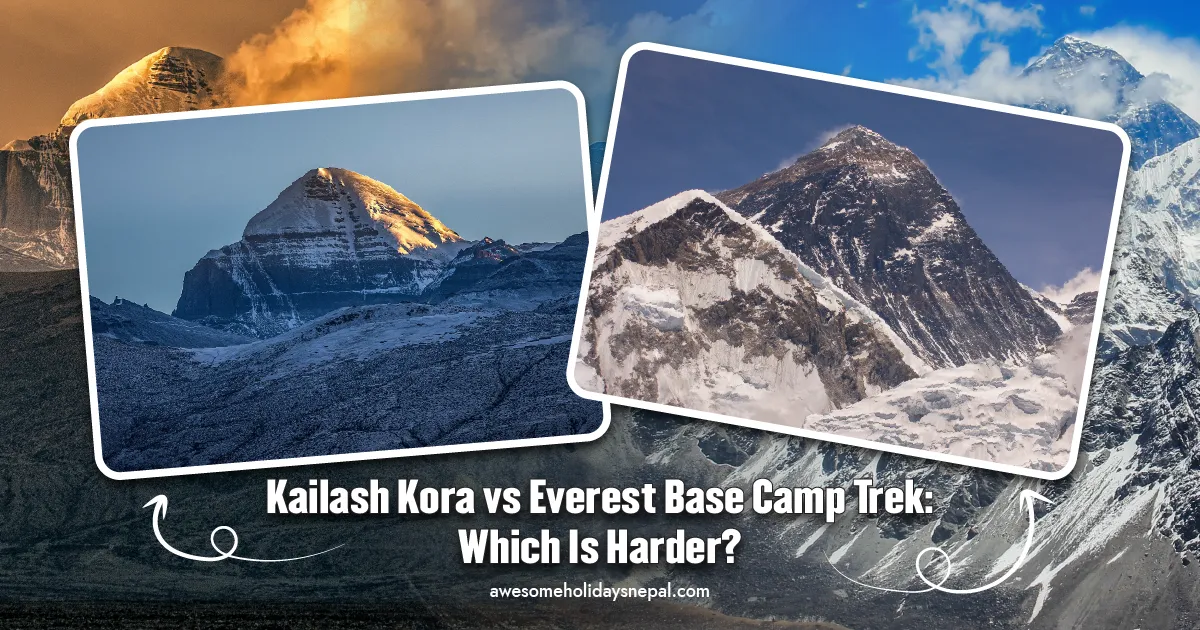
People are often found comparing Kailash Kora vs. Everest Trek, their difficulty level, and altitude.
Especially those who have done one of them and are planning to go to the other. People compare the various aspects of trekking in both. Those who have not been to Kailash think Kailash is easier, as it is shorter. The question “Is the Kailash Trek really tougher than the Everest Trek?” Let’s find out.
In general, the Kailash trek just takes three days to complete as you start walking, but the Everest Trek takes almost 12 days. So, the Everest Base Camp Trek is longer, and it is obvious to think it might be more difficult than the trek to Kailash. Everest and Kailash are two mountains located in different regions, countries, and at varying altitudes.
Irrespective of different profiles, trekking at high altitudes is not easy. Both of them are demanding, risky, and amazing. Comparing Everest and Kailash based only on distance is the wrong approach and an injustice for both of them. Difficulty is not measured only by distance alone. It is measured on altitude, thinness of air, ascending and descending slope, speed, food, and other supplies.
In this blog, we will find out the various aspects related to the difficulty and accessibility of the Kailash vs Everest Trek.
Kailash vs Everest: Distance and Duration
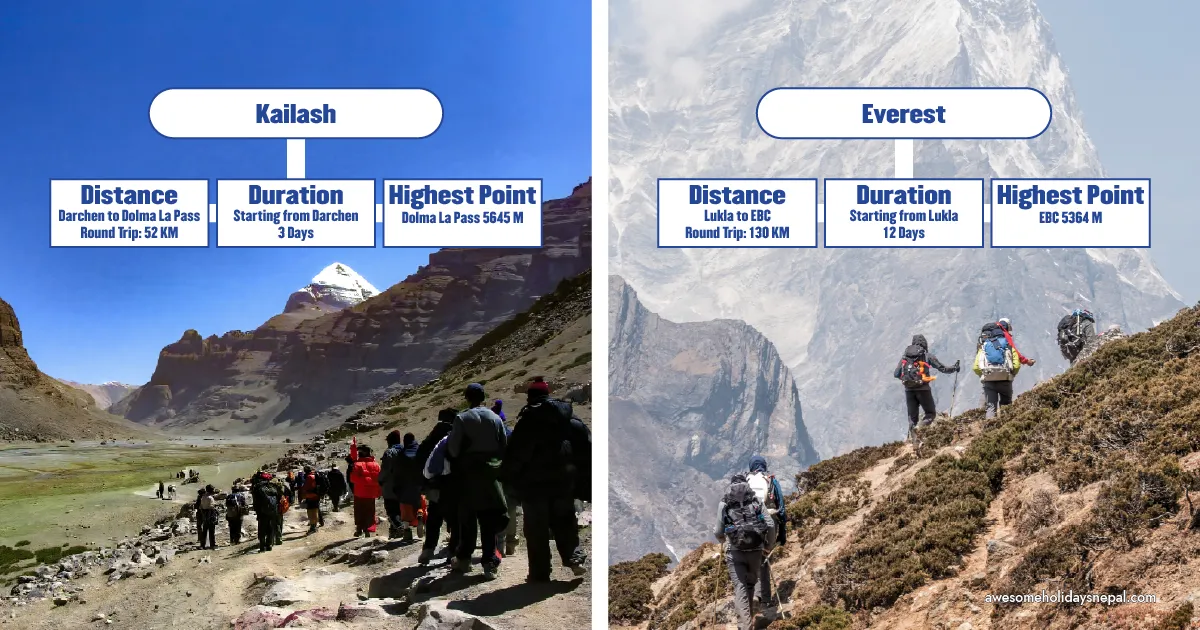
The Kailash Kora difficulty level and the Everest Base Camp difficulty level are often measured in terms of distance and duration. The Kailash Kora distance is about 52 km, which is usually completed in 3 days. Only in certain instances and under specific weather conditions is it extended to four days. On the other hand, the Everest Base Camp trek itinerary is extended to roughly 130 km round trip for 12 days in general. From a distance, Everest looks harder. But in reality, Kailash drains a lot of energy. It is more demanding and creates more stress on the muscles. Difficulty does not come only from distance. But from the stress applied to the body and muscles.
Trekking around Mount Kailash calls for much more effort in a short time, due to which the difficulty is increased. This could be the first clue to compare the Kailash vs Everest Trek.
Starting Point: Where Difficulty Actually Begins
Traveling for several days, the Kailash Kora begins from Darchen, at around 4,700 meters. In most cases, the vehicle will drop you to Yamadwar, and from there, pilgrims start the actual Kailash Parikrama. This is the first step for your kora for the next three days. From the very first step, you are already at an altitude of 4700m. This is something to notice. In Darchen, you sleep high. You ate at high, and you were walking at high. This matters because you are escaping acclimatization. This height is already higher than the halfway point to Everest Base Camp.
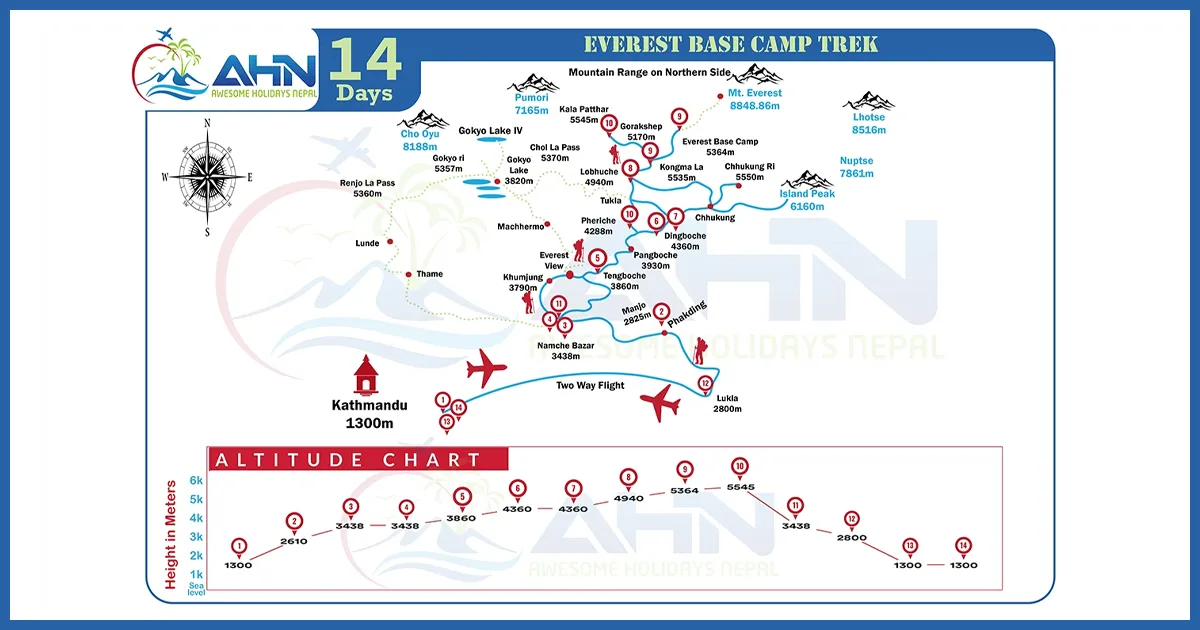
The trek to Everest Base Camp starts at Lukla at around 2,800 m. This is good for the body to adjust to the decreasing volume of oxygen. As we slowly ascend higher for several days, the body starts adjusting to the altitude and thin air. Namche Bazaar and Dingboche or Pheriche are common spots for acclimatization. This is the basic principle of climbing high and sleeping low. By the time you reach 4700 m, almost the height of Darchen, your body has already learned breathing and acclimatization.
But this is not possible for Kailash. So, the kailah parikrama feels more difficult.

Acclimatization:
The three days in Kailash do not include acclimatization, but the 12 days in Everest are comprised of acclimatization too. In general, the trek to Everest Base Camp takes longer with more walking days.
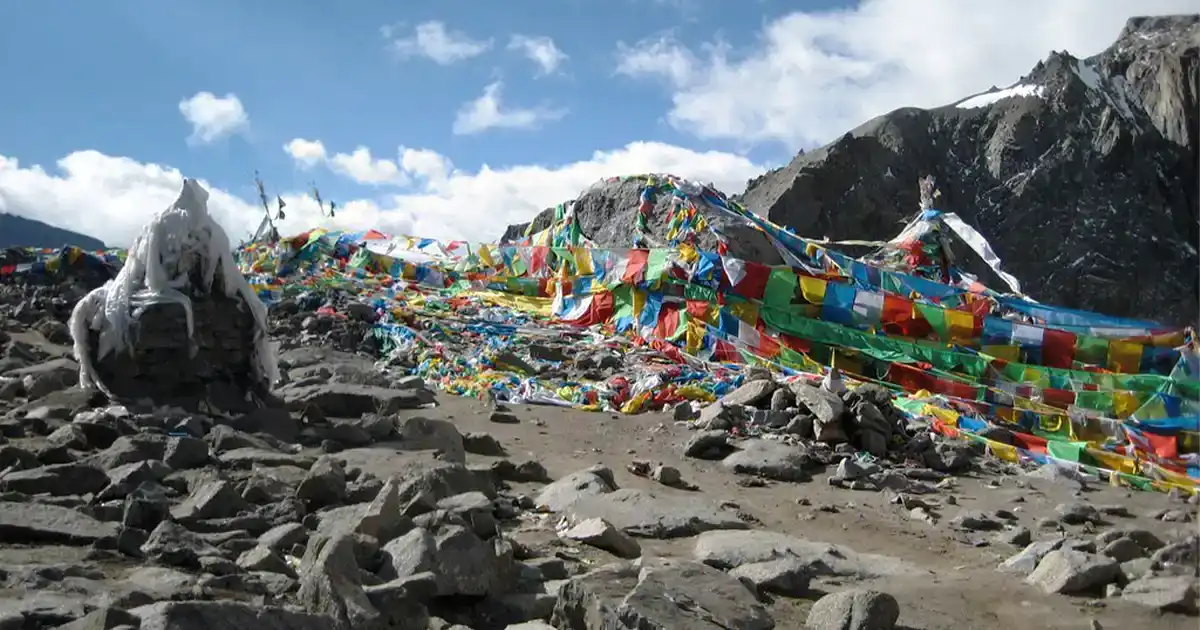
Kailash Parikrama Highest Point: Dolma La Pass
On the second day, pilgrims cross Dolma La Pass, at an altitude of 5,645 meters. This is the highest point on Kailash Kora. The ascent is steep, and the air is thin. But, at this height, the weather can change at any time. Snowfall and strong winds are common at this pass. Everest Base Camp lies at a height of 5,364 meters above sea level, which is lower than the Dolma La pass. Another good thing is that the ascent is gradual, and trekkers walk slowly.
Also, after reaching the Everest base camp, trekkers must descend the same way they came from. There is nowhere to go, crossing the base camp. But on the Kailah Kora, you must cross the pass and reach Zutulphuk for resting. Crossing the Dolma La Pass is the hardest part of the Kailash Kora. This fact also increases the Kailash Kora difficulty level. This is why this is considered the most difficult day during the Kailash Kora.
Altitude Sickness: Kailash vs EBC
Though Altitude sickness is a problem in both treks, Kailash has more impact. This is because you start from a high altitude in Kailash. Kora started from Darchen at a height of 4,700 m, but in the EBC trek, walking started from 2,800 m. Additionally, the EBC is designed to acclimatize. We climb high hills, visit surrounding villages, and come back to hotels on the lower ground. This is absent in the case of Kailash. So, the only way to remain safe in Kailash is by drinking more water and consuming high-energy-providing food. If any problem arises on the first and last day, it is manageable, but it could be difficult on the second day.
Oxygen and Supplies in Kailash Kora Vs Everest Trek
Oxygen supply in Kailash is more limited. Your tour operators will be carrying some oxygen cylinders, but there are no proper medical clinics on the Kailash Kora. Some of the hotels in Everest Base Camp keep oxygen cans for emergencies. Most importantly, EBC has a facility for helicopter evacuation in an emergency. This is not the case with Kailash; there is no option of helicopter rescue.
Terrain and Walking Trails
The walking trails to EBC are well established. The trails are stone-paved with clear directions indicated. There are also certain suspension bridges on the way. There are villages and interaction with people on every corner of the trails. There are teahouses and guesthouses every half hour of walking. You can just rest and have a cup of tea and warm yourself up.
For Kailash, everything is different; the terrain is tough, without proper pavement. The path is rocky, uneven, and often slippery. There are quite rare teahouses around the Dolma La Pass. Except for a few hotels and teahouses, there are seldom any villages in Kailash. The walk from Darchen to Dirapuk is smooth, but to the Dolma La pass and to Zutulphuk, it is the toughest one. Even descending from Dolma La is a test of knees and balance.
Facilities, Support, and Safety
EBC has a strong support network with comfortable lodges and medical facilities. There are health posts in several regions, like Namche Bazar and Pheriche. And the major difference is the telephone network. Though not 100%, the network works well in Everest, which is quite rare in Kailash.
Final Comparison: Kailash vs Everest
Comparing the Kailash Kora difficulty level and the Everest Base Camp, the difficulty varies. Both of them involve high-altitude walking, rapid accent, and limited internet access. But also, there are several differences in duration, steepness, difficulties, and physical exhaustion. The EBC tests endurance, whereas the Kailash Kora tests tolerance. This truth about the Kailash and Everest helps you to prepare for the journey.
If you have been to one of the places and are thinking of going to the other, you might need to prepare accordingly. A short trek is not always necessarily easier. Going on both of the treks requires physical fitness and preparation. But still, you need to be clear that completing Kailah Kora night feels more strenuous and difficult.
FAQs
Expand AllWhat is the Kailash kora difficulty level?
The Kailash Kora is considered more difficult than the Everest Trek. The Kora starts easy to moderate, becoming difficult at the Dolma La pass.
Is Kailash Parikrama harder than Everest Base Camp?
Many people often find the Kailash Kora harder than the Everest Base Camp. It is due to the high altitude and quicker gain of height.
Is Kailash Parikrama hard or easy for beginners?
Kailash Parikrama is challenging for beginners due to the sudden gain in height. The thin air might create altitude sickness. Good preparation and acclimatization planning are needed before going to Kailash. Manasarovar yatra.
What is the highest point of Kailash Parikrama?
The highest point in Kailash Parikrama is the Dolma La Pass, at a height of about 5,645 meters above sea level.
How difficult is Dolma La Pass?
This is the most difficult part of the Kailash Mansarovar Yatra. The steep climb, slippery and rocky trails, and thin air make the journey really tough.
Is altitude sickness common during the Kailash Yatra?
Yes. Altitude sickness is a common phenomenon in high mountains and passes like Dolma La and the base camps of Everest and Annapurna. Generally. There is a chance of altitude sickness above 3000 m for the majority of people coming from coastal areas.
How risky is Kailash Parikrama?
The risk associated with Kailash parikrama is moderate to high.
How long is Kailash Parikrama?
It takes three days to complete the 52 km-long Kailash parikrama.
What fitness is required for Kailash Parikrama?
Kailash parikrama demands good physical and mental fitness with good stamina, slow endurance, and the ability to walk long hours at high altitude.
What is the toughest day of Kailash Parikrama?
The second day of the parikrama, crossing the Dolma La Pass, is the toughest day of the Kailash Parikrama.
Related blog posts
Discover a choice of tourist destinations loved by most of our visitors. Whether you're on a jungle safari to spot rare animals or walking through a world heritage site, these well-planned itineraries cover the major highlights of Nepal.
 call an expert at: