
How Hard is it to Climb Ama Dablam?

 Sujata Pokhrel
Climbing the peaks of the Everest region has become quite common after the commercialization of Everest. But how hard is it to climb Ama Dablam? Trekkers aren’t quite aware of it!
It is crucial to remember that climbing a mountain isn’t always about elevation. The steep ridges, unpredictable weather, and unsupportive weather conditions often make ascent difficult even on lower peaks, let alone the mountains of Khumbu. And that’s what Ama Dablam climbing is about.
Let’s review the blog to gain a better understanding of the Ama Dablam climbing difficulty.
Ama Dablam Climbing Route Options
Often referred to as the “Matterhorn of the Himalayas,” Ama Dablam is a stunning, graceful, and extremely technical peak. Its towering ridges and peaks require a special blend of climbing skill, accuracy, and stamina. Thus, the Ama Dablam expedition is a thrilling experience, being one of the technically demanding ascents in the Khumbu region.
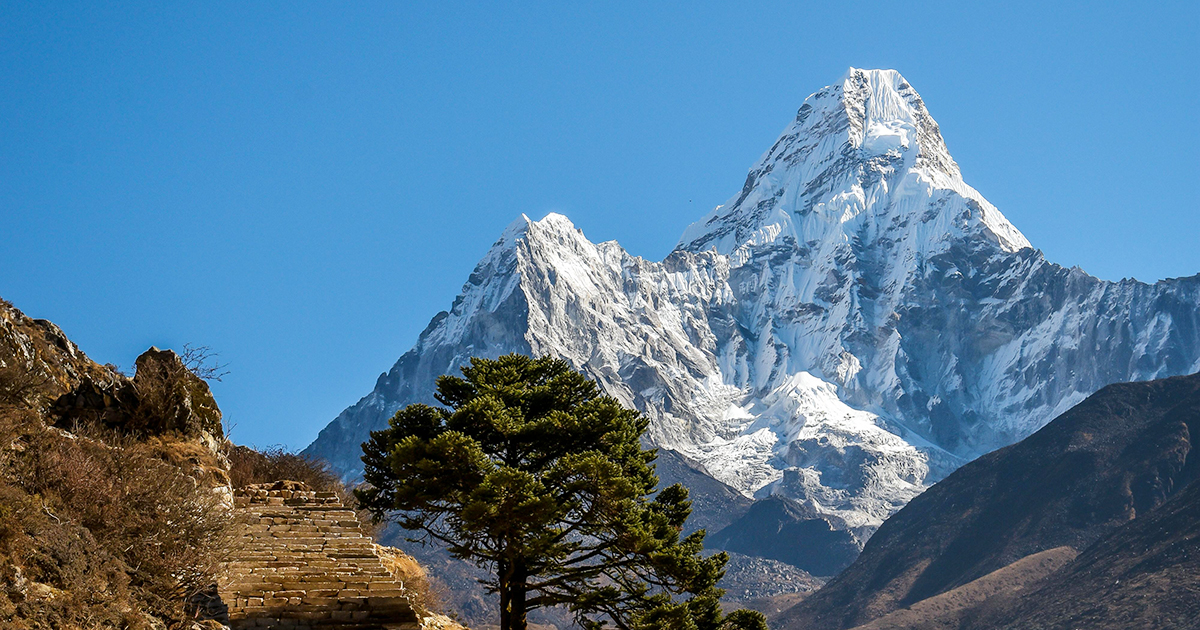
Given the technical complexity of the peak, the Ama Dablam climbing route options are diverse. Here’s the detailed information about different climbing routes for Mount Ama Dablam.
Southwest Ridge Route
The southwest ridge route is the most preferred route for ascending the summit of Mount Ama Dablam. Since the trail follows a straight ridge line that’s more stable and has well-established routes, many commercial companies prefer it to ascend the peak. Compared to other faces of the mountain, the southwest ridge is more safer and confers safety from disastrous avalanches.
It is more safer route and rewarding route to climbers. It offers a true alpine experience with steep rock, exposed snow, and a direct line to the summit.
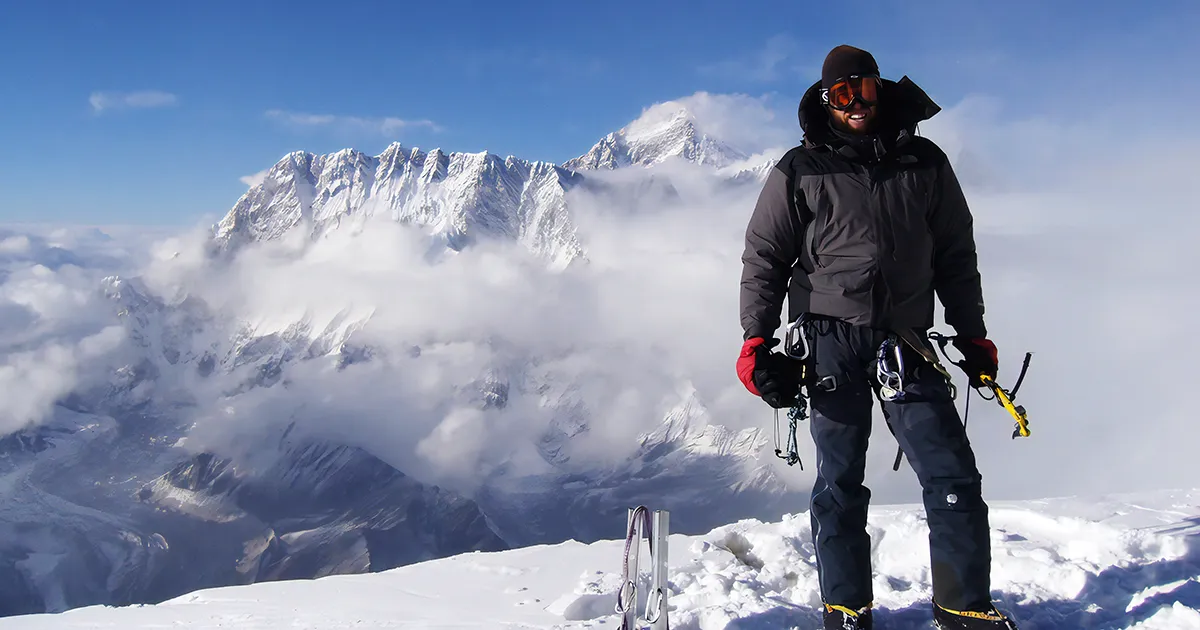
Climbing Ama Dablam through the South ridge route consists of the following technical sections:
The Yellow Tower
Located just above Camp 1, the Yellow tower is also called the technical crux of the entire climb. It involves climbing a nearly vertical rock wall at a high altitude while balancing on tiny holds with controlled movements and exact foot placements.
Although fixed ropes help climbers, actual rock climbing skills are still necessary for the endeavor. interesting sections of the expedition because of the feeling of hanging above enormous drops while pulling yourself upward.
The Grey Tower
It is another challenging rocky section that lies between camp 1 and camp 2. This section involves nearly vertical rocks that has a mix of slabs, cracks, ad small ledges. You need to move carefully controlling your foot placements on the narrow ridges and small holds of the peak.
Altitude fatigue and strong winds that funnel through the ridge present challenges to climbers as they climb this section. The Grey Tower presents a harsh test of endurance due to its combination of height, exposure, and exhaustion.
Mushroom Ridge
The mushroom ridge is another thin crust section that comes right before reaching the camp 3. This ridge must walk off the tight snow trail that has sharp drops in both the sides. One needs to maintain a balance while maintaining composure and place their crampons right.
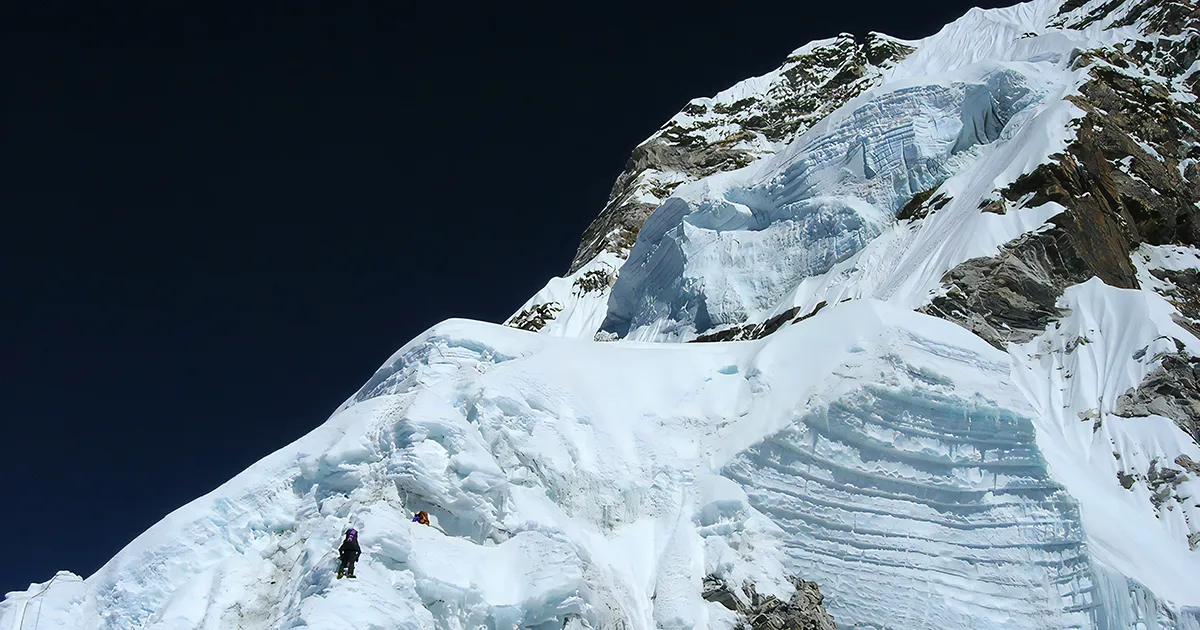
This narrow spine can cause disaster with just one wrong step, therefore even seasoned mountaineers recognize its intensity. While the views are intriguing, the exposure is equally daunting.
High Camp to Summit Push
The final summit push is a true test of your proficient climbing skills. From camp 3, the transforms to steep snow and ice slopes until you reach the summit. Because of the thin air, cold temperatures, and sharp winds, the climb becomes less technical but much more exhausting.
Climbers must make an effort in every movement and maintain concentration for hours as they ascend a lengthy ridge. Both mental and physical endurance gets put to the test during the summit push. Climbers are rewarded with expansive views of Everest, Lhotse, Makalu, Cho Oyu, and the entire Khumbu landscape upon reaching the summit ridge, which makes the entire hardship worthwhile.
Less-Preferred Routes for Climbing Ama Dablam
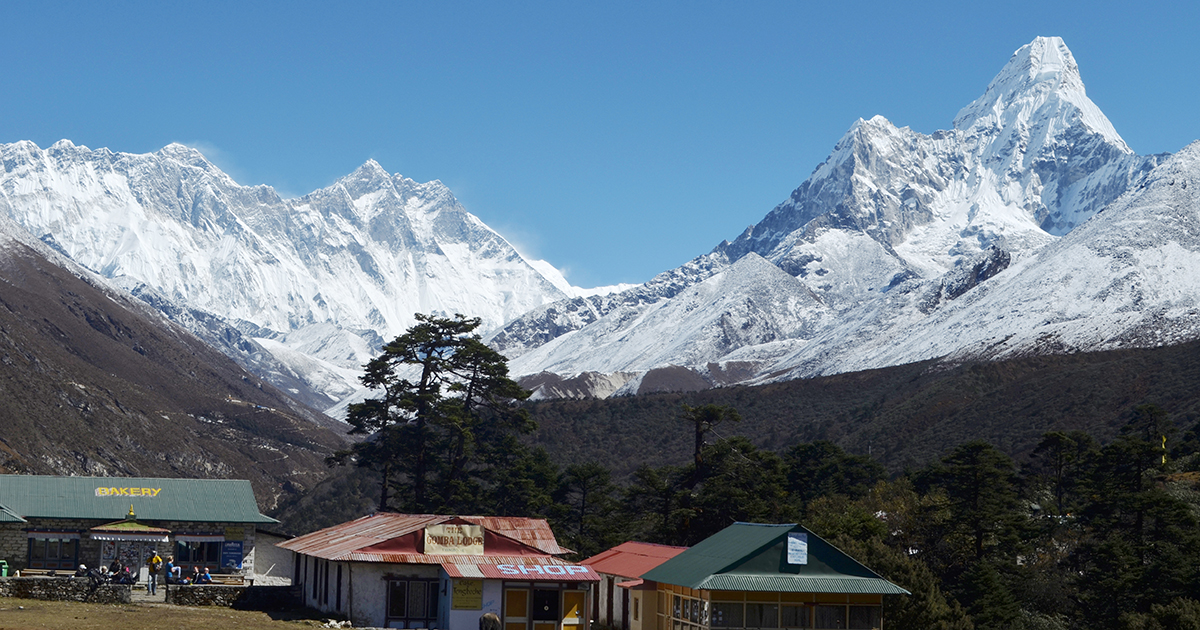
While the south-ridge is the most preferred, it isn’t the only route to reach the summit of Mount Ama Dablam. The east ridge route, South Face route, and Northeast face route are the other ways for the summit. Because of the extreme difficulty, unstable snow, and unpredictable weather conditions, people barely prefer these.
Unlike the Southwest Ridge, these alternative paths do not have established camps or fixed ropes. Hence these are accessible only to expert alpinists seeking highly technical ascents.
East Ridge Route
The East Ridge Route is an exposed, steep line that demands high alpine expertise. There are sections of steep rock and snow, little protection, and few fixed ropes. Only seasoned and skilled climbers attempt this route due to its high objective risk and technical complexity

South Face Route (Lowe Route)
With a combination of icy slopes and vertical rock, the South Face, also known as the Lowe Route, is incredibly steep and technical. Due to the high risk of avalanches and serac, which calls for precise climbing skills and total independence, it is rarely climbed.
Northeast Face Route
The Northeast Face is a dangerous, long, and isolated route with difficult terrain and unpredictable snow conditions. Strong technical abilities, advanced route-finding skills, and experience in extreme alpine conditions are essential, with little margin for error. Due to its remoteness and danger, this route is rarely ascended.
Challenges of Climbing Ama Dablam
It takes much more than just physical strength to climb Ama Dablam. Climbers are forced to deal with danger, uncertainty, adverse conditions, and the ongoing need for focus at every stage of the ascent.
A Test of Physical and Mental Resilience
The physical demands of Ama Dablam include long trekking days, steep slopes, and the strain of navigating effectively through rugged terrain while carrying equipment. However, it demands firm mental resilience even more than physical endurance.
In high-risk areas, climbers need to maintain composure, have faith in their rope systems, and get over their natural fear of standing on narrow ridges thousands of meters above the valley floor. Every movement becomes more difficult due to fatigue, and the continuous exposure requires constant mental clarity.
Acclimatization and Risk of Altitude Sickness
Ama Dablam’s difficulty is largely determined by altitude. From base camp to higher camps, climbers make quick ascents, frequently navigating steep terrain and gaining a considerable amount of altitude. A rushed acclimatization schedule significantly raises the risk of altitude sickness.
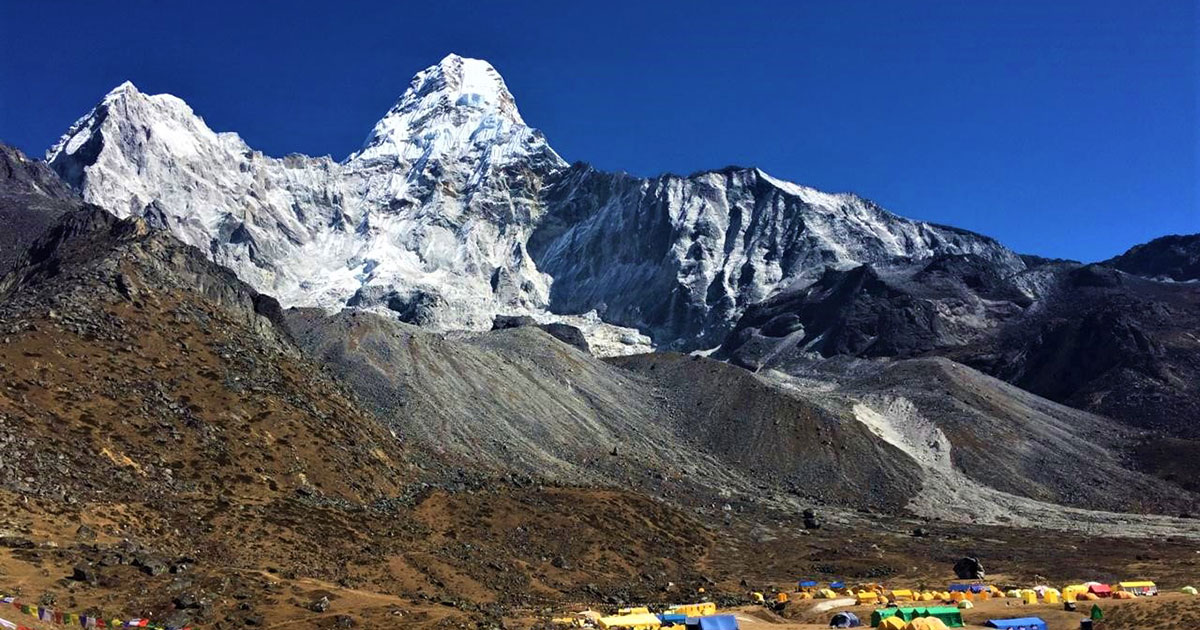
Ama Dablam Altitude Acclimatization Schedule
Before the final push to the summit, an Ama Dablam expedition typically involves climbing to Camp 1 and then returning to Base Camp, followed by another rotation to Camp 2. The body adapts to falling oxygen levels with the aid of this routine.
However, compared to trekking peaks, acclimatization is much more difficult due to the climb’s technical nature. The climb becomes even more challenging at altitude because even well-prepared climbers may experience headaches, sleep disturbances, and a lack of appetite.
Challenging Weather Conditions
Ama Dablam’s weather can change rapidly from calm to dangerously unstable. In particular above Camp 2, strong winds, snowfall, and rapidly declining temperatures are frequent. By covering rock holds and creating instability, even a small amount of snow can turn a route from safe to dangerous.
Temperatures drop significantly below freezing on cold nights, and wind chill makes even quick stops uncomfortable. Because a sudden storm can force climbers to retreat or wait for days at high camps, it becomes essential to plan around weather windows.
Comparing Climbing Ama Dablam with Other Khumbu Peaks
There is no doubt Ama Dablam is quite a unique combination of challenges and rewarding view. But it isn’t the only peak of the Khumbu region. The high mountains like Everest, Lhotse, Nuptse and peaks like Island, Peaky peak, Lobuche peak are equally interesting and climbable peaks of the region.
Here’s a comparison of the features of Ama Dablam with Everest and Island peak.
Ama Dablam vs Island Peak Difficulty
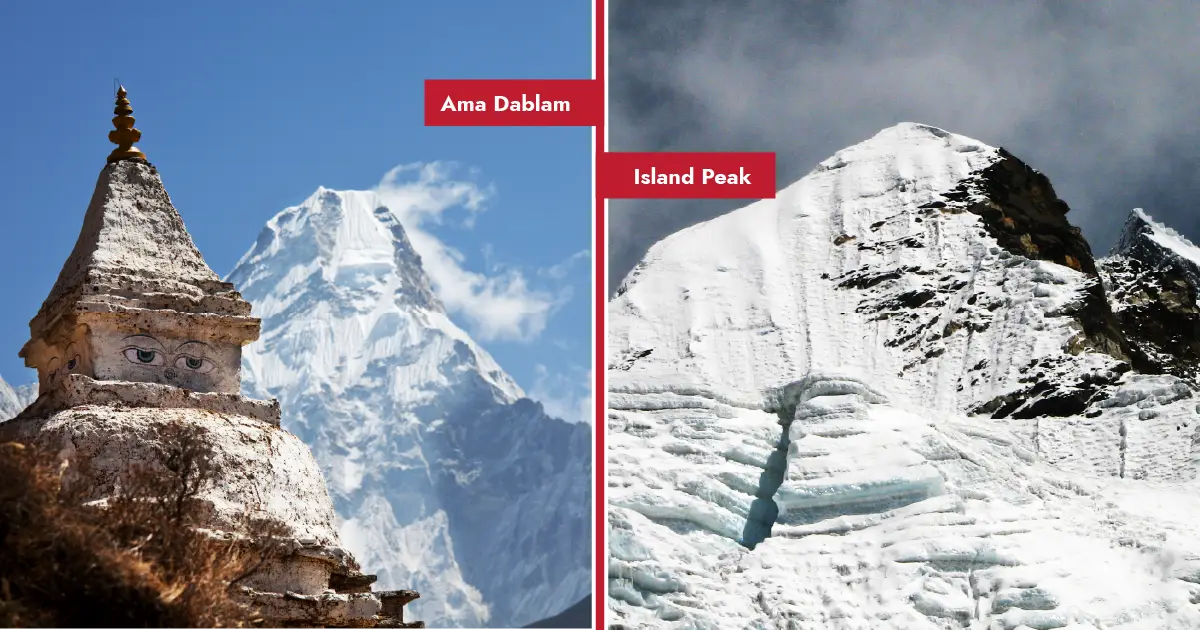
It’s clear how technical Ama Dablam is when compared to Island Peak. Island Peak is a trekking peak that primarily consists of snow slopes with brief sections of mixed terrain. It is designed for beginners or trekkers looking to experience their first Himalayan summit.
But in order to climb in Ama Dablam, climbers must be skilled in rope management, ice climbing, and rock climbing. It requires skills far beyond those required for Island Peak due to its exposed ridges and towering towers. In short, Ama Dablam prepares you for actual mountaineering, while Island Peak prepares you for high altitudes.
Is Ama Dablam Harder than Everest?
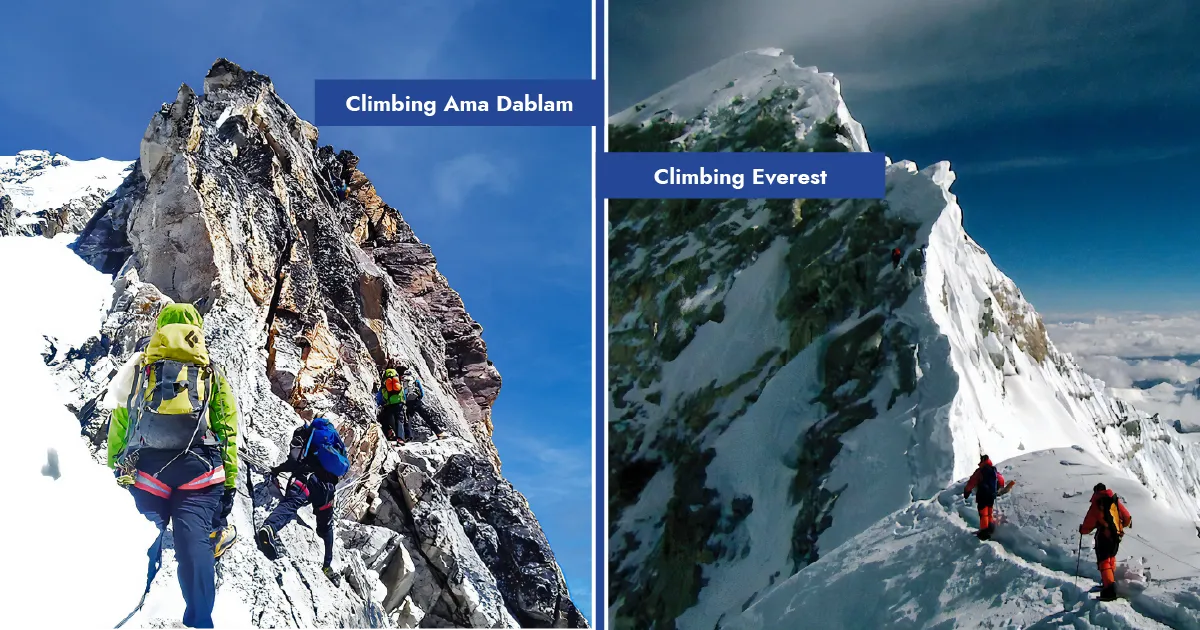
Ama Dablam is generally considered more technical, even though Everest is physically more demanding and much higher. The typical South Col route of Everest is mostly a snow climb, with climbers being led up gradual slopes by fixed ropes. In contrast, Ama Dablam is made up of steep ice, knife-edge ridges, and vertical rock, all of which call for technical skill.
According to many mountaineers, Ama Dablam demands more climbing skills, self-assurance, and a deeper understanding of rope structures than Everest. Ama Dablam tests skill; Everest tests endurance. For this reason, a lot of climbers try Ama Dablam as a warm-up before Everest.
Ama Dablam Climbing Guide
You need to be aware of few climbing tricks to have a successful ascent of the Ama Dablam.
Best Climbing Season
Autumn is the best season to climb Ama Dablam because of the clear skies and more stable ridge conditions. For safe travel on exposed terrain, the fall months offer the solid snow and consistent weather that are crucial.
Although spring is a good time of year, it usually brings more fresh snow, which can make some areas more vulnerable to avalanches. Spring climbing requires climbers to be ready for a slightly smaller window of weather and unpredictable conditions.
Safety Concerns
The key to safety on Ama Dablam is controlling risks, such as slipping on exposed ridges, rockfall, and serac instability. Storms can produce brittle ice and uneven snow deposits, making the area above Camp 2 especially vulnerable to weather variations.
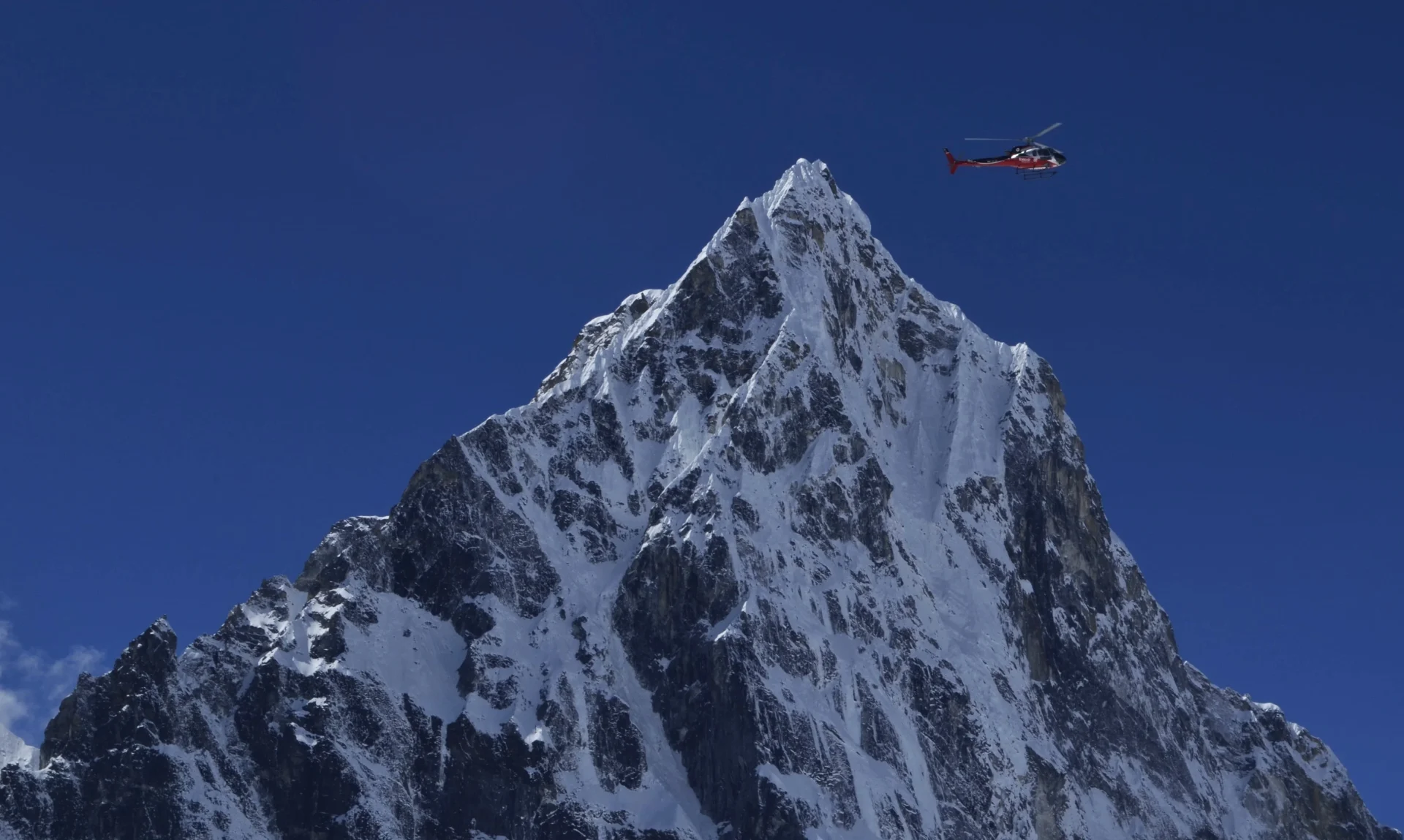
Besides, narrow ledges and a lack of helicopter landing zones make rescue operations above Camp 2 very challenging. As a result, independence and careful planning are crucial. Climbers need to be proficient in rope systems, stick to safety precautions, and pay close attention to their guides’ instructions.
Skills and Equipment Required
To climb Ama Dablam safely, climbers must have a solid foundation in alpine climbing techniques. This includes being able to use crampons to climb ice slopes, maneuver fixed ropes with jumars and rappel devices, and traverse vertical rock with both feet and hands.
Since there are steep drops on both sides for a large portion of the climb, it is essential to feel at ease being exposed. High-quality, weather-resistant gear is essential; items such as double boots, insulated gloves, down jackets, and sturdy climbing equipment are crucial. Every piece of equipment contributes to maintaining performance and safety.
Climbing Permits
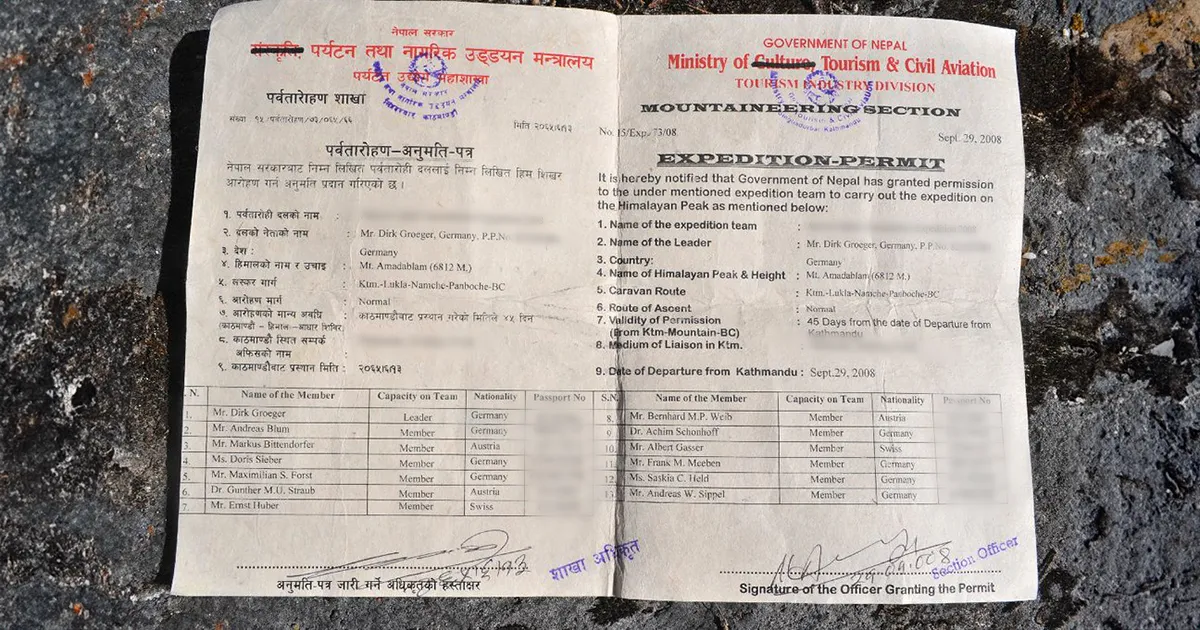
A number of permits are needed to climb Ama Dablam, including those from the Khumbu Pasang Lhamu Rural Municipality, Sagarmatha National Park, and the Nepal Mountaineering Association.
These permits support conservation initiatives, control the number of climbers on the mountain, and guarantee that appropriate safety precautions are taken. Seasons affect the price; autumn is the most expensive because of demand.
Journey of Beauty and Bravery
Ama Dablam is a test of accuracy, perseverance, and unwavering resolve. It is much more than just a high-altitude challenge.
From its jagged ridges to its intricate rock and ice passages, every part of the mountain requires skill and dedication. But the catch is, it offers climbers some of the most breathtaking views in the Himalayas.
Even though it’s not as high as Everest, Ama Dablam is a true climber’s mountain. Reaching its peak is a potent journey of bravery, skill, and appreciation for the raw beauty of the Khumbu.
Keep adventuring!
FAQs
Expand AllIs Ama Dablam harder than Everest?
Yes, Ama Dablam is generally considered more technical than Everest. While Everest is higher and physically more exhausting, Ama Dablam requires advanced rock and ice climbing skills, making it a more technically demanding ascent.
How difficult is Ama Dablam climb?
Ama Dablam is a highly technical alpine climb involving exposed ridges, steep rock sections, and mixed ice climbing. It requires strong endurance, experience with fixed ropes, and the ability to navigate vertical terrain at high altitude.
What is the success rate of climbing Ama Dablam?
The success rate typically ranges between 50% and 60%, depending on weather, experience level, and acclimatization strategy. Well-prepared climbers with technical skills tend to have significantly higher success rates.
Do you need previous climbing experience for Ama Dablam?
Yes, you do. Climbers must have prior experience in multi-pitch rock climbing, ice climbing, and using fixed lines. Without these skills, the technical sections of the mountain become extremely risky.
How long does it take to climb Ama Dablam?
A typical Ama Dablam expedition takes 25–30 days, including acclimatization and summit attempts. The climbing period itself is shorter, but altitude adaptation is essential for safety.
What gear do you need to climb Ama Dablam?
Climbers need mountaineering boots, crampons, an ice axe, harness, jumar, belay device, helmet, and layers suitable for −20°C conditions. Technical gear like cams, carabiners, ascenders, and a quality sleeping system is also essential.
Is Ama Dablam dangerous?
Yes, Ama Dablam is dangerous. The mountain involves rockfall exposure, steep technical climbing, and risks from serac collapse near the Dablam glacier. Although safer in recent years due to fixed ropes, the climb still carries significant inherent danger.
Can beginners climb Ama Dablam?
No. Ama Dablam is not suitable for beginners due to its technical difficulty. Climbers should gain prior experience on peaks like Island Peak, Lobuche East, or other 6,000–7,000m mountains before attempting it.
What is the death rate on Ama Dablam?
Ama Dablam’s fatality rate is estimated at around 1–2%, making it dangerous but less fatal than some other technical Himalayan peaks. Most incidents stem from serac falls or technical climbing errors.
When is the best time to climb Ama Dablam?
The best seasons are autumn (October–November) and spring (April–May). These windows offer stable weather, clear skies, and safer conditions on the ridges and ice sections.
How much does it cost to climb Ama Dablam?
It typically costs around USD 6000 to USD 10000 to climb mount Ama Dablam. The costs depends entirely on the expedition operator, logistics, guide ratio, and included services like oxygen, gear transport, and base camp support.
Do I need oxygen for Ama Dablam
No, you do not require supplementary oxygen for climbing Ama Dablam as as the summit is 6,812m. However, some climbers choose to carry it for emergencies
What altitude is Ama Dablam summit?
The summit of Ama Dablam stands at 6,812 meters (22,349 feet) above sea level.
How fit do you need to be to climb Ama Dablam?
Climbers need excellent cardiovascular endurance, strong core stability, and the ability to perform sustained climbing for hours at high altitude. Training should include rock climbing, ice climbing, and long-duration aerobic workouts.
What is the Ama Dablam vs Island Peak difficulty?
Ama Dablam is significantly harder than Island Peak. While Island Peak is mostly a trekking peak with basic snow and ice sections, Ama Dablam demands vertical rock climbing, knife-edge ridges, and mixed technical terrain suitable only for advanced climbers.
Related blog posts
Discover a choice of tourist destinations loved by most of our visitors. Whether you're on a jungle safari to spot rare animals or walking through a world heritage site, these well-planned itineraries cover the major highlights of Nepal.



 call an expert at: