
How Do Climbers Go to the Bathroom on Everest? Toilets, Waste Bags and Hygiene Explained
 Sristi Adhikari
How do climbers go to the bathroom on Everest?
It’s quite an interesting question that every climber will ask before planning for the expedition, or those who are dreaming about reaching the world’s highest peak, Mount Everest. Doing bathroom is a human basic need, but it becomes so challenging in high altitude, as there are no luxury toilets, no running water, and certainly no privacy for disposing of human waste.
Also, the extreme cold temperature and lack of oxygen above Camp 1 take a long time to decompose human waste, no matter whether it is urine or feces. For decades, Everest climbers have been passing their human waste haphazardly on the trail, and this has resulted in the accumulation of frozen human waste.
This factor is directly polluting the glaciers, snowfields, and downstream water sources, most importantly impacting the area around South Col (Camp IV) and contaminating water in settlements like Gorak Shep and Lobuche. Due to this, Nepal Government made new regulation for Everest Climbing for stricter waste management.
One of the rule is to bring 8 Kg garbage back those who ascends beyond Everest Base Camp. Let’s dive more deeper into Nepal Government new law made with Sagarmatha Pollution Control Committee (SPCC) regarding the waste management in Everest.
Nepal Government New Rules For Pollution Control
Nepal Government and Sagarmatha Pollution Control Committee (SPCC) made strict rules and regulation to control pollution in the Everest Climbing route, and they are:
- Compulsory bring back at least two kilograms of garbage from Camp II, Camp III, camp IV each per climber.
- Climbers are required to deposit eight kilograms of garbage at Everest Base Camp after their expeditions.
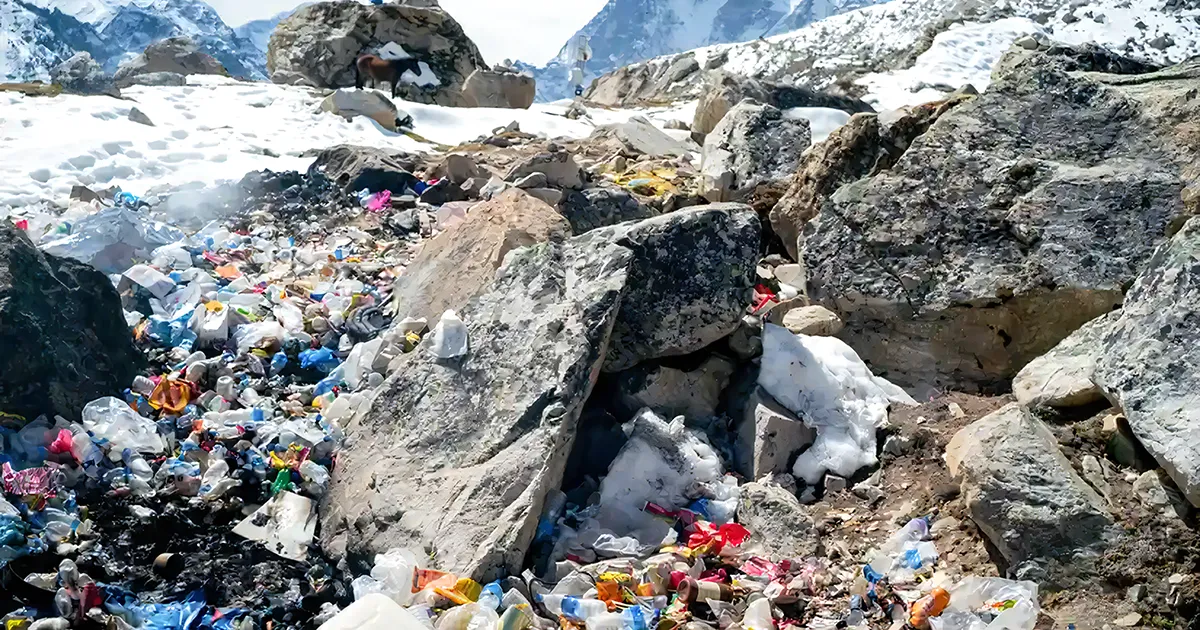
- Mandatory use of poop bags and portable barrels.
- If climbers do not fulfill the above three mentioned rules, they wont get Garbage Clearance Letter and your deposited $4,000 (£2964) will not be returned.
Common Type of Toilet systems in Base Camp
Barrel Toilet
This type of toilet is widely used in the base camp where human waste is collected inside liners or bags and then later disposed.
Portable Cabin or Box Toilets
This type of Everest toilets system is mostly used by large support teams and it has rigid lightweight units.
Deep Pit
This is the most traditional type of toilet system where a whole is dug into moraine or in ground under a wooden platform.
How do Climber Go to the Bathroom on Everest?
The Most Comfortable Option in Everest Base Camp(5,364m)
At Everest Base Camp, climbers will stay for multiple week to adapt themself and to practice for the expedition. There, they have the closest thing to a normal toilet and dispose their waste in:
- Barrel toilets inside tents
- Waste collected in liners
- Regular cleaning by support staff
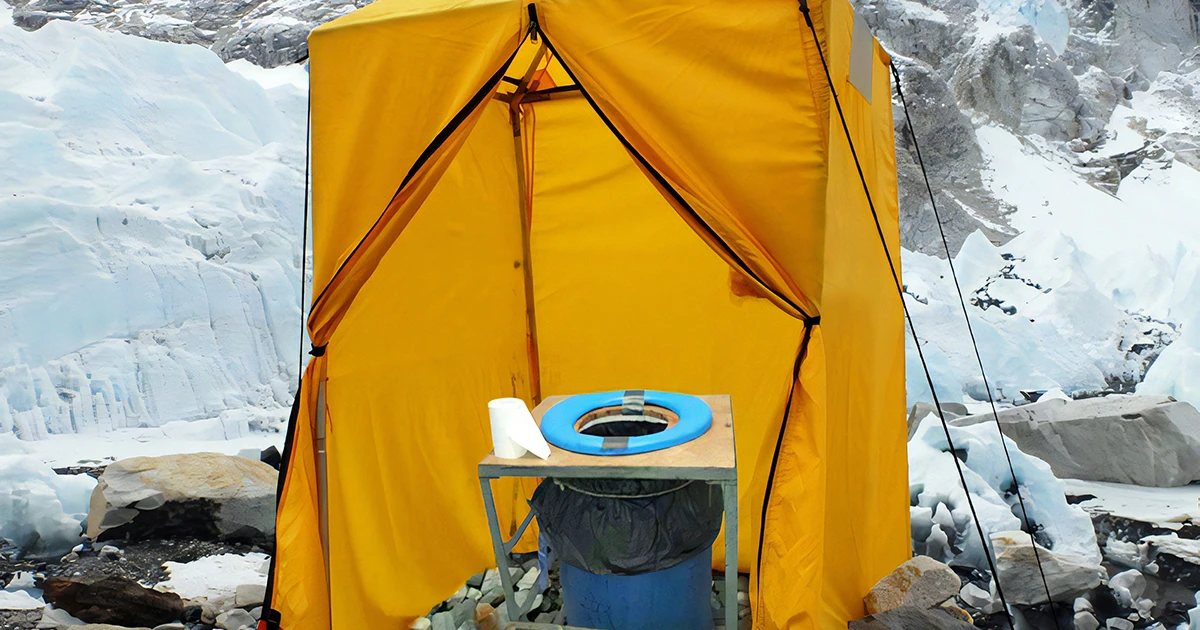
These systems are relatively organized compared to higher camps like Camp III or IV. Waste is later transported down the mountain for proper disposal. So at this level, how do climbers go to the bathroom on Everest answers comfortably in comparison to the what they faces next.
Camp I (6,061 m) and Camp II(6,400 m)
As climbers move higher than Everest Base Camp, things become more basic as they have to dispose waste on:
- Simple toilet made nearby tents
- Buckets or barrels lined with bags
- At last, they seal everything and packed them and later carried down
Here, how do climbers go to the bathroom on Everest starts to get more challenging. Privacy decreases, and hygiene becomes harder to maintain. Still, these systems help reduce environmental damage by containing waste.
Camp III(7,200 m)
At this point, how do climbers go to the bathroom on Everest answers carefully, quickly, and often inside a tent. When climbers reach Camp III, they have to face extreme conditions as they have to do poop in wag bags inside the tent and behind the rocks only if they found any.
Due to less space, strong wind, and most importantly freezing cold, building a proper toilet using tent is not possible. So, they pass their human waste like pee and stool carefully and quickly.
Camp IV(8,000 m)
Camp IV also known as the death zone, where how do climbers go to the bathroom on Everest becomes extreme. As it has no toilets, so climber use wags bags and pee bottles. Also, to avoid peeing and feces, climbers often focus on avoiding heavy meals.
Wag Bags
A major part of understanding how do climbers go to the bathroom on Everest is the use of WAG bags. Wag bag or Waste alleviation and gelling bags is a special sealed bag which has high absorption capacity with solidfying agents. Climbers use these bag to do stool inside the tent and pack it and carry them down with themself. Wag bag is also known as poop bags and they are:
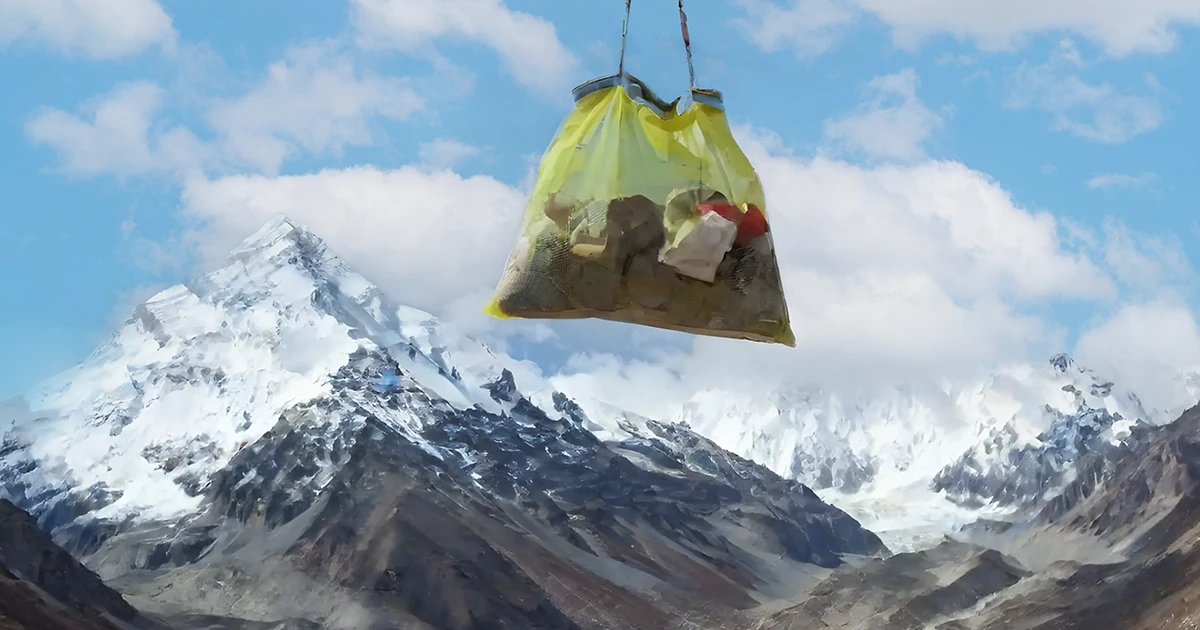
- Leak-proof bags with super-absorbent polymers (SAP)
- Designed in such a way they reduce odor
New regulations now require Everest climbers to carry their waste down the mountain due to pollution concerns. This system is critical because waste does not decompose in freezing conditions.
Pee Bottle or Pee Funnel
The pee bottle have wide mouth which is used to urinate both male and female climbers. Urine Funnel is used by women to pass urine inside down suits.
The pee funnel helps climbers to urinate while standing no matter their gender. It also avoid you to pull down your pant in the freezing temperature during night and in summit hour.
Summit Push
During summit Push, climber avoid eating heavy and carry pee bottle and funnel to pass urine. Similarly, they also carry wags bags in case of emergency. So, how do climbers go to the bathroom on Everest during summit day? Most climbers try not to go, as they plan their solid intake to avoid needing to go.
Hygienic Tips for Everest Climbers
Everest Climbers should follow these practical tips to maintain proper hygiene throughout the journey:
- Always carry your personal hygiene kit like wet wipes, hand sanitizer, toilet paper, and wag bags.
- Make sure to avoid narrow neck containers as it will be difficult for you to use them.
- You should practice peeing in urine funnel.

- Carry your own waste bag after passing the human waste.
- Hydration is a key and you should focus on drinking enough water.
- When cleaning your stool or faeces make sure to avoid direct contact with snow.
- Regularly change your inner layer as sweat can lead to bacterial growth and skin irritation.
Packing Essential for Bathroom During Everest Expedition
Every climbers should pack bathroom essential in their bag properly so that you don’t have to worry about last minute shortage:
- Multiple piece of certified Wag bags.
- Wide Mouth pee funnel
- female Urine Funnel
- Hand sanitiser and antiseptic wipes
- Small trowel
- Bio-degradable soap
- Quick-dry small towels
- Extra seal plastic
Conclusion
So, How do climbers go to bathroom on Everest depends mainly on the altitude but it also requires necessary planning, right gear, weather, and team discipline. This is the most least discussed side of mountaineering but it is very important for the protection of the fragile ecosystem of Sagarmatha region.
Climbers can find comfortable toilets in Everest Base Camp hotels, but as you leave it and head to other Camp, you have to use sealed wag bag for passing the stool, pee funnel for peeing and carry it with you by packing it properly. This discipline not only show respect towards the fragile mountain environment but will also protect the health of the future climbers and locals of the Everest regions.
As regulations tighten and awareness grows, the way how do climbers go to the bathroom on Everest is handled continues to improve, helping preserve Everest for future generations while ensuring safer and more sustainable expeditions. If you are planning to do Everest Expedition in the upcoming season, make sure to contact Awesome Holidays Nepal, so that you can most memorable adventure of your life in 2026.
FAQs
Expand AllHow do climbers go to the bathroom on Mount Everest?
Climbers use toilet tents at lower camps and waste bags or pee bottles at higher altitudes to manage waste safely on Everest expedition.
Are there toilets at Everest Base Camp?
Yes. Everest Base Camp has basic toilet tents with barrel systems so that they can manage the waste.
What does a toilet at Everest Base Camp look like?
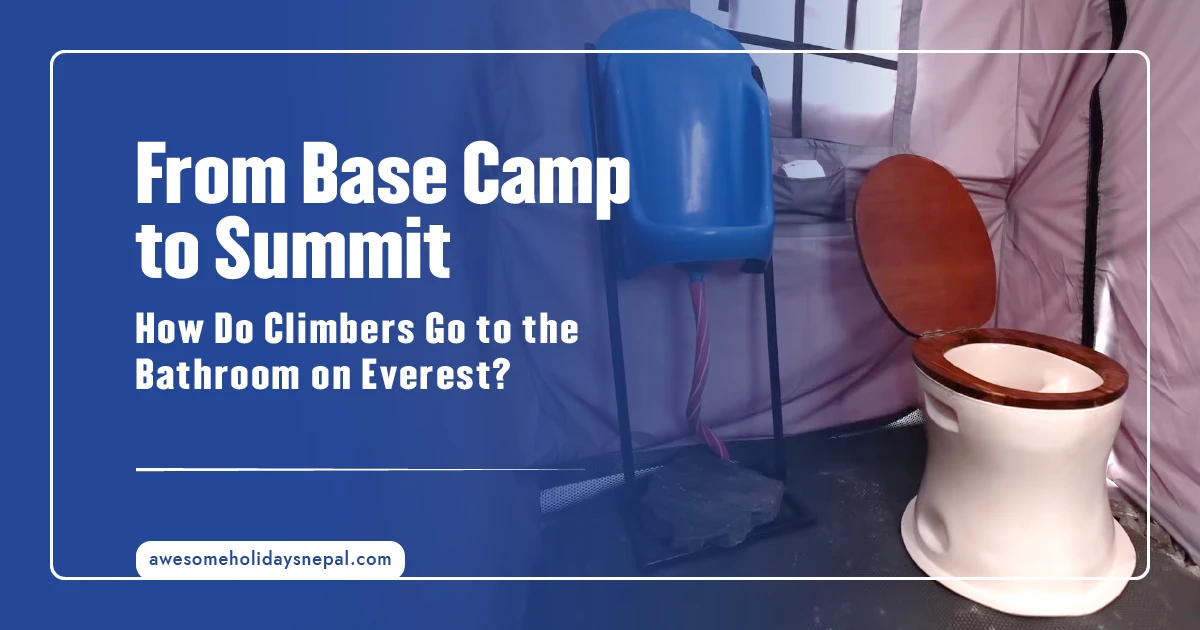
Toilet at Everest Base Camp is of tent with a seat placed over a barrel lined with waste bags.
How do climbers pee above Base Camp?
Climbers pee only in designated areas or use pee bottles above base camps.
Do climbers use pee bottles on Everest?
Yes, climbers use pee bottles on Everest.
What happens when climbers need to pee at night in a tent?
When climbers need to pee at night in a tent, they urinate in pee bottle.
How do climbers go to the toilet during the summit push?
During the summit push, climbers use waste bags for stool disposal while minimizing stops due to extreme conditions.
Is there a toilet in the death zone on Everest?
No. There is no toilet in the death zone on Everest.
Do climbers carry their human waste down from Everest?
Yes, climbers carry their human waste down from Everest as it is mandatory.
What are Everest poop bags, and how are they used?
The bag which is sealed and have chemical-lining is called Everest poop bags. It is used to collect and transport human waste.
Are poop bags mandatory on Everest now?
Yes, poop bags are mandatory on Everest now.
What is the current waste rule above Camp II?
The current waste rule above Camp II is to pack out all human waste using designated waste bags.
How is human waste managed at Everest Base Camp?
Human waste is managed by collecting them in barrels and later bringing them back to Everest Base Camp for proper disposal.
Is urine handled differently from solid waste on Everest?
Yes, urine is disposed on the trail or in crevasses while solid waste must be carried down but new rules requires treating urine with the same strictness like solid waste.
Can climbers just go outside anywhere on Everest?
No. Climbers cannot go outside anywhere on Everest.
Why do climbers pee more often at high altitude?
Climbers pee more often at high altitude as the body detects lower oxygen levels and starts adjusting by breathing faster and changing blood chemistry. So, to balance this, the kidneys remove excess fluid from the body, which leads to more frequent urination.
What is altitude diuresis?
A condition where the body produces more urine at high elevations is called altitude diuresis.
Can frequent urination increase dehydration risk on Everest?
Yes, frequent urination increase dehydration risk on Everest.
How do female climbers manage toilet breaks on Everest?
Female climbers manage toilet breaks on Everest by using pee funnels and waste bags.
Are toilet breaks harder for women at high altitude?
Yes, toilet breaks cab be more harder for women at high altitude due to clothing layers, exposure, and limited privacy.
Related blog posts
Discover a choice of tourist destinations loved by most of our visitors. Whether you're on a jungle safari to spot rare animals or walking through a world heritage site, these well-planned itineraries cover the major highlights of Nepal.



 call an expert at: