
How are the Everest Villages Built: Stone and Wood Craftmanship

 Sujata Pokhrel
How are the Everest villages built? Every single person who visits the region often gets this question in their mind, given the resilient structure that has withstood the region’s extremes.
From Lukla to Gorakshep, the last human settlement in the Everest region, you will find unique stone houses. These structures not only withstand strong winds and the extreme cold of Everest but also carry the story of resilient Sherpa architecture.
The architecture of the Everest region is well-rooted in the ancient wood and stone craftsmanship that has been passed down for many generations. Let’s delve deeper to understand how the Everest villages are built and the story behind their origin.
The Architecture of the Everest Region Village
The unique craftsmanship of the houses, monasteries, chortens, and every other structure in the Everest villages intrigues many. Despite the harsh climatic conditions, cold freezing winters, and catastrophic avalanches, the unique architecture of the Everest villages has withstood the test of time.

More than just being visually appealing, the structural framework of Everest’s houses speaks volumes about functionality and sustainability. Since the raw materials used in the construction are sourced locally, the cost is minimal and considers environmental health. This traditional architecture not only provides safety but also preserves Sherpa heritage and identity.
Elements of Sherpa Architecture
The elements of the Sherpa architecture are as simple as the people who reside here. As the region is rich in stone, wood, and mud, these are elements that go into construction. And even in the construction process, it is the people from community that get involved to build it not any modern machinery.
With increasing flow of tourists and introduction of modern equipment has been observed in a few buildings. Yet the recent construction works have made sure the authentic architecture of houses in the Everest region remains intact. Following are a few elements that makes the Sherpa architecture stand out in the Everest region:
Stone Craftmanship
The detailing of stonework is the actual backbone of Sherpa houses. From rooftop to the walls of the houses, the boundary walls outside the house and the stairways were all built with stone. One of the reasons behind using stones lies in the fact that it provides strong insulation instead of concrete. But the other main reason is the easy availability and cheapness of this resource.

You can easily find these stones lying around near the rivers and mountains. Since there is no specific charge for collecting these stones, the Sherpas take it for almost no cost at all. After collecting, they manually shape the stones to their liking and start constructing. These stone are stacked one upon another and interlocked properly to create thick walls through which cold breeze cannot pass.
They use dry masonry technique for this construction as no cement or any binding agent is used to keep these stones together. Apart from preventing air, this technique also makes the houses flexible enough to trap trembling from earthquake as well as from heavy pressure of snow.

Using stone layering is a good technique while building houses in high altitude as it acts as an natural insulator in both summer and winter. But there’s one downside of it as stone is quick to catch layer of mossy green that grows between stones. While it does add up to insulation, but it does look dirty and unkept.
Woodwork
Whether it’s for decorating the doors and windows or making beams of the house, woodwork is another intricate part of Sherpa architecture. The wooden joints on these frames and doors are carved precisely and fitted using minimal of nails in the traditional design.

Local artisans use chisels and axes to carve these designs that are pretty and durable at the same time. These wood logs for making doors and windows come from the community forest in lower valleys as deforestation is completely forbidden in Sagarmatha region. Usually, the villagers prefer birch, juniper, and rhododendron tress for doing these work.
You can find intricate carvings of buddha and Buddhist symbols such as mythical creatures, lotus flower, and never-ending knots. Such carvings hold spiritual significance in people’s lives along with being useful to people. It is believed that having such symbols in your house brings good luck ad fortune as well as protect the house from negative energies.
Roof and Structural Design
If you look deeper, the roofs of the houses in the Everest region aren’t structured like a pyramid like most of the houses in modern cities. You will find a flat stone roof with slight inclination as these areas barely have any rainfall. These traditionally flat roofs are made from stone slab and held together with wooden beams.
In certain areas that get heavier snowfall, some people modernized the roof using metal sheets as it is good for drainage.
Modernization of Everest’s Architecture: How are the Everest Villages Built Today?
With flourishing tourism industry, the Everest region has become modernized and so are the houses and other structures in its villages. For efficiency and comfort, many lodges and tea houses now have cement walls, glass windows, and metal roofs.
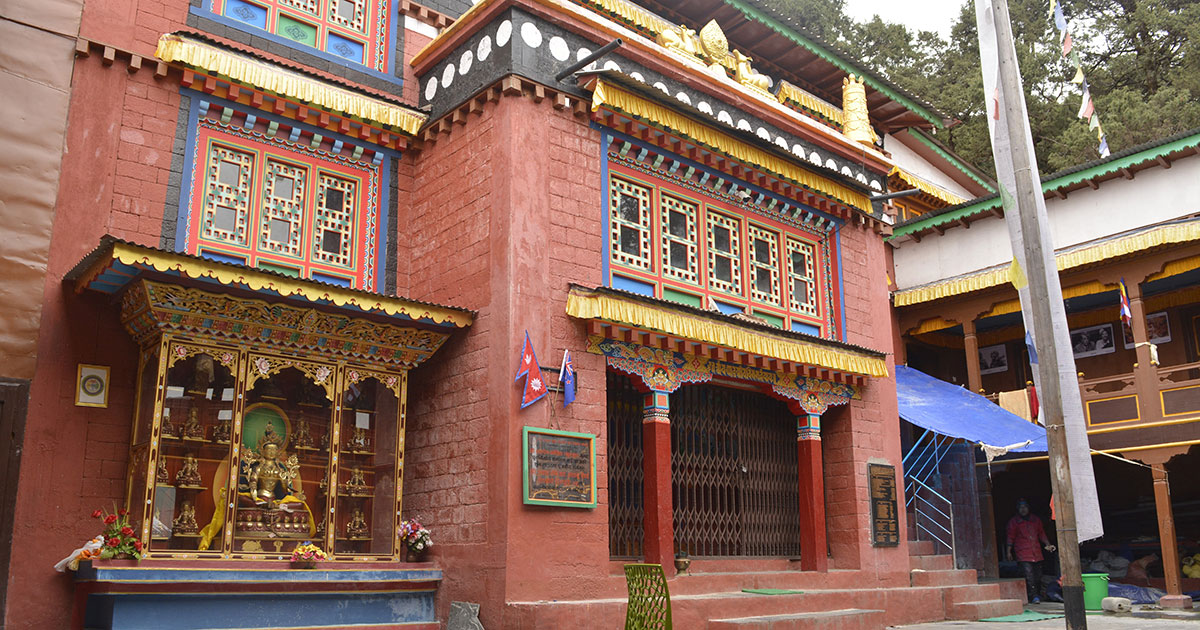
However, the locals still continue to use Sherpa-style layouts, wooden accents, and stone foundations to preserve the essence of traditional craftsmanship. Coming to a middle ground, some of the modern lodges seen to combine the new conveniences and traditional craftsmanship to give a proper identity to Sherpa culture while addressing the modern needs.
Notable Architectural Highlights of Everest Region
Some of the notable architectural buildings that well-display the Sherpa craftsmanship and rich architecture in the Everest region are:
Khumjung Monastery
Built with hand-carved stone and wood, Khumjung Monastery (at elevation of 3,790 meters) is known for its fine Sherpa craftsmanship and the famous Yeti scalp displayed inside. It remains a key spiritual and cultural landmark for the Khumjung community.
Tengboche Monastery
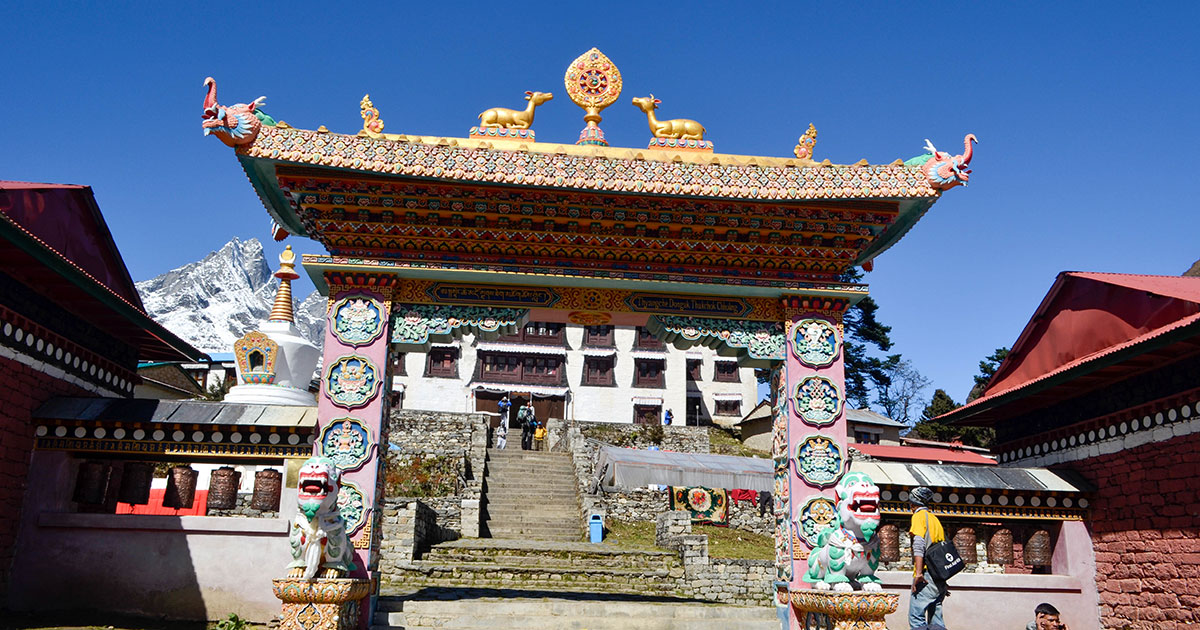
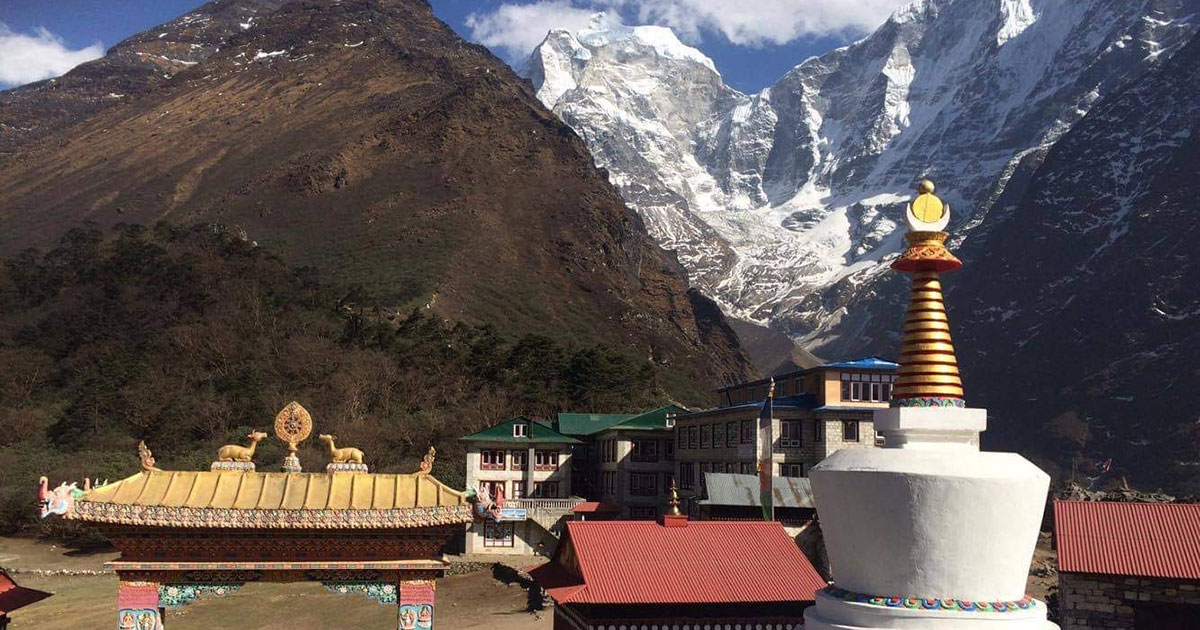
Situated at an elevation of 3,867 meters, Tengboche Monastery is the largest in the Everest region. Reconstructed after the 1989 fire using traditional Sherpa methods, it showcases intricate wood carvings and stonework against a backdrop of Everest and Ama Dablam.
Houses of Namche Bazaar
The homes of Namche Bazaar are tiered residence built into the hillside. Their thick walls and wooden frames provide warmth and strength, reflecting Sherpa cooperation and adaptation to high-altitude life.
Monasteries of Pangboche Villages
Standing tall at 3,985 meters from sea level, the Pangboche village is home to the oldest monastery in the Khumbu. It was founded in the 17th century. Its dry-stone walls and carved wooden beams preserve the centuries-old Sherpa building tradition that still defines village life today.
Evidence of Timeless Resilience and Beauty
The traditional Sherpa villages of the Everest region stand out as living museum of rich Sherpa heritage that’s well-depicted in the infrastructures around. It’s monasteries, old tea-houses and the stone staircase tells the story of timeless resilience hidden in Sherpa architecture.
Such houses not only glorify the rich heritage of Himalayas but also stand as an embodiment of toughness of Sherpas and their mountains. Even with modern influences, the heart of Sherpa structure stays intact and flourishing. If you are planning to visit Everest region this season, make sure to take time to witness the relentless beauty of Sherpa craftsmanship.
Enjoy your adventure with a mighty view of heritage!
FAQs
Expand AllWhat materials are used in Everest region village houses?
Traditional houses in the Everest region are primarily built using locally sourced stone and wood. Stones are gathered from nearby riverbeds and mountain slopes, while timber comes from forests at lower altitudes. Mud or clay is sometimes used as a binding agent, though most structures rely on dry-stone stacking
How do Sherpa homes withstand extreme weather?
Sherpa homes are designed with thick stone walls that act as natural insulation against freezing temperatures. Small windows minimize heat loss, and the low ceilings retain warmth.
Why is wood and stone used in Himalayan architecture?
Stone and wood are used because they are readily available, durable, and sustainable. Stone provides strength and insulation, while wood adds flexibility, decoration, and warmth to the interiors.
What is unique about Sherpa house design?
Sherpa houses are known for their harmonious blend of practicality and spirituality. They are compact, sturdy, and symmetrical, often built facing south for sunlight. Inside, a central hearth serves as both a kitchen and gathering area.
How are traditional Everest homes built without modern tools?
Traditional Sherpa homes are constructed using manual labor and simple hand tools. Stones are split and shaped with chisels and hammers, then stacked precisely without cement. Wooden beams are carved and fitted by hand.
Are Everest village houses earthquake resistant?
Yes, many traditional homes are naturally earthquake-resistant due to their dry-stone masonry technique. The lack of rigid cement joints allows the stones to move slightly and absorb tremors, reducing structural damage.
What cultural symbols are carved into Sherpa wooden beams?
Sherpa wooden carvings feature Buddhist motifs such as lotus flowers (purity), dragons (protection), clouds (harmony), and the endless knot (eternity). These carvings are both decorative and spiritual, believed to bring blessings and ward off negative energy.
How has tourism affected Everest region architecture?
Tourism has brought both innovation and change to the Everest region. Modern lodges in the region consist of materials like glass, metal, and cement for greater comfort and insulation. While this modernization supports the growing trekking industry, it sometimes risks overshadowing traditional craftsmanship.
Where can I see authentic stone and wood houses near Everest?
You can find well-preserved traditional Sherpa homes in villages like Khumjung, Khunde, Thame, and Pangboche. These settlements showcase classic dry-stone houses with wooden windows and carved beams.
What role does craftsmanship play in Sherpa home building?
Craftsmanship is at the heart of Sherpa architecture. Building a home is not just a technical task but an artistic and spiritual practice. Skilled masons and carpenters pass their knowledge through generations, shaping each home with precision and devotion.
How long does it take to build a traditional Sherpa house?
Building a traditional stone-and-wood Sherpa home typically takes three to six months, depending on weather, material availability, and manpower. Since most work is done by hand, progress is slow but meticulous.
Do Everest villagers still use traditional building methods?
Yes, though modern materials are more common, many villagers still use traditional methods, especially in remote areas. Stone masonry, hand-carved woodwork, and natural insulation techniques remain integral to home building.
What are the common architectural features of Khumbu homes?
The common architectural features of Khumbu homes include; thick stone walls, flat or slightly sloped stone roofs, wooden widow frames with small, south-facing windows, and central-kitchen.
How do windows and doors function in high-altitude homes?
Windows are small and strategically positioned to retain heat and block wind while still allowing sunlight in. Wooden shutters can be closed at night for warmth. Doors are often low to prevent heat loss and built from heavy wood to endure strong gusts.
What is the spiritual meaning behind Sherpa house layouts?
Traditional layouts reflect balance, harmony, and spirituality. The central hearth represents the heart of the family, while sacred spaces or altars are placed on the upper floor or a clean corner, symbolizing respect for deities.
How do villagers source stone and wood sustainably?
Stones are gathered from nearby land or riverbeds, never quarried destructively. Wood is usually sourced from lower regions or through community-managed forests, where cutting is regulated by local conservation committees.
Are there preservation efforts for Everest’s traditional architecture?
Yes, the organizations like the Sagarmatha National Park Office and various local NGOs promote heritage preservation. Some lodges and homeowners are also restoring old homes using traditional designs.
What challenges traditional builders face in the Everest region?
The key challenges faced by traditional builders in the Everest region are:
- scarcity of quality timber
- rising cost of materials
- declining number of skilled craftsmen
- limitations of weather
How does altitude influence architectural design in Everest villages?
At altitudes above 4,000 meters, oxygen is thin, temperatures are freezing, and winds are strong. Architecture adapts with compact layouts, thick walls, and low roofs to conserve warmth.
Can tourists stay in traditional stone-and-wood Sherpa homes?
Yes, many teahouses and family lodges in villages like Pangboche, Thame, and Khumjung still operate within traditional stone-and-wood houses. Staying in these homes offers travelers an authentic glimpse into Sherpa life.
Related blog posts
Discover a choice of tourist destinations loved by most of our visitors. Whether you're on a jungle safari to spot rare animals or walking through a world heritage site, these well-planned itineraries cover the major highlights of Nepal.


 call an expert at: