
Farming in the Himalayas above 3000 m in Nepal: Crops, Seasons, Water, and Village Life in the Mountain
 Sristi Adhikari
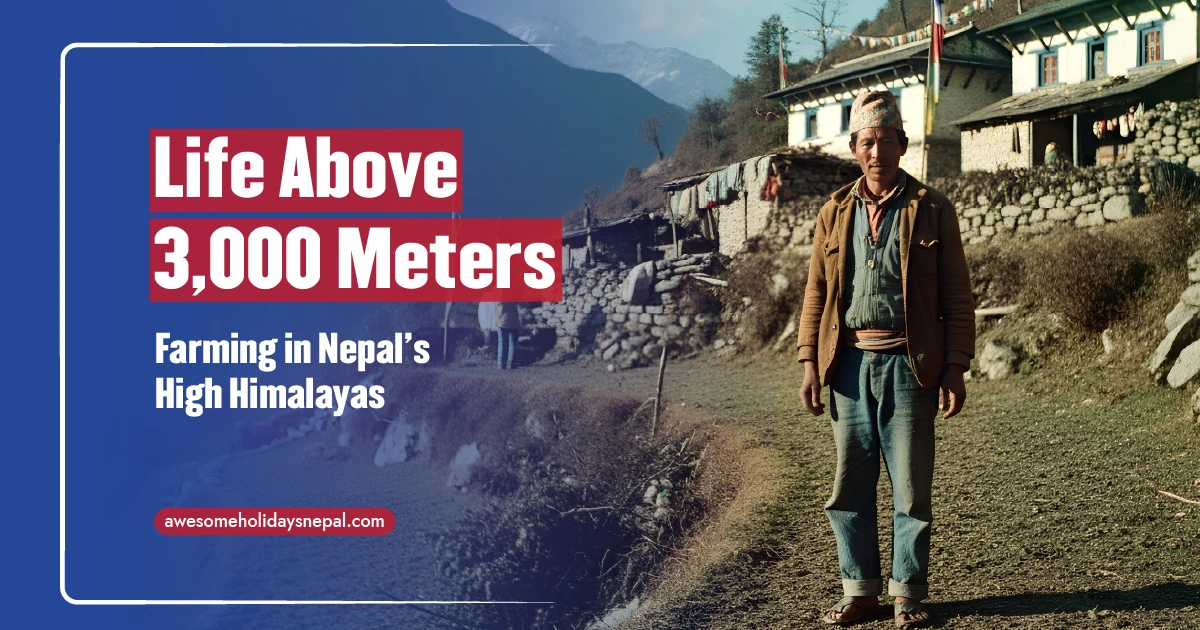
Farming in the Himalayas above 3000 m is not just an occupation; it is about survival, culture, and identity for mountain communities in Nepal. Elevations above 3000 m are characterized by harsh winters, thin air, a short growing season, and steep terrain, which create harsh living and agricultural conditions.
In popular trekking and tourist destinations like Everest, Annapurna, Upper Mustang, Dolpa, and Manang, families have practiced high-altitude agriculture for generations. The dramatic landscapes, unpredictable climate, and short growing season present many challenges and hardships, yet communities continue to adapt with remarkable skill and resilience.
Lets dive deeper how communities above 3000 m in the Himalayas are living a village life in the mountain environment in details:
Geography and Climate Above 3000 meters
Above 3000 meters, the landscapes vary from tall mountains to sharp slopes and rough, rocky ground. Almost every time of the year, the weather is very cold and dry winters which makes winter last from November to March. Due to snowfall, it can isolate entire villages.
The vegetation, alpine grasses and small shrubs, is dominated as they can survive in the thin air conditions. The growing season usually starts from late April or May until September.
So, remote villagers have to be careful when planting the crops, as farming in the Himalayas depends heavily on the timing. Even a small delay, it will affect the entire year’s food supply in the mountain.
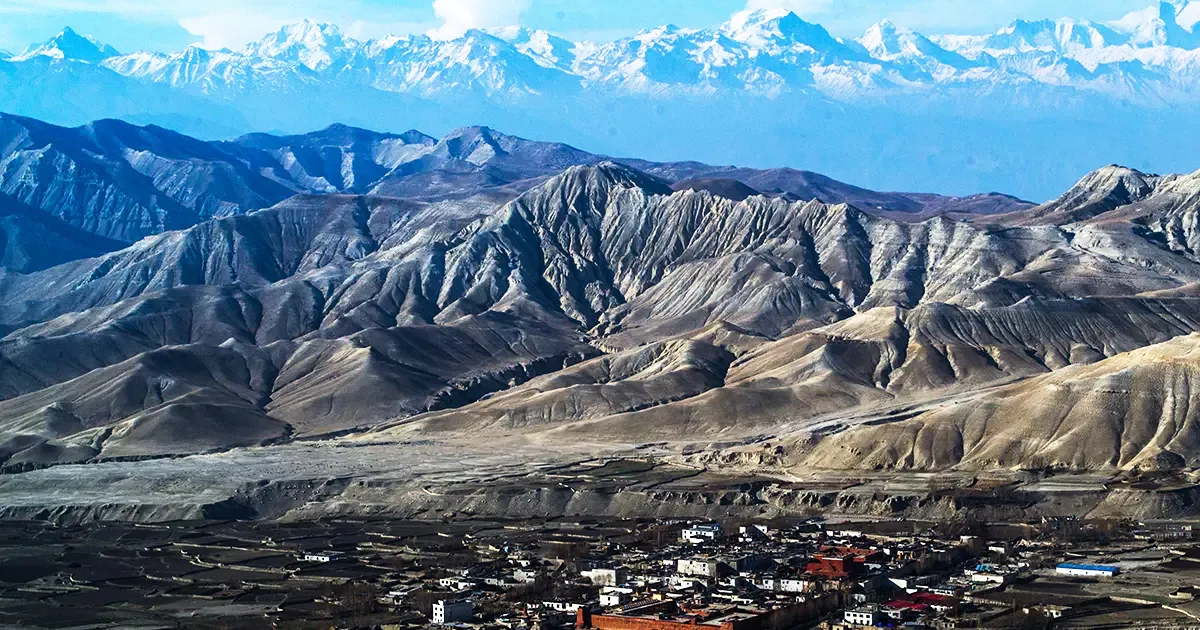
Almost every mountain peaks are covered by Snow and glaciers, and the melting ice originates rivers that flow down to lower areas. Similarly, summer days are pleasant, but nights remain cold. Also, frost can occur unexpectedly, making crop selection extremely important.
Farming Seasons
The agricultural period above 3000 meters is short and intense and they have to follow the tight calendar. The calendar means farming in the Himalayas requires cooperation among families and strong community labor exchange systems.
- April to May: Snow starts to melt and prepare fields.
- May to June: They are sowing barley, buckwheat, and potatoes.
- July to August: Crop maintenance and irrigation begin.
- September to October: Known as the Harvest season.
- November to March: Winter rest; livestock care and tool repair starts.
Main Crops Grown at High Altitudes
The thin air, dry weather offer harsh weather conditions even though local communities grow a variety of mountain crops successfully above 3000 meters like:
Apple
Marpha is a small village in Mustang which is famous worldwide for its apples productivity. The cold temperatures and dry air of lower and upper Mustang offer a favorable environment for apple productivity. The cold winter helps the trees rest properly, which leads to good flowering in spring.
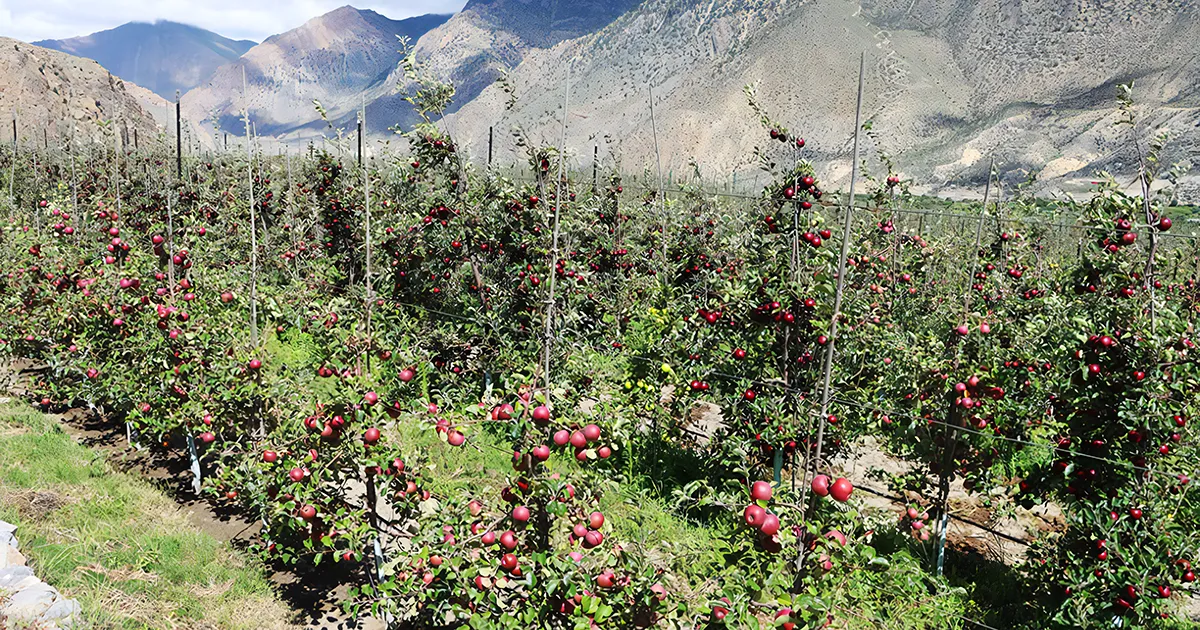
Local farmers in Marpha harvest apples in late summer and early autumn. The apples are known for their fresh taste and quality, free from any chemical fertilizers which is the best form of Mustang agriculture. Besides selling fresh fruit, local people also make apple products like dried apples, juice, cider, and brandy, which are popular among visitors.
Barley (Hordeum vulgare)
Barley is one of the most important crops which grows quickly and tolerates cold temperatures. In many highland communities, roasted barley flour (tsampa) is a staple food. Barley farming in the high altitude often revolves around barley because it is reliable and nutritious.
Buckwheat
Buckwheat thrives in poor soils and short seasons. Buckwheat farming in Himalayas is mostly used for making traditional breads and porridge.
Potatoes
Potatoes are a crucial high-altitude crop. They grow well in cool climates and provide essential calories. In many villages, farming in the Himalayas has increasingly shifted toward potato production due to its market value.
Millet and Mustard
In slightly lower elevations above 3,000 m, farmers grow millet and mustard during warmer months.
Green leafy vegetables are grown in small kitchen gardens, especially during summer.
Beans and Peas
Legumes improve soil fertility and offer protein in local diets. Because of these hardy crops, farming in the Himalayas ensures basic food supply even in isolated regions.
Water Sources and Irrigation
Water management is critical in the high-altitude regions. The high-altitude agriculture hugely depends on the streams and rivers which originated from Glacial meltwater.
In remote areas near the Annapurna region, Manaslu region, local farmers build traditional irrigation canals known as kulos (in Nepali) to divert water from mountain streams. Similarly, rainfall is limited in trans-Himalayan areas, which makes farming in the Himalayas to depend heavily on snowmelt and glacier-fed systems.
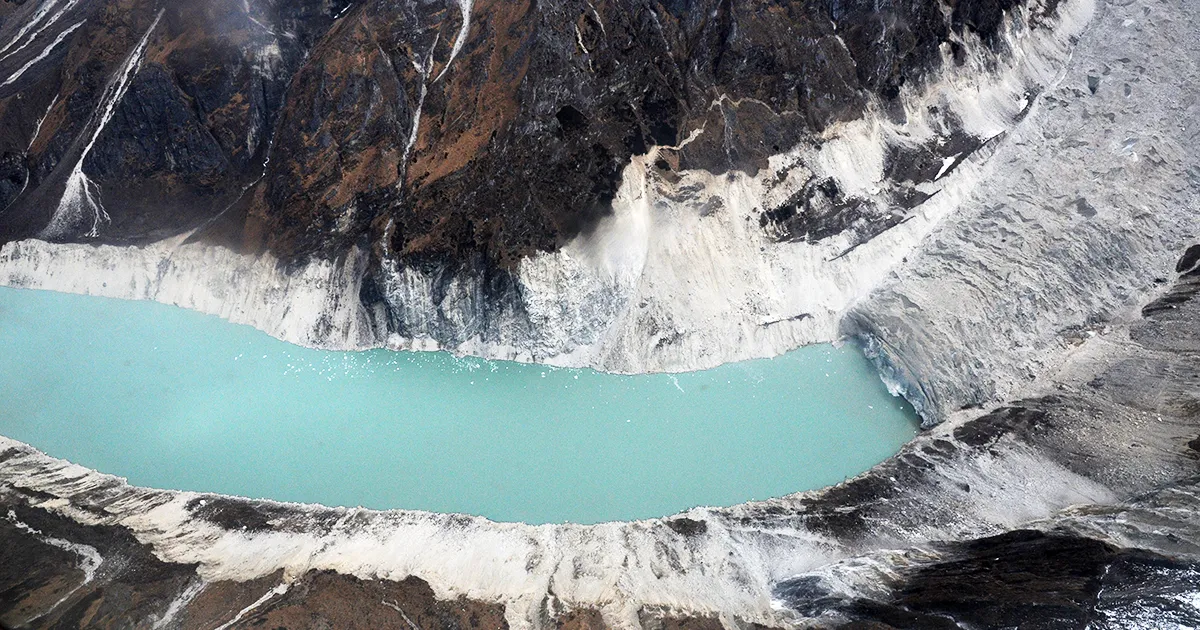
Nowadays, due to climate change, it started to impact water availability, making irrigation planning even more important. The remote villagers often work together to maintain canals, sharing responsibility for water distribution.
Terrace Farming and Soil Management
Steep slopes dominate the landscape of the high altitude region above 3000 m. So, to prevent soil erosion, villagers construct stone-supported terraces. These terraces:
- Reduce soil loss
- Retain moisture
- Make cultivation manageable
They apply an organic manure from yaks, sheep, and goats enriches the soil naturally. Chemical fertilizers are rarely used in remote settlements. Sustainable mountain agriculture practices are central to farming in the Himalayas.
Livestock and Other Farming
In addition to crop planting, the remote Himalayan communities also depend on livestock farming to run their livelihood smoothly. They raise Yaks and yak-cattle hybrids known as chauri for milk, butter, meat, and transport. They also raise Sheep and goats, which supply wool and manure for them.
Animal manure is an essential fertilizer that enriches the soil naturally. In many villages, farming in the Himalayas combines crops and livestock in a balanced system. Animals are moved seasonally between grazing areas in a traditional system known as transhumance.
Challenges Faced by High Altitude Farmers
In high altitude, farmers faces many challenges but farming in the Himalayas still continues to thrive. Most of the farmers are growing crops by using greenhouse in order to extend the growing season. Farmers also grow high-value medicinal herbs for income in the higher Himalayas. When doing farming in the Himalayas, farmers faces following obstacles and difficulties like:
- There is a short growing season, even a minor delay destruct the crop productivity.
- The lands are not flat, so soil erosion often flows the crops in the slopes.
- There is limited access of market.
- Climate change is affecting snowfall and glacier melt which disrupt the growing and harvest season.
- Lastly, there is rising costs of goods.
The Future of Farming Above 3000 m
The future of farming in the Himalayas above 3000 meters will depend on balance of tradition and transformation. Terrace systems, communal irrigation, and livestock integration have sustained communities for centuries in the mountain communities of Mustang, Dolpo, and Everest.
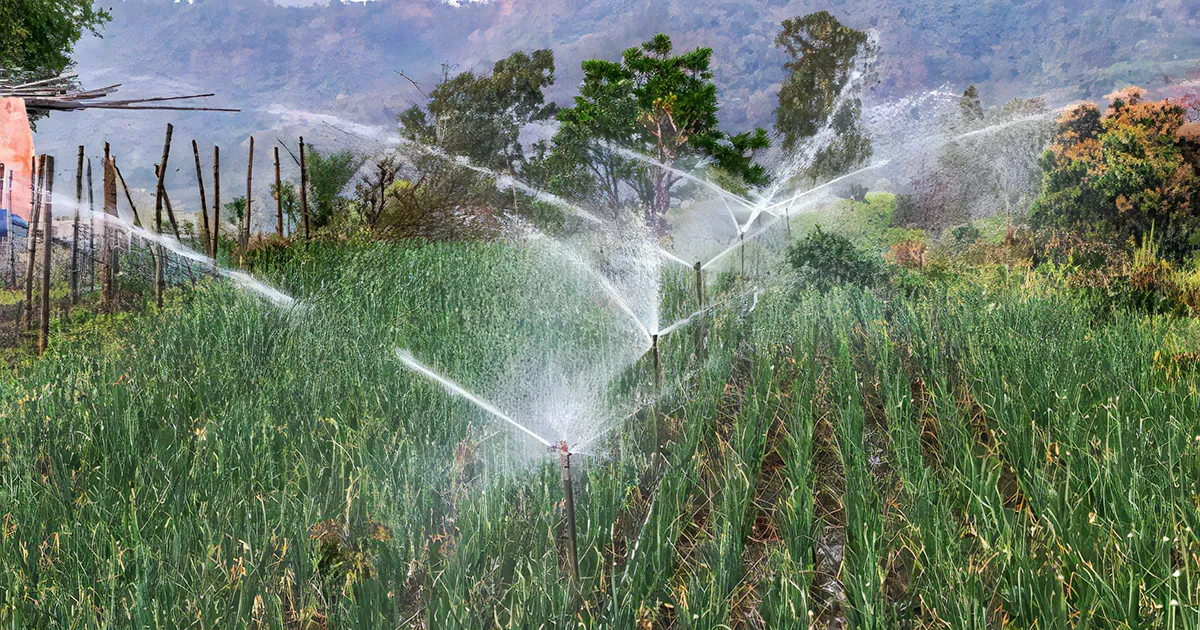
Ultimately, the future of farming in the Himalayas is not just about crops but it is all about sustaining mountain livelihoods, protecting fragile ecosystems, and honoring a deep cultural connection to the land.
Final Thoughts: Farming in the Himalayas above 3000 m in Nepal
Mountain life above 3,000 meters in Nepal is very difficult but very fulfilling and unique. Farming in the Himalayas is not all about production but it is all about being strong, flexible and living in balance with nature.
From barley fields beneath snow covered mountain peaks to glacier-fed irrigation canals, farming in the Himalayas is all about the human resilience at its highest limits. The Himalayan villagers mostly depends livestock and crop cultivation but the productivity is being affected due to climate changes.
Most of the youth migrate to cities for further education and better employment and only old people are living in the mountain villages and they are surviving on combination of limited subsistence farming.
If you want to experience real farming in the Himalayas and want to get deeper insight of Nepal’s rich agricultural heritage, make sure to contact Awesome Holidays Nepal for unforgettable journey to the lap of Himalayas.
FAQs
Expand AllWhat is considered “high-altitude farming” in Nepal?
Farming above an altitude of 3000 m from sea level is considered as “high-altitude farming” in Nepal.
Can crops grow above 3,000 m in Nepal?
Yes, crops can grow above 3,000 m in Nepal.
What is the highest elevation where cultivation is documented in Nepal’s high mountains?
The Chumchaur of Jumla is the highest elevation where rice cultivation is documented in Nepal’s high mountains at an elevation of 3050 meters.
Why is the growing season shorter at higher altitudes?
The growing season shorter at higher altitudes because of lower temperature, frost risk, increased wind, thin air and low pressure.
Which staple crops are common in high hills/mountain regions (potato, buckwheat, barley)?
Potatoes, buckwheat, millet, and barley are common in high hills/mountain regions.
Why are potatoes so important in high mountain diets?
Potatoes are so important in high mountain diets because they are resilient, filled with high nutrient, and versatile crop that thrives in challenging environments where other staples fail to survive in thin air.
What is “naked barley” and why is it used in high mountains?
A type of hull-less barley whose loose outer hull is inedible that separates easily from the grain during threshing is “Naked Barley”.
It is used in high mountain because it can adapt in extreme conditions of Himalaya, also it has high nutritional value, and has easy processing.
Where does irrigation water often come from in high mountain basins?
Irrigation water often comes from the melting of snow, ice, and glaciers in high mountain basins.
What happens when irrigation systems fail or labour is unavailable during sowing/harvest?
When irrigation systems fail or labour is unavailable during sowing/harvest it will result in the immediate loss of the crop productivity, degradation of soil quality, and massive revenue losses.
Why are yaks and other pack animals important to some mountain livelihoods?
Yaks and other pack animals are important to some mountain livelihoods they can be a form of transportation, are good source of protein, and dairy products followed by using their waste as a fertilizer.
What kinds of fruit orchards exist in Mustang/Marpha area?
Fruits like apple, plums, apricots, grapevines, and peaches exist in Mustang/Marpha area.
What is a polyhouse/greenhouse and how does it help at altitude?
A polyhouse (or polyethylene house) or greenhouse is a specially designed framed structure covered with transparent polyethylene (plastic) sheets which creates an enclosed, controlled, or semi-controlled environment for plant cultivation.
It helps in production of crops of even in harsh environment and the villagers don’t have to suffer from food deficiency.
Are new vegetables being grown in higher Mustang villages compared to earlier years?
Yes. Vegetables like cauliflower, tomatoes, and cucumbers are now growing in Mustang’s villages compared to earlier years.
Is apple cultivation changing in Mustang, and why?
Yes, apple cultivation is changing in Mustang. The climate change and rising temperature with reduction of snowfall, and scarcity of water resources is making apple cultivation changing in Mustang.
Why are traditional/underutilised grains important for resilience and nutrition?
Traditional/underutilised grains like millet, barley, buckwheat, amaranth are important for resilience and nutrition because they can survive in harsh environmental conditions, and are filled with high proteins, healthy fats, dietary fiber, and micronutrients, iron, calcium, zinc, and so on.
What are the biggest risks to high-altitude farming?
The biggest risks to high-altitude farming is climate change, scarcity of water, erratic weather shocks, and ecosystem fragility.
What should trekkers know before photographing farms and farmers?
Trekkers should always ask for consent before photographing farms and farmers.
How can travellers support local food systems without disrupting them?
Travellers can support local food systems by eating at family-owned restaurants, shopping at farmers’ markets, and choosing seasonal vegetables instead of ordering western foods.
What local foods should travellers try that reflect mountain agriculture?
Local foods like Dhido (Buckwheat or Millet Porridge), Tsampa, Tibetan Bread, Gundruk, Chhurpi (Yak Cheese), Sherpa Stew , Yak Butter Tea (Po Cha), etc should be eaten by travellers as it reflect mountain agriculture.
How do remote villages store food for winter?
The remote villages store food for winter by focusing on dehydration, fermentation, and freezing.
Related blog posts
Discover a choice of tourist destinations loved by most of our visitors. Whether you're on a jungle safari to spot rare animals or walking through a world heritage site, these well-planned itineraries cover the major highlights of Nepal.



 call an expert at: