
Everything About Sherpa Guide Gear for Everest

 Sristi Adhikari
Are you curious about what is included on the Sherpa Guide Gear list? Haven’t found all the details regarding the Sherpa guide gear list? Then you clicked on the right page!
Every year, thousands of expeditions from around the globe attempt to reach the world’s highest peak, Mount Everest, but without a Sherpa guide, it is impossible. Sherpa guides are the backbone of mountain climbing because they have the responsibility of not only navigation but also of carrying physical loads.
Carrying loads from one place to another to make the successful ascent, Sherpas are highly responsible. So, what’s the exact thing a Sherpa guide carries on Everest?
Let’s review the blog to delve deeper into the Sherpa Guide Gear list of their formidable loads for the Everest expedition.
Hidden Burden of the Sherpa Guides
Sherpa guides are professional mountaineers of Tibetan Ethnicity. Their mountaineering skills and navigation ability on the challenging topography of the Himalayas are the main reasons behind their worldwide popularity. Sherpas are referred to as the spirit of mountain trekking and expeditions.
Being born and raised in the Himalaya, Sherpas have deep mountain wisdom, unlimited energy, genuine and unshakeable reliability, and a positive spirit. These immense qualities of the Sherpa are the reason behind the successful story of Mount Everest expeditions. Mount Everest, the world’s tallest peak, stands at an altitude of 8,848 m.
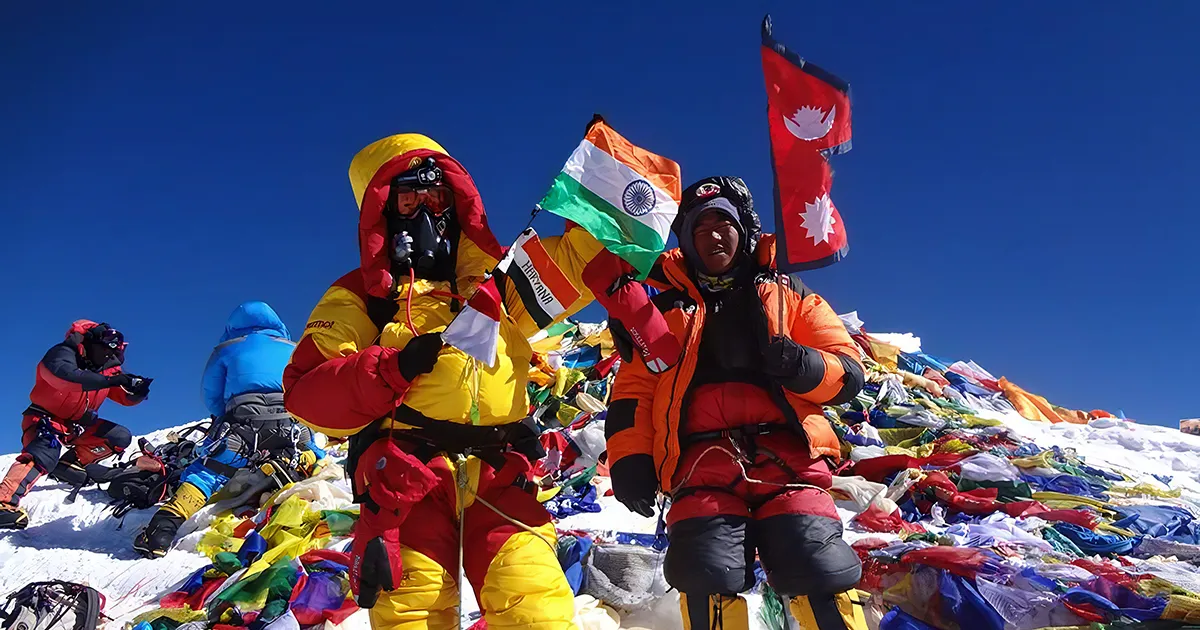
An Everest expedition is not successful without a Sherpa Guide. They are the unspoken heroes behind every successful attempt to climb Mount Everest. But what about their safety?
Mountain isn’t merciful on anyone, whether you are a guest, guide or a normal porter. Every single person who sets a foot on mountain must have the right gears to make a trip successful.
Sherpa Guide Gear for Climbing
Climbing to the top of the world’s highest Peak, Everest, is not something you can do alone. It is an incredibly challenging and dangerous endeavor that cannot be completed without proper gear and equipment. The Sherpa guide’s equipment cost for brand-new breakdowns ranges from US$5,000 to US$10,000.
The details on the climbing equipment are described below:
Climbing Helmet
It is a lightweight helmet specially used for mountain climbing, which covers your bare head with a hat or balaclava. It is also used to secure headlamp straps and give protection against falling rocks and ice, and other harmful head injuries.
Ice Axe
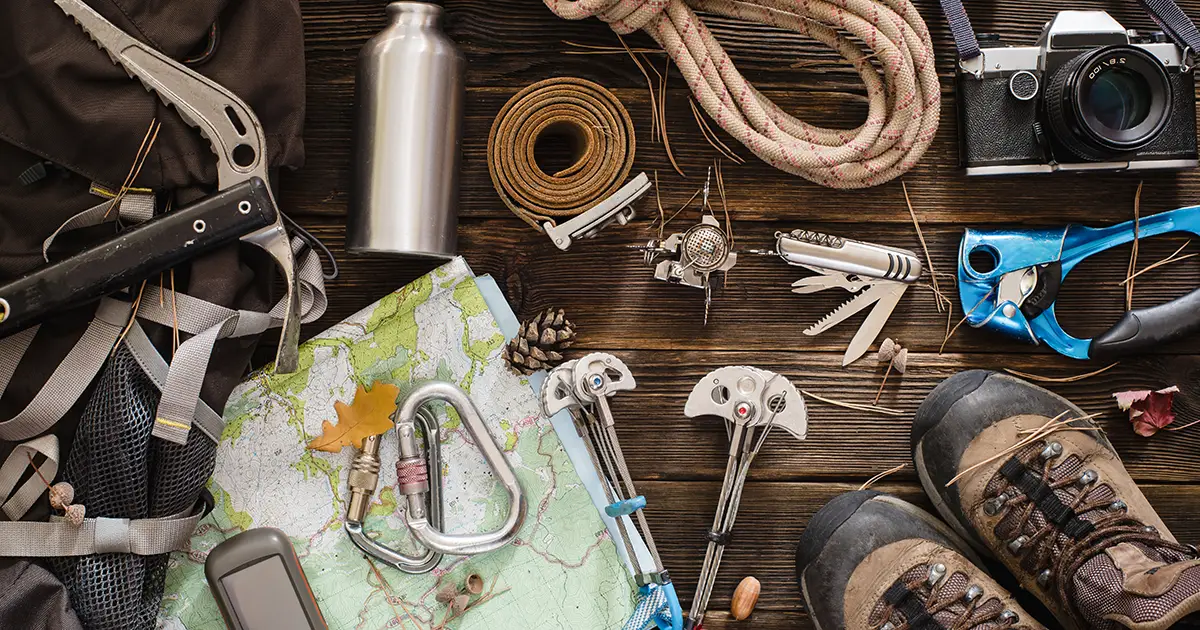
Ice Axe is very important mountaineering gear, and Sherpas recommend a shorter ice axe. A shorter ice axe also depends on the height and arm size of the climber. It provides balance in the steep and icy landscape of the Everest.
Crampons
Sherpa guides use crampon of modern steel 12-point crampons with an anti-balling plate for Everest. Crampons help guide climbers with stability on slippery, frozen terrain on the routes to Everest.
Alpine Climbing Harness
Sherpa Gear includes an Alpine climbing harness that fits over all of your clothing. It has a belay loop, gear loop, adjustable or detachable leg loops, and a waist belt, which helps to put foot harness with crampons. It is most important for mountaineering because of its ultra-light weight and adaptability in cold climates.
Carabiner System
Sherpa Guide Gear is incomplete without the Carabiner system. They have two large oval wire gates, two small wire gates, one large pear-shaped locking screw gate, and one large locking carabiner. It provides a strong and reliable connection to ropes, harness, and connection points.
Belay Device Plus 1 Locking Carabiner
The Sherpa guide uses Black Diamond Guide ATC or Poetzl Reverso. The belay device of modern tube style and 1 large pear-shaped locking carabiner helps protect against accidental gate opening or disconnection in a catastrophe.
Ascender
They pack a left-handed or right-handed ascender for the Everest expedition. The Sherpa guide uses it for climbing on the fixed ropes.
Rappel/ Belay Device
Everest requires larger-diameter fixed lines, and Sherpa uses a figure-8 style rappel/belay device, which provides safety against friction falls.
Accessory Cord
Sherpa Guide gear includes a soft, flexible, and supple accessory cord with 40 feet of 6 mm. Its flexibility, lightweight offer technical safety on the expeditions.
Trekking Pole
Sherpa Guide Gear is incomplete without a trekking pole. They use collapsible skiing or Three-section varieties of trekking poles.
Foot Gear
Sherpa Guide gear and safety includes high-quality foot gear. The cold and snowy trails demand the safety of foot, they have to walk on the soft snow or the rocky snow platform, and without proper footwear, they cannot last a second. Some of the important footwear, Sherpa guide gear includes:
High Altitude Boot
Sherpa guides prefer warm all-in-one high altitude boots instead of standard double boots. This avoids gaiters need which reduces the weight in luggage. Sometimes, they use triple boots as they fit perfectly on their crampons.
Camp Boot
Sherpa uses insulated, non-technical camp boots in the base camp region.
Insulated Camp boots
The Sherpa guide wears insulated camp boots with down or synthetic insulation while sleeping in the camp.
Light Hiking Boots/Trekking Shoes
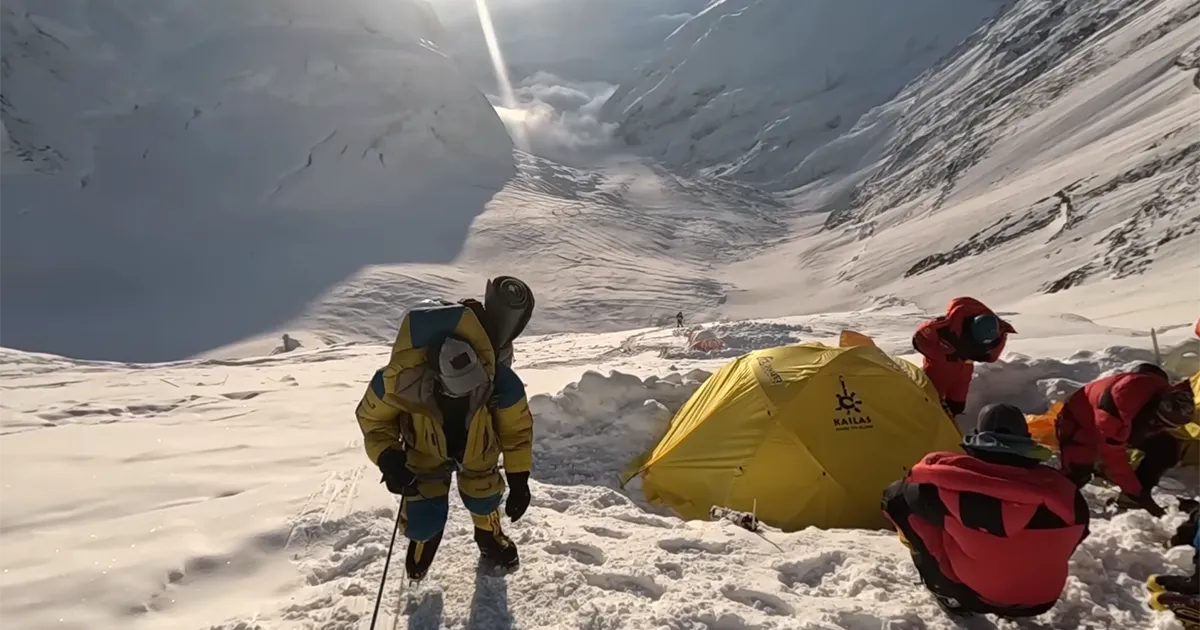
Hiking/trekking shoes are one of the most important Sherpa Guide Gear for the Everest expedition. It is mostly used in dry trails, and its extra toe box support is the hiking region.
Wool or Synthetic Socks
The Sherpa backpack also comprises four to five pairs of wool or synthetic socks. Packing extra socks is essential, as there is a high chance of extra days on the way due to the extreme weather.
Liner socks
They also pack four extra pairs of smooth, thin, non-cotton liner socks. It is usually worn inside the woolen socks.
Technical Clothing
The clothing of mountaineers and trekkers is designed to provide both basic comfort and aesthetic appeal in the Himalayas. Some of the basic technical wear is Sherpa guides choose over fashion are described below:
Short Underwear
The Everest expedition requires 3 to 4 pairs of short underwear. They pack and recommend synthetic or wool fabric undergarments. Sherpa strictly avoids cotton materials.
Base Layers Tops and Bottoms
Guide gear comprises 2 to 3 pairs of light wear base layers. It is made of merino wool or polyester fabric.
Softshell Pants
Softshell pants should be soft, stretchable, comfortable, and non-insulated. They recommend zip-off style trekking pants.
Hard-shell Pants
Hard-shell pants are non-insulated, fully waterproof, and fit comfortably with base layer bottoms and soft shell pants. They recommend and pack full-length pants with a separate zipper size.
Trekking Pants
Everest Sherpa packing list comprises 1 to 2 pairs of lightweight nylon pants. Most of them pack pants with synthetic fabrics with pockets.
Long Sleeve Sun Shirt
They make sure to add a long-sleeved base layer sun shirt made of merino wool or polyester. They wear light colored hooded sun shirt as it offers sun protection.
Insulated Synthetic Pants
The Everest gear list is incomplete without full-length separating side zips. Most of the Sherpa wear synthetic insulated pants of their own, while some use rented ones.
Mid-layer Top
It is worn over base layers and should be of mid-weight material. Some Sherpa use hoods with grid fleeces while a few carry light light-weight puffer jacket as a mid-layer.
Softshell Jacket
A jacket with wind and water resistance is used as a soft shell jacket. The breathable mountaineering layer will fit over the mid and base layers.
Expedition Down Pants
The Sherpa generally pack heavily insulated down pants in their Everest gear. The pants are of weatherproof shell fabric.
Down Suit
Sometimes, Sherpas’ gear list comprises of Down suit instead of separate down pants and a down parka. This down suit makes extra space in their baggage.
Hard-shell Jacket
It is a non-insulated, waterproof jacket made of Gore-Tex Pro Shell or the same fabrics. A hard-shell jacket must have a three-layer fabric, and its hood must be helmet compatible.
Lightweight Insulated Jacket
Sherpa Guide Gear requires a lightweight insulated jacket as it can be used as a standalone. This synthetic insulated jacket retains warmth in case it gets wet.
Insulated Down Parka
The high-quality quality heavily insulated down parka is most essential items of the Sherpa gear list. They use a parka of a weight between 1.5 and 2.5 pounds.
Expedition Down Parka
Everest climbing is an extreme high altitude climbing where you have to reach an altitude of over 8000 meters. The expedition down parka is most essential, and it should be in excellent condition.
Sleeping and Camping Equipment
Inside the Sherpa guide gear list, sleeping and camping essentials are also included. They have to manage sleeping and camping at high altitude, they must pack every essential thing in their duffel bags, and they have to carry everything from the beginning to the end of the Everest summit.
Sleeping Bag
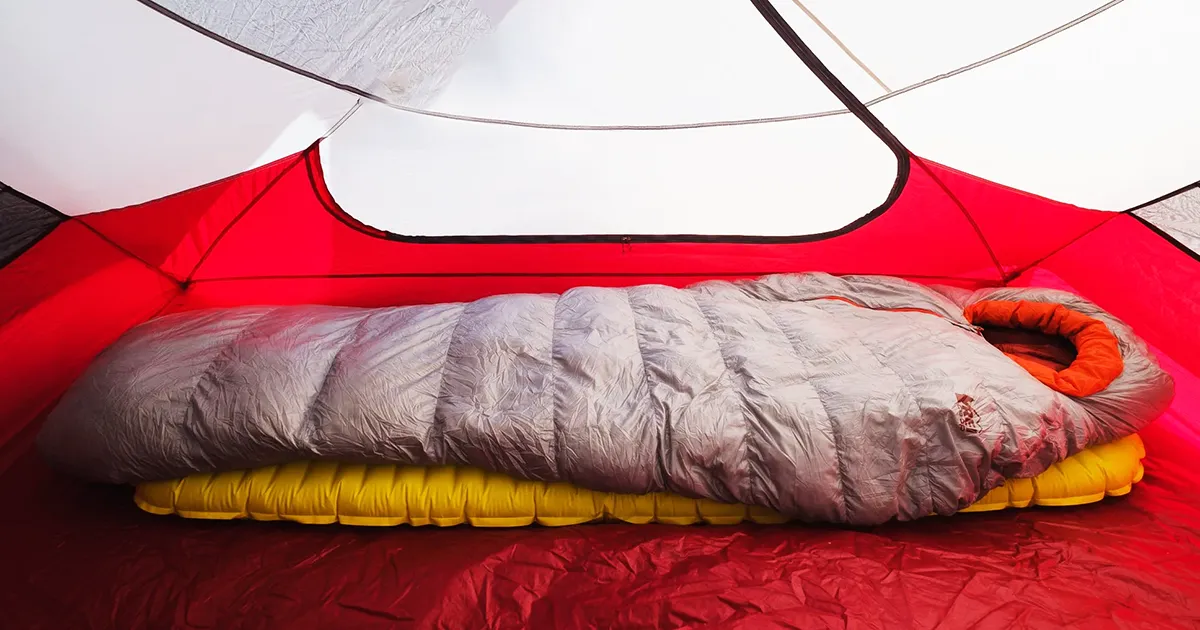
Sherpa sleeping gear includes two types of sleeping bags. They use -40°F rated down sleeping bags above base camp made of synthetic fabrics. Guide uses -20°F rated down sleep bag for base camp. It is of down-filled material, which is kept at the base camp.
Sleeping Pad and Foam Pad
The Everest expedition requires an inflatable ultralight sleeping pad of full length. Sherpa’s uses a valve repair/body patch kit and foam pad. They pack a 3/4 or body-length foam pad.
Kitchen Utensils
At high altitudes, the Sherpa’s kitchen equipment includes water bottles with parkas, a mug, a knife, a spoon, a two-cup capacity bowl, a 0.5L Nalgene Bottle, and a stainless steel vacuum-sealed thermos.
Hand Wear
Gloves
Everest expedition gear includes different types of gloves. Lightweight liner gloves, midweight softshell gloves, and insulated shell gloves are very important during mountain climbing. Liner gloves are used if conditions are too warm for mid-weight softshell gloves. Warm shell gloves are excellent in cold conditions, and they use a leather palm type.
Expedition Mittens
It has an insulated, removable liner and is highly recommended for the Everest expedition. Without it, no Sherpa Guide or expeditors dare to climb Mount Everest.
Head Wear
The head is the most sensitive part of the body, and it requires maximum protection in the Everest expedition. It includes a pair of buffs, a sunhat, a wool or synthetic ski hat, and two full balaclavas.
For face protection, Sherpa guides make sure to add a couple of breathable and anti-fogging face masks, glacier glasses, or ski goggles. Nose guard and head lamp are also included.
Personal Essentials
Sherpa’s personal supplies for the Everest expedition include the following:
Trash Compactor/Contractor Bags
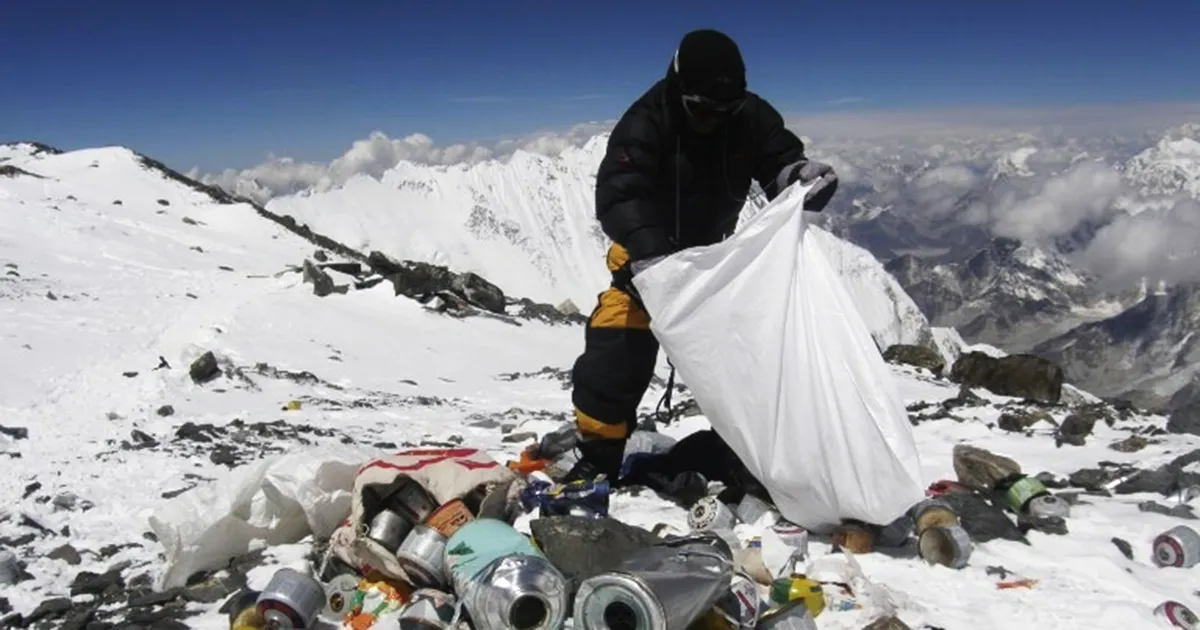
Sherpas have to collect their own garbage during the Everest Expedition, so they must have three heavy plastic garbage bags. These bags are made of plastic, which withstands for a longer time.
Toiletry Bag
The Sherpa guide’s toiletry gear list includes toilet paper, alcohol-based hand sanitizer, toothbrush, toothpaste, floss, wet wipes, SPF 30+Sunscreen, Lip screen, towel, shower sandals, and a small bottle of soap/shampoo.
Water Treatment Tools
Mount Everest Expedition requires proper hydration, so you must have 4 to 6 liters of water a day. Sherpas use Steri-Pen for water purification, and they also recommend one set of Aqua Mira chemical treatment drops. Steri-Pen works on the batteries, and it treats water without the addition of chemical tastes.
Altimeter/Smart Watch (Optional)
Nowadays, altimeters and smart watches with GPS tracking and activity mode are very helpful tools for the Everest expedition. These help the Sherpa guide track their trip altitude and distance.
Hand and Toe Warmers
Sherpa usually packs more than three sets of hand and toe warmers. It helps to keep your legs and hands warm in the lower oxygen region.
Heal and Nutrition
Everest climbing requires the arrangement of every possible medicine that may be needed on the journey. Sherpa’s medicine bags include Pepto Bismol, Metronidazole (500mg tablets), Z-Paks (500mg tablets), Excedrin, Diamox (125mg tablets, approx. 2 per day at altitude), and Zofran (4mg tablets).
Imodium, Erythromycin ointment for those who wear glasses/contacts, hard candies and cough drops, cold medicine (Mucinex, Tylenol cold +flu, Theraflu), and a variety of over-the-counter pain relievers like Tylenol and Ibuprofen are also important. Guides make sure to add high-energy protein bars, dried fruits, and nuts.
Camera, Solar Panel, and Power Bank
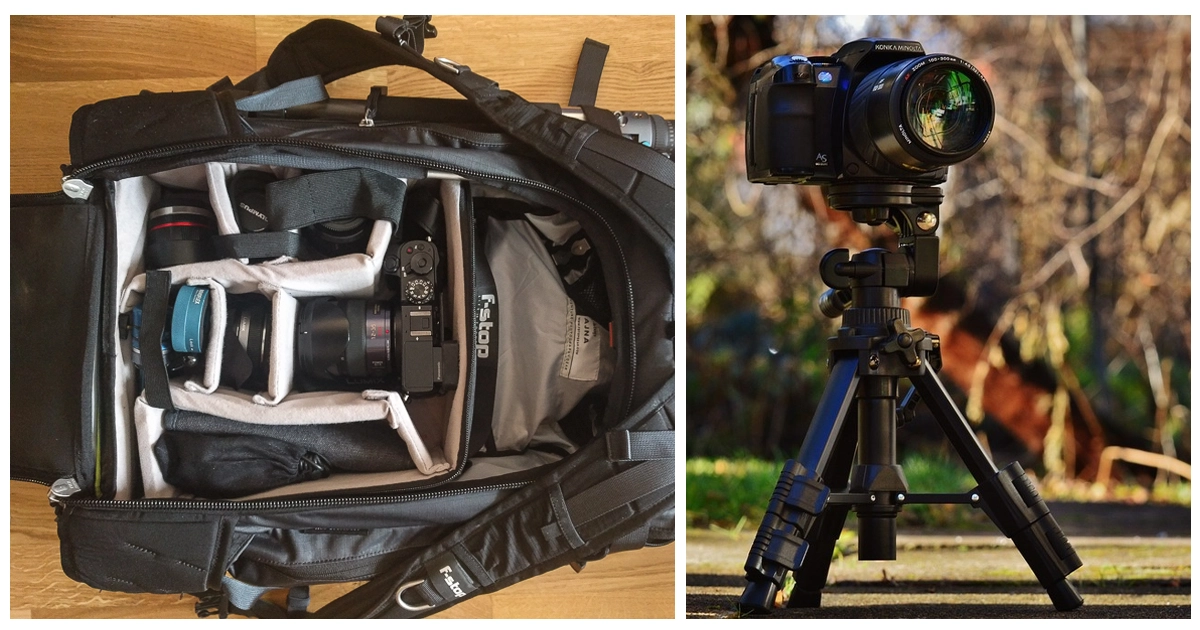
These items are optional for the Sherpa guides. Sherpa guides pack their camera, a small portable solar panel, and a power bank for charging. They recommend their client bring a lightweight solar panel of 10-20 charging watts. Power bank must be small and of models like Goal Zero Flip 36 or Venture 35.
Pee Bottle and Pee Funnel
The complete Sherpa gear list for Everest summit demands a hard-sided 1.5 to 2-liter model of a pee bottle. Sherpa guides have to carry the Pee funnel for their female client.
Travel Gear
Sherpas carry all these gears on a simple, light climbing pack with Crampon and ice axe attachment points. They have to carry three large duffels to base camp and keep them there. The Sherpa guide gear also demands one small duffel bag where they will keep items that will not be taken to the mountains. It is of a 40 to 50 liter capacity. All the travel gear is placed in it, and he has to climb Everest by carrying it on his back.
The proper weight distribution for the Sherpa backpack is quite important; it places the heaviest items close to your back in between the shoulder blades. This allows transfer of 80 % of the weight to the hips.
Navigation Tools
A satellite phone or radio is used as an emergency tool in high altitudes like Everest. A GPS device provides real-time location and acts as a digital map. Compass helps you to focus on the correct direction during heavy snowfall and fog, as it always points north.
Oxygen Bottles for Sherpa on Everest
From carrying heavy loads to fixing ropes at extreme altitudes, Sherpas depend on supplemental oxygen. Sherpa guides use 3 to 4 full large bottles of oxygen, while the client uses more than 8 bottles of oxygen.
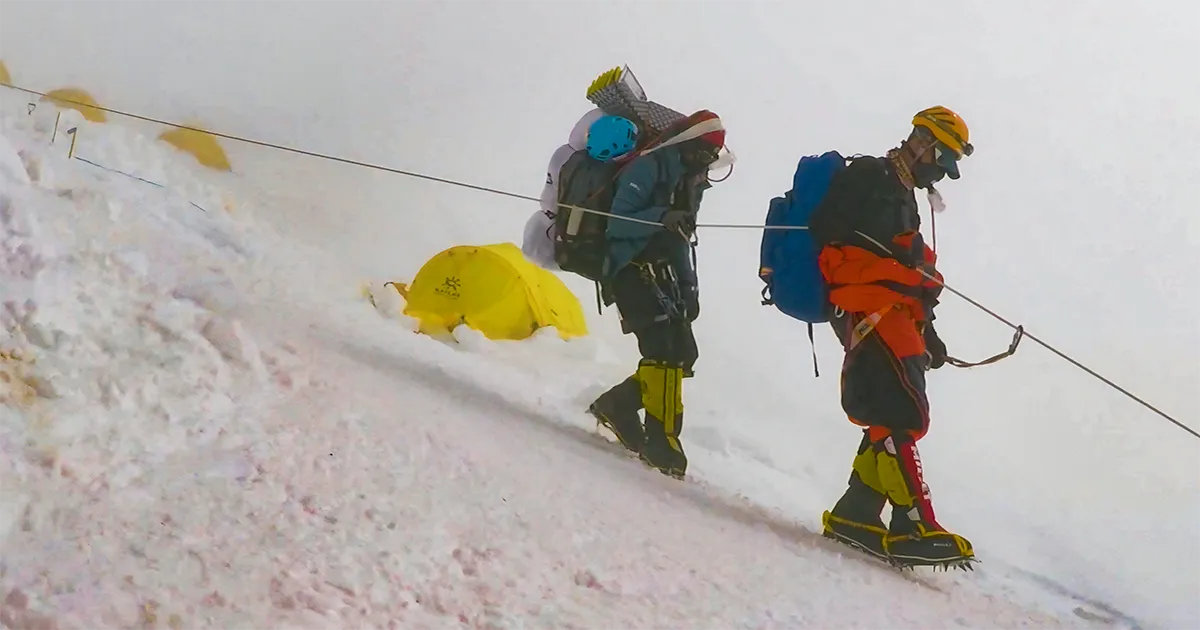
They use an oxygen flow rate of 0.5 to 1 litres per minute for Camps 3 and 4 at the time of sleeping. Above Camp 4, they regulate the oxygen flow to 2 to 3 litres per minute during ascents, and one will last for approximately 6 hours. The cost of one high-quality cylinder, regulator, and mask system ranges from $500 to $600+ per bottle.
The Heroes of Himalayas
Sherpa guides, the mountain heroes, are the reason behind the victory of the Everest summit. The proper gear arrangement and the support of the mountain spirit, the Sherpa, are the reasons behind the success of the Everest attempt. Sherpas are not only responsible for the navigation of the Everest path, but they also have to carry the heavy gear bag on their back.
They make sure to refill the clients’ oxygen tanks, provide proper gear for the required weather conditions, and guide them in extreme weather conditions above 8000 meters. As of 2025, Sherpa guides are using technology like drones for delivering supplies and removing trash, advanced satellite communication, and tracking devices in the risky areas like Khumbu Icefall.
Sherpa guides are also updating themselves according to the advancement of mountaineering techniques and safety protocols. Climbing Everest is a life-changing experience that makes us fearless with a deeper appreciation of our precious life.
If you are planning for Everest Expedition, make sure to contact Awesome Holidays for more details.
FAQs
Expand AllHow much weight do sherpa guides carry on Everest?
Sherpa guides carry a weight range of 70 kg to 100 kg. They have to carry the load of food, tents, and fuel for the Everest Expedition, sometimes it even exceeds their body weight.
What oxygen do sherpas use on Everest?
A Sherpa guide on Everest uses modern supplemental oxygen, a smaller carbon fiber reinforced aluminium cylinder with a regulator and mask.
They use an oxygen flow rate of 0.5 to 1 litres per minute for Camps 3 and 4 at the time of sleeping. Above Camp 4, they regulate the oxygen flow to 2 to 3 litres per minute during ascents, and one will last for approximately 6 hours.
How many sherpas climb Everest per year?
Every year, thousands of Sherpas accompany foreign climbers on their ascent of Everest. There were 491 personnel hired for the Everest expedition, and most of them were Sherpas for the 2024 season. Similarly, in 2023, 600 Sherpas were employed out of 1,200 individuals on the summit list.
What food do sherpas eat on Everest?
Sherpas focus on high-calorie food on Everest. They consume easily digestible foods like dal bhat (lentil soup with rice and vegetables), Shyakpa (Sherpa stew), Tsampa (roasted barley flour), and butter tea. Sherpas take three meals a day, including breakfast, lunch, and dinner.
Do sherpa guides use supplemental oxygen?
Yes, most of the Sherpa guide uses supplemental oxygen. They typically use oxygen tanks at around 7,950 meters, and only 39 Sherpas have reached the Everest summit without supplemental oxygen.
What climbing gear do sherpas carry?
Sherpas carry modern, high-quality technical climbing gear, which includes ropes, harnesses, and other safety and survival devices.
How do sherpas stay warm on Everest?
Sherpas wear multiple layers of high-performance clothing with modern down jackets, insulated boots, and gloves. Some Sherpas wear traditional garments like wool chuba along with thermal underwear and windproof outer shells.
What communication equipment do sherpas use?
Sherpa and foreign climbers communicate with the help of a two-way radio(walkie-talkies). In the lower altitude, they use satellite messengers/phones and cellular networks for broader connectivity and emergencies.
How much do sherpa guides earn?
Sherpas earn between $3,000 and $8,000 per climbing season. They have to compensate for two months of climbing season and have to cover the living expenses for a year. Agencies provide an extra $1,000 to $2,000 above 7000 meters or reaching the summit.
What safety equipment do sherpas carry?
Sherpa guides’ gear includes safety equipment like specialized climbing hardware, safety lines, protective clothing, emergency supplies, and increasingly, supplemental oxygen.
Do sherpas carry medical supplies to Everest summit?
Yes, Sherpas carry their medical supplies to the Everest summit themself. Everything required for the expedition is carried by Sherpas on the Everest.
What navigation tools do sherpas use on Everest?
Sherpas use tools like GPS devices, an altimeter, a map, satellite phones, and compasses for navigation in the mountains. According to new expedition rules, sherpas and climbers must have mandatory tracking devices.
How much water do sherpas carry on Everest?
Sherpas carry 2 to 3 liters of water on Everest. They refill at established stops by melting snow and are purified by water treatment tools. Dehydration is very common at high altitude, so they consume 3 to 4 liters of water a day.
What sleeping equipment do sherpas use?
Sherpas use a professional-grade, heavily insulated sleeping bags, sleeping pads, and high altitude durable for four season sleeping tents.
They use -20°C (-4°F) to -40°C (-40°F) rated sleeping bags for summit.
How do sherpas manage altitude sickness supplies?
Sherpas management strategy, careful acclimatization protocols, and carrying medical resources like supplemental oxygen and medications like acetazolamide (Diamox) helps them prevent altitude sickness on the Everest. Additionally, they have a inherited physiological adaptation.
What tools do sherpas use for fixed ropes?
Fixing and securing ropes on the Evrest requires tools like Ropes, Anchoring devices, Jumars , Carabiners, Cow’s tails, Descenders, Harness, and so on. The ascend and descend of the foreign climbers are managed by Sherpa guide.
Do sherpas carry personal items on Everest?
Yes, Sherpas carries personal items on Everest. They packs sleeping bags, spare clothing, and other gear like snacks, water bottles, and stoves, for personal use.
Do Sherpas Died on Everest?
Yes, many Sherpas have died on the way to Everest. One third of Everest deaths are of Sherpa due to avalanches, crevasses, and falls while fixing ropes for clients.
Do Sherpas go to the top of Everest?
Yes, Sherpas go to the top of Everest wth their clients. They assist climbers from the beginning to the end of the summit.
How many Sherpas have died on Everest ?
About 132 Sherpas have died on Mount Everest. In the past decade, 28 Sherpas have died due to avalanches, falls, altitude sickness, and other hazards of the extreme environment.
Related blog posts
Discover a choice of tourist destinations loved by most of our visitors. Whether you're on a jungle safari to spot rare animals or walking through a world heritage site, these well-planned itineraries cover the major highlights of Nepal.



 call an expert at: