
No Limits in the Khumbu: The Everest Lhotse Traverse Through Kabita Nepali
 Sujata Pokhrel
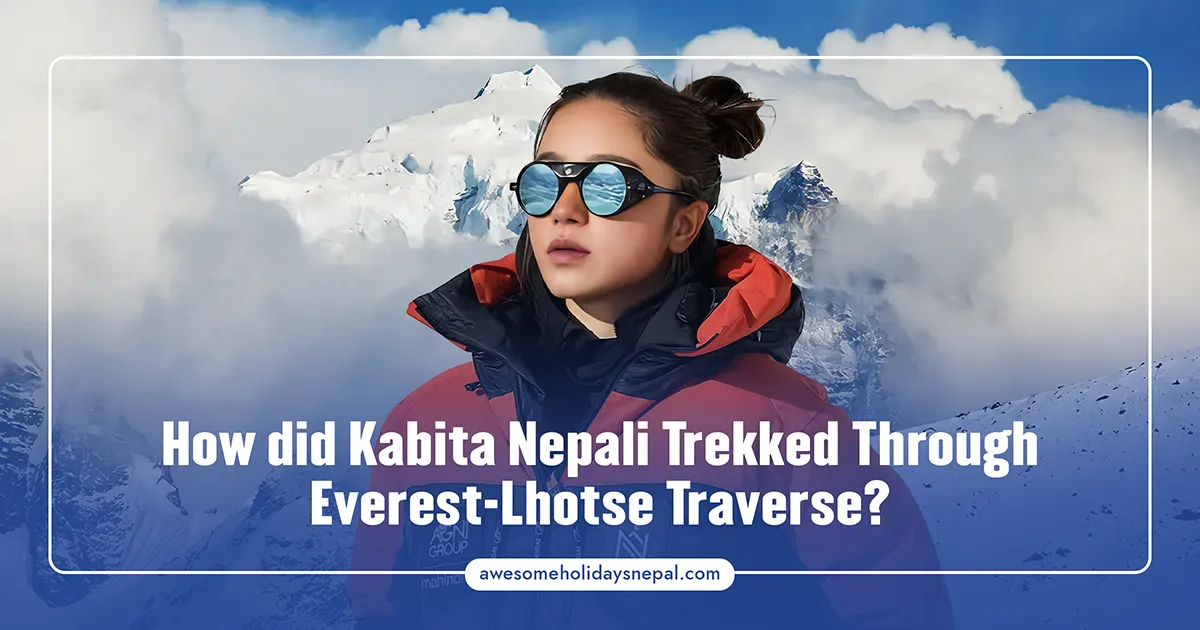
How often have you heard of a double-summit in just under 24 hours? Sounds rare and weird, right? While most summiteers hustle to get down from the summit of Everest, this courageous Nepali girl made her record trekking the Everest Lhotse traverse in just a day.
Kabita Nepali is a popular dancer and public personality, someone associated with energy, rhythm, and stage lights. But beyond the spotlight, she carried a different dream, one shaped not by applause, but by altitude. Driven by discipline, fitness, and a relentless mindset, she stepped away from familiar territory and into one of the harshest environments on Earth.
While most climbers consider the summit of Mount Everest the ultimate goal, Kabita chose to keep going. After standing on the world’s highest peak, she descended only as far as necessary before pushing onward to Mount Lhotse, completing the Everest–Lhotse traverse in roughly a single continuous effort.
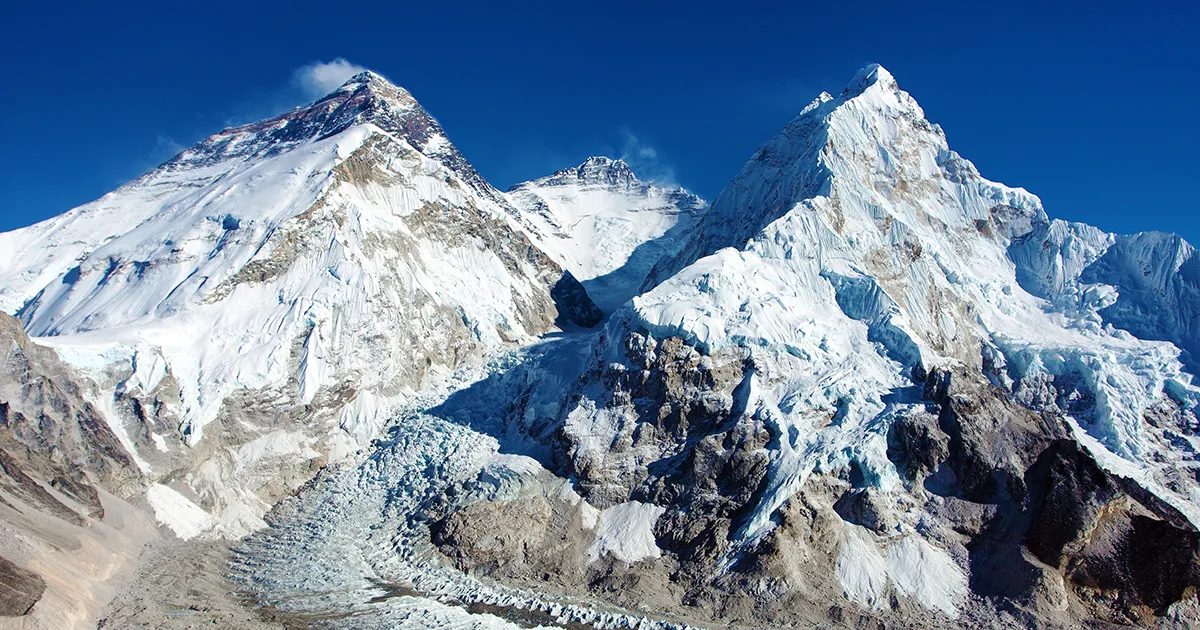
Her journey is not just about mountains. It is about transformation from stage to summit, from performer to pioneer and about redefining what is possible for Nepali women in adventure. Let’s get through the blog to understand this journey.
Peaks of the Khumbu Region
The Khumbu is not just a trekking destination; it is a living amphitheater of ice, rock, wind, and faith. Home to Sherpa communities and ancient monasteries, this region holds some of the tallest mountains on Earth.
At its heart stands Mount Everest (8,848.86 m), known locally as Sagarmatha and Chomolungma. Right beside it rises Mount Lhotse (8,516 m), sharing much of the same route up to the South Col before diverging toward its own steep, unforgiving summit face.
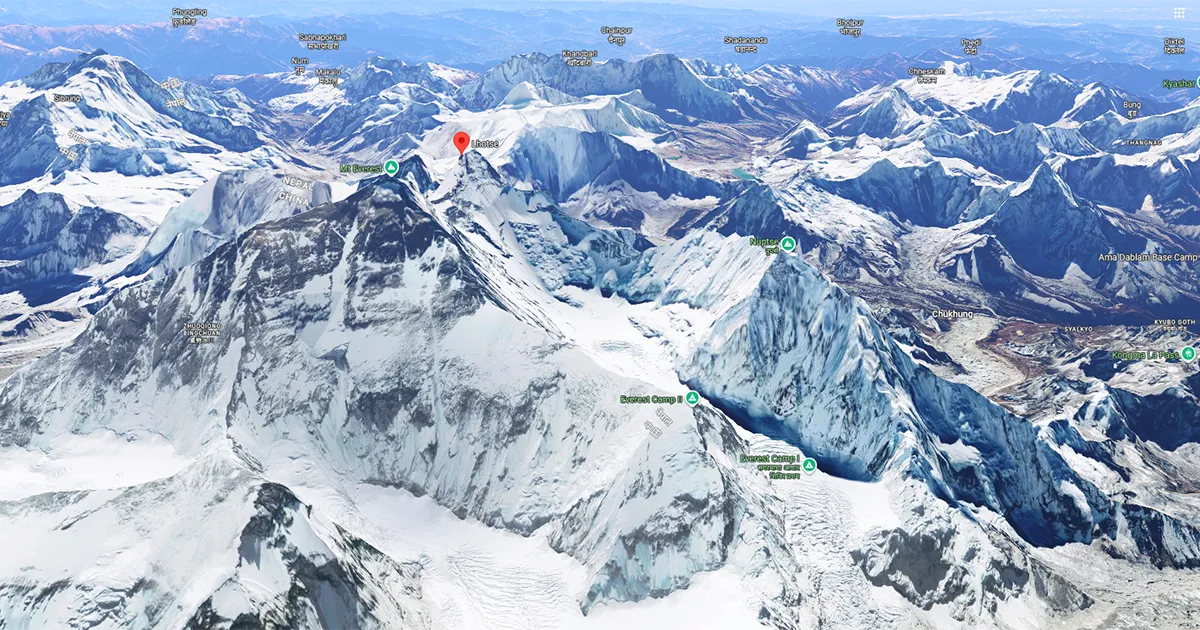
The Khumbu’s dramatic terrain, the Khumbu Icefall, Western Cwm, and the windswept South Col is already a test of survival for Everest aspirants. Linking Everest and Lhotse in one continuous effort multiplies that challenge. It demands not just strength, but precise timing, acclimatization, mental stability, and relentless willpower.
Everest-Lhotse Traverse
In mountaineering terms, a traverse means moving from one summit to another without returning to base between climbs. In the case of Everest and Lhotse, climbers summit Everest, descend back to the South Col, and then push toward Lhotse all within an extremely tight weather window.
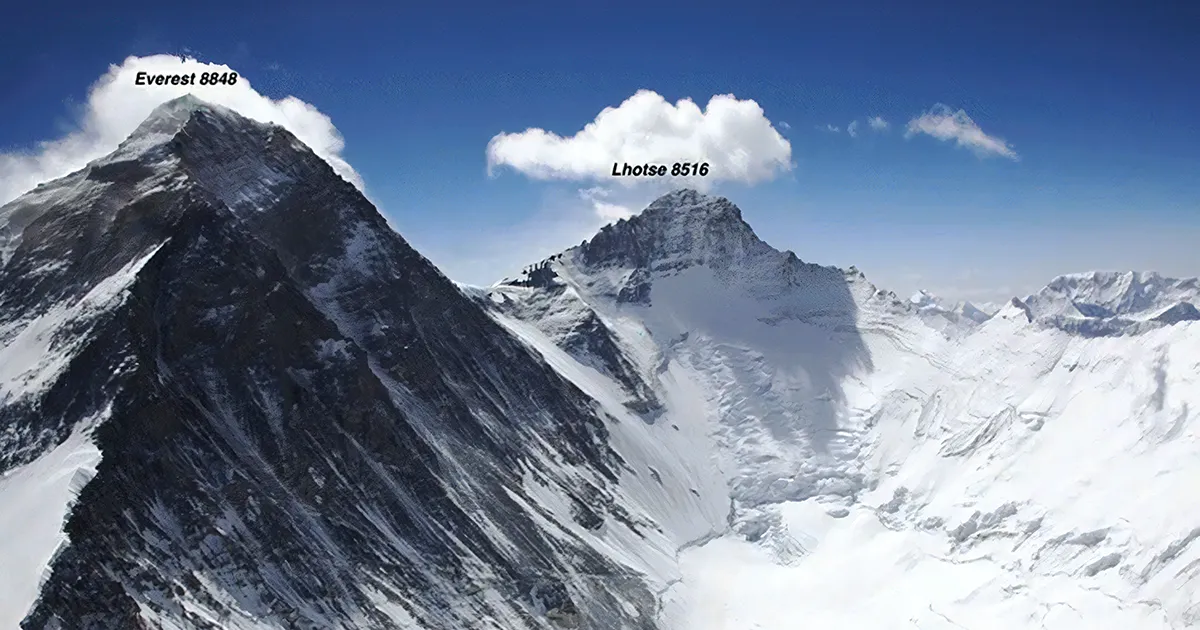
Most climbers are physically and mentally drained after Everest alone. Oxygen levels are critically low, the body is starved of energy, and every step feels like lifting stone. Yet Kabita chose to continue.
The video capturing her journey shows the thin air whipping against prayer flags, frost forming on gear, and the raw exhaustion that comes after hours above 8,000 meters the so-called “death zone.” And still, step by step, she kept moving.
This wasn’t just a double summit. It was a declaration.
Kabita Nepali: From Stage to Summit
Kabita Nepali is a dancer, performer, and public figure who rose to fame through entertainment. Known for her dynamic stage presence and strong fitness background, she had long embodied discipline and physical control. But mountains demand something different.
On stage, energy flows outward. In the mountains, it turns inward.
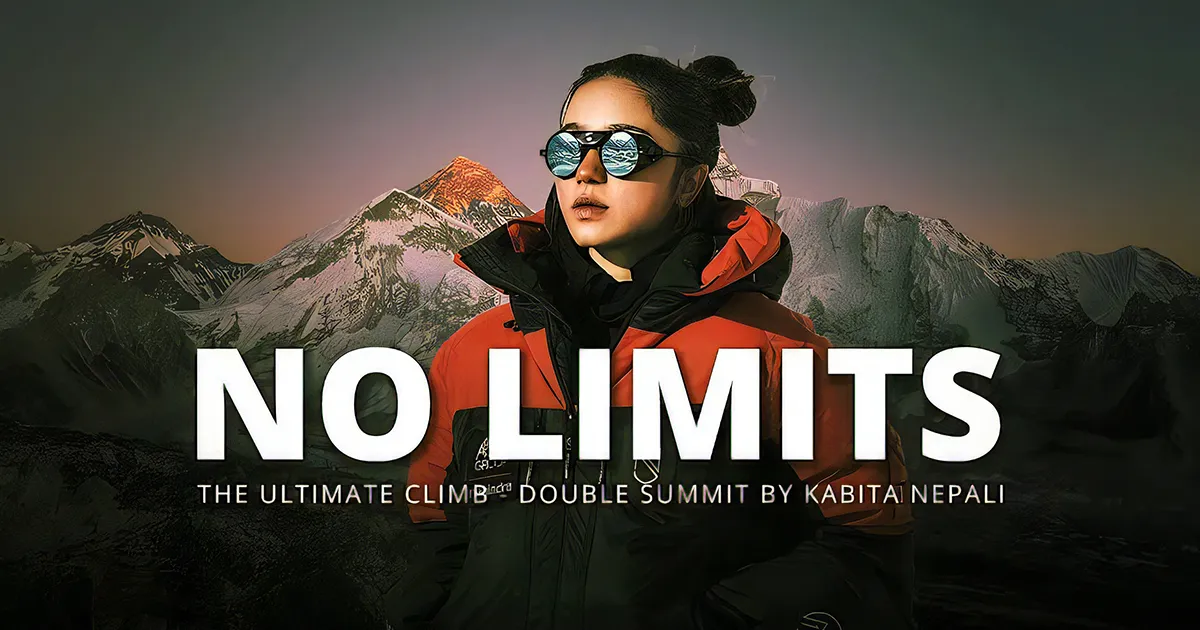
In interviews and moments shared in the documentary, Kabita reflects on fear, doubt, and the responsibility she felt carrying not only her own dream but also the expectations of a nation watching. Her transformation from performer to high-altitude climber is not framed as a publicity stunt it feels deeply personal.
Training for the mountains required endurance work, mental conditioning, and the humility to start as a learner in an entirely new world. She did not arrive as a celebrity; she climbed as a determined Nepali woman willing to suffer for her goal.
Experience Behind the Film
The documentary footage offers more than summit shots. It captures quiet, vulnerable spaces heavy breathing inside an oxygen mask, silent stares across endless snowfields, the emotional release after reaching each peak.
The camera does not romanticize the climb. It shows fatigue, windburned faces, and the slow, deliberate movement required above 8,000 meters. There is a sense of isolation despite being surrounded by team members. Every climber, at that altitude, is ultimately alone with their thoughts.
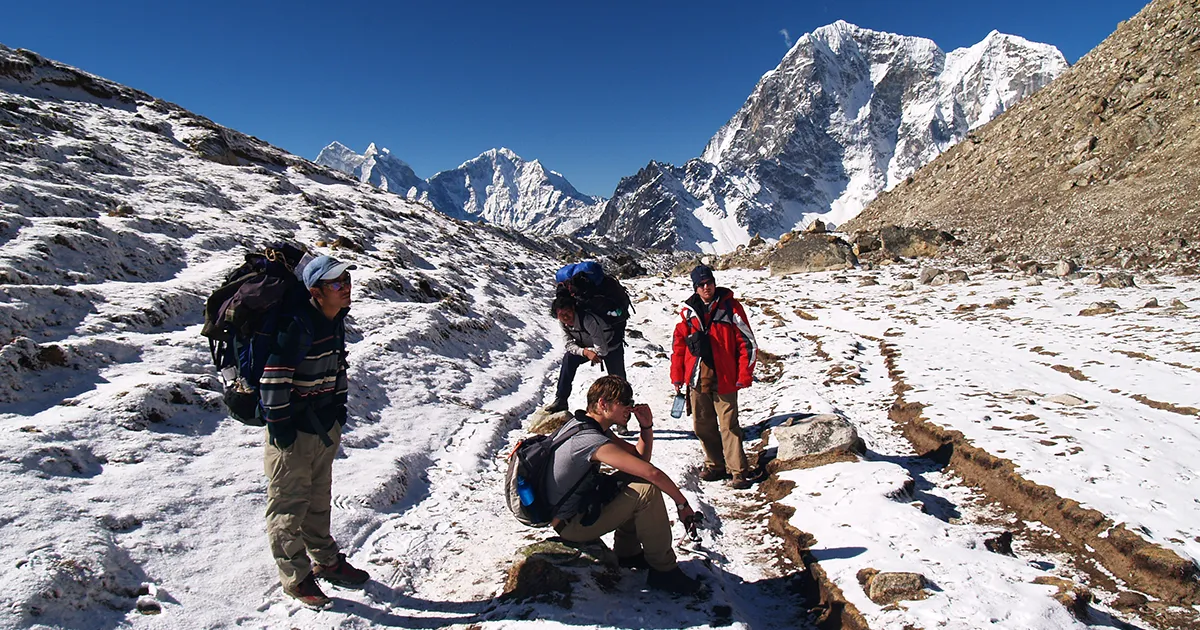
Through this lens, viewers see not just an achievement but a process, the long trek to Base Camp, the rotations through higher camps, the waiting game for weather, and the razor-thin margin between success and retreat.
Lessons to Learn from the Mountain
Mountains strip away illusion. In the Khumbu, status and background mean nothing only preparation, discipline, and steady effort matter.
Kabita’s journey shows that many limits are self-created. What seems impossible becomes achievable when broken into small, consistent steps. Confidence comes from preparation, and courage is not the absence of fear, but the decision to continue despite it.
Her presence on the world’s highest summits also matters beyond mountaineering. When young Nepali girls see someone like them succeed, it quietly expands what feels possible.
The Expedition Journey
The journey began long before summit day with months of preparation and the iconic trek through the Khumbu Valley toward Everest Base Camp. Acclimatization rotations between camps helped her body adapt to thinning oxygen levels.
Summit night on Everest typically begins before midnight. Climbers ascend slowly under a canopy of stars, headlamps flickering like a moving constellation. After reaching Everest’s summit, most climbers descend immediately to conserve energy.
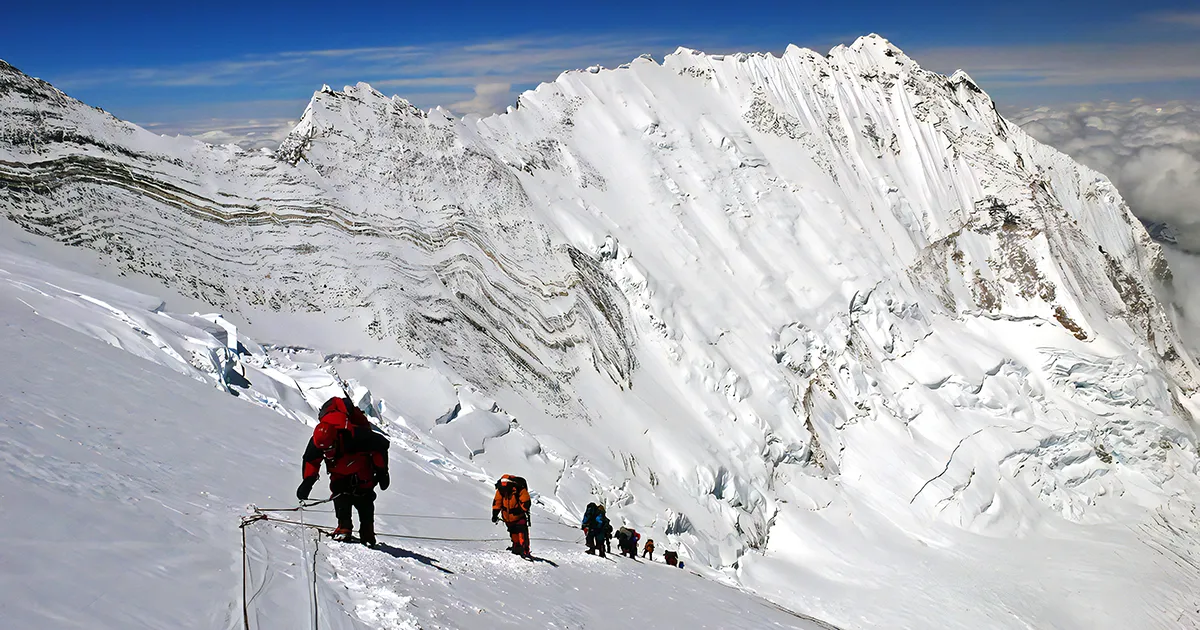
Kabita descended to the South Col and then prepared to climb again.
The push toward Lhotse required navigating a steep couloir and icy slopes. Fatigue compounds risk at this stage. Muscles ache, oxygen runs low, and judgment must remain sharp. Completing both summits in roughly 24 hours required near-perfect weather, team coordination, and exceptional resilience.
A Milestone for Nepali Women in Adventure
Kabita Nepali’s Everest–Lhotse traverse is more than a mountaineering statistic. It stands as a powerful moment for Nepali women in adventure sports — fields historically dominated by men.
Her climb sends a clear message: Nepali women are not confined to narratives written for them. They are writing their own at 8,000 meters and beyond.
In the vast silence of the Khumbu, between Everest and Lhotse, a boundary shifted. Not just geographical, but cultural. And perhaps that is the real summit.
No limits in the Khumbu, no limits for Kabita and, maybe no limits for those inspired to follow.
Keep daring yourself to break your limits!
FAQs
Expand AllWhat is the Everest–Lhotse traverse?
The Everest–Lhotse traverse refers to climbing both Mount Everest and Mount Lhotse in a single continuous effort, typically without descending all the way back to base camp between summits. Climbers summit Everest, descend to the South Col, and then push toward Lhotse within the same weather window.
Is “Everest–Lhotse traverse” the same as “Everest–Lhotse double summit”?
They’re often used interchangeably in headlines, but technically a traverse emphasizes continuity moving from one peak to the other without fully resetting the expedition. A “double summit” can be broader and may not always imply such a tight, connected effort.
How are Everest and Lhotse connected geographically?
Everest and Lhotse are connected by a high ridge and share the same massif. On the south side (Nepal route), climbers follow the same path up to the South Col before their routes split toward separate summits.
Where is Lhotse located?
Lhotse lies immediately south of Mount Everest on the Nepal–Tibet border within the Khumbu region of Nepal.
Is Lhotse part of Everest?
No, it isn’t. Lhotse is a separate mountain with its own summit and ranking (the fourth highest in the world), though it is physically connected to Everest by a ridge.
How far is Lhotse from Everest?
The two summits are roughly 3 kilometers apart in a straight-line ridge connection, though climbing distance and terrain make the journey far more demanding.
Why is Lhotse called the “South Peak” in some references?
The name “Lhotse” translates from Tibetan as “South Peak,” reflecting its position directly south of Everest.
What is the South Col?
The South Col is a high saddle (around 7,900–8,000 meters) between Everest and Lhotse. It serves as the final high camp for climbers attempting Everest from Nepal.
Why is the South Col important on the south-side Everest route?
It is the staging point for summit attempts. From here, climbers begin their summit push to Everest and for those attempting a traverse, it becomes the transition point toward Lhotse.
What is the Lhotse Face?
The Lhotse Face is a steep, icy wall that climbers ascend between Camps II and III on the south route. It is one of the most physically demanding sections shared by both Everest and Lhotse climbers.
Why do Everest and Lhotse share the same approach for part of the climb?
Because they rise from the same massif, the safest and most established southern route naturally follows the same glacier system and high camps before splitting near the South Col.
Where do Everest and Lhotse routes typically diverge?
They diverge near the South Col. Everest climbers turn northeast toward the summit ridge, while Lhotse climbers head toward a steep couloir on Lhotse’s face.
What is the Yellow Band on Everest?
The Yellow Band is a distinct sedimentary rock layer high on Everest that climbers cross above Camp III. It’s visually recognizable and a key landmark on the route.
What is the Geneva Spur?
The Geneva Spur is a rocky rib above the Yellow Band. It’s a technical section that climbers navigate before reaching the South Col, making it a critical waypoint.
Is Lhotse easier than Everest?
Not necessarily! While slightly lower in elevation, Lhotse has steeper technical sections near the summit. Many climbers find its final couloir more physically intense than Everest’s summit ridge.
What makes Lhotse technically different from Everest?
Lhotse’s summit push involves a steep, narrow gully requiring more direct climbing technique, while Everest’s upper section focuses more on endurance at extreme altitude.
What does “in 24 hours” usually mean in Everest–Lhotse headlines?
It typically refers to the time between summiting Everest and summiting Lhotse, not the entire expedition duration.
Why is a 24-hour benchmark significant in high-altitude climbing stories?
Because climbers are operating in the “death zone” above 8,000 meters. Extending time there dramatically increases physical stress and risk.
What is the “death zone” and why is it relevant to Everest and Lhotse?
The “death zone” refers to altitudes above 8,000 meters, where oxygen levels are insufficient to sustain human life long-term. Both Everest and Lhotse summits lie within this zone.
Do all climbers use supplemental oxygen on Everest and Lhotse?
Most commercial climbers use bottled oxygen for safety and performance, though some elite mountaineers attempt climbs without it.
Why do weather windows matter so much on Everest and Lhotse?
High winds and storms make summit attempts impossible. Climbers wait for short, stable “windows” of low wind and clearer conditions to attempt the summit.
What is a “summit window”?
A summit window is a short period of favorable weather conditions suitable for attempting the summit safely.
What is “acclimatization” in the context of Everest expeditions?
Acclimatization is the gradual process of climbing higher and returning lower to allow the body to adapt to thinning oxygen levels before a summit attempt.
What is a “summit push”?
The summit push is the final ascent from the highest camp (usually the South Col on Everest) to the summit and back.
Why is congestion (traffic) discussed so often on Everest?
During popular summit windows, many climbers may attempt the summit at the same time, causing delays in narrow sections which can increase risk in extreme altitude.
What are the main safety concerns for climbers and high-altitude workers?
Altitude illness, exhaustion, frostbite, weather changes, avalanches, and logistical risks such as fixed rope congestion are major concerns.
What kinds of rules has Nepal proposed or introduced to improve Everest safety?
Nepal has proposed measures such as requiring prior high-altitude experience, regulating guide ratios, and improving waste management and route oversight to enhance safety and sustainability.
Where can you check Nepal’s official mountaineering fee tables?
Official mountaineering permit fees are published by Nepal’s Department of Tourism under the Ministry of Culture, Tourism and Civil Aviation on the Government of Nepal’s official website.
Does an Everest permit automatically cover Lhotse?
No, Everest and Lhotse are separate peaks requiring separate climbing permits.
What does Kabita Nepali’s “No Limits” documentary focus on?
The documentary centers on Kabita Nepali and her journey completing the Everest–Lhotse traverse highlighting preparation, mental resilience, summit moments, and the emotional weight of representing Nepali women in adventure.
Who filmed/documented Kabita Nepali’s Everest–Lhotse story (as reported)?
According to media coverage surrounding the release, her expedition story was documented and later shared publicly through a dedicated production team and media collaborators associated with the film’s release.
Are there verified historical “firsts” associated with an Everest–Lhotse traverse?
Yes. There are historically documented Everest–Lhotse traverses, including recognized early successful attempts by elite mountaineers. Claims of “firsts” should always be cross-checked against mountaineering records and reputable databases.
Can you see Lhotse from Everest Base Camp or nearby viewpoints?
Yes. Lhotse is clearly visible from Everest Base Camp and from popular viewpoints like Kala Patthar.
Why do people confuse Lhotse with being a “part of Everest”?
Because they share the same massif and are physically connected, many assume Lhotse is simply a sub-peak. In reality, it is an independent 8,000-meter mountain.
What should readers verify before trusting a “record” claim online?
Readers should verify:
- The exact definition of the record (e.g., traverse vs. double summit)
- Timing criteria (summit-to-summit vs. expedition duration)
- Official confirmations from mountaineering bodies or reputable expedition operators
Careful verification ensures achievements are celebrated accurately and respectfully.
Related blog posts
Discover a choice of tourist destinations loved by most of our visitors. Whether you're on a jungle safari to spot rare animals or walking through a world heritage site, these well-planned itineraries cover the major highlights of Nepal.
 call an expert at: