
Everest Garbage Problem 2026: The New 8kg Law & Poop Bag Mandate Explained
 Sristi Adhikari
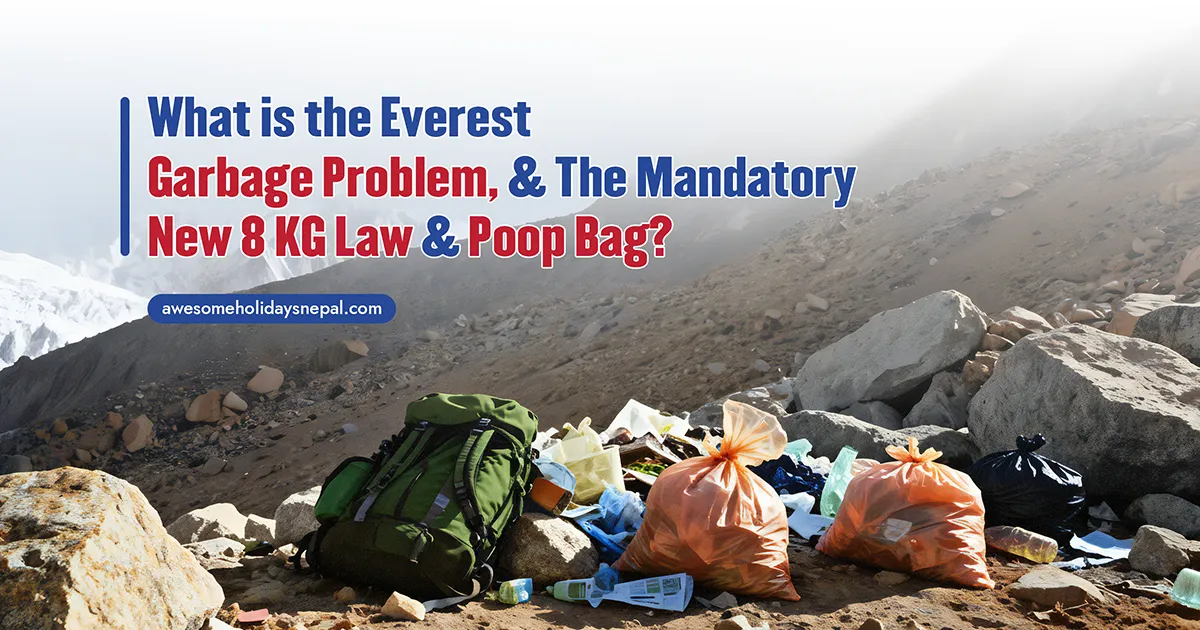
Are you aware of the rising Everest garbage problem? The ultimate symbol of human ambition and endurance, Mount Everest, has been affected by a global environmental crisis caused by human waste, discarded gear, and climbing-generated trash.
It has reached a point where drastic action is needed to reduce pollution and protect the fragile ecosystem of Mount Everest. The pristine, snowy giant has reached crisis levels, and Nepalese authorities have instituted sweeping new regulations for the 2026 climbing season, most notably an 8 kg garbage haul rule with a mandatory poop bag requirement.
This blog breaks down what’s new, why it’s necessary, and what it means for climbers and the Everest garbage problem:
The Growing Everest Garbage Problem
The Everest garbage problem is rising, and it didn’t happen overnight. It started from the first successful ascent in 1953, over 7,000 climbers have attempted the peak, and many of them have left behind more than just footprints, such as:
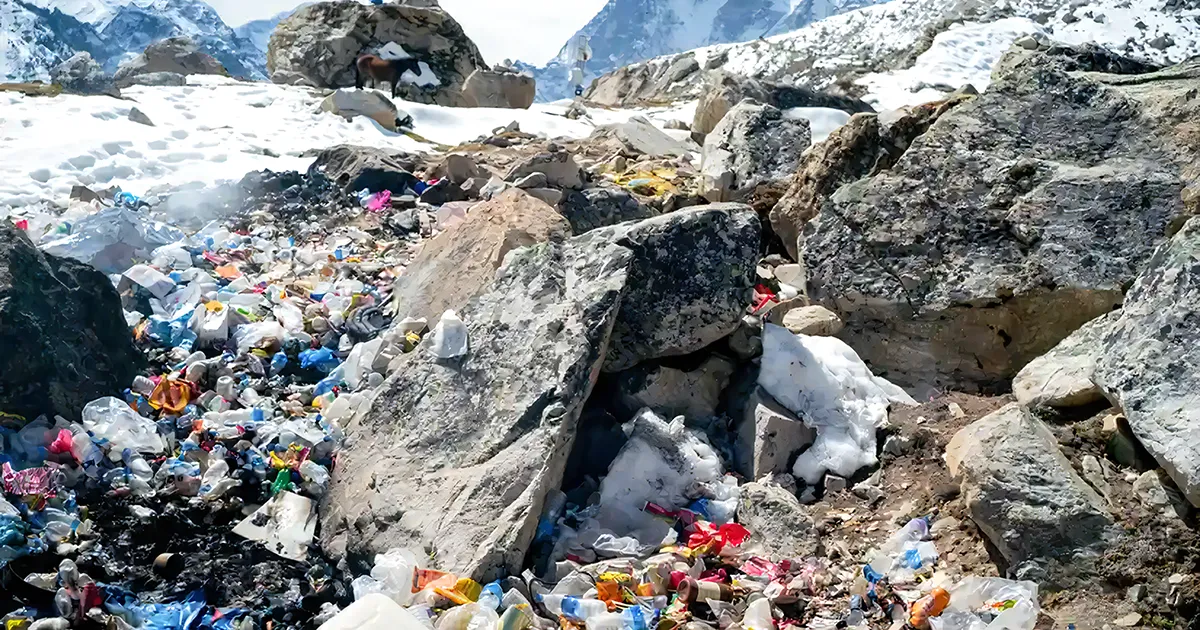
- Discarded oxygen cylinders
- Torn tents and climbing ropes
- Food covers, cans
- Clothing, boots, and climbing equipment
- Broken pieces of ladders and gear
- Frozen human waste around the camps.
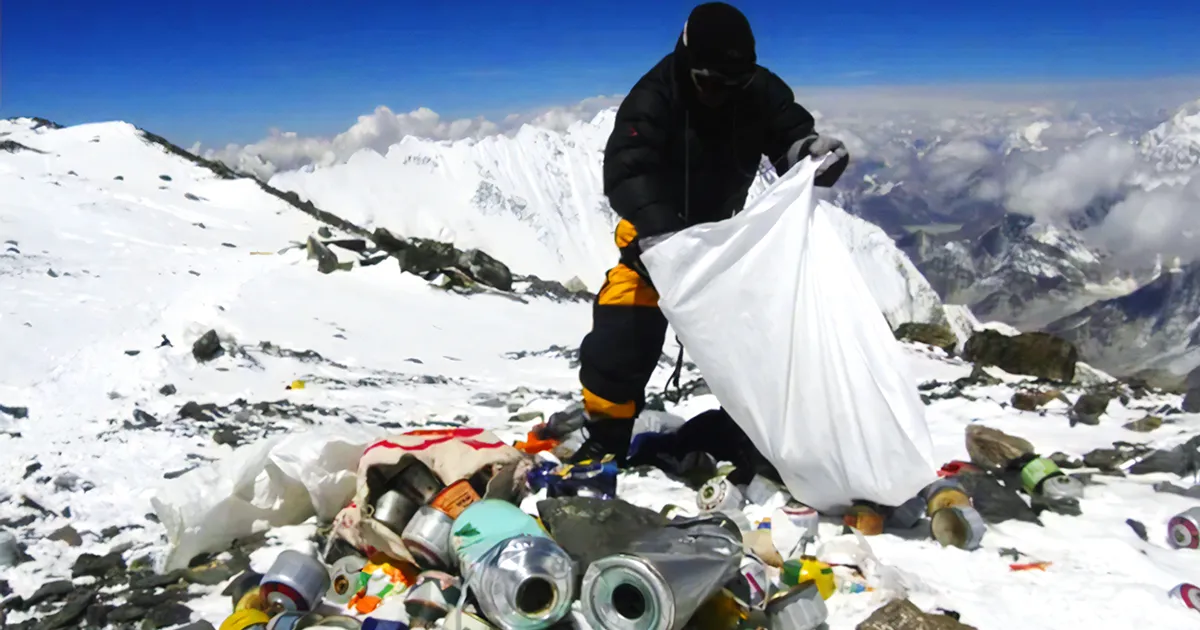
Everest has more than 50 tons of garbage remaining scattered from base camp to higher camps. Due to extreme cold and snowy weather, waste doesn’t decompose, which makes the garbage pile up more and more.
Mount Everest Pollution 2025: A Turning Point
In 2025, the Everest trash became viral, where you could see the camps surrounded by trash, which resulted in growing concerns of contaminated snow melt, affecting drinking water safety. Human waste is polluting the glaciers, and microplastics are entering downstream rivers, which made the Nepali Government act with stricter enforcement of environmental laws.
The new Everest Climbing rule for stricter waste management for the reduction of the Everest garbage problem:
- Deposit of refundable $4,000 for waste management
- Must return with a minimum weight of 8 kg of waste
- Compulsory biodegradable gear packaging
- Mandatory poop Bag
- Camp must be free of human waste
The New 8kg Law Explained
The 8 kg garbage law means that every climber who ascends beyond Everest Base Camp must bring back at least 8 kilograms (roughly 17.6 lbs) of garbage on their descent. They should bring back everything they used during their summit journey, whether it is a piece of packaging or the broken pieces of gear from low camp to high camp, along with the human waste.
At first, if the climbers do not return with the 8kg of trash, their deposited garbage fee of $4,000 (£2964) will not be returned. But discussion for this rule has been altered, and they are planning this deposited money will not be refunded, as it would help fund ongoing waste management and monitoring efforts.

The Poop Bag Mandate: Why Human Waste Is a Major Issue
The mandatory poop bag is the most talked-about rule during Everest waste management. The absence of proper toilets, a sewage system, Everest expeditors relive themselves over the snow and the cold and frozen environments makes the human waste accumulated over the years, as it takes a longer time to decompose.
So, climbers have to carry a special biodegradable poop bag and carry it down and disposing them in designated areas only. Some also carry a portable containment system for poop.
Why is Mount Everest pollution still rising?
Even though every time climbers bring back the 8kg trash from the Everest, the waste is still being accumulated, and climbers are getting their refund over time. The climbers are taking down the trash cleverly from low camps only, and from high camps, they are only returning with oxygen cylinders.
This clearly shows a lack of proper monitoring from Khumbu icefall; the High Camp trash problem is getting worse.
Inside the Changed Rules
The officials have been targeting the minimisation of the Everest garbage problem, which is yt to be implemented after the approval of parliaments by:
- A non-refundable clean-up fee of USD $4,000 per person from Everest expeditors will be used to set up a checkpoint at Camp Two.
- Deploying mountain rangers so that expeditors will bring down their trash from higher parts of the Everest.
The chairperson of Pasang Lhamu rural municipality, Mingma Sherpas, said that:
“The change was something the Sherpa community had lobbied for for many years now. We had been questioning the effectiveness of the deposit scheme all this time because we are not aware of anyone who was penalised for not bringing their trash down.
And there was no designated fund, but now this non-refundable fee will lead to the creation of a fund that can enable us to do all these clean-up and monitoring works.”
Similarly, the spokesperson of the Ministry of Tourism. Jaynarayan Acharya also said that the non-refundable fee will form part of a recently introduced five-year mountain clean-up action plan, which will surely address the tons of waste, including human excrement, being piled in the mountain.
The Role of Climbers in Solving the Everest Garbage Problem
The Everest Garbage Problem cannot be solved by policy only; it requires the collaboration of the climbers, sherpas, and expedition operators. Everyone must have a direct influential role in the protection of the highest mountain ecosystem. The Everest environmental issues can be solved if climbers follow these:
Everest Is a Privilege, Not a Dumping Ground
Everest expedition is not an everyday adventure; everyone should utilise this rare privilege with full responsibility. Focusing on reaching the summit of Everest doesn’t mean you should neglect the environment and leave the trash.
You should always carry your waste and focus on preserving the environment for future climbers.
Pack In, Pack Out: The Core Responsibility
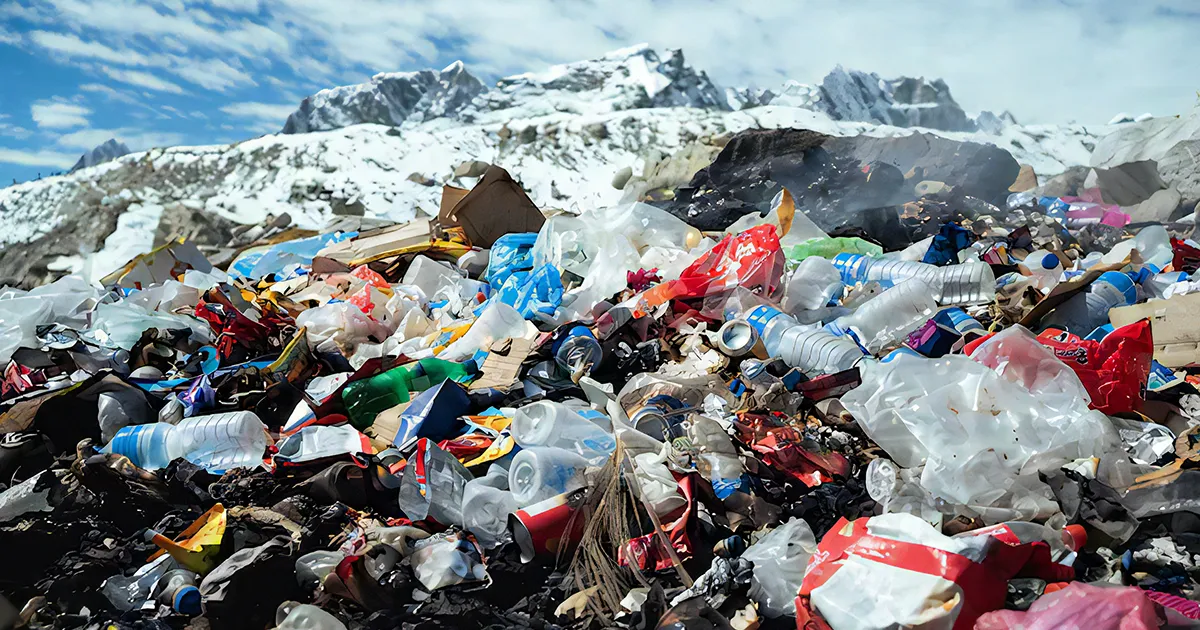
The Mount Everest trash problem can be managed by following the rule of outdoor ethics: pack in and pack out. Climbers should make sure that there is no waste like food wrappers, broken gear, and abandoned materials, which will surely reduce the pollution in the mountain.
Human Waste Management Matters
Climbers relived human waste becomes frozen and will stay there for decades. Carrying a biodegradable bag or containment system, properly packing it, and bringing it back surely helps in waste management whic will help in the protection of glaciers, water resources, and local communities downstream.
Choosing Ethical Expedition Operators
Only an ethical and certified expedition operator believes and follows the strict waste policies, help sherpa people in the cleanup initiatives. Responsible op[erators helps reduction of Everest pollution for long term, and you should also join them.
Reducing Waste Before the Climb Begins
Prevention is better than cure, we all known these phrase well. So, climbers should follow this approach when planning for the Everest summit, like avoiding single-use plastic, opting for a refillable container, and using durable and reliable gear. This will avoid waste in the pristine environment of Everest.
Respecting Sherpas and Cleanup Crews
Climbers should never assume that sherpas will clean up their waste. You must be responsible for your actions and should remove the waste by yourself, and climbers should fairly pay the sherpas and the cleanup crews.
Setting an Example for Future Climbers
Even the high-profile climbers and expedition leaders focus on environmental ethics, so everyone should also follow them, which will surely influence the global mountaineering culture.
Conclusion: Trek Everest Without Leaving a Trace
Addressing the Everest garbage problem is compulsory, and this problem won’t disappear overnight. Everyone should have a feeling of responsibility, accountability, and sustainability towards the pristine environment of the tallest mountain in the world, Mount Everest.
The Everest garbage problem can be solved if everyone who steps on the Everest follows the 2026, 8kg waste law and poop bag mandatory protocol and conquer the journey more ethically. When climbers choose to be stewards of the mountain they aspire to conquer, and this pollution will be gone in no matterof times.
The world’s highest peak, Mount Everest deserve the world’s highest level of responsibility. So, climb safely without leaving a trace.
FAQs
Expand AllIs Everest Base Camp really polluted, or is it exaggerated?
Everest Base Camp (EBC) is really polluted. There is no exaggeration regarding the trash piled up in the serene, pristine environment of Everest.
Where does most trekking-route trash come from in the Khumbu region?
The most trekking-route trash comes from single-use food/drink packaging and bottled water containers left by tourists, guides, and porters in the Khumbu region.
What are the easiest ways to avoid plastic bottles on the EBC trek?
The easiest way to avoid plastic bottles on the EBC trek is by opting for durable and reusable water bottles.
Who manages waste on the EBC trail (SPCC, park, local government)?
SPCC, in conjunction with local government, the national park, and non-profit partners, manages waste on the EBC trail.
Are there bins and collection points between Lukla and EBC?
Yes, there are bins and collection points between Lukla and EBC.
What should trekkers do with batteries, wrappers, and broken gear?
Trekkers should pack and carry all the batteries, wrappers, and broken gear back to the places.
How should trekkers handle toilet and sanitation responsibly on the trail?
Trekkers should handle toilet and sanitation responsibly on the trail by packing the human poop in a biodegradable waste bag, collecting all the trash and bringing it down, and disposing of it safely.
Are “poop bag” rules only for climbers, or do they affect trekkers too?
The poop bag rules is only for climbers.
Does Nepal’s Everest cleanup plan change anything for 2026 visitors?
Nepal’s Everest cleanup plan demands that climbers have a mandatory poop bag and 8 kg of trash after the expedition.
What does “pack in, pack out” mean on an EBC teahouse trek?
Pack in, pack out means that everyone should be responsible for all personal trash, gear, and waste brought into the Sagarmatha National Park, ensuring it is carried back out to lower, developed areas like Lukla or Kathmandu for proper disposal on an EBC teahouse trek.
How can I support local cleanup work without doing a full volunteer trip?
You can supply donations or use social media to amplify local efforts without doing a full volunteer trip to support local cleanup work.
What should I ask a trekking company to confirm their waste practices?
You should ask a trekking company to confirm their waste practices policies by asking about reducing single-use plastics, whether they provide water refills instead of bottled water.
Related blog posts
Discover a choice of tourist destinations loved by most of our visitors. Whether you're on a jungle safari to spot rare animals or walking through a world heritage site, these well-planned itineraries cover the major highlights of Nepal.



 call an expert at: