
What Happens in Everest Base Camp Puja? Sherpa Rituals Explained
 Sristi Adhikari
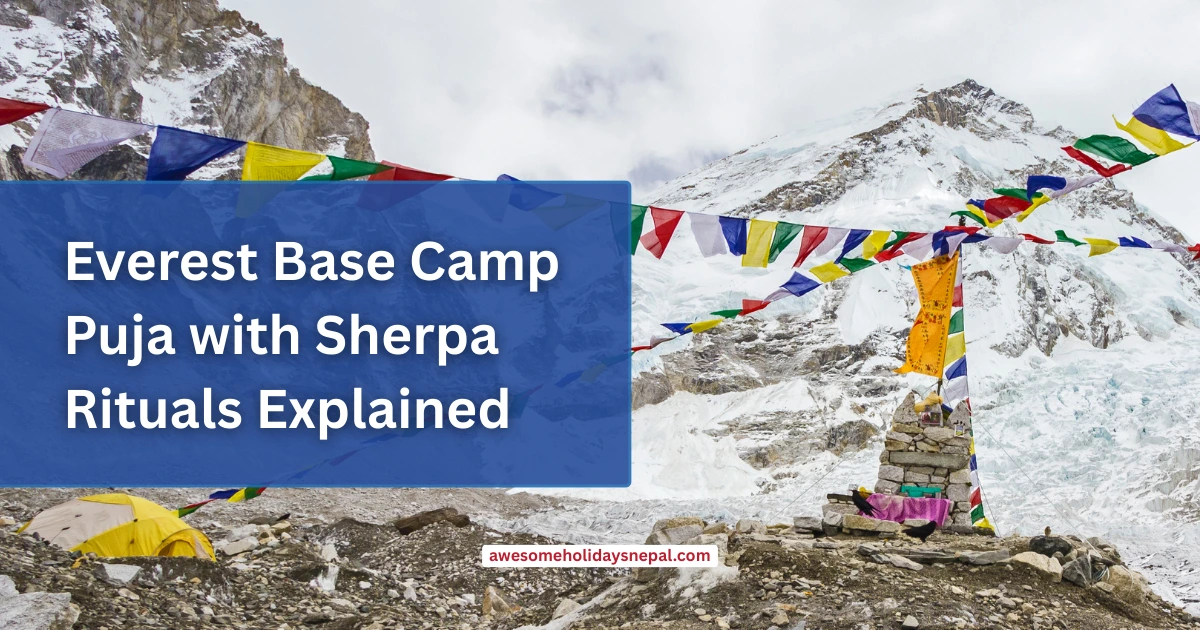
Do you know that every climber does an Everest Base Camp Puja before setting foot on the dangerous slope? This is one of the most unique ceremonies performed by Sherpa Buddhist Lamas of the Himalayas. This Sherpa mountain ceremony is done to seek permission from the mountain and ask for safety, success, and harmony as a blessing from the gods.
The Sherpa rituals Everest are deeply connected to Tibetan Buddhism and the sacredness of Mount Chomolungma. They have a local animistic belief and view Everest as a divine abode. The Everest Base Camp Puja ceremony involves blessing gear, chanting, burning juniper for purification, raising prayer flags, and, at last, scattering flour on each other and dancing in the puja hall.
The puja ceremony at Everest is a symbol of gratitude, unity, and long life. Let’s explore in depth what actually happens in the Everest Base Camp Puja ceremony with Sherpa rituals:
What is Everest Base Camp Puja?
The Everest Base Camp puja is a ceremony performed by a Buddhist lama or monks. The head monks of the Sherpa monastery in the Everest region performed this puja ceremony at Everest Base Camp to ask permission and protection from the mountain goddess, Miyolangsangma, also known as Chomolungma, for Everest climbers. This puja is believed to offer a safe passage to Everest climbers and for their summit victory.
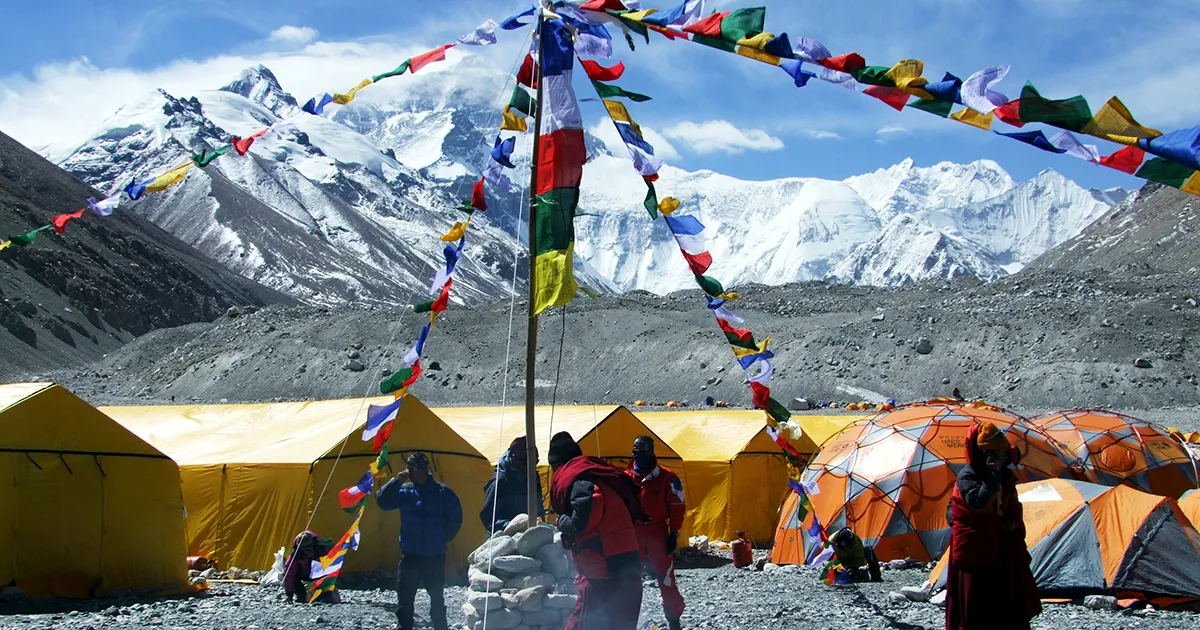
There is a belief among Sherpa that if you attempt the Everest climb without doing a puja, it is dangerously unlucky and is also disrespectful to mountain deities. Even the atheist climber participates in this Everest Sherpa ritual before doing the Everest ascent.
Where Does the Puja Ceremony Everest Take Place?
The Puja ceremony Everest takes place in the Everest Base Camp. Everest Base Camp is located at an elevation of 5,364 meters, and the puja is set directly below the Khumbu Icefall on the Khumbu glacier. The Everest Sherpa rituals are done before entering the most dangerous Khumbu Icefall, and this ceremony is the beginning of the Everest Expedition.
After doing this puja, it is believed that you have received the blessing of the mountain deities, Miyolangsangma, and you will be under their protection throughout the expedition. Similarly, the exact location of the puja ceremony changes every season with glacial movement and camping location.
Inside the Sherpa Rituals on Everest Puja
Construction of Puja Altar
First, the selection of the base camp is done in a clean and quiet area. The land facing east of Mount Everest is selected on slightly raised ground. After that, wooden sticks, bamboo, flat stone or ice, and juniper branches are gathered.
Then, the base is constructed with bigger stones and stacks of stone are added layer by layer. The height of the altar needs to be around 2 to 3 feet. The top should be fat so that it can hold the offering, sacred object, lamps, and incense.
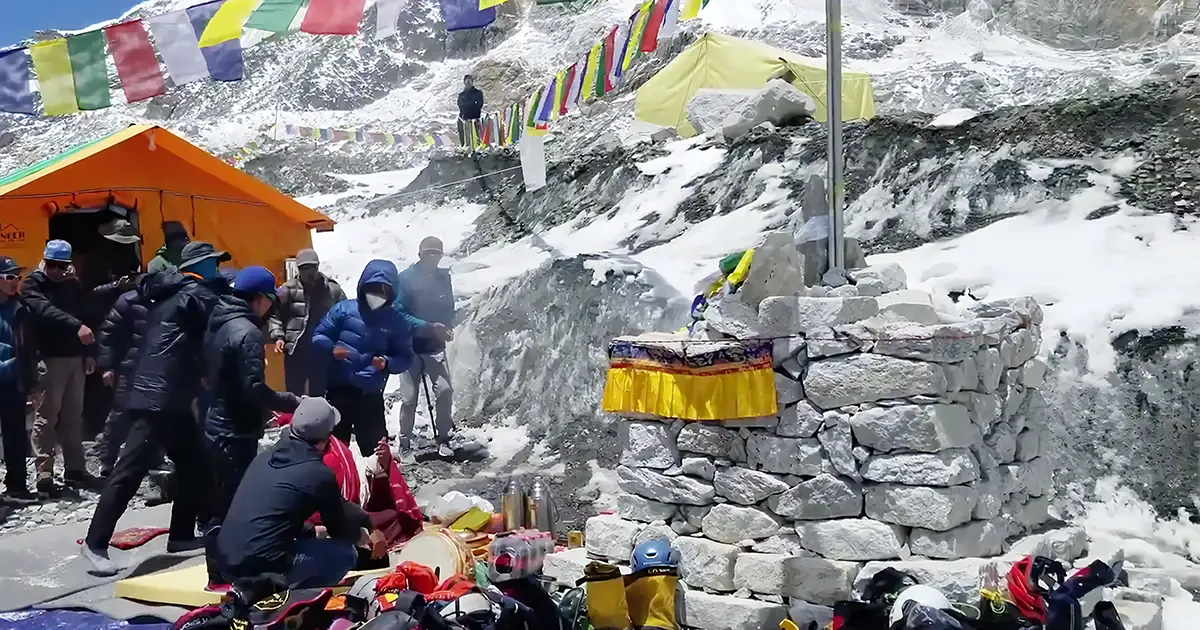
The altar is attached with five different colour flags in such a way that they should flutter freely. Trekking gear, like an ice axe and poles, is kept in front of the altar and ritual items are placed. The ritual items, like tormas (ritual dough offerings), rice or tsampa, butter or oil lamp, Dorje and bell, and Sacred texts, are only placed after the construction of the Puja altar.
Blessing Gear
The head lama gives a blessing to the trekking gear, like ice axes, crampons, helmets, ropes, so that they could protect the expeditors from high altitude unpredictable disasters like avalanches, crevasses, storms, and altitude sickness. The climbing equipment is placed in the front row of the altar, and the head lama chants a sacred mantra while sprinkling the gear with holy water, followed by touching them with sacred rice or barley flour (Tsampa). They also apply a small mark to some items with butter or flour.
Also, the burning smoke of juniper is waved over the trekking gear, and short prayer flags are also attached to ropes, ice axes or helmets. Throughout the gear blessing, climbers have to bow their foreheads, while a few also remove their hats as a sign of respect. Click here for details on the Sherpa guide gear list for Everest.
Chanting and Mantra
The head monks do low, rhythmic mantra chanting, which lasts for more than 30 minutes or an hour. This chanting is accompanied by bells, drums (nga), cymbals (rolmo), and a ritual horn (dungchen), which makes the mind calmer and purifies the environment. The most commonly heard mantra is ” Om Mane Padme Hum.”
Offering to the Mountain
They offer traditional Chang (Barley beer), Tsampa, torma, tea, rice, flour, butter fruits, sweets, and dry foods to the mountain spirits. In addition to this, smoke from juniper branches or incense and holy water are also offered to the mountain deities.
Prayer Flag Raised
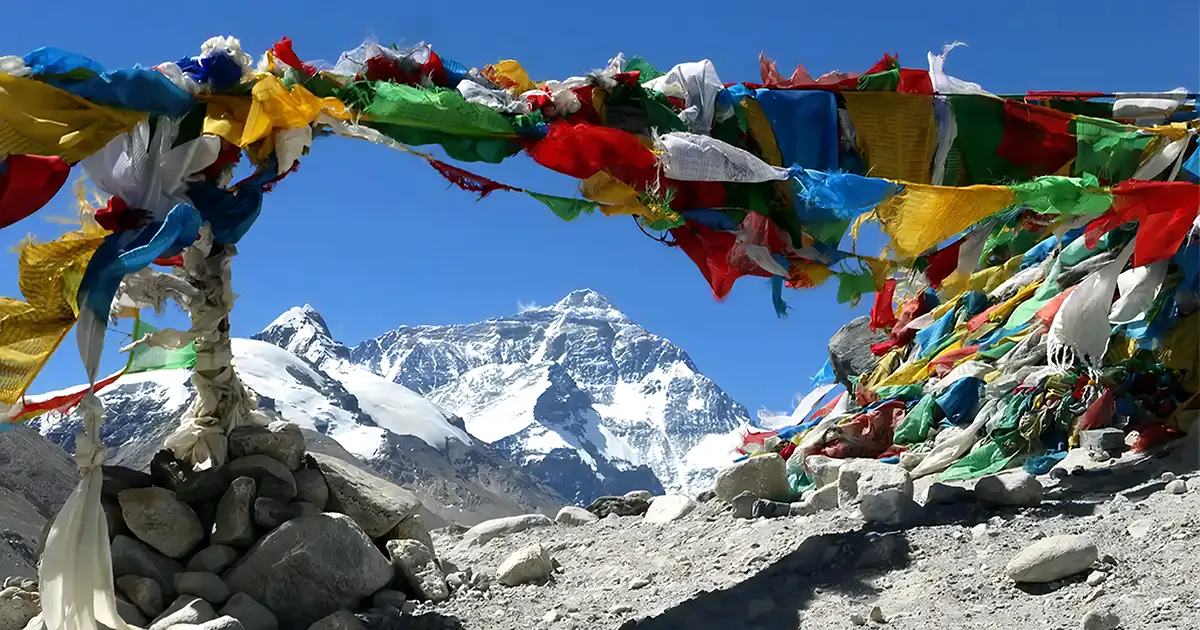
The prayer flag is composed of five colors, such as Blue, white, red, green, and yellow. This color represents:
- Blue: Sky
- White: Air
- Red: Fire
- Green: Water
- Yellow: Earth
These prayer flags are placed in such a way that they flutter continuously.
Feast
After completing the puja ceremony, lama monks and expeditors enjoy having meals and drinks. It is a unique opportunity to indulge in Sherpa hospitality, as you will be offered Dal Bhat (lentils, rice, and veg curry) for energy, Sherpa cuisines like Thukpa (noodle soup) or Shakpa (stew), and Momos. They serve you this meal with hot tea.
Cultural Rules Everest Climbers Must Follow
There are certain cultural rules in the Everest region, which should be followed by every trekker and climber, some of them are:
- Always have respect for the mountains.
- Respect for prayer flags and sacred sites.
- Must participate in the Everest Base Camp puja.
- Always follow “Leave No Trace” rules strictly.
- Must have photography etiquette.
- Maintain a respectful behaviour towards other climbers and Sherpa guides.
- Never step on your climbing gear.
How Climbers Participate in Everest Puja
The Climbers participate in the Everest puja performed in the Everest Base Camp by:
- Standing or kneeling quietly and making their climbing gear ready for the puja.
- Some clasp hands, do namaste, or bow their heads in front of the altar.
- Silence and focusing on the mantra and chanting.
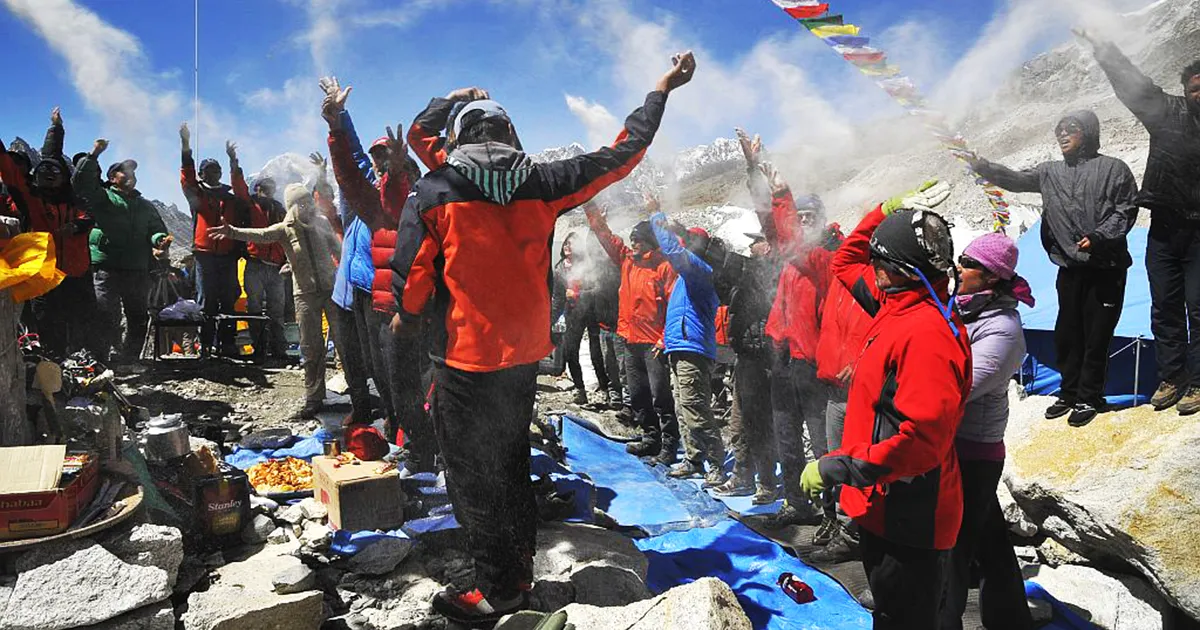
- Contributing to the offering by providing Rice or tsampa (roasted barley flour), Butter or tea, and Alcohol.
- Following the Lama’s mantra and touching the gear as he says.
- Climber offers khatas (ceremonial scarves) to the ceremony.
Importance of Puja Ceremony Everest
The Everest Base Camp puja ceremony is important in cultural, spiritual, and psychological terms.
- The puja ceremony Everest offers spiritual protection, as it is done for receiving blessings for the journey’s success from mountain deities.
- This is done to show respect for Everest before stepping on it.
- The Everest Base Camp puja is a way of honoring and respecting the centuries-old Sherpa culture, tradition, and norms.
- Spiritual purification of gear is needed as the climber’s life depends on the climbing gear.
- Following the Sherpa spiritual practice in puja helps you focus, calm your mind, and recharge yourself from within.
- The Everest Base Camp puja makes the bonds of the climber, the sherpa porter, and the guide stronger.
- This puja helps you remove all the bad luck and accidents and saves you from negative spirits.
- It also provides a deeper sense of connection with the Himalayan environment and the Sherpas.
A Spiritual Safety Everest Ritual
The Everest Base Camp puja is a brief display of Sherpa rituals at Everest. This puja ceremony is very important, and no one can place a single step on Everest without participating in it. To seek permission, protection, and victory, the puja ceremony is performed by head lamas at the Everest Base Camp.
The ceremony is a mixture of prayer, monks chanting, and offering of food, rice, and juniper incense to the mountain deity, Miyolangsangma, which helps climbers connect with the Sherpa spirituality and belief. The puja ceremony offers a serene and sacred environment in the middle of the chill and snowy landscapes of the Everest region. These Sherpa rituals help every climber and participant to gain a sense of purpose and mindfulness in their life.
FAQs
Expand AllWhat is the Sherpa puja ceremony?
The Sherpa puja ceremony is a ritual done before climbing Mount Everest.
Why do Sherpas pray to Mount Everest before climbing?
Sherpas pray to Mount Everest before climbing because Mount Everest is also known as the Mother Goddess of the World, and it is very sacred.
What happens in Everest Base Camp puja ceremony?
Everest Base Camp puja ceremony is a mixture of chanting, offering, receiving blessings, and asking permission from the mountain deity by gathering around the altar for the Everest climb.
How long does the Sherpa puja ceremony last?
The Sherpa puja ceremony lasts for more than one and a half hours.
What is offered during Sherpa mountain worship?
They offer Tibetan foods and drinks like milk, a local beer called chhang (rice beer or from maize/millet), rice, yoghurt, flour (tsampa), biscuits, and candy, followed by incense, butter lamps, climbing gear, ritual instruments, and symbolic objects.
Do sherpas perform rituals after the climbing season?
Yes. Sherpas do perform rituals after the climbing season.
What is the khada ceremony in Nepal?
The khata ceremony in Nepal is a way of showing respect, goodwill, welcoming, and auspiciousness.
Why do climbers receive juniper smoke blessing?
Climbers receive a juniper smoke blessing because it is a part of traditional Sherpa Buddhism in Everest.
What is tsampa throwing in Sherpa culture?
Tsampa throwing in Sherpa culture, refers offering of blessings, good luck, and freeing the spirit. Tsampa throwing refers to throwing a pinch of roasted barley flour over the climber and gear.
When do Sherpas perform the closing mountain ceremony?
Sherpas perform the closing mountain ceremony at the summit expedition, which involves a ceremony with fire. It is also done on the final day of the Mani Rimdu festival.
What is the Jhum or juniper blessing?
Jhum means slash-and-burn shifting cultivation, while juniper blessing means the use of the juniper tree for purification, blessing, and healing spiritually.
Are sherpas Buddhist or Animist?
Sherpas are deeply rooted in Tibetan Buddhism. They are also animist.
How Sherpas thank the mountain goddess after expedition?
Sherpas thank the mountain goddess after the expedition by post post-climb ceremony.
What is the difference between lha puja and bon sherpa rituals?
Lha Puja refers to doing puja for the god Lha, and it is a Buddhist or Bon ritual term. Bon Sherpa ritual means ritual practices by the Sherpa people who are linked to Bon traditions.
Can tourists participate in sherpa puja ceremony?
Yes. Tourists can participate in the Sherpa Puja ceremony.
What foods are offered in Everest puja?
Tsampa, butter, fruit, chocolates, and bread are offered in the Everest Puja.
Why is Sagarmatha called Chomolungma by sherpas?
Sagarmatha is called Chomolungma because Chomolungma refers to “the Goddess mother of the world”.
What is the meaning of “lha gyal lo"?
The meaning of “lha gyal lo” is victory to the gods, often chanted in an auspicious ceremony.
Related blog posts
Discover a choice of tourist destinations loved by most of our visitors. Whether you're on a jungle safari to spot rare animals or walking through a world heritage site, these well-planned itineraries cover the major highlights of Nepal.


 call an expert at: