
EBC Teahouse Cost Breakdown 2026: Meals, Hot Showers, Charging, Wi-Fi (Village-By-Village)
 Sristi Adhikari
Are you wondering what your EBC Teahouse Cost for the 2026 season looks like? Understanding the village-by-village Everest Base Camp Trek Cost early helps you plan your budget smoothly. Every day, the EBC teahouse costs depend on essentials like meals, hot showers, charging, and Wi-Fi services.
The prices fluctuate village to village, depending on season, supply costs, and demand at the EBC teahouse. Peak seasons like Spring and Autumn are more expensive on the Everest Base Camp trek.
Continue reading the blog for details on the EBC Teahouse cost for the 2026 season.
Everest Base Camp Trek Route
The actual Everest Base Camp trek usually starts and ends in Lukla. Our company, Awesome Holidays Nepal, 14-day Everest Base Camp trek, includes the itinerary of:
- Kathmandu-Lukla-Phakding-Namche Bazaar-Tengboche-Dingboche-Lobuche-Gorakshep-Pherioche-Namche-Phakding-Lukla-Kathmandu.
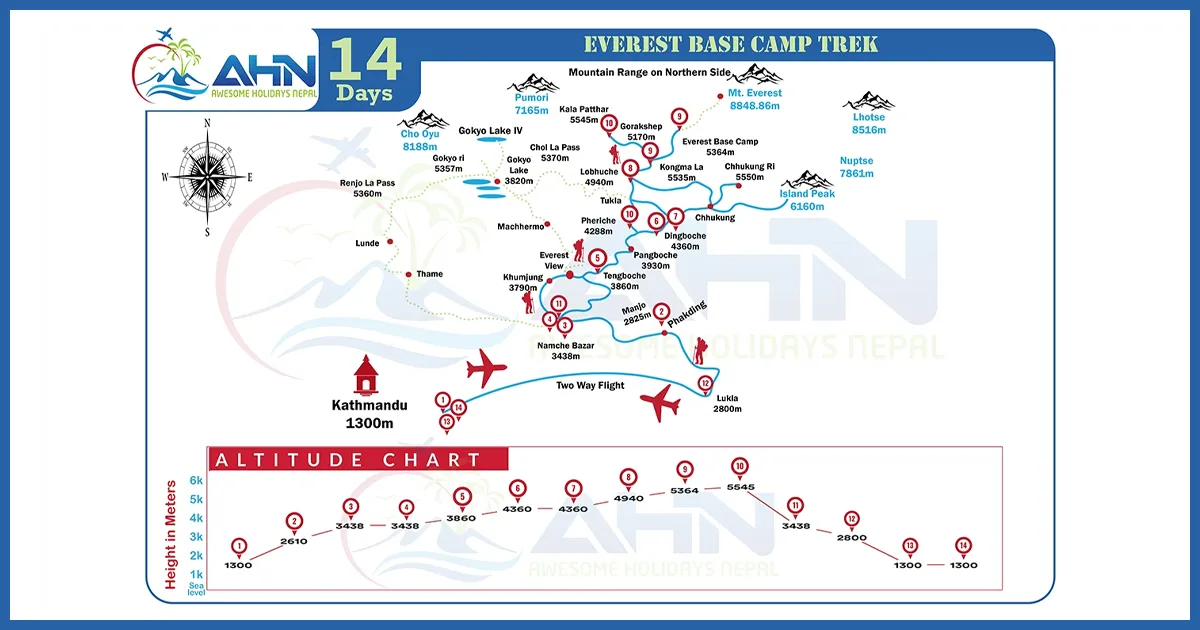
If you like a customized itinerary for the EBC trek, we can also make one as per your requirements.
Teahouse Cost Breakdown
EBC trekking cost increases with the increase in altitude. The EBC Teahouse costs with different villages are described below:
Lower Altitude
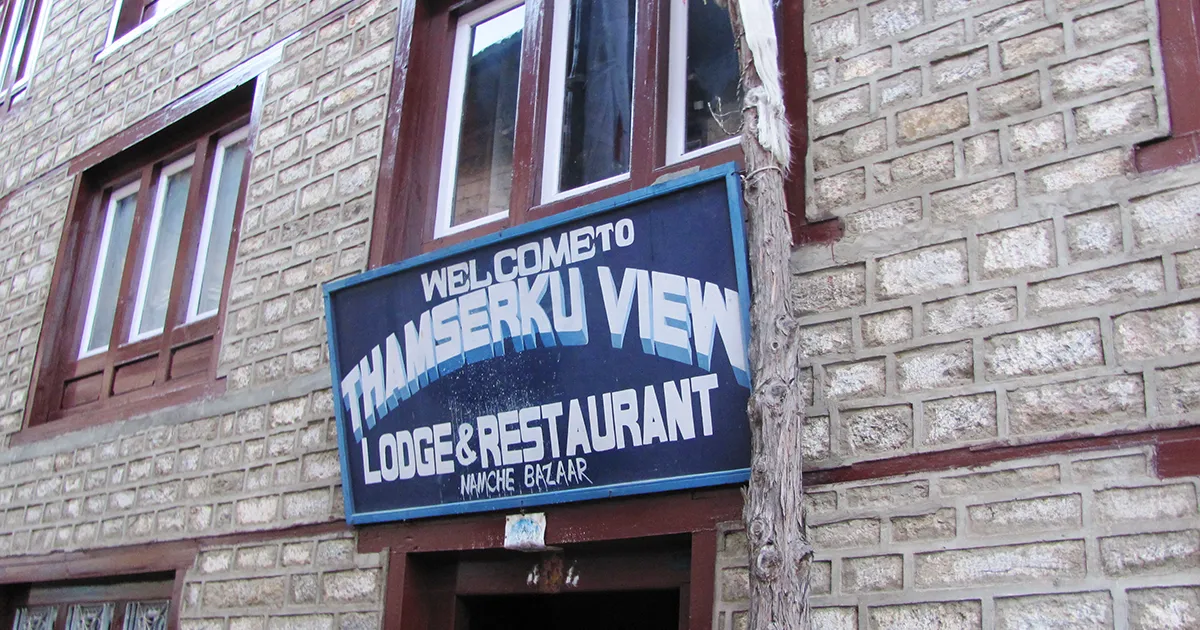
The EBC teahouse costs at a lower altitude are generally low. The typical teahouses of the lower altitudinal regions, where many trekkers and climbers stop, are Phakding, Monjo, Jorsale, and Namche Bazaar.
These villages are quite close to roads and airstrips, which reduces the transportation cost of food, gas, building materials, and equipment via mules, porters, or even in vehicles. In addition to this, in lower altitude regions like Lukla or Phakding, there is high productivity on local farms and fresh vegetables; they don’t have to spend on imported goods via airways.
Also, there is a higher population and more teahouses, which increases competition in their teahouse business, so they offer a lower rate on the accommodation and meals.
Accommodation
Most of the teahouses offer discounts or free services in accommodation, if you eat all three meals there. Shared rooms are cheaper, and private rooms with attached bathrooms are more expensive.
- Basic twin rooms in Lukla: NPR 1500 to 2000 per night
- Phakding: NPR 2500+ per night
- Namche Bazaar: NPR 3000+ per night
Meals and Drinks
| Items | Lower Altitude |
|---|---|
| Dal Bhat(Lunch and Dinner) | USD $6 to $8 |
| Breakfast | USD $5 to $7 |
| Tea/coffee | USD $1.5 to $3 |
| Snacks and Drinks | USD $2 to $4 |
Hot Showers
Here, water resources like rivers, springs are nearby, along with a stable solar system, which makes the hot shower facility more accessible and cheap. Hot showers are generated via electric heaters and gas, which makes them more frequent.
Hot showers cost ranges from USD $3 to USD $5.
Charging Devices
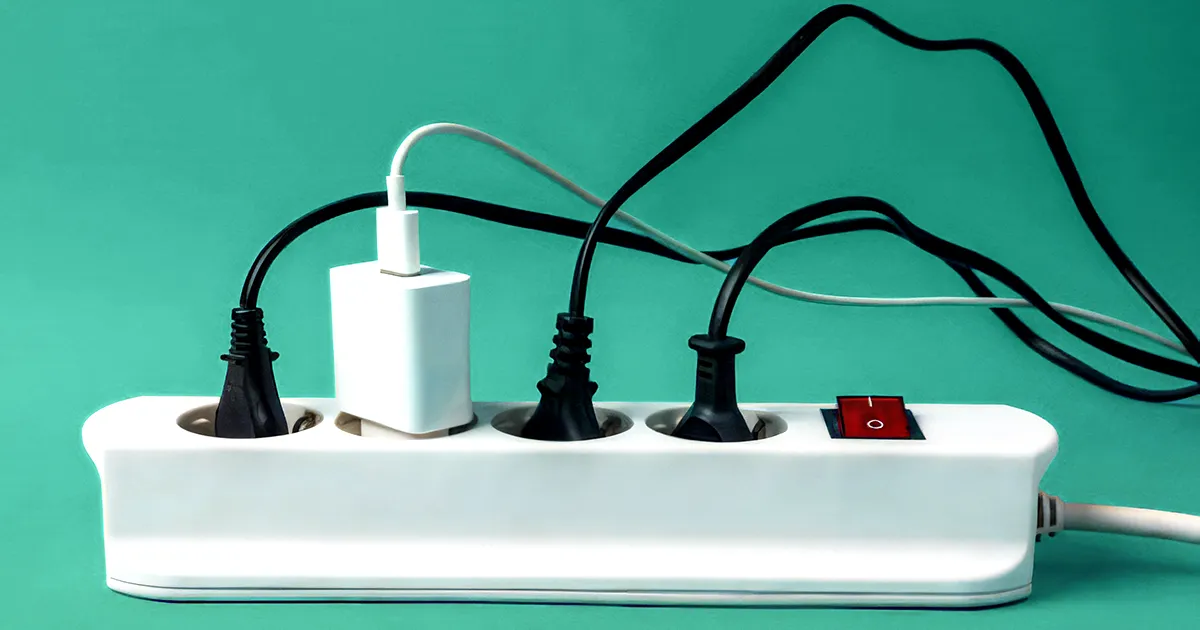
When trekking to the EBC, charging is never free. You have to bring your own cables and adapter. You have to pay USD $2 to $6 per device for charging in this region. Bringing your own power bank or solar chargers helps to save money.
Wi-Fi services
EBC trails are remote, and staying connected to the outside world is not free. You have to pay per hour when sharing wifi services in teahouses.
Trekkers can also buy Everest Link Data cards, which cost $17 to $25 for multi-GB packs. Teahouses charge USD $4 to $6 per hour.
Mid-Altitude Region
Mid-altitude region of the EBC trek includes villages like Tengboche, Dibuche, Pangboche, and Dingboche. The teahouse accommodation cost, meals, and other facilities are more expensive than in lower altitude regions.
The main reason behind the expensive rate is the difficulty of transporting food, gas, bottled drinks, and building materials, which are carried via porters or yaks, as there is no access to a roadway. Also, they serve popular destination for overnight stops and acclimatization, so an increase in the trekker flow increases the rate of accommodation, meals, and other facilities. It cost higher than lower altitude regions in every aspect, like accommodation, meals and shower etc.
High Altitude
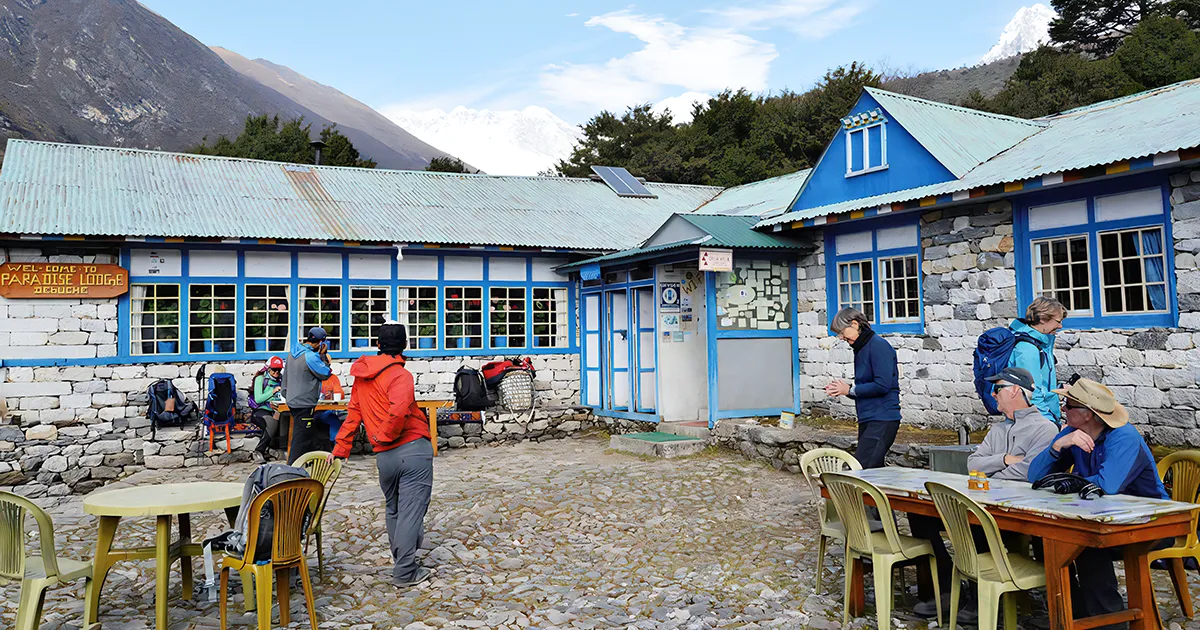
High altitude regions of the EBC trek are Dingboche, Lobuche, and Gorakshep. These villages are above 4,410 meters above sea level, and it is very difficult to transfer raw materials. Everything needs to get transferred via porter and yaks or mules.
Accommodation
- Basic rooms: $30 to $50
- Standard rooms: $100 +
Meals and Drinks
- Breakfast: NPR 700 to 1500
- Lunch/dinner: NPR 800 to 1200 per meal
- Drinks and snacks: NPR 200 +
Hot Showers
Hot showers in higher altitudes above 4,000 meters are very expensive. Trekkers need to pay USD $6-10 per shower. Sometimes you have to carry hot water in a bucket for showers, as there is no direct supply in bathrooms.
Charging Devices
Charging electronic devices costs: $2 to $6 per device. The high rate is due to limited electricity and low solar power.
Wi-Fi services
The Wi-Fi services are available in a few teahouses, but the connectivity is so slow and limited.
Bonus Tips
Daily Expense Per Day in Teahouse
If you want to trek on a budget, you will be spending USD $25 to $40 per day for extra essentials like buying bottled water, snacks, Wi-Fi, and extra meals.
Those who don’t have a problem with the budget, we suggest you carry USD $40 to $60 for these extras.
Other Expense Per Day beyond Teahouse
When trekking to Everest, other expenses beyond the teahouse include permits, trekking fees, a guide, Kathmandu-Lukla flights, and insurance. Most of the trekking companies like ours, Awesome Holidays Nepal, include these fees in the trekking package.
Hiring porters and tipping guides and porters includes the expenses beyond the teahouses. The certified trekking guide charges around USD $35 to $40 per day, while a porter charges $22 to $25 per day for the EBC trek. Tipping is totally personal but we recommend USD $10 to $15 per day for a guide, while USD $8 to $12 for porters ( Depending on the group size).
Currency and Payments
EBC teahouse costs and payments are made only via Nepali rupees. You have to pay in cash in tea houses for meals, snacks, hot showers, charging electronic devices, Wi-Fi cards, and tipping guides and porters.
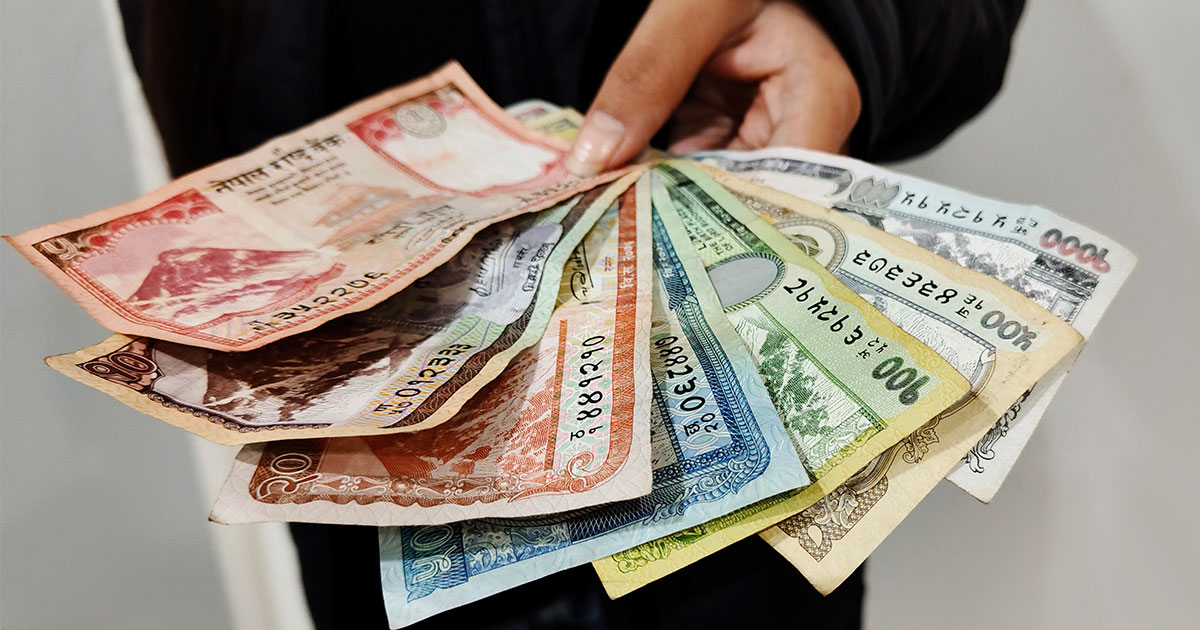
When you leave Lukla, make sure to withdraw a sufficient amount of money, as there are no ATMs, no card payment facilities, and no mobile banking payments after.
What is the Peak and Slow-Season for the Everest Base Camp Trek?
The peak season for the Everest Base Camp trek is Spring and Autumn. Spring starts in March and lasts until May. It offers clear skies, mild temperatures, and vibrant blooming of the Rhododendron, which captivates the hearts of many travel enthusiasts in the Everest region.
The autumn season starts in late September and lasts until November. Mild weather, moderate temperature, and clear skies favor exploring the EBC trails with the breathtaking beauty of snow-capped mountains.
The slow-season is winter and the monsoon season. Slow-season is not ideal for trekking because heavy rainfall and snowfall make trails slippery and icy, which increases the chances of injuries. Also, the high risk of landslides and trail blockage makes it unfavorable for trekking in the winter and monsoon season.
Final Thoughts
The overall EBC teahouse cost includes expenses in meals, accommodation, hot showers, charging devices, and Wi-Fi services. The rate of these services increases with the increase in altitude. The lower regions like Namche Bazaar, Lukla, etc., offer quite cheap rates as there is high productivity, high population, and they are near airstrips and roadways.
Also, there is competition among the many teahouses, and they offer lower rates to run their business. Whereas mid-altitude and higher-altitude regions like Dingboche, Tengboche, Lobuche, Gorakshep, etc. offer high prices on their services.
They are very far away from the road strips and airstrips, and every essential thing needs to be carried either via yak or porter, which increases the cost of the meals and other services. Also, trekkers usually stay in this region for acclimatization, which increases the supply and demand, followed by an increase in price rates. If you are planning to EBC trek for the upcoming season in 2026, make your budget plan early so that you can enjoy your trek fully.
FAQs
Expand AllHow much does a teahouse cost on the Everest Base Camp trek in 2026?
Teahouse cost on the Everest Base Camp trek in 2026 varies according to the altitude and season. The per-night rate for basic teahouses in lower regions costs $5–$10, while it increases to $20–$40+ at higher altitudes.
How much should I budget per day for meals on the EBC trek?
You should budget USD $25 to $50 per day for meals on the EBC trek.
Are hot showers included in Everest Base Camp teahouses?
Yes. The hot showers are generally included in the Everest Base Camp teahouses.
How much does charging phones and power banks cost on EBC?
Charging phones and power banks on the EBC Trek costs USD $2 to $7 per device.
Is Wi-Fi available on the Everest Base Camp trek?
Yes. Wi-Fi services are available on the Everest Base Camp trek, but they are slow and limited.
Do teahouse prices increase with altitude on the EBC route?
Yes. The teahouse prices increase with altitude on the EBC route.
Which village on the EBC trek is the most expensive to stay in?
Gorakshep village of the EBC trek is the most expensive place to stay. It is located at an altitude of 5164 meters, and everything is very expensive due to remoteness.
Can I reduce teahouse costs on the Everest Base Camp trek?
Yes. You can reduce the teahouse costs on the Everest Base Camp trek by eating all meals at one teahouse and buying all the munching snacks from Kathmandu, and drinking water via purification rather than buying bottled ones.
Are teahouse prices fixed or negotiable on the EBC trek?
Teahouse prices are semi-negotiable on the EBC trek. Rooms can be negotiated, but prices of meals, hot showers, and charging are fixed.
How much cash should I carry for teahouse expenses on EBC?
You should carry cash of $300-$700 forfor teahouse expenses on EBC trek.
How much is food on Everest Base Camp?
The food on Everest Base Camp may range from $15 to $45 per day, which fluctuates as per your ordered dish in breakfast, lunch, and dinner. Also, this price goes higher in high altitudes like Lobuche or Dingboche.
How much does the EBC trek cost?
If you book EBC with Awesome Holidays Nepal, it will cost you USD $1155 per person.
Are there tea houses at Everest Base Camp?
Yes, there are many tea houses in the Everest Base Camp routes.
Are meals included with the room cost?
No. Meals are not included with the room cost in the Everest trek.
Can I take a hot shower in teahouses?
Yes, you can take a hot shower in teahouses, but you have to pay an extra charge for the hot shower, which depends on the altitude.
How much to charge electronic devices?
Charging electronic devices can cost $2-6 per charge and goes higher in the upper EBC region like Lobuche or Gorakshep.
Does pricing change by village?
Yes, pricing changes from village to village in the EBC trek. In the lower region, you will see the price in a range of budget but as the altitude increases, it goes on increasing.
Can I pay with cash or cards in the EBC teahouses?
You should pay with Nepali currency in the EBC Teahouses. Digital payments and card payment is not accepted in the higher regions.
Should I bring a power bank or solar charger for EBC trek?
You should bring a high-capacity power bank of 20,000mAh for the EBC trek.
What is the best power bank for Everest Base Camp trek?
The best power bank for the Everest Base Camp trek is the Anker Powerbank as it is lightweight, affordable, and reliable.
Related blog posts
Discover a choice of tourist destinations loved by most of our visitors. Whether you're on a jungle safari to spot rare animals or walking through a world heritage site, these well-planned itineraries cover the major highlights of Nepal.

 call an expert at: